Download to read offline
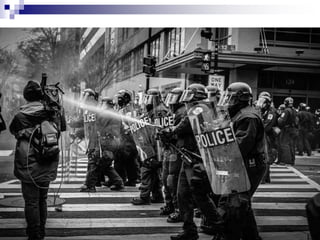
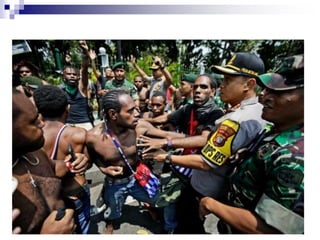
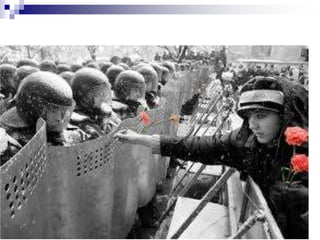
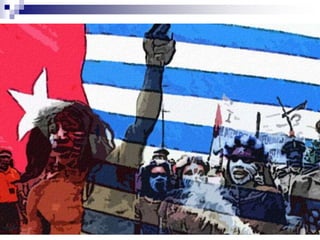
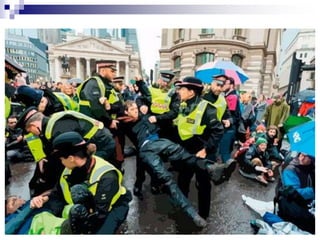
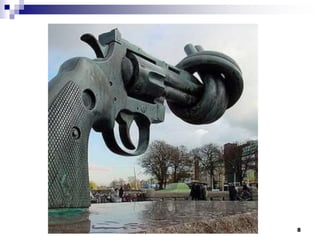
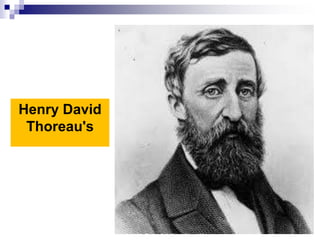
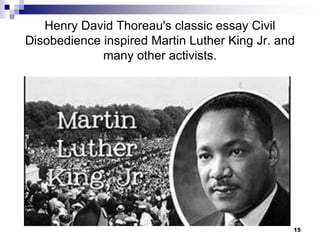
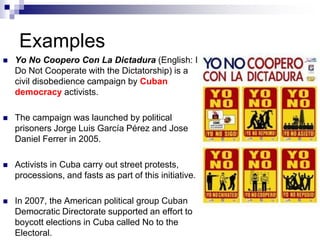
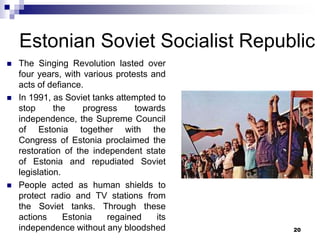
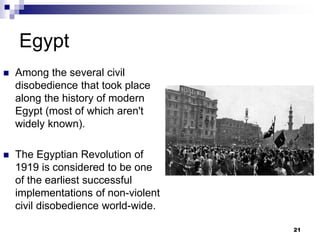
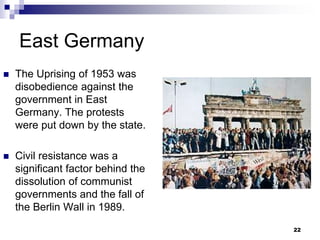
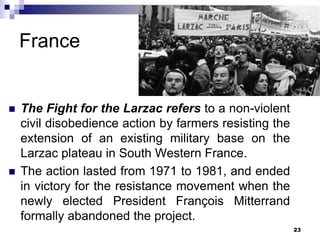

The document discusses civil resistance and civil disobedience. It begins by defining civil as relating to citizens or the state. It then distinguishes between non-violent resistance, which relies on nonviolent civil groups challenging power through nonviolent means, and violent resistance like killing. The document focuses on Henry David Thoreau's 1849 essay "Civil Disobedience", which inspired Martin Luther King Jr. and others. It discusses whether civil disobedience is ethical and reasons for choosing non-violent resistance. Examples of civil disobedience movements are provided, including in Cuba, Estonia, Egypt, East Germany, France, and Thailand.


