Cinematography – Camera shots
Extreme close up – ECU
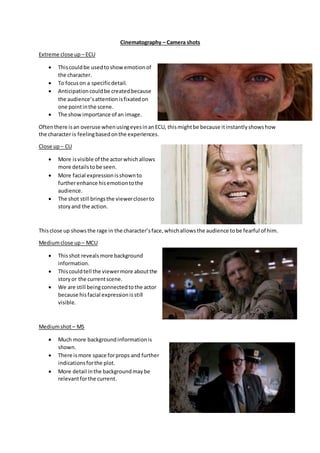
 Thiscouldbe usedtoshowemotionof
the character.
 To focuson a specificdetail.
 Anticipationcouldbe createdbecause
the audience’sattentionisfixatedon
one pointinthe scene.
 The show importance of an image.
Oftenthere isan overuse whenusingeyesinanECU, thismightbe because itinstantlyshowshow
the character is feelingbasedonthe experiences.
Close up – CU
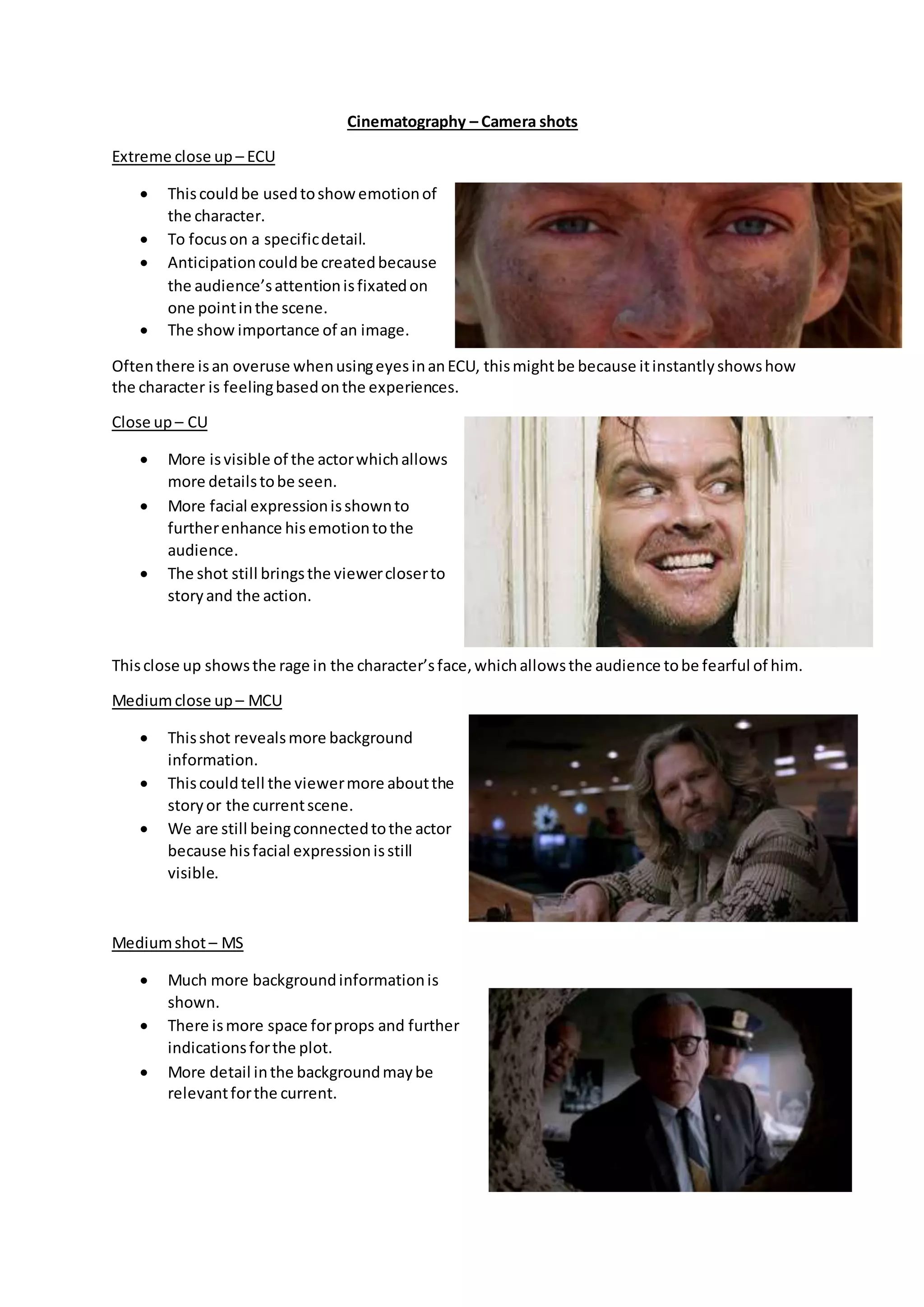
 More isvisible of the actorwhichallows
more detailstobe seen.
 More facial expressionisshownto
furtherenhance hisemotiontothe
audience.
 The shot still bringsthe viewercloserto
storyand the action.
Thisclose up showsthe rage in the character’sface,whichallowsthe audience tobe fearful of him.
Mediumclose up – MCU
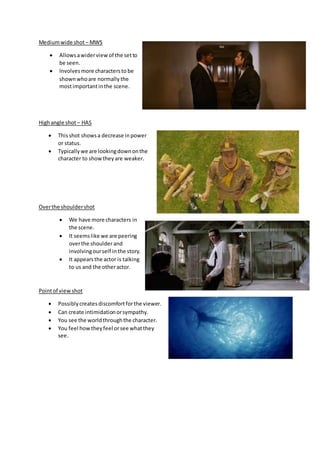
 Thisshot revealsmore background
information.
 Thiscouldtell the viewermore aboutthe
storyor the currentscene.
 We are still beingconnectedtothe actor
because hisfacial expressionisstill
visible.
Mediumshot– MS
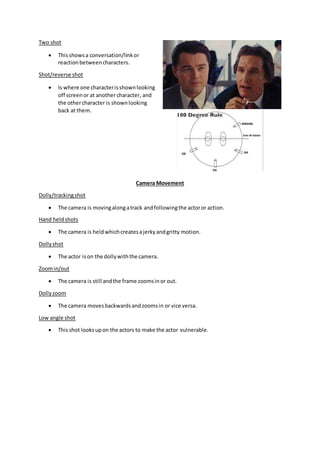
 Much more backgroundinformationis
shown.
 There ismore space forprops and further
indicationsforthe plot.
 More detail inthe backgroundmaybe
relevantforthe current.
Mediumwide shot – MWS
 Allowsawiderviewof the setto
be seen.
 Involvesmore charactersto be
shownwhoare normallythe
mostimportantinthe scene.
Highangle shot– HAS
 Thisshot showsa decrease inpower
or status.
 Typicallywe are lookingdownonthe
character to showtheyare weaker.
Overthe shouldershot
 We have more characters in
the scene.
 It seemslike we are peering
overthe shoulderand
involvingourself inthe story.
 It appearsthe actor is talking
to us and the otheractor.
Pointof viewshot
 Possiblycreatesdiscomfortforthe viewer.
 Can create intimidationorsympathy.
 You see the worldthroughthe character.
 You feel howtheyfeel orsee whatthey
see.
Two shot
 Thisshowsa conversation/linkor
reactionbetweencharacters.
Shot/reverse shot
 Is where one characterisshownlooking
off screenor at anothercharacter, and
the othercharacter is shownlooking
back at them.
Camera Movement
Dolly/trackingshot
 The camera is movingalongatrack andfollowingthe actoror action.
Hand heldshots
 The camera is heldwhichcreatesajerkyandgritty motion.
Dollyshot
 The actor ison the dollywiththe camera.
Zoomin/out
 The camera is still andthe frame zoomsinor out.
Dollyzoom
 The camera movesbackwardsandzoomsin or vice versa.
Low angle shot
 Thisshot looksupon the actors to make the actor vulnerable.

Cinematography shot types

  • 1.
    Cinematography – Camerashots Extreme close up – ECU  Thiscouldbe usedtoshowemotionof the character.  To focuson a specificdetail.  Anticipationcouldbe createdbecause the audience’sattentionisfixatedon one pointinthe scene.  The show importance of an image. Oftenthere isan overuse whenusingeyesinanECU, thismightbe because itinstantlyshowshow the character is feelingbasedonthe experiences. Close up – CU  More isvisible of the actorwhichallows more detailstobe seen.  More facial expressionisshownto furtherenhance hisemotiontothe audience.  The shot still bringsthe viewercloserto storyand the action. Thisclose up showsthe rage in the character’sface,whichallowsthe audience tobe fearful of him. Mediumclose up – MCU  Thisshot revealsmore background information.  Thiscouldtell the viewermore aboutthe storyor the currentscene.  We are still beingconnectedtothe actor because hisfacial expressionisstill visible. Mediumshot– MS  Much more backgroundinformationis shown.  There ismore space forprops and further indicationsforthe plot.  More detail inthe backgroundmaybe relevantforthe current.
  • 2.
    Mediumwide shot –MWS  Allowsawiderviewof the setto be seen.  Involvesmore charactersto be shownwhoare normallythe mostimportantinthe scene. Highangle shot– HAS  Thisshot showsa decrease inpower or status.  Typicallywe are lookingdownonthe character to showtheyare weaker. Overthe shouldershot  We have more characters in the scene.  It seemslike we are peering overthe shoulderand involvingourself inthe story.  It appearsthe actor is talking to us and the otheractor. Pointof viewshot  Possiblycreatesdiscomfortforthe viewer.  Can create intimidationorsympathy.  You see the worldthroughthe character.  You feel howtheyfeel orsee whatthey see.
  • 3.
    Two shot  Thisshowsaconversation/linkor reactionbetweencharacters. Shot/reverse shot  Is where one characterisshownlooking off screenor at anothercharacter, and the othercharacter is shownlooking back at them. Camera Movement Dolly/trackingshot  The camera is movingalongatrack andfollowingthe actoror action. Hand heldshots  The camera is heldwhichcreatesajerkyandgritty motion. Dollyshot  The actor ison the dollywiththe camera. Zoomin/out  The camera is still andthe frame zoomsinor out. Dollyzoom  The camera movesbackwardsandzoomsin or vice versa. Low angle shot  Thisshot looksupon the actors to make the actor vulnerable.