Chronic viral hepatitis
By Dr.Elmadana
Difinition
Chronic hepatitis is defined as
inflammatory disease of the liver lasting for
more than six months.
 The histological differentiation between
chronic persistent hepatitis (no cell
necrosis) and chronic active hepatitis (cell
necrosis) does not correlate with
prognosis and is therefore now much less
used.
Symptoms-Nonspecific symptoms, eg:
 Fatigue, anorexia,
muscle pains,
arthralgia, weight loss
 Right abdomen pain
(liver distension)
 Abdominal distension
(ascites)
 Ankle swelling (fluid
retention)
 Haematemesis and
melaena(gastrointesti
nal haemorrhage)
 Pruritus (cholestasis)
 Breast swelling
(gynaecomastia),
testicular atrophy,
loss of libido and
amenorrhoea due to
endocrine dysfunction
 Confusion and
drowsiness
(encephalopathy)
Signs
Spider naevi (chest and upper
body),
Palmar erythema
Jaundice
Splenomegaly (portal
hypertension)
Complications
Liver failure
Portal
hypertension:
ascites, hypersplen
ism, lower
oesophageal and
rectal varices
Hypoalbuminaemia
Coagulopathy
Osteoporosis
Hepatopulmonary
syndrome (defect
in arterial
oxygenation
induced by
pulmonary
vascular dilatation
in patients with
liver disease)
Hepatorenal
syndrome
Encephalopathy
Cirrhosis
Hepatocellular
carcinoma
HBV chronic hepatitis
 HBV is transmitted by perinatal, percutaneous, and
sexual exposure, as well as by close person-to-person
contact by open cuts and sores, especially among
children in hyperendemic areas.
 The risk of developing chronic HBV infection after acute
exposure ranges from 90% in newborns of HBeAg-
positive mothers to 25% to30% in infants and children
under 5 and to less than 5% in adults.
 In addition, immunosuppressed persons are more likely
to develop chronic HBV infection after acute infection.
Chronic hepatitis B
An estimated 350 million persons
worldwide are chronically infected with
HBV
 Chronical infection is defined If persons
are positive for hepatitis B surface
antigen(HBsAg) for more than 6months.
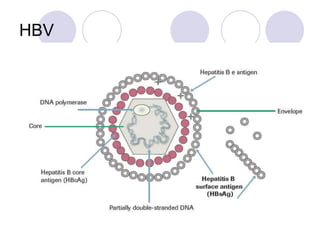
HBV
HBV Genotypes
 Eight genotypes of HBVhave been identified
labeled A through H. The prevalence of HBV
genotypes varies depending on the geographical
location.
 A, B, C, D and E-G being 35%,22%, 31%, 10%,
and 2%, respectively.
HBV genotypes
 HBV genotypes may play an important role in
the progression of HBV-related liver disease as
well as response to interferon therapy.
 Genotype B is associated with HBeAg
seroconversion at an earlier age, less active
hepaticnecroinflammation, a slower rate of
progression to cirrhosis,and a lower rate of HCC
development compared to genotype C.
Carriers
Carriers of HBV are at increased risk of
developing cirrhosis, hepatic
decompensation,and hepatocellular
carcinoma (HCC).
Although most carriers will not develop
hepatic complications from chronic
hepatitis B, 15% to 40% will develop
serious sequelae during their lifetime.
Glossary of Clinical Terms Used in
HBV Infection
 Chronic hepatitis B subdivide into HBeAg positive
and HBeAg negative chronic hepatitis B.
 Inactive HBsAg carrier state — Persistent HBV
infection of the liver without significant, ongoing
necroinflammatory disease.
 Resolved hepatitis B — Previous HBV infection
without further virologic, biochemical or
histological evidence of active virus infection or
disease.
 Acute exacerbation or flare of hepatitis B —
Intermittent elevations of ALT activity to more than
10 times the upper limit of normal and more than
twice the baseline value.
Glossary of Clinical Terms Used in
HBV Infection
 Reactivation of hepatitis B — Reappearance of
active necroinflammatory
 Carrier state or resolved hepatitis B.
 HBeAg clearance — Loss of HBeAg in a person who
was previously HBeAg
 positive.
 HBeAg seroconversion — Loss of HBeAg and
detection of anti-HBe in a person who was
previously HBeAg positive and anti-HBe negative.
 HBeAg reversion — Reappearance of HBeAg in a
person who was previously HBeAg negative, anti-
HBe positive.
Chronic hepatitis B
 The 10-30% of HBsAg carriers who develop
chronic hepatitis may be symptomatic or
asymptomatic(HBsAg carriers).
 Fatigue is the most common symptom of chronic
HBV infection.
 Patients may occasionally experience an acute
flare of their disease, with symptoms and signs
similar to those of acute hepatitis.).
Extrahepatic manifestations
Patients also may have
extrahepatic manifestations of
their disease, including
polyarteritis nodosa
cryoglobulinemia, and
glomerulonephritis.
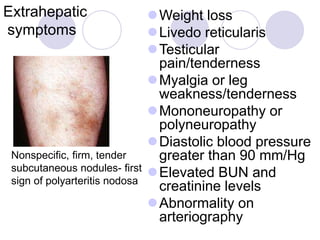
Extrahepatic
symptoms
Weight loss
Livedo reticularis
Testicular
pain/tenderness
Myalgia or leg
weakness/tenderness
Mononeuropathy or
polyneuropathy
Diastolic blood pressure
greater than 90 mm/Hg
Elevated BUN and
creatinine levels
Abnormality on
arteriography
Nonspecific, firm, tender
subcutaneous nodules- first
sign of polyarteritis nodosa
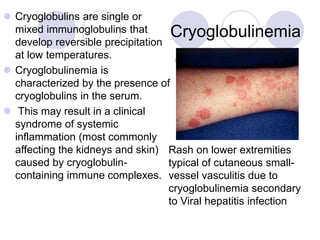
Cryoglobulinemia
 Cryoglobulins are single or
mixed immunoglobulins that
develop reversible precipitation
at low temperatures.
 Cryoglobulinemia is
characterized by the presence of
cryoglobulins in the serum.
 This may result in a clinical
syndrome of systemic
inflammation (most commonly
affecting the kidneys and skin)
caused by cryoglobulin-
containing immune complexes.
 .
Rash on lower extremities
typical of cutaneous small-
vessel vasculitis due to
cryoglobulinemia secondary
to Viral hepatitis infection
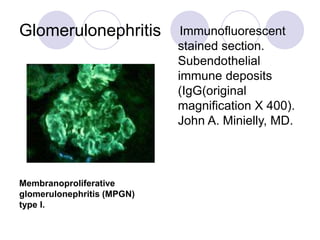
Glomerulonephritis Immunofluorescent
stained section.
Subendothelial
immune deposits
(IgG(original
magnification X 400).
John A. Minielly, MD.
Membranoproliferative
glomerulonephritis (MPGN)
type I.
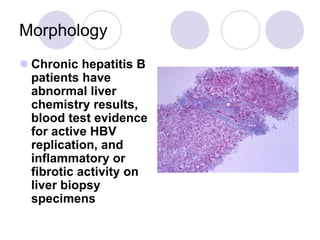
Morphology
 Chronic hepatitis B
patients have
abnormal liver
chemistry results,
blood test evidence
for active HBV
replication, and
inflammatory or
fibrotic activity on
liver biopsy
specimens
Serological types of HBV
Patients with chronic hepatitis may be
considered either HBeAg-positive or
HBeAg-negative
Ultimately, approximately 20% of
HBsAg carriers (approximately 1% of
all adult patients infected acutely with
HBV) go on to develop cirrhosis or HCC
Serology
 Patients with HBeAg-negative chronic
hepatitis acquired a mutation in either the
precore or the core promoter region of the
viral genome.
 In such patients with a precore mutant state,
HBV continues to replicate but HBeAg is not
produced. The majority of patients with
HBeAg-negative chronic hepatitis B have a
serum HBV DNA greater than 2000 IU/mL.
HBV and HCC
Worldwide, up to 1 million cases of
HCC are diagnosed each year. Most
appear to be related to HBV infection.
In HBV-induced cirrhosis, as in
cirrhosis due to other etiologies,
hepatic inflammation and appear to
stimulate mutational events and
carcinogenesis.
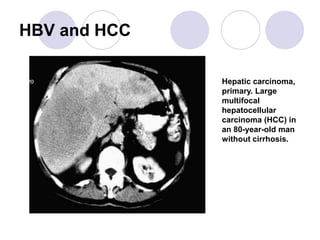
HBV and HCC
Hepatic carcinoma,
primary. Large
multifocal
hepatocellular
carcinoma (HCC) in
an 80-year-old man
without cirrhosis.
Diagnostic criteria Chronic hepatitis B
1. HBsAg-positive 6 months
2. Serum HBV DNA 20,000 IU/mL (105copies/mL), lower
values 2,000-20,000 IU/mL (104-105 copies/mL) are often
seen in HBeAg-negative chronic hepatitis B
3. Persistent or intermittent elevation in ALT/AST levels
4. Liver biopsy showing chronic hepatitis with moderate
or severe necroinflammation
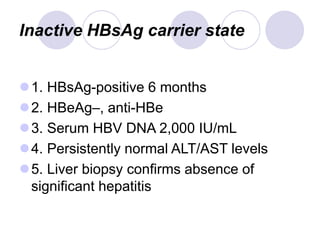
Inactive HBsAg carrier state
1. HBsAg-positive 6 months
2. HBeAg–, anti-HBe
3. Serum HBV DNA 2,000 IU/mL
4. Persistently normal ALT/AST levels
5. Liver biopsy confirms absence of
significant hepatitis
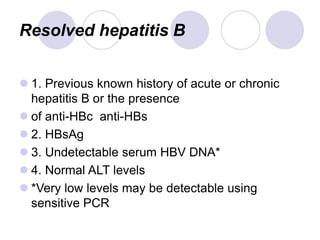
Resolved hepatitis B
 1. Previous known history of acute or chronic
hepatitis B or the presence
 of anti-HBc anti-HBs
 2. HBsAg
 3. Undetectable serum HBV DNA*
 4. Normal ALT levels
 *Very low levels may be detectable using
sensitive PCR
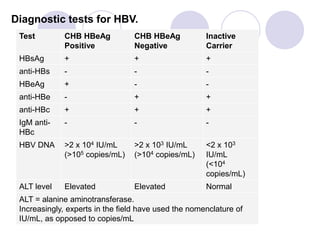
Test CHB HBeAg
Positive
CHB HBeAg
Negative
Inactive
Carrier
HBsAg + + +
anti-HBs - - -
HBeAg + - -
anti-HBe - + +
anti-HBc + + +
IgM anti-
HBc
- - -
HBV DNA >2 x 10⁴ IU/mL
(>105 copies/mL)
>2 x 10³ IU/mL
(>104 copies/mL)
<2 x 10³
IU/mL
(<104
copies/mL)
ALT level Elevated Elevated Normal
ALT = alanine aminotransferase.
Increasingly, experts in the field have used the nomenclature of
IU/mL, as opposed to copies/mL
Diagnostic tests for HBV.
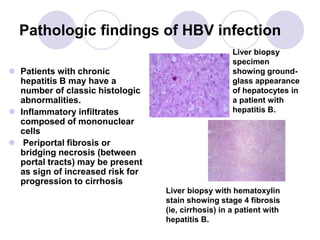
Pathologic findings of HBV infection
 Patients with chronic
hepatitis B may have a
number of classic histologic
abnormalities.
 Inflammatory infiltrates
composed of mononuclear
cells
 Periportal fibrosis or
bridging necrosis (between
portal tracts) may be present
as sign of increased risk for
progression to cirrhosis
Liver biopsy
specimen
showing ground-
glass appearance
of hepatocytes in
a patient with
hepatitis B.
Liver biopsy with hematoxylin
stain showing stage 4 fibrosis
(ie, cirrhosis) in a patient with
hepatitis B.
Treatment of chronic hepatitis B
 The main ideal goal of the treatment of patients with
chronic hepatitis B would routinely achieve the loss of
HBsAg.
 Indeed, the loss of HBsAg is associated with a
decreased incidence of HCC and a decreased incidence
of liver-related death in patients with HBV-induced
cirrhosis.
 However, loss of HBsAg is only achieved infrequently in
patients with chronic hepatitis B: in 3-7% of patients
undergoing treatment with pegylated interferon (PEG-
IFN) and in 0-5% of patients undergoing treatment with
oral nucleoside or nucleotide agents.
Key goal of antiviral treatment of HBV
 At this time, the key goal of antiviral treatment of
HBV is the inhibition of viral replication.
 This is marked by the loss of HBeAg (in patients
with HBeAg-positive chronic hepatitis B) and by
the suppression of HBV DNA levels.
 Secondary aims are prevent or delay the
progression of chronic hepatitis to cirrhosis or
HCC.
Treatment
The agents currently in use for the
treatment of hepatitis B include:
PEG-IFN-alfa 2a and the oral nucleoside
or nucleotide analogues.
Typically, PEG-IFN treatment is continued
for 48 weeks for both HBeAg-positive and
HBeAg-negative chronic hepatitis.
Oral nucleoside/nucleotide analogue
The oral agents may be used for as little
as 1-2 years. However, the majority of
HBeAg-positive chronic hepatitis patients
and almost all HBeAg-negative chronic
hepatitis patients require indefinite
prolong therapy with the oral agents.
Withdrawal of oral nucleoside/nucleotide
analogue therapy in these individuals
usually results in virologic relapse.
Treatment of HBV by nucleoside
analogue
Lamivudine for chronic hepatitis B
Lamivudine (Epivir; GlaxoSmithKline) is
the negative enantiomer of 2'3'-dideoxy-3'-
thiacytidine.
This synthetic nucleoside analogue inhibits
DNA polymerase–associated reverse
transcriptase and can suppress HBV
replication.,
Dosing-lamivudine 100 mg/d orally for 1
year
Adefovir dipivoxil for chronic hepatitis B
Adefovir dipivoxil (HepSera; Gilead
Sciences, Inc, Foster City, CA) is a
synthetic nucleotide analogue.
This agent inhibits HBV DNA polymerase
and causes DNA chain termination after its
incorporation into viral DNA.
Dosing-Adefovir dipivoxil 10 mg orally
once per day for 48 weeks
Entecavir for chronic hepatitis B
 Entecavir (Baraclude; Bristol-Myers Squibb
Company, New York, NY) is a deoxyguanine
nucleoside analogue. It inhibits priming of HBV
DNA polymerase with a resulting decrease in
HBV replication.
 It is dosed at 0.5 mg orally once per day in
patients with HBeAg-positive and HBeAg-
negative chronic hepatitis B.
Telbivudine for chronic hepatitis B
Telbivudine (Tyzeka; Novartis
Pharmaceuticals Corp, East Hanover,
NJ,Sebivo)
Telbivudine is a synthetic thymidine
nucleoside analogue with activity against
HBV DNA polymerase. It is dosed at 600,
(mg/d) by 52 weeks
Tenofovir disoproxil fumarate for
chronic hepatitis B
Tenofovir disoproxil fumarate (Viread;
Gilead Sciences, Inc., Foster City, Calif)
received FDA approval for the treatment of
hepatitis B in 2008. It is dosed at 300 mg
once daily for 48 weeks.
Cronic Hepatitis C
 HCV is a flavivirus. It is a 9.4-kb RNA virus
with a diameter of 55 nm.
 It has one serotype and multiple genotypes.
 HCVs have profound genetic variability
throughout the world.
 At least 6 major genotypes and more than 90
subtypes are described.
Genotypes
Genotype 1b is the genotype most
commonly seen in the United States, in
Europe, in Japan, and in Taiwan.
Genotypes 1b and 1a (also common in the
US) are less responsive to interferon
therapy than other HCV genotypes.
Genotypes 2 and 3
Individuals with genotypes 2 and 3 are
almost three times more likely than
individuals with genotype 1 to respond to
therapy with alpha interferon or the
combination of alpha interferon and
ribavirin.

Epidemiology of hepatitis C
Hepatitis C is prevalent in 0.5-2% of
populations in nations around the
world
An estimated 20% of patients with
chronic hepatitis C experience
progression to cirrhosis. This
process may take 10-40 years
Extrahepatic manifestations of
hepatitis C
 Patients with chronic hepatitis C are at risk for
extrahepatic complications.
 Mixed cryoglobulinemia. Complications of
cryoglobulinemia include rash, vasculitis, and
glomerulonephritis.
 Lymphocytic sialadenitis,
 Autoimmune thyroiditis,
 Prphyria cutanea tarda,
 Mooren corneal ulcer.
 Non-Hodgkin lymphoma
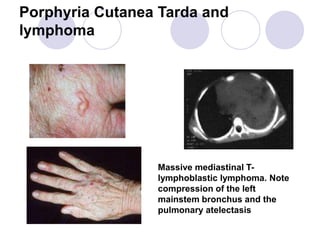
Porphyria Cutanea Tarda and
lymphoma
Massive mediastinal T-
lymphoblastic lymphoma. Note
compression of the left
mainstem bronchus and the
pulmonary atelectasis
Pathologic findings of hepatitis C
 Lymphocytic infiltrates, within the portal
tract or expanding out of the portal tract into
the liver lobule (interface hepatitis),
 Portal and periportal fibrosis may be present
 Other classic histologic features of the
disease include bile duct damage, lymphoid
follicles or aggregates, and macrovesicular
steatosis.
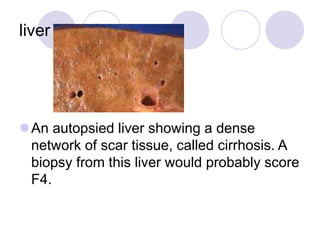
liver biopsies.
An autopsied liver showing a dense
network of scar tissue, called cirrhosis. A
biopsy from this liver would probably score
F4.
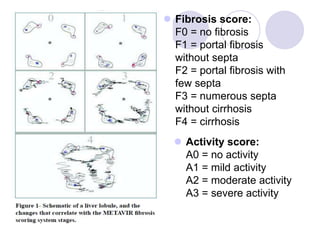
 Fibrosis score:
F0 = no fibrosis
F1 = portal fibrosis
without septa
F2 = portal fibrosis with
few septa
F3 = numerous septa
without cirrhosis
F4 = cirrhosis
 Activity score:
A0 = no activity
A1 = mild activity
A2 = moderate activity
A3 = severe activity
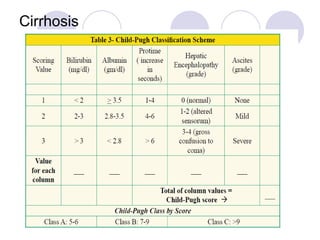
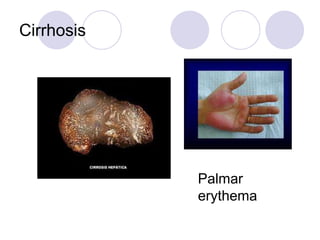
Cirrhosis
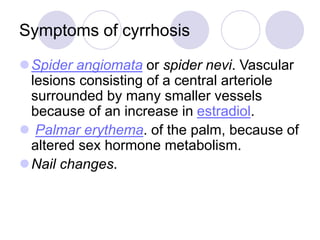
Symptoms of cyrrhosis
Spider angiomata or spider nevi. Vascular
lesions consisting of a central arteriole
surrounded by many smaller vessels
because of an increase in estradiol.
 Palmar erythema. of the palm, because of
altered sex hormone metabolism.
Nail changes.
Cirrhosis
Palmar
erythema
Cirrhosis
 Splenomegaly (increase in size of the spleen).
Caused by congestion of the red pulp as a result
of portal hypertension.
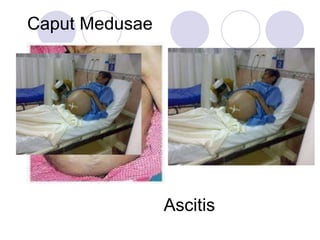
 Ascites. Accumulation of fluid in the peritoneal
cavity giving rise to flank dullness (needs about
1500 mL to detect flank dullness).
 Caput medusa. In portal hypertension, the
umbilical vein may open. Blood from the portal
venous system may be shunted through the
periumbilical veins into the umbilical vein with
manifesting as caput medusa.
Caput Medusae
Ascitis
Cirrhosis
 Hypertrophic osteoarthropathy. Chronic proliferative
periostitis of the long bones that can cause
considerable pain.
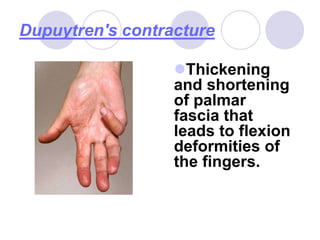
 Dupuytren's contracture. Thickening and shortening
of palmar fascia that leads to flexion deformities of
the fingers.
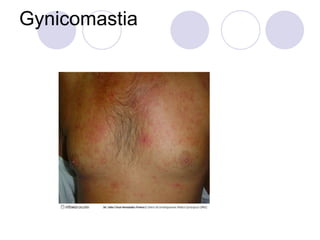
 Gynecomastia.. This is caused by increased
estradiol and can occur in up to 66% of patients.
 Hypogonadism. Manifested as impotence, infertility,
loss of sexual drive, and testicular gonadal injury or
suppression of hypothalamic or pituitary function.
 Liver size. Can be enlarged, normal, or shrunken
Gynicomastia
Dupuytren's contracture
Thickening
and shortening
of palmar
fascia that
leads to flexion
deformities of
the fingers.
Symptoms
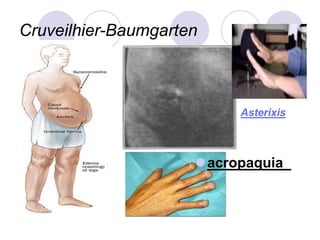
Cruveilhier-Baumgarten murmur. Venous
murmur heard in epigastric region (on
examination by stethoscope) because of
collateral connections between portal
system and the remnant of the umbilical
vein in portal hypertension.
Fetor hepaticus. Musty odor in breath as a
result of increased dimethyl sulfide.
Symptoms
Jaundice. Yellow discoloring of the skin,
eye, and mucus membranes because of
increased bilirubin (at least 2–3 mg/dL or
30 mmol/L). Urine may also appear dark.
Asterixis. Bilateral asynchronous flapping
of outstretched, dorsiflexed hands seen in
patients with hepatic encephalopathy
Cruveilhier-Baumgarten
Asterixis
acropaquia_
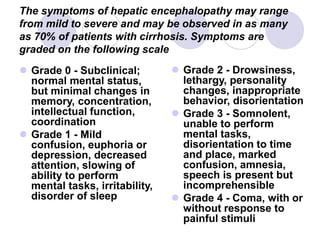
The symptoms of hepatic encephalopathy may range
from mild to severe and may be observed in as many
as 70% of patients with cirrhosis. Symptoms are
graded on the following scale
 Grade 0 - Subclinical;
normal mental status,
but minimal changes in
memory, concentration,
intellectual function,
coordination
 Grade 1 - Mild
confusion, euphoria or
depression, decreased
attention, slowing of
ability to perform
mental tasks, irritability,
disorder of sleep
 Grade 2 - Drowsiness,
lethargy, personality
changes, inappropriate
behavior, disorientation
 Grade 3 - Somnolent,
unable to perform
mental tasks,
disorientation to time
and place, marked
confusion, amnesia,
speech is present but
incomprehensible
 Grade 4 - Coma, with or
without response to
painful stimuli
Diagnosis of hepatitis C using
serologic tests for HCV
 Structural and nonstructural regions of the HCV
These can be recognized by human IgG anti-
HCV.
 Recombinant HCV antigens are used in
enzyme-linked immunosorbent assay (ELISA) to
detect anti-HCV in patients' sera, or
Recombinant immunoblot assays (RIBAs)
 Positive serologic tests require confirmation with
HCV RNA testing.
Goals of HCV therapy
Antiviral therapy has a number of major goals.
- Decrease viral replication or eradicate HCV,
- Prevent progression of disease,
- Decrease the prevalence of cirrhosis,
- Decrease the frequency of HCC as a
complication of cirrhosis,
- Reduce symptoms such as fatigue and joint pain,
- Treat extrahepatic complications of HCV infection
such as cryoglobulinemia or
glomerulonephritis.
Interferon (IFN)
Interferon (IFN) has been the drug of
choice for the treatment of hepatitis C for
two decades. It is often used in
combination with another drug, ribavirin.
Successful interferon-based therapy,
resulting in SVR, can improve the natural
history of chronic hepatitis C and may
reduce the risk of HCC in patients with
HCV
Treatment(24 weeks for genotype 2-3a
and 48weeks for genotype 1b)
IFN-alfa-2b, IFN-alfa-2a dosed at 3 million
U subcutaneously 3 times per week
+ribavirin at 1000-1200 mg/d orally
PEG-IFN-alfa-2b is 1-1.5 mcg/kg/wk
subcutaneously.
PEG-IFN-alfa-2a is dosed at 180 mcg/wk.
Typical ribavirin dosing is in the range of
800-1200 mg/d in 2 divided doses.
Factors predictive of an SVR to treatment
with PEG-IFN in combination with ribavirin
include
 (1) genotype 2 or 3 status,
(2) a baseline HCV RNA level <800,000
IU/mL or <2 million copies/mL,
(3) compliance with treatment,
(4) absence of cirrhosis.
Virological response
 RVR (Rapid virological response)= No virus detected
at week 4
 eRVR(Extended rapid virological response) = No virus
detected at week 4 and week 12
 EVR (Early Virological Response) — 2 log drop of
HCV RNA after 12 weeks.
 cEVR = Complete Early Virological Response — No
virus detected after 12 Weeks.
 SVR12 (Sustained virological response) = No virus
detected at 12 weeks after completion
 of treatment.
 SVR24 = No virus detected at 24 weeks after
completion of treatment
SVR
Sustained virologic response (SVR) is
defined as the absence of detectable HCV
RNA on blood testing 6 months after the
completion of antiviral treatment.
 Most experts now contend that the
achievement of SVR can be equated with
viral eradication or "cure" of HCV infection
Triple Therapy for Chronic Hepatitis C
Virus Infection
Two new drugs to treat hepatitis C,
boceprevir and telaprevir, have recently
been approved by FDA
and promise to improve the chance for a
patient with HCV genotype 1 infection to
be cured.
 Neither boceprevir nor telaprevir can ever
be taken as monotherapy, these drugs
must be administered with peginterferon
and ribavirin.
Triple Therapy for Chronic Hepatitis C
Virus Infection
 Triple therapy (taken for 24 to 48 weeks
depending upon response of HCV RNA to the
treatment regimen) is the combination of:
Peginterferon, plus
Ribavirin, plus
Either Boceprevir (Victrelis) or Telaprevir
(Incivek)
 Adding boceprevir or telaprevir to standard
peginterferon and ribavirin therapy dramatically
improved sustained virologic response.

Chronic_viral_hepatitis.ppt

  • 1.
  • 2.
    Difinition Chronic hepatitis isdefined as inflammatory disease of the liver lasting for more than six months.  The histological differentiation between chronic persistent hepatitis (no cell necrosis) and chronic active hepatitis (cell necrosis) does not correlate with prognosis and is therefore now much less used.
  • 3.
    Symptoms-Nonspecific symptoms, eg: Fatigue, anorexia, muscle pains, arthralgia, weight loss  Right abdomen pain (liver distension)  Abdominal distension (ascites)  Ankle swelling (fluid retention)  Haematemesis and melaena(gastrointesti nal haemorrhage)  Pruritus (cholestasis)  Breast swelling (gynaecomastia), testicular atrophy, loss of libido and amenorrhoea due to endocrine dysfunction  Confusion and drowsiness (encephalopathy)
  • 4.
    Signs Spider naevi (chestand upper body), Palmar erythema Jaundice Splenomegaly (portal hypertension)
  • 5.
    Complications Liver failure Portal hypertension: ascites, hypersplen ism,lower oesophageal and rectal varices Hypoalbuminaemia Coagulopathy Osteoporosis Hepatopulmonary syndrome (defect in arterial oxygenation induced by pulmonary vascular dilatation in patients with liver disease) Hepatorenal syndrome Encephalopathy Cirrhosis Hepatocellular carcinoma
  • 6.
    HBV chronic hepatitis HBV is transmitted by perinatal, percutaneous, and sexual exposure, as well as by close person-to-person contact by open cuts and sores, especially among children in hyperendemic areas.  The risk of developing chronic HBV infection after acute exposure ranges from 90% in newborns of HBeAg- positive mothers to 25% to30% in infants and children under 5 and to less than 5% in adults.  In addition, immunosuppressed persons are more likely to develop chronic HBV infection after acute infection.
  • 7.
    Chronic hepatitis B Anestimated 350 million persons worldwide are chronically infected with HBV  Chronical infection is defined If persons are positive for hepatitis B surface antigen(HBsAg) for more than 6months.
  • 8.
  • 9.
    HBV Genotypes  Eightgenotypes of HBVhave been identified labeled A through H. The prevalence of HBV genotypes varies depending on the geographical location.  A, B, C, D and E-G being 35%,22%, 31%, 10%, and 2%, respectively.
  • 10.
    HBV genotypes  HBVgenotypes may play an important role in the progression of HBV-related liver disease as well as response to interferon therapy.  Genotype B is associated with HBeAg seroconversion at an earlier age, less active hepaticnecroinflammation, a slower rate of progression to cirrhosis,and a lower rate of HCC development compared to genotype C.
  • 11.
    Carriers Carriers of HBVare at increased risk of developing cirrhosis, hepatic decompensation,and hepatocellular carcinoma (HCC). Although most carriers will not develop hepatic complications from chronic hepatitis B, 15% to 40% will develop serious sequelae during their lifetime.
  • 12.
    Glossary of ClinicalTerms Used in HBV Infection  Chronic hepatitis B subdivide into HBeAg positive and HBeAg negative chronic hepatitis B.  Inactive HBsAg carrier state — Persistent HBV infection of the liver without significant, ongoing necroinflammatory disease.  Resolved hepatitis B — Previous HBV infection without further virologic, biochemical or histological evidence of active virus infection or disease.  Acute exacerbation or flare of hepatitis B — Intermittent elevations of ALT activity to more than 10 times the upper limit of normal and more than twice the baseline value.
  • 13.
    Glossary of ClinicalTerms Used in HBV Infection  Reactivation of hepatitis B — Reappearance of active necroinflammatory  Carrier state or resolved hepatitis B.  HBeAg clearance — Loss of HBeAg in a person who was previously HBeAg  positive.  HBeAg seroconversion — Loss of HBeAg and detection of anti-HBe in a person who was previously HBeAg positive and anti-HBe negative.  HBeAg reversion — Reappearance of HBeAg in a person who was previously HBeAg negative, anti- HBe positive.
  • 14.
    Chronic hepatitis B The 10-30% of HBsAg carriers who develop chronic hepatitis may be symptomatic or asymptomatic(HBsAg carriers).  Fatigue is the most common symptom of chronic HBV infection.  Patients may occasionally experience an acute flare of their disease, with symptoms and signs similar to those of acute hepatitis.).
  • 15.
    Extrahepatic manifestations Patients alsomay have extrahepatic manifestations of their disease, including polyarteritis nodosa cryoglobulinemia, and glomerulonephritis.
  • 16.
    Extrahepatic symptoms Weight loss Livedo reticularis Testicular pain/tenderness Myalgiaor leg weakness/tenderness Mononeuropathy or polyneuropathy Diastolic blood pressure greater than 90 mm/Hg Elevated BUN and creatinine levels Abnormality on arteriography Nonspecific, firm, tender subcutaneous nodules- first sign of polyarteritis nodosa
  • 17.
    Cryoglobulinemia  Cryoglobulins aresingle or mixed immunoglobulins that develop reversible precipitation at low temperatures.  Cryoglobulinemia is characterized by the presence of cryoglobulins in the serum.  This may result in a clinical syndrome of systemic inflammation (most commonly affecting the kidneys and skin) caused by cryoglobulin- containing immune complexes.  . Rash on lower extremities typical of cutaneous small- vessel vasculitis due to cryoglobulinemia secondary to Viral hepatitis infection
  • 18.
    Glomerulonephritis Immunofluorescent stained section. Subendothelial immunedeposits (IgG(original magnification X 400). John A. Minielly, MD. Membranoproliferative glomerulonephritis (MPGN) type I.
  • 19.
    Morphology  Chronic hepatitisB patients have abnormal liver chemistry results, blood test evidence for active HBV replication, and inflammatory or fibrotic activity on liver biopsy specimens
  • 20.
    Serological types ofHBV Patients with chronic hepatitis may be considered either HBeAg-positive or HBeAg-negative Ultimately, approximately 20% of HBsAg carriers (approximately 1% of all adult patients infected acutely with HBV) go on to develop cirrhosis or HCC
  • 21.
    Serology  Patients withHBeAg-negative chronic hepatitis acquired a mutation in either the precore or the core promoter region of the viral genome.  In such patients with a precore mutant state, HBV continues to replicate but HBeAg is not produced. The majority of patients with HBeAg-negative chronic hepatitis B have a serum HBV DNA greater than 2000 IU/mL.
  • 22.
    HBV and HCC Worldwide,up to 1 million cases of HCC are diagnosed each year. Most appear to be related to HBV infection. In HBV-induced cirrhosis, as in cirrhosis due to other etiologies, hepatic inflammation and appear to stimulate mutational events and carcinogenesis.
  • 23.
    HBV and HCC Hepaticcarcinoma, primary. Large multifocal hepatocellular carcinoma (HCC) in an 80-year-old man without cirrhosis.
  • 24.
    Diagnostic criteria Chronichepatitis B 1. HBsAg-positive 6 months 2. Serum HBV DNA 20,000 IU/mL (105copies/mL), lower values 2,000-20,000 IU/mL (104-105 copies/mL) are often seen in HBeAg-negative chronic hepatitis B 3. Persistent or intermittent elevation in ALT/AST levels 4. Liver biopsy showing chronic hepatitis with moderate or severe necroinflammation
  • 25.
    Inactive HBsAg carrierstate 1. HBsAg-positive 6 months 2. HBeAg–, anti-HBe 3. Serum HBV DNA 2,000 IU/mL 4. Persistently normal ALT/AST levels 5. Liver biopsy confirms absence of significant hepatitis
  • 26.
    Resolved hepatitis B 1. Previous known history of acute or chronic hepatitis B or the presence  of anti-HBc anti-HBs  2. HBsAg  3. Undetectable serum HBV DNA*  4. Normal ALT levels  *Very low levels may be detectable using sensitive PCR
  • 27.
    Test CHB HBeAg Positive CHBHBeAg Negative Inactive Carrier HBsAg + + + anti-HBs - - - HBeAg + - - anti-HBe - + + anti-HBc + + + IgM anti- HBc - - - HBV DNA >2 x 10⁴ IU/mL (>105 copies/mL) >2 x 10³ IU/mL (>104 copies/mL) <2 x 10³ IU/mL (<104 copies/mL) ALT level Elevated Elevated Normal ALT = alanine aminotransferase. Increasingly, experts in the field have used the nomenclature of IU/mL, as opposed to copies/mL Diagnostic tests for HBV.
  • 28.
    Pathologic findings ofHBV infection  Patients with chronic hepatitis B may have a number of classic histologic abnormalities.  Inflammatory infiltrates composed of mononuclear cells  Periportal fibrosis or bridging necrosis (between portal tracts) may be present as sign of increased risk for progression to cirrhosis Liver biopsy specimen showing ground- glass appearance of hepatocytes in a patient with hepatitis B. Liver biopsy with hematoxylin stain showing stage 4 fibrosis (ie, cirrhosis) in a patient with hepatitis B.
  • 29.
    Treatment of chronichepatitis B  The main ideal goal of the treatment of patients with chronic hepatitis B would routinely achieve the loss of HBsAg.  Indeed, the loss of HBsAg is associated with a decreased incidence of HCC and a decreased incidence of liver-related death in patients with HBV-induced cirrhosis.  However, loss of HBsAg is only achieved infrequently in patients with chronic hepatitis B: in 3-7% of patients undergoing treatment with pegylated interferon (PEG- IFN) and in 0-5% of patients undergoing treatment with oral nucleoside or nucleotide agents.
  • 30.
    Key goal ofantiviral treatment of HBV  At this time, the key goal of antiviral treatment of HBV is the inhibition of viral replication.  This is marked by the loss of HBeAg (in patients with HBeAg-positive chronic hepatitis B) and by the suppression of HBV DNA levels.  Secondary aims are prevent or delay the progression of chronic hepatitis to cirrhosis or HCC.
  • 31.
    Treatment The agents currentlyin use for the treatment of hepatitis B include: PEG-IFN-alfa 2a and the oral nucleoside or nucleotide analogues. Typically, PEG-IFN treatment is continued for 48 weeks for both HBeAg-positive and HBeAg-negative chronic hepatitis.
  • 32.
    Oral nucleoside/nucleotide analogue Theoral agents may be used for as little as 1-2 years. However, the majority of HBeAg-positive chronic hepatitis patients and almost all HBeAg-negative chronic hepatitis patients require indefinite prolong therapy with the oral agents. Withdrawal of oral nucleoside/nucleotide analogue therapy in these individuals usually results in virologic relapse.
  • 33.
    Treatment of HBVby nucleoside analogue Lamivudine for chronic hepatitis B Lamivudine (Epivir; GlaxoSmithKline) is the negative enantiomer of 2'3'-dideoxy-3'- thiacytidine. This synthetic nucleoside analogue inhibits DNA polymerase–associated reverse transcriptase and can suppress HBV replication., Dosing-lamivudine 100 mg/d orally for 1 year
  • 34.
    Adefovir dipivoxil forchronic hepatitis B Adefovir dipivoxil (HepSera; Gilead Sciences, Inc, Foster City, CA) is a synthetic nucleotide analogue. This agent inhibits HBV DNA polymerase and causes DNA chain termination after its incorporation into viral DNA. Dosing-Adefovir dipivoxil 10 mg orally once per day for 48 weeks
  • 35.
    Entecavir for chronichepatitis B  Entecavir (Baraclude; Bristol-Myers Squibb Company, New York, NY) is a deoxyguanine nucleoside analogue. It inhibits priming of HBV DNA polymerase with a resulting decrease in HBV replication.  It is dosed at 0.5 mg orally once per day in patients with HBeAg-positive and HBeAg- negative chronic hepatitis B.
  • 36.
    Telbivudine for chronichepatitis B Telbivudine (Tyzeka; Novartis Pharmaceuticals Corp, East Hanover, NJ,Sebivo) Telbivudine is a synthetic thymidine nucleoside analogue with activity against HBV DNA polymerase. It is dosed at 600, (mg/d) by 52 weeks
  • 37.
    Tenofovir disoproxil fumaratefor chronic hepatitis B Tenofovir disoproxil fumarate (Viread; Gilead Sciences, Inc., Foster City, Calif) received FDA approval for the treatment of hepatitis B in 2008. It is dosed at 300 mg once daily for 48 weeks.
  • 38.
    Cronic Hepatitis C HCV is a flavivirus. It is a 9.4-kb RNA virus with a diameter of 55 nm.  It has one serotype and multiple genotypes.  HCVs have profound genetic variability throughout the world.  At least 6 major genotypes and more than 90 subtypes are described.
  • 39.
    Genotypes Genotype 1b isthe genotype most commonly seen in the United States, in Europe, in Japan, and in Taiwan. Genotypes 1b and 1a (also common in the US) are less responsive to interferon therapy than other HCV genotypes.
  • 40.
    Genotypes 2 and3 Individuals with genotypes 2 and 3 are almost three times more likely than individuals with genotype 1 to respond to therapy with alpha interferon or the combination of alpha interferon and ribavirin. 
  • 41.
    Epidemiology of hepatitisC Hepatitis C is prevalent in 0.5-2% of populations in nations around the world An estimated 20% of patients with chronic hepatitis C experience progression to cirrhosis. This process may take 10-40 years
  • 42.
    Extrahepatic manifestations of hepatitisC  Patients with chronic hepatitis C are at risk for extrahepatic complications.  Mixed cryoglobulinemia. Complications of cryoglobulinemia include rash, vasculitis, and glomerulonephritis.  Lymphocytic sialadenitis,  Autoimmune thyroiditis,  Prphyria cutanea tarda,  Mooren corneal ulcer.  Non-Hodgkin lymphoma
  • 43.
    Porphyria Cutanea Tardaand lymphoma Massive mediastinal T- lymphoblastic lymphoma. Note compression of the left mainstem bronchus and the pulmonary atelectasis
  • 44.
    Pathologic findings ofhepatitis C  Lymphocytic infiltrates, within the portal tract or expanding out of the portal tract into the liver lobule (interface hepatitis),  Portal and periportal fibrosis may be present  Other classic histologic features of the disease include bile duct damage, lymphoid follicles or aggregates, and macrovesicular steatosis.
  • 45.
    liver biopsies. An autopsiedliver showing a dense network of scar tissue, called cirrhosis. A biopsy from this liver would probably score F4.
  • 46.
     Fibrosis score: F0= no fibrosis F1 = portal fibrosis without septa F2 = portal fibrosis with few septa F3 = numerous septa without cirrhosis F4 = cirrhosis  Activity score: A0 = no activity A1 = mild activity A2 = moderate activity A3 = severe activity
  • 47.
  • 48.
    Symptoms of cyrrhosis Spiderangiomata or spider nevi. Vascular lesions consisting of a central arteriole surrounded by many smaller vessels because of an increase in estradiol.  Palmar erythema. of the palm, because of altered sex hormone metabolism. Nail changes.
  • 49.
  • 50.
    Cirrhosis  Splenomegaly (increasein size of the spleen). Caused by congestion of the red pulp as a result of portal hypertension.  Ascites. Accumulation of fluid in the peritoneal cavity giving rise to flank dullness (needs about 1500 mL to detect flank dullness).  Caput medusa. In portal hypertension, the umbilical vein may open. Blood from the portal venous system may be shunted through the periumbilical veins into the umbilical vein with manifesting as caput medusa.
  • 51.
  • 52.
    Cirrhosis  Hypertrophic osteoarthropathy.Chronic proliferative periostitis of the long bones that can cause considerable pain.  Dupuytren's contracture. Thickening and shortening of palmar fascia that leads to flexion deformities of the fingers.  Gynecomastia.. This is caused by increased estradiol and can occur in up to 66% of patients.  Hypogonadism. Manifested as impotence, infertility, loss of sexual drive, and testicular gonadal injury or suppression of hypothalamic or pituitary function.  Liver size. Can be enlarged, normal, or shrunken
  • 53.
  • 54.
    Dupuytren's contracture Thickening and shortening ofpalmar fascia that leads to flexion deformities of the fingers.
  • 55.
    Symptoms Cruveilhier-Baumgarten murmur. Venous murmurheard in epigastric region (on examination by stethoscope) because of collateral connections between portal system and the remnant of the umbilical vein in portal hypertension. Fetor hepaticus. Musty odor in breath as a result of increased dimethyl sulfide.
  • 56.
    Symptoms Jaundice. Yellow discoloringof the skin, eye, and mucus membranes because of increased bilirubin (at least 2–3 mg/dL or 30 mmol/L). Urine may also appear dark. Asterixis. Bilateral asynchronous flapping of outstretched, dorsiflexed hands seen in patients with hepatic encephalopathy
  • 57.
  • 58.
    The symptoms ofhepatic encephalopathy may range from mild to severe and may be observed in as many as 70% of patients with cirrhosis. Symptoms are graded on the following scale  Grade 0 - Subclinical; normal mental status, but minimal changes in memory, concentration, intellectual function, coordination  Grade 1 - Mild confusion, euphoria or depression, decreased attention, slowing of ability to perform mental tasks, irritability, disorder of sleep  Grade 2 - Drowsiness, lethargy, personality changes, inappropriate behavior, disorientation  Grade 3 - Somnolent, unable to perform mental tasks, disorientation to time and place, marked confusion, amnesia, speech is present but incomprehensible  Grade 4 - Coma, with or without response to painful stimuli
  • 59.
    Diagnosis of hepatitisC using serologic tests for HCV  Structural and nonstructural regions of the HCV These can be recognized by human IgG anti- HCV.  Recombinant HCV antigens are used in enzyme-linked immunosorbent assay (ELISA) to detect anti-HCV in patients' sera, or Recombinant immunoblot assays (RIBAs)  Positive serologic tests require confirmation with HCV RNA testing.
  • 60.
    Goals of HCVtherapy Antiviral therapy has a number of major goals. - Decrease viral replication or eradicate HCV, - Prevent progression of disease, - Decrease the prevalence of cirrhosis, - Decrease the frequency of HCC as a complication of cirrhosis, - Reduce symptoms such as fatigue and joint pain, - Treat extrahepatic complications of HCV infection such as cryoglobulinemia or glomerulonephritis.
  • 61.
    Interferon (IFN) Interferon (IFN)has been the drug of choice for the treatment of hepatitis C for two decades. It is often used in combination with another drug, ribavirin. Successful interferon-based therapy, resulting in SVR, can improve the natural history of chronic hepatitis C and may reduce the risk of HCC in patients with HCV
  • 62.
    Treatment(24 weeks forgenotype 2-3a and 48weeks for genotype 1b) IFN-alfa-2b, IFN-alfa-2a dosed at 3 million U subcutaneously 3 times per week +ribavirin at 1000-1200 mg/d orally PEG-IFN-alfa-2b is 1-1.5 mcg/kg/wk subcutaneously. PEG-IFN-alfa-2a is dosed at 180 mcg/wk. Typical ribavirin dosing is in the range of 800-1200 mg/d in 2 divided doses.
  • 63.
    Factors predictive ofan SVR to treatment with PEG-IFN in combination with ribavirin include  (1) genotype 2 or 3 status, (2) a baseline HCV RNA level <800,000 IU/mL or <2 million copies/mL, (3) compliance with treatment, (4) absence of cirrhosis.
  • 64.
    Virological response  RVR(Rapid virological response)= No virus detected at week 4  eRVR(Extended rapid virological response) = No virus detected at week 4 and week 12  EVR (Early Virological Response) — 2 log drop of HCV RNA after 12 weeks.  cEVR = Complete Early Virological Response — No virus detected after 12 Weeks.  SVR12 (Sustained virological response) = No virus detected at 12 weeks after completion  of treatment.  SVR24 = No virus detected at 24 weeks after completion of treatment
  • 65.
    SVR Sustained virologic response(SVR) is defined as the absence of detectable HCV RNA on blood testing 6 months after the completion of antiviral treatment.  Most experts now contend that the achievement of SVR can be equated with viral eradication or "cure" of HCV infection
  • 66.
    Triple Therapy forChronic Hepatitis C Virus Infection Two new drugs to treat hepatitis C, boceprevir and telaprevir, have recently been approved by FDA and promise to improve the chance for a patient with HCV genotype 1 infection to be cured.  Neither boceprevir nor telaprevir can ever be taken as monotherapy, these drugs must be administered with peginterferon and ribavirin.
  • 67.
    Triple Therapy forChronic Hepatitis C Virus Infection  Triple therapy (taken for 24 to 48 weeks depending upon response of HCV RNA to the treatment regimen) is the combination of: Peginterferon, plus Ribavirin, plus Either Boceprevir (Victrelis) or Telaprevir (Incivek)  Adding boceprevir or telaprevir to standard peginterferon and ribavirin therapy dramatically improved sustained virologic response.