Chronic Hepatitis
Author: dr. Jerrell
VOSmed Medical Course
Jakarta – Bandung – Semarang – Jogjakarta - Surabaya
Introduction
• Chronic hepatitis represent a series of liver disorders of varying
cause which hepatic inflamation and necrosis continue 6 months
• Terms :
1) Chronic lobular/persistent hepatitis
2) Chronic active hepatitis
• Classification is based on cause, grade, stages
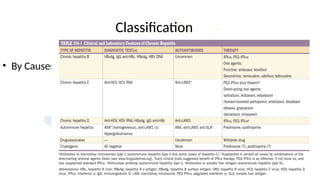
Classification
• By Causes
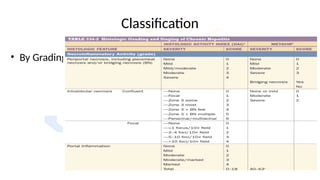
Classification
• By Grading
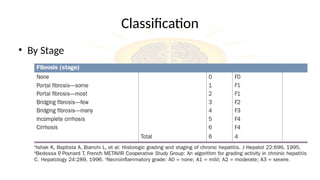
Classification
• By Stage
Chronic hepatitis B
• Both the enterically transmitted forms of viral hepatitis, hepatitis
A and E, are self-limited and do not cause chronic hepatitis
• Chronic HBV infection can occur in the presence or absence of
serum hepatitis B e antigen (HBeAg), and generally, for both
HBeAg-reactive and HBeAg-negative chronic hepatitis B, the
level of HBV DNA correlates with the level of liver injury and risk
of progression.
Chronic hepatitis B (Clinical manifestation)
• Spectrum of clinical features of chronic hepatitis B is broad,
ranging from asymptomatic infection to debilitating disease or
even end-stage, fatal hepatic failure
• Fatigue is a common symptom, and persistent or intermittent
jaundice is a common feature in severe or advanced
cases. Intermittent deepening of jaundice, recurrence of
malaise, anorexia, as well as worsening fatigue
Chronic hepatitis B ( Laboratory findings)
• Laboratory features of chronic hepatitis B do not distinguish
adequately between histologically mild and severe hepatitis
• ALT > AST but after cirrhosis, AST overcome ALT
• Hypoalbuminemia and prolongation of the prothrombin time
occur in severe or end-stage cases
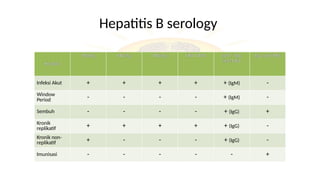
Hepatitis B serology
Kondisi
HBsAg HBcAg HBeAg HBV DNA IgM / IgG
anti-HBc
IgG anti-HBs
Infeksi Akut + + + + + (IgM) -
Window
Period - - - - + (IgM) -
Sembuh - - - - + (IgG) +
Kronik
replikatif + + + + + (IgG) -
Kronik non-
replikatif + - - - + (IgG) -
Imunisasi - - - - - +
Treatment
• Seven drugs have been approved for treatment of chronic hepatitis
B:
1. injectable interferon (IFN) α and pegylated interferon (long-
acting IFN bound to polyethylene glycol, PEG [PEG IFN]) and
2. The oral agents lamivudine, adefovir dipivoxil, entecavir,
telbivudine, and tenofovir disoproxil fumarate (TDF).
• Management of chronic hepatitis B is directed at suppressing the
level of virus replication
Treatment
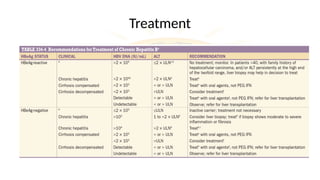
• No treatment is recommended or available for inactive
“nonreplicative” hepatitis B carriers :
1. undetectable HBeAg
2. Normal ALT
3. HBV DNA ≤103 IU/mL documented serially over time)
• Recommend treatment in HBeAg-positive patients for HBV DNA
levels >2 × 10³ IU/mL and ALT above the upper limit of normal
Treatment
Treatment
• One of the potent oral drugs with a high barrier to resistance
(entecavir or tenofovir) or PEG IFN can be used as first-line
therapy
• For children aged 2 to <18 with HBeAg-reactive hepatitis B (most
children will be HBeAg-reactive; no studies have been done in
children with HBeAg-negative chronic hepatitis B), treatment is
recommended if HBV DNA is detectable and ALT levels are
elevated, but not if ALT levels are normal
Hepatitis D(Delta)
• Chronic hepatitis D virus (HDV) may follow acute co-infection with
HBV
• Although HDV co-infection can increase the severity of acute
hepatitis B, HDV does not increase the likelihood of progression to
chronic hepatitis B.
• chronic hepatitis B plus D has similar clinical and laboratory
features to those seen in chronic hepatitis B alone.
• The clinical manifestation include Right upper quadrant
discomfort, nausea, vomiting, and in rare case jaundice.
• Diagnosis : HDV RNA detection
• Treatment : long-term IFN for at least a year and, in
responders, extension of therapy until HDV RNA and HBsAg
clearance
Hepatitis D(Delta)- Clinical manifestation
References
• Harrison’s Internal Medicine 20th Edition – Chronic hepatitis

Chronic hepatitis chronic hepatitis learn

  • 1.
    Chronic Hepatitis Author: dr.Jerrell VOSmed Medical Course Jakarta – Bandung – Semarang – Jogjakarta - Surabaya
  • 2.
    Introduction • Chronic hepatitisrepresent a series of liver disorders of varying cause which hepatic inflamation and necrosis continue 6 months • Terms : 1) Chronic lobular/persistent hepatitis 2) Chronic active hepatitis • Classification is based on cause, grade, stages
  • 3.
  • 4.
  • 5.
  • 6.
    Chronic hepatitis B •Both the enterically transmitted forms of viral hepatitis, hepatitis A and E, are self-limited and do not cause chronic hepatitis • Chronic HBV infection can occur in the presence or absence of serum hepatitis B e antigen (HBeAg), and generally, for both HBeAg-reactive and HBeAg-negative chronic hepatitis B, the level of HBV DNA correlates with the level of liver injury and risk of progression.
  • 7.
    Chronic hepatitis B(Clinical manifestation) • Spectrum of clinical features of chronic hepatitis B is broad, ranging from asymptomatic infection to debilitating disease or even end-stage, fatal hepatic failure • Fatigue is a common symptom, and persistent or intermittent jaundice is a common feature in severe or advanced cases. Intermittent deepening of jaundice, recurrence of malaise, anorexia, as well as worsening fatigue
  • 8.
    Chronic hepatitis B( Laboratory findings) • Laboratory features of chronic hepatitis B do not distinguish adequately between histologically mild and severe hepatitis • ALT > AST but after cirrhosis, AST overcome ALT • Hypoalbuminemia and prolongation of the prothrombin time occur in severe or end-stage cases
  • 9.
    Hepatitis B serology Kondisi HBsAgHBcAg HBeAg HBV DNA IgM / IgG anti-HBc IgG anti-HBs Infeksi Akut + + + + + (IgM) - Window Period - - - - + (IgM) - Sembuh - - - - + (IgG) + Kronik replikatif + + + + + (IgG) - Kronik non- replikatif + - - - + (IgG) - Imunisasi - - - - - +
  • 10.
    Treatment • Seven drugshave been approved for treatment of chronic hepatitis B: 1. injectable interferon (IFN) α and pegylated interferon (long- acting IFN bound to polyethylene glycol, PEG [PEG IFN]) and 2. The oral agents lamivudine, adefovir dipivoxil, entecavir, telbivudine, and tenofovir disoproxil fumarate (TDF). • Management of chronic hepatitis B is directed at suppressing the level of virus replication
  • 11.
    Treatment • No treatmentis recommended or available for inactive “nonreplicative” hepatitis B carriers : 1. undetectable HBeAg 2. Normal ALT 3. HBV DNA ≤103 IU/mL documented serially over time) • Recommend treatment in HBeAg-positive patients for HBV DNA levels >2 × 10³ IU/mL and ALT above the upper limit of normal
  • 12.
  • 13.
    Treatment • One ofthe potent oral drugs with a high barrier to resistance (entecavir or tenofovir) or PEG IFN can be used as first-line therapy • For children aged 2 to <18 with HBeAg-reactive hepatitis B (most children will be HBeAg-reactive; no studies have been done in children with HBeAg-negative chronic hepatitis B), treatment is recommended if HBV DNA is detectable and ALT levels are elevated, but not if ALT levels are normal
  • 14.
    Hepatitis D(Delta) • Chronichepatitis D virus (HDV) may follow acute co-infection with HBV • Although HDV co-infection can increase the severity of acute hepatitis B, HDV does not increase the likelihood of progression to chronic hepatitis B. • chronic hepatitis B plus D has similar clinical and laboratory features to those seen in chronic hepatitis B alone.
  • 15.
    • The clinicalmanifestation include Right upper quadrant discomfort, nausea, vomiting, and in rare case jaundice. • Diagnosis : HDV RNA detection • Treatment : long-term IFN for at least a year and, in responders, extension of therapy until HDV RNA and HBsAg clearance Hepatitis D(Delta)- Clinical manifestation
  • 16.
    References • Harrison’s InternalMedicine 20th Edition – Chronic hepatitis