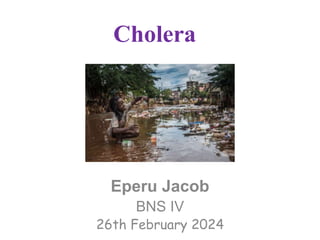
Cholera
Eperu Jacob
BNS IV
26th February 2024
Learning objectives
• By the end of this session, the learner
should be able to:
– Define cholera and state its causative agent
– Discuss the epidemiology of cholera
– Describe the pathophysiology and clinical
manifestations of cholera
– Describe the management of cholera
– Describe the complications of cholera
– Describe the prevention of cholera
Cholera
• Definition
– Cholera is an acute diarrheal infection caused by
ingestion of food or water contaminated with the
bacterium vibrio cholerae.
– Vibrio cholerae is a comma shaped gram
negative aerobic or facultatatively anaerobic
bacillus.
– Its antigenic structure consists of a flagella H
antigen and somatic O antigen .
– Differentiation of pathogenic strains is dependent
on the O antigen.
Strands
• be classified into different serogroups
based on the structure of their O antigens
– Vibrio cholerae O1.
• This serogroup is further divided into two biotypes:
classical and El Tor. Each biotype can be further
classified into two serotypes based on the
structure of the O antigen: Inaba and Ogawa. The
classical biotype was responsible for earlier
pandemics, while the El Tor biotype is associated
with more recent outbreaks.
– Vibrio cholerae O139:
• This serogroup, also known as Bengal cholera,
emerged in the Indian subcontinent in the 1990s
as a result of genetic recombination between V.
cholerae O1 strains and other Vibrio species.
• It is characterized by its ability to cause cholera-
like illness despite lacking the classical O1
serogroup antigens.
Vibrio cholerae
Epidemiology
• A global estimate of 1.3 to 4 million people
get cholera each year and 21,000 to
143,000 people die from it. (WHO, 2023)
• People who get infected my may range
from no symptoms to severe states
Pathophysiology
• Transmitted by fecal oral route
• V. cholerae bacteria reach the small
intestine, where they colonize and adhere
to the mucosal surface, initiating infection
• V. cholerae produces several virulence
factors, with cholera toxin being the most
notable.
• Cholera toxin is an AB toxin consisting of
two subunits:
– The A subunit (active enzymatic component)
and the B subunit (binding component).
– The B subunit facilitates the entry of the toxin
into intestinal epithelial cells by binding to
specific receptors, such as GM1 ganglioside
receptors.
• Once inside the intestinal epithelial cells,
the A subunit of cholera toxin modifies a
regulatory G protein (Gs) by ADP-
ribosylation.
• This modification locks the Gs protein in its
active state, leading to continuous
activation of adenylyl cyclase.
• Adenylyl cyclase catalyzes the conversion
of ATP to cyclic AMP (cAMP), resulting in
elevated intracellular cAMP levels.
• Increased cAMP levels activate protein
kinase A (PKA), which phosphorylates and
activates the cystic fibrosis
transmembrane conductance regulator
(CFTR) channel.
• Activated CFTR channels facilitate the
secretion of chloride ions (Cl-) into the
intestinal lumen.
• Additionally, PKA inhibits sodium absorption
channels, reducing sodium reabsorption.
• The net effect is an efflux of chloride ions
and water into the intestinal lumen, leading
to watery diarrhea characteristic of
cholera.
Clinical manifestations
• The hallmark symptom of cholera is profuse,
watery diarrhea often described as "rice-
water stool."
• Signs of dehydration and electrolyte
imbalances, including hyponatremia,
hypokalemia, and metabolic acidosis.
• Dehydration manifests with symptoms such
as thirst, dry mucous membranes, sunken
eyes, decreased urine output, tachycardia,
and hypotension.
• In severe cases, dehydration can progress to
hypovolemic shock and death if untreated
Diagnosis
• History taking
• Physical examination
• Isolation and identification of v. cholerae in
stool cultures.
Management
• This can be categorized into two:
– Medical management
– Nursing management
• The goal of management is to replace the
lost fluids and get rid of the
microorganism.
Nursing management:
• Nursing concerns:
– Dehydration
– Loss of appetite
– Lethargy
Nursing diagnoses
• Imbalanced nutrition less than body
requirement related to loss of food
components in diarrhea evidenced by loss
of weight.
• Deficient fluid volume related to fluid loss
in watery diarrhea evidenced by sunken
eyes.
Nursing interventions
• Assessment of frequency and volume of
diarrhea
• Rehydration therapy
• Electrolyte replacement
• Infection control by isolation
• Nutritional support- small frequent meals
• Patient education
• Psychological support
Complications of cholera
• Hypovolemic shock
• Renal failure
• Cardiac arrhythmias
• Respiratory failure- due to metabolic
acidosis
• Secondary infections
• Neurologic complications as seizures
Prevention
• Improved water and sanitation
infrastructure
• Promotion of hygiene- hand washing
• Surveillance and early detection
• Vaccination- oral cholera vaccines
• Health education of communities
• Response and preparedness
References
• Herrington, DA , Hall, RH , Losonsky, G , Mekalanos,
JJ , Taylor, RK , and Levine, MM . Toxin, toxin-
coregulated pili, and the toxR regulon are essential for
Vibrio cholerae pathogenesis in humans. J Exp Med.
(1988) 168:1487–92. doi: 10.1084/jem.168.4.1487
• Kirn, TJ , Lafferty, MJ , Sandoe, CMP , and Taylor, RK
. Delineation of pilin domains required for bacterial
association into microcolonies and intestinal
colonization by Vibrio cholerae. Mol Microbiol. (2000)
35:896–910. doi: 10.1046/j.1365-2958.2000.01764.x
THANK YOU

Cholera.pptx thankyousomuchoooooooooooooo

  • 1.
  • 2.
    Learning objectives • Bythe end of this session, the learner should be able to: – Define cholera and state its causative agent – Discuss the epidemiology of cholera – Describe the pathophysiology and clinical manifestations of cholera – Describe the management of cholera – Describe the complications of cholera – Describe the prevention of cholera
  • 3.
    Cholera • Definition – Cholerais an acute diarrheal infection caused by ingestion of food or water contaminated with the bacterium vibrio cholerae. – Vibrio cholerae is a comma shaped gram negative aerobic or facultatatively anaerobic bacillus. – Its antigenic structure consists of a flagella H antigen and somatic O antigen . – Differentiation of pathogenic strains is dependent on the O antigen.
  • 4.
    Strands • be classifiedinto different serogroups based on the structure of their O antigens – Vibrio cholerae O1. • This serogroup is further divided into two biotypes: classical and El Tor. Each biotype can be further classified into two serotypes based on the structure of the O antigen: Inaba and Ogawa. The classical biotype was responsible for earlier pandemics, while the El Tor biotype is associated with more recent outbreaks.
  • 5.
    – Vibrio choleraeO139: • This serogroup, also known as Bengal cholera, emerged in the Indian subcontinent in the 1990s as a result of genetic recombination between V. cholerae O1 strains and other Vibrio species. • It is characterized by its ability to cause cholera- like illness despite lacking the classical O1 serogroup antigens.
  • 6.
  • 7.
    Epidemiology • A globalestimate of 1.3 to 4 million people get cholera each year and 21,000 to 143,000 people die from it. (WHO, 2023) • People who get infected my may range from no symptoms to severe states
  • 10.
    Pathophysiology • Transmitted byfecal oral route • V. cholerae bacteria reach the small intestine, where they colonize and adhere to the mucosal surface, initiating infection • V. cholerae produces several virulence factors, with cholera toxin being the most notable.
  • 11.
    • Cholera toxinis an AB toxin consisting of two subunits: – The A subunit (active enzymatic component) and the B subunit (binding component). – The B subunit facilitates the entry of the toxin into intestinal epithelial cells by binding to specific receptors, such as GM1 ganglioside receptors.
  • 12.
    • Once insidethe intestinal epithelial cells, the A subunit of cholera toxin modifies a regulatory G protein (Gs) by ADP- ribosylation. • This modification locks the Gs protein in its active state, leading to continuous activation of adenylyl cyclase. • Adenylyl cyclase catalyzes the conversion of ATP to cyclic AMP (cAMP), resulting in elevated intracellular cAMP levels.
  • 13.
    • Increased cAMPlevels activate protein kinase A (PKA), which phosphorylates and activates the cystic fibrosis transmembrane conductance regulator (CFTR) channel. • Activated CFTR channels facilitate the secretion of chloride ions (Cl-) into the intestinal lumen. • Additionally, PKA inhibits sodium absorption channels, reducing sodium reabsorption.
  • 14.
    • The neteffect is an efflux of chloride ions and water into the intestinal lumen, leading to watery diarrhea characteristic of cholera.
  • 16.
    Clinical manifestations • Thehallmark symptom of cholera is profuse, watery diarrhea often described as "rice- water stool." • Signs of dehydration and electrolyte imbalances, including hyponatremia, hypokalemia, and metabolic acidosis. • Dehydration manifests with symptoms such as thirst, dry mucous membranes, sunken eyes, decreased urine output, tachycardia, and hypotension. • In severe cases, dehydration can progress to hypovolemic shock and death if untreated
  • 17.
    Diagnosis • History taking •Physical examination • Isolation and identification of v. cholerae in stool cultures.
  • 18.
    Management • This canbe categorized into two: – Medical management – Nursing management • The goal of management is to replace the lost fluids and get rid of the microorganism.
  • 20.
    Nursing management: • Nursingconcerns: – Dehydration – Loss of appetite – Lethargy
  • 21.
    Nursing diagnoses • Imbalancednutrition less than body requirement related to loss of food components in diarrhea evidenced by loss of weight. • Deficient fluid volume related to fluid loss in watery diarrhea evidenced by sunken eyes.
  • 22.
    Nursing interventions • Assessmentof frequency and volume of diarrhea • Rehydration therapy • Electrolyte replacement • Infection control by isolation • Nutritional support- small frequent meals • Patient education • Psychological support
  • 23.
    Complications of cholera •Hypovolemic shock • Renal failure • Cardiac arrhythmias • Respiratory failure- due to metabolic acidosis • Secondary infections • Neurologic complications as seizures
  • 24.
    Prevention • Improved waterand sanitation infrastructure • Promotion of hygiene- hand washing • Surveillance and early detection • Vaccination- oral cholera vaccines • Health education of communities • Response and preparedness
  • 25.
    References • Herrington, DA, Hall, RH , Losonsky, G , Mekalanos, JJ , Taylor, RK , and Levine, MM . Toxin, toxin- coregulated pili, and the toxR regulon are essential for Vibrio cholerae pathogenesis in humans. J Exp Med. (1988) 168:1487–92. doi: 10.1084/jem.168.4.1487 • Kirn, TJ , Lafferty, MJ , Sandoe, CMP , and Taylor, RK . Delineation of pilin domains required for bacterial association into microcolonies and intestinal colonization by Vibrio cholerae. Mol Microbiol. (2000) 35:896–910. doi: 10.1046/j.1365-2958.2000.01764.x
  • 26.

Editor's Notes

  • #13 ADP-ribosylation involves the transfer of ADP ribose group from the NAD+ (nicotinamide adenine dinucleotide) onto a specific amino acid residue cysteine 351of the Gs protein.