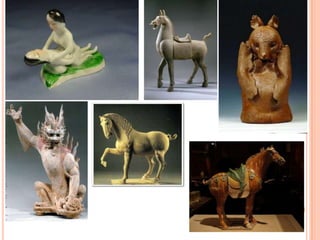
After the invention of pottery in the Neolithic
period, (5000-2200 B.C.), the ancient Chinese
succeeded in producing painted pottery, black
pottery and carved pottery. The long years of
experience in kiln firing led China entering
into a new ceramic age in the Han dynasty
(206 B.C.-220 A.D.) Although archaeological
finds have revealed that glazed pottery was
produced as early as the Western Zhou
dynasty (1100-771 B.C.), yet the production of
glazed wares was not common until the Han
Dynasty.
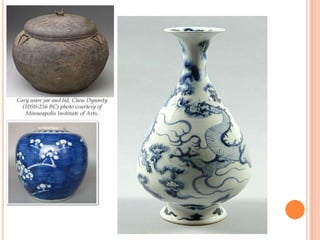
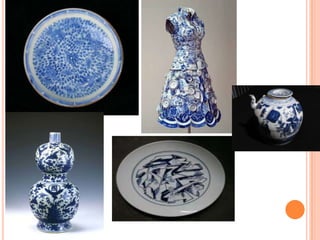
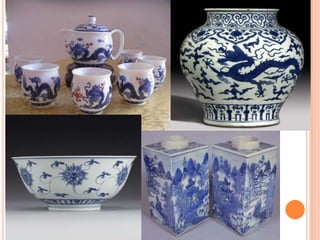
The production of blue and white wares at the
end of the Yuan dynasty (1280-1367) and the
beginning of the Ming dynasty (1368-1643)
was generally of a poorer quality, possibly due
to the shortage of imported cobalt during the
period of political instability. In Yung Lo reign
(1403-1424), both the potting and glazing
techniques improved and wares attained a
whiter body and richer blue than those of
Yuan dynasty ware. The underglaze blue of
the Yung Lo wares and Hsuen Te (1426-1435)
wares noted or their rich blue tone.
Throughout the Ming dynasty, dragon
and phoenix were the most popular
decorative motifs on ceramic wares.
Other animals, plant forms, and human
figures in garden and interior setting
were often used as decors for blue and
white wares. It has been noted that
after Wan Li (1573-1620), very few
ceramic wares of the Ming dynasty
bear reign marks.
The fashionable wucai wares of Chia Ching (1522-
1566) and Wan Li (1573-1620) periods are usually
fully covered with colourful patterns. Very often the
colors are a bit too heavy. The colors used include
red, yellow, light and dark green, brown, aubergine
and underglaze blue. In Ming dynasty, a variety of
porcelain wares were decorated with motifs coming
up on colored ground instead. They included wares
with green glazed pattern on a yellow ground,
yellow glazed pattern on a blue ground, green
glazed pattern on a red ground and other color
combinations.
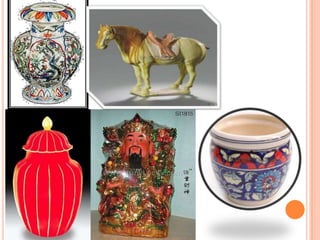
Another remarkable category of coloured wares produced in the Ming
dynasty was the susancai or 'tri-colour'. The major three colours are
yellow, green and aubergine. Tri-colour wares of the Ming dynasty
appeared in the reigns of Hsuen Te, Chia Ching and Wan Li.
The peak of Chinese ceramic production was seen in the reigns of
Kang Hsi (1622-1722). Yung Cheng (1723-1735) and Chien Lung
(1736-1796) of the Ching dynasty during which improvement was
seen in almost all ceramic types, including the blue and white wares,
polychrome wares, wucai wares, etc. The improved enamel glazes of
early Ching dynasty being fired at a higher temperature also acquired
a more brilliant look than those of the Ming dynasty.
The production of doucai wares in the Yung Cheng period reached
new height both in quantity and technical perfection.
The use of fencai enamel for decorating porcelain wares was first introduced in
Kang Hsi period. The production of fencai enamel wares reached a mature
stage in the Yung Cheng era. As the improved fencai enamels had a wider
range of colours and each could be applied in a variety of tones, they could be
used to depict some of the highly complicated pictorial compositions of flower
and plant forms, figures and even insects.
Ching dynasty is a period specially noted for the production of colour glazes. In
the area of monochromes, Ching potters succeeded in reproducing most of the
famous glaze colours found in ceramic wares on the Sung, Yuan and Ming
dynasties. In addition, they created a number of new glazes, especially the
monochromes. Among them were the Sang-de-boeuf, the rough-pink, the coral
red and the mirror black. All these four glazes were invented in the reign of
Kang Hsi.
Yung Cheng potters invented a flambe glaze know as Lujun, or robin's egg
which was produced in two firings. Another significant colour glaze
successfully produced by the Ching potter was 'tea-dust'. It is an opaque glaze
finely speckled with colours in green, yellow and brown.
When Ming was taken over by Qing (about 1639-1700 AD), and when
Qing was taken over by the Republic of China (about 1909-1915 AD),
the disturbances in these two periods resulted in the collapse of the
official kilns. In their places, private kilns were established by the
operators and artists who previously worked in the official kilns. With
their expertise, they produced high quality porcelain wares, such as the
'export porcelain wares made during the transition of Ming to Qing',
which earned a high praise in overseas markets, and the excellent
imitations of Sung, Yuan and Qing wares are made during "the early
stage of the Republic of China," which were almost true to the originals.
When the war broke out in 1937, triggered by the incident at Lo-Kou
Bridge, all the kilns were closed. The operators and artists were
dispersed, and many of them traveled to the south, trying to make a
living. When peace came in 1945, social stability led to the re-
establishment of the pottery industry. In this stretch of fifty years to the
present time, the industry has re-gained its previous glory and is
enjoying a growing prosperity. In the past twenty years, the ceramics
industry has been developing at a quick pace.
chinese ceramics

chinese ceramics

  • 2.
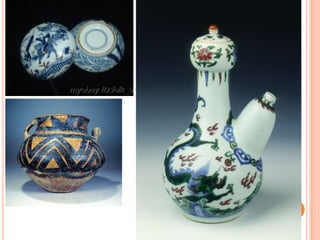
    After the inventionof pottery in the Neolithic period, (5000-2200 B.C.), the ancient Chinese succeeded in producing painted pottery, black pottery and carved pottery. The long years of experience in kiln firing led China entering into a new ceramic age in the Han dynasty (206 B.C.-220 A.D.) Although archaeological finds have revealed that glazed pottery was produced as early as the Western Zhou dynasty (1100-771 B.C.), yet the production of glazed wares was not common until the Han Dynasty.
  • 6.
    The production ofblue and white wares at the end of the Yuan dynasty (1280-1367) and the beginning of the Ming dynasty (1368-1643) was generally of a poorer quality, possibly due to the shortage of imported cobalt during the period of political instability. In Yung Lo reign (1403-1424), both the potting and glazing techniques improved and wares attained a whiter body and richer blue than those of Yuan dynasty ware. The underglaze blue of the Yung Lo wares and Hsuen Te (1426-1435) wares noted or their rich blue tone.
  • 8.
    Throughout the Mingdynasty, dragon and phoenix were the most popular decorative motifs on ceramic wares. Other animals, plant forms, and human figures in garden and interior setting were often used as decors for blue and white wares. It has been noted that after Wan Li (1573-1620), very few ceramic wares of the Ming dynasty bear reign marks.
  • 10.
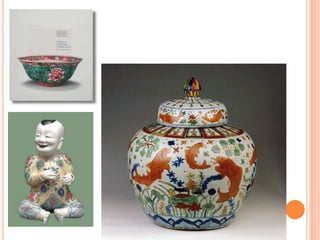
    The fashionable wucaiwares of Chia Ching (1522- 1566) and Wan Li (1573-1620) periods are usually fully covered with colourful patterns. Very often the colors are a bit too heavy. The colors used include red, yellow, light and dark green, brown, aubergine and underglaze blue. In Ming dynasty, a variety of porcelain wares were decorated with motifs coming up on colored ground instead. They included wares with green glazed pattern on a yellow ground, yellow glazed pattern on a blue ground, green glazed pattern on a red ground and other color combinations.
  • 12.
    Another remarkable categoryof coloured wares produced in the Ming dynasty was the susancai or 'tri-colour'. The major three colours are yellow, green and aubergine. Tri-colour wares of the Ming dynasty appeared in the reigns of Hsuen Te, Chia Ching and Wan Li. The peak of Chinese ceramic production was seen in the reigns of Kang Hsi (1622-1722). Yung Cheng (1723-1735) and Chien Lung (1736-1796) of the Ching dynasty during which improvement was seen in almost all ceramic types, including the blue and white wares, polychrome wares, wucai wares, etc. The improved enamel glazes of early Ching dynasty being fired at a higher temperature also acquired a more brilliant look than those of the Ming dynasty. The production of doucai wares in the Yung Cheng period reached new height both in quantity and technical perfection.
  • 14.
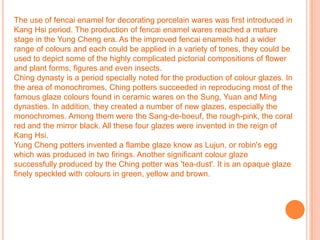
    The use offencai enamel for decorating porcelain wares was first introduced in Kang Hsi period. The production of fencai enamel wares reached a mature stage in the Yung Cheng era. As the improved fencai enamels had a wider range of colours and each could be applied in a variety of tones, they could be used to depict some of the highly complicated pictorial compositions of flower and plant forms, figures and even insects. Ching dynasty is a period specially noted for the production of colour glazes. In the area of monochromes, Ching potters succeeded in reproducing most of the famous glaze colours found in ceramic wares on the Sung, Yuan and Ming dynasties. In addition, they created a number of new glazes, especially the monochromes. Among them were the Sang-de-boeuf, the rough-pink, the coral red and the mirror black. All these four glazes were invented in the reign of Kang Hsi. Yung Cheng potters invented a flambe glaze know as Lujun, or robin's egg which was produced in two firings. Another significant colour glaze successfully produced by the Ching potter was 'tea-dust'. It is an opaque glaze finely speckled with colours in green, yellow and brown.
  • 16.
    When Ming wastaken over by Qing (about 1639-1700 AD), and when Qing was taken over by the Republic of China (about 1909-1915 AD), the disturbances in these two periods resulted in the collapse of the official kilns. In their places, private kilns were established by the operators and artists who previously worked in the official kilns. With their expertise, they produced high quality porcelain wares, such as the 'export porcelain wares made during the transition of Ming to Qing', which earned a high praise in overseas markets, and the excellent imitations of Sung, Yuan and Qing wares are made during "the early stage of the Republic of China," which were almost true to the originals. When the war broke out in 1937, triggered by the incident at Lo-Kou Bridge, all the kilns were closed. The operators and artists were dispersed, and many of them traveled to the south, trying to make a living. When peace came in 1945, social stability led to the re- establishment of the pottery industry. In this stretch of fifty years to the present time, the industry has re-gained its previous glory and is enjoying a growing prosperity. In the past twenty years, the ceramics industry has been developing at a quick pace.