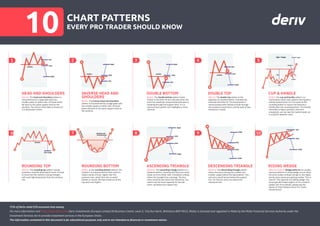
10 CHART PATTERNS
EVERY PRO TRADER SHOULD KNOW
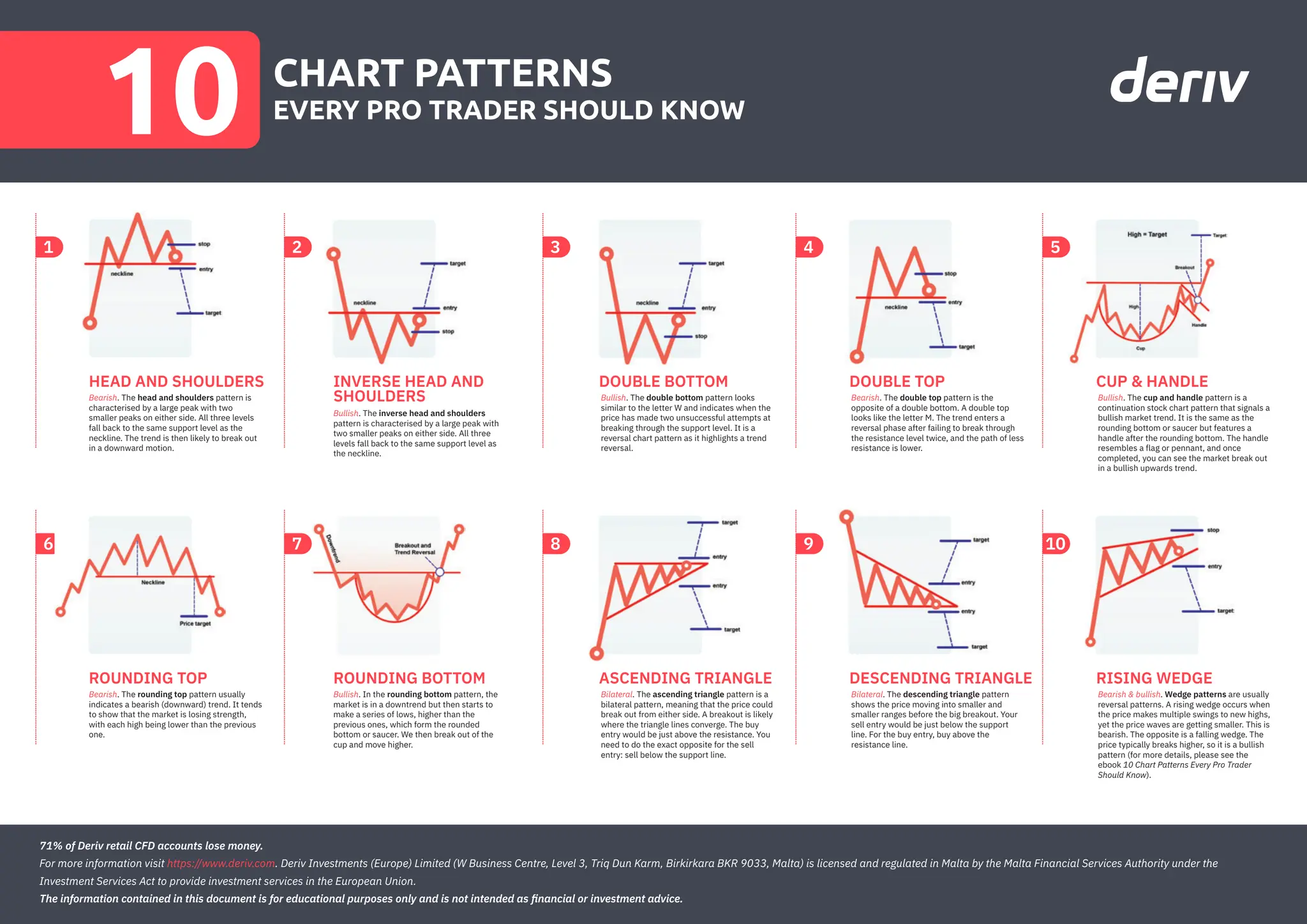
HEAD AND SHOULDERS
Bearish. The head and shoulders pattern is
characterised by a large peak with two
smaller peaks on either side. All three levels
fall back to the same support level as the
neckline. The trend is then likely to break out
in a downward motion.
INVERSE HEAD AND
SHOULDERS
Bullish. The inverse head and shoulders
pattern is characterised by a large peak with
two smaller peaks on either side. All three
levels fall back to the same support level as
the neckline.
DOUBLE BOTTOM
Bullish. The double bottom pattern looks
similar to the letter W and indicates when the
price has made two unsuccessful attempts at
breaking through the support level. It is a
reversal chart pattern as it highlights a trend
reversal.
DOUBLE TOP
Bearish. The double top pattern is the
opposite of a double bottom. A double top
looks like the letter M. The trend enters a
reversal phase after failing to break through
the resistance level twice, and the path of less
resistance is lower.
1 2 3 4
CUP & HANDLE
Bullish. The cup and handle pattern is a
continuation stock chart pattern that signals a
bullish market trend. It is the same as the
rounding bottom or saucer but features a
handle after the rounding bottom. The handle
resembles a flag or pennant, and once
completed, you can see the market break out
in a bullish upwards trend.
ROUNDING TOP
Bearish. The rounding top pattern usually
indicates a bearish (downward) trend. It tends
to show that the market is losing strength,
with each high being lower than the previous
one.
ROUNDING BOTTOM
Bullish. In the rounding bottom pattern, the
market is in a downtrend but then starts to
make a series of lows, higher than the
previous ones, which form the rounded
bottom or saucer. We then break out of the
cup and move higher.
ASCENDING TRIANGLE
Bilateral. The ascending triangle pattern is a
bilateral pattern, meaning that the price could
break out from either side. A breakout is likely
where the triangle lines converge. The buy
entry would be just above the resistance. You
need to do the exact opposite for the sell
entry: sell below the support line.
DESCENDING TRIANGLE
Bilateral. The descending triangle pattern
shows the price moving into smaller and
smaller ranges before the big breakout. Your
sell entry would be just below the support
line. For the buy entry, buy above the
resistance line.
6 8 9
RISING WEDGE
Bearish & bullish. Wedge patterns are usually
reversal patterns. A rising wedge occurs when
the price makes multiple swings to new highs,
yet the price waves are getting smaller. This is
bearish. The opposite is a falling wedge. The
price typically breaks higher, so it is a bullish
pattern (for more details, please see the
ebook 10 Chart Patterns Every Pro Trader
Should Know).
5
10
71% of Deriv retail CFD accounts lose money.
For more information visit https://www.deriv.com. Deriv Investments (Europe) Limited (W Business Centre, Level 3, Triq Dun Karm, Birkirkara BKR 9033, Malta) is licensed and regulated in Malta by the Malta Financial Services Authority under the
Investment Services Act to provide investment services in the European Union.
The information contained in this document is for educational purposes only and is not intended as financial or investment advice.
7

Chart Patterns Deriv Volatility Indecies

  • 1.
    10 CHART PATTERNS EVERYPRO TRADER SHOULD KNOW HEAD AND SHOULDERS Bearish. The head and shoulders pattern is characterised by a large peak with two smaller peaks on either side. All three levels fall back to the same support level as the neckline. The trend is then likely to break out in a downward motion. INVERSE HEAD AND SHOULDERS Bullish. The inverse head and shoulders pattern is characterised by a large peak with two smaller peaks on either side. All three levels fall back to the same support level as the neckline. DOUBLE BOTTOM Bullish. The double bottom pattern looks similar to the letter W and indicates when the price has made two unsuccessful attempts at breaking through the support level. It is a reversal chart pattern as it highlights a trend reversal. DOUBLE TOP Bearish. The double top pattern is the opposite of a double bottom. A double top looks like the letter M. The trend enters a reversal phase after failing to break through the resistance level twice, and the path of less resistance is lower. 1 2 3 4 CUP & HANDLE Bullish. The cup and handle pattern is a continuation stock chart pattern that signals a bullish market trend. It is the same as the rounding bottom or saucer but features a handle after the rounding bottom. The handle resembles a flag or pennant, and once completed, you can see the market break out in a bullish upwards trend. ROUNDING TOP Bearish. The rounding top pattern usually indicates a bearish (downward) trend. It tends to show that the market is losing strength, with each high being lower than the previous one. ROUNDING BOTTOM Bullish. In the rounding bottom pattern, the market is in a downtrend but then starts to make a series of lows, higher than the previous ones, which form the rounded bottom or saucer. We then break out of the cup and move higher. ASCENDING TRIANGLE Bilateral. The ascending triangle pattern is a bilateral pattern, meaning that the price could break out from either side. A breakout is likely where the triangle lines converge. The buy entry would be just above the resistance. You need to do the exact opposite for the sell entry: sell below the support line. DESCENDING TRIANGLE Bilateral. The descending triangle pattern shows the price moving into smaller and smaller ranges before the big breakout. Your sell entry would be just below the support line. For the buy entry, buy above the resistance line. 6 8 9 RISING WEDGE Bearish & bullish. Wedge patterns are usually reversal patterns. A rising wedge occurs when the price makes multiple swings to new highs, yet the price waves are getting smaller. This is bearish. The opposite is a falling wedge. The price typically breaks higher, so it is a bullish pattern (for more details, please see the ebook 10 Chart Patterns Every Pro Trader Should Know). 5 10 71% of Deriv retail CFD accounts lose money. For more information visit https://www.deriv.com. Deriv Investments (Europe) Limited (W Business Centre, Level 3, Triq Dun Karm, Birkirkara BKR 9033, Malta) is licensed and regulated in Malta by the Malta Financial Services Authority under the Investment Services Act to provide investment services in the European Union. The information contained in this document is for educational purposes only and is not intended as financial or investment advice. 7