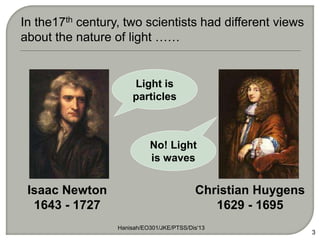
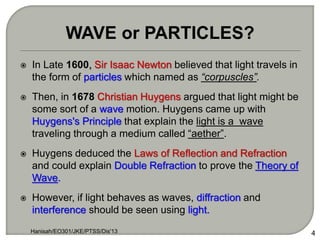
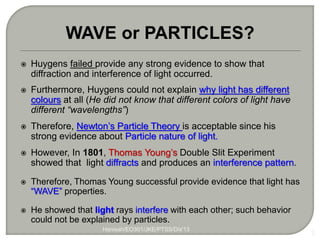
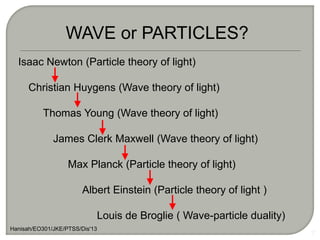
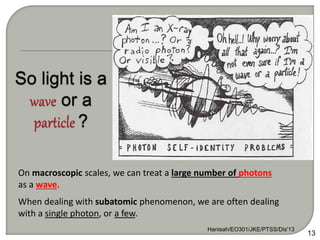
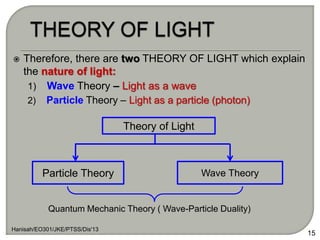
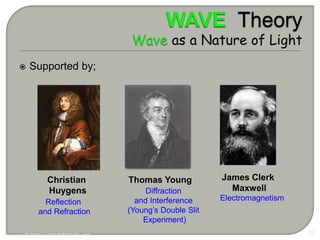
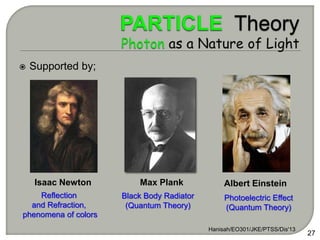
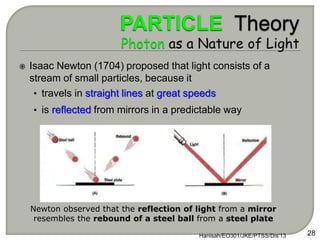
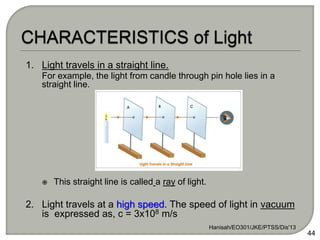
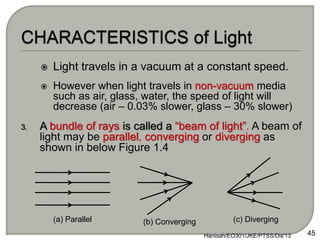
- In the 17th century, Isaac Newton and Christian Huygens proposed different theories on the nature of light - Newton believed light consisted of particles while Huygens argued it was a wave.
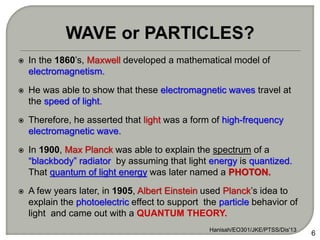
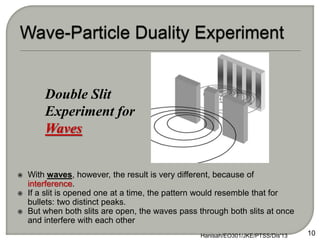
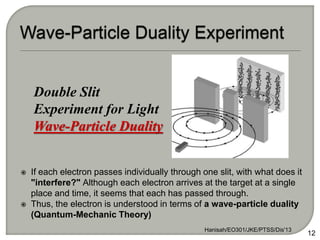
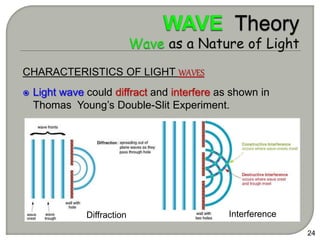
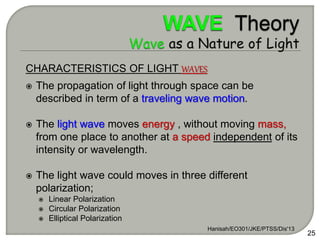
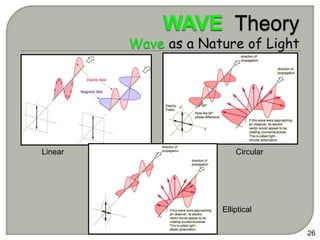
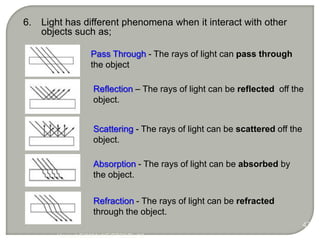
- Experiments by Thomas Young and James Clerk Maxwell in the 18th-19th centuries provided evidence that light exhibits wave-like properties such as diffraction and interference.
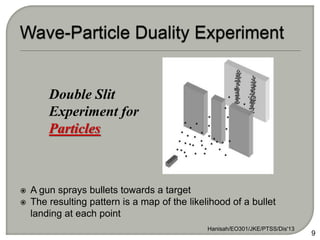
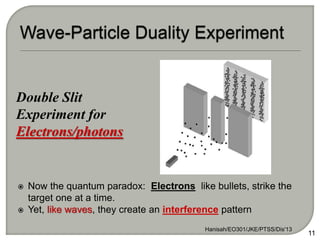
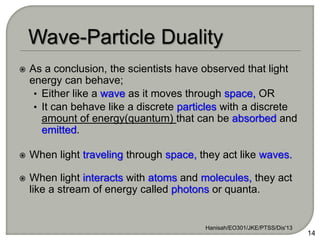
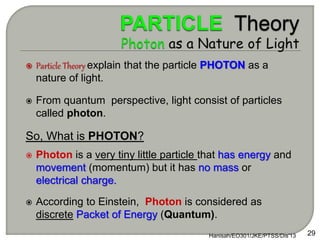
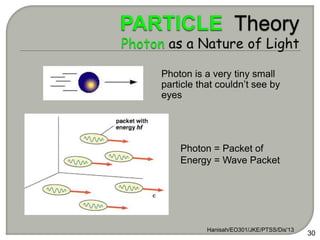
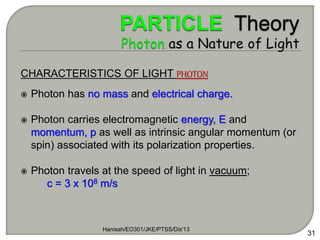
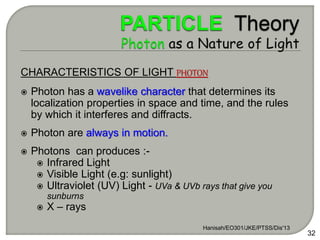
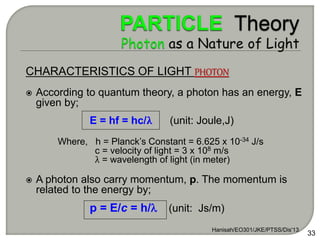
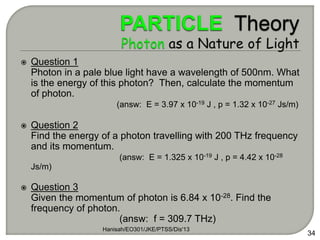
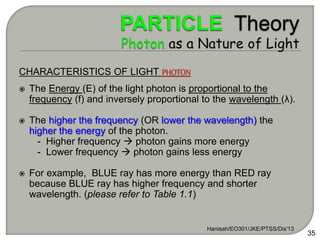
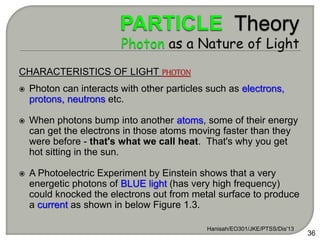
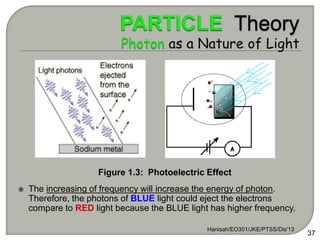
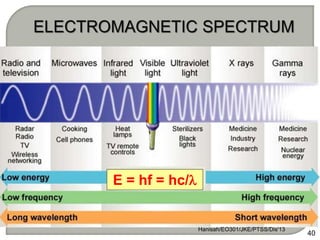
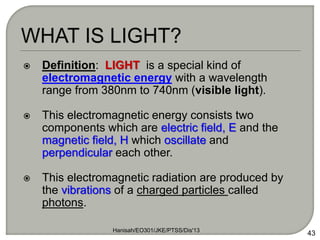
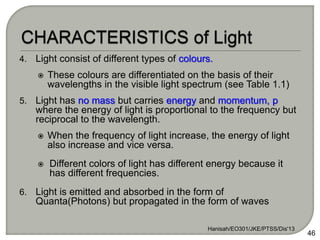
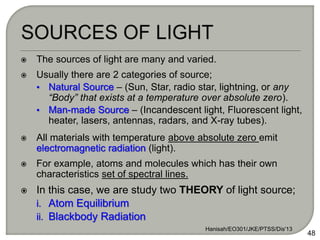
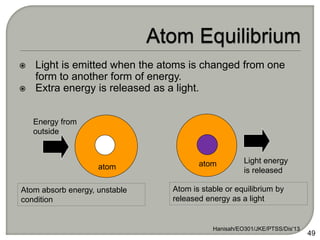
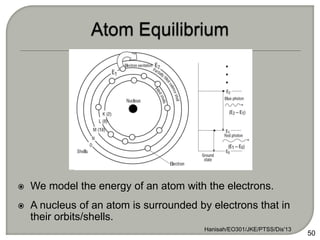
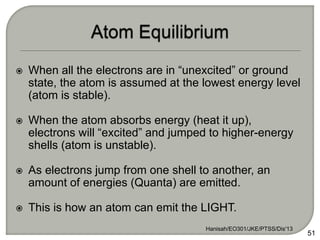
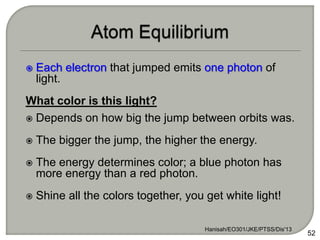
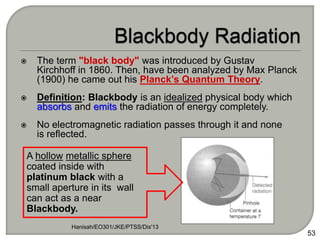
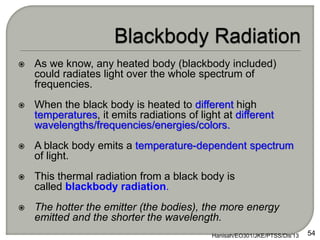
- In the early 20th century, Max Planck and Albert Einstein put forth the idea that light also behaves as discrete packets of energy called photons, supporting both wave and particle descriptions of light.


![GENERAL BEHAVIOR OF LIGHT [Autosaved].ppt](https://cdn.slidesharecdn.com/ss_thumbnails/generalbehavioroflightautosaved-260127030455-9b712450-thumbnail.jpg?width=640&height=640&fit=bounds)
![Presentation on lights [ gamma team ]](https://cdn.slidesharecdn.com/ss_thumbnails/presentationonlightsgammateam-170605110522-thumbnail.jpg?width=640&height=640&fit=bounds)
![Presentation on lights [ physics ]](https://cdn.slidesharecdn.com/ss_thumbnails/presentationonlightsphysics-170809202610-thumbnail.jpg?width=640&height=640&fit=bounds)


