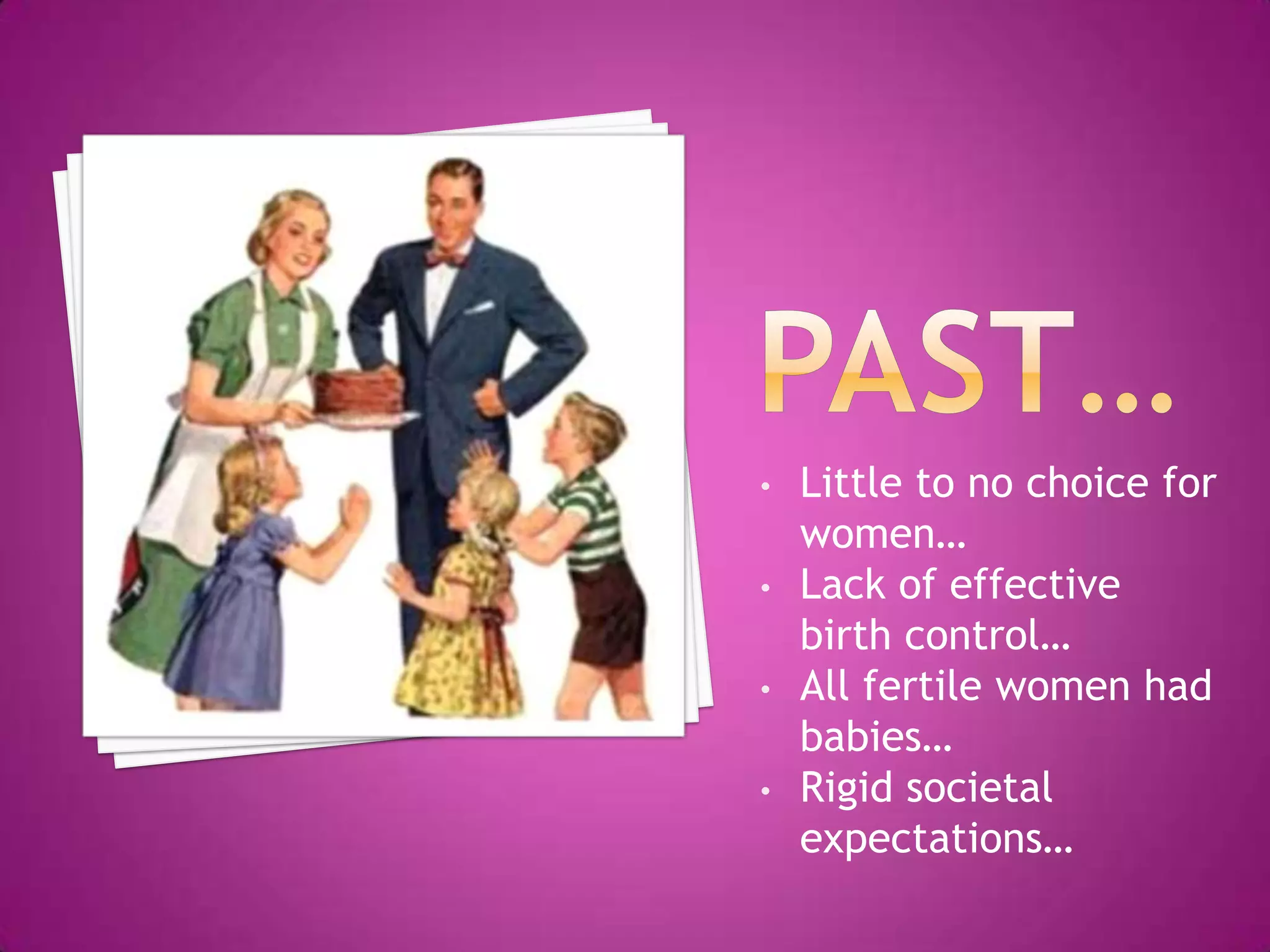
•   Little to no choice for
    women…
•   Lack of effective
    birth control…
•   All fertile women had
    babies…
•   Rigid societal
    expectations…
•   More choices…
•   Access to birth control…
•   Legal abortion…
•   Reproductive
    technologies…
•   Adoption…
•   Greater acceptance of
    women who do not have
    or want children…
•   Greater acceptance of
    single women, same sex
    couples, and other non-
    traditional families who
    want to conceive or adopt
    children…
•   Grow and change
    together…
•   Share activities and
    memories that are
    meaningful…
•   Children are challenging
    and inspiring…
•   Children give
    unconditional love…
•   Added responsibility…
•   Complicated schedules…
•   Your needs vs. needs of
    children…
•   Less personal freedom…
•   Added expenses…
•   Can be stressful at times…
•   Conceiving and
    bearing a child

•   Adoption

•   Fostering a child
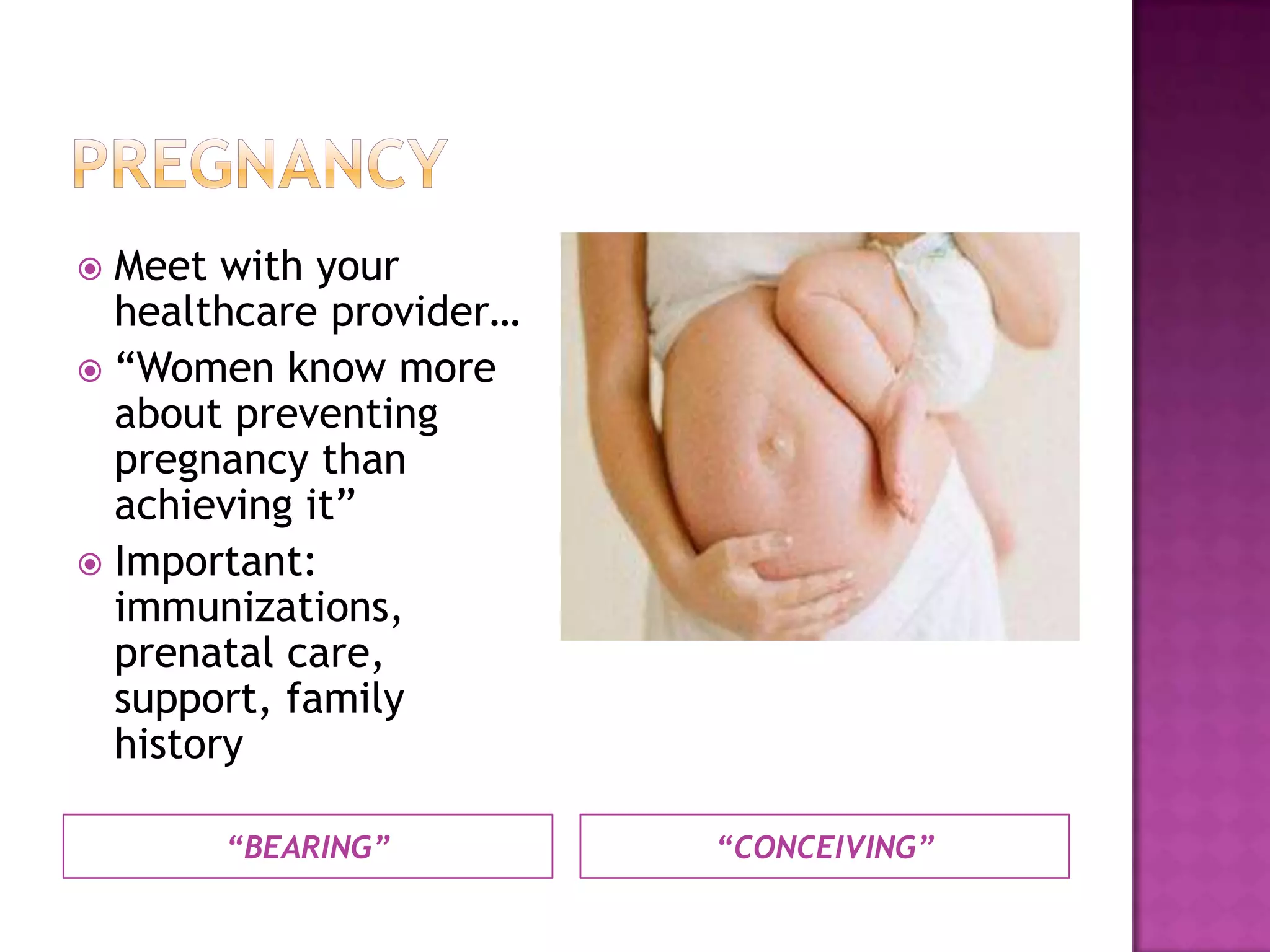
 Meet with your
  healthcare provider…
 “Women know more
  about preventing
  pregnancy than
  achieving it”
 Important:
  immunizations,
  prenatal care,
  support, family
  history

       “BEARING”         “CONCEIVING”
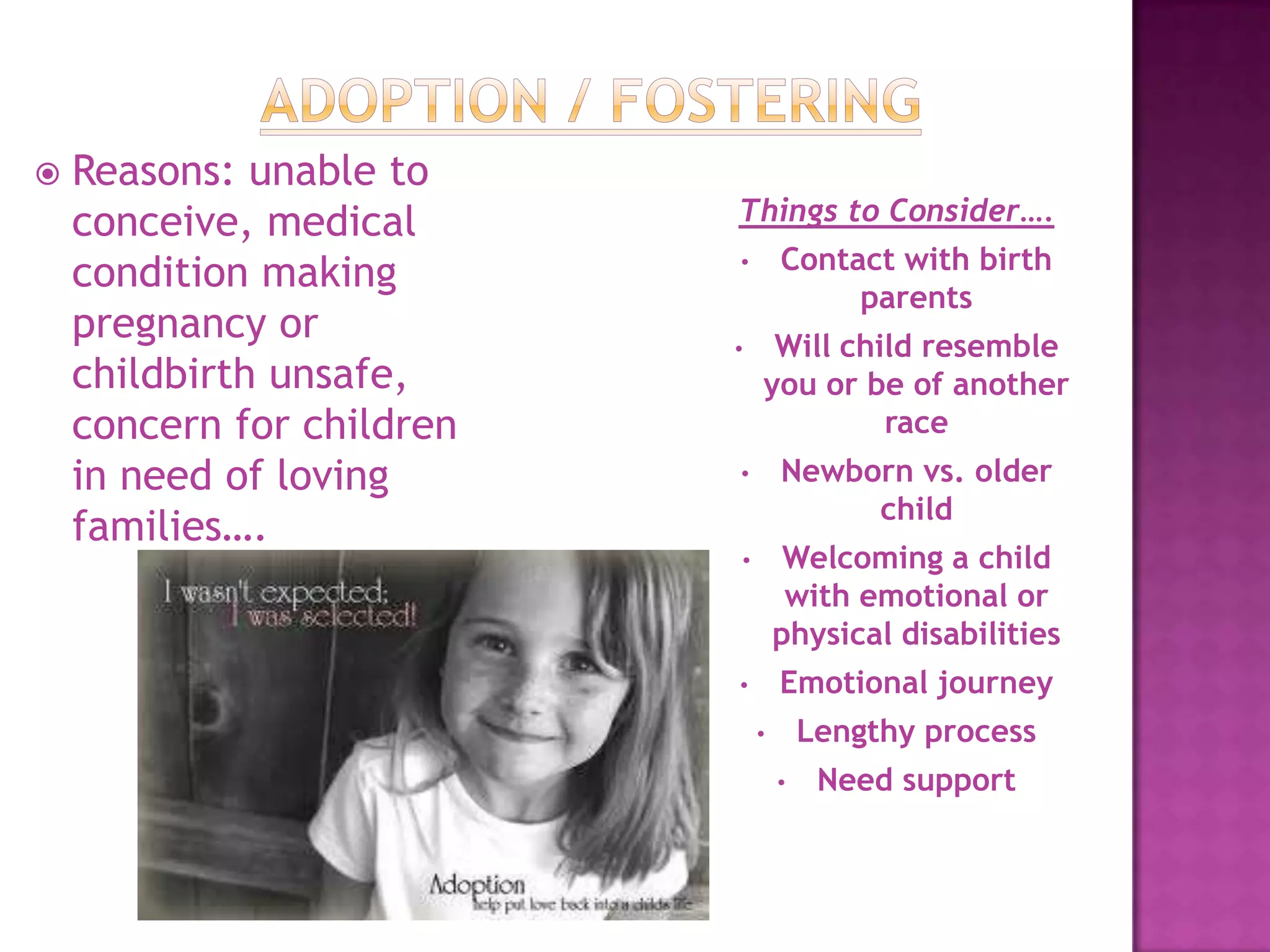
   Reasons: unable to
    conceive, medical      Things to Consider….
                                   Contact with birth
    condition making       •
                                        parents
    pregnancy or           •    Will child resemble
    childbirth unsafe,         you or be of another
    concern for children                race
    in need of loving      •       Newborn vs. older
                                        child
    families….
                           •        Welcoming a child
                                    with emotional or
                                   physical disabilities
                           •       Emotional journey
                               •       Lengthy process
                                   •    Need support
 Avoiding   a conscious decision: “Let nature
  decide”
 Peer pressure: Parents wanting
  grandchildren, friends having children
 Letting partner decide for you: either wants
  children or does not
 Thinking partner will change: “Having kids
  will improve my relationship”
 Worrying you won’t be a good parent: Discuss
  fears with friends, family, or counselor
(Pg. 352) Our Bodies, Ourselves – In
reference to children…“There are enough
reasons to have them as there are to not
have them.”

So…if there are as many reasons to have
children as there are not to have them,
how do you know when the “right” time is
to have them? Or is there ever a “right”
time?
Chapter14 parenting

Chapter14 parenting

  • 2.
    Little to no choice for women… • Lack of effective birth control… • All fertile women had babies… • Rigid societal expectations…
  • 3.
    More choices… • Access to birth control… • Legal abortion… • Reproductive technologies… • Adoption… • Greater acceptance of women who do not have or want children… • Greater acceptance of single women, same sex couples, and other non- traditional families who want to conceive or adopt children…
  • 4.
    Grow and change together… • Share activities and memories that are meaningful… • Children are challenging and inspiring… • Children give unconditional love…
  • 5.
    Added responsibility… • Complicated schedules… • Your needs vs. needs of children… • Less personal freedom… • Added expenses… • Can be stressful at times…
  • 6.
    Conceiving and bearing a child • Adoption • Fostering a child
  • 7.
     Meet withyour healthcare provider…  “Women know more about preventing pregnancy than achieving it”  Important: immunizations, prenatal care, support, family history “BEARING” “CONCEIVING”
  • 8.
    Reasons: unable to conceive, medical Things to Consider…. Contact with birth condition making • parents pregnancy or • Will child resemble childbirth unsafe, you or be of another concern for children race in need of loving • Newborn vs. older child families…. • Welcoming a child with emotional or physical disabilities • Emotional journey • Lengthy process • Need support
  • 9.
     Avoiding a conscious decision: “Let nature decide”  Peer pressure: Parents wanting grandchildren, friends having children  Letting partner decide for you: either wants children or does not  Thinking partner will change: “Having kids will improve my relationship”  Worrying you won’t be a good parent: Discuss fears with friends, family, or counselor
  • 10.
    (Pg. 352) OurBodies, Ourselves – In reference to children…“There are enough reasons to have them as there are to not have them.” So…if there are as many reasons to have children as there are not to have them, how do you know when the “right” time is to have them? Or is there ever a “right” time?