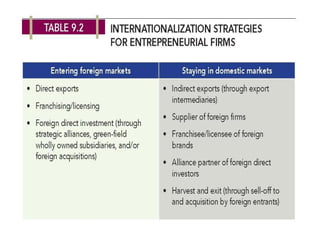
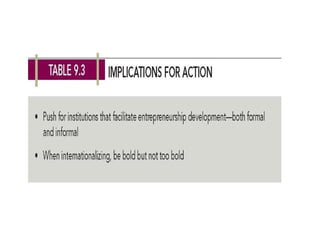
Chapter 9 Learning Objectives After studying this chapter, you should be able to: Define entrepreneurship, entrepreneurs, and entrepreneurial firms  Understand how institutions and  sources affect entrepreneurship Identify the three characteristics of a growing entrepreneurial firm Differentiate international strategies that enter foreign markets and that stay in domestic markets Participate in three leading debates on growing and internationalizing the entrepreneurial firm Draw implications for action
ENTREPRENEURSHIP AND ENTREPRENEURIAL FIRMS small and medium-sized enterprises  (SMEs)  - generally defined in the US as firms with fewer than 500 employees entrepreneurship  –  identification and exploitation of previously unexplored opportunities entrepreneurs -   founders and owners of new businesses or managers of existing firms international entrepreneurship  -  combination of innovative, proactive, and risk seeking behavior that crosses national borders and is intended to create wealth in organizations
GROWING THE ENTREPRENEURIAL FIRM growth  -  an entrepreneurial firm can be viewed as an attempt to more fully utilize currently underutilized resources and capabilities innovation  -  heart of entrepreneurship and allows for a more sustainable basis for competitive advantage financing  -  start-ups need to raise capital; “4F” sources of entrepreneurial financing: founders, family, and friends, and  fools microfinance - lending institutions provide tiny loans  ($50–$300) to entrepreneurs in developing countries  that would lift them out of poverty
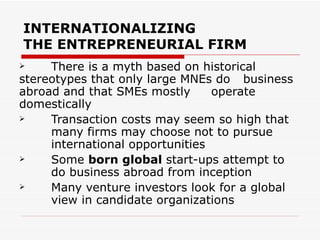
INTERNATIONALIZING THE ENTREPRENEURIAL FIRM There is a myth based on historical  stereotypes that only large MNEs do  business abroad and that SMEs mostly  operate domestically Transaction costs may seem so high that  many firms may choose not to pursue  international opportunities Some  born global  start-ups attempt to  do business abroad from inception Many venture investors look for a global  view in candidate organizations
 
International Strategies for Staying in Domestic Markets indirect exports   -  SMEs reach overseas customers by exporting through domestic-based export intermediaries   export intermediaries  -  perform an important “ middleman” function by linking sellers and buyers overseas that otherwise would not have been connected: export trading companies (ETCs), export management companies (EMCs)
 

Chapter Nine Powerpoint Presentation

  • 1.
    Chapter 9 LearningObjectives After studying this chapter, you should be able to: Define entrepreneurship, entrepreneurs, and entrepreneurial firms Understand how institutions and sources affect entrepreneurship Identify the three characteristics of a growing entrepreneurial firm Differentiate international strategies that enter foreign markets and that stay in domestic markets Participate in three leading debates on growing and internationalizing the entrepreneurial firm Draw implications for action
  • 2.
    ENTREPRENEURSHIP AND ENTREPRENEURIALFIRMS small and medium-sized enterprises (SMEs) - generally defined in the US as firms with fewer than 500 employees entrepreneurship – identification and exploitation of previously unexplored opportunities entrepreneurs - founders and owners of new businesses or managers of existing firms international entrepreneurship - combination of innovative, proactive, and risk seeking behavior that crosses national borders and is intended to create wealth in organizations
  • 3.
    GROWING THE ENTREPRENEURIALFIRM growth - an entrepreneurial firm can be viewed as an attempt to more fully utilize currently underutilized resources and capabilities innovation - heart of entrepreneurship and allows for a more sustainable basis for competitive advantage financing - start-ups need to raise capital; “4F” sources of entrepreneurial financing: founders, family, and friends, and fools microfinance - lending institutions provide tiny loans ($50–$300) to entrepreneurs in developing countries that would lift them out of poverty
  • 4.
    INTERNATIONALIZING THE ENTREPRENEURIALFIRM There is a myth based on historical stereotypes that only large MNEs do business abroad and that SMEs mostly operate domestically Transaction costs may seem so high that many firms may choose not to pursue international opportunities Some born global start-ups attempt to do business abroad from inception Many venture investors look for a global view in candidate organizations
  • 5.
  • 6.
    International Strategies forStaying in Domestic Markets indirect exports - SMEs reach overseas customers by exporting through domestic-based export intermediaries export intermediaries - perform an important “ middleman” function by linking sellers and buyers overseas that otherwise would not have been connected: export trading companies (ETCs), export management companies (EMCs)
  • 7.