1
CHAPTER 9 – CHAMPAGNE
2
CHAPTER 9 – CHAMPAGNE
Contents
• Overview
• Geography
• Terroir
• Harvest & Pressing
• Fermentation
• Blending & Ageing
• Riddling & Disgorgement
3
CHAPTER 9 – CHAMPAGNE
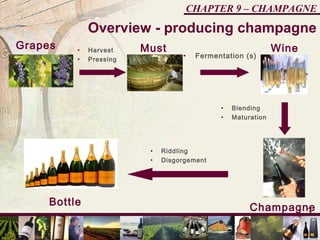
Grapes Must• Harvest
• Pressing
Wine
• Fermentation (s)
Champagne
• Blending
• Maturation
Bottle
• Riddling
• Disgorgement
Overview - producing champagne
CHAPTER 9 – CHAMPAGNE
EQUATOR
49th
parallel South
.
.
.
.
.. ..
.
. ..
... . .
........... ... ... ...
. .
.. . .
..
49th
parallel North
Geographical position
5
CHAPTER 9 – CHAMPAGNE
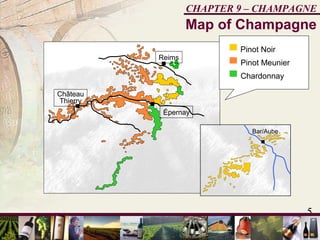
Château
Thierry
Épernay
Reims
Pinot Noir
Pinot Meunier
Chardonnay
Bar/Aube
Map of Champagne
6
CHAPTER 9 – CHAMPAGNE
Chalk - regulates water cycle and temperature
- offers optimum minerality for local grape varieties
Champagne Terroir: the soil
7
CHAPTER 9 – CHAMPAGNE
•East or South-East aspect (exposure)
•Canopy management optimising sunshine exposure
Champagne Terroir: Aspect
9
CHAPTER 9 – CHAMPAGNE
Continental climate with oceanic influence
Average yearly temperature : 10.5 °C (54°F), frequent frost periods,
low rainfalls, favourable summer and fall
Champagne Terroir: the climate
10
CHAPTER 9 – CHAMPAGNE
Pinot Noir
Black Grape, Clear Pulp
Montagne de Reims
Pinot Meunier
Black Grape, Clear Pulp
Vallée de la Marne and
Montagne Ouest
Chardonnay
White Grape, Clear Pulp
Côte des Blancs
Grape varieties
11
CHAPTER 9 – CHAMPAGNE
Grape varieties, Crus and even blocks are kept
separate
Grapes are all hand-harvested
Harvest
12
CHAPTER 9 – CHAMPAGNE
Minimum time between harvesting and pressing
Juice fractions : "cuvée" and "taille" are kept separate
Limited extraction : 2550 litres/4000 kgs ("marc"), or 1,2 kg for 1 bottle
Pressing
13
CHAPTER 9 – CHAMPAGNE
Sugar + Yeast = Alcohol
From the grape
juice
Selected strains
added
The must turns
into wine
+ CO2
Escapes in the
air
Alcoholic fermentation
14
CHAPTER 9 – CHAMPAGNE
Malic Acid + Bacteria
s
= Lactic Acid
Strong Acid from
the grape juice
Selected strains
added
Milder acid
Malo-lactic Fermentation
15
CHAPTER 9 – CHAMPAGNE
Blending different grape varieties,
Pinot Meunier for fruitiness, roundness,
Pinot Noir for body, structure, length,
Chardonnay for freshness, finesse, delicacy
coming from different crus and several vintages.
Blending
16
CHAPTER 9 – CHAMPAGNE
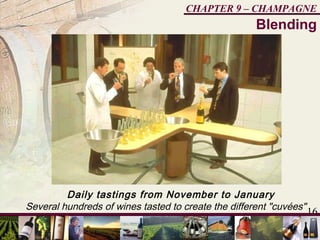
Daily tastings from November to January
Several hundreds of wines tasted to create the different "cuvées"
Blending
17
CHAPTER 9 – CHAMPAGNE
Once the blends have been made, wines are bottled
for the 2nd alcoholic fermentation
Ageing
18
CHAPTER 9 – CHAMPAGNE
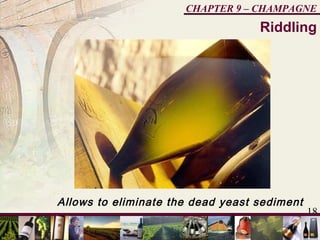
Allows to eliminate the dead yeast sediment
Riddling
19
CHAPTER 9 – CHAMPAGNE
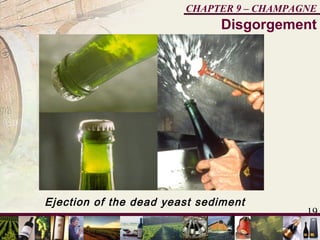
Ejection of the dead yeast sediment
Disgorgement
20
CHAPTER 9 – CHAMPAGNE
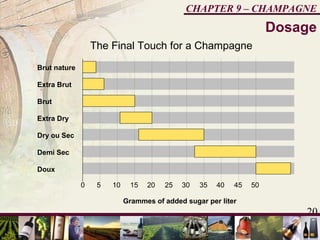
Brut nature
Extra Brut
Brut
Extra Dry
Dry ou Sec
Demi Sec
Doux
Grammes of added sugar per liter
0 5 10 15 20 25 30 35 40 45 50
The Final Touch for a Champagne
Dosage
21
CHAPTER 9 – CHAMPAGNE
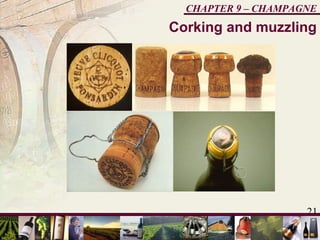
Corking and muzzling
22
CHAPTER 9 – CHAMPAGNE
From Quarter bottle to … Nebucchadnezzar (20 bottles)
Quarterbottle
Halfbottle
Magnum
Bottle
Jeroboam
Mathuselem
Salmanazar
Nebuchadnezzor
Balthazar
Labelling
23
CHAPTER 9 – CHAMPAGNE
Recommended temperatures :
- Brut NV : 8 to 10°C (46/50 °F)
- Vintages : 10 to 12°C (50/54°F)
Tasting and serving champagne
24
CHAPTER 9 – CHAMPAGNE
• The style is defined by the fundamental elements
that characterize all the different champagnes made
by a given House, and which recur year after year.
• It is perceptible through:
– Effervescence & foam
– Colour
– Structure on the palate
– Texture
– Taste
Style
25
CHAPTER 9 – CHAMPAGNE
`In victory, you deserve Champagne,
in defeat, you need it.`
Napoleon Bonaparte

Chapter 9 – Champagne (NXPowerLite)

  • 1.
    1 CHAPTER 9 –CHAMPAGNE
  • 2.
    2 CHAPTER 9 –CHAMPAGNE Contents • Overview • Geography • Terroir • Harvest & Pressing • Fermentation • Blending & Ageing • Riddling & Disgorgement
  • 3.
    3 CHAPTER 9 –CHAMPAGNE Grapes Must• Harvest • Pressing Wine • Fermentation (s) Champagne • Blending • Maturation Bottle • Riddling • Disgorgement Overview - producing champagne
  • 4.
    CHAPTER 9 –CHAMPAGNE EQUATOR 49th parallel South . . . . .. .. . . .. ... . . ........... ... ... ... . . .. . . .. 49th parallel North Geographical position
  • 5.
    5 CHAPTER 9 –CHAMPAGNE Château Thierry Épernay Reims Pinot Noir Pinot Meunier Chardonnay Bar/Aube Map of Champagne
  • 6.
    6 CHAPTER 9 –CHAMPAGNE Chalk - regulates water cycle and temperature - offers optimum minerality for local grape varieties Champagne Terroir: the soil
  • 7.
    7 CHAPTER 9 –CHAMPAGNE •East or South-East aspect (exposure) •Canopy management optimising sunshine exposure Champagne Terroir: Aspect
  • 8.
    9 CHAPTER 9 –CHAMPAGNE Continental climate with oceanic influence Average yearly temperature : 10.5 °C (54°F), frequent frost periods, low rainfalls, favourable summer and fall Champagne Terroir: the climate
  • 9.
    10 CHAPTER 9 –CHAMPAGNE Pinot Noir Black Grape, Clear Pulp Montagne de Reims Pinot Meunier Black Grape, Clear Pulp Vallée de la Marne and Montagne Ouest Chardonnay White Grape, Clear Pulp Côte des Blancs Grape varieties
  • 10.
    11 CHAPTER 9 –CHAMPAGNE Grape varieties, Crus and even blocks are kept separate Grapes are all hand-harvested Harvest
  • 11.
    12 CHAPTER 9 –CHAMPAGNE Minimum time between harvesting and pressing Juice fractions : "cuvée" and "taille" are kept separate Limited extraction : 2550 litres/4000 kgs ("marc"), or 1,2 kg for 1 bottle Pressing
  • 12.
    13 CHAPTER 9 –CHAMPAGNE Sugar + Yeast = Alcohol From the grape juice Selected strains added The must turns into wine + CO2 Escapes in the air Alcoholic fermentation
  • 13.
    14 CHAPTER 9 –CHAMPAGNE Malic Acid + Bacteria s = Lactic Acid Strong Acid from the grape juice Selected strains added Milder acid Malo-lactic Fermentation
  • 14.
    15 CHAPTER 9 –CHAMPAGNE Blending different grape varieties, Pinot Meunier for fruitiness, roundness, Pinot Noir for body, structure, length, Chardonnay for freshness, finesse, delicacy coming from different crus and several vintages. Blending
  • 15.
    16 CHAPTER 9 –CHAMPAGNE Daily tastings from November to January Several hundreds of wines tasted to create the different "cuvées" Blending
  • 16.
    17 CHAPTER 9 –CHAMPAGNE Once the blends have been made, wines are bottled for the 2nd alcoholic fermentation Ageing
  • 17.
    18 CHAPTER 9 –CHAMPAGNE Allows to eliminate the dead yeast sediment Riddling
  • 18.
    19 CHAPTER 9 –CHAMPAGNE Ejection of the dead yeast sediment Disgorgement
  • 19.
    20 CHAPTER 9 –CHAMPAGNE Brut nature Extra Brut Brut Extra Dry Dry ou Sec Demi Sec Doux Grammes of added sugar per liter 0 5 10 15 20 25 30 35 40 45 50 The Final Touch for a Champagne Dosage
  • 20.
    21 CHAPTER 9 –CHAMPAGNE Corking and muzzling
  • 21.
    22 CHAPTER 9 –CHAMPAGNE From Quarter bottle to … Nebucchadnezzar (20 bottles) Quarterbottle Halfbottle Magnum Bottle Jeroboam Mathuselem Salmanazar Nebuchadnezzor Balthazar Labelling
  • 22.
    23 CHAPTER 9 –CHAMPAGNE Recommended temperatures : - Brut NV : 8 to 10°C (46/50 °F) - Vintages : 10 to 12°C (50/54°F) Tasting and serving champagne
  • 23.
    24 CHAPTER 9 –CHAMPAGNE • The style is defined by the fundamental elements that characterize all the different champagnes made by a given House, and which recur year after year. • It is perceptible through: – Effervescence & foam – Colour – Structure on the palate – Texture – Taste Style
  • 24.
    25 CHAPTER 9 –CHAMPAGNE `In victory, you deserve Champagne, in defeat, you need it.` Napoleon Bonaparte

Editor's Notes

  • #5 <number>
  • #6 <number>
  • #7 <number>
  • #8 <number>
  • #9 <number>
  • #10 <number>
  • #11 <number>
  • #12 <number>
  • #13 <number>
  • #14 <number>
  • #15 <number>
  • #16 <number>
  • #17 <number>
  • #18 <number>
  • #19 <number>
  • #20 <number>
  • #22 <number>
  • #23 <number>
  • #24 <number>