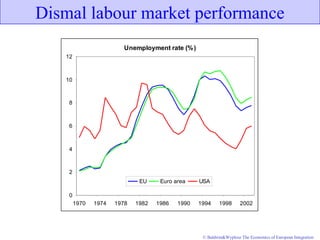
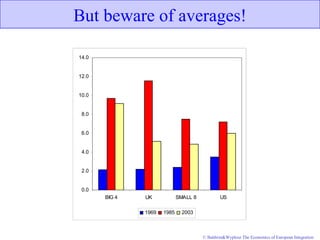
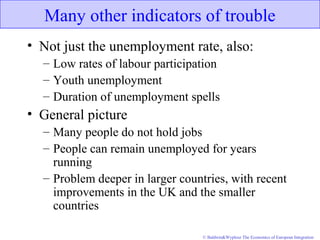
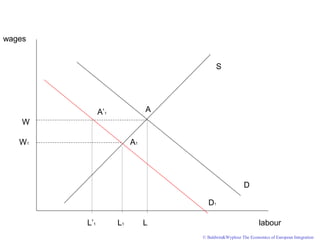
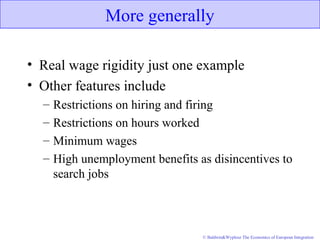
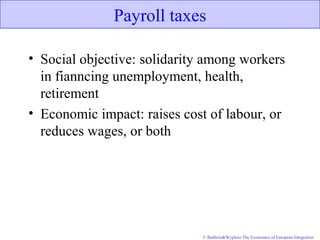
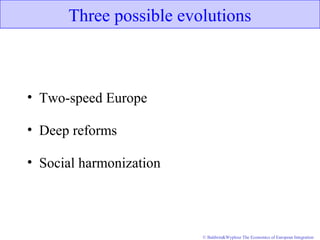
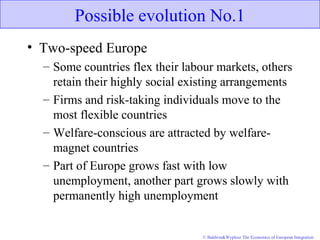
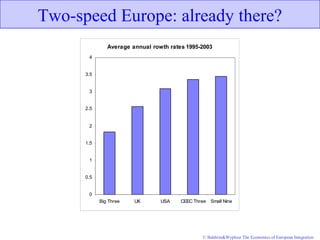
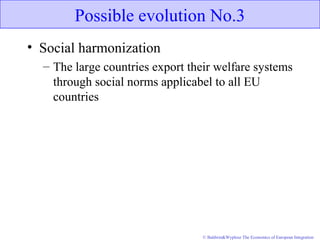
The document discusses how economic integration challenges existing labor market institutions in Europe. It finds that European labor markets are generally rigid, with high unemployment, low participation rates, and long spells of unemployment. This is due to features like real wage rigidity, restrictions on hiring/firing, minimum wages, and generous unemployment benefits. Deeper economic integration exacerbates competition and reduces firms' flexibility to respond to shocks under these rigid systems. The document outlines three possible evolutions in response: two-speed Europe with flexible and inflexible systems, reforms to make labor markets more flexible, or social harmonization across Europe.