Ownership and Structural Forms of Business EnterpriseChapter 5
OwnershipIt  means the legal title to a thing or control over the thing owned, the right possession and disposal.Title to and possession  of the assets of the enterprise , the power to determine  the policies  of the operation and the right to receive and dispose of the proceeds.
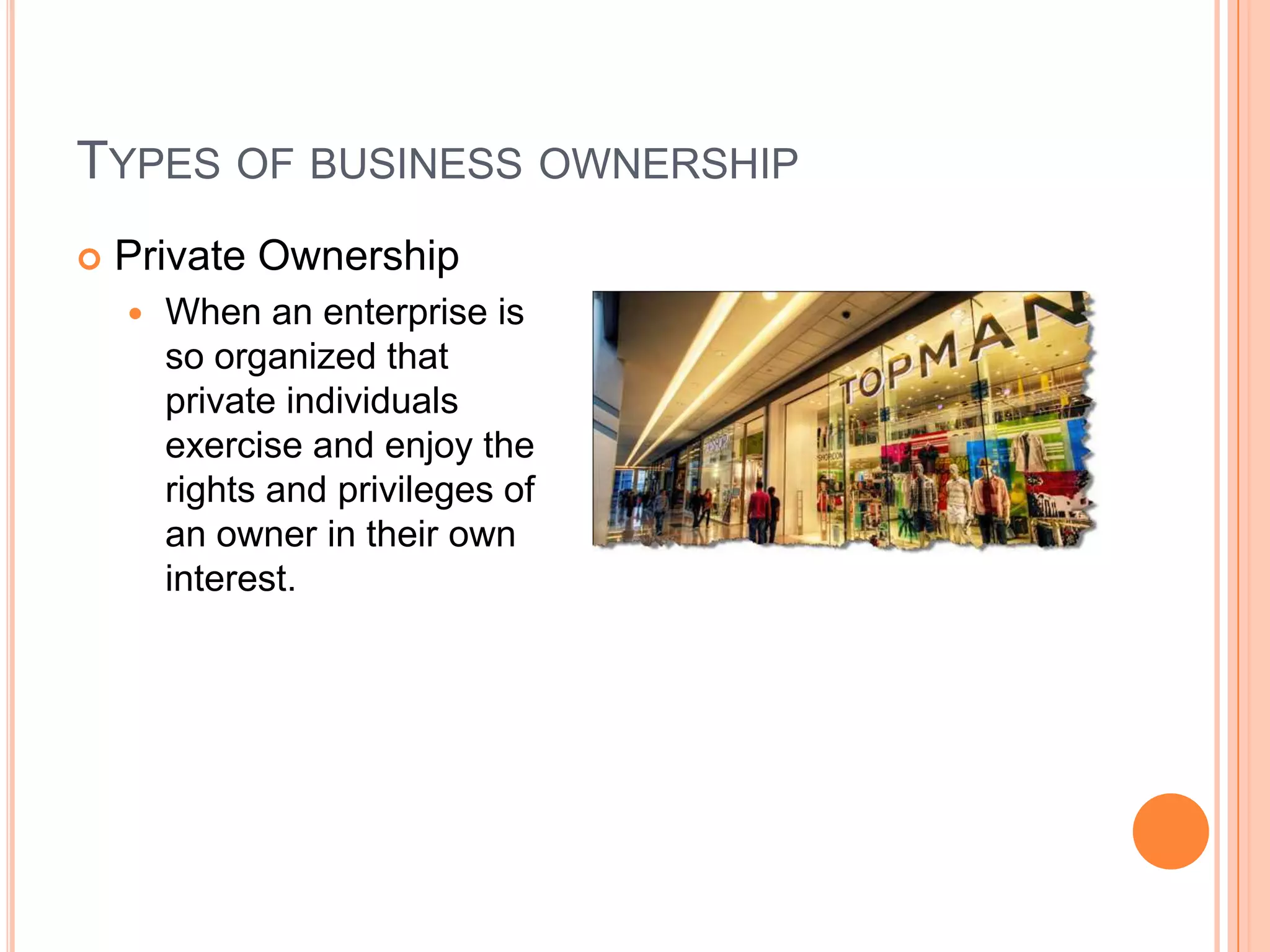
Types of business ownershipPrivate OwnershipWhen an enterprise is so organized that private individuals exercise and enjoy the rights and privileges of an owner in their own interest.
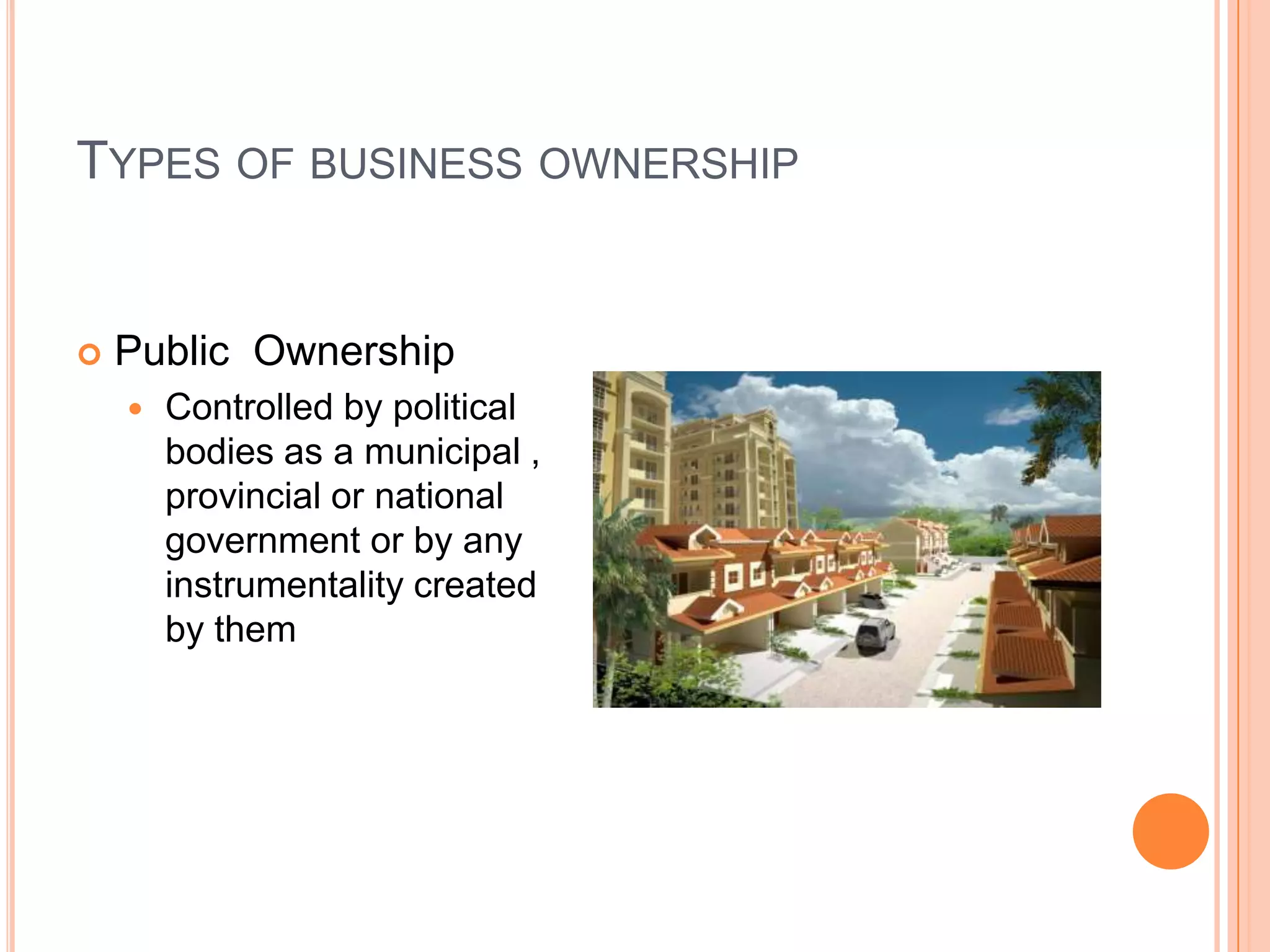
Types of business ownershipPublic  OwnershipControlled by political bodies as a municipal , provincial or national government or by any instrumentality created by them
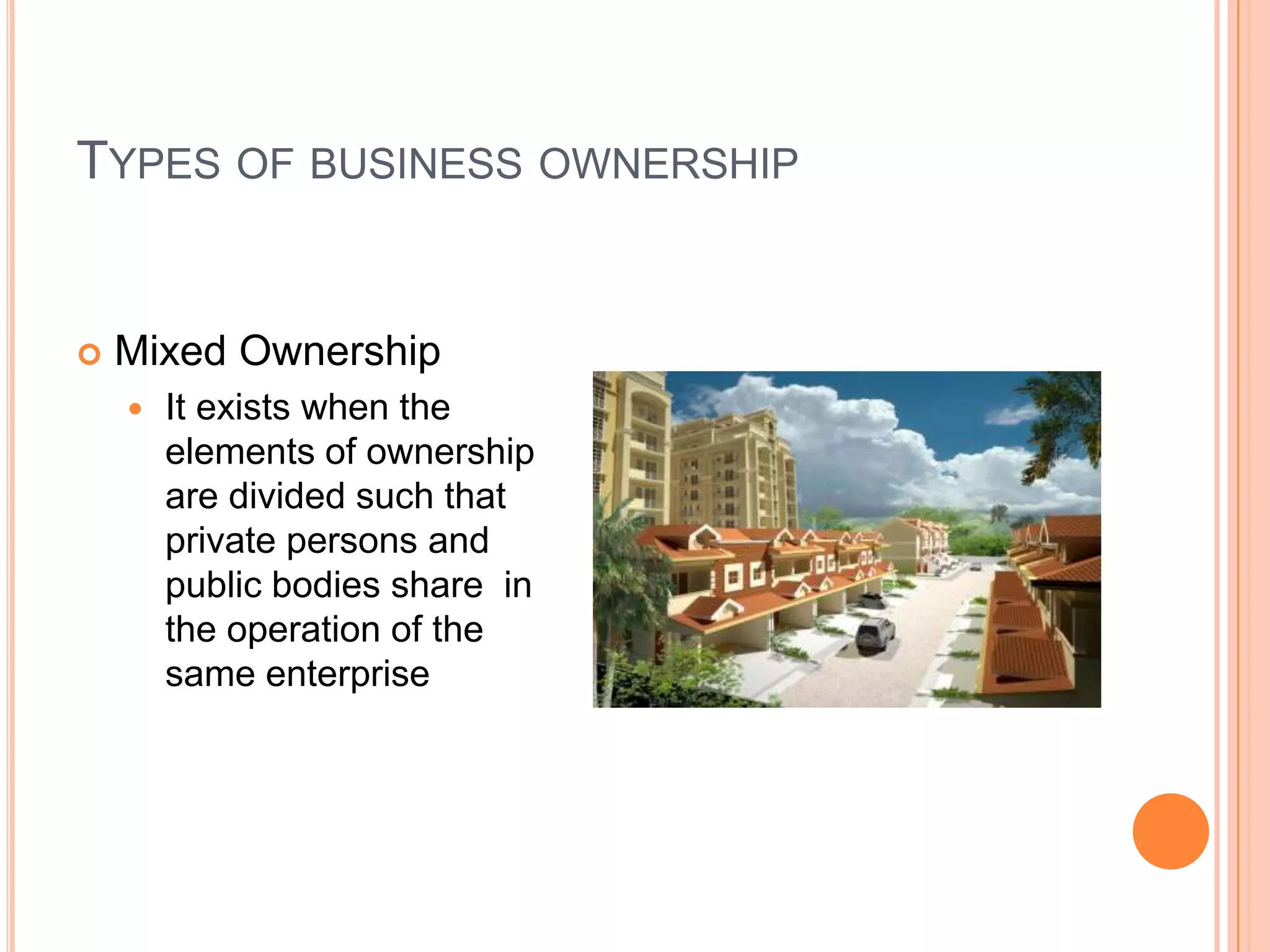
Types of business ownershipMixed OwnershipIt exists when the elements of ownership are divided such that private persons and public bodies share  in the operation of the same enterprise
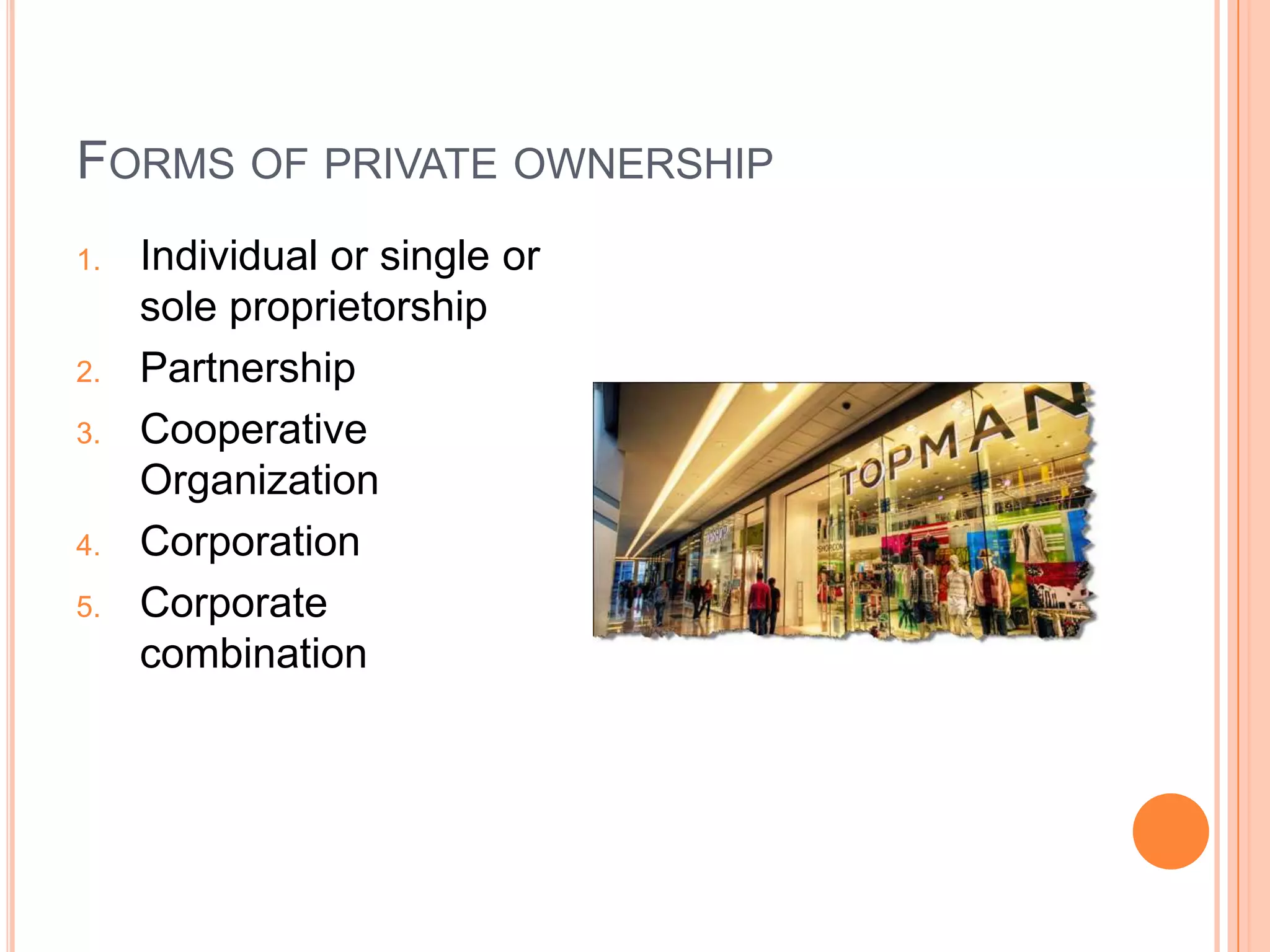
Forms of private ownershipIndividual or single or sole proprietorshipPartnershipCooperative OrganizationCorporationCorporate combination
Factors  involved  in business formsThe nature and size of the businessThe capital required and the means of procuring itThe length of time the enterprise is expected to operateThe technical conditions affecting the enterpriseThe types of products to be manufacturedThe method and volume of productionThe kind of markets to be supplied and methods of marketingThe competitive nature of the chosen industry.
1. Single ProprietorshipThe ownership is vested in one person.This form of ownership is small, requires  but little amount of capital and is readily established  under the control of one man.
Advantages of single proprietorshipIt is easy to start and to terminateControl and management lies entirely in the hands of the ownerOnly a small amount of capital is required in startingProfits belong  entirely to the owner High Credit Standing
Disadvantages of single proprietorshipLimited judgment and wisdom. Limited amount of capitalUnlimited liabilityDifficulties of Management
2. Partnership The business partnership  is a business relationship between two or more persons competent to make contracts for the purpose of engaging in a business activity.
Advantages of partnershipIt could be as easily formed as the single proprietorship.There are more persons to conduct the business and to handle its problems.A partnership has access to greater or better credit facilitiesThe combined ability and resources of partners are a source  of strength.Retention of Valuable Employees
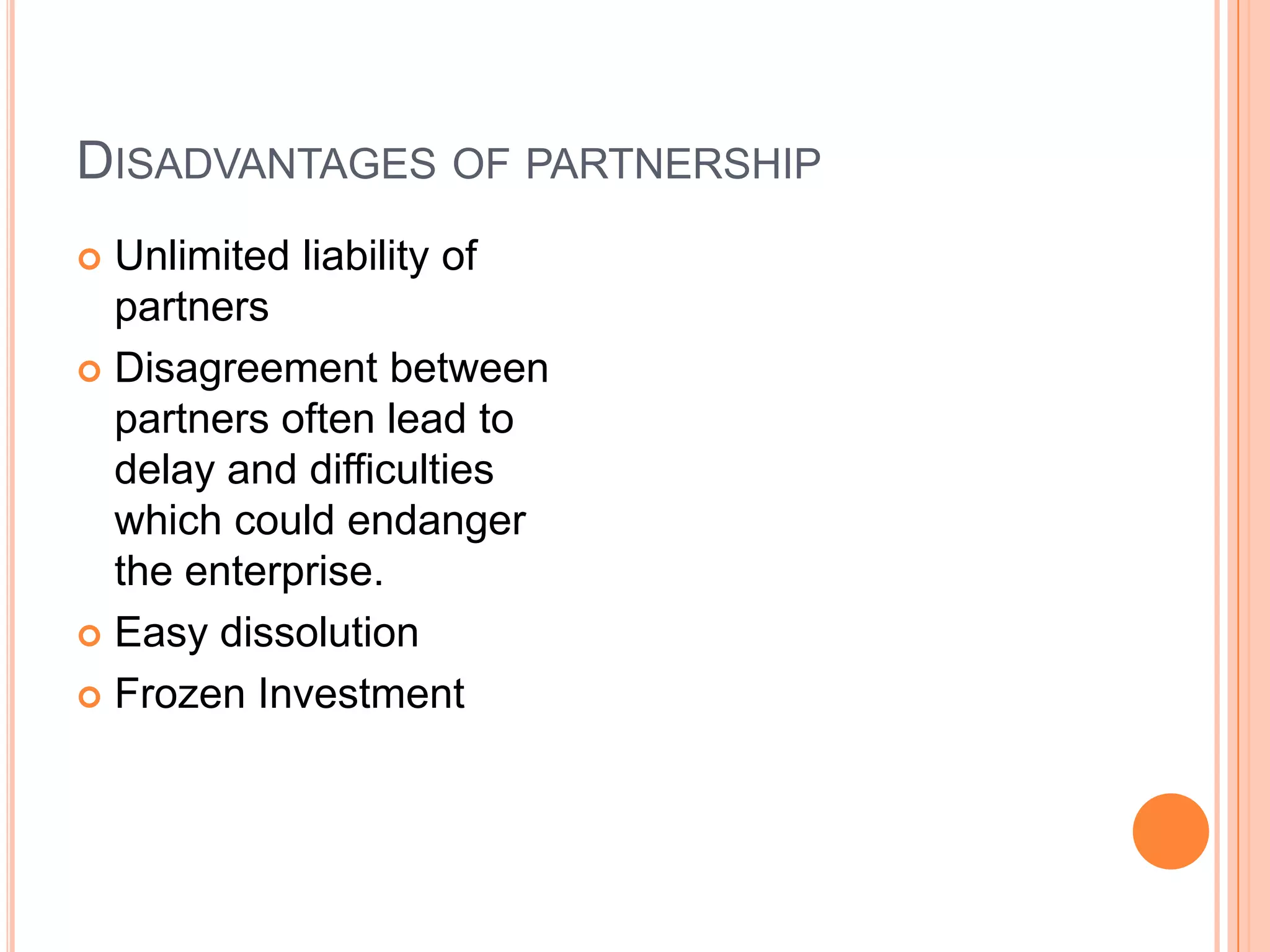
Disadvantages of partnershipUnlimited liability of partnersDisagreement between partners often lead to delay and difficulties which could endanger the enterprise.Easy dissolution Frozen Investment
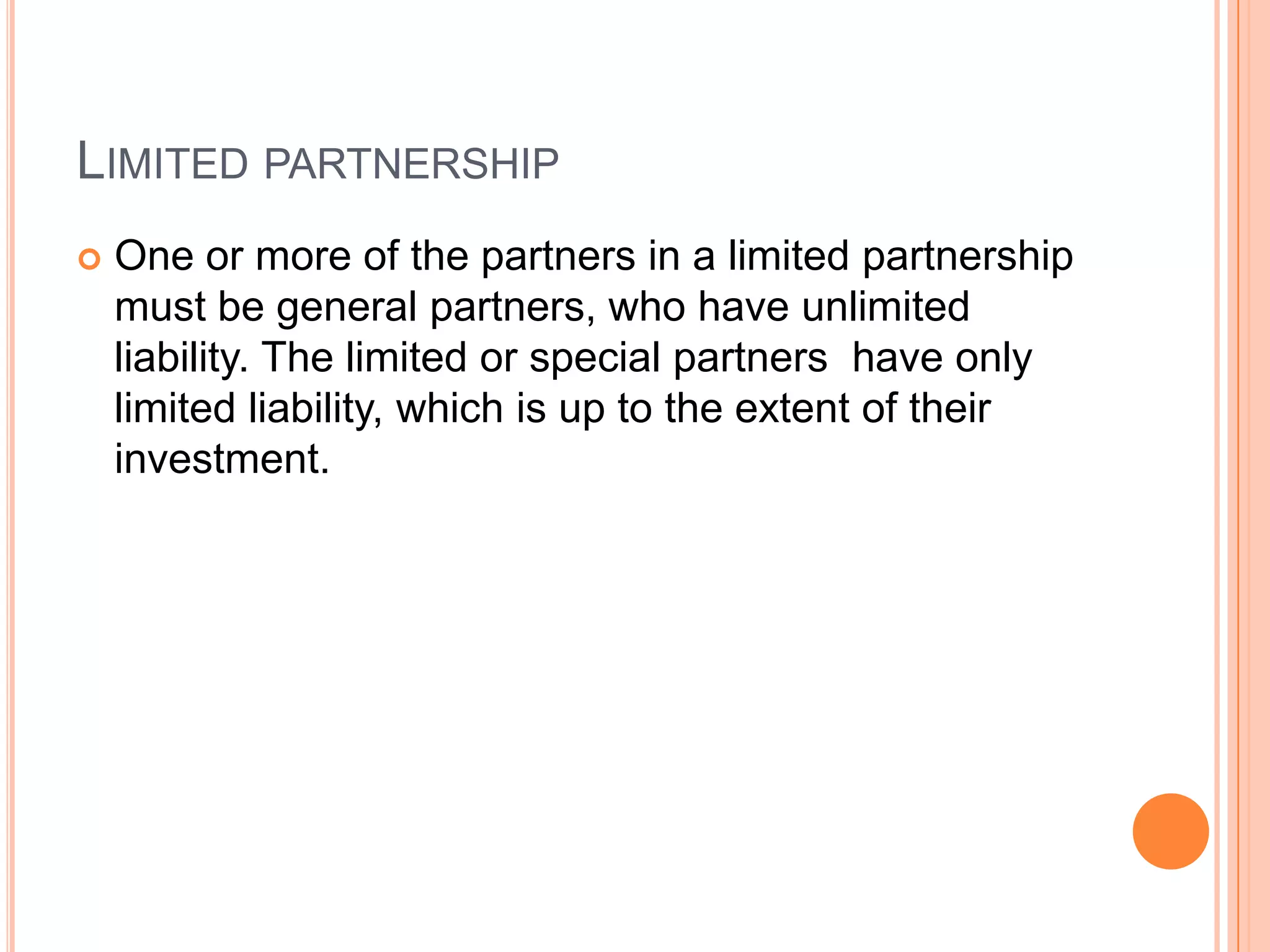
Limited partnershipOne or more of the partners in a limited partnership must be general partners, who have unlimited liability. The limited or special partners  have only limited liability, which is up to the extent of their investment.
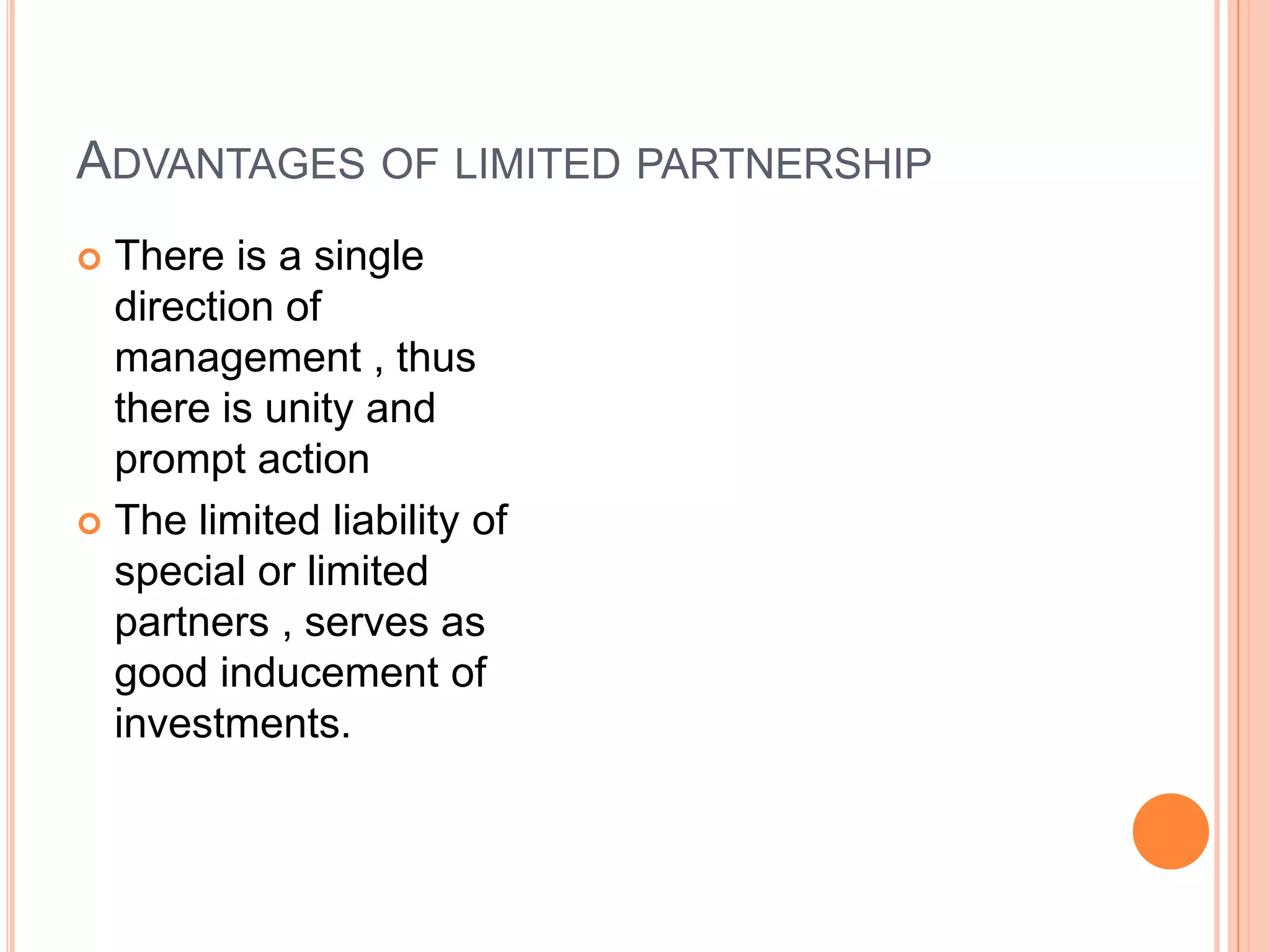
Advantages of limited partnershipThere is a single direction of management , thus there is unity and prompt actionThe limited liability of special or limited partners , serves as good inducement of investments.
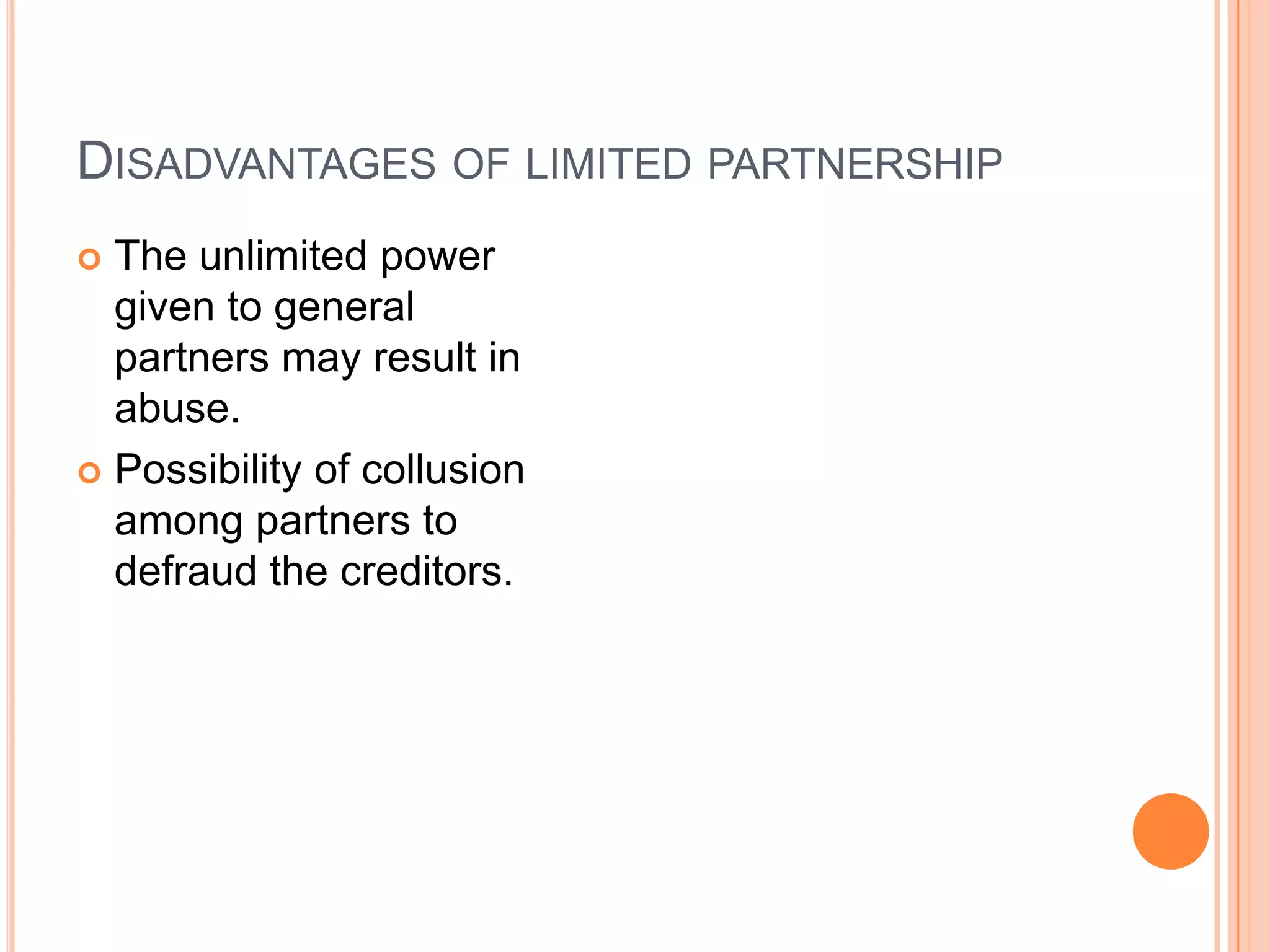
Disadvantages of limited partnershipThe unlimited power given to general partners may result in abuse.Possibility of collusion among partners to defraud the creditors.
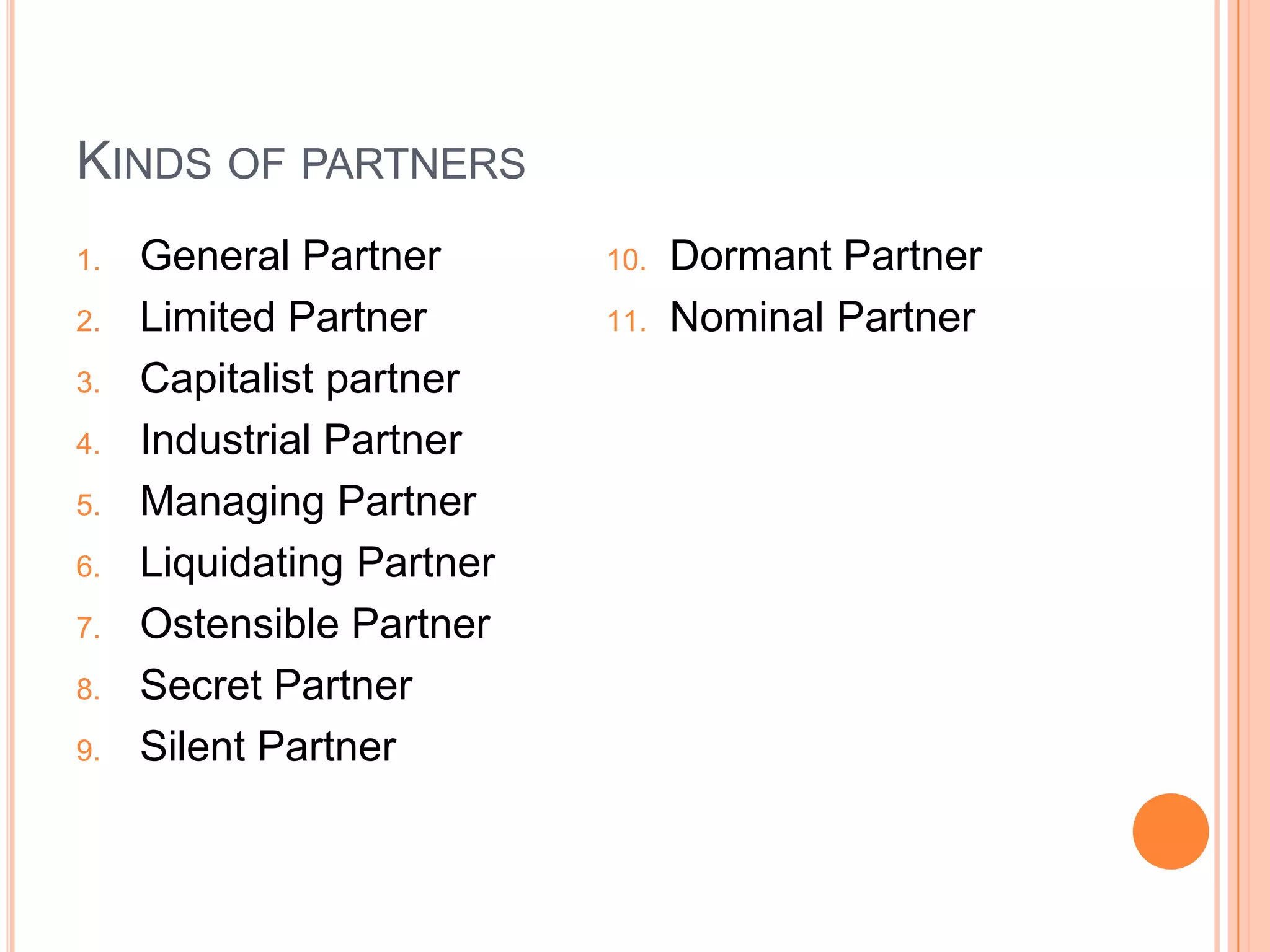
Kinds of partnersGeneral PartnerLimited PartnerCapitalist partnerIndustrial PartnerManaging PartnerLiquidating PartnerOstensible PartnerSecret PartnerSilent PartnerDormant PartnerNominal Partner
Cooperative organization	A cooperative association has some elements of a large partnership  and also many features of a corporation , although it is distinct from both .
Kinds of cooperativeThe Consumer’s CooperativeIt draws its members from the general public. This cooperative carries on retail trade operations.

Chapter 6 Forms Of Business Enterprise

  • 1.
    Ownership and StructuralForms of Business EnterpriseChapter 5
  • 2.
    OwnershipIt meansthe legal title to a thing or control over the thing owned, the right possession and disposal.Title to and possession of the assets of the enterprise , the power to determine the policies of the operation and the right to receive and dispose of the proceeds.
  • 3.
    Types of businessownershipPrivate OwnershipWhen an enterprise is so organized that private individuals exercise and enjoy the rights and privileges of an owner in their own interest.
  • 4.
    Types of businessownershipPublic OwnershipControlled by political bodies as a municipal , provincial or national government or by any instrumentality created by them
  • 5.
    Types of businessownershipMixed OwnershipIt exists when the elements of ownership are divided such that private persons and public bodies share in the operation of the same enterprise
  • 6.
    Forms of privateownershipIndividual or single or sole proprietorshipPartnershipCooperative OrganizationCorporationCorporate combination
  • 7.
    Factors involved in business formsThe nature and size of the businessThe capital required and the means of procuring itThe length of time the enterprise is expected to operateThe technical conditions affecting the enterpriseThe types of products to be manufacturedThe method and volume of productionThe kind of markets to be supplied and methods of marketingThe competitive nature of the chosen industry.
  • 8.
    1. Single ProprietorshipTheownership is vested in one person.This form of ownership is small, requires but little amount of capital and is readily established under the control of one man.
  • 9.
    Advantages of singleproprietorshipIt is easy to start and to terminateControl and management lies entirely in the hands of the ownerOnly a small amount of capital is required in startingProfits belong entirely to the owner High Credit Standing
  • 10.
    Disadvantages of singleproprietorshipLimited judgment and wisdom. Limited amount of capitalUnlimited liabilityDifficulties of Management
  • 11.
    2. Partnership Thebusiness partnership is a business relationship between two or more persons competent to make contracts for the purpose of engaging in a business activity.
  • 12.
    Advantages of partnershipItcould be as easily formed as the single proprietorship.There are more persons to conduct the business and to handle its problems.A partnership has access to greater or better credit facilitiesThe combined ability and resources of partners are a source of strength.Retention of Valuable Employees
  • 13.
    Disadvantages of partnershipUnlimitedliability of partnersDisagreement between partners often lead to delay and difficulties which could endanger the enterprise.Easy dissolution Frozen Investment
  • 14.
    Limited partnershipOne ormore of the partners in a limited partnership must be general partners, who have unlimited liability. The limited or special partners have only limited liability, which is up to the extent of their investment.
  • 15.
    Advantages of limitedpartnershipThere is a single direction of management , thus there is unity and prompt actionThe limited liability of special or limited partners , serves as good inducement of investments.
  • 16.
    Disadvantages of limitedpartnershipThe unlimited power given to general partners may result in abuse.Possibility of collusion among partners to defraud the creditors.
  • 17.
    Kinds of partnersGeneralPartnerLimited PartnerCapitalist partnerIndustrial PartnerManaging PartnerLiquidating PartnerOstensible PartnerSecret PartnerSilent PartnerDormant PartnerNominal Partner
  • 18.
    Cooperative organization A cooperativeassociation has some elements of a large partnership and also many features of a corporation , although it is distinct from both .
  • 19.
    Kinds of cooperativeTheConsumer’s CooperativeIt draws its members from the general public. This cooperative carries on retail trade operations.