CHAPTER 3 DISCUSSION QUESTIONS

1) Define "nutrition."
2) Define "nutrients."
3) On a given day, nearly 1/2 of the people in the US do not eat what?
4) On a given day, almost 1/4 of the people in the US do not eat what?
5) Food availability is not a problem, but what is?
6) What are among the leading causes of death in many developed countries throughout the world, including the US?
7) Up to what % of all cancers may be diet related?
8) What are the essential nutrients?
9) What are the fuel nutrients?
10) What are the regulatory nutrients?
11) What are the macronutrients?
12) What are the micronutrients?
13) What is often called the "7th nutrient" by many nutritionists?
14) Define "nutrient density."
15) Define "calorie."
16) What constitute the major source of calories that the body uses to provide energy for work, to maintain cells, & generate heat?
17) Each gram of carbohydrate provides the human body with how many calories?
18) What are the 2 major types of carbohydrates?
19) Why is fiber important in the diet?
20) What is the recommended fiber intake for adult women 50 years & younger?
21) What is the recommended fiber intake for adult men 50 years & younger?
22) What is the most concentrated energy source for the human body?
23) Each gram of fat provides the human body with how many calories?
24) What are the 3 main groups of fat?
25) What are the main substances the body uses to build & repair tissues?
26) Each gram of proteins provides the human body with how many calories?
27) What are necessary for normal bodily metabolism, growth, & development?
28) What are the 2 types of vitamins?
29) What inorganic nutrients are crucial to maintaining water balance & the acid-base balance?
30) What is the most important nutrient?
31) What % of a man's total body weight is water?
32) What % of a woman's total body weight is water?
HOW DO YOU DEFINE NUTRITION?


SCIENCE THAT STUDIES THE RELATIONSHIP OF FOODS TO
         OPTIMAL HEALTH & PERFORMANCE.
WHY IS GOOD NUTRITION IMPORTANT TO OVERALL
           HEALTH & WELL-BEING?
PROPER NUTRITION MEANS:


1) THAT A PERSON’S DIET
   SUPPLIES ALL THE
   ESSENTIAL NUTRIENTS
   NEEDED TO CARRY OUT
   NORMAL TISSUE GROWTH,
   REPAIR, & MAINTENANCE.
2) THAT A PERSON’S DIET
   PROVIDES ENOUGH
   SUBSTRATES TO PRODUCE
   THE ENERGY NECESSARY
   FOR WORK, PHYSICAL
   ACTIVITY, & RELAXATION.
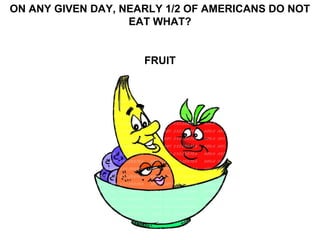
ON ANY GIVEN DAY, NEARLY 1/2 OF AMERICANS DO NOT
                   EAT WHAT?


                     FRUIT
ON ANY GIVEN DAY, NEARLY 1/4 OF AMERICANS DO NOT
                   EAT WHAT?


                  VEGETABLES
IF FOOD AVAILABILITY IS NOT THE PROBLEM, THEN WHAT
                         IS?


     OVERCONSUMPTION OF THE WRONG FOODS
WHAT ARE AMONG THE LEADING CAUSES OF DEATH IN
 MANY DEVELOPED COUNTRIES, INCLUDING THE US?


   DISEASES OF DIETARY EXCESS & IMBALANCE
UP TO WHAT % OF ALL CANCERS MAY BE DIET RELATED?


                      50%
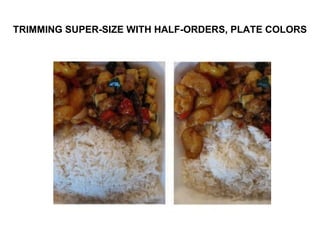
TRIMMING SUPER-SIZE WITH HALF-ORDERS, PLATE COLORS
1) What are one of the culprits behind the epidemic of bulging waistlines?
-GIANT PORTION SIZES.

2) What is "right-sizing?”
-CHOOSING AN APPROPRIATE SIZE PORTION OF FOOD.

3) Americans tend to rely on what to tell us about how much food is left?
-VISUAL CUES.

4) Why do restaurants pile on calorie-dense starches like rice or pasta?
-THEY’RE INEXPENSIVE TO FILL THE PLATE SO IT LOOKS LIKE A GOOD
DEAL.

5) About how many calories does 10 ounces of rice or noodles yield?
-400.

6) What % more pasta do people serve with marinara sauce onto a red
plate than a white one?
-18%.
7) What % more pasta alfredo do people serve onto a white plate than a red one?
-18%.

8) What do people tend to overeat more of than vegetables?
-WHITE STARCHES.

9) What does switching from an 11-inch plate to a 10-inch plate make people do?
-TAKE LESS & WASTE LESS FOOD.

10) What type of glass do people think they're drinking more from?
-TALL SKINNY GLASS.

11) 6-year-olds serve themselves what % more food in an 18-ounce bowl than a
12-ounce bowl?
-44%.

12) Applebees has introduced a line of meals under how many calories?
-550.

13) What term is used to describe smaller-portion entrees?
-MINI-MEALS.

Chapter 3

  • 1.
    CHAPTER 3 DISCUSSIONQUESTIONS 1) Define "nutrition." 2) Define "nutrients." 3) On a given day, nearly 1/2 of the people in the US do not eat what? 4) On a given day, almost 1/4 of the people in the US do not eat what? 5) Food availability is not a problem, but what is? 6) What are among the leading causes of death in many developed countries throughout the world, including the US? 7) Up to what % of all cancers may be diet related? 8) What are the essential nutrients? 9) What are the fuel nutrients? 10) What are the regulatory nutrients? 11) What are the macronutrients? 12) What are the micronutrients? 13) What is often called the "7th nutrient" by many nutritionists? 14) Define "nutrient density." 15) Define "calorie." 16) What constitute the major source of calories that the body uses to provide energy for work, to maintain cells, & generate heat? 17) Each gram of carbohydrate provides the human body with how many calories? 18) What are the 2 major types of carbohydrates? 19) Why is fiber important in the diet? 20) What is the recommended fiber intake for adult women 50 years & younger? 21) What is the recommended fiber intake for adult men 50 years & younger? 22) What is the most concentrated energy source for the human body? 23) Each gram of fat provides the human body with how many calories? 24) What are the 3 main groups of fat? 25) What are the main substances the body uses to build & repair tissues? 26) Each gram of proteins provides the human body with how many calories? 27) What are necessary for normal bodily metabolism, growth, & development? 28) What are the 2 types of vitamins? 29) What inorganic nutrients are crucial to maintaining water balance & the acid-base balance? 30) What is the most important nutrient? 31) What % of a man's total body weight is water? 32) What % of a woman's total body weight is water?
  • 2.
    HOW DO YOUDEFINE NUTRITION? SCIENCE THAT STUDIES THE RELATIONSHIP OF FOODS TO OPTIMAL HEALTH & PERFORMANCE.
  • 3.
    WHY IS GOODNUTRITION IMPORTANT TO OVERALL HEALTH & WELL-BEING?
  • 4.
    PROPER NUTRITION MEANS: 1)THAT A PERSON’S DIET SUPPLIES ALL THE ESSENTIAL NUTRIENTS NEEDED TO CARRY OUT NORMAL TISSUE GROWTH, REPAIR, & MAINTENANCE. 2) THAT A PERSON’S DIET PROVIDES ENOUGH SUBSTRATES TO PRODUCE THE ENERGY NECESSARY FOR WORK, PHYSICAL ACTIVITY, & RELAXATION.
  • 5.
    ON ANY GIVENDAY, NEARLY 1/2 OF AMERICANS DO NOT EAT WHAT? FRUIT
  • 6.
    ON ANY GIVENDAY, NEARLY 1/4 OF AMERICANS DO NOT EAT WHAT? VEGETABLES
  • 7.
    IF FOOD AVAILABILITYIS NOT THE PROBLEM, THEN WHAT IS? OVERCONSUMPTION OF THE WRONG FOODS
  • 8.
    WHAT ARE AMONGTHE LEADING CAUSES OF DEATH IN MANY DEVELOPED COUNTRIES, INCLUDING THE US? DISEASES OF DIETARY EXCESS & IMBALANCE
  • 9.
    UP TO WHAT% OF ALL CANCERS MAY BE DIET RELATED? 50%
  • 10.
    TRIMMING SUPER-SIZE WITHHALF-ORDERS, PLATE COLORS
  • 11.
    1) What areone of the culprits behind the epidemic of bulging waistlines? -GIANT PORTION SIZES. 2) What is "right-sizing?” -CHOOSING AN APPROPRIATE SIZE PORTION OF FOOD. 3) Americans tend to rely on what to tell us about how much food is left? -VISUAL CUES. 4) Why do restaurants pile on calorie-dense starches like rice or pasta? -THEY’RE INEXPENSIVE TO FILL THE PLATE SO IT LOOKS LIKE A GOOD DEAL. 5) About how many calories does 10 ounces of rice or noodles yield? -400. 6) What % more pasta do people serve with marinara sauce onto a red plate than a white one? -18%.
  • 12.
    7) What %more pasta alfredo do people serve onto a white plate than a red one? -18%. 8) What do people tend to overeat more of than vegetables? -WHITE STARCHES. 9) What does switching from an 11-inch plate to a 10-inch plate make people do? -TAKE LESS & WASTE LESS FOOD. 10) What type of glass do people think they're drinking more from? -TALL SKINNY GLASS. 11) 6-year-olds serve themselves what % more food in an 18-ounce bowl than a 12-ounce bowl? -44%. 12) Applebees has introduced a line of meals under how many calories? -550. 13) What term is used to describe smaller-portion entrees? -MINI-MEALS.