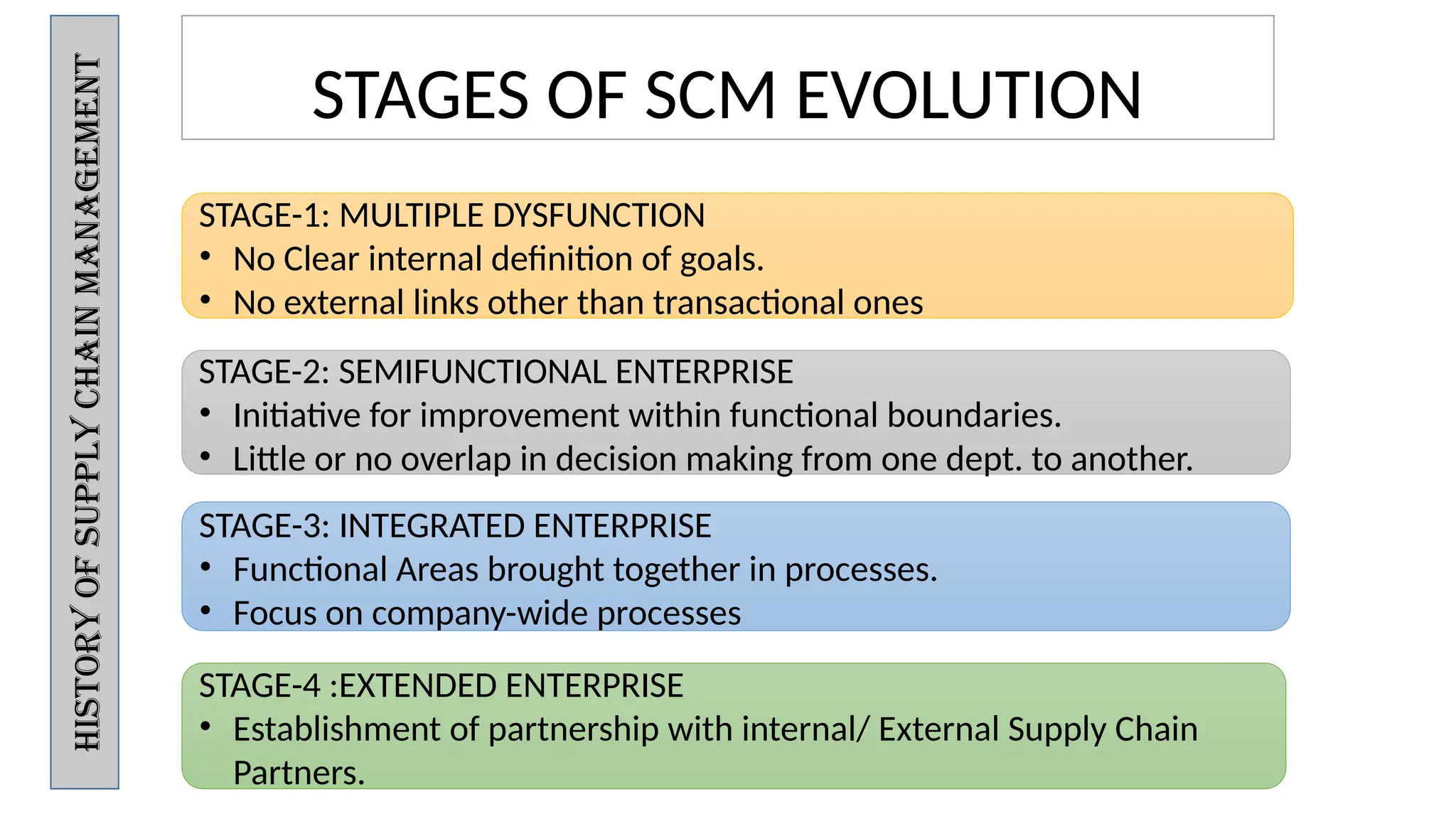
STAGES OF SCMEVOLUTION
STAGE-1: MULTIPLE DYSFUNCTION
• No Clear internal definition of goals.
• No external links other than transactional ones
STAGE-4 :EXTENDED ENTERPRISE
• Establishment of partnership with internal/ External Supply Chain
Partners.
STAGE-3: INTEGRATED ENTERPRISE
• Functional Areas brought together in processes.
• Focus on company-wide processes
STAGE-2: SEMIFUNCTIONAL ENTERPRISE
• Initiative for improvement within functional boundaries.
• Little or no overlap in decision making from one dept. to another.
HISTORY
OF
SUPPLY
CHAIN
MANAGEMENT
3.
What is aSupply Chain?
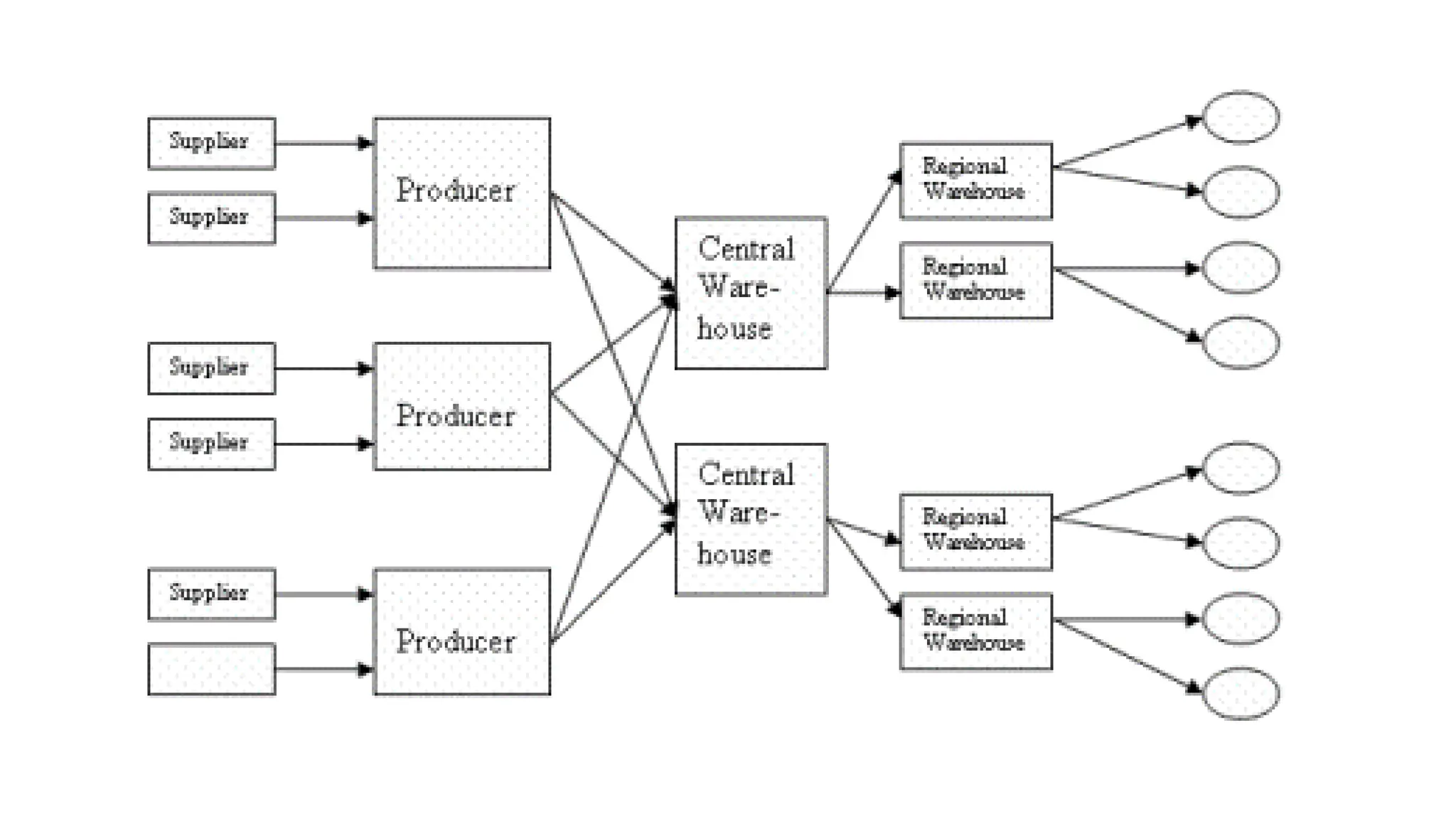
• All stages involved, directly or indirectly, in fulfilling a customer
request
• Includes manufacturers, suppliers, transporters, warehouses,
retailers, and customers
• Within each company, the supply chain includes all functions involved
in fulfilling a customer request (product development, marketing,
operations, distribution, finance, customer service)
4.
What is aSupply Chain?
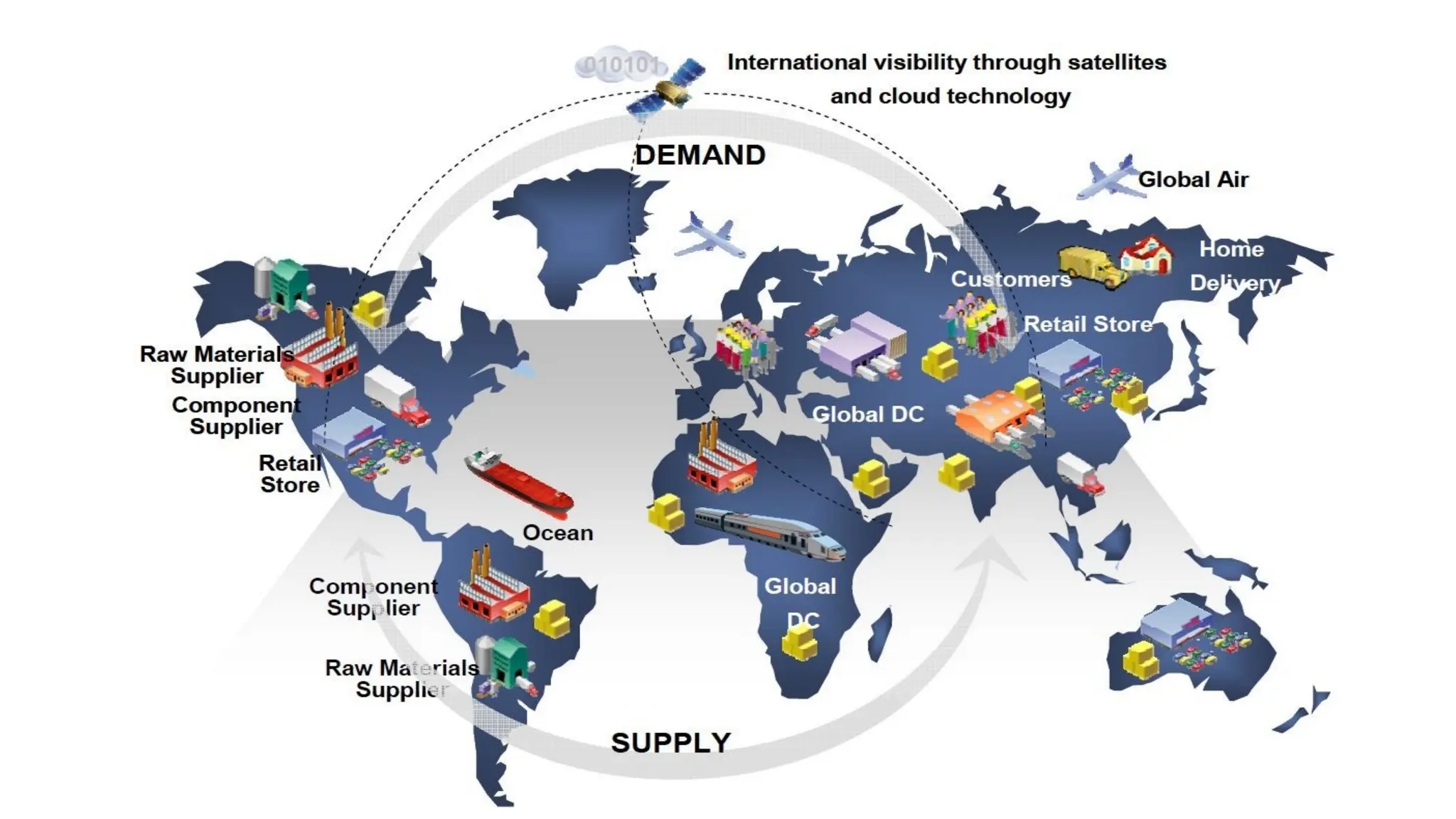
• A supply chain is actually a complex and dynamic supply and demand
network.
• A supply chain is a system of organizations, people, activities,
information, and resources involved in moving a product or service
from supplier to customer.
Source: Wikipedia
5.
What is aSupply Chain?
• Customer is an integral part of the supply chain
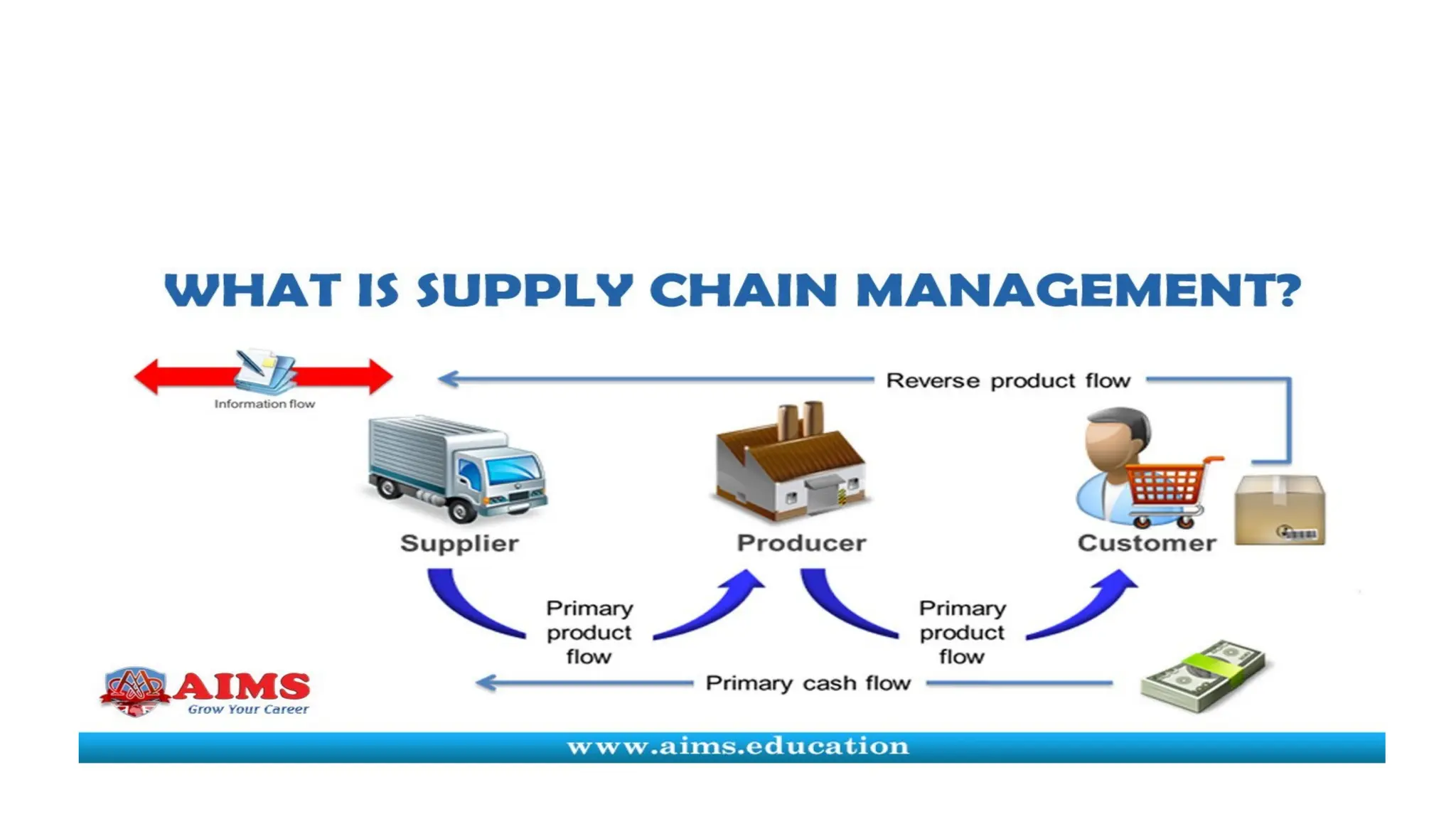
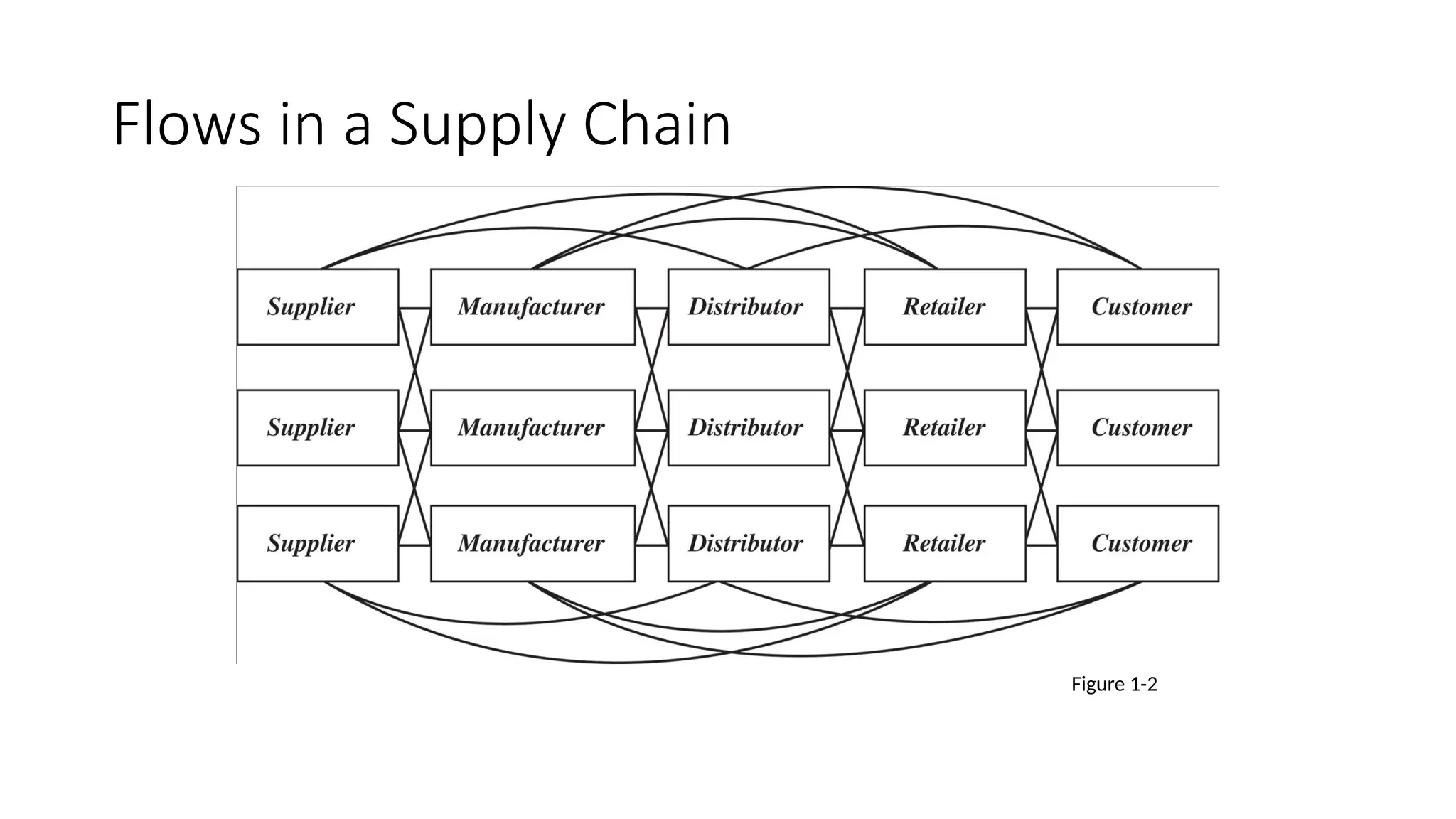
• Includes movement of products from suppliers to manufacturers to
distributors and information, funds, and products in both directions
• May be more accurate to use the term “supply network” or “supply
web”
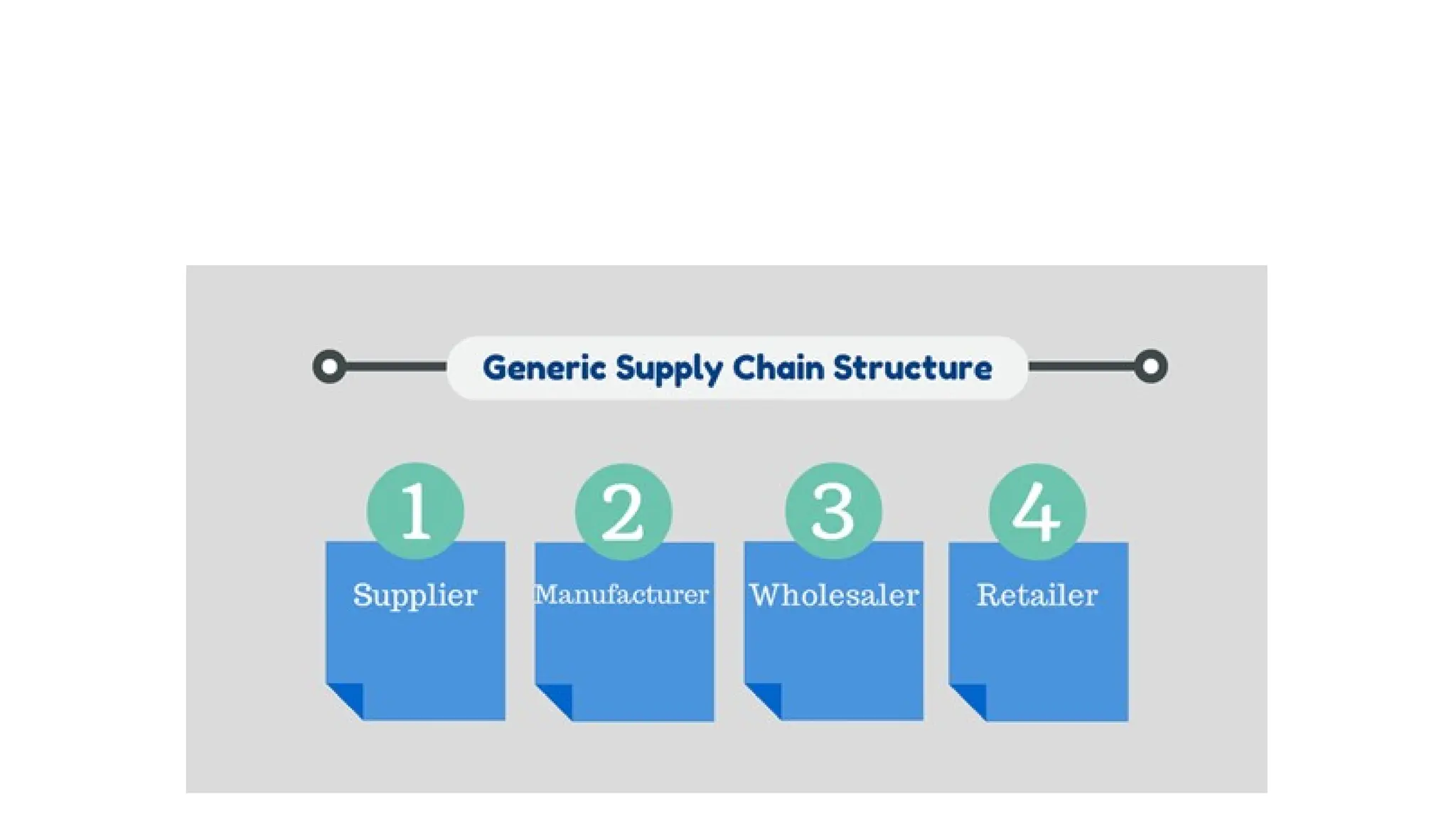
• Typical supply chain stages: customers, retailers, distributors,
manufacturers, suppliers
• All stages may not be present in all supply chains (e.g., no retailer or
distributor for Dell)
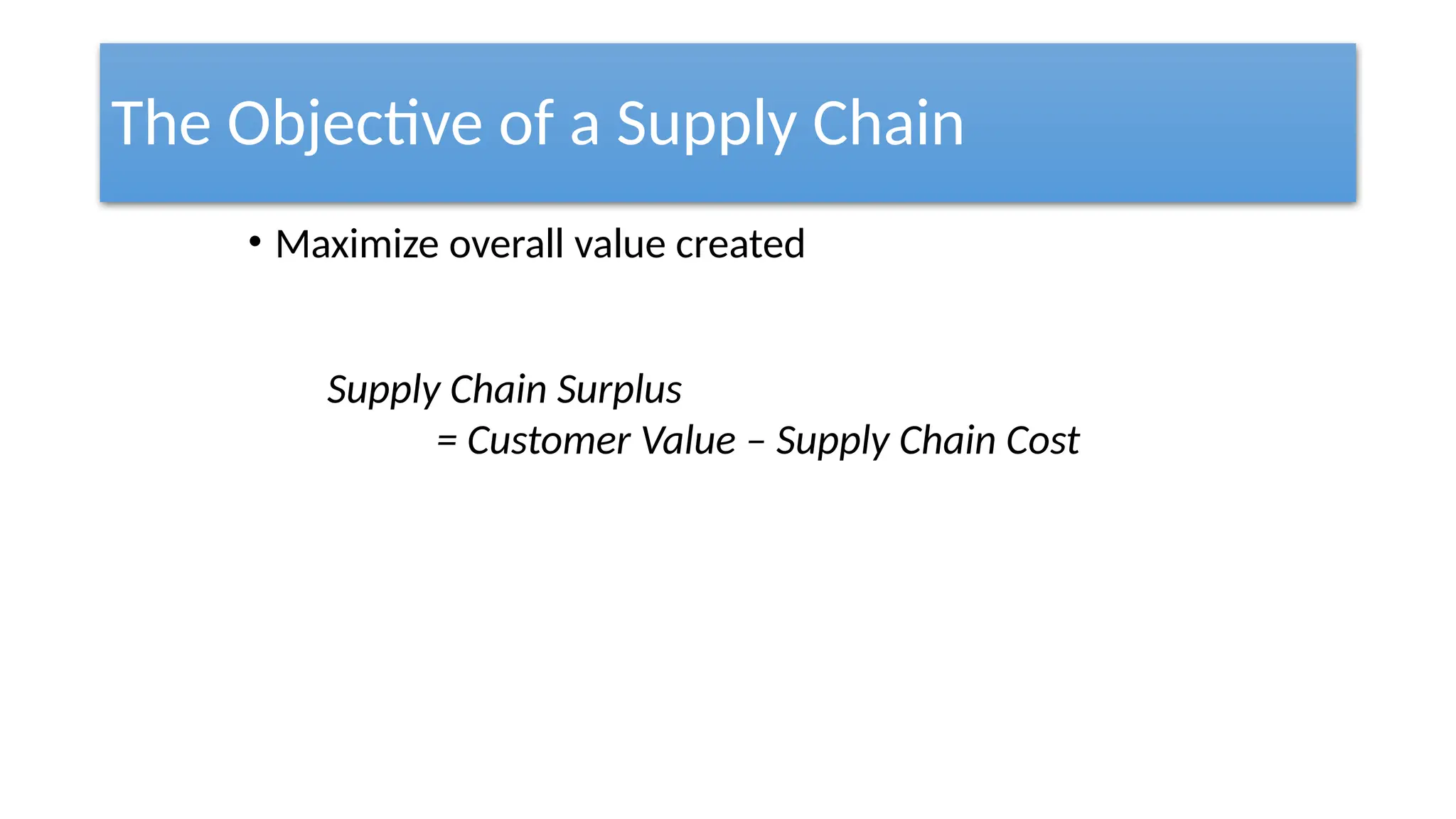
The Objective ofa Supply Chain
• Maximize overall value created
Supply Chain Surplus
= Customer Value – Supply Chain Cost
12.
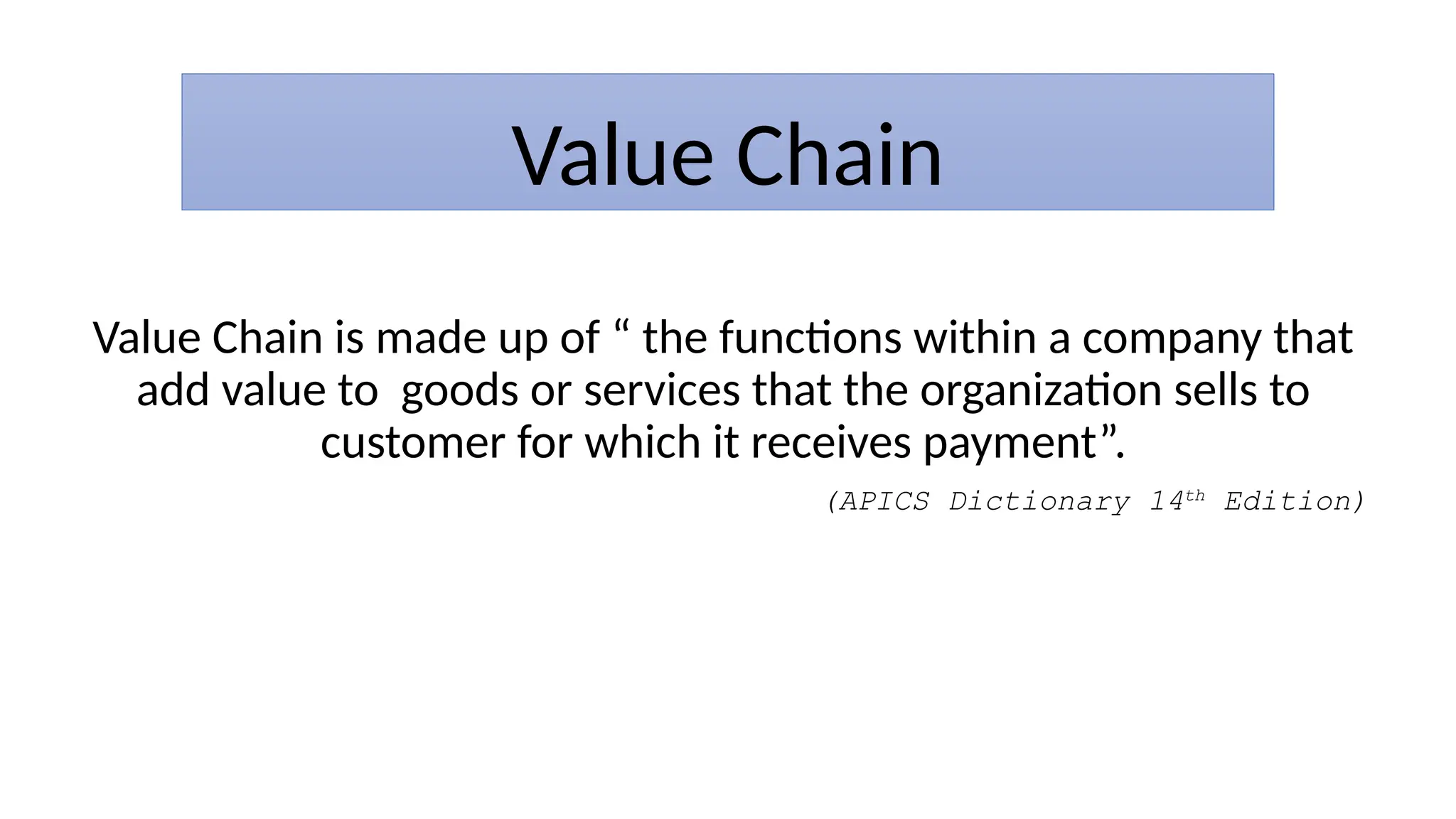
Value Chain
Value Chainis made up of “ the functions within a company that
add value to goods or services that the organization sells to
customer for which it receives payment”.
(APICS Dictionary 14th
Edition)
13.
The Objective ofa Supply Chain
• Example: a customer purchases a wireless router from
Best Buy for $60 (revenue)
• Supply chain incurs costs (information, storage,
transportation, components, assembly, etc.)
• Difference between $60 and the sum of all of these
costs is the supply chain profit
• Supply chain profitability is total profit to be shared
across all stages of the supply chain
• Success should be measured by total supply chain
profitability, not profits at an individual stage
14.
The Objective ofa Supply Chain
• Customer the only source of revenue
• Sources of cost include flows of information, products, or funds
between stages of the supply chain
• Effective supply chain management is the management of flows
between and among supply chain stages to maximize total supply
chain surplus
17.
Decision Phases ofa Supply Chain
• Supply chain strategy or design
• How to structure the supply chain over the next several years
• Supply chain planning
• Decisions over the next quarter or year
• Supply chain operation
• Daily or weekly operational decisions
18.
Supply Chain Strategyor Design
• Decisions about the structure of the supply chain and
what processes each stage will perform
• Strategic supply chain decisions
• Locations and capacities of facilities
• Products to be made or stored at various locations
• Modes of transportation
• Information systems
• Supply chain design must support strategic objectives
• Supply chain design decisions are long-term and
expensive to reverse – must take into account market
uncertainty
19.
Supply Chain Planning
•Definition of a set of policies that govern short-term operations
• Fixed by the supply configuration from previous phase
• Starts with a forecast of demand in the coming year
20.
Supply Chain Planning
•Planning decisions:
• Which markets will be supplied from which locations
• Planned buildup of inventories
• Subcontracting, backup locations
• Inventory policies
• Timing and size of market promotions
• Must consider in planning decisions demand
uncertainty, exchange rates, competition over the
time horizon
21.
Supply Chain Operation
•Time horizon is weekly or daily
• Decisions regarding individual customer orders
• Supply chain configuration is fixed and operating
policies are determined
• Goal is to implement the operating policies as
effectively as possible
• Allocate orders to inventory or production, set order
due dates, generate pick lists at a warehouse, allocate
an order to a particular shipment, set delivery
schedules, place replenishment orders
• Much less uncertainty (short time horizon)
22.
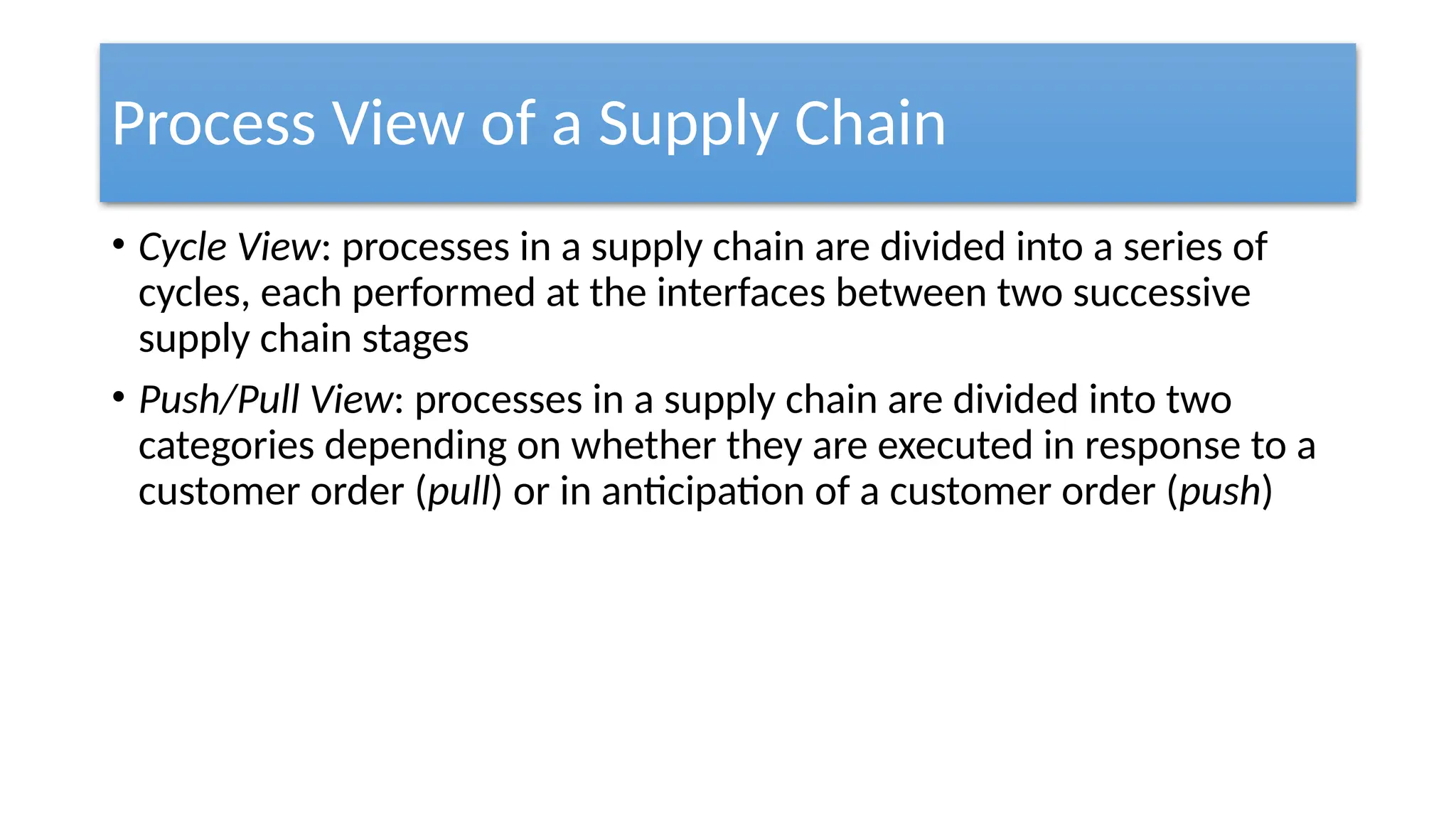
Process View ofa Supply Chain
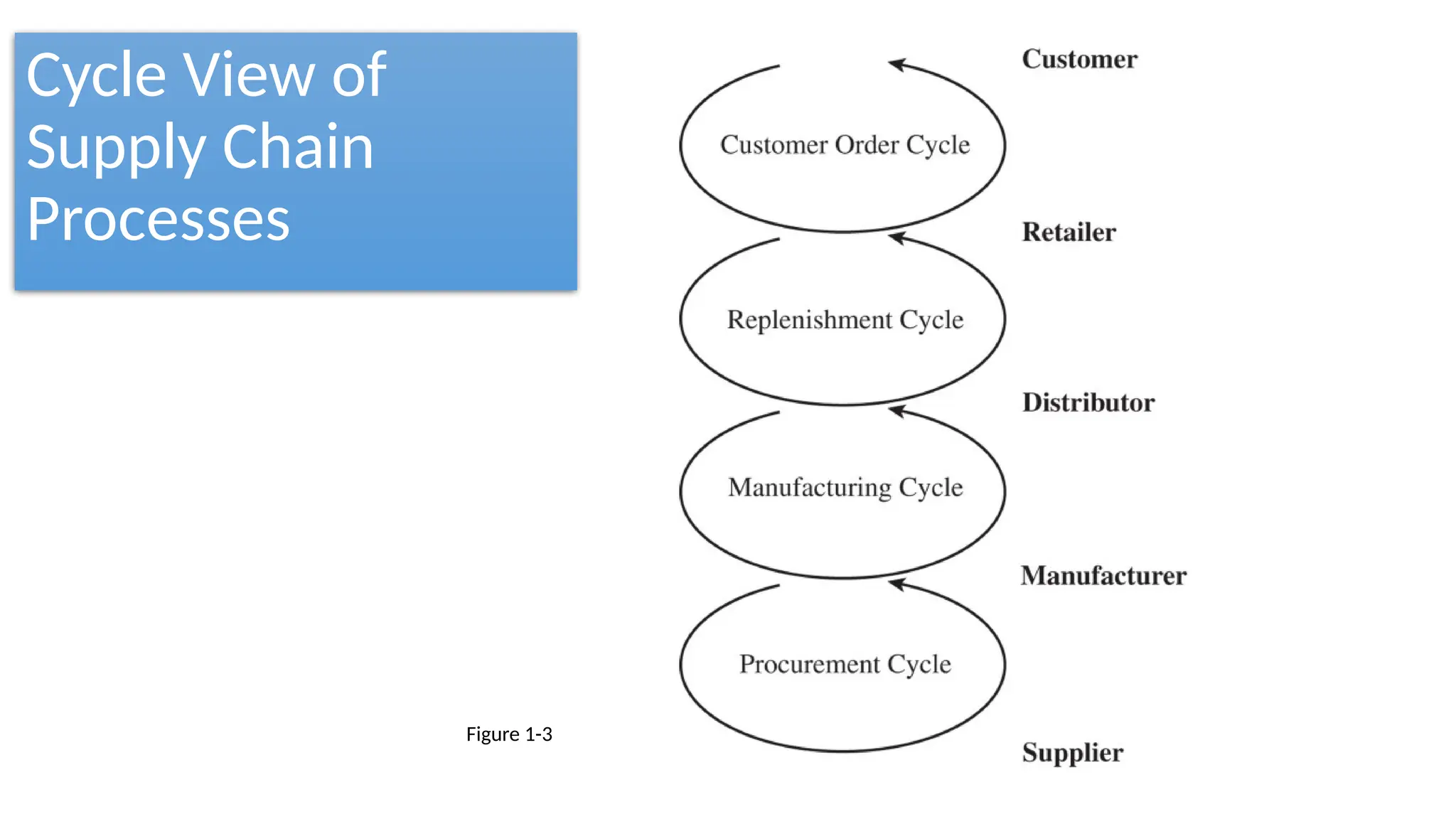
• Cycle View: processes in a supply chain are divided into a series of
cycles, each performed at the interfaces between two successive
supply chain stages
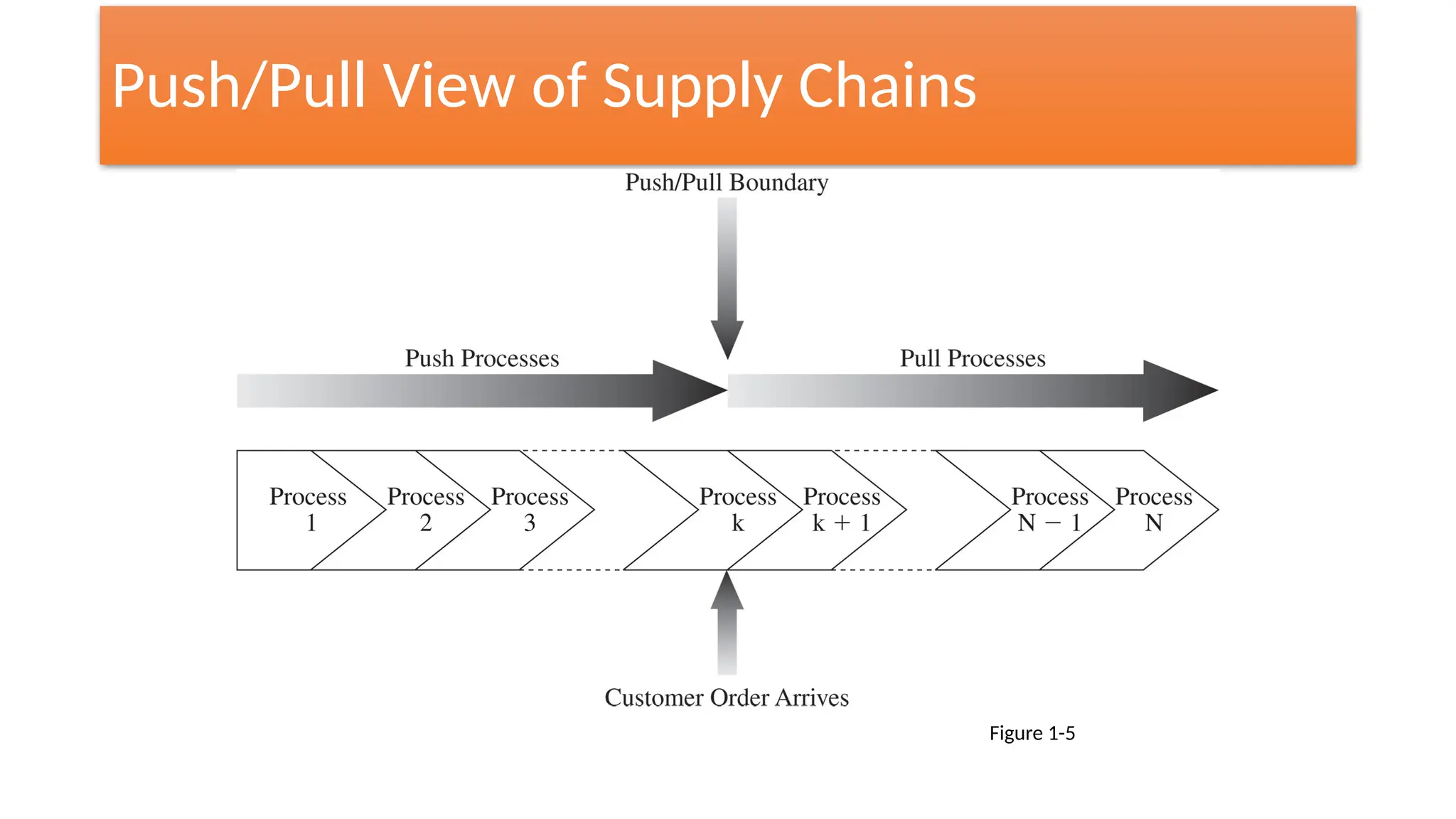
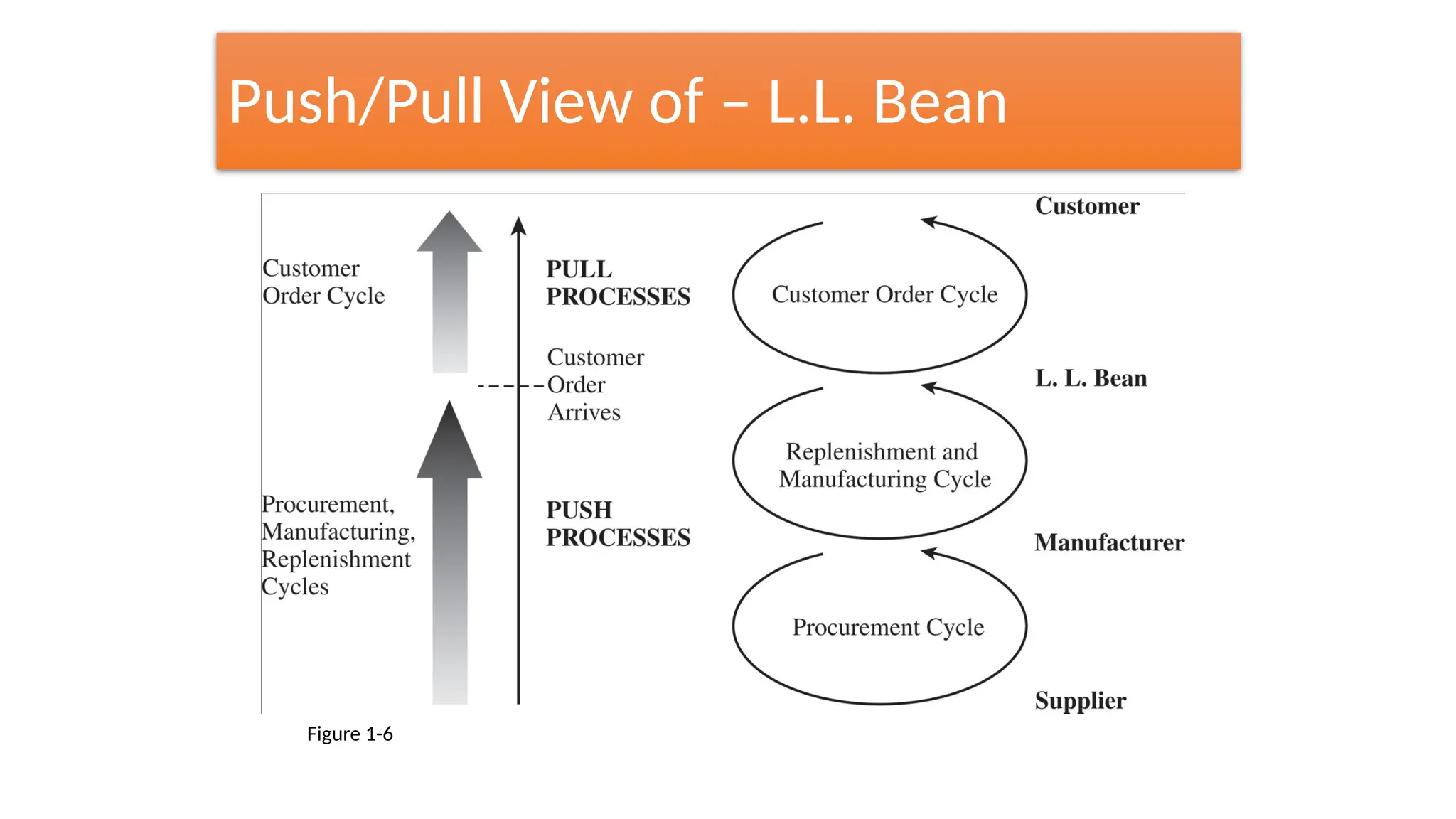
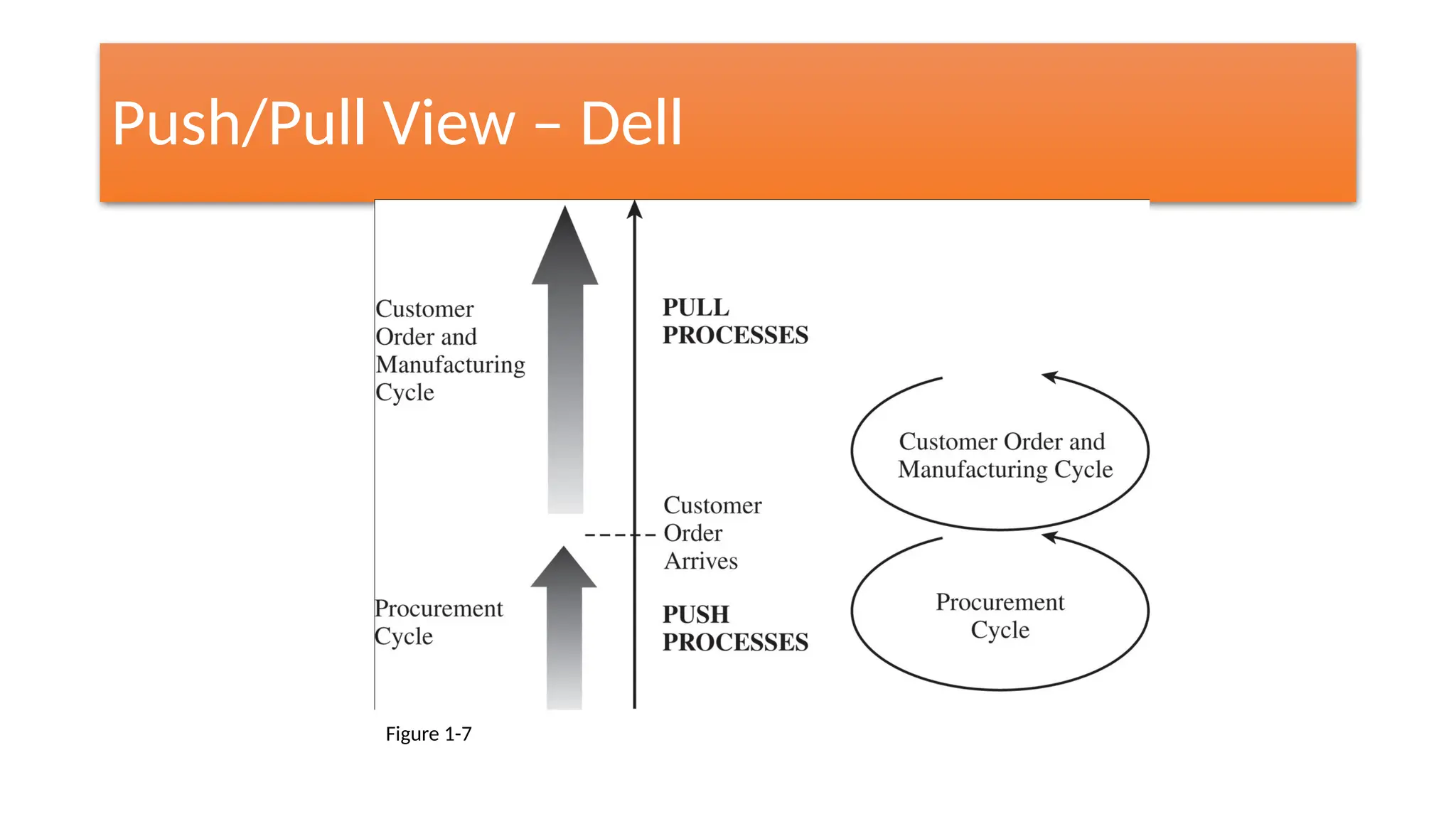
• Push/Pull View: processes in a supply chain are divided into two
categories depending on whether they are executed in response to a
customer order (pull) or in anticipation of a customer order (push)
Push/Pull View of
SupplyChain Processes
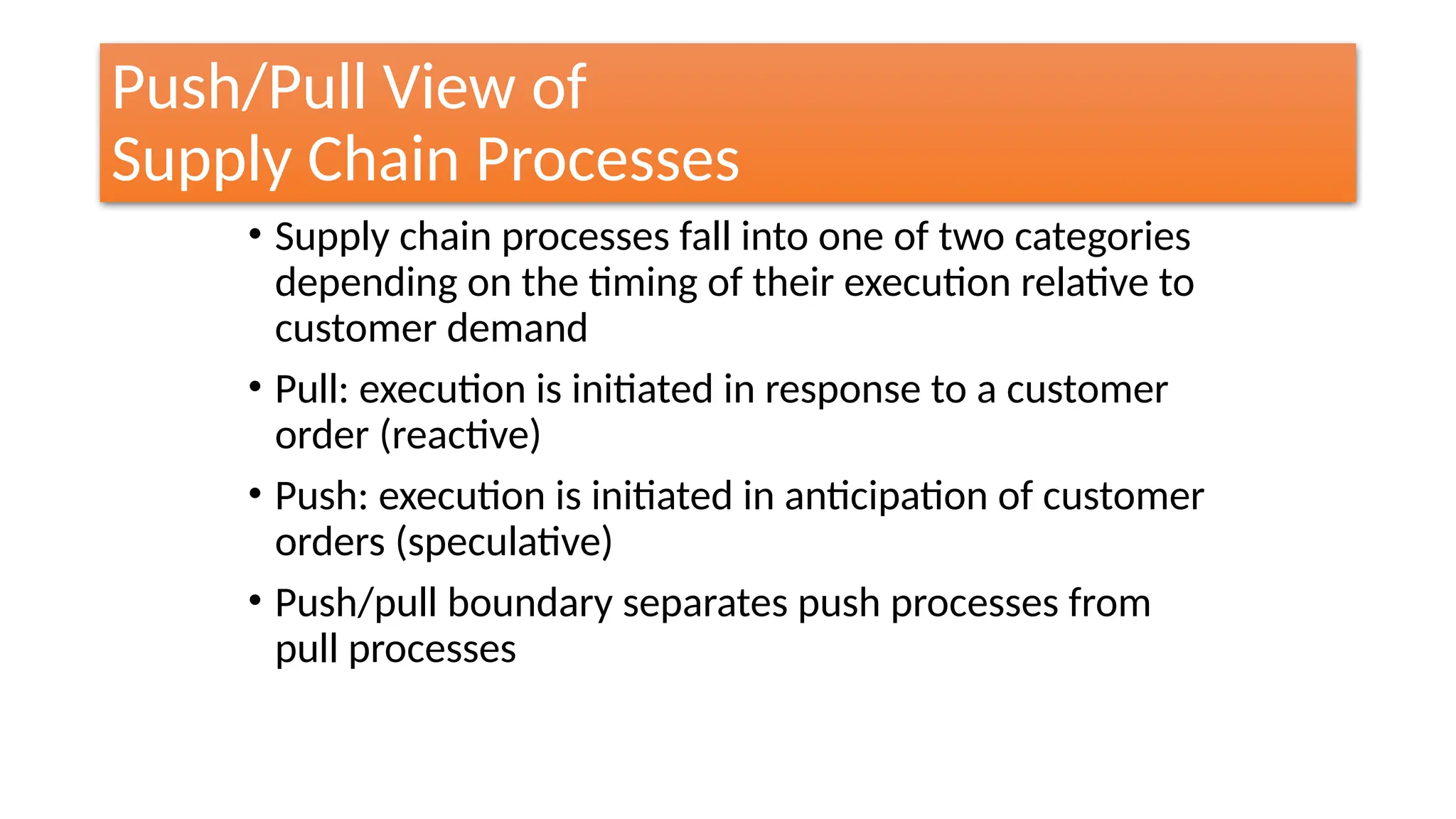
• Supply chain processes fall into one of two categories
depending on the timing of their execution relative to
customer demand
• Pull: execution is initiated in response to a customer
order (reactive)
• Push: execution is initiated in anticipation of customer
orders (speculative)
• Push/pull boundary separates push processes from
pull processes
27.
Push/Pull View of
SupplyChain Processes
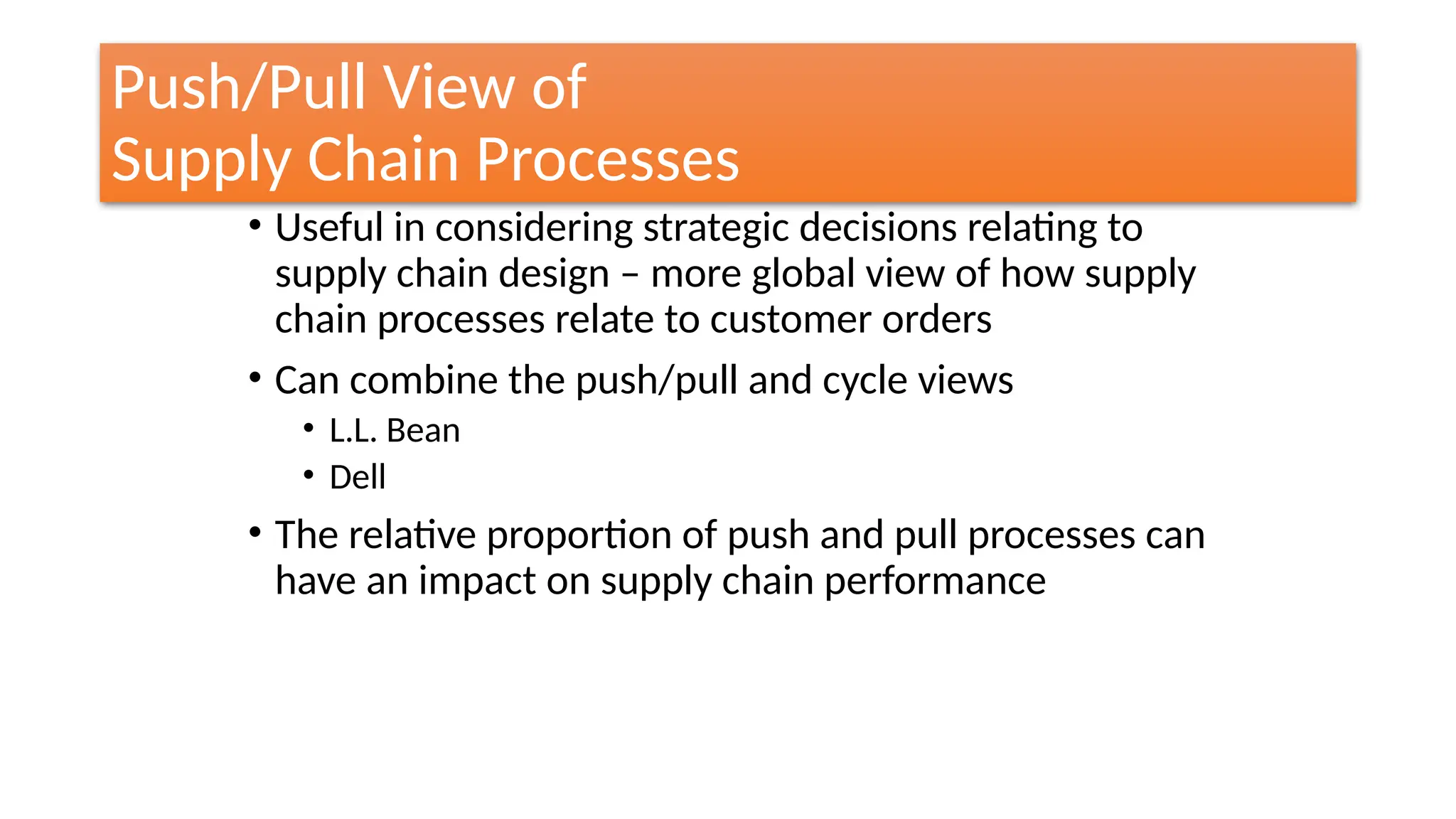
• Useful in considering strategic decisions relating to
supply chain design – more global view of how supply
chain processes relate to customer orders
• Can combine the push/pull and cycle views
• L.L. Bean
• Dell
• The relative proportion of push and pull processes can
have an impact on supply chain performance
Supply Chain MacroProcesses
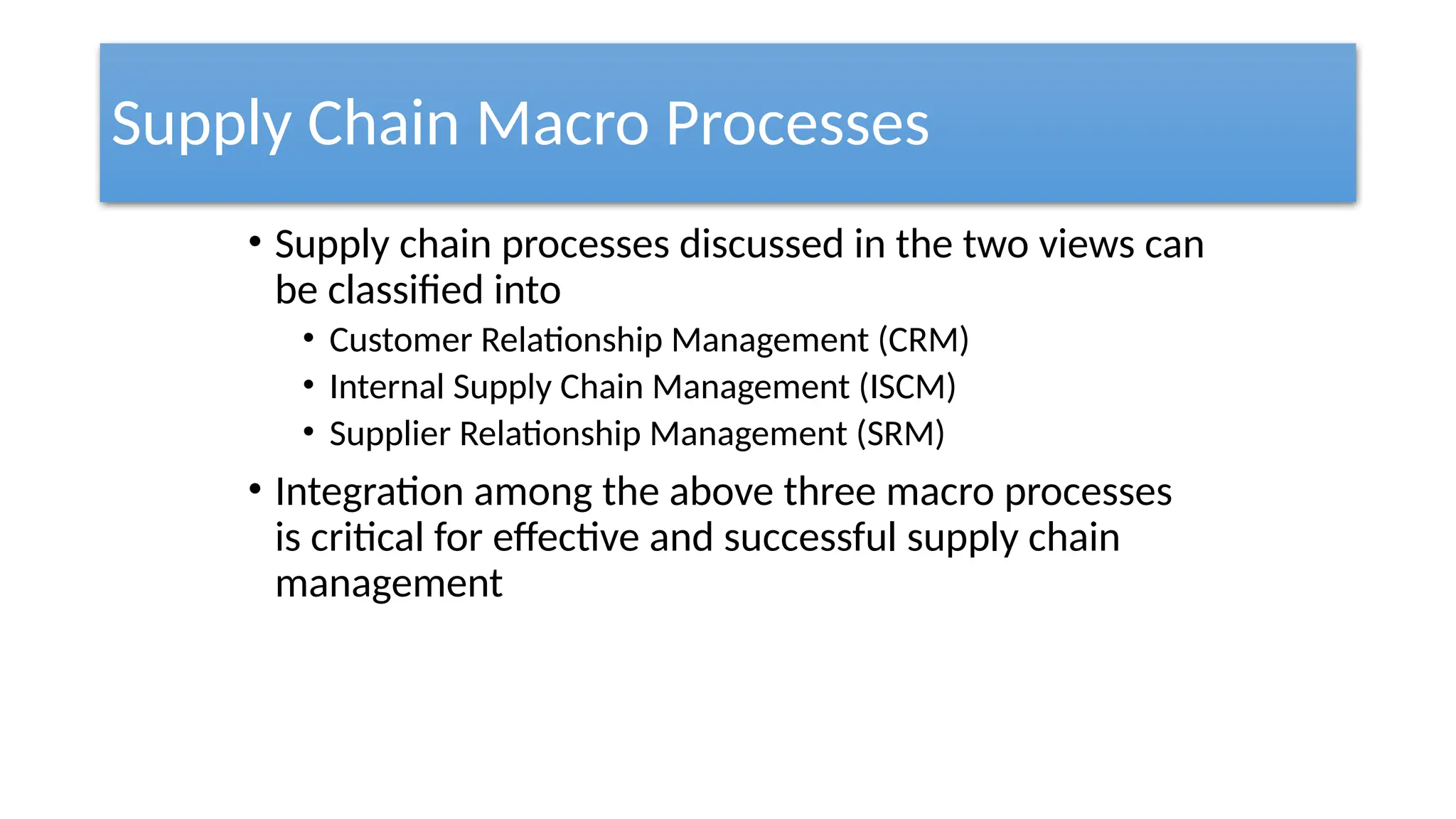
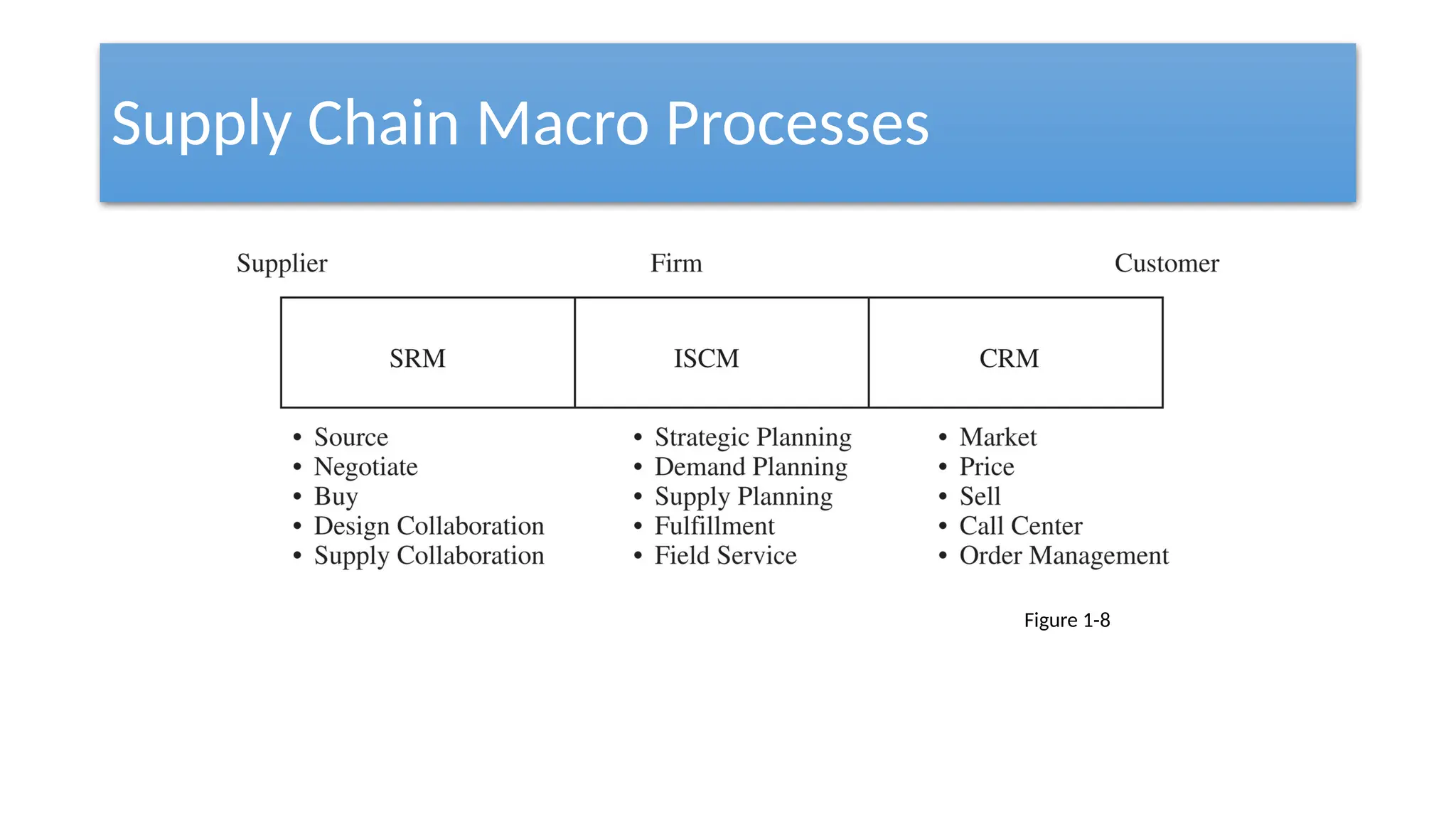
• Supply chain processes discussed in the two views can
be classified into
• Customer Relationship Management (CRM)
• Internal Supply Chain Management (ISCM)
• Supplier Relationship Management (SRM)
• Integration among the above three macro processes
is critical for effective and successful supply chain
management
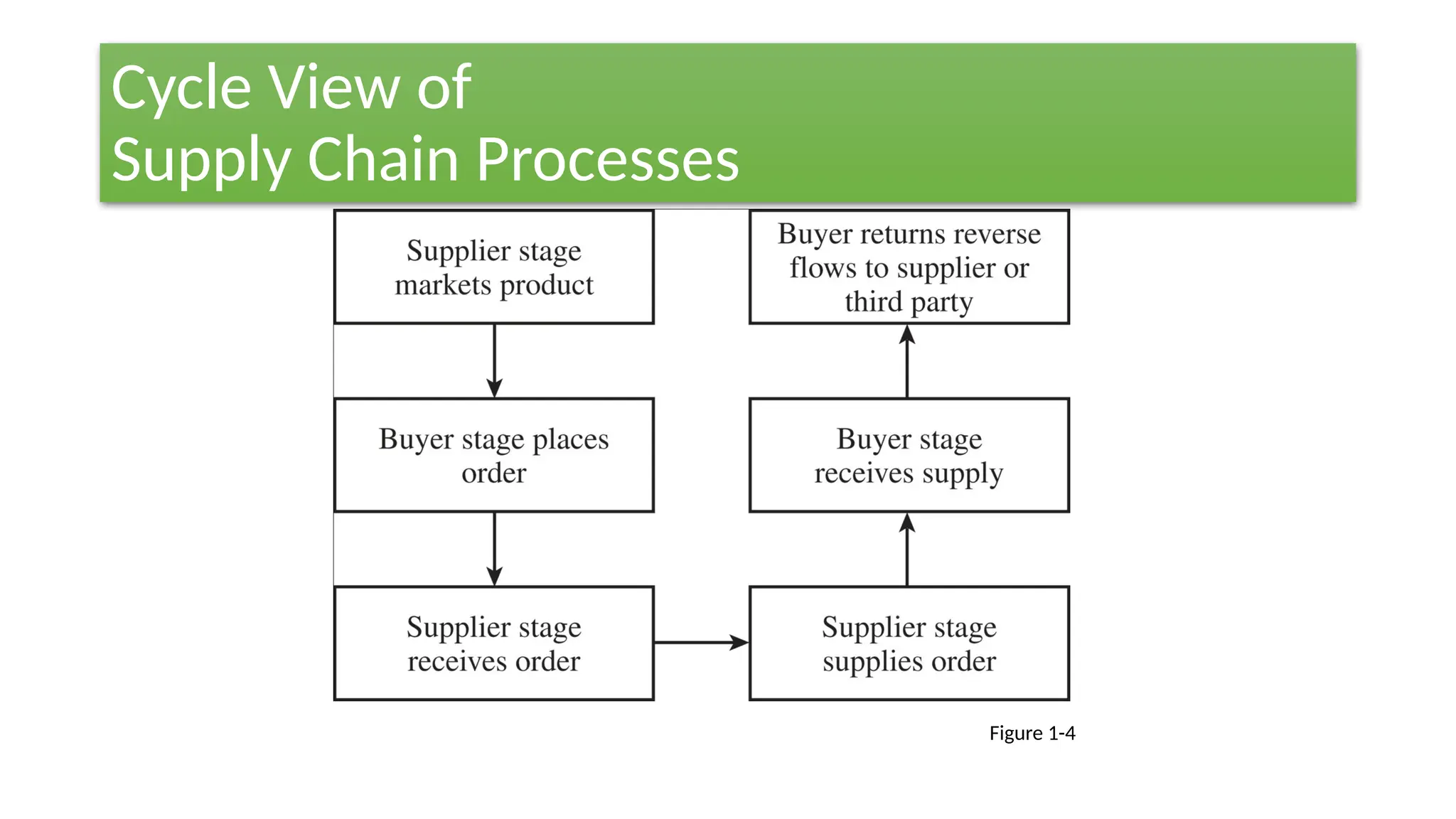
#23 The supply chain is a concatenation of cycles with each cycle at the interface of two successive stages in the supply chain. Each cycle involves the customer stage placing an order and receiving it after it has been supplied by the supplier stage.
One difference is in size of order. Second difference is in predictability of orders - orders in the procurement cycle are predictable once manufacturing planning has been done.
This is the predominant view for ERP systems. It is a transaction level view and clearly defines each process and its owner.
#25 In this view processes are divided based on their timing relative to the timing of a customer order. Define push and pull processes.
They key difference is the uncertainty during the two phases.
Give examples at Amazon and Borders to illustrate the two views