Chapter 1
INTRODUCTION TO
SCIENCE
Science is part of everyday life
1. What is science?
 Science is the systematic study of
nature for the purpose of understanding
how it affects our lives and the
environment / a systematic organization
of knowledge regarding natural
phenomena that is acquired through
observations and systematic
experiments by scientists.
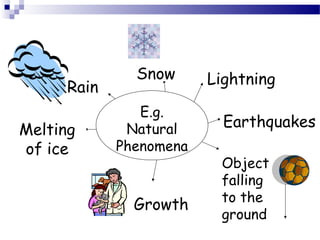
Growth
E.g.
Natural
Phenomena
Rain
Snow Lightning
EarthquakesMelting
of ice
Object
falling
to the
ground
2. Science can be divided into different branches according
to the specialization of the studies. The main branches of
scientific studies are :
 Physics : the study of matter and its relation to
energy
 Chemistry : the study of the composition and
chemical properties of substances
 Biology : the study of living things
 Botany : the study of plants and their structure.
 Geology : the study of rocks and minerals
 Entomology : the study of insects
 Astronomy: the study of planets, stars and
other bodies in the universe
 Meteorology: the study of climates and
weather.
3. The importance of science in specific
areas:
Area Importance
Agriculture
Development of pesticides to
eliminate pests.
Invention of machines for
planting and harvesting.Medicine
Creation of new medicines to
cure diseases.
Invention of modern medical
machines such as haemodialysis
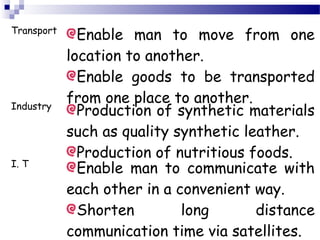
Transport
Enable man to move from one
location to another.
Enable goods to be transported
from one place to another.Industry
Production of synthetic materials
such as quality synthetic leather.
Production of nutritious foods.
I. T
Enable man to communicate with
each other in a convenient way.
Shorten long distance
communication time via satellites.
4. Careers in science include the
following:
Architect – a person who designs
building.
Computer programmer – a developer of
computer software’s programmes.
Doctor – someone trained in medical
science.
Microbiologist- a person who specializes
in the study of microorganisms.
Pharmacist – someone trained in the field
of medicine and drugs.
The importance of science to man:
Man better understands himself and
his surrounding environment.
Numerous new discoveries and
knowledge can be gained.
There will be more science-related
job opportunities such as engineers,
doctors, microbiologists, pharmacist
and others.
6. Technology is the application of
scientific knowledge to provide for
the needs of man to help man to
complete the work quickly and
easily as well as to upgrade his
standard of living.
Questions :
 State 4 natural phenomena that you see
around you.
 State 2 advances made in the medical
science which help us to live healthier
and longer lives.
 The application of scientific has greatly
benefited mankind. Name 4 areas of our
studies which have benefited greatly
from such scientific knowledge.
Answers
 1. Lightning, phases of the moon, germination of
the seed and rain falling from the sky.
 2. The usage of dialysis machines to treat
patients with kidney problems, stethoscope, X-
ray machines, laser beam for operations,
plastics surgery and liposuction.
 3. Transportation, medicine, agriculture, industry
and communication.

Chap1.11

  • 1.
  • 2.
    Science is partof everyday life 1. What is science?  Science is the systematic study of nature for the purpose of understanding how it affects our lives and the environment / a systematic organization of knowledge regarding natural phenomena that is acquired through observations and systematic experiments by scientists.
  • 3.
  • 4.
    2. Science canbe divided into different branches according to the specialization of the studies. The main branches of scientific studies are :  Physics : the study of matter and its relation to energy  Chemistry : the study of the composition and chemical properties of substances  Biology : the study of living things  Botany : the study of plants and their structure.  Geology : the study of rocks and minerals  Entomology : the study of insects  Astronomy: the study of planets, stars and other bodies in the universe  Meteorology: the study of climates and weather.
  • 5.
    3. The importanceof science in specific areas: Area Importance Agriculture Development of pesticides to eliminate pests. Invention of machines for planting and harvesting.Medicine Creation of new medicines to cure diseases. Invention of modern medical machines such as haemodialysis
  • 6.
    Transport Enable man tomove from one location to another. Enable goods to be transported from one place to another.Industry Production of synthetic materials such as quality synthetic leather. Production of nutritious foods. I. T Enable man to communicate with each other in a convenient way. Shorten long distance communication time via satellites.
  • 7.
    4. Careers inscience include the following: Architect – a person who designs building. Computer programmer – a developer of computer software’s programmes. Doctor – someone trained in medical science. Microbiologist- a person who specializes in the study of microorganisms. Pharmacist – someone trained in the field of medicine and drugs.
  • 8.
    The importance ofscience to man: Man better understands himself and his surrounding environment. Numerous new discoveries and knowledge can be gained. There will be more science-related job opportunities such as engineers, doctors, microbiologists, pharmacist and others.
  • 9.
    6. Technology isthe application of scientific knowledge to provide for the needs of man to help man to complete the work quickly and easily as well as to upgrade his standard of living.
  • 10.
    Questions :  State4 natural phenomena that you see around you.  State 2 advances made in the medical science which help us to live healthier and longer lives.  The application of scientific has greatly benefited mankind. Name 4 areas of our studies which have benefited greatly from such scientific knowledge.
  • 11.
    Answers  1. Lightning,phases of the moon, germination of the seed and rain falling from the sky.  2. The usage of dialysis machines to treat patients with kidney problems, stethoscope, X- ray machines, laser beam for operations, plastics surgery and liposuction.  3. Transportation, medicine, agriculture, industry and communication.