1
2
We noticed that science is part of everyday life.
-The objects we see.
-The food we eat.
-The clothes we wear.
-The growth we experience.
-The transport we take.
-The computer and energy we use.
 How does a ship float?
 Why does some birds fly south for the winter?
 Can life exist on other planets?
 Why does an astronaut float in outer space?
 How does the butterfly help plant when it feeds on
flowers?
 What is the role of sc in health care?
 How is an X-ray film produced?
3
4
•People are searching for the answer
for above question.
•The answer for the question are
complex and require careful thought
and study.
•Many facts are needed to answer
the question correctly.
5
 Science is the systematic study of things
around us.
 Science is the systematic study of nature and
how it affects us and the environment.
 Science is the knowledge of thing that
happen in nature – “natural phenomena”,
not made or cause by humans.
6
7
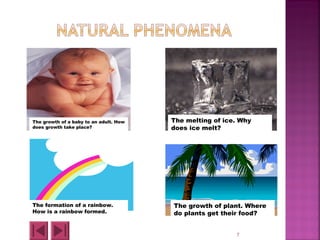
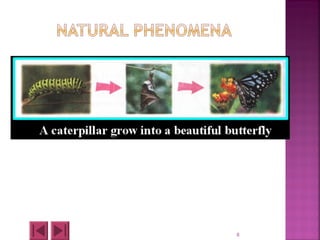
The growth of plant. Where
do plants get their food?
The formation of a rainbow.
How is a rainbow formed.
The growth of a baby to an adult. How
does growth take place?
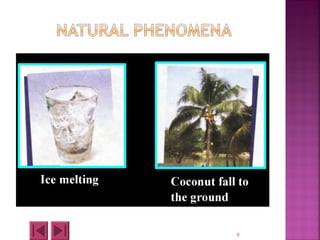
The melting of ice. Why
does ice melt?
8
9
 Biology
 Physics
 Chemistry
 Geology
 Astronomy
 Meteorology
10
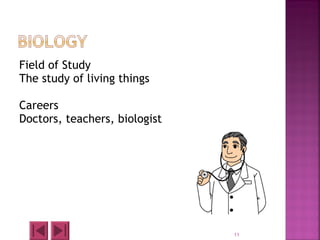
Field of Study
The study of living things
Careers
Doctors, teachers, biologist
11
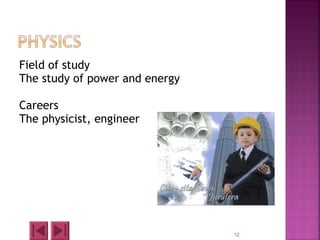
Field of study
The study of power and energy
Careers
The physicist, engineer
12
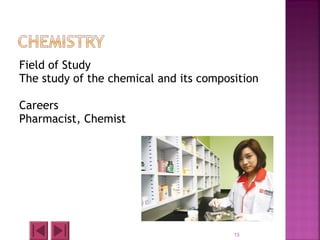
Field of Study
The study of the chemical and its composition
Careers
Pharmacist, Chemist
13
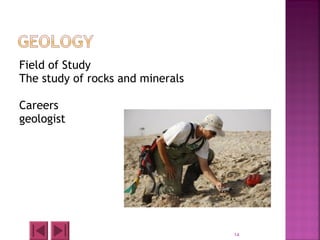
Field of Study
The study of rocks and minerals
Careers
geologist
14
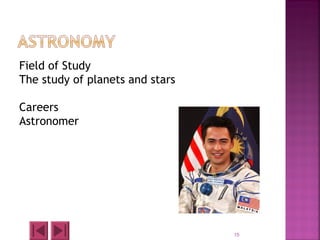
Field of Study
The study of planets and stars
Careers
Astronomer
15
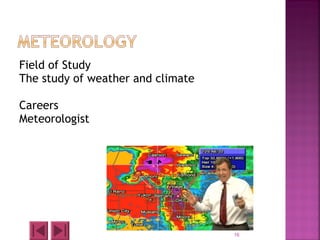
Field of Study
The study of weather and climate
Careers
Meteorologist
16
17
 Is science important only to scientists?
 Can ordinary people benefit from it?
 Why do we need to understand science?
 Who is scientists?
18
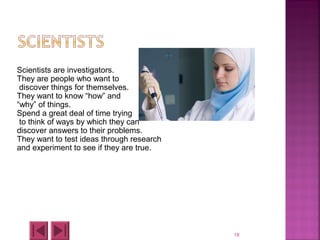
Scientists are investigators.
They are people who want to
discover things for themselves.
They want to know “how” and
“why” of things.
Spend a great deal of time trying
to think of ways by which they can
discover answers to their problems.
They want to test ideas through research
and experiment to see if they are true.
19
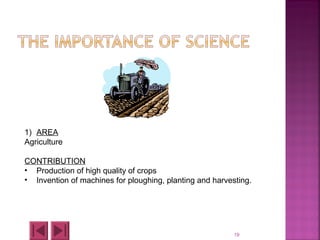
1) AREA
Agriculture
CONTRIBUTION
• Production of high quality of crops
• Invention of machines for ploughing, planting and harvesting.
20
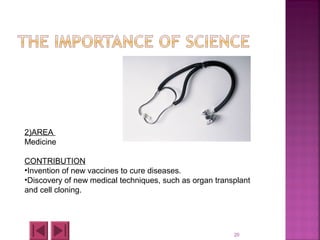
2)AREA
Medicine
CONTRIBUTION
•Invention of new vaccines to cure diseases.
•Discovery of new medical techniques, such as organ transplant
and cell cloning.
21
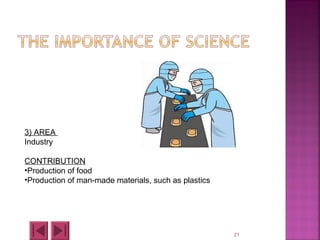
3) AREA
Industry
CONTRIBUTION
•Production of food
•Production of man-made materials, such as plastics
22
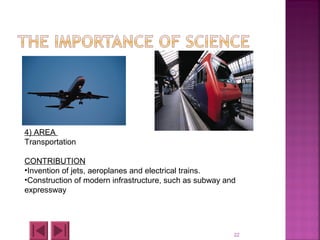
4) AREA
Transportation
CONTRIBUTION
•Invention of jets, aeroplanes and electrical trains.
•Construction of modern infrastructure, such as subway and
expressway
23
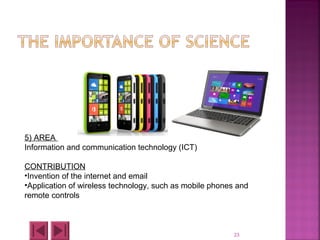
5) AREA
Information and communication technology (ICT)
CONTRIBUTION
•Invention of the internet and email
•Application of wireless technology, such as mobile phones and
remote controls
24
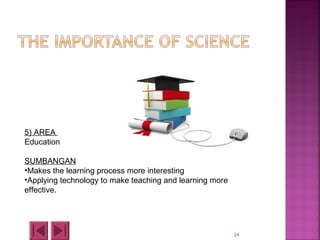
5) AREA
Education
SUMBANGAN
•Makes the learning process more interesting
•Applying technology to make teaching and learning more
effective.
25
26

Apakah sains english

  • 1.
  • 2.
    2 We noticed thatscience is part of everyday life. -The objects we see. -The food we eat. -The clothes we wear. -The growth we experience. -The transport we take. -The computer and energy we use.
  • 3.
     How doesa ship float?  Why does some birds fly south for the winter?  Can life exist on other planets?  Why does an astronaut float in outer space?  How does the butterfly help plant when it feeds on flowers?  What is the role of sc in health care?  How is an X-ray film produced? 3
  • 4.
    4 •People are searchingfor the answer for above question. •The answer for the question are complex and require careful thought and study. •Many facts are needed to answer the question correctly.
  • 5.
  • 6.
     Science isthe systematic study of things around us.  Science is the systematic study of nature and how it affects us and the environment.  Science is the knowledge of thing that happen in nature – “natural phenomena”, not made or cause by humans. 6
  • 7.
    7 The growth ofplant. Where do plants get their food? The formation of a rainbow. How is a rainbow formed. The growth of a baby to an adult. How does growth take place? The melting of ice. Why does ice melt?
  • 8.
  • 9.
  • 10.
     Biology  Physics Chemistry  Geology  Astronomy  Meteorology 10
  • 11.
    Field of Study Thestudy of living things Careers Doctors, teachers, biologist 11
  • 12.
    Field of study Thestudy of power and energy Careers The physicist, engineer 12
  • 13.
    Field of Study Thestudy of the chemical and its composition Careers Pharmacist, Chemist 13
  • 14.
    Field of Study Thestudy of rocks and minerals Careers geologist 14
  • 15.
    Field of Study Thestudy of planets and stars Careers Astronomer 15
  • 16.
    Field of Study Thestudy of weather and climate Careers Meteorologist 16
  • 17.
    17  Is scienceimportant only to scientists?  Can ordinary people benefit from it?  Why do we need to understand science?  Who is scientists?
  • 18.
    18 Scientists are investigators. Theyare people who want to discover things for themselves. They want to know “how” and “why” of things. Spend a great deal of time trying to think of ways by which they can discover answers to their problems. They want to test ideas through research and experiment to see if they are true.
  • 19.
    19 1) AREA Agriculture CONTRIBUTION • Productionof high quality of crops • Invention of machines for ploughing, planting and harvesting.
  • 20.
    20 2)AREA Medicine CONTRIBUTION •Invention of newvaccines to cure diseases. •Discovery of new medical techniques, such as organ transplant and cell cloning.
  • 21.
    21 3) AREA Industry CONTRIBUTION •Production offood •Production of man-made materials, such as plastics
  • 22.
    22 4) AREA Transportation CONTRIBUTION •Invention ofjets, aeroplanes and electrical trains. •Construction of modern infrastructure, such as subway and expressway
  • 23.
    23 5) AREA Information andcommunication technology (ICT) CONTRIBUTION •Invention of the internet and email •Application of wireless technology, such as mobile phones and remote controls
  • 24.
    24 5) AREA Education SUMBANGAN •Makes thelearning process more interesting •Applying technology to make teaching and learning more effective.
  • 25.
  • 26.