Change, Engagement
&
Artificial Intelligence
Jo Curkpatrick & Lee Hopkins
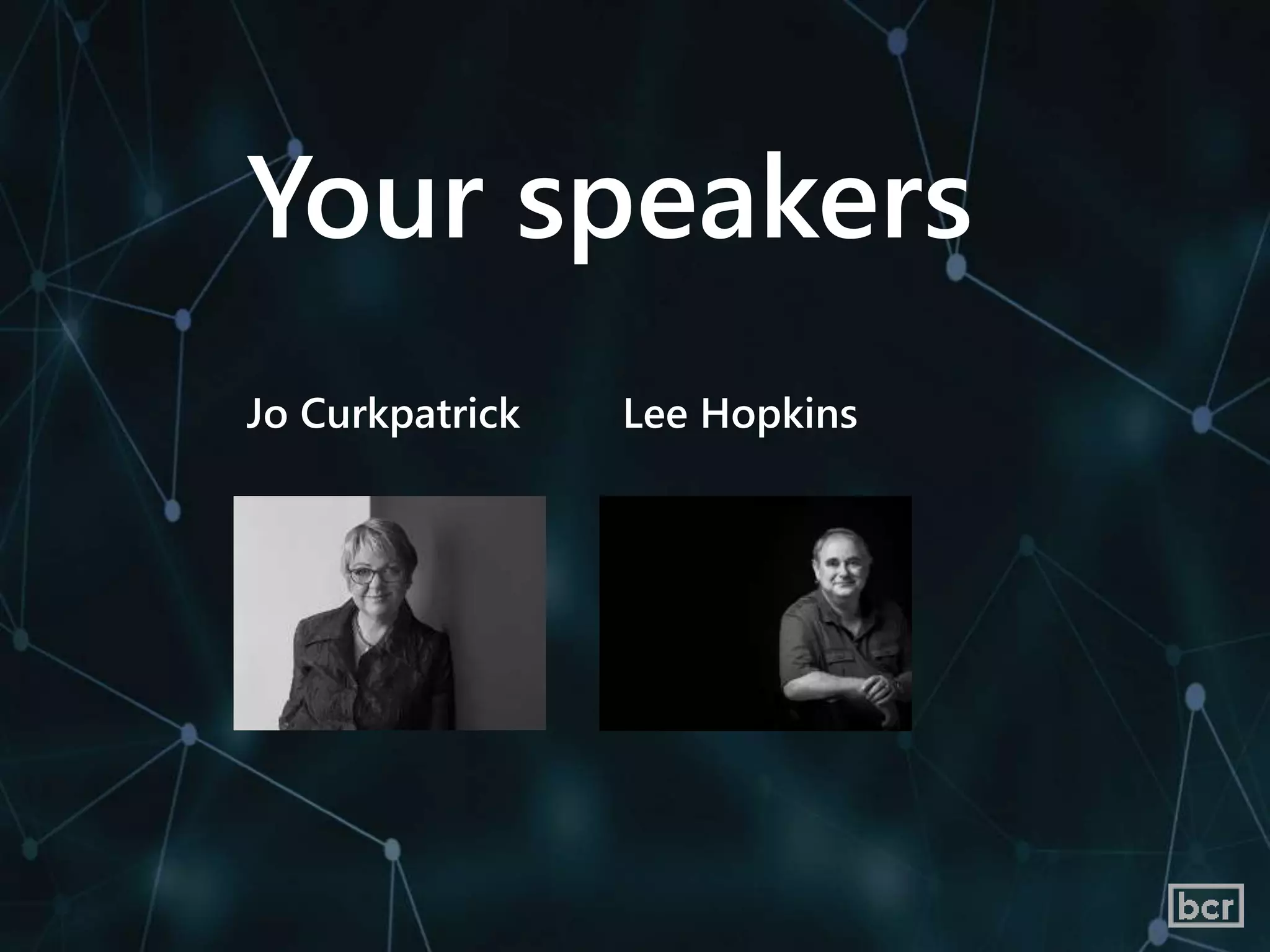
Your speakers
Jo Curkpatrick Lee Hopkins
• What are you doing to support the
successful adoption of AI?
• How do you engage people when there is fear
of losing a job or power?
• How do you embrace the change of AI
disruption when there are so many unknowns?
Today
What is AI?
Machines
behaving
intelligently
Source: visualcapitalist.com/debunking-8-myths-ai-workplace/
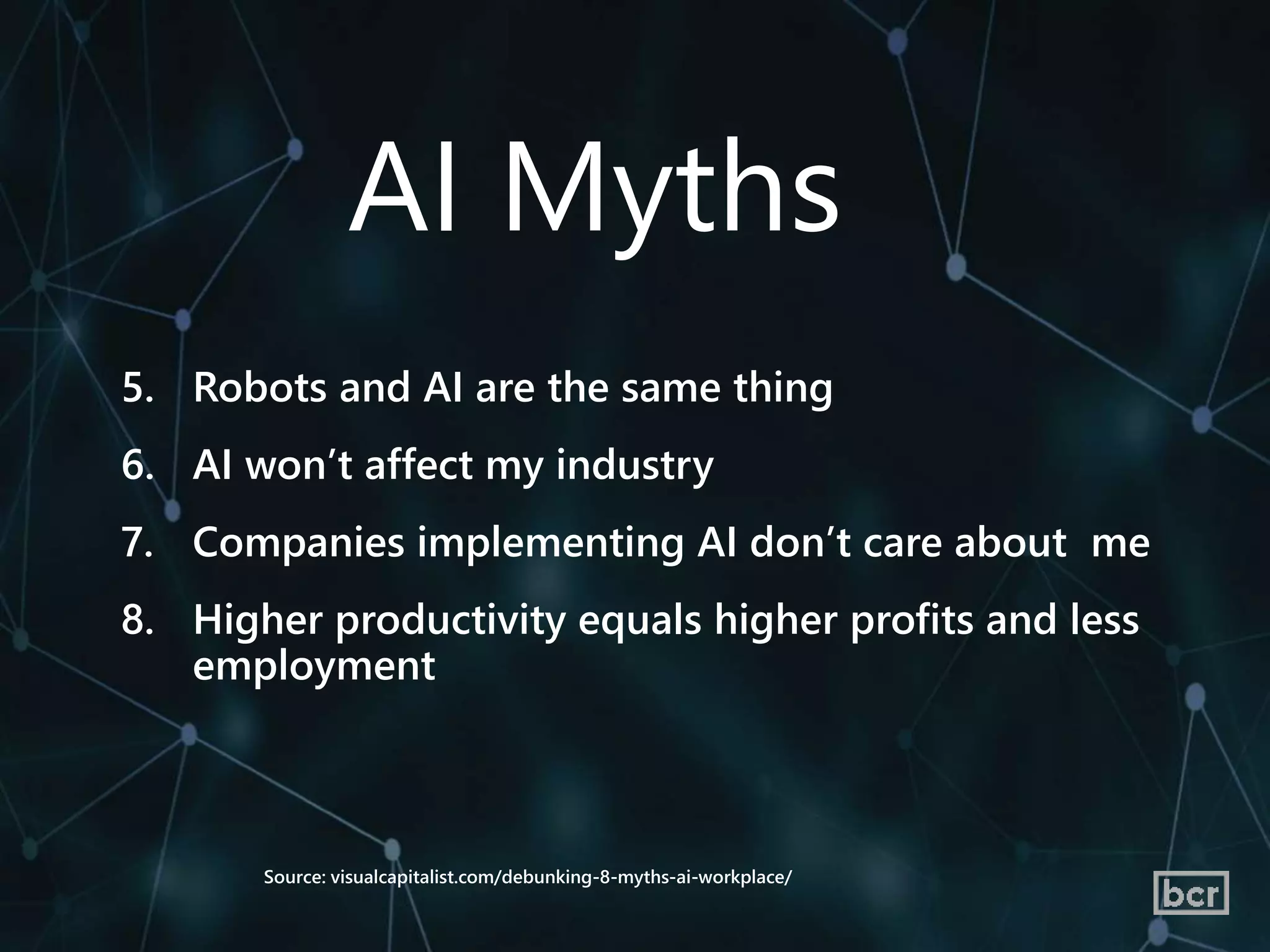
AI Myths
1. Automation will completely displace employees
2. Companies are primarily interested in cutting
costs
3. AI, machine-learning and deep learning are all
the same thing
4. Automation will eradicate more jobs than it
creates
5. Robots and AI are the same thing
6. AI won’t affect my industry
7. Companies implementing AI don’t care about me
8. Higher productivity equals higher profits and less
employment
Source: visualcapitalist.com/debunking-8-myths-ai-workplace/
AI Myths
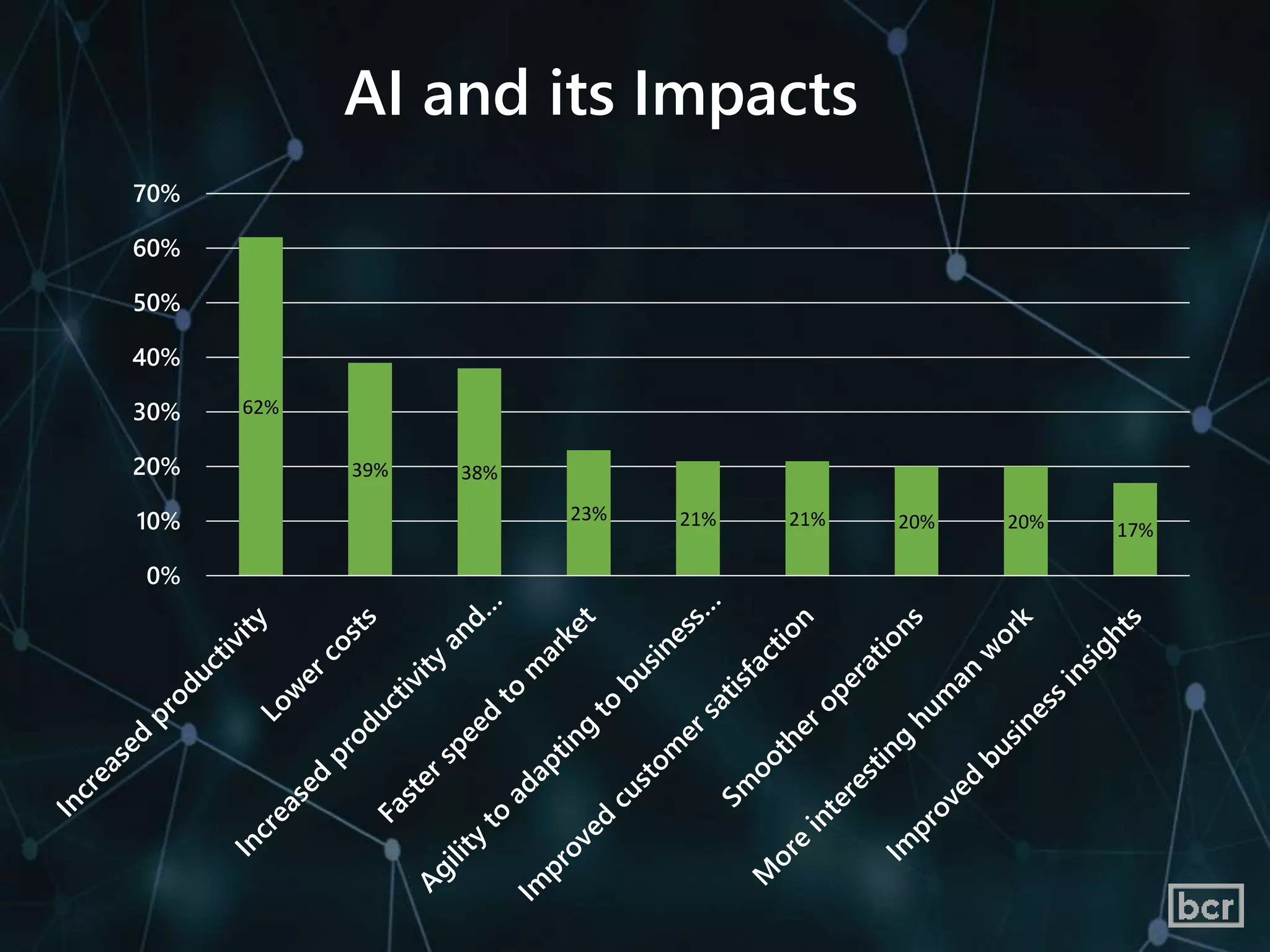
AI and its
impact
AI and its Impacts
62%
39% 38%
23% 21% 21% 20% 20% 17%
0%
10%
20%
30%
40%
50%
60%
70%
Communication
and engagement
–
What does AI mean for
professional
communicators?
AI will
Know us better than ourselves
Know our audience better than we do
Create content better than we can
Distribute content better than we can
Human input remains
critical
-
In a world of increasing automation
our ability to facilitate real human
connection becomes even more
important
What communication
professionals are doing
now
Please share your stories
What we can do to facilitate
successful AI
implementation
• Be part of a community of excellence
• Align with HR, IT and marketing
• Identify advocates
• Review your comms strategy
• Talk the talk, walk the talk
• Be thoughtful, be human
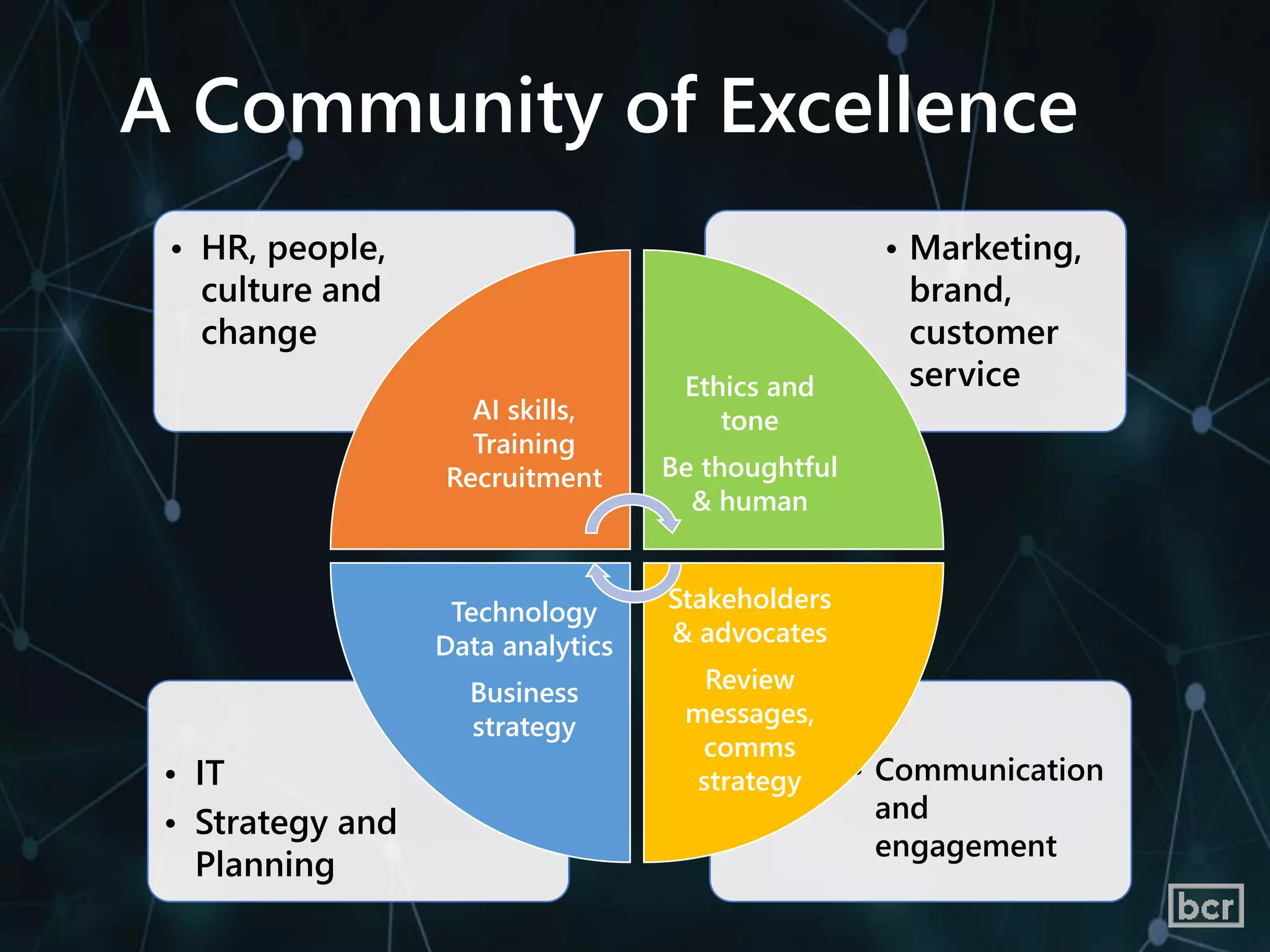
A Community of Excellence
• Communication
and
engagement
• IT
• Strategy and
Planning
• Marketing,
brand,
customer
service
• HR, people,
culture and
change
AI skills,
Training
Recruitment
Ethics and
tone
Be thoughtful
& human
Stakeholders
& advocates
Review
messages,
comms
strategy
Technology
Data analytics
Business
strategy
What can we do to facilitate
successful implementation of AI?
• Think about the rules, our Code of
Ethics
• Be prepared to learn or retrain
• Start the conversation
• Enjoy what AI can do to make our
jobs easier and faster
AI tools
What is out
there
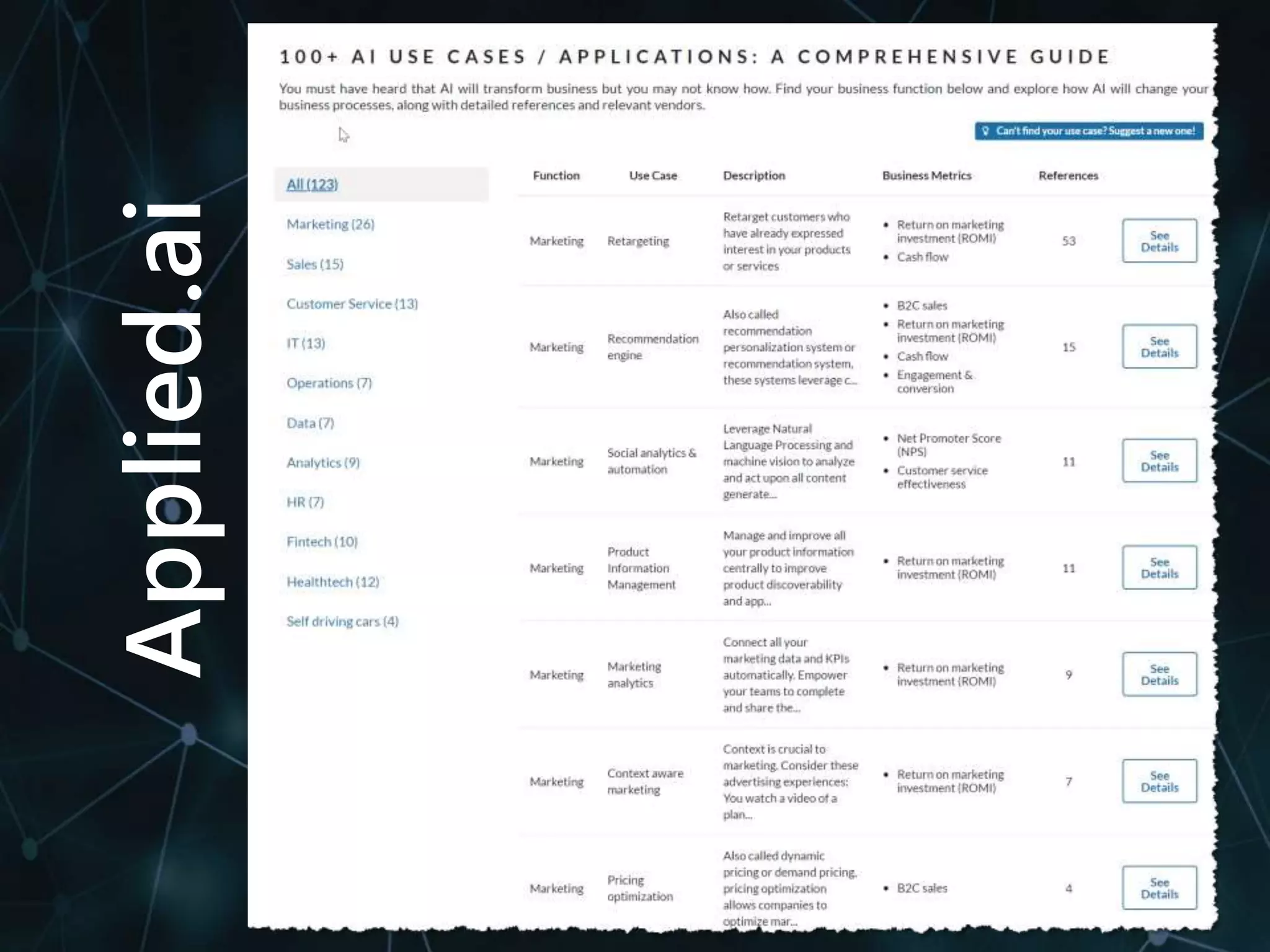
Applied.ai
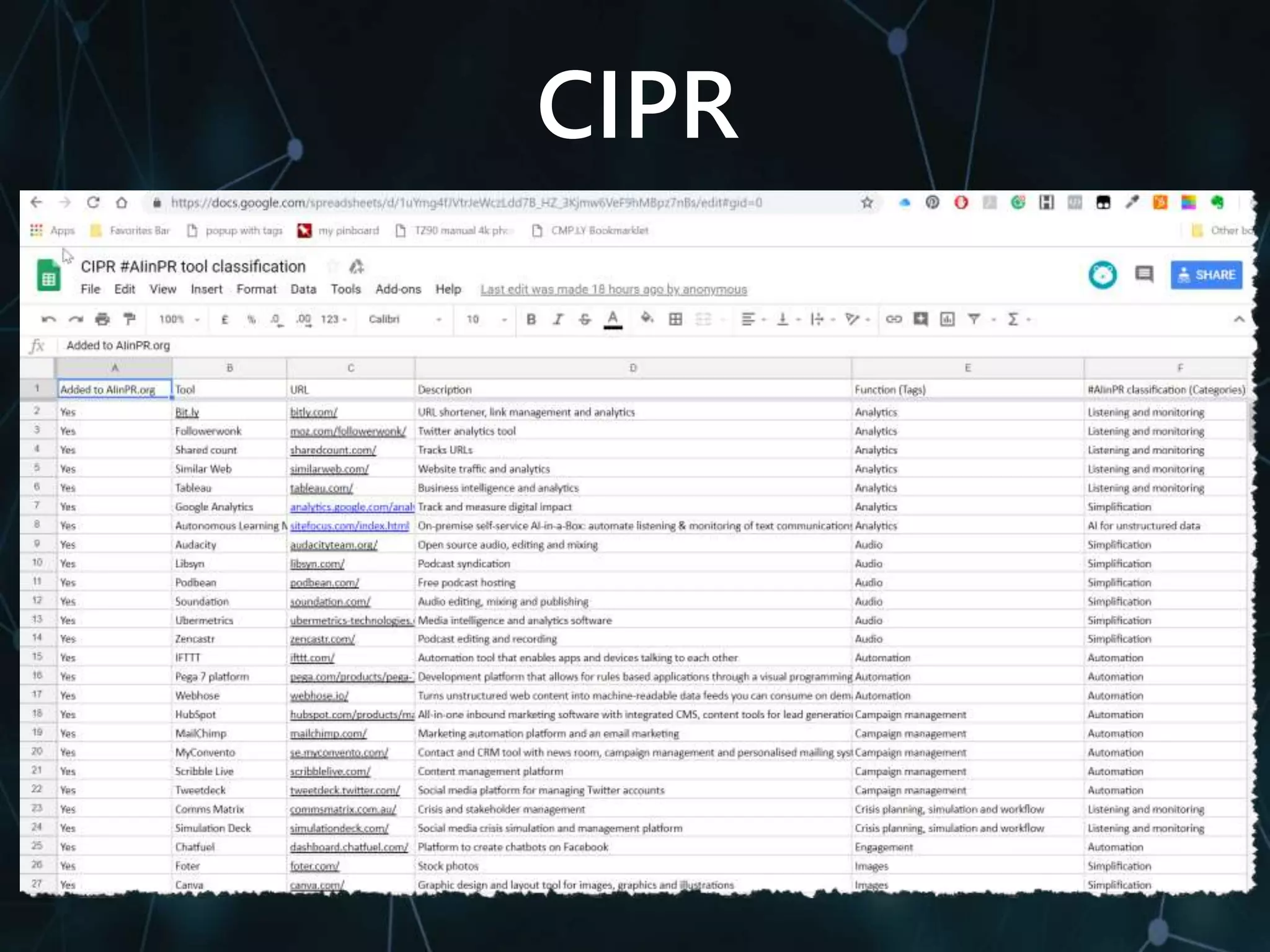
CIPR
Preparing the communication
professionals of the future
• Forecasting
• Analysis and data management
• Thinking skills
• Applying emotion, conscience
Overcoming the fear
and making a start
What will you be doing
when you get back to
work?
How did we go?
Try, fail, learn, share: learning
opportunities, resources and networking
www.bcr.ai
Change, Engagement
&
Artificial Intelligence
Jo Curkpatrick & Lee Hopkins
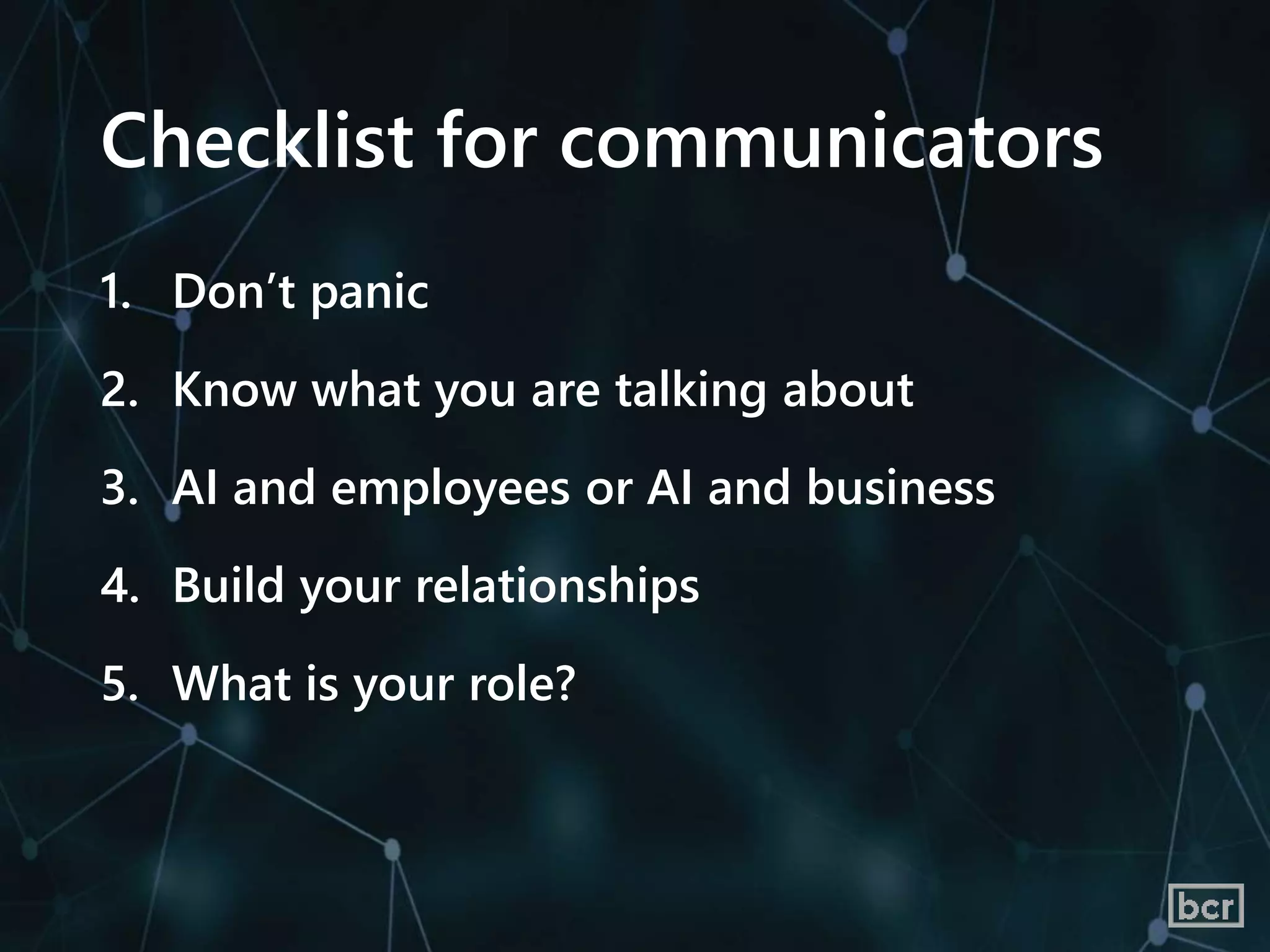
Checklist for communicators
1. Don’t panic
2. Know what you are talking about
3. AI and employees or AI and business
4. Build your relationships
5. What is your role?
Checklist for communicators
6. Identify advocates
7. Talk the talk
8. Walk the talk
9. Review your comms strategy
10. Be thoughtful in your comms

Change, Employee Engagement and Artificial Intelligence

  • 1.
  • 2.
  • 3.
    • What areyou doing to support the successful adoption of AI? • How do you engage people when there is fear of losing a job or power? • How do you embrace the change of AI disruption when there are so many unknowns? Today
  • 4.
  • 7.
  • 8.
    Source: visualcapitalist.com/debunking-8-myths-ai-workplace/ AI Myths 1.Automation will completely displace employees 2. Companies are primarily interested in cutting costs 3. AI, machine-learning and deep learning are all the same thing 4. Automation will eradicate more jobs than it creates
  • 9.
    5. Robots andAI are the same thing 6. AI won’t affect my industry 7. Companies implementing AI don’t care about me 8. Higher productivity equals higher profits and less employment Source: visualcapitalist.com/debunking-8-myths-ai-workplace/ AI Myths
  • 10.
  • 11.
    AI and itsImpacts 62% 39% 38% 23% 21% 21% 20% 20% 17% 0% 10% 20% 30% 40% 50% 60% 70%
  • 13.
    Communication and engagement – What doesAI mean for professional communicators?
  • 14.
    AI will Know usbetter than ourselves Know our audience better than we do Create content better than we can Distribute content better than we can
  • 15.
    Human input remains critical - Ina world of increasing automation our ability to facilitate real human connection becomes even more important
  • 16.
    What communication professionals aredoing now Please share your stories
  • 17.
    What we cando to facilitate successful AI implementation • Be part of a community of excellence • Align with HR, IT and marketing • Identify advocates • Review your comms strategy • Talk the talk, walk the talk • Be thoughtful, be human
  • 19.
    A Community ofExcellence • Communication and engagement • IT • Strategy and Planning • Marketing, brand, customer service • HR, people, culture and change AI skills, Training Recruitment Ethics and tone Be thoughtful & human Stakeholders & advocates Review messages, comms strategy Technology Data analytics Business strategy
  • 20.
    What can wedo to facilitate successful implementation of AI? • Think about the rules, our Code of Ethics • Be prepared to learn or retrain • Start the conversation • Enjoy what AI can do to make our jobs easier and faster
  • 21.
  • 23.
  • 24.
  • 26.
    Preparing the communication professionalsof the future • Forecasting • Analysis and data management • Thinking skills • Applying emotion, conscience
  • 27.
    Overcoming the fear andmaking a start What will you be doing when you get back to work?
  • 28.
    How did wego? Try, fail, learn, share: learning opportunities, resources and networking www.bcr.ai
  • 29.
  • 30.
    Checklist for communicators 1.Don’t panic 2. Know what you are talking about 3. AI and employees or AI and business 4. Build your relationships 5. What is your role?
  • 31.
    Checklist for communicators 6.Identify advocates 7. Talk the talk 8. Walk the talk 9. Review your comms strategy 10. Be thoughtful in your comms

Editor's Notes

  • #6 In computer science AI research is defined as the study of "intelligent agents" any device that perceives its environment and takes actions that maximise its chance of successfully achieving its goals.  Colloquially, the term "artificial intelligence" is applied when a machine mimics "cognitive" functions that humans associate with other human minds, such as "learning" and "problem solving"
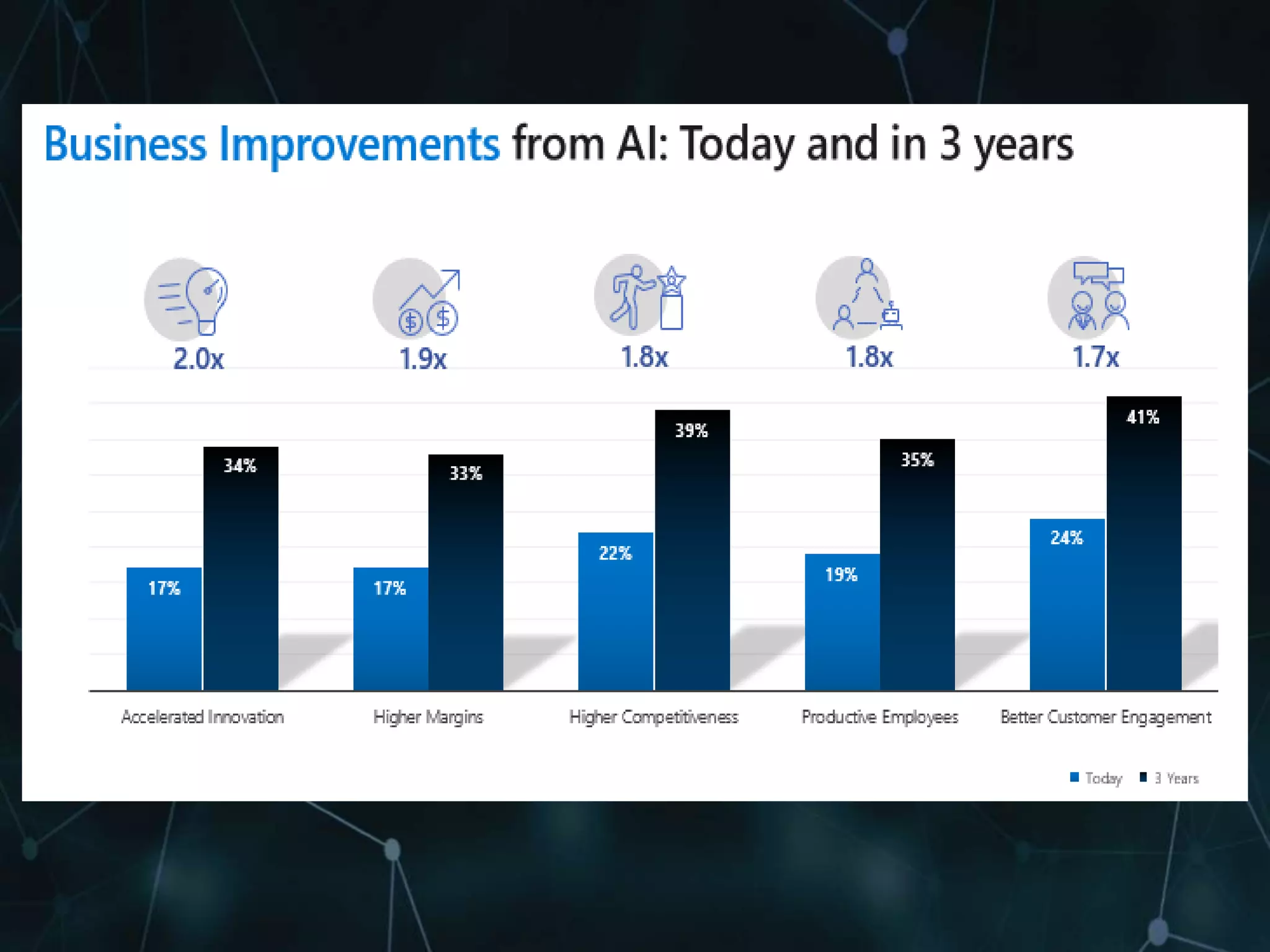
  • #12 The recent study by Microsoft Asia and IDC Asia Pacific: “Future Ready Business: Assessing Asia Pacific’s Growth with AI” found that those organisations who have started to adopt AI believe it will nearly double their competitiveness (1.8 times) in the next 3 years. It’s here to stay…
  • #13 That same survey identified innovation, margins, competitiveness, productive employees and better customer engagement as benefits BUT The areas lagging in AI readiness are dimensions such as culture (agility and empowerment), data (availability, quality and governance) and strategy (that is an AI strategy). We believe these are areas we can take a lead in and influence. Let’s look at how… This slide is from a recent survey by Microsoft in the Asia-Pacific region. It shows that manufacturers expect the following business improvements in just three years’ time
  • #14 We have a role to play, just as we will be impacted… because AI is disrupting every industry.
  • #15 According to Noah Zandon from Quantified.ai in an APAC IABC webinar:
  • #16 In a world of increasing automation we need to facilitate connection, empathy and relationships AI and machine learning are still transactional, not conversational, a medium between humans, but still involve the human communicating. In ensuring the TONE is right To make the MESSAGE appropriate To keep an eye on values and ethics – even how our AI is dealing with other AI, and to intervene
  • #17 Tell us about practical applications you know about Tell us about your concerns? •As a manager •As a communicator •As an employee
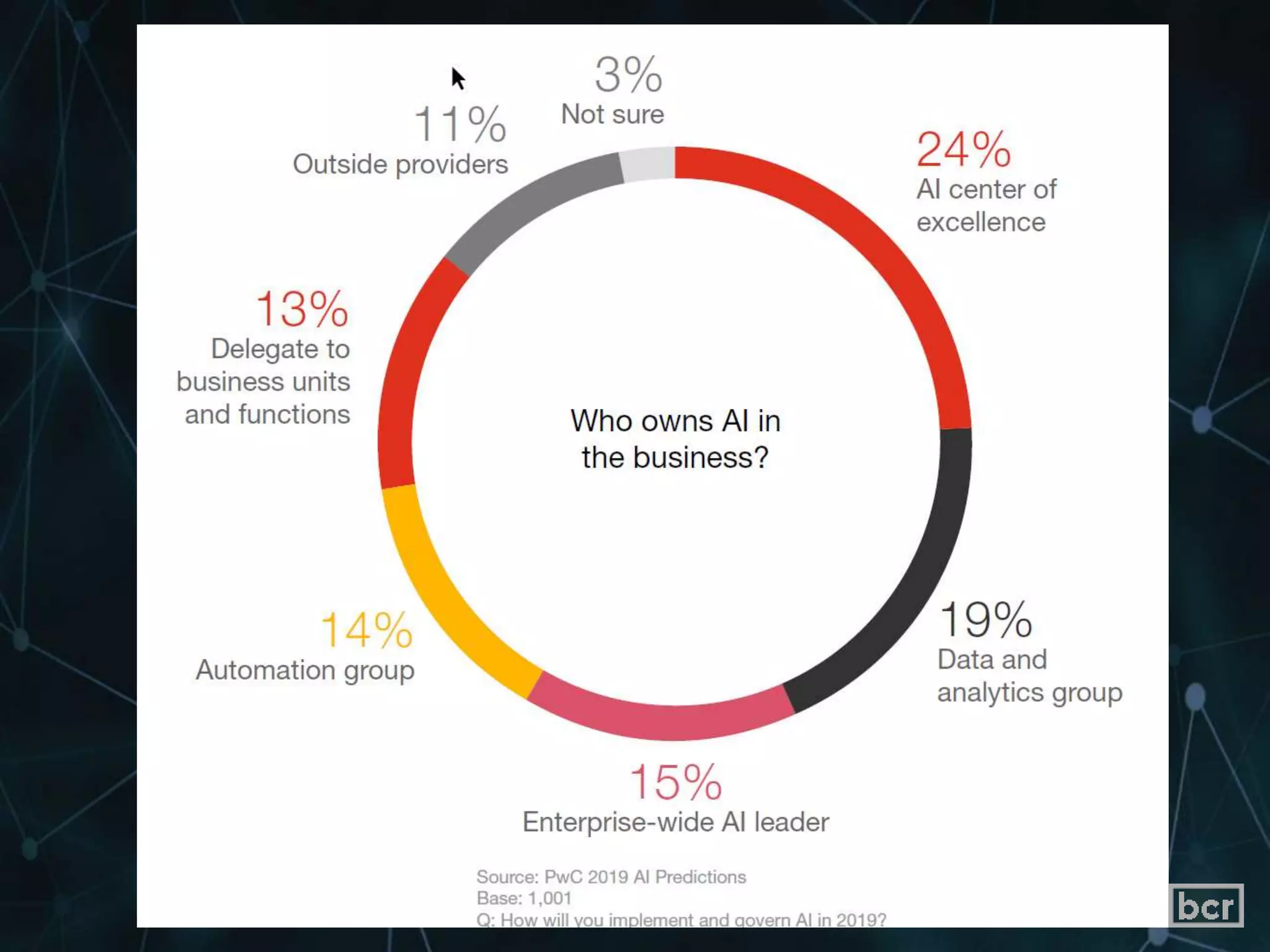
  • #19 PwC put this graphic together to show how organisations are thinking about implementing and governing AI. As they say: When AI initiatives begin with AI specialists, they sometimes struggle to gain broad traction. When they come from the business side, projects may have a limited focus may not take full advantage of the technology. In both cases, isolated teams may create duplicate—or incompatible—efforts. Their answer is oversight from a diverse team that includes people who have business, IT and specialised AI skills and represents all parts of an organisation. You need to be disciplined, creating an organisational structure that crosses functions and enables you to establish a clear AI strategy. BTW, PwC has a Centre of Excellence
  • #20 As Dr John Flackett from AI Lab in Adelaide says about Integrating AI into your organisation or business: “Start with the customer experience and work back to the technology.” Good advice, so our framework is aimed at how we ensure as communication professionals we are at the table and able to guide and contribute. As a framework for a Community of Excellence it is a one-stop shop for all things AI. Bringing together HR, Marketing, Strategy & Planning, Customer Service with IT and the AI experts Building skills in data, analytics, IT Considering brand and messaging Keeping an eye on ethics and tone Looking after our stakeholders And ensuring everyone in the organisation is on the AI journey
  • #21 With the capability to produce, alter and create content, AI can deepen mistrust. One of our roles will be to build and maintain trust. As one of our colleagues in Canada, Krista Davidson wrote in Communication World – Communicators are uniquely skilled with emphasising transparency and openness within an organisation, and that skill will be important for maintaining the trust of audiences. As communicators, where once we were being encouraged to better understand the business, finance and strategy. Now we need to consider improving our knowledge and understanding of machine learning and in particular – statistics, data science – the quantitative stuff. In “AI For Marketers: An Introduction and Primer” we are told: Your mission, your imperative, is to be managing the machines more than being managed by them. By embracing machine learning and AI, by learning what it can do, what outcomes you should demand, and what skills you need to hire for, you’ll be well positioned to adapt to a world in which the majority of the work being done is done by a machine. 3. So start the conversation, take the lead because AI might have a complex ancestry it has almost limitless future Engage And as a good board Director knows – ask the questions 4. Enjoy what AI can do Virtual assistants Smarter and more targeted campaigns Transcription of interviews within seconds Using data for crisis management before it hits the fan
  • #23 News release and articles Share trading Sport scores
  • #27  And finally, there will need to be a shift in skills, including forecasting, analysis, thinking and applying emotion and conscience. Because: Regardless of the tasks and skills that can be automated or benefit from AI: human intervention in editing, sensitivity, emotional intelligence, applying good judgement and ethics will always be needed. According to Professor Anne Gregory from Huddersfield University in the UK development of a Hippocratic Oath for the professional is being developed, wow.
  • #28 TRY – FAIL – LEARN – SHARE The future of work is not one in which the humans do all the work. Instead, the machines will do the work and we will validate that they’ve created the outcomes we want. When they don’t, we’ll help retrain them until they achieve our goals with us. Either you manage the machines, or the machines will manage you. Reach out, look around your organisation, help, enable where you can, and lead if necessary Utilise our CHECKLIST Call us
  • #29 Cover off on our offering