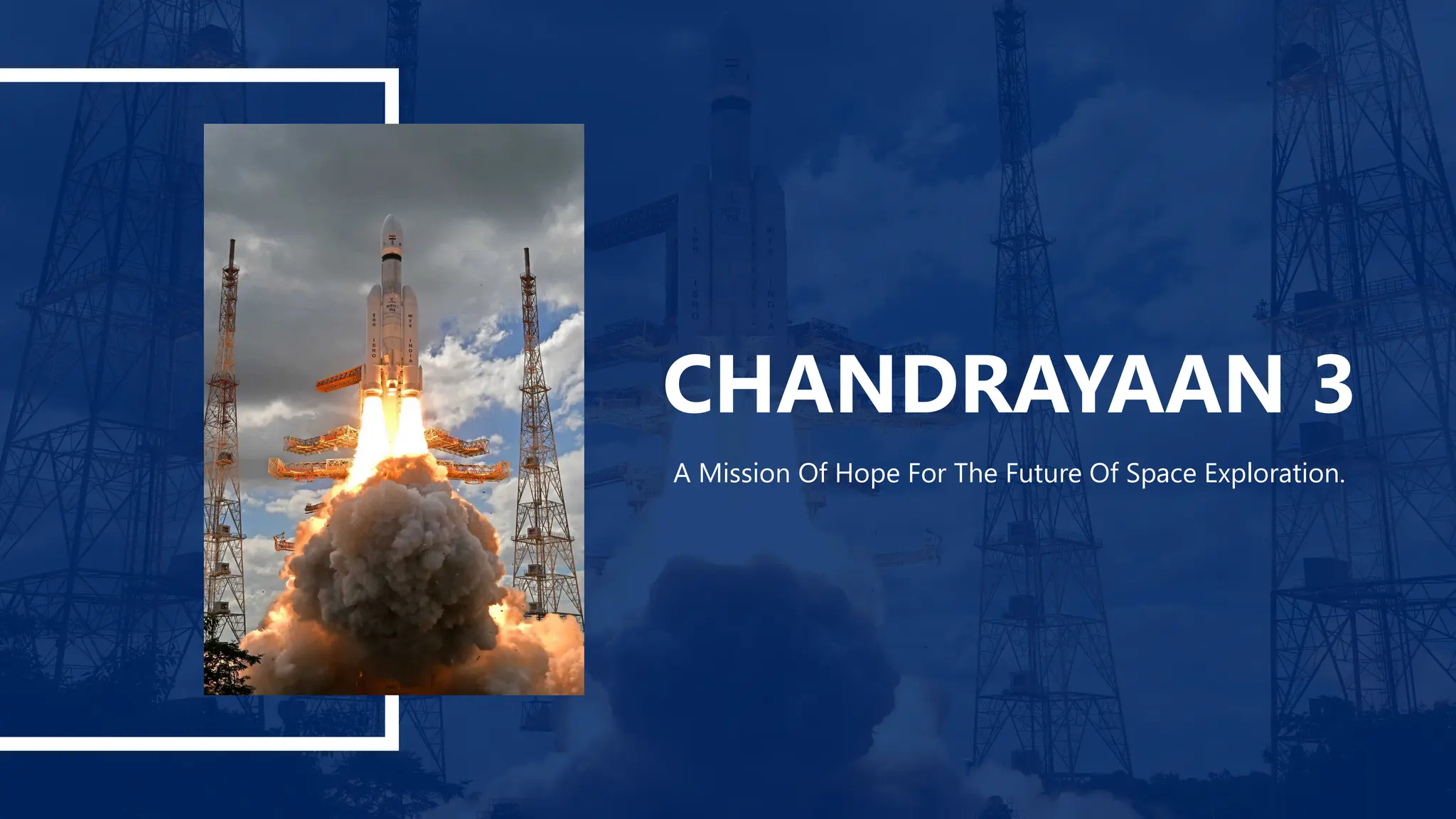
CHANDRAYAAN 3
A Mission Of Hope For The Future Of Space Exploration.
Chandrayaan 3 is India's third lunar mission
to soft land on the lunar south pole region.
The mission will conduct scientific
experiments to study the lunar geology,
atmosphere, and environment.
Introduction Of
Chandrayaan 3
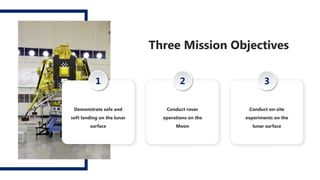
Three Mission Objectives
Demonstrate safe and
soft landing on the lunar
surface
Conduct rover
operations on the
Moon
Conduct on-site
experiments on the
lunar surface
1 2 3
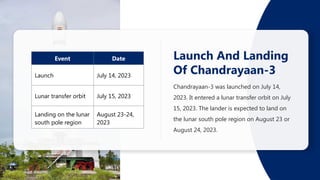
Launch And Landing
Of Chandrayaan-3
Chandrayaan-3 was launched on July 14,
2023. It entered a lunar transfer orbit on July
15, 2023. The lander is expected to land on
the lunar south pole region on August 23 or
August 24, 2023.
Event Date
Launch July 14, 2023
Lunar transfer orbit July 15, 2023
Landing on the lunar
south pole region
August 23-24,
2023
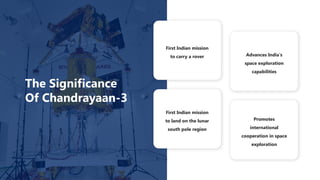
First Indian mission
to land on the lunar
south pole region
First Indian mission
to carry a rover Advances India's
space exploration
capabilities
Promotes
international
cooperation in space
exploration
The Significance
Of Chandrayaan-3
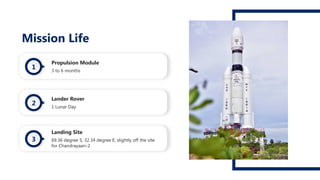
Mission Life
Propulsion Module
3 to 6 months
1
Lander Rover
1 Lunar Day
2
Landing Site
69.36 degree S, 32.34 degree E; slightly off the site
for Chandrayaan-2
3
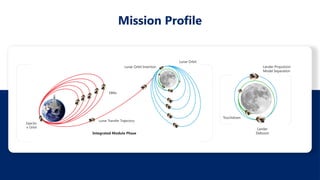
Integrated Module Phase
Lunar Transfer Trajectory
Injectio
n Orbit
EBNs
Lunar Orbit Insertion
Lunar Orbit
Lander
Deboost
Lander Propulsion
Model Separation
Touchdown
Mission Profile
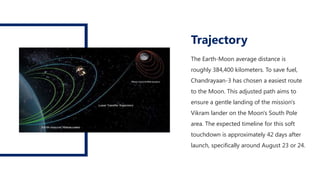
The Earth-Moon average distance is
roughly 384,400 kilometers. To save fuel,
Chandrayaan-3 has chosen a easiest route
to the Moon. This adjusted path aims to
ensure a gentle landing of the mission's
Vikram lander on the Moon's South Pole
area. The expected timeline for this soft
touchdown is approximately 42 days after
launch, specifically around August 23 or 24.
Trajectory
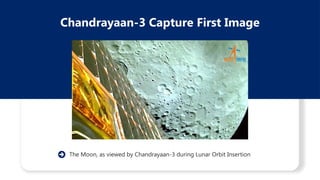
Chandrayaan-3 Capture First Image
The Moon, as viewed by Chandrayaan-3 during Lunar Orbit Insertion
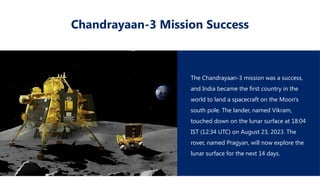
Chandrayaan-3 Mission Success
The Chandrayaan-3 mission was a success,
and India became the first country in the
world to land a spacecraft on the Moon's
south pole. The lander, named Vikram,
touched down on the lunar surface at 18:04
IST (12:34 UTC) on August 23, 2023. The
rover, named Pragyan, will now explore the
lunar surface for the next 14 days.
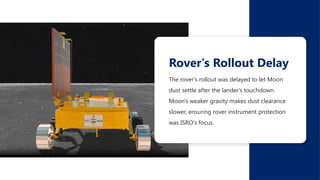
The rover's rollout was delayed to let Moon
dust settle after the lander's touchdown.
Moon's weaker gravity makes dust clearance
slower, ensuring rover instrument protection
was ISRO's focus.
Rover's Rollout Delay
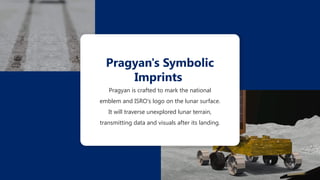
Pragyan is crafted to mark the national
emblem and ISRO's logo on the lunar surface.
It will traverse unexplored lunar terrain,
transmitting data and visuals after its landing.
Pragyan's Symbolic
Imprints
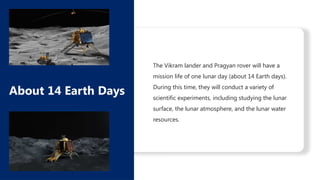
The Vikram lander and Pragyan rover will have a
mission life of one lunar day (about 14 Earth days).
During this time, they will conduct a variety of
scientific experiments, including studying the lunar
surface, the lunar atmosphere, and the lunar water
resources.
About 14 Earth Days
The RAMBHA-LP payload on the Chandrayaan-3
Lander has achieved a historic milestone by
conducting the first-ever measurements of the
lunar near-surface plasma environment in the
south polar region.
RAMBHA-LP On-board
Measures Plasma
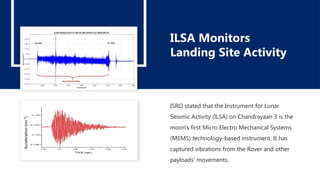
ISRO stated that the Instrument for Lunar
Seismic Activity (ILSA) on Chandrayaan 3 is the
moon's first Micro Electro Mechanical Systems
(MEMS) technology-based instrument. It has
captured vibrations from the Rover and other
payloads' movements.
ILSA Monitors
Landing Site Activity
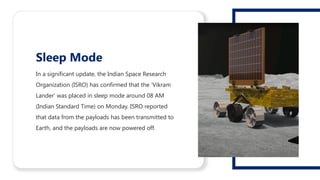
In a significant update, the Indian Space Research
Organization (ISRO) has confirmed that the 'Vikram
Lander' was placed in sleep mode around 08 AM
(Indian Standard Time) on Monday. ISRO reported
that data from the payloads has been transmitted to
Earth, and the payloads are now powered off.
Sleep Mode
On September 2, the space organization
confirmed that Pragyan had finished its tasks
and was safely parked in sleep mode, with its
receiver active. ISRO further noted that Vikram
would enter sleep mode alongside Pragyan
once its solar power was depleted and the
battery was drained.
Why Sleep Mode?
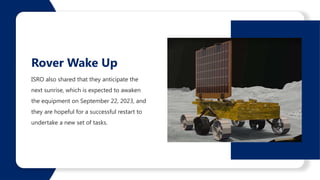
ISRO also shared that they anticipate the
next sunrise, which is expected to awaken
the equipment on September 22, 2023, and
they are hopeful for a successful restart to
undertake a new set of tasks.
Rover Wake Up
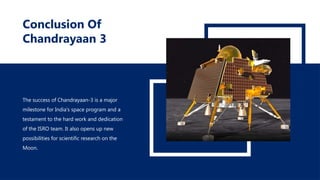
Conclusion Of
Chandrayaan 3
The success of Chandrayaan-3 is a major
milestone for India's space program and a
testament to the hard work and dedication
of the ISRO team. It also opens up new
possibilities for scientific research on the
Moon.

Chandrayaan 3 power point presentation.pptx

  • 1.
    CHANDRAYAAN 3 A MissionOf Hope For The Future Of Space Exploration.
  • 2.
    Chandrayaan 3 isIndia's third lunar mission to soft land on the lunar south pole region. The mission will conduct scientific experiments to study the lunar geology, atmosphere, and environment. Introduction Of Chandrayaan 3
  • 3.
    Three Mission Objectives Demonstratesafe and soft landing on the lunar surface Conduct rover operations on the Moon Conduct on-site experiments on the lunar surface 1 2 3
  • 4.
    Launch And Landing OfChandrayaan-3 Chandrayaan-3 was launched on July 14, 2023. It entered a lunar transfer orbit on July 15, 2023. The lander is expected to land on the lunar south pole region on August 23 or August 24, 2023. Event Date Launch July 14, 2023 Lunar transfer orbit July 15, 2023 Landing on the lunar south pole region August 23-24, 2023
  • 5.
    First Indian mission toland on the lunar south pole region First Indian mission to carry a rover Advances India's space exploration capabilities Promotes international cooperation in space exploration The Significance Of Chandrayaan-3
  • 6.
    Mission Life Propulsion Module 3to 6 months 1 Lander Rover 1 Lunar Day 2 Landing Site 69.36 degree S, 32.34 degree E; slightly off the site for Chandrayaan-2 3
  • 7.
    Integrated Module Phase LunarTransfer Trajectory Injectio n Orbit EBNs Lunar Orbit Insertion Lunar Orbit Lander Deboost Lander Propulsion Model Separation Touchdown Mission Profile
  • 8.
    The Earth-Moon averagedistance is roughly 384,400 kilometers. To save fuel, Chandrayaan-3 has chosen a easiest route to the Moon. This adjusted path aims to ensure a gentle landing of the mission's Vikram lander on the Moon's South Pole area. The expected timeline for this soft touchdown is approximately 42 days after launch, specifically around August 23 or 24. Trajectory
  • 9.
    Chandrayaan-3 Capture FirstImage The Moon, as viewed by Chandrayaan-3 during Lunar Orbit Insertion
  • 10.
    Chandrayaan-3 Mission Success TheChandrayaan-3 mission was a success, and India became the first country in the world to land a spacecraft on the Moon's south pole. The lander, named Vikram, touched down on the lunar surface at 18:04 IST (12:34 UTC) on August 23, 2023. The rover, named Pragyan, will now explore the lunar surface for the next 14 days.
  • 11.
    The rover's rolloutwas delayed to let Moon dust settle after the lander's touchdown. Moon's weaker gravity makes dust clearance slower, ensuring rover instrument protection was ISRO's focus. Rover's Rollout Delay
  • 12.
    Pragyan is craftedto mark the national emblem and ISRO's logo on the lunar surface. It will traverse unexplored lunar terrain, transmitting data and visuals after its landing. Pragyan's Symbolic Imprints
  • 13.
    The Vikram landerand Pragyan rover will have a mission life of one lunar day (about 14 Earth days). During this time, they will conduct a variety of scientific experiments, including studying the lunar surface, the lunar atmosphere, and the lunar water resources. About 14 Earth Days
  • 14.
    The RAMBHA-LP payloadon the Chandrayaan-3 Lander has achieved a historic milestone by conducting the first-ever measurements of the lunar near-surface plasma environment in the south polar region. RAMBHA-LP On-board Measures Plasma
  • 15.
    ISRO stated thatthe Instrument for Lunar Seismic Activity (ILSA) on Chandrayaan 3 is the moon's first Micro Electro Mechanical Systems (MEMS) technology-based instrument. It has captured vibrations from the Rover and other payloads' movements. ILSA Monitors Landing Site Activity
  • 16.
    In a significantupdate, the Indian Space Research Organization (ISRO) has confirmed that the 'Vikram Lander' was placed in sleep mode around 08 AM (Indian Standard Time) on Monday. ISRO reported that data from the payloads has been transmitted to Earth, and the payloads are now powered off. Sleep Mode
  • 17.
    On September 2,the space organization confirmed that Pragyan had finished its tasks and was safely parked in sleep mode, with its receiver active. ISRO further noted that Vikram would enter sleep mode alongside Pragyan once its solar power was depleted and the battery was drained. Why Sleep Mode?
  • 18.
    ISRO also sharedthat they anticipate the next sunrise, which is expected to awaken the equipment on September 22, 2023, and they are hopeful for a successful restart to undertake a new set of tasks. Rover Wake Up
  • 19.
    Conclusion Of Chandrayaan 3 Thesuccess of Chandrayaan-3 is a major milestone for India's space program and a testament to the hard work and dedication of the ISRO team. It also opens up new possibilities for scientific research on the Moon.