
Philosophy of 
Assessment 
By: Lauralee Chamberlain 
Ed Psych 510 
October 9, 2014
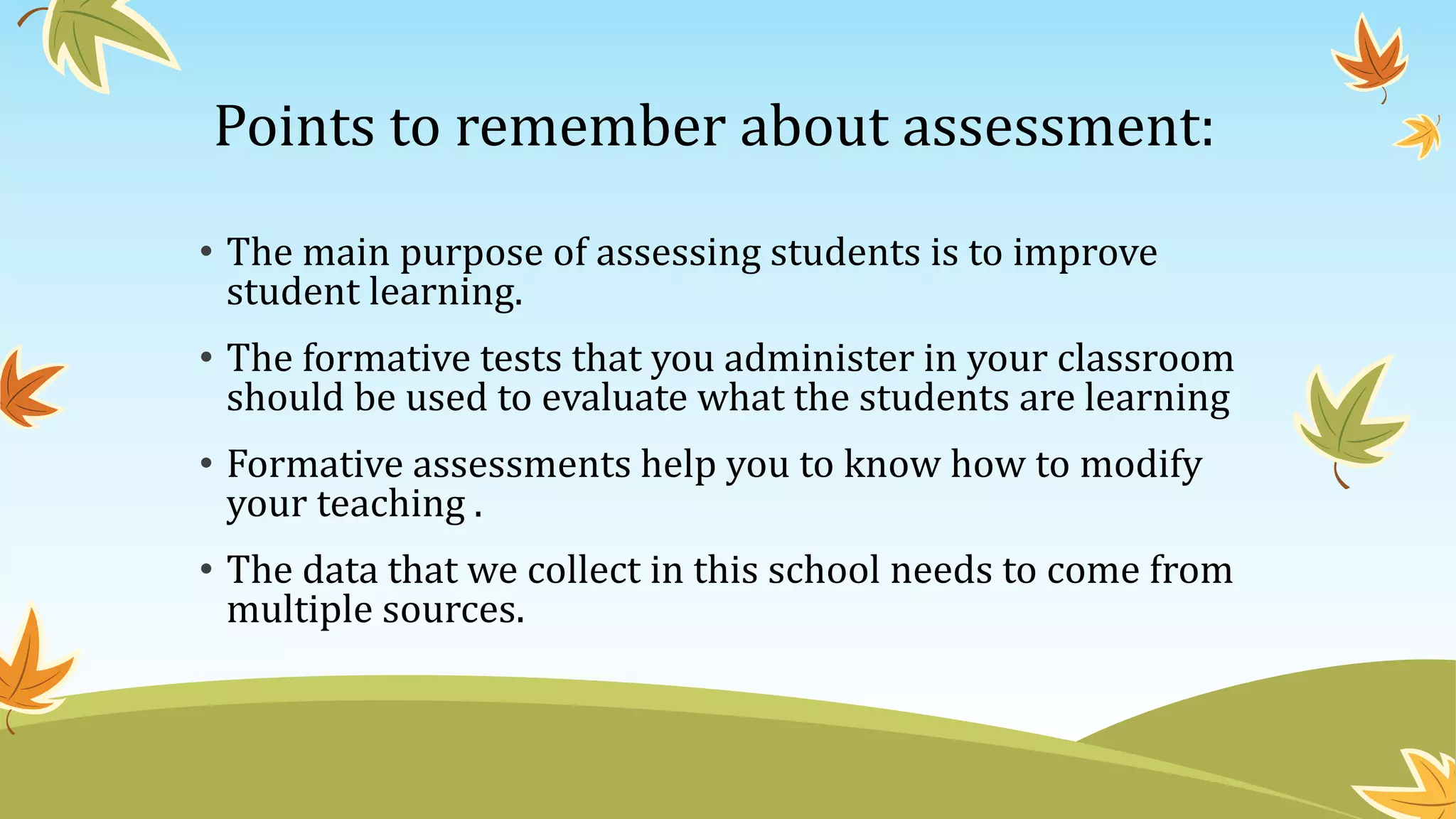
Points to remember about assessment: 
• The main purpose of assessing students is to improve 
student learning. 
• The formative tests that you administer in your classroom 
should be used to evaluate what the students are learning 
• Formative assessments help you to know how to modify 
your teaching . 
• The data that we collect in this school needs to come from 
multiple sources.
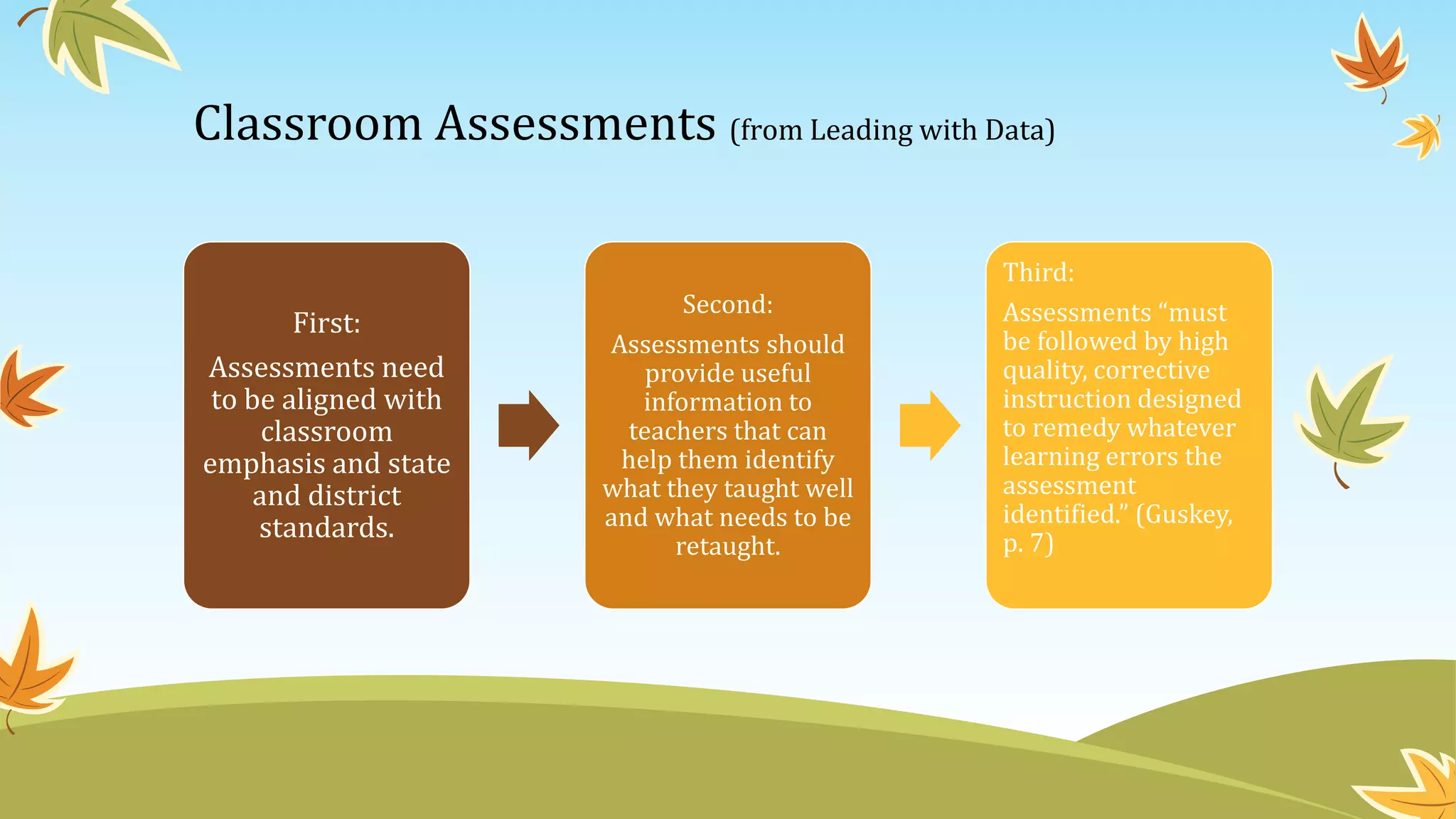
Classroom Assessments (from Leading with Data) 
First: 
Assessments need 
to be aligned with 
classroom 
emphasis and state 
and district 
standards. 
Second: 
Assessments should 
provide useful 
information to 
teachers that can 
help them identify 
what they taught well 
and what needs to be 
retaught. 
Third: 
Assessments “must 
be followed by high 
quality, corrective 
instruction designed 
to remedy whatever 
learning errors the 
assessment 
identified.” (Guskey, 
p. 7)
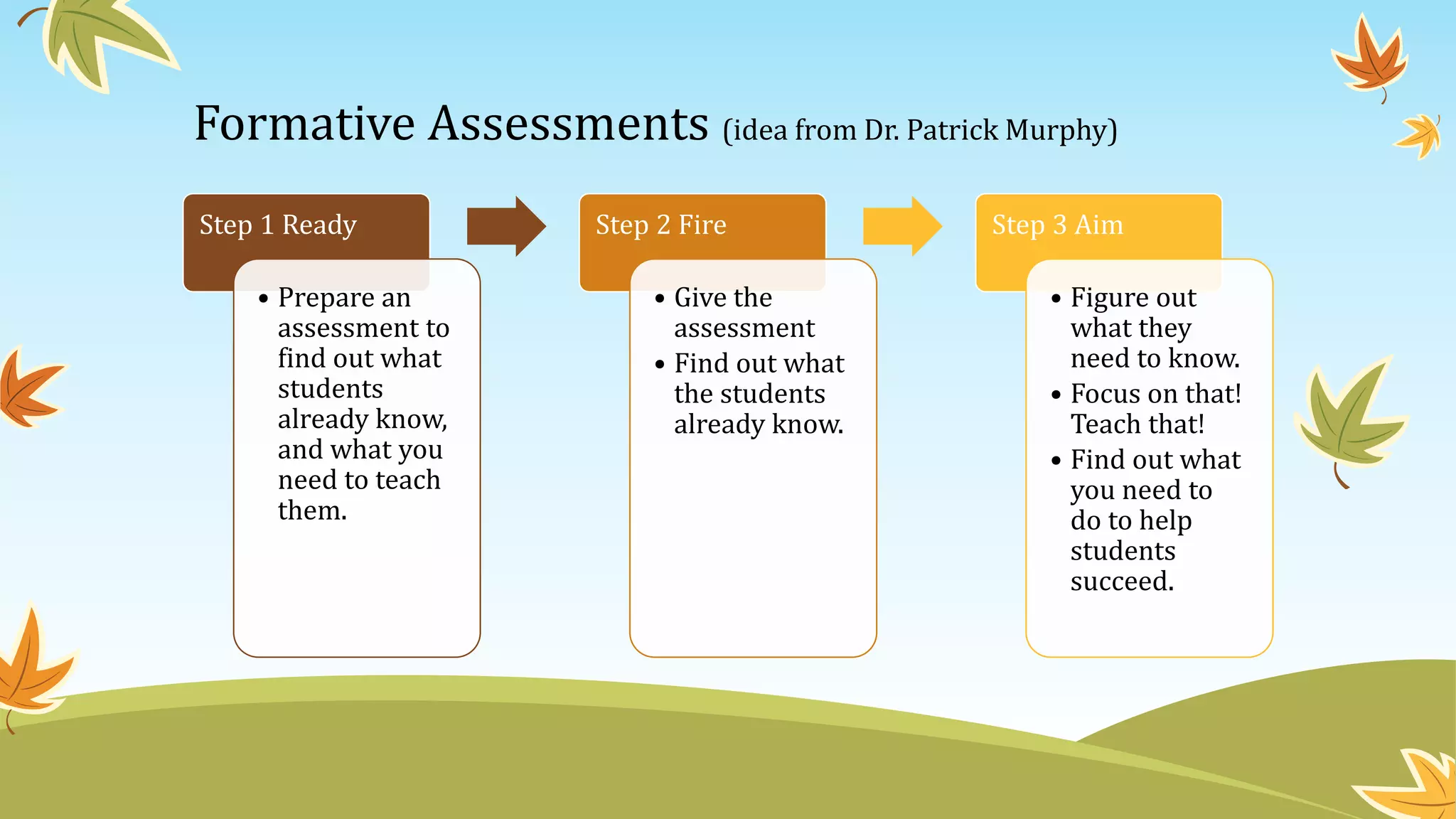
Formative Assessments (idea from Dr. Patrick Murphy) 
Step 1 Ready 
• Prepare an 
assessment to 
find out what 
students 
already know, 
and what you 
need to teach 
them. 
Step 2 Fire 
• Give the 
assessment 
• Find out what 
the students 
already know. 
Step 3 Aim 
• Figure out 
what they 
need to know. 
• Focus on that! 
Teach that! 
• Find out what 
you need to 
do to help 
students 
succeed.
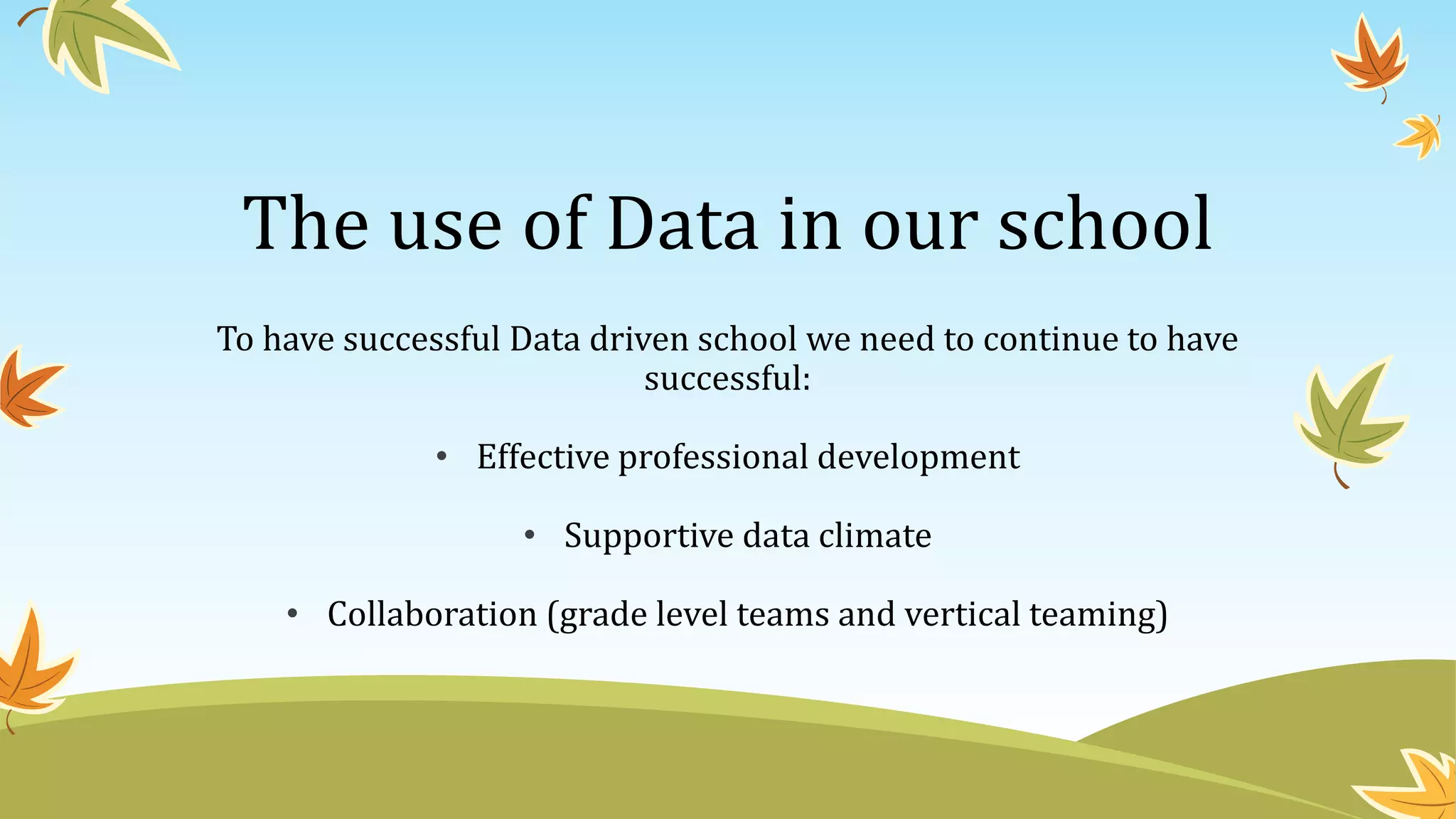
The use of Data in our school 
To have successful Data driven school we need to continue to have 
successful: 
• Effective professional development 
• Supportive data climate 
• Collaboration (grade level teams and vertical teaming)
Effective Professional 
Development 
• It is important that teachers have the chance to meet together and 
talk about what you are doing and what is working in your 
classrooms. 
• As your principal I want to be sure this time is scheduled and becomes part of 
our culture. 
• We will have a template for note taking to keep track of what your grade level 
data is and the interventions that you are making to have gains for all 
students. 
• From the book, Align the Design, “ Data becomes valuable when 
the decisions made from them hit your targets for school 
improvement.”
Supportive Data Climate: 
• As your principal I want you to know I am here to support you, 
however I am can. We are here to help our students and looking 
at how they are doing (by looking at data) helps us to help them. 
• I am here for you and to support you in all ways I am able to. 
• I want to be sure your grade level teams have the time and space 
to support each other, as we use data to make improvements in 
student learning. 
• I will visit your grade level teams, to find ways to support you in the work you are 
doing.
Collaboration 
• Opportunities to exchange ideas and practices and share 
frustrations and difficulties 
• Can be done during meetings and discussions 
• I would love to help where I can, if it’s helping you to assess students or working 
with a small group, I want to help you in your efforts. 
• Visiting each other’s classrooms to see how each other 
differentiate instruction. 
• I will cover your class, so you can observe other teachers.
TPEP, CCSS and Student Growth 
You will be following the TPEP process 
as you are: 
• Using multiple student data 
elements to modify instruction and 
improve student learning. 
• Recognizing individual student 
learning needs and developing 
strategies to address those needs. 
Looking at Student Growth Percentiles 
(SGP’s) 
• We will look at a students’ academic 
growth from 2 different periods of 
time. 
• It is comparing a student’s 
performance to their own previous 
performance on an assessment. 
• We want growth for all students, and 
these frameworks help us to see how 
to make that happen.
Chamberlain philosophy of assessment

Chamberlain philosophy of assessment

  • 1.
    Philosophy of Assessment By: Lauralee Chamberlain Ed Psych 510 October 9, 2014
  • 2.
    Points to rememberabout assessment: • The main purpose of assessing students is to improve student learning. • The formative tests that you administer in your classroom should be used to evaluate what the students are learning • Formative assessments help you to know how to modify your teaching . • The data that we collect in this school needs to come from multiple sources.
  • 3.
    Classroom Assessments (fromLeading with Data) First: Assessments need to be aligned with classroom emphasis and state and district standards. Second: Assessments should provide useful information to teachers that can help them identify what they taught well and what needs to be retaught. Third: Assessments “must be followed by high quality, corrective instruction designed to remedy whatever learning errors the assessment identified.” (Guskey, p. 7)
  • 4.
    Formative Assessments (ideafrom Dr. Patrick Murphy) Step 1 Ready • Prepare an assessment to find out what students already know, and what you need to teach them. Step 2 Fire • Give the assessment • Find out what the students already know. Step 3 Aim • Figure out what they need to know. • Focus on that! Teach that! • Find out what you need to do to help students succeed.
  • 5.
    The use ofData in our school To have successful Data driven school we need to continue to have successful: • Effective professional development • Supportive data climate • Collaboration (grade level teams and vertical teaming)
  • 6.
    Effective Professional Development • It is important that teachers have the chance to meet together and talk about what you are doing and what is working in your classrooms. • As your principal I want to be sure this time is scheduled and becomes part of our culture. • We will have a template for note taking to keep track of what your grade level data is and the interventions that you are making to have gains for all students. • From the book, Align the Design, “ Data becomes valuable when the decisions made from them hit your targets for school improvement.”
  • 7.
    Supportive Data Climate: • As your principal I want you to know I am here to support you, however I am can. We are here to help our students and looking at how they are doing (by looking at data) helps us to help them. • I am here for you and to support you in all ways I am able to. • I want to be sure your grade level teams have the time and space to support each other, as we use data to make improvements in student learning. • I will visit your grade level teams, to find ways to support you in the work you are doing.
  • 8.
    Collaboration • Opportunitiesto exchange ideas and practices and share frustrations and difficulties • Can be done during meetings and discussions • I would love to help where I can, if it’s helping you to assess students or working with a small group, I want to help you in your efforts. • Visiting each other’s classrooms to see how each other differentiate instruction. • I will cover your class, so you can observe other teachers.
  • 9.
    TPEP, CCSS andStudent Growth You will be following the TPEP process as you are: • Using multiple student data elements to modify instruction and improve student learning. • Recognizing individual student learning needs and developing strategies to address those needs. Looking at Student Growth Percentiles (SGP’s) • We will look at a students’ academic growth from 2 different periods of time. • It is comparing a student’s performance to their own previous performance on an assessment. • We want growth for all students, and these frameworks help us to see how to make that happen.