Downloaded 17 times
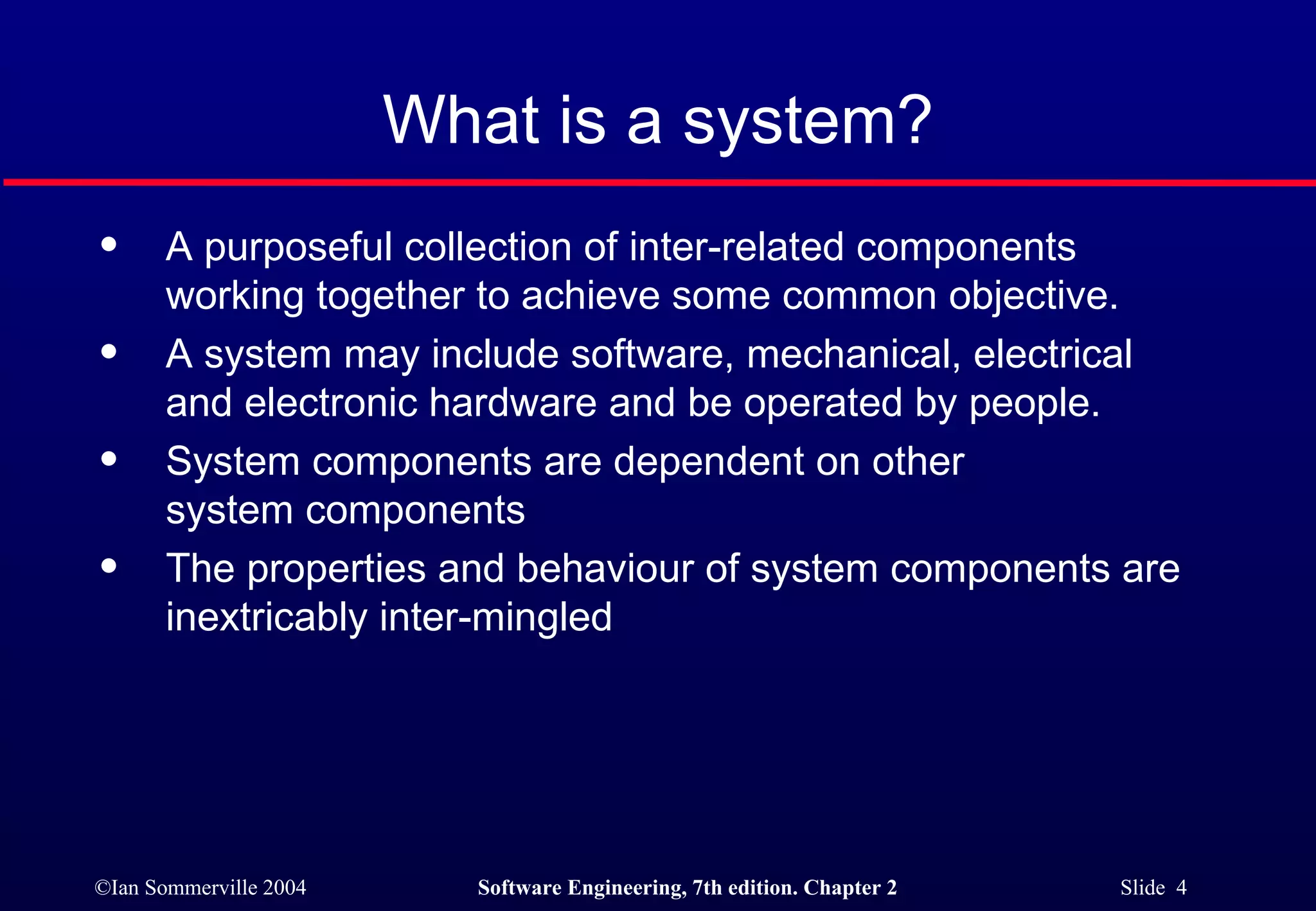
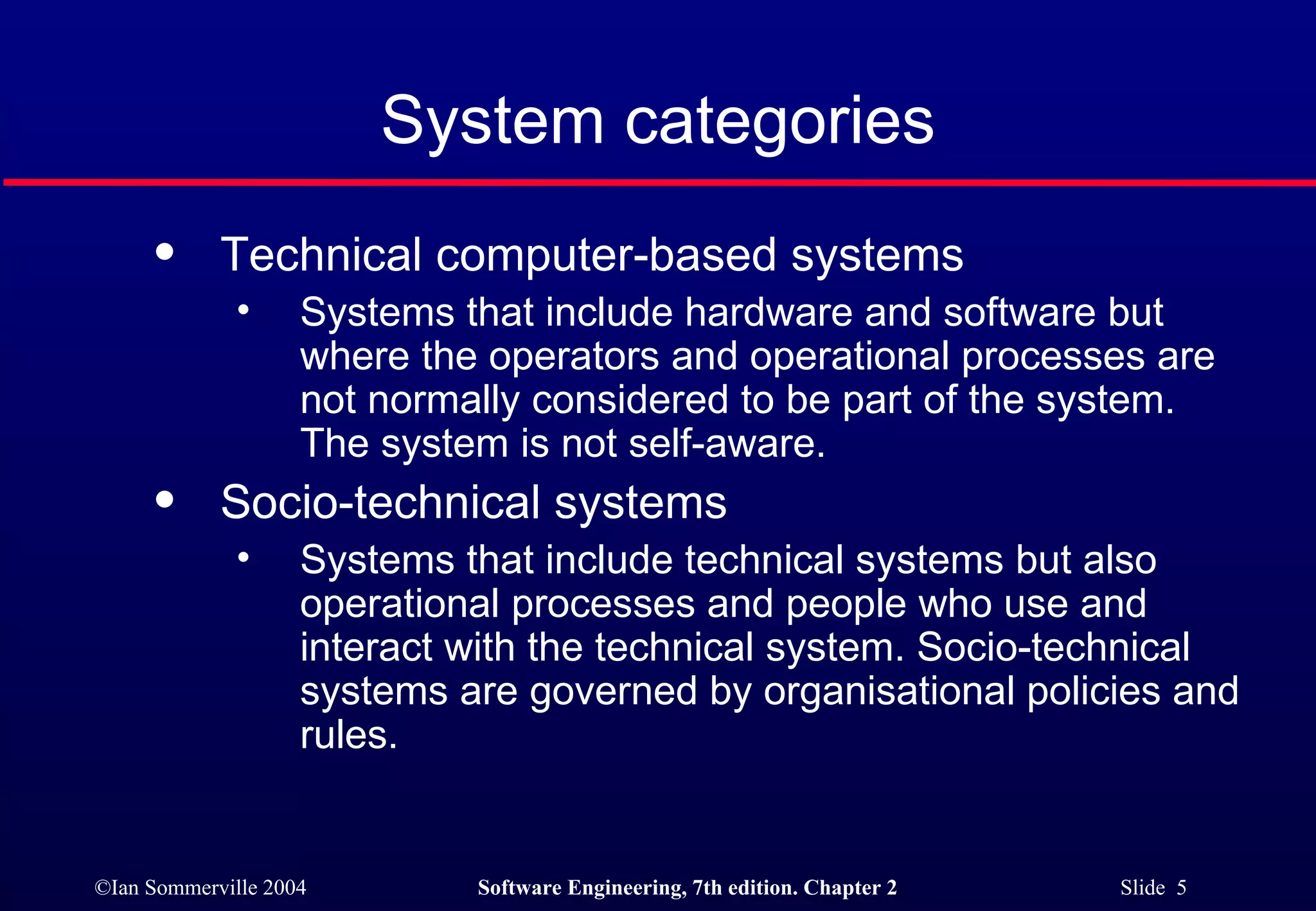
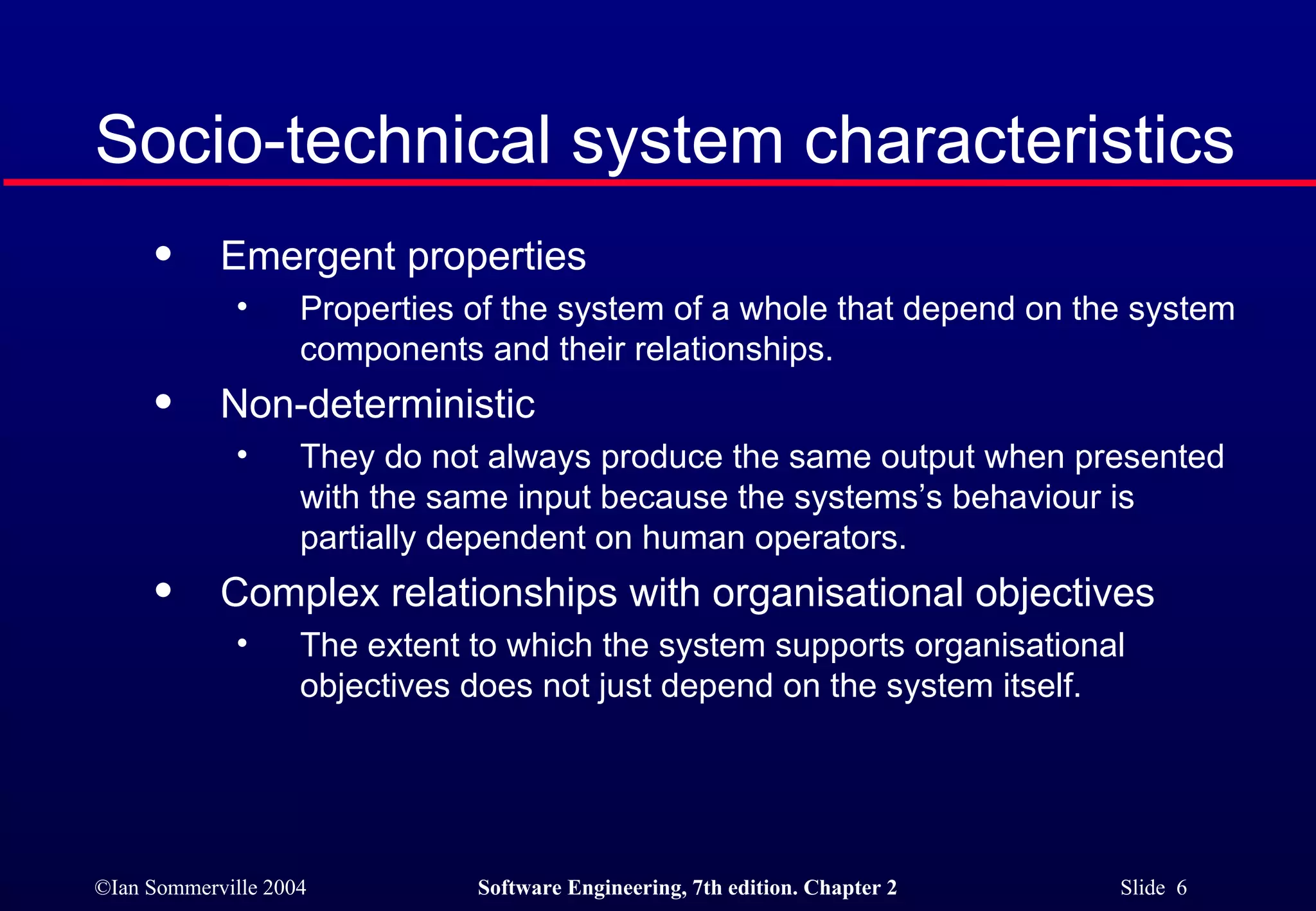
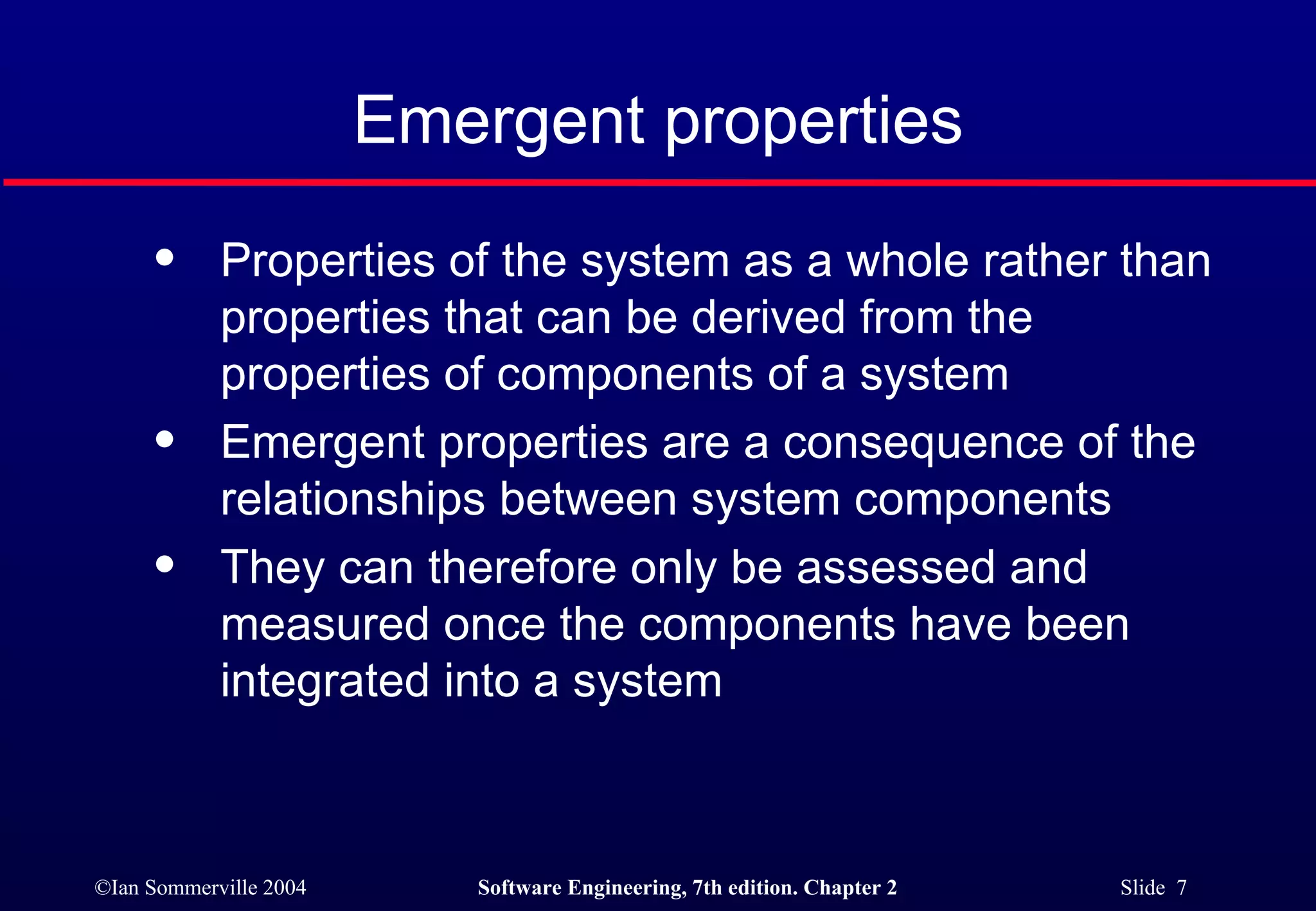
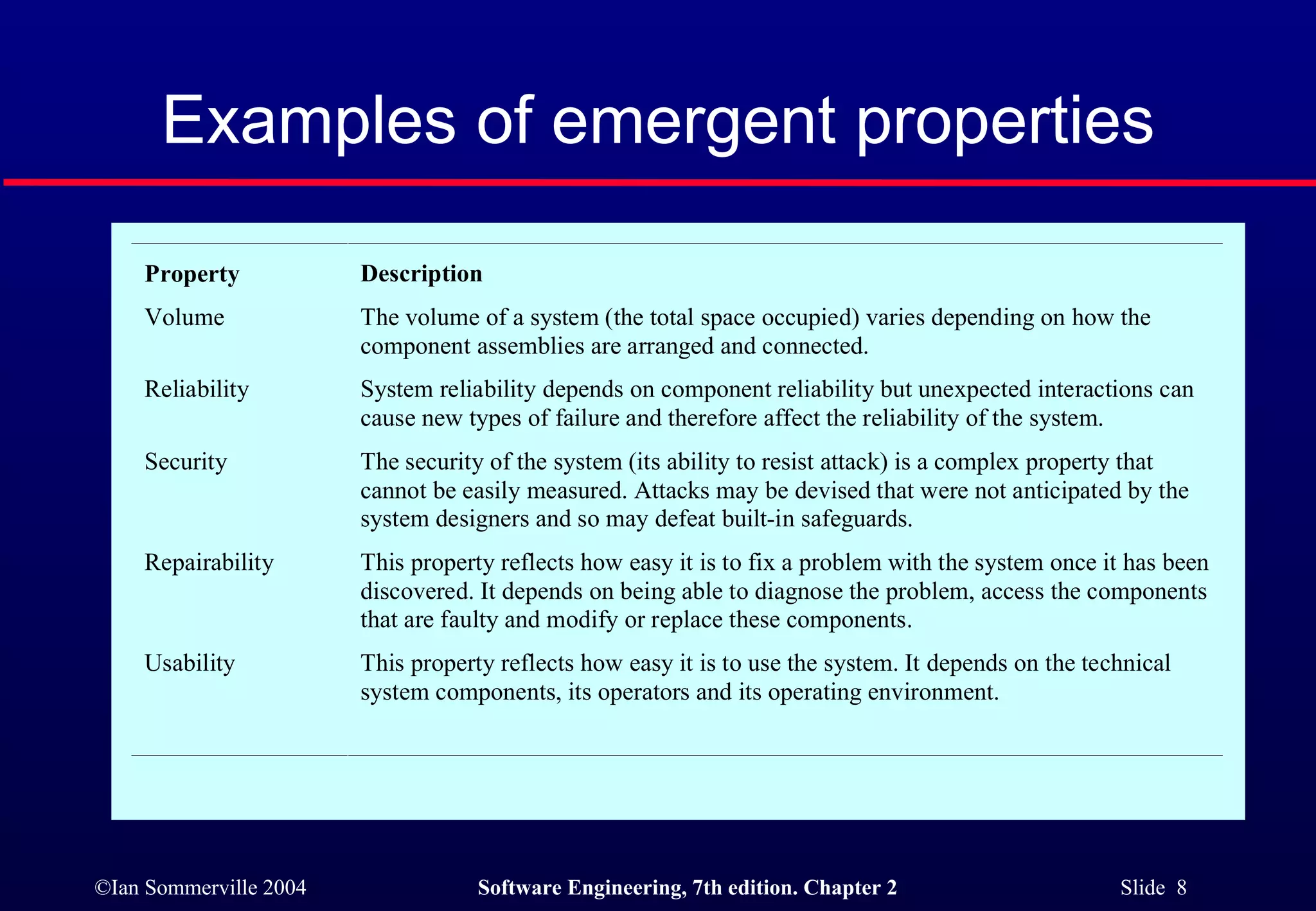
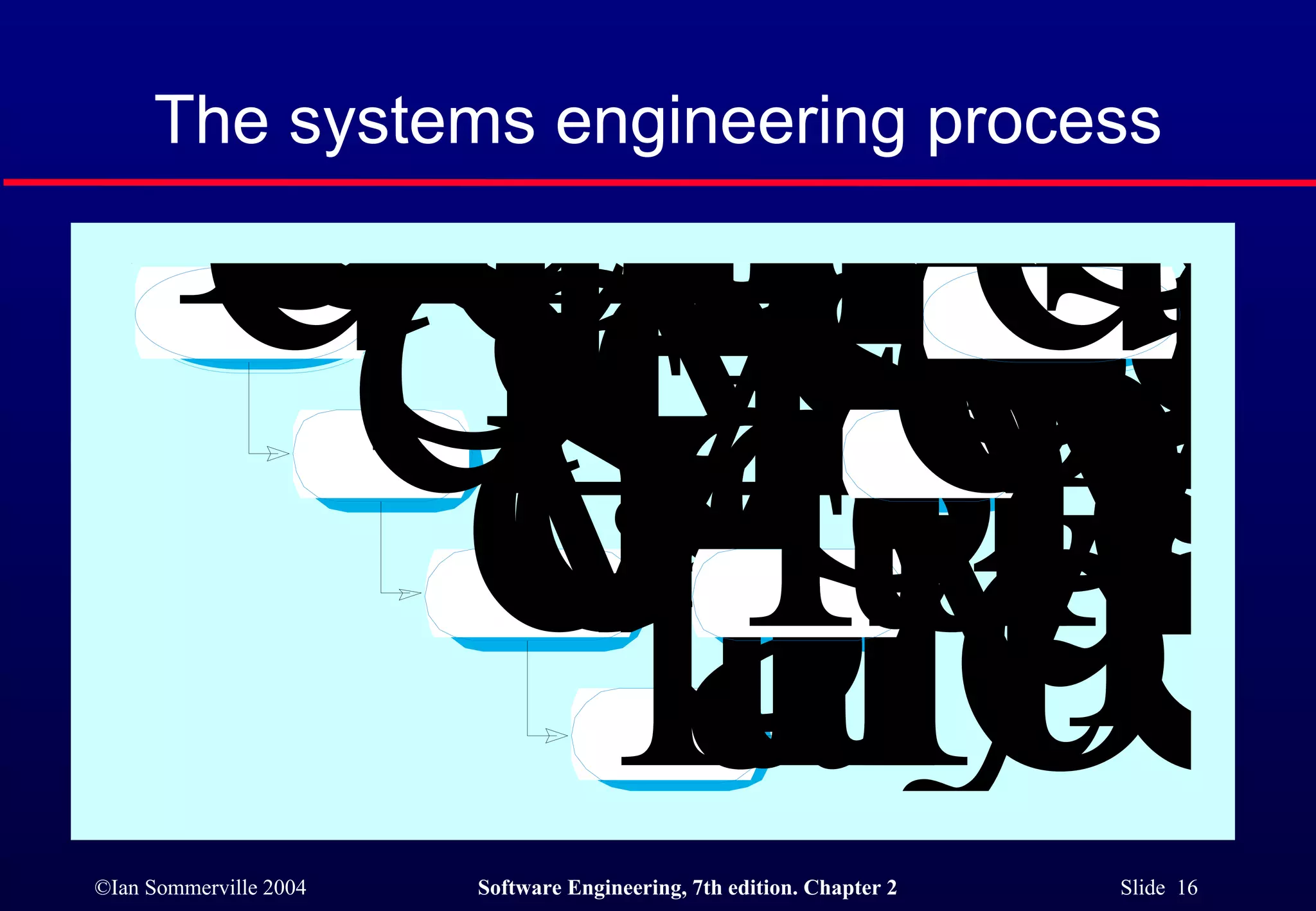
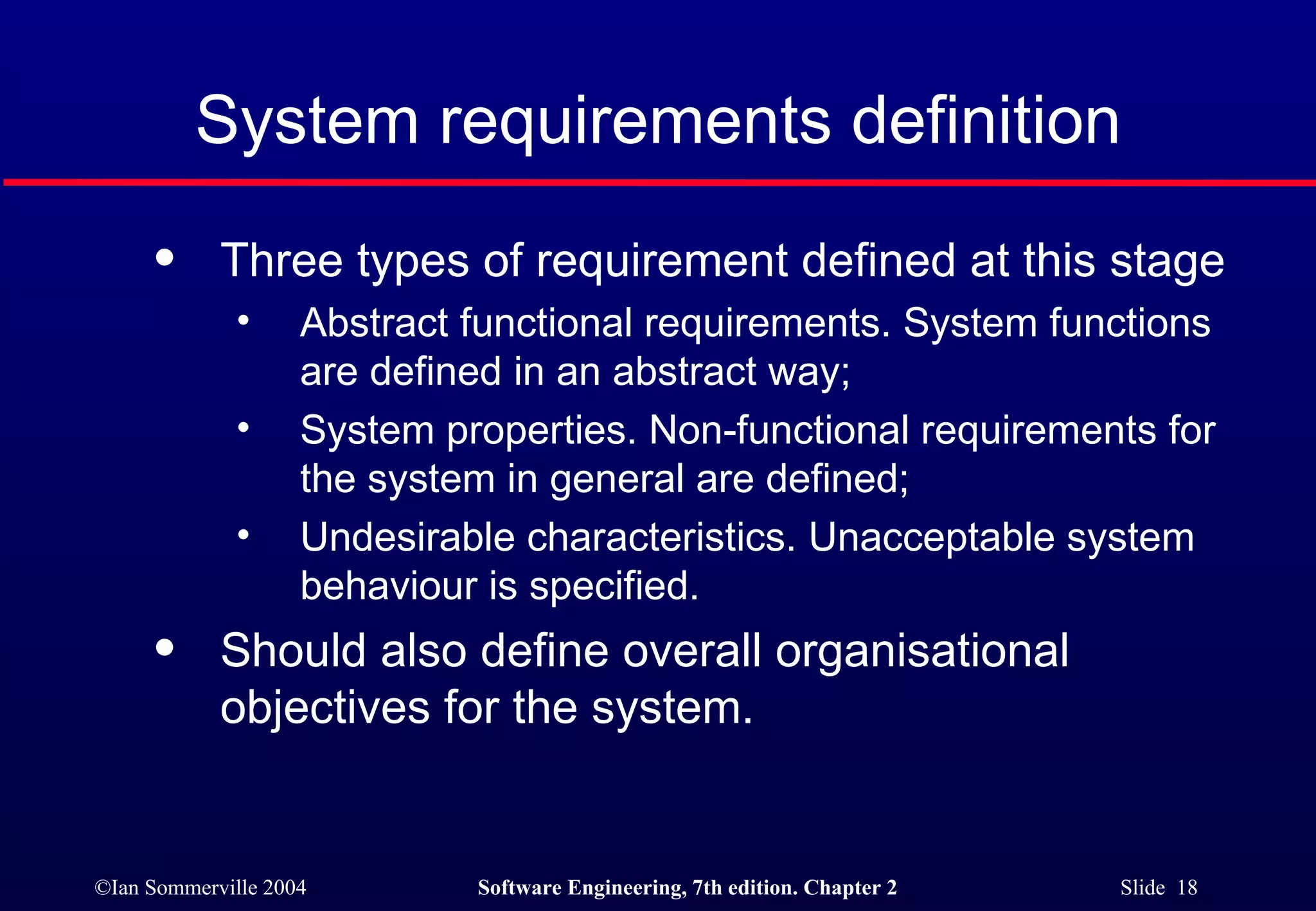
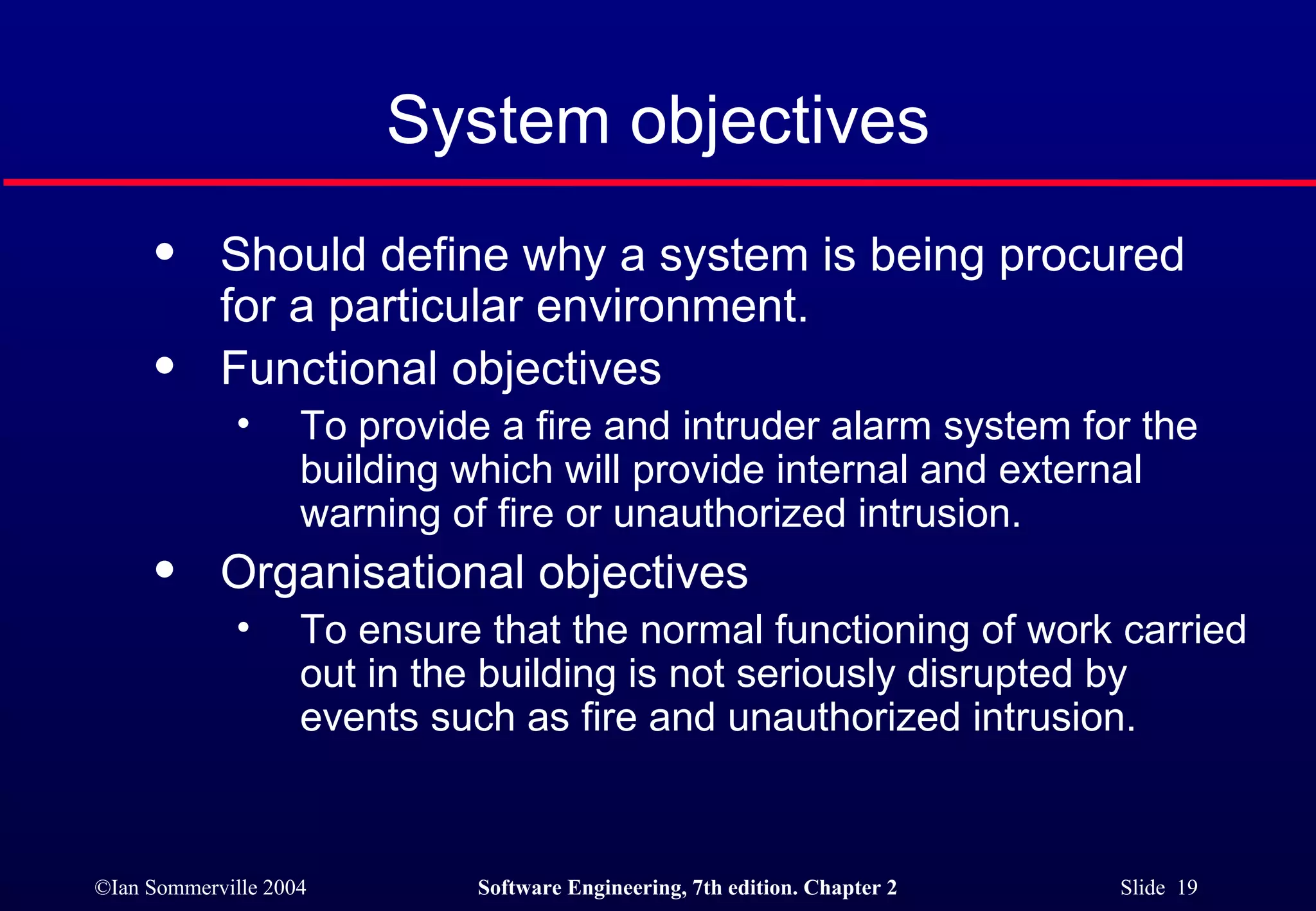
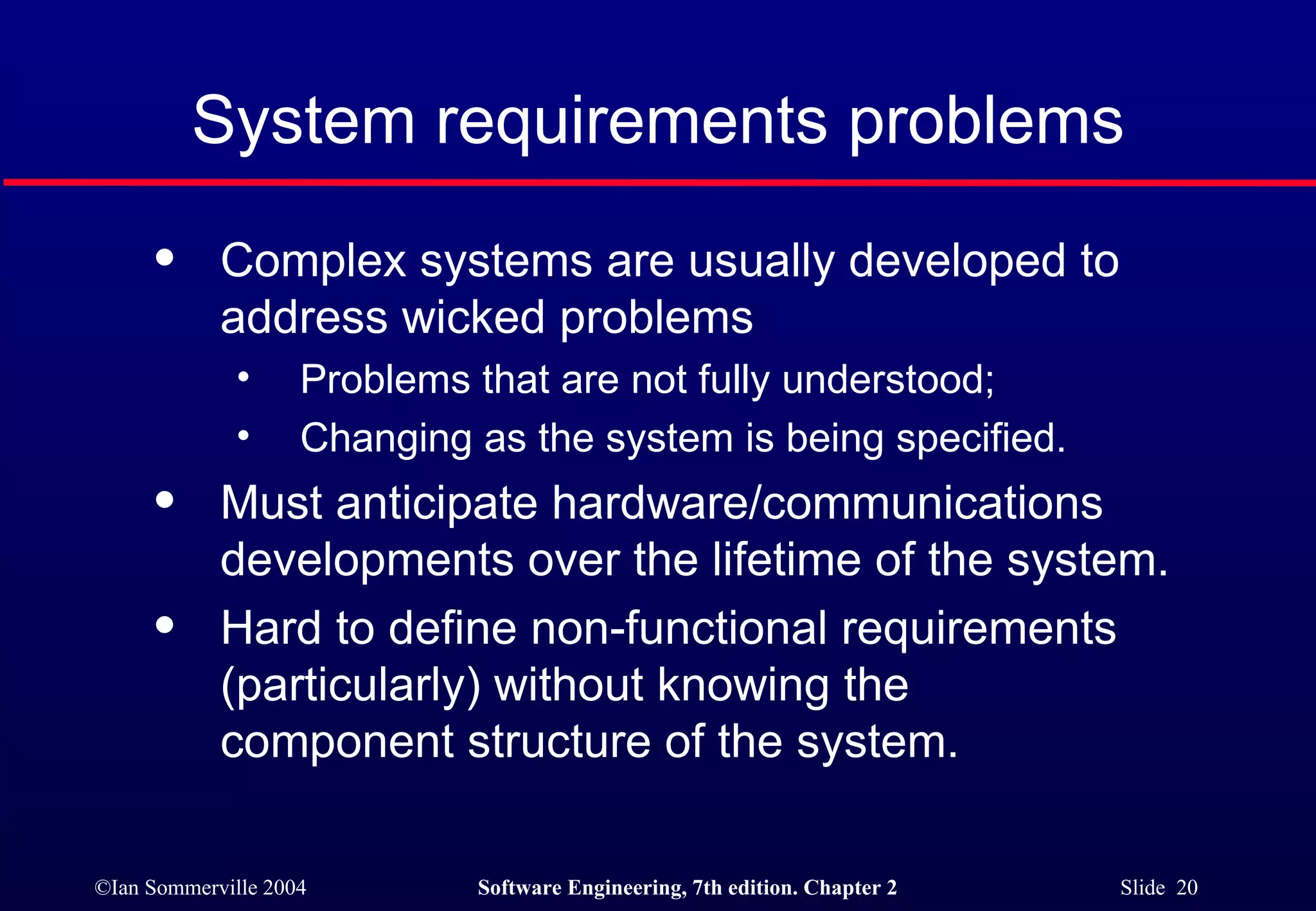
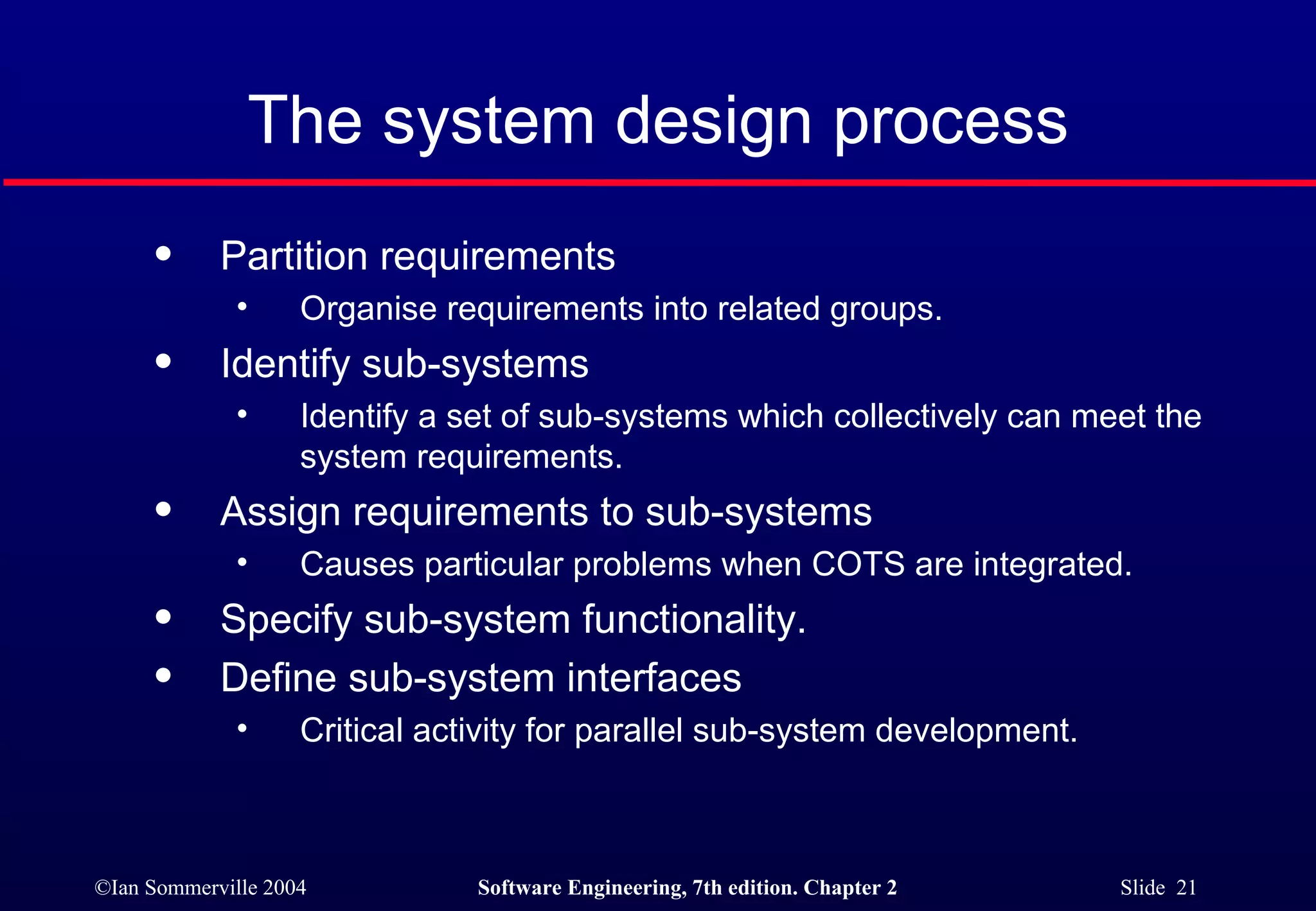
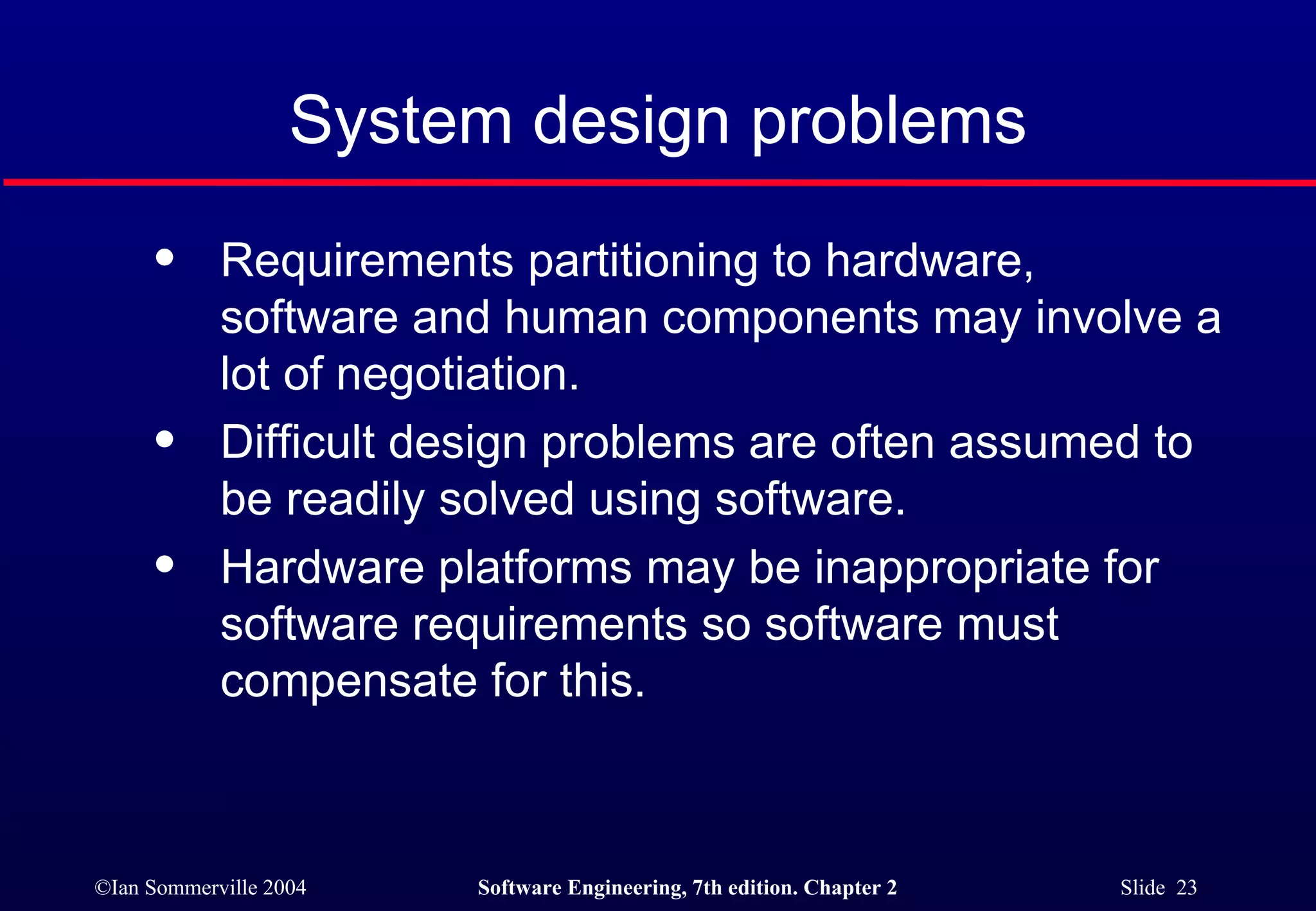
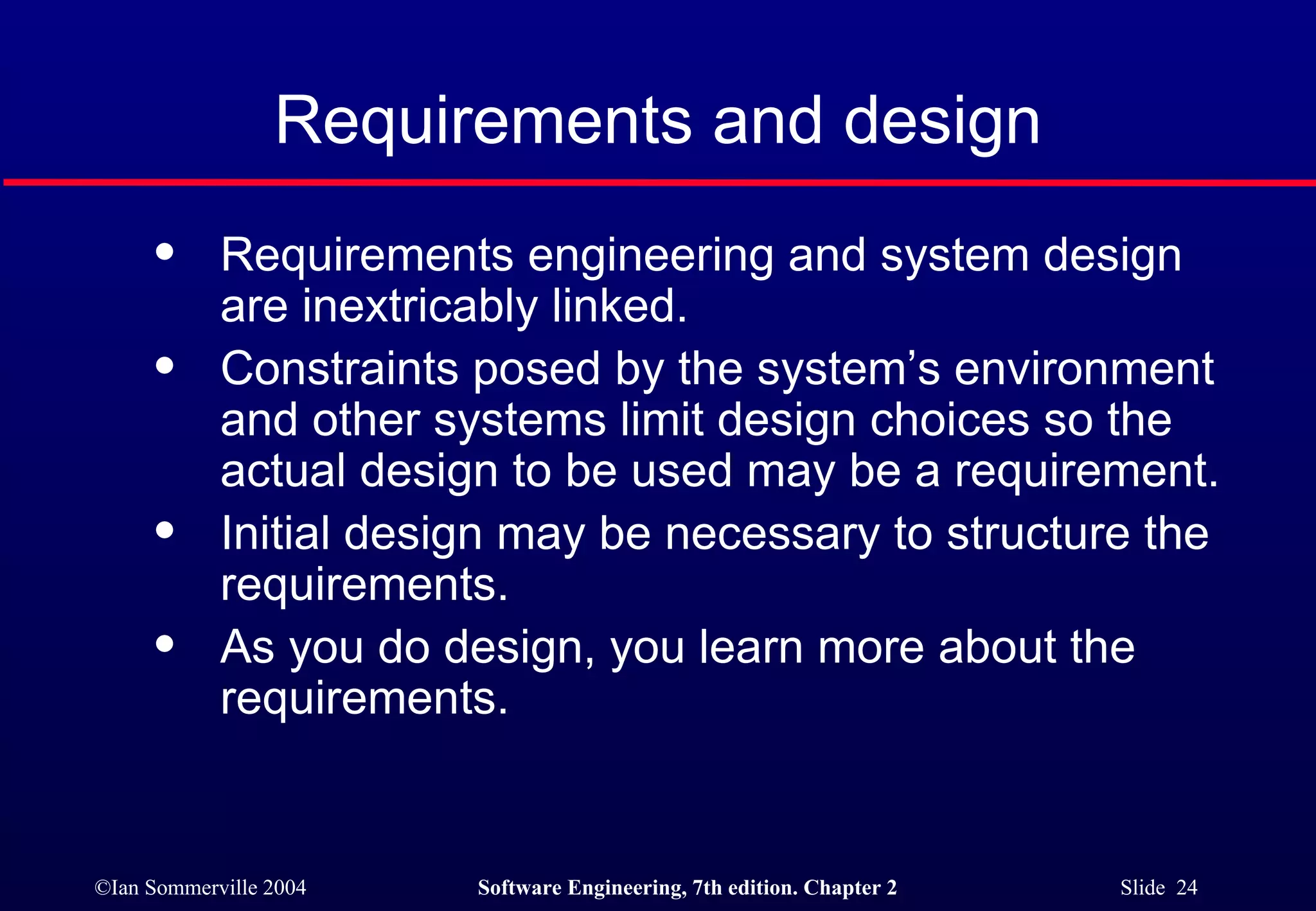




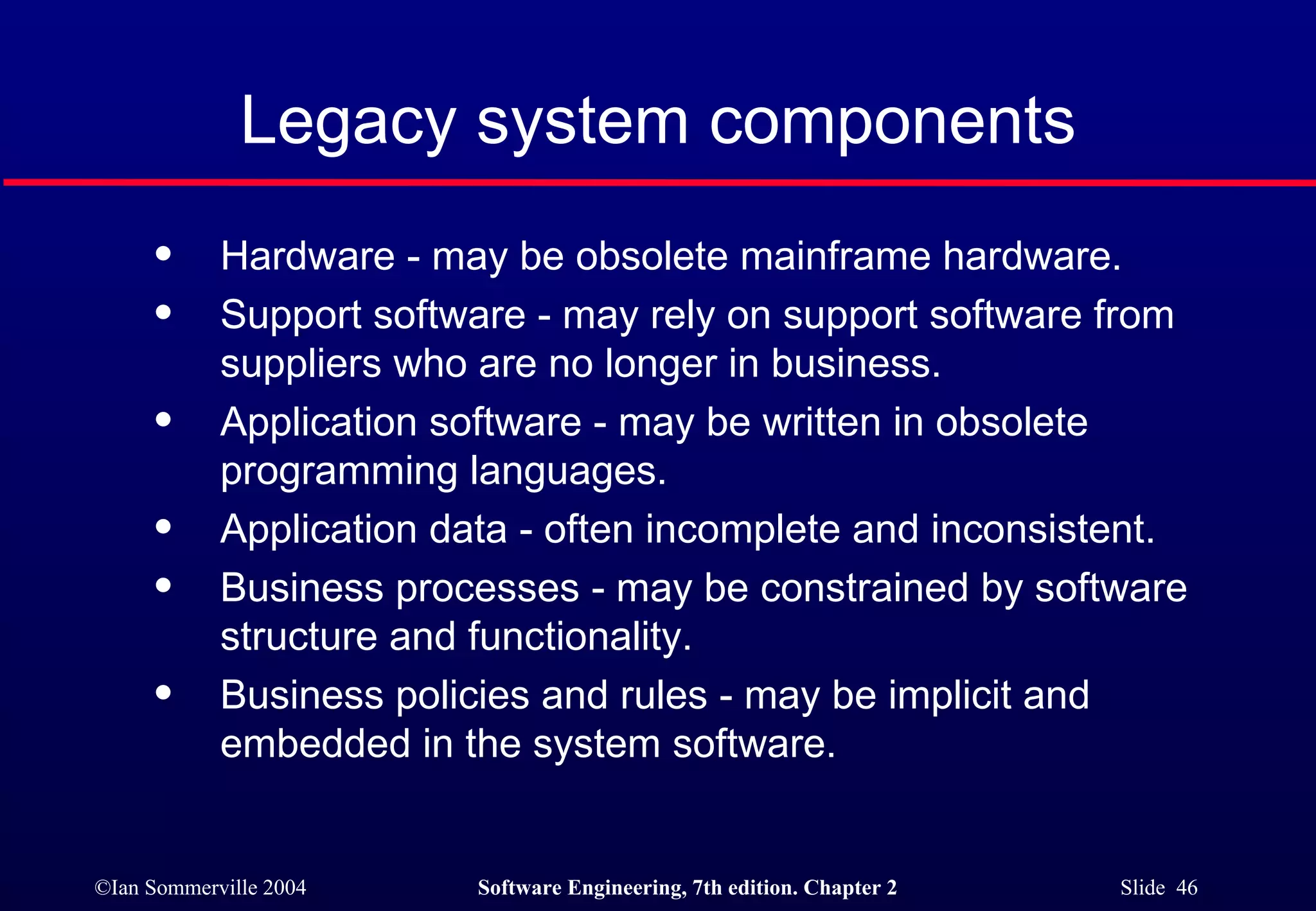


1. A socio-technical system includes technical components like hardware and software as well as people and organizational processes. It has emergent properties that depend on the relationships between components and cannot be understood by examining individual parts alone. 2. Systems engineering involves specifying, designing, developing, and testing socio-technical systems through processes like requirements definition, system design, sub-system development, and integration. It must account for human and organizational factors. 3. Legacy systems refer to existing socio-technical systems that are crucial but use outdated technology. They constrain business processes and are costly to maintain.


