Chapter11 : The Selection Interview ( p.479-p.501 ) 報告者:何育甄
2.
面談 2 days/ a open position 耗時、高成本 信效度問題 “ Designed appropriately and used correctly, the interview is good !”
3.
Used of theinterview in selection 使用面談做為甄選工具的優點 Provides an opportunity for the organization to recruit good candidates and educate them about the job. An efficient and practical method for measuring a number of different KSAs of an applicant. Help an employer make a decision about applicant.
4.
Recruiting the applicantto the organization Providing job information : consider the alternatives. Recruitment only : 記得較多與職位有關的訊息 Recruitment and selection Recruitment function ↑ :面談者更能著重在與工作相關的問題和訊息上
5.
Effect on applicants : recruiting outcomes. 門面 招募者的特質和行為會影響申請者取得的資訊 招募者的人口地理學資料不影響申請者對組織和工作的觀感 如何掌控訊息內容及來源:統一由其他管道給予申請者訊息
6.
Measuring applicant KSAsMore is not better. 面談者應問多少 KSAs 相關的問題? 法律因素:能力測驗 ↓ 、未結構化評分的面談 確定紙筆測驗和能力測驗的信效度 Appropriate KSAs. Table 11.1 與組織 fit & match 的程度、情緒穩定性能有效預測未來工作表現(比人格測驗更具預測力) 特殊工作知識與技巧及社會溝通能力
Making a selectiondecision Structured vs. Unstructured interviews 面談者是自己的敵人 工作分析、問與工作相關的問題 面談者訓練(記分、問題呈現方式) 結構化面談的組成因素 標準化: anchored rating scales, summing scores 與工作行為相關的問題 一致性 Rapport building :一開始用合理、非正式方式互相認識(鼓勵暴露訊息)
9.
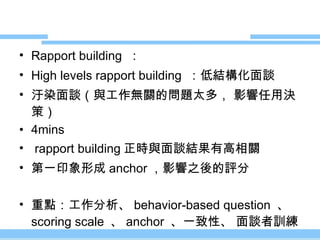
Rapport building : High levels rapport building :低結構化面談 汙染面談(與工作無關的問題太多, 影響任用決策) 4mins rapport building 正時與面談結果有高相關 第一印象形成 anchor ,影響之後的評分 重點:工作分析、 behavior-based question 、 scoring scale 、 anchor 、一致性、 面談者訓練
10.
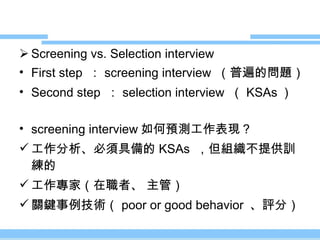
Screening vs. Selectioninterview First step : screening interview (普遍的問題) Second step : selection interview ( KSAs ) screening interview 如何預測工作表現? 工作分析、必須具備的 KSAs ,但組織不提供訓練的 工作專家(在職者、 主管) 關鍵事例技術( poor or good behavior 、評分)
11.
Discrimination and theinterview Discrimination found. Discrimination not found. Table 11.2
A model ofinterviewer decision making 影響任用決策的因素:社會因素、認知因素、個別差異 哪些因素會導致面談的低信效度??? Expectations, beliefs, needs, and intentions prior to the interview. 面談三個階段 Figure 11.1 印象 自證預言