Communication and Consumer Behavior
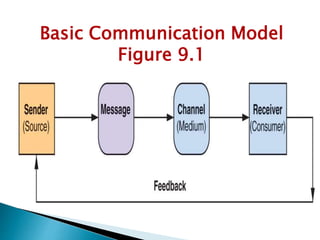
Basic Communication Model
Figure 9.1
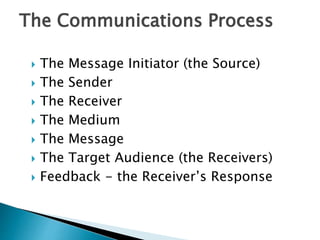
The Communications Process
 The Message Initiator (the Source)
 The Sender
 The Receiver
 The Medium
 The Message
 The Target Audience (the Receivers)
 Feedback - the Receiver’s Response
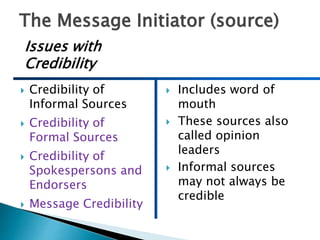
The Message Initiator (source)
 Credibility of
Informal Sources
 Credibility of
Formal Sources
 Credibility of
Spokespersons and
Endorsers
 Message Credibility
 Includes word of
mouth
 These sources also
called opinion
leaders
 Informal sources
may not always be
credible
Issues with
Credibility
The Message Initiator (source)
 Credibility of
Informal Sources
 Credibility of
Formal Sources
 Credibility of
Spokespersons and
Endorsers
 Message Credibility
 Neutral sources have the
greatest credibility.
 Source credibility judged
on past performance,
reputation, service,
quality, spokesperson
image, retailers, social
responsibility.
 Institutional advertising
used to promote
favorable company
image.
Issues with
Credibility
The Message Initiator (source)
 Credibility of
Informal Sources
 Credibility of
Formal Sources
 Credibility of
Spokespersons and
Endorsers
 Message Credibility
 Effectiveness related
to:
◦ The message
◦ Synergy between
endorser and type of
product
◦ Demographic
characteristics of
endorser
◦ Corporate credibility
◦ Endorsement wording
Issues with
Credibility
This ad has
strong
synergy
between the
endorser
and the
type of
product.
The Message Initiator (source)
 Credibility of
Informal Sources
 Credibility of
Formal Sources
 Credibility of
Spokespersons and
Endorsers
 Message Credibility
 Credibility of
retailers.
 Reputation of the
medium that carries
the ad.
 Consumer’s
previous experience
with product.
Issues with
Credibility
Sleeper
Effect
The idea that both
positive and negative
credibility effects tend
to disappear after a
period of time.
The Target Audience (receivers)
 Personal characteristics and
comprehension
 Involvement and congruency
 Mood
 Barriers to communication
◦ Selective exposure to messages
◦ Psychological noise
Feedback
The Receiver’s Response
 Feedback should be gathered:
◦ Promptly
◦ Accurately
Advertising Effectiveness
Research
 Media and message exposure
measures
◦ How many consumers received the
message
◦ Which consumers received the message
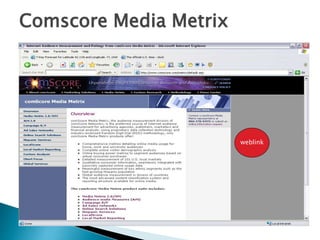
Comscore Media Metrix
weblink
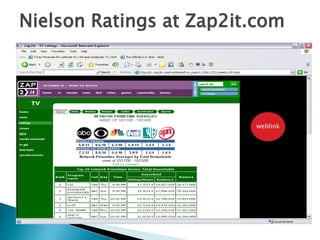
Nielson Ratings at Zap2it.com
weblink
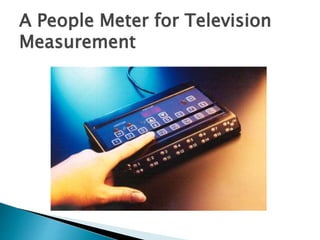
A People Meter for Television
Measurement
Advertising Effectiveness
Research
 Message Attention and Interpretation
◦ Physiological measures
◦ Theater tests
◦ Readership surveys
◦ Attitudinal measures
 Message Recall Measures
◦ Day after recall
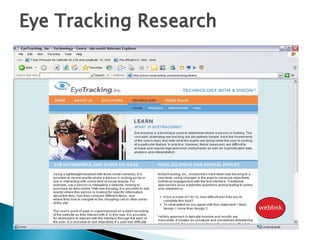
Eye Tracking Research
weblink
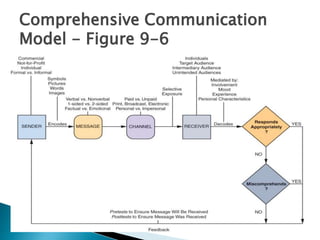
Comprehensive Communication
Model - Figure 9-6
Designing Persuasive
Communications
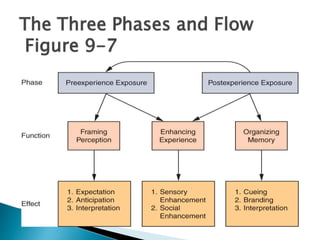
 Communications strategy
◦ Must include objectives
◦ Includes cognitive models
◦ Newer models include perception,
experience, and memory
The Three Phases and Flow
Figure 9-7
Designing Persuasive
Communications
 Target Audience
◦ Segmentation is key
 Media Strategy
◦ Consumer profile
◦ Audience profiles
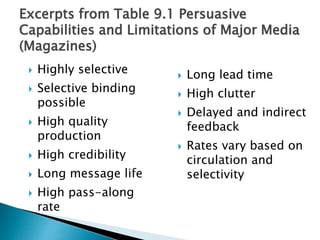
Excerpts from Table 9.1 Persuasive
Capabilities and Limitations of Major Media
(Magazines)
 Highly selective
 Selective binding
possible
 High quality
production
 High credibility
 Long message life
 High pass-along
rate
 Long lead time
 High clutter
 Delayed and indirect
feedback
 Rates vary based on
circulation and
selectivity
Excerpts from Table 9.1 Persuasive
Capabilities and Limitations of Major Media
(Television)
 Low costs per
contact
 Long lead time
 High clutter
 Short message life
 Viewers can avoid
exposure with
zapping, etc.
 Day-after recall
tests for feedback
 Large audiences
possible
 Appeals to many
senses
 Emotion and
attention possible
 Demonstration
possible
 Very high costs
overall
Designing Persuasive
Communications
 Message Strategy
◦ Involvement theory
 Central and peripheral routes
Designing Persuasive
Communications
 Resonance
 Message framing
 Comparative
advertising
 Order effects
 Repetition
 Wordplay
 Used to create a
double meaning
when used with a
relevant picture.
Message Structure
and Presentation
Wordplay on
SUV
Designing Persuasive
Communications
 Resonance
 Message framing
 Comparative
advertising
 Order effects
 Repetition
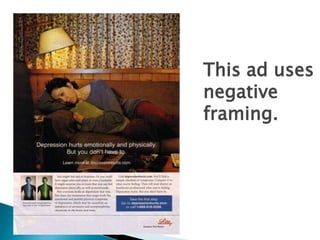
 Positive framing
 Negative framing
 One-sided vs. two-
sided
Message Structure
and Presentation
This ad uses
negative
framing.
Designing Persuasive
Communications
 Resonance
 Message framing
 Comparative
advertising
 Order effects
 Repetition
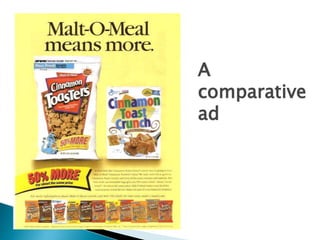
 Marketer claims
product superiority
over another brand.
 Useful for
positioning.
Message Structure
and Presentation
A
comparative
ad
Designing Persuasive
Communications
 Resonance
 Message framing
 Comparative
advertising
 Order effects
 Repetition
 Primacy
 Recency
 Order of benefits
 Brand name
Message Structure
and Presentation
Designing Persuasive
Communications
 Resonance
 Message framing
 Comparative
advertising
 Order effects
 Repetition
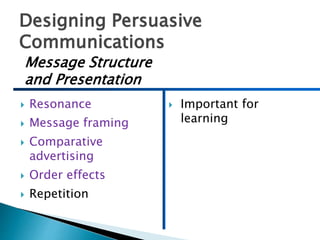
 Important for
learning
Message Structure
and Presentation
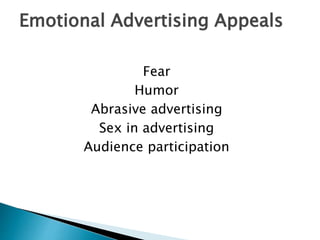
Emotional Advertising Appeals
Fear
Humor
Abrasive advertising
Sex in advertising
Audience participation
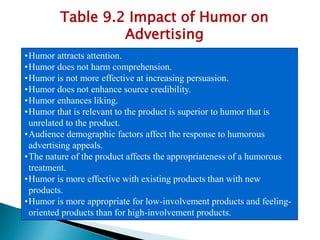
Table 9.2 Impact of Humor on
Advertising
•Humor attracts attention.
•Humor does not harm comprehension.
•Humor is not more effective at increasing persuasion.
•Humor does not enhance source credibility.
•Humor enhances liking.
•Humor that is relevant to the product is superior to humor that is
unrelated to the product.
•Audience demographic factors affect the response to humorous
advertising appeals.
•The nature of the product affects the appropriateness of a humorous
treatment.
•Humor is more effective with existing products than with new
products.
•Humor is more appropriate for low-involvement products and feeling-
oriented products than for high-involvement products.

Ch 9.ppt

  • 1.
  • 2.
  • 3.
    The Communications Process The Message Initiator (the Source)  The Sender  The Receiver  The Medium  The Message  The Target Audience (the Receivers)  Feedback - the Receiver’s Response
  • 4.
    The Message Initiator(source)  Credibility of Informal Sources  Credibility of Formal Sources  Credibility of Spokespersons and Endorsers  Message Credibility  Includes word of mouth  These sources also called opinion leaders  Informal sources may not always be credible Issues with Credibility
  • 5.
    The Message Initiator(source)  Credibility of Informal Sources  Credibility of Formal Sources  Credibility of Spokespersons and Endorsers  Message Credibility  Neutral sources have the greatest credibility.  Source credibility judged on past performance, reputation, service, quality, spokesperson image, retailers, social responsibility.  Institutional advertising used to promote favorable company image. Issues with Credibility
  • 6.
    The Message Initiator(source)  Credibility of Informal Sources  Credibility of Formal Sources  Credibility of Spokespersons and Endorsers  Message Credibility  Effectiveness related to: ◦ The message ◦ Synergy between endorser and type of product ◦ Demographic characteristics of endorser ◦ Corporate credibility ◦ Endorsement wording Issues with Credibility
  • 7.
    This ad has strong synergy betweenthe endorser and the type of product.
  • 8.
    The Message Initiator(source)  Credibility of Informal Sources  Credibility of Formal Sources  Credibility of Spokespersons and Endorsers  Message Credibility  Credibility of retailers.  Reputation of the medium that carries the ad.  Consumer’s previous experience with product. Issues with Credibility
  • 9.
    Sleeper Effect The idea thatboth positive and negative credibility effects tend to disappear after a period of time.
  • 10.
    The Target Audience(receivers)  Personal characteristics and comprehension  Involvement and congruency  Mood  Barriers to communication ◦ Selective exposure to messages ◦ Psychological noise
  • 11.
    Feedback The Receiver’s Response Feedback should be gathered: ◦ Promptly ◦ Accurately
  • 12.
    Advertising Effectiveness Research  Mediaand message exposure measures ◦ How many consumers received the message ◦ Which consumers received the message
  • 13.
  • 14.
    Nielson Ratings atZap2it.com weblink
  • 15.
    A People Meterfor Television Measurement
  • 16.
    Advertising Effectiveness Research  MessageAttention and Interpretation ◦ Physiological measures ◦ Theater tests ◦ Readership surveys ◦ Attitudinal measures  Message Recall Measures ◦ Day after recall
  • 17.
  • 18.
  • 19.
    Designing Persuasive Communications  Communicationsstrategy ◦ Must include objectives ◦ Includes cognitive models ◦ Newer models include perception, experience, and memory
  • 20.
    The Three Phasesand Flow Figure 9-7
  • 21.
    Designing Persuasive Communications  TargetAudience ◦ Segmentation is key  Media Strategy ◦ Consumer profile ◦ Audience profiles
  • 22.
    Excerpts from Table9.1 Persuasive Capabilities and Limitations of Major Media (Magazines)  Highly selective  Selective binding possible  High quality production  High credibility  Long message life  High pass-along rate  Long lead time  High clutter  Delayed and indirect feedback  Rates vary based on circulation and selectivity
  • 23.
    Excerpts from Table9.1 Persuasive Capabilities and Limitations of Major Media (Television)  Low costs per contact  Long lead time  High clutter  Short message life  Viewers can avoid exposure with zapping, etc.  Day-after recall tests for feedback  Large audiences possible  Appeals to many senses  Emotion and attention possible  Demonstration possible  Very high costs overall
  • 24.
    Designing Persuasive Communications  MessageStrategy ◦ Involvement theory  Central and peripheral routes
  • 25.
    Designing Persuasive Communications  Resonance Message framing  Comparative advertising  Order effects  Repetition  Wordplay  Used to create a double meaning when used with a relevant picture. Message Structure and Presentation
  • 26.
  • 27.
    Designing Persuasive Communications  Resonance Message framing  Comparative advertising  Order effects  Repetition  Positive framing  Negative framing  One-sided vs. two- sided Message Structure and Presentation
  • 28.
  • 29.
    Designing Persuasive Communications  Resonance Message framing  Comparative advertising  Order effects  Repetition  Marketer claims product superiority over another brand.  Useful for positioning. Message Structure and Presentation
  • 30.
  • 31.
    Designing Persuasive Communications  Resonance Message framing  Comparative advertising  Order effects  Repetition  Primacy  Recency  Order of benefits  Brand name Message Structure and Presentation
  • 32.
    Designing Persuasive Communications  Resonance Message framing  Comparative advertising  Order effects  Repetition  Important for learning Message Structure and Presentation
  • 33.
    Emotional Advertising Appeals Fear Humor Abrasiveadvertising Sex in advertising Audience participation
  • 34.
    Table 9.2 Impactof Humor on Advertising •Humor attracts attention. •Humor does not harm comprehension. •Humor is not more effective at increasing persuasion. •Humor does not enhance source credibility. •Humor enhances liking. •Humor that is relevant to the product is superior to humor that is unrelated to the product. •Audience demographic factors affect the response to humorous advertising appeals. •The nature of the product affects the appropriateness of a humorous treatment. •Humor is more effective with existing products than with new products. •Humor is more appropriate for low-involvement products and feeling- oriented products than for high-involvement products.