Generating and Testing
Hypotheses
Classroom Instruction That Works
Chapter 9
Robert J. Marzano
Debra J. Pickering
Jane E. Pollock
Hypothesis and Testing
Hypothesis and testing can be approached
inductively or deductively:
Inductive: drawing conclusions based on
information we know or are presented with
(Reading – inference)
*Deductive: using a general rule to make a
prediction about a future action or event
( Math – problem solving)
*generally produces best results
Six Types of Tasks
That Employ Hypotheses
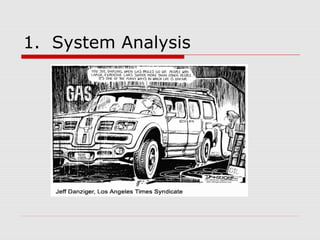
1. System Analysis
Explain the purpose of the
system
Describe
Identify the parts
Test your hypothesis
1. System Analysis
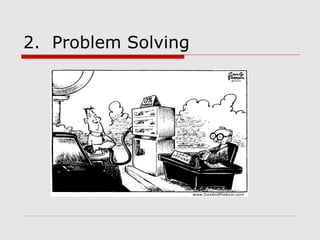
2. Problem Solving
Identify the goal
Describe the barriers
Identify solutions
Try your solution
Evaluate hypothesis
2. Problem Solving
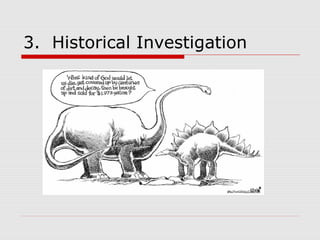
3. Historical Investigation
Describe the historical event
Identify what you know
Offer a hypothetical scenario
Analyze evidence
3. Historical Investigation
4. Invention
 Describe a situation which needs
improvement
 Identify standards
 Brainstorm ideas
 Draft, sketch, or actually create the
invention
 Test your hypothesis
 Revise your invention
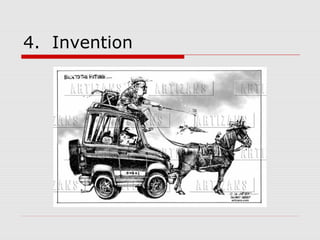
4. Invention
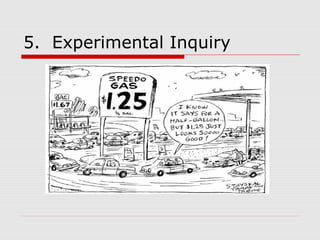
5. Experimental Inquiry
Observe something of
interest
Apply theories or rules
Generate a hypothesis
Set up an experiment
Explain the results
5. Experimental Inquiry
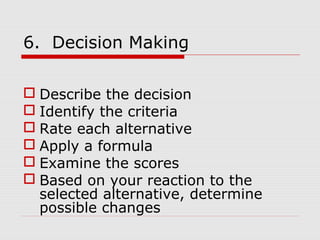
6. Decision Making
 Describe the decision
 Identify the criteria
 Rate each alternative
 Apply a formula
 Examine the scores
 Based on your reaction to the
selected alternative, determine
possible changes
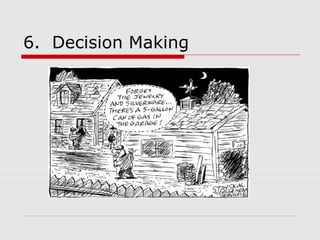
6. Decision Making
Teachers should ask students to clearly
explain their hypotheses and their
conclusions
 Provide templates
 Provide sentence stems
 Create audiotapes
 Develop rubrics
 Set up events during which parents
or community members ask students
to explain their thinking
Generating and Testing Hypotheses
 “We commonly think of generating
and testing hypotheses as the
purview of the science teacher only.
As this chapter has shown, this basic
cognitive skill applies to a variety of
tasks that are applicable to many
subject areas.”
-Robert Marzano, Classroom
Instruction That Works

Ch. 9 generating and testing hypotheses

  • 1.
    Generating and Testing Hypotheses ClassroomInstruction That Works Chapter 9 Robert J. Marzano Debra J. Pickering Jane E. Pollock
  • 2.
    Hypothesis and Testing Hypothesisand testing can be approached inductively or deductively: Inductive: drawing conclusions based on information we know or are presented with (Reading – inference) *Deductive: using a general rule to make a prediction about a future action or event ( Math – problem solving) *generally produces best results
  • 3.
    Six Types ofTasks That Employ Hypotheses
  • 4.
    1. System Analysis Explainthe purpose of the system Describe Identify the parts Test your hypothesis
  • 5.
  • 6.
    2. Problem Solving Identifythe goal Describe the barriers Identify solutions Try your solution Evaluate hypothesis
  • 7.
  • 8.
    3. Historical Investigation Describethe historical event Identify what you know Offer a hypothetical scenario Analyze evidence
  • 9.
  • 10.
    4. Invention  Describea situation which needs improvement  Identify standards  Brainstorm ideas  Draft, sketch, or actually create the invention  Test your hypothesis  Revise your invention
  • 11.
  • 12.
    5. Experimental Inquiry Observesomething of interest Apply theories or rules Generate a hypothesis Set up an experiment Explain the results
  • 13.
  • 14.
    6. Decision Making Describe the decision  Identify the criteria  Rate each alternative  Apply a formula  Examine the scores  Based on your reaction to the selected alternative, determine possible changes
  • 15.
  • 16.
    Teachers should askstudents to clearly explain their hypotheses and their conclusions  Provide templates  Provide sentence stems  Create audiotapes  Develop rubrics  Set up events during which parents or community members ask students to explain their thinking
  • 17.
    Generating and TestingHypotheses  “We commonly think of generating and testing hypotheses as the purview of the science teacher only. As this chapter has shown, this basic cognitive skill applies to a variety of tasks that are applicable to many subject areas.” -Robert Marzano, Classroom Instruction That Works