Organizational Culture
Abdulrhman Alzhrani- BSc, MHA
T.A, Health Services Administration Dept.
Faculty of Public Health and Health Informatics, UQU
Objectives/Outline
• Know the nature of organizational culture and its manifestations
• Know how to interpret the culture
• Understand the importance of organizational culture
• Describe the four types of organizational culture
What is Organizational Culture?
• An org’s shared values, norms, guiding beliefs, and understandings
• It is the the unwritten part of the organization.
• Shared by members of an org – weakly or strongly
• Taught to new org members as the correct way to think, feel and behave
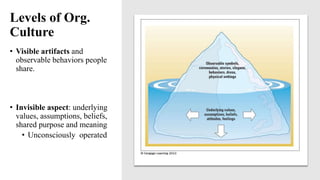
Levels of Org.
Culture
• Visible artifacts and
observable behaviors people
share.
• Invisible aspect: underlying
values, assumptions, beliefs,
shared purpose and meaning
• Unconsciously operated
Purpose of Culture
• Culture serves two critical functions in organizations:
1. Internal Integration: integrates members with shared identity and
purpose so they know how to relate to one another and what to expect of
others
2. External Adaptation: helps organization adapt to external environment
• Both functions of culture are related to building the org’s social capital.
• Social Capital refers to the quality of interaction among people and weather they
share a common perspective.
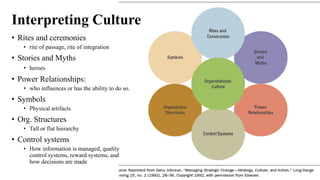
Interpreting Culture
• Rites and ceremonies
• rite of passage, rite of integration
• Stories and Myths
• heroes
• Power Relationships:
• who influences or has the ability to do so.
• Symbols
• Physical artifacts
• Org. Structures
• Tall or flat hierarchy
• Control systems
• How information is managed, quality
control systems, reward systems, and
how decisions are made
Org. Design and Culture
• Managers want a corporate culture that reinforces the strategy and structural
design that the org. needs to be effective in its environment.
e.g. Internet-based companies
• The correct relationship among cultural values, organizational structure and
strategy, and the environment can enhance performance.
• Cultures can be assessed along many dimensions such as the extent of
collaboration vs. isolation among people and departments.
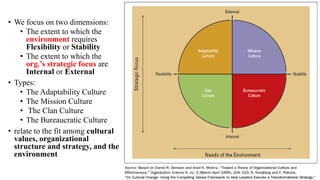
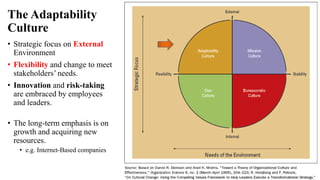
• We focus on two dimensions:
• The extent to which the
environment requires
Flexibility or Stability
• The extent to which the
org.’s strategic focus are
Internal or External
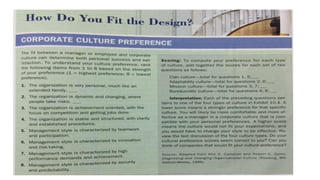
• Types:
• The Adaptability Culture
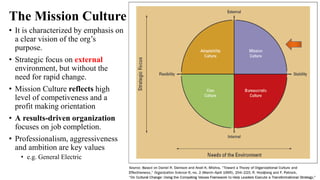
• The Mission Culture
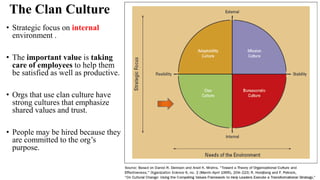
• The Clan Culture
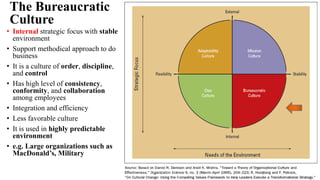
• The Bureaucratic Culture
• relate to the fit among cultural
values, organizational
structure and strategy, and the
environment
The Adaptability
Culture
• Strategic focus on External
Environment
• Flexibility and change to meet
stakeholders’ needs.
• Innovation and risk-taking
are embraced by employees
and leaders.
• The long-term emphasis is on
growth and acquiring new
resources.
• e.g. Internet-Based companies
The Mission Culture
• It is characterized by emphasis on
a clear vision of the org’s
purpose.
• Strategic focus on external
environment, but without the
need for rapid change.
• Mission Culture reflects high
level of competiveness and a
profit making orientation
• A results-driven organization
focuses on job completion.
• Professionalism, aggressiveness
and ambition are key values
• e.g. General Electric
The Clan Culture
• Strategic focus on internal
environment .
• The important value is taking
care of employees to help them
be satisfied as well as productive.
• Orgs that use clan culture have
strong cultures that emphasize
shared values and trust.
• People may be hired because they
are committed to the org’s
purpose.
The Bureaucratic
Culture
• Internal strategic focus with stable
environment
• Support methodical approach to do
business
• It is a culture of order, discipline,
and control
• Has high level of consistency,
conformity, and collaboration
among employees
• Integration and efficiency
• Less favorable culture
• It is used in highly predictable
environment
• e.g. Large organizations such as
MacDonald’s, Military
Culture Strength and Subcultures
• Culture Strength refers to the degree of agreement among members of the org.
about the importance of specific values.
• high consensus about the importance of org’s values = cohesive and strong
• disagreement = weak culture
• Strong culture is associated with the frequent use of ceremonies, symbols ,..etc.
which increase employee commitment to the values and strategy of the org.
• Subcultures do exist- a branch, or department cab have its own distinctive
subculture- e.g. RD dept. vs. manufacturing dept.
Implications
• Pay attention to corporate culture.
• Understand the underlying values, assumptions, and beliefs on which culture is
based as well as its observable manifestations.
• Evaluate org. culture based on rites and ceremonies, stories and myths, symbols
and the structures, control systems, and power relationships you can observe in the
org.
• Make sure corporate culture is consistent with strategy and environment .
Cont.
• Shape culture to fit the needs
• Consciously manage culture to shift values toward high performance and goal
accomplishment.
• To support learning orientation, emphasize cultural values of openness and
collaboration, equality and trust, continuous improvement, and risk-taking.
• Build a strong internal culture that encourages adaptation to changing
environmental conditions.
Q & A
Thank You

ch 10 organizational cuture.ppt

  • 1.
    Organizational Culture Abdulrhman Alzhrani-BSc, MHA T.A, Health Services Administration Dept. Faculty of Public Health and Health Informatics, UQU
  • 2.
    Objectives/Outline • Know thenature of organizational culture and its manifestations • Know how to interpret the culture • Understand the importance of organizational culture • Describe the four types of organizational culture
  • 3.
    What is OrganizationalCulture? • An org’s shared values, norms, guiding beliefs, and understandings • It is the the unwritten part of the organization. • Shared by members of an org – weakly or strongly • Taught to new org members as the correct way to think, feel and behave
  • 4.
    Levels of Org. Culture •Visible artifacts and observable behaviors people share. • Invisible aspect: underlying values, assumptions, beliefs, shared purpose and meaning • Unconsciously operated
  • 5.
    Purpose of Culture •Culture serves two critical functions in organizations: 1. Internal Integration: integrates members with shared identity and purpose so they know how to relate to one another and what to expect of others 2. External Adaptation: helps organization adapt to external environment • Both functions of culture are related to building the org’s social capital. • Social Capital refers to the quality of interaction among people and weather they share a common perspective.
  • 6.
    Interpreting Culture • Ritesand ceremonies • rite of passage, rite of integration • Stories and Myths • heroes • Power Relationships: • who influences or has the ability to do so. • Symbols • Physical artifacts • Org. Structures • Tall or flat hierarchy • Control systems • How information is managed, quality control systems, reward systems, and how decisions are made
  • 7.
    Org. Design andCulture • Managers want a corporate culture that reinforces the strategy and structural design that the org. needs to be effective in its environment. e.g. Internet-based companies • The correct relationship among cultural values, organizational structure and strategy, and the environment can enhance performance. • Cultures can be assessed along many dimensions such as the extent of collaboration vs. isolation among people and departments.
  • 8.
    • We focuson two dimensions: • The extent to which the environment requires Flexibility or Stability • The extent to which the org.’s strategic focus are Internal or External • Types: • The Adaptability Culture • The Mission Culture • The Clan Culture • The Bureaucratic Culture • relate to the fit among cultural values, organizational structure and strategy, and the environment
  • 9.
    The Adaptability Culture • Strategicfocus on External Environment • Flexibility and change to meet stakeholders’ needs. • Innovation and risk-taking are embraced by employees and leaders. • The long-term emphasis is on growth and acquiring new resources. • e.g. Internet-Based companies
  • 10.
    The Mission Culture •It is characterized by emphasis on a clear vision of the org’s purpose. • Strategic focus on external environment, but without the need for rapid change. • Mission Culture reflects high level of competiveness and a profit making orientation • A results-driven organization focuses on job completion. • Professionalism, aggressiveness and ambition are key values • e.g. General Electric
  • 11.
    The Clan Culture •Strategic focus on internal environment . • The important value is taking care of employees to help them be satisfied as well as productive. • Orgs that use clan culture have strong cultures that emphasize shared values and trust. • People may be hired because they are committed to the org’s purpose.
  • 12.
    The Bureaucratic Culture • Internalstrategic focus with stable environment • Support methodical approach to do business • It is a culture of order, discipline, and control • Has high level of consistency, conformity, and collaboration among employees • Integration and efficiency • Less favorable culture • It is used in highly predictable environment • e.g. Large organizations such as MacDonald’s, Military
  • 14.
    Culture Strength andSubcultures • Culture Strength refers to the degree of agreement among members of the org. about the importance of specific values. • high consensus about the importance of org’s values = cohesive and strong • disagreement = weak culture • Strong culture is associated with the frequent use of ceremonies, symbols ,..etc. which increase employee commitment to the values and strategy of the org. • Subcultures do exist- a branch, or department cab have its own distinctive subculture- e.g. RD dept. vs. manufacturing dept.
  • 15.
    Implications • Pay attentionto corporate culture. • Understand the underlying values, assumptions, and beliefs on which culture is based as well as its observable manifestations. • Evaluate org. culture based on rites and ceremonies, stories and myths, symbols and the structures, control systems, and power relationships you can observe in the org. • Make sure corporate culture is consistent with strategy and environment .
  • 16.
    Cont. • Shape cultureto fit the needs • Consciously manage culture to shift values toward high performance and goal accomplishment. • To support learning orientation, emphasize cultural values of openness and collaboration, equality and trust, continuous improvement, and risk-taking. • Build a strong internal culture that encourages adaptation to changing environmental conditions.
  • 17.

Editor's Notes

  • #5 During job interviews, observe symbols to judge org culture – then decide if you would ‘fit’ in that org. Invisible : foundations of culture, so widely shared in the org.