Towards Greener Electronics


 Greenpeaceʼs 3rd Edition Product Survey
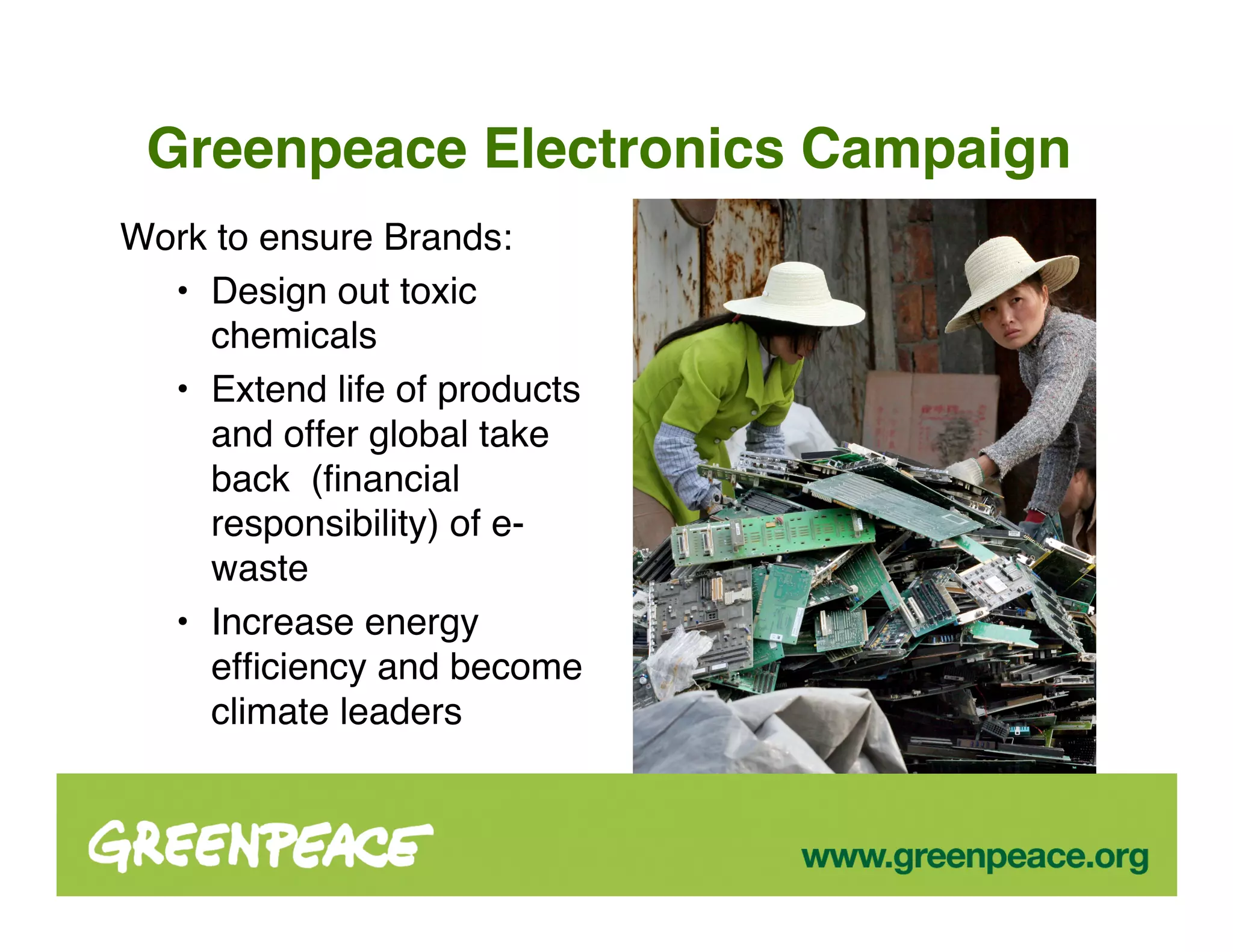
Greenpeace Electronics Campaign
Work to ensure Brands:
  • Design out toxic
    chemicals
  • Extend life of products
    and offer global take
    back (financial
    responsibility) of e-
    waste
  • Increase energy
    efficiency and become
    climate leaders
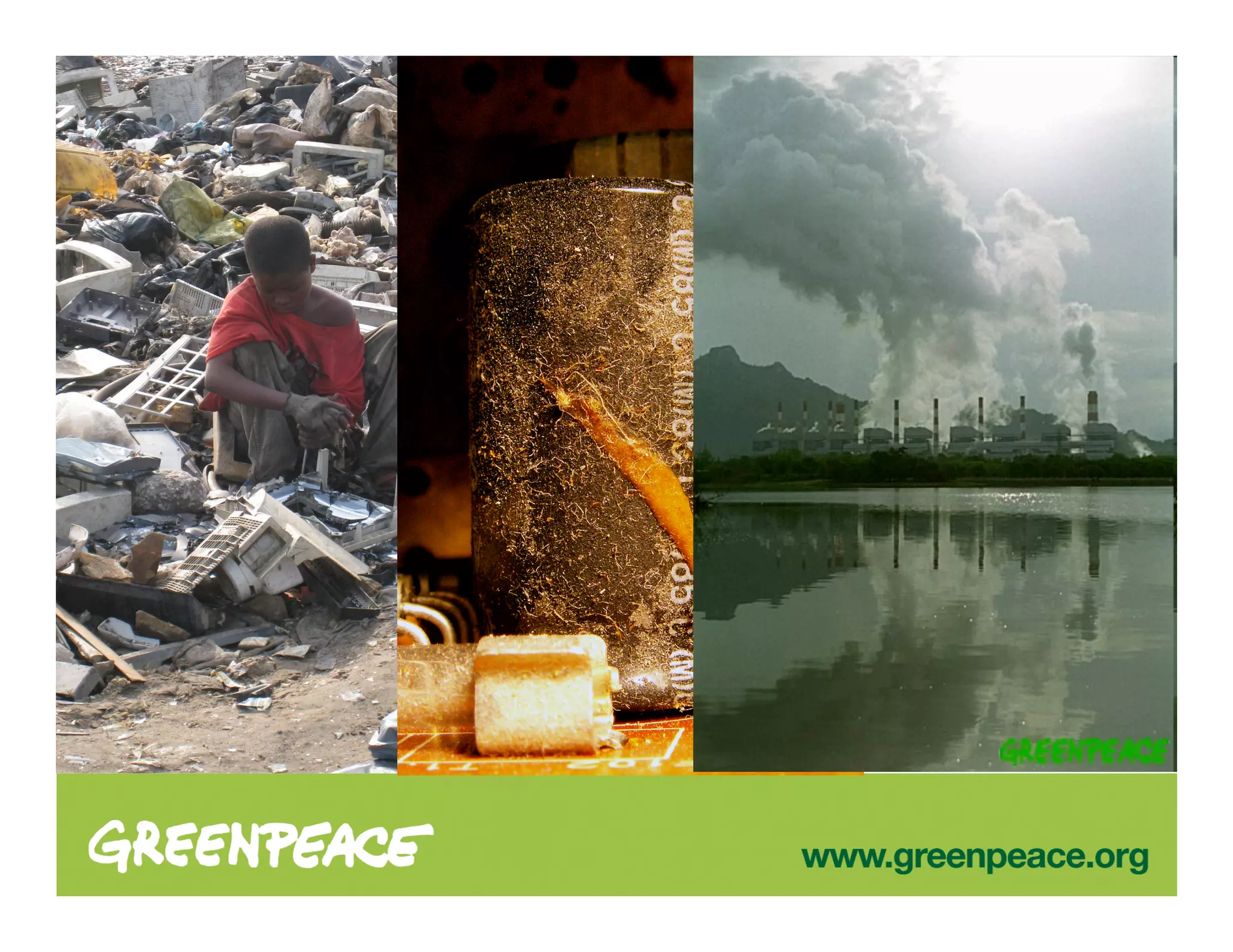
The problem
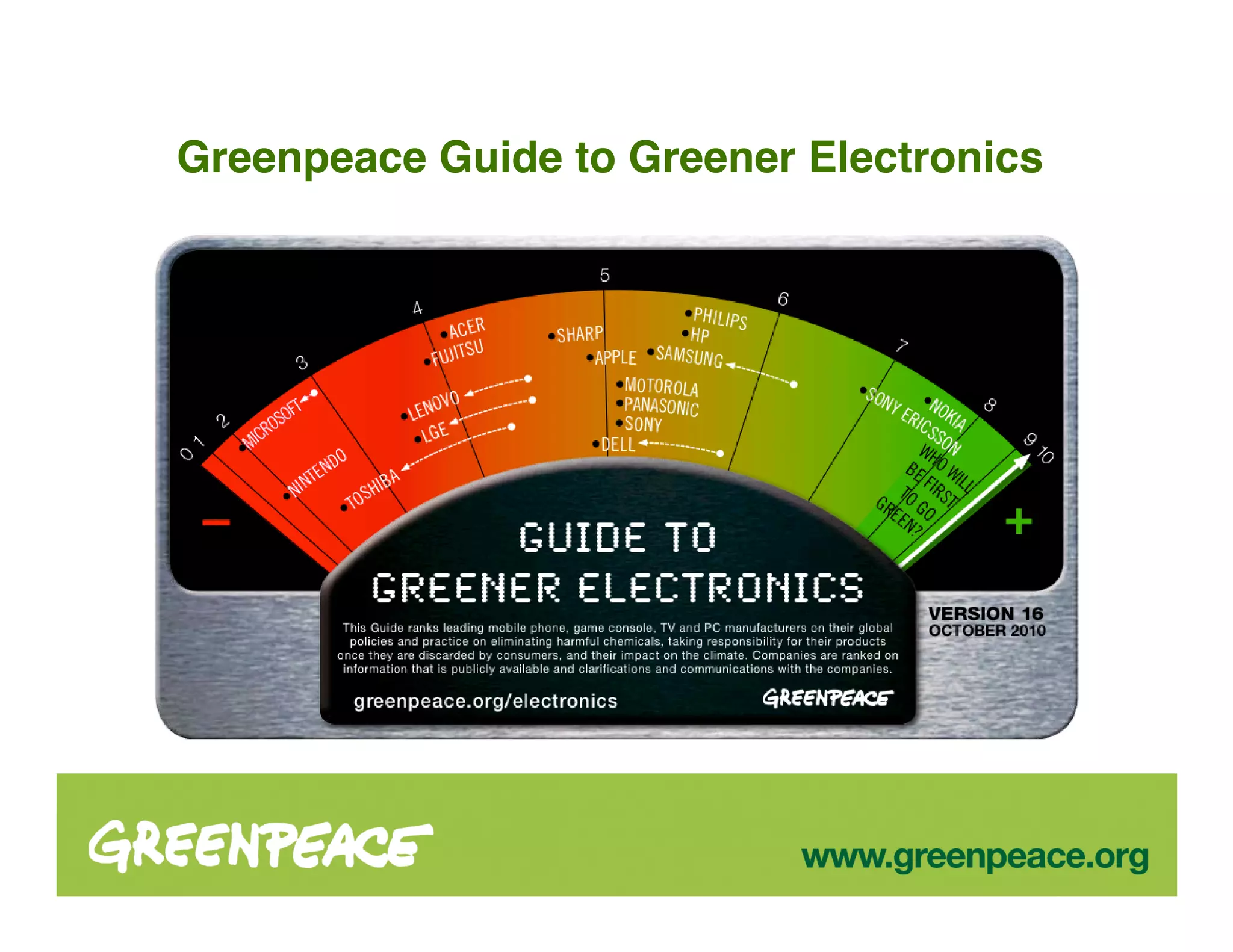
Greenpeace Guide to Greener Electronics
Industry Then & Now

• Guide to Greener Electronics v1 - 2006
  – 5 out of 14 companies have some type of
    commitment on PVC and BFRʼs
  – 7 out of 14 companies support producer
    responsibility policies
  – 10 out of 14 companies have take back programs
    in countries without take back laws
  – 2 (Dell and Nokia) have more extensive programs
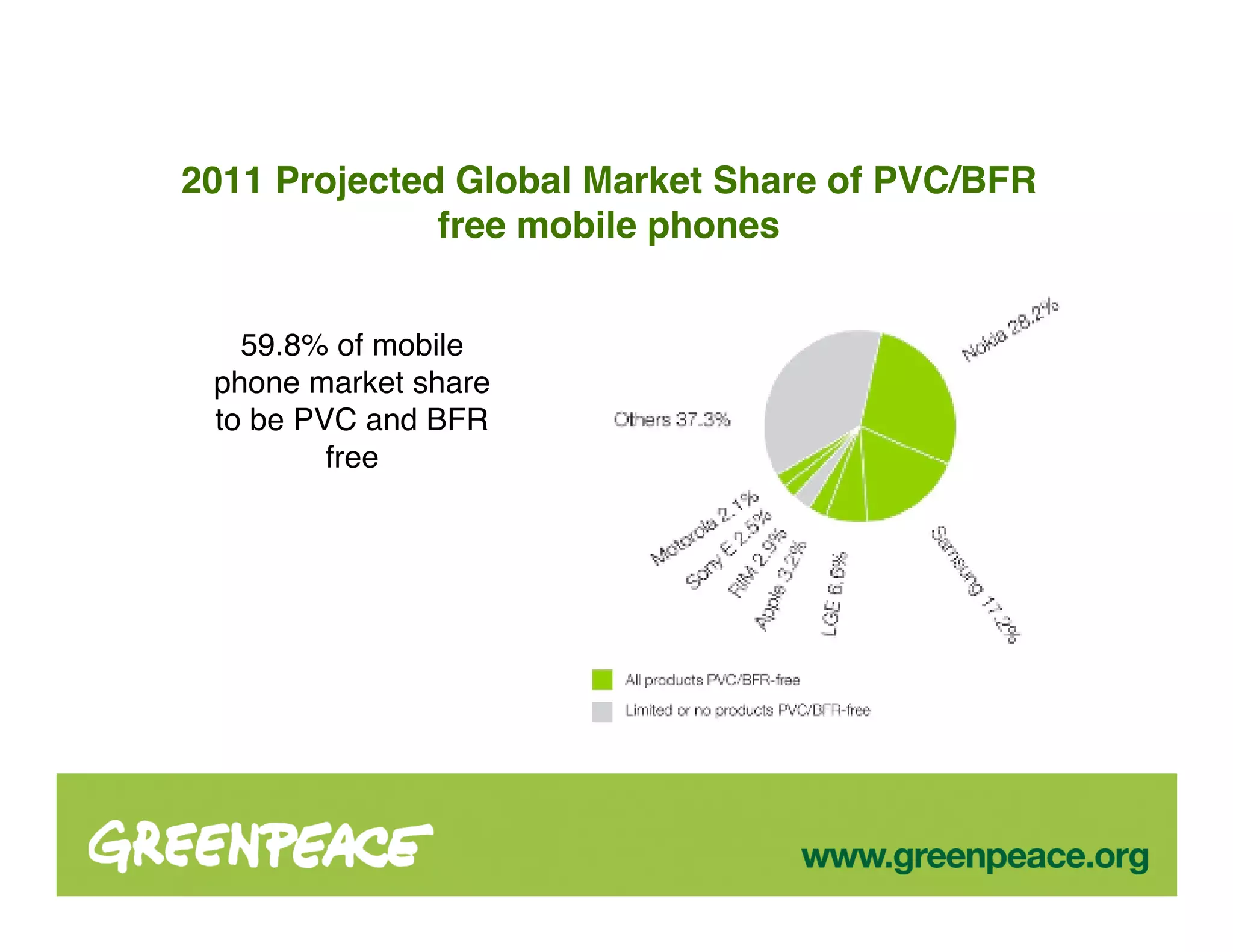
2011 Projected Global Market Share of PVC/BFR
              free mobile phones


   59.8% of mobile
 phone market share
 to be PVC and BFR
         free
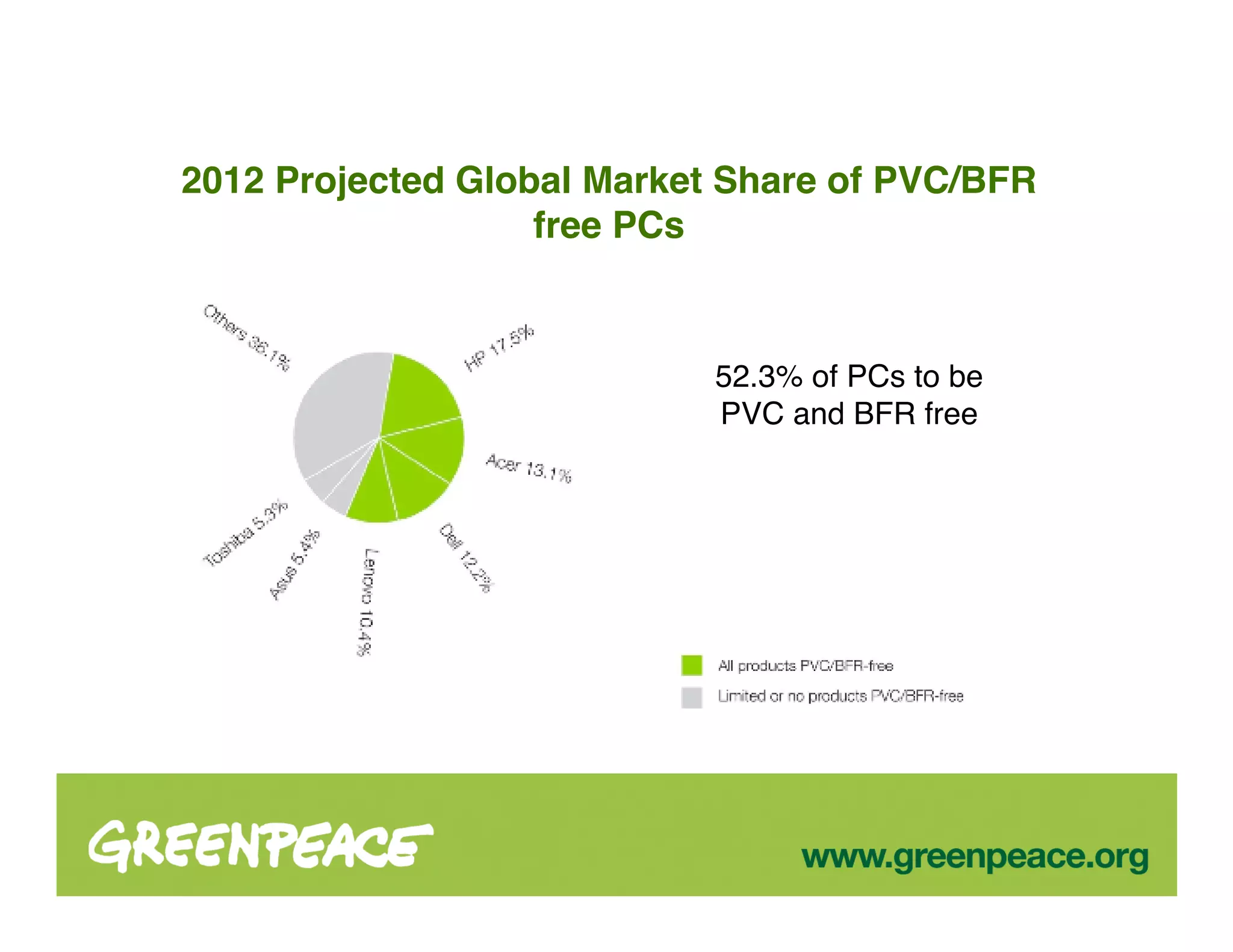
2012 Projected Global Market Share of PVC/BFR
                   free PCs


                            52.3% of PCs to be
                            PVC and BFR free
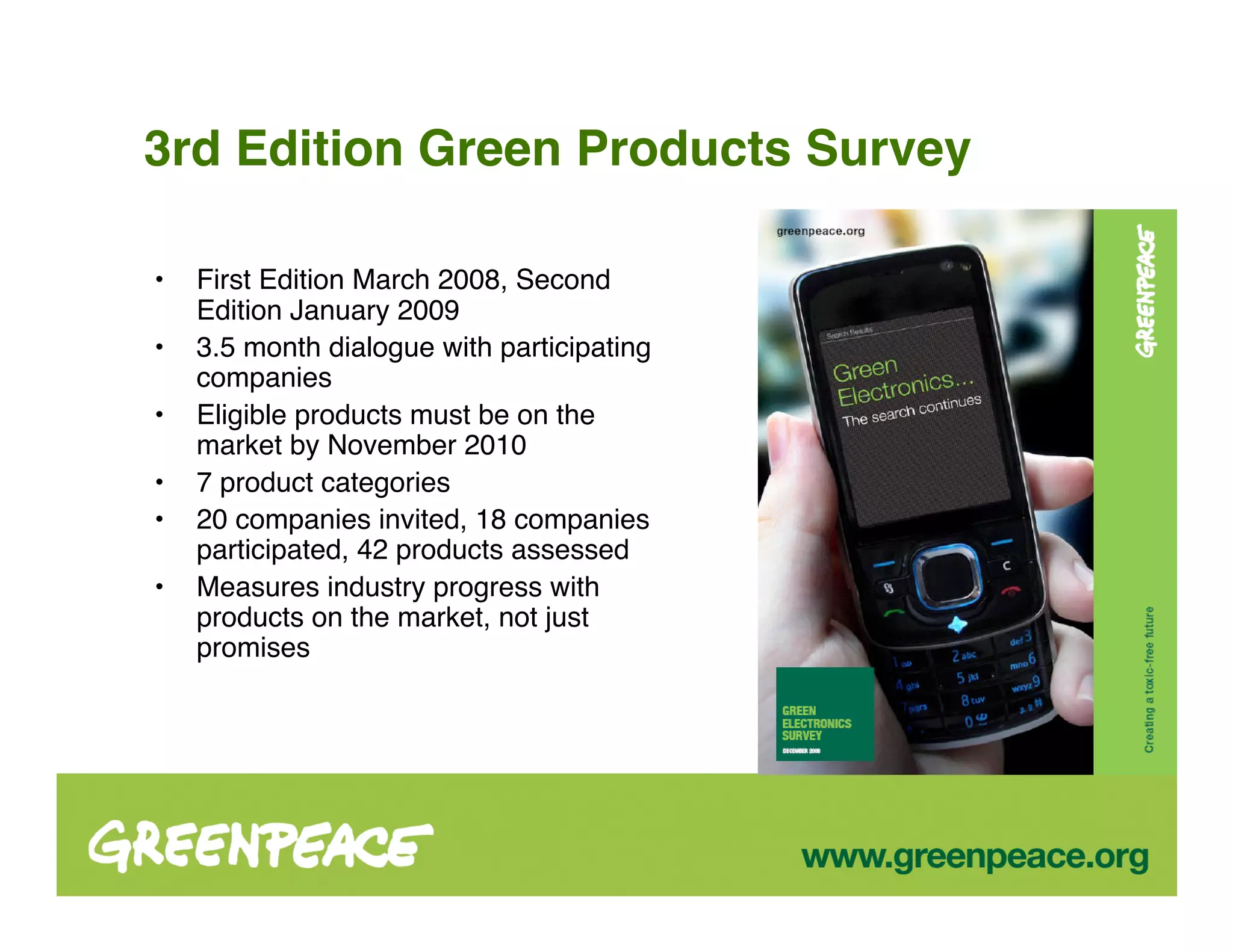
3rd Edition Green Products Survey

•   First Edition March 2008, Second
    Edition January 2009
•   3.5 month dialogue with participating
    companies
•   Eligible products must be on the
    market by November 2010
•   7 product categories
•   20 companies invited, 18 companies
    participated, 42 products assessed
•   Measures industry progress with
    products on the market, not just
    promises
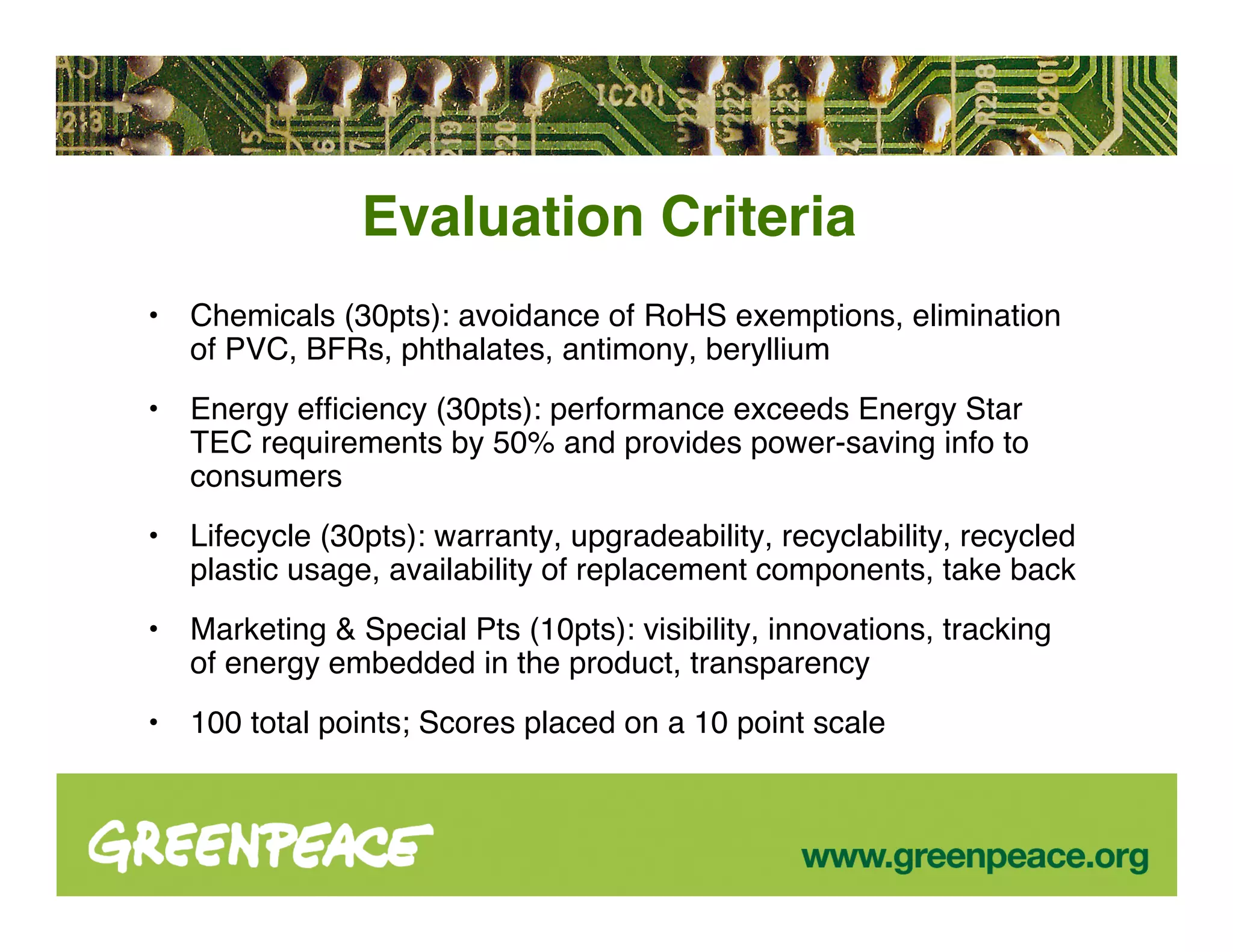
Evaluation Criteria
•   Chemicals (30pts): avoidance of RoHS exemptions, elimination
    of PVC, BFRs, phthalates, antimony, beryllium
•   Energy efficiency (30pts): performance exceeds Energy Star
    TEC requirements by 50% and provides power-saving info to
    consumers
•   Lifecycle (30pts): warranty, upgradeability, recyclability, recycled
    plastic usage, availability of replacement components, take back
•   Marketing & Special Pts (10pts): visibility, innovations, tracking
    of energy embedded in the product, transparency
•   100 total points; Scores placed on a 10 point scale
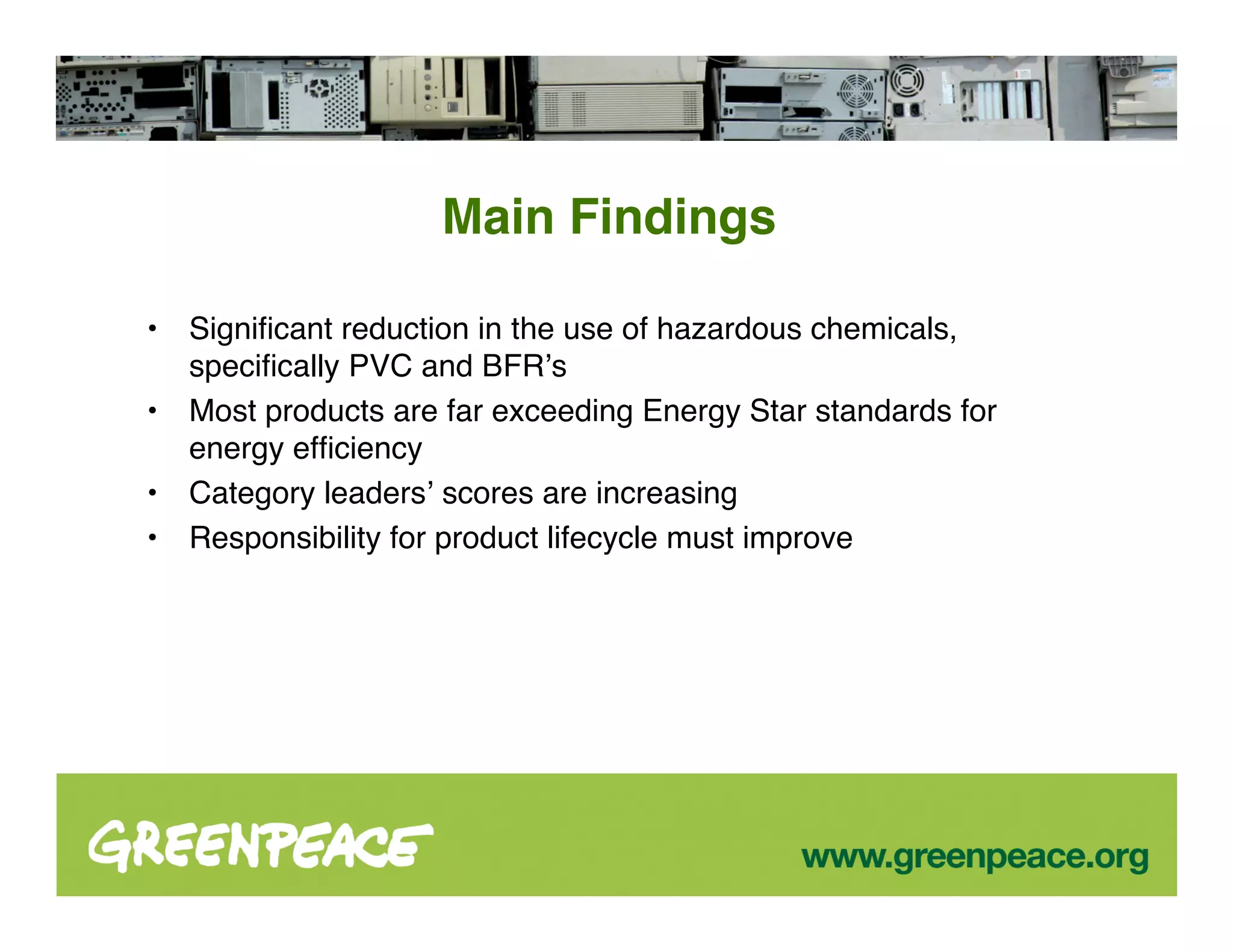
Main Findings

•   Significant reduction in the use of hazardous chemicals,
    specifically PVC and BFRʼs
•   Most products are far exceeding Energy Star standards for
    energy efficiency
•   Category leadersʼ scores are increasing
•   Responsibility for product lifecycle must improve
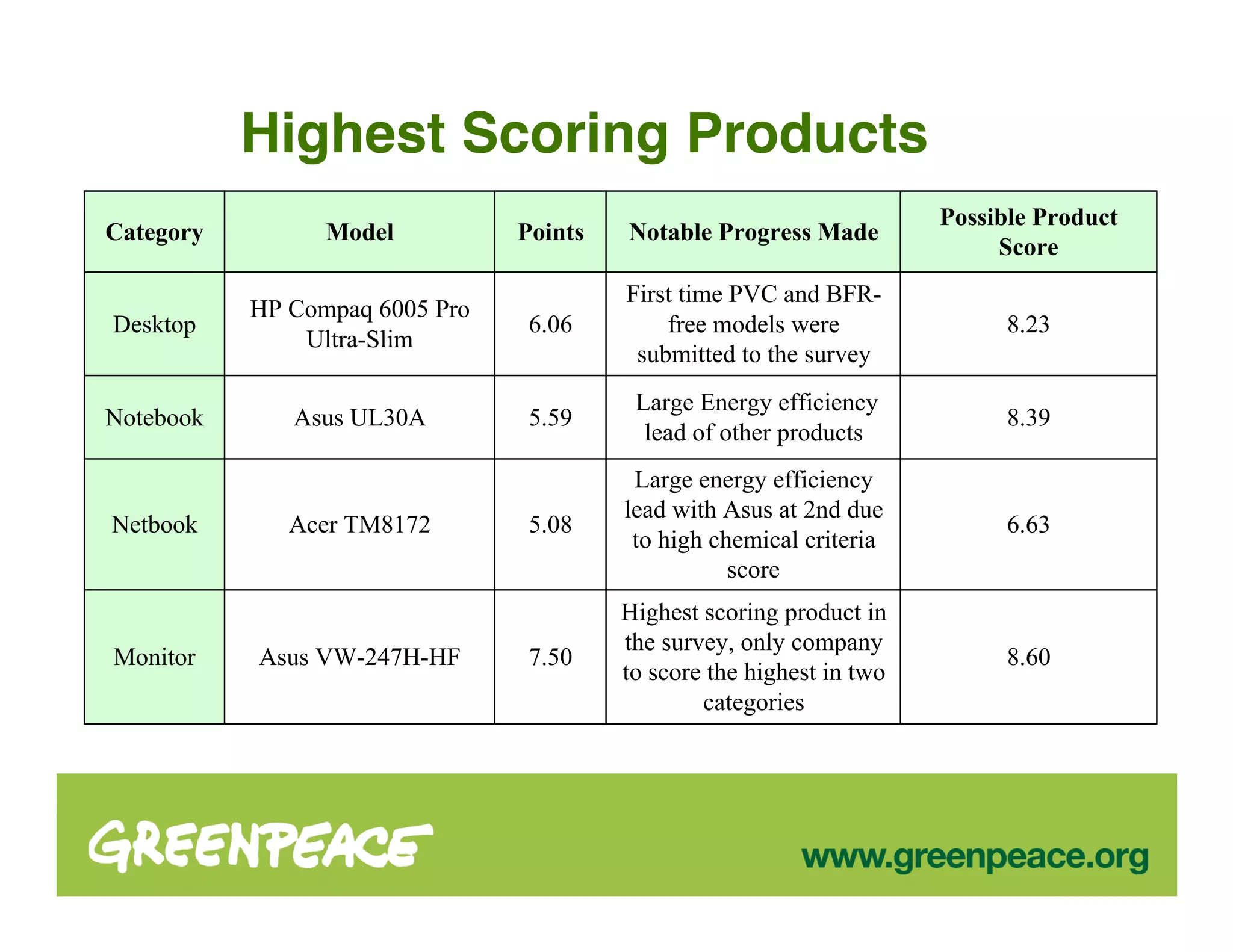
Highest Scoring Products
                                                                       Possible Product
Category         Model          Points   Notable Progress Made
                                                                            Score
                                         First time PVC and BFR-
           HP Compaq 6005 Pro
Desktop                          6.06        free models were                8.23
               Ultra-Slim
                                          submitted to the survey
                                          Large Energy efficiency
Notebook      Asus UL30A         5.59                                        8.39
                                           lead of other products
                                          Large energy efficiency
                                         lead with Asus at 2nd due
Netbook       Acer TM8172        5.08                                        6.63
                                          to high chemical criteria
                                                    score
                                         Highest scoring product in
                                         the survey, only company
Monitor    Asus VW-247H-HF       7.50                                        8.60
                                         to score the highest in two
                                                 categories
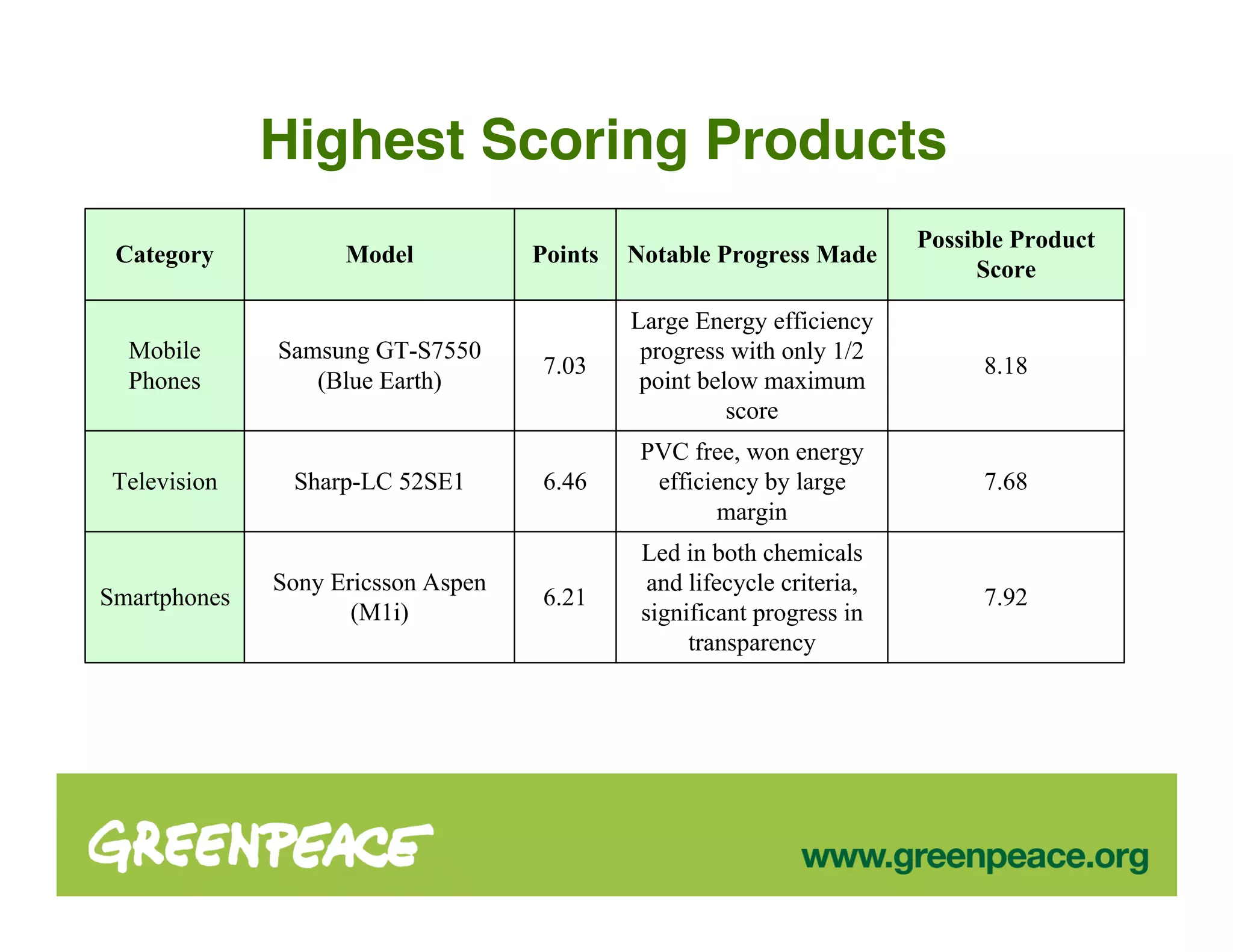
Highest Scoring Products
                                                                         Possible Product
 Category           Model           Points   Notable Progress Made
                                                                              Score

                                             Large Energy efficiency
  Mobile      Samsung GT-S7550                progress with only 1/2
                                     7.03                                      8.18
  Phones         (Blue Earth)                 point below maximum
                                                       score
                                              PVC free, won energy
 Television    Sharp-LC 52SE1        6.46      efficiency by large             7.68
                                                     margin
                                              Led in both chemicals
              Sony Ericsson Aspen              and lifecycle criteria,
Smartphones                          6.21                                      7.92
                     (M1i)                    significant progress in
                                                   transparency
The Way Forward
Eliminating Toxic Chemicals
    – PVC and BFR-free products are quickly becoming standard
    – Decrease the number of hazardous chemicals used beyond PVC
      and BFR
    – Strengthen RoHS, use no RoHS exemptions
    – No double standards; consistent global policies and products

Product Lifecycle
    – Increased use of recycled materials - easier without toxic chemicals
    – Extend the lifecycle – no planned obsolescence!
    – Design for full cradle-to-cradle responsibility
    – Green products should not be niche, but industry standard
The Way Forward
   Energy Issues
       Go beyond Energy Star;
          − ES as floor, not ceiling for all products
          − Exceed ES requirements by at least 50%
          − Aspirational Goals: Zero Watt & Energy Generating Products
       Provide consumers with clearer power saving options
       Create products & software that help people reduce environmental
        impact in other aspects of their lives
       Track and reduce energy used in making products
          − Work with suppliers to create demand for their use of more
            energy efficient manufacturing & use of clean, low carbon
            (preferably renewable) energy
Thank you


Contact

Casey Harrell
IT Analyst
tel: + 1 415 307 3382
casey.harrell@greenpeace.org
http://www.greenpeace.org/electronics
http://www.greenpeace.org/coolit

Ces2011 presentation

  • 1.
    Towards Greener Electronics Greenpeaceʼs 3rd Edition Product Survey
  • 2.
    Greenpeace Electronics Campaign Workto ensure Brands: • Design out toxic chemicals • Extend life of products and offer global take back (financial responsibility) of e- waste • Increase energy efficiency and become climate leaders
  • 3.
  • 4.
    Greenpeace Guide toGreener Electronics
  • 5.
    Industry Then &Now • Guide to Greener Electronics v1 - 2006 – 5 out of 14 companies have some type of commitment on PVC and BFRʼs – 7 out of 14 companies support producer responsibility policies – 10 out of 14 companies have take back programs in countries without take back laws – 2 (Dell and Nokia) have more extensive programs
  • 6.
    2011 Projected GlobalMarket Share of PVC/BFR free mobile phones 59.8% of mobile phone market share to be PVC and BFR free
  • 7.
    2012 Projected GlobalMarket Share of PVC/BFR free PCs 52.3% of PCs to be PVC and BFR free
  • 8.
    3rd Edition GreenProducts Survey • First Edition March 2008, Second Edition January 2009 • 3.5 month dialogue with participating companies • Eligible products must be on the market by November 2010 • 7 product categories • 20 companies invited, 18 companies participated, 42 products assessed • Measures industry progress with products on the market, not just promises
  • 9.
    Evaluation Criteria • Chemicals (30pts): avoidance of RoHS exemptions, elimination of PVC, BFRs, phthalates, antimony, beryllium • Energy efficiency (30pts): performance exceeds Energy Star TEC requirements by 50% and provides power-saving info to consumers • Lifecycle (30pts): warranty, upgradeability, recyclability, recycled plastic usage, availability of replacement components, take back • Marketing & Special Pts (10pts): visibility, innovations, tracking of energy embedded in the product, transparency • 100 total points; Scores placed on a 10 point scale
  • 10.
    Main Findings • Significant reduction in the use of hazardous chemicals, specifically PVC and BFRʼs • Most products are far exceeding Energy Star standards for energy efficiency • Category leadersʼ scores are increasing • Responsibility for product lifecycle must improve
  • 11.
    Highest Scoring Products Possible Product Category Model Points Notable Progress Made Score First time PVC and BFR- HP Compaq 6005 Pro Desktop 6.06 free models were 8.23 Ultra-Slim submitted to the survey Large Energy efficiency Notebook Asus UL30A 5.59 8.39 lead of other products Large energy efficiency lead with Asus at 2nd due Netbook Acer TM8172 5.08 6.63 to high chemical criteria score Highest scoring product in the survey, only company Monitor Asus VW-247H-HF 7.50 8.60 to score the highest in two categories
  • 12.
    Highest Scoring Products Possible Product Category Model Points Notable Progress Made Score Large Energy efficiency Mobile Samsung GT-S7550 progress with only 1/2 7.03 8.18 Phones (Blue Earth) point below maximum score PVC free, won energy Television Sharp-LC 52SE1 6.46 efficiency by large 7.68 margin Led in both chemicals Sony Ericsson Aspen and lifecycle criteria, Smartphones 6.21 7.92 (M1i) significant progress in transparency
  • 13.
    The Way Forward EliminatingToxic Chemicals – PVC and BFR-free products are quickly becoming standard – Decrease the number of hazardous chemicals used beyond PVC and BFR – Strengthen RoHS, use no RoHS exemptions – No double standards; consistent global policies and products Product Lifecycle – Increased use of recycled materials - easier without toxic chemicals – Extend the lifecycle – no planned obsolescence! – Design for full cradle-to-cradle responsibility – Green products should not be niche, but industry standard
  • 14.
    The Way Forward  Energy Issues  Go beyond Energy Star; − ES as floor, not ceiling for all products − Exceed ES requirements by at least 50% − Aspirational Goals: Zero Watt & Energy Generating Products  Provide consumers with clearer power saving options  Create products & software that help people reduce environmental impact in other aspects of their lives  Track and reduce energy used in making products − Work with suppliers to create demand for their use of more energy efficient manufacturing & use of clean, low carbon (preferably renewable) energy
  • 15.
    Thank you Contact Casey Harrell ITAnalyst tel: + 1 415 307 3382 casey.harrell@greenpeace.org http://www.greenpeace.org/electronics http://www.greenpeace.org/coolit