Updates on cx ca prevention
June 2022
Outline
Background
Cervical cancer, HPV and HIV
Preventing cervical cancer
Screening precancerous disease
Managing precancerous disease
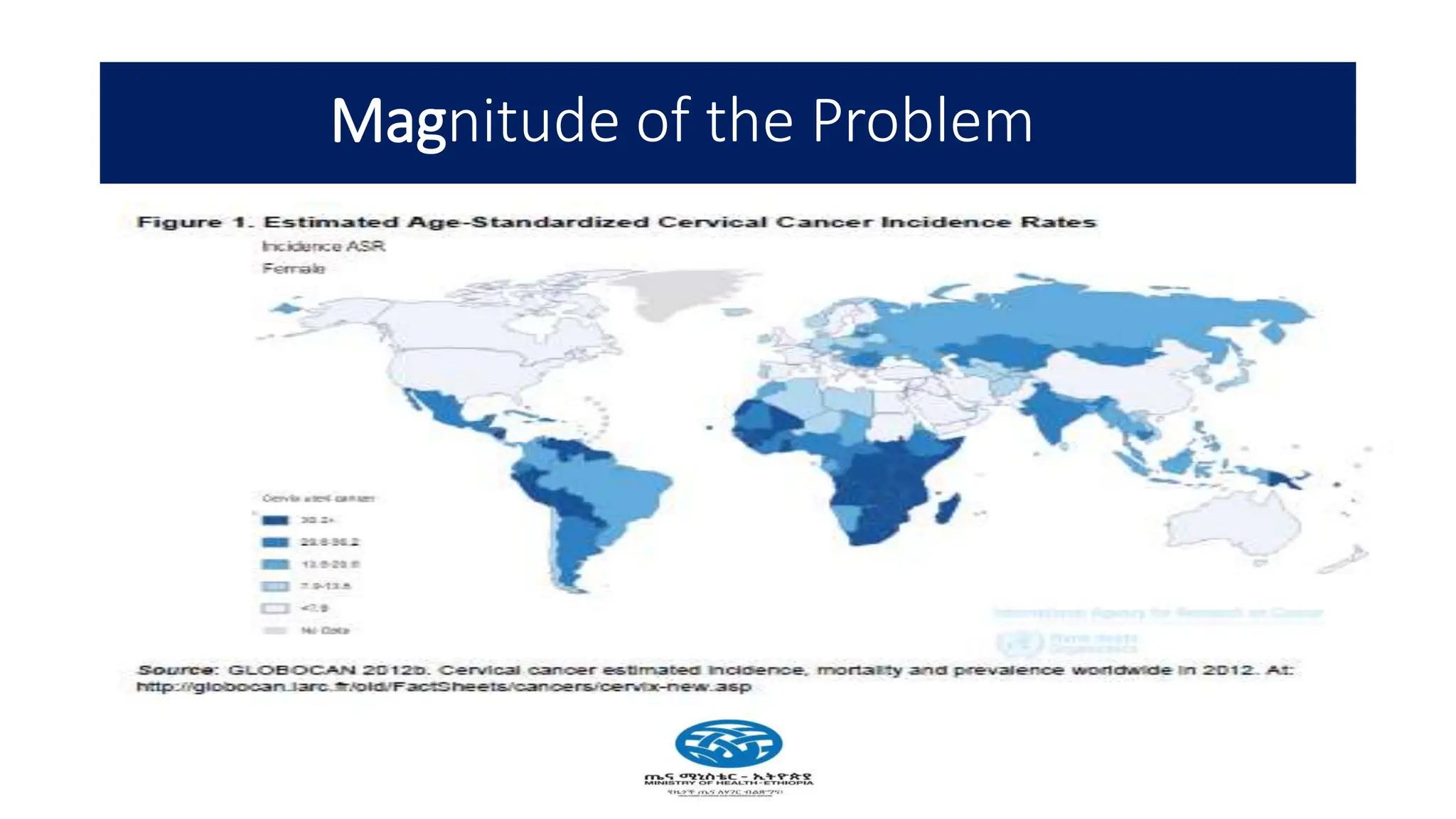
Magnitude of the Problem
• Cervical cancer is the 2rd most common cancer in women
• An estimated 570,000 new case and 311,000 deaths annually as of 2018, the
burden will increase to almost 460,000 deaths by 2040, a nearly 50% increase
over 2018 level
• This increase will also be inequitable, with nearly 90% of deaths occurring in
low- and middle-income countries.
Female cancers
Magnitude of the Problem
∞ This increase will also be inequitable, with nearly 90% of deaths occurring in
low- and middle-income countries.
∞ In Ethiopia cervical cancer is the second most frequent form of cancer and the
leading cause of cancer deaths among women.
∞ Every year there are an estimated 6,000 new cases and close to 5,000 deaths due
to cervical cancer in the country
Magnitude of the Problem
WHO cervical cancer elimination
© To eliminate cervical cancer as a public health problem within a century, 90-70-90
targets must be reached by 2030 .
Natural history of HPV infection and cervical cancer
∞99.7% of case linked to human papillomavirus (HPV)
∞HPV is one of the most prevalent STIs
70-80% women will be exposed to HPV
∞Serotypes 16, 18, 31, and 45 are the most common with serotype 16 accounting
for 50% of cases worldwide
∞Persistent infection with hrHPV is the most important risk factor for the
development of cervical precancer and cancer.
Natural history …
 For every women who contract with HPV, 10% will develop precancerous changes
 Seen most between age 30-40
 8% of those women will develop carcinoma in situ and 1.6% will develop invasive
cervical cancer
 Slow progression
Cervical cancer generally takes 10-20 years
 So plenty of time to catch and treat
Natural history …
HIV/AIDs, HPV Infection, and Cervical Cancer
 Increased incidence of HPV in HIV seropositive women
 One out of Five HIV infected women develop dysplasia within 3 years
 In HIV endemic populations, cervical cancer screening may be positive in up to
15-20% of women
 HIV accelerates the progression of precancerous lesions.
Risk Factors for HPV and Cervical Cancer
◊ Sexual activity before age 20-cervix with very exposed transformation zone (TZ)
◊ Multiple sexual partners
◊ Exposure to sexually transmitted infections (STIs)
◊ Previous abnormal pap smear
◊ Smoking
◊ Immunosuppression (e.g. HIV/AIDs, corticosteroid use)
Prevention of cervical cancer
• A comprehensive approach to cervical cancer prevention requires applying effective
interventions along a continuum of care throughout the life cycle and includes
a. Primary prevention
b. Secondary prevention and
c. Tertiary care as well as palliative care and all the activities that support these
interventions.
Programmatic interventions over the life course to
prevent HPV infection and cervical cancer
Vaccination against HPV
Affordable solution? Not yet but promising
 Primary prevention of HPV transmission needs to focus on reducing behaviors
that are risk factors for disease transmission:
 Promote condom usage
 Discourage adolescent girls from early sexual activity
 Discourage smoking especially in adolescents
Secondary Prevention
Women who are already infected with HPV should be screened for
precancerous cervical lesions
 Screening methods include:
 Pap smear (classic or liquid based)
 Visual screening utilizing acetic acid
 HPV tests
 Automated cytology screening
What is screening for cervical cancer?
Screening in general is defined as the application of a test on an apparently
asymptomatic healthy population to identify those with high-risk of having or
developing a particular disease.
 Screening test positive women need to have further investigations to confirm the
diagnosis.
To screen for cervical cancer, apparently healthy women belonging to a specified
age group are tested routinely, irrespective of whether they have any symptom or
not. The tests applied are called the screening tests.
Why is it necessary to screen women for cervical cancer?
 Cancer of the uterine cervix is the fourth most common cancer among women globally.
 In African women, cervical cancer ranks second after breast cancer.
 The cancer causes a large number of deaths amongst women in the South-East Asia and African regional countries
 Cervical cancer affects women at a relatively younger age causing great personal, social and economic loss.
 Screening helps to detect the cancer at a potentially curable precancerous stage.
 Detection of the precancerous conditions by screening tests and their appropriate treatment help prevent the cancer
and avoid untimely deaths of from the disease.
How does screening for cervical cancer reduce the disease burden
Cervical cancer has a unique natural history that allows its prevention through screening.
The cancer is caused by infection from high-risk types of human papillomavirus (HPV).
 About 10% of African women are estimated to harbor cervical HPV infection at any given time, and 65–
85% of invasive cancers of cervix detected in Asian women are attributed to HPV types 16 or 18.
 The virus infection induces a precancerous change known as cervical intraepithelial neoplasia (CIN). CIN
can be detected by various screening tests and can be treated by simple techniques.
Detection and treatment of the disease at the CIN stage prevents development of cervical cancer in the
future.
• Countries that introduced national programmes to systematically
screen women for cervical cancer and treat precancerous conditions,
observed significant reduction in deaths from cervical cancer over a
few years.
• Fig. shows the decline of cervical cancer deaths over time in
Australia with the introduction of the National Cervical Screening
Programme 1991.
• The mortality rates more than halved from 1991 to 2007, from 4.0 to
1.9 deaths per 100 000 women due to systematic screening of the
population.
Screening tests
• CYTOLOGY
• Cytology screening for cervical cancer has been effective in reducing cervical
cancer incidence in countries with high-coverage and high-quality screening
programs.
• Replicating the success of cytology based screening programs in high income
countries has proven difficult in resource poor countries.
Visual inspection of the cervix
• Visual inspection of the cervix uses 3-5% acetic acid applied over the cervix, and
see for the presence of dense, well outlined white lesion on the cervix
• VIA is a low cost, low tech approach to cervical cancer screening that allows
immediate treatment of precancerous lesion with ablative (cryotherapy/Thermal
ablation) or excisional (LEEP) methods in a single visit approach (SVA).
• Safe, feasible and acceptable alternative to cytology based screening with
comparable sensitivity and it is cost effective (Goldie et al 2005)
Visual inspection …
• VIA can also be task shifted to non-physician health care providers as evidenced
by JHPIEGO country program experience and is consistent with findings from
other international organizations (WHO 2006, FIGO2009)
• VIA is a relatively simple, low-cost method presenting immediate results.
• A positive result can be followed by immediate treatment (i.e. single-visit
approach).
• VIA is subjective and depends on the skills and experience of the provider.
Visual inspection …
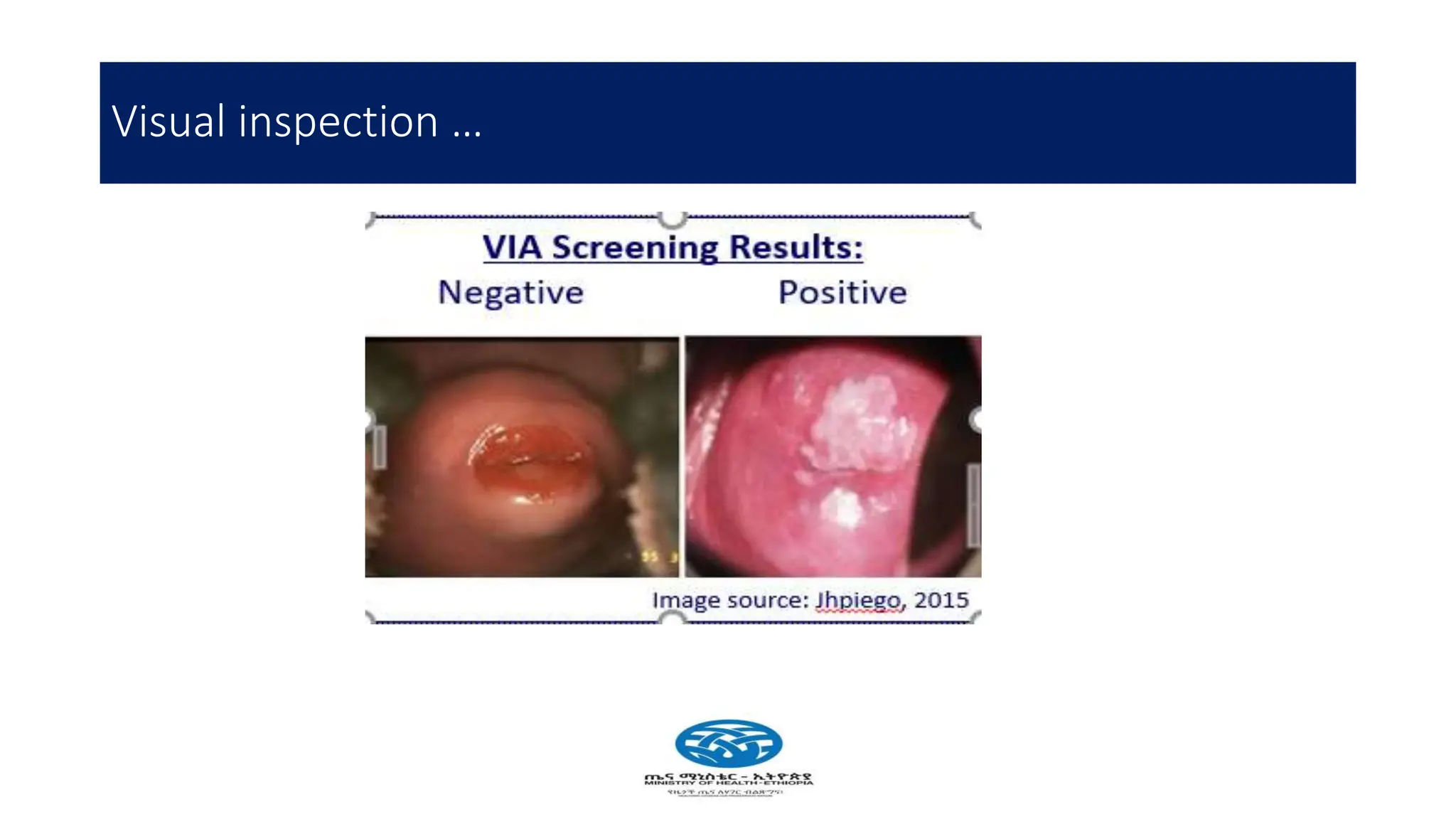
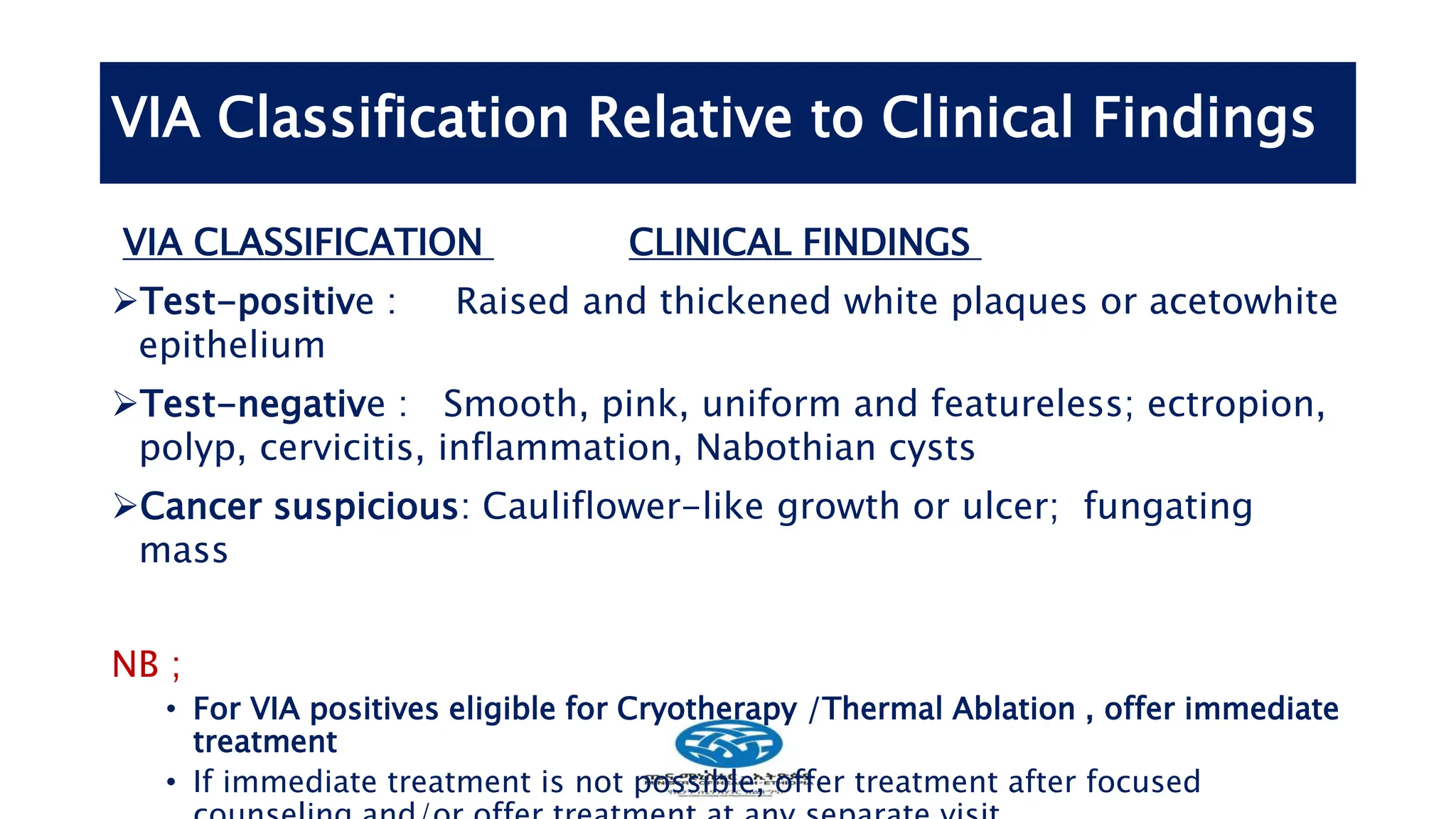
VIA Classification Relative to Clinical Findings
VIA CLASSIFICATION CLINICAL FINDINGS
Test-positive : Raised and thickened white plaques or acetowhite
epithelium
Test-negative : Smooth, pink, uniform and featureless; ectropion,
polyp, cervicitis, inflammation, Nabothian cysts
Cancer suspicious: Cauliflower-like growth or ulcer; fungating
mass
NB ;
• For VIA positives eligible for Cryotherapy /Thermal Ablation , offer immediate
treatment
• If immediate treatment is not possible, offer treatment after focused
VIA : Technical Specification Guidance
HPV DNA testing
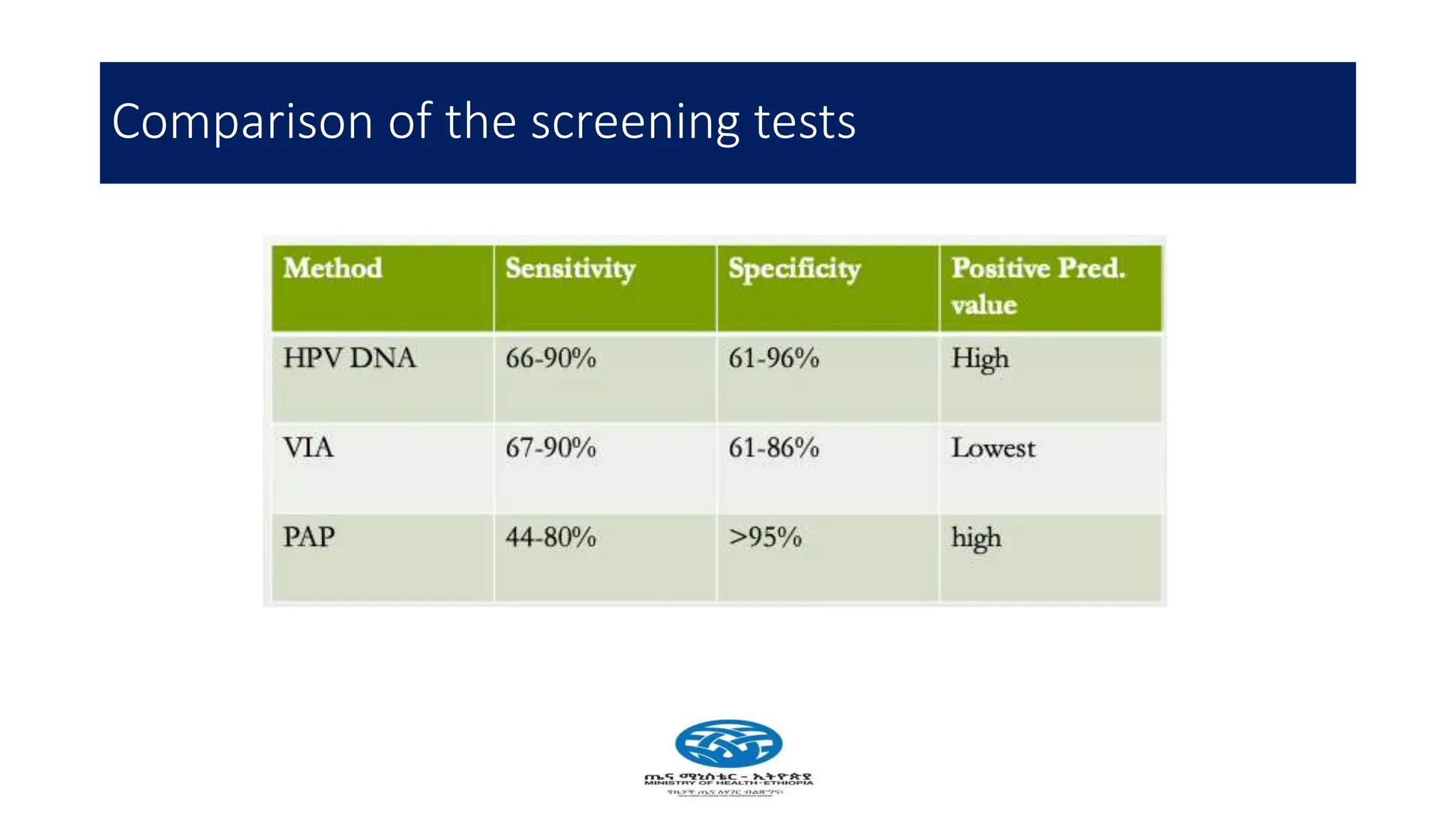
• HPV DNA testing for oncogenic or high risk HPV subtypes accumulating evidence
of its accuracy, effectiveness and reproducibility adds support for the use of HPV
DNA testing as a primary cervical cancer screening.
• Clinicians collected HPV DNA testing has consistently demonstrated higher
sensitivity to detect significant cervical disease than VIA or cytology along with
good specificity.
• Self-collection of HPV DNA shows only slight decrease in accuracy.
• Both options could be considered after through counselling
• A rapid HPV test has been developed but is not yet widely available and feasibility
and affordability remain significant barriers to wide spread use of HPV testing in
low resource settings
• Due to its accuracy, WHO recommends HPV testing over VIA and cytology if
resources are available.
• If HPV testing is used, WHO recommends using it either as a single test or
sequential testing.
Comparison of the screening tests
National screening protocol with VIA
Treatment for precancerous lesions of the cervix
• The choice of treatment for precancerous lesions depends on the following
• Availability and accessibility of the treatment method
• Training and experience of the provider
• Cost
• Location and extent of the lesion
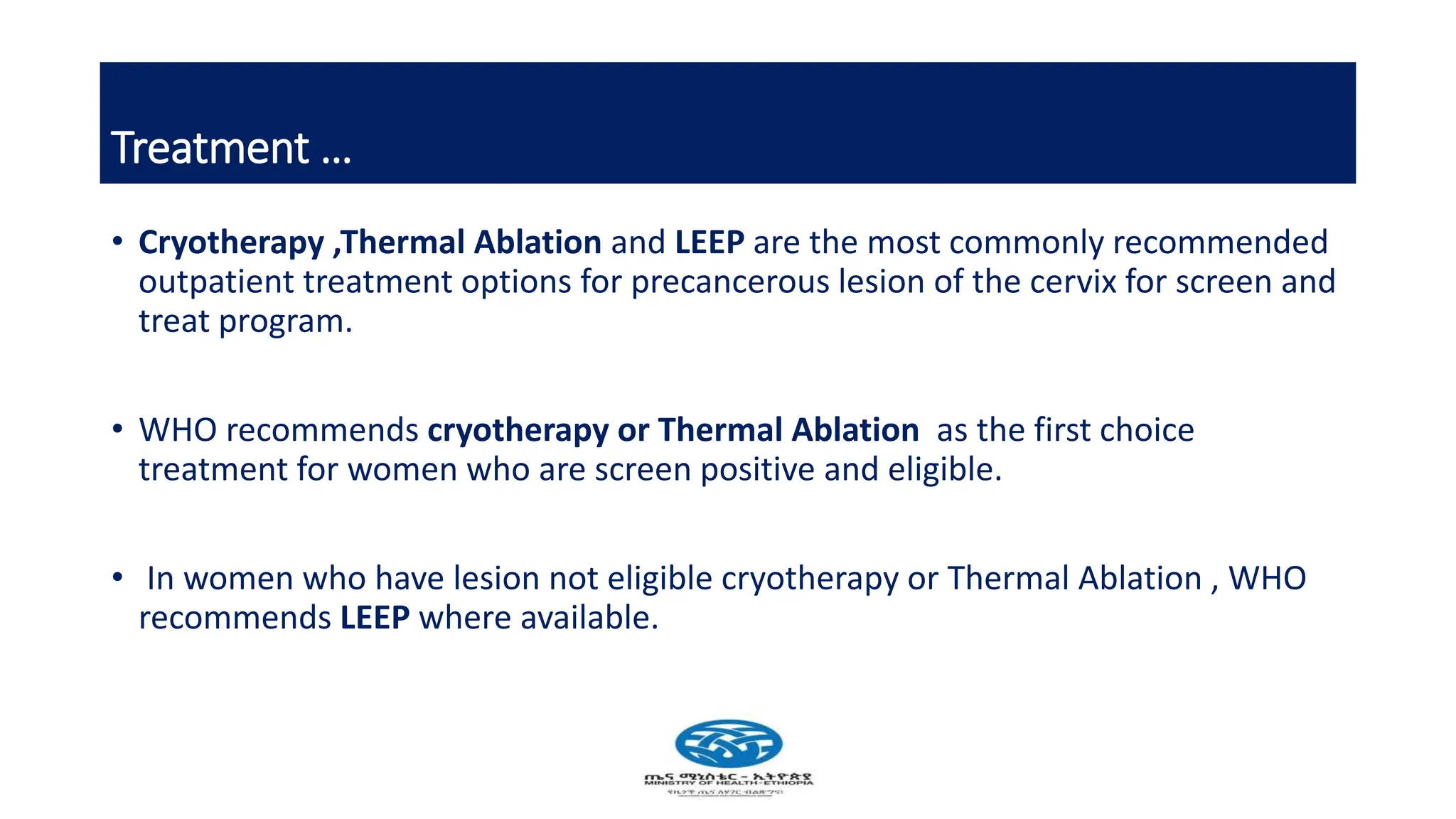
Treatment …
• Cryotherapy ,Thermal Ablation and LEEP are the most commonly recommended
outpatient treatment options for precancerous lesion of the cervix for screen and
treat program.
• WHO recommends cryotherapy or Thermal Ablation as the first choice
treatment for women who are screen positive and eligible.
• In women who have lesion not eligible cryotherapy or Thermal Ablation , WHO
recommends LEEP where available.
Comparison of cryotherapy, thermal ablation and LEEP
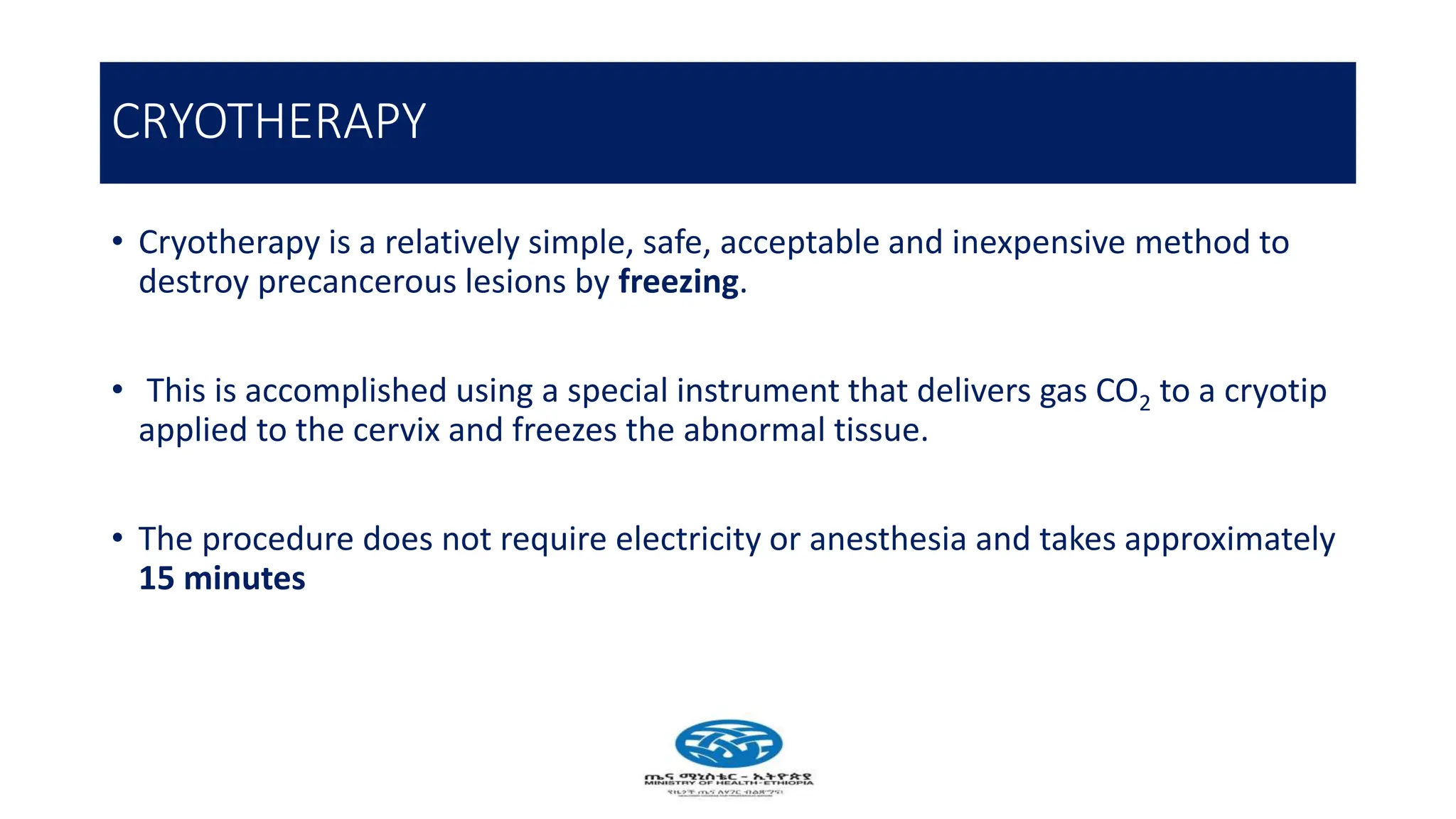
CRYOTHERAPY
• Cryotherapy is a relatively simple, safe, acceptable and inexpensive method to
destroy precancerous lesions by freezing.
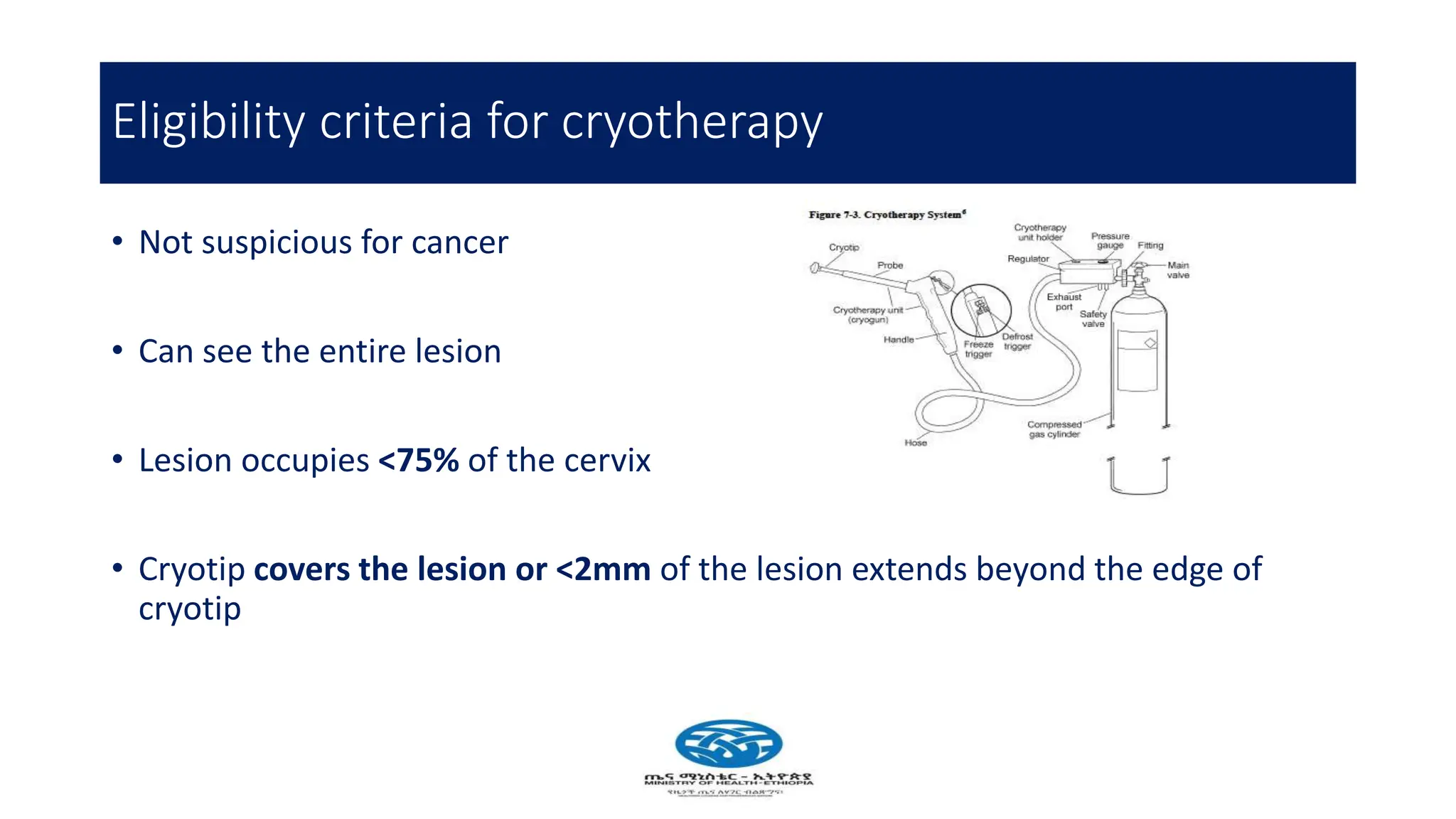
• This is accomplished using a special instrument that delivers gas CO2 to a cryotip
applied to the cervix and freezes the abnormal tissue.
• The procedure does not require electricity or anesthesia and takes approximately
15 minutes
Eligibility criteria for cryotherapy
• Not suspicious for cancer
• Can see the entire lesion
• Lesion occupies <75% of the cervix
• Cryotip covers the lesion or <2mm of the lesion extends beyond the edge of
cryotip
Eligibility criteria …
• No anatomical deformity of the cervix that prevents good application of cryotip
• Client is not pregnant
• Client is more than 12 weeks post-partum
Thermal ablation
• Potentially more suited to low resource settings
• It utilizes electricity, including battery power,
• The technology is simple
• The treatment is shorter, and might therefore be more acceptable to women
and care providers.
Thermal ablation …
• Electronic sensors within the applicator itself make it possible to have more
reliable and stable final probe temperatures.
• Thermal Ablation is a technique that appears feasible, safe, and effective.
• Thermal Ablation is highly effective for the treatment of CIN2+.
• Thermal Ablation is comparable to that for CT, as shown in a recent meta-
analysis (Sauvaget et al., 2013)
• Portable
The National Strategy
• Ethiopia
• The ‘Screen and treat’ (‘See and treat’) or ‘’single visit’’
• the preferred approach
• the national strategy method to reduce cervical cancer
 Using a screening test that gives immediate results (VIA) followed by “on the spot”
treatment (using cryotherapy) of detected lesions, without any further tests unless a
suspected cancer.
• Rationale for the strategy
• Can effectively identify most precancerous lesions,
• Is noninvasive, easy to perform and inexpensive,
• Can be performed by all levels of healthcare workers in almost any setting,
• Provides immediate results that can be used to inform decisions and actions
regarding treatment,
• Requires supplies and equipment that are readily available locally.
1. Priority should be given to women who are between 30–49 years old for
screening. HIV positive screen upon diagnosis
2. The screening interval (frequency) should be every 3 years for women with
negative VIA result every 2 yrs for sero posatives .
3. For VIA positive women who were treated with cryo or LEEP follow up visit
should be scheduled a one year period( 6 months for WLHIV
4. Priority should be given to maximizing coverage a woman’s life time
5. All women who screen for cervical cancer should be offered HIV testing and
counseling
CRITERIA FOR AGE AND FREQUENCY OF CERVICAL CANCER SCREENING
THANK YOU
Email – fekadeg2008@gmail.com
fekadehailu3@gmail.com
Phone - +251912615973 /+251979460046/

cervical cancer prevention updates.pptx

  • 1.
    Updates on cxca prevention June 2022
  • 2.
    Outline Background Cervical cancer, HPVand HIV Preventing cervical cancer Screening precancerous disease Managing precancerous disease
  • 3.
    Magnitude of theProblem • Cervical cancer is the 2rd most common cancer in women • An estimated 570,000 new case and 311,000 deaths annually as of 2018, the burden will increase to almost 460,000 deaths by 2040, a nearly 50% increase over 2018 level • This increase will also be inequitable, with nearly 90% of deaths occurring in low- and middle-income countries.
  • 4.
  • 5.
    Magnitude of theProblem ∞ This increase will also be inequitable, with nearly 90% of deaths occurring in low- and middle-income countries. ∞ In Ethiopia cervical cancer is the second most frequent form of cancer and the leading cause of cancer deaths among women. ∞ Every year there are an estimated 6,000 new cases and close to 5,000 deaths due to cervical cancer in the country
  • 6.
  • 7.
    WHO cervical cancerelimination © To eliminate cervical cancer as a public health problem within a century, 90-70-90 targets must be reached by 2030 .
  • 8.
    Natural history ofHPV infection and cervical cancer ∞99.7% of case linked to human papillomavirus (HPV) ∞HPV is one of the most prevalent STIs 70-80% women will be exposed to HPV ∞Serotypes 16, 18, 31, and 45 are the most common with serotype 16 accounting for 50% of cases worldwide ∞Persistent infection with hrHPV is the most important risk factor for the development of cervical precancer and cancer.
  • 9.
    Natural history … For every women who contract with HPV, 10% will develop precancerous changes  Seen most between age 30-40  8% of those women will develop carcinoma in situ and 1.6% will develop invasive cervical cancer  Slow progression Cervical cancer generally takes 10-20 years  So plenty of time to catch and treat
  • 10.
  • 11.
    HIV/AIDs, HPV Infection,and Cervical Cancer  Increased incidence of HPV in HIV seropositive women  One out of Five HIV infected women develop dysplasia within 3 years  In HIV endemic populations, cervical cancer screening may be positive in up to 15-20% of women  HIV accelerates the progression of precancerous lesions.
  • 12.
    Risk Factors forHPV and Cervical Cancer ◊ Sexual activity before age 20-cervix with very exposed transformation zone (TZ) ◊ Multiple sexual partners ◊ Exposure to sexually transmitted infections (STIs) ◊ Previous abnormal pap smear ◊ Smoking ◊ Immunosuppression (e.g. HIV/AIDs, corticosteroid use)
  • 13.
    Prevention of cervicalcancer • A comprehensive approach to cervical cancer prevention requires applying effective interventions along a continuum of care throughout the life cycle and includes a. Primary prevention b. Secondary prevention and c. Tertiary care as well as palliative care and all the activities that support these interventions.
  • 14.
    Programmatic interventions overthe life course to prevent HPV infection and cervical cancer
  • 15.
    Vaccination against HPV Affordablesolution? Not yet but promising  Primary prevention of HPV transmission needs to focus on reducing behaviors that are risk factors for disease transmission:  Promote condom usage  Discourage adolescent girls from early sexual activity  Discourage smoking especially in adolescents
  • 16.
    Secondary Prevention Women whoare already infected with HPV should be screened for precancerous cervical lesions  Screening methods include:  Pap smear (classic or liquid based)  Visual screening utilizing acetic acid  HPV tests  Automated cytology screening
  • 17.
    What is screeningfor cervical cancer? Screening in general is defined as the application of a test on an apparently asymptomatic healthy population to identify those with high-risk of having or developing a particular disease.  Screening test positive women need to have further investigations to confirm the diagnosis. To screen for cervical cancer, apparently healthy women belonging to a specified age group are tested routinely, irrespective of whether they have any symptom or not. The tests applied are called the screening tests.
  • 18.
    Why is itnecessary to screen women for cervical cancer?  Cancer of the uterine cervix is the fourth most common cancer among women globally.  In African women, cervical cancer ranks second after breast cancer.  The cancer causes a large number of deaths amongst women in the South-East Asia and African regional countries  Cervical cancer affects women at a relatively younger age causing great personal, social and economic loss.  Screening helps to detect the cancer at a potentially curable precancerous stage.  Detection of the precancerous conditions by screening tests and their appropriate treatment help prevent the cancer and avoid untimely deaths of from the disease.
  • 19.
    How does screeningfor cervical cancer reduce the disease burden Cervical cancer has a unique natural history that allows its prevention through screening. The cancer is caused by infection from high-risk types of human papillomavirus (HPV).  About 10% of African women are estimated to harbor cervical HPV infection at any given time, and 65– 85% of invasive cancers of cervix detected in Asian women are attributed to HPV types 16 or 18.  The virus infection induces a precancerous change known as cervical intraepithelial neoplasia (CIN). CIN can be detected by various screening tests and can be treated by simple techniques. Detection and treatment of the disease at the CIN stage prevents development of cervical cancer in the future.
  • 20.
    • Countries thatintroduced national programmes to systematically screen women for cervical cancer and treat precancerous conditions, observed significant reduction in deaths from cervical cancer over a few years. • Fig. shows the decline of cervical cancer deaths over time in Australia with the introduction of the National Cervical Screening Programme 1991. • The mortality rates more than halved from 1991 to 2007, from 4.0 to 1.9 deaths per 100 000 women due to systematic screening of the population.
  • 22.
    Screening tests • CYTOLOGY •Cytology screening for cervical cancer has been effective in reducing cervical cancer incidence in countries with high-coverage and high-quality screening programs. • Replicating the success of cytology based screening programs in high income countries has proven difficult in resource poor countries.
  • 23.
    Visual inspection ofthe cervix • Visual inspection of the cervix uses 3-5% acetic acid applied over the cervix, and see for the presence of dense, well outlined white lesion on the cervix • VIA is a low cost, low tech approach to cervical cancer screening that allows immediate treatment of precancerous lesion with ablative (cryotherapy/Thermal ablation) or excisional (LEEP) methods in a single visit approach (SVA). • Safe, feasible and acceptable alternative to cytology based screening with comparable sensitivity and it is cost effective (Goldie et al 2005)
  • 24.
    Visual inspection … •VIA can also be task shifted to non-physician health care providers as evidenced by JHPIEGO country program experience and is consistent with findings from other international organizations (WHO 2006, FIGO2009) • VIA is a relatively simple, low-cost method presenting immediate results. • A positive result can be followed by immediate treatment (i.e. single-visit approach). • VIA is subjective and depends on the skills and experience of the provider.
  • 25.
  • 26.
    VIA Classification Relativeto Clinical Findings VIA CLASSIFICATION CLINICAL FINDINGS Test-positive : Raised and thickened white plaques or acetowhite epithelium Test-negative : Smooth, pink, uniform and featureless; ectropion, polyp, cervicitis, inflammation, Nabothian cysts Cancer suspicious: Cauliflower-like growth or ulcer; fungating mass NB ; • For VIA positives eligible for Cryotherapy /Thermal Ablation , offer immediate treatment • If immediate treatment is not possible, offer treatment after focused
  • 27.
    VIA : TechnicalSpecification Guidance
  • 28.
    HPV DNA testing •HPV DNA testing for oncogenic or high risk HPV subtypes accumulating evidence of its accuracy, effectiveness and reproducibility adds support for the use of HPV DNA testing as a primary cervical cancer screening. • Clinicians collected HPV DNA testing has consistently demonstrated higher sensitivity to detect significant cervical disease than VIA or cytology along with good specificity. • Self-collection of HPV DNA shows only slight decrease in accuracy. • Both options could be considered after through counselling
  • 29.
    • A rapidHPV test has been developed but is not yet widely available and feasibility and affordability remain significant barriers to wide spread use of HPV testing in low resource settings • Due to its accuracy, WHO recommends HPV testing over VIA and cytology if resources are available. • If HPV testing is used, WHO recommends using it either as a single test or sequential testing.
  • 30.
    Comparison of thescreening tests
  • 31.
  • 33.
    Treatment for precancerouslesions of the cervix • The choice of treatment for precancerous lesions depends on the following • Availability and accessibility of the treatment method • Training and experience of the provider • Cost • Location and extent of the lesion
  • 34.
    Treatment … • Cryotherapy,Thermal Ablation and LEEP are the most commonly recommended outpatient treatment options for precancerous lesion of the cervix for screen and treat program. • WHO recommends cryotherapy or Thermal Ablation as the first choice treatment for women who are screen positive and eligible. • In women who have lesion not eligible cryotherapy or Thermal Ablation , WHO recommends LEEP where available.
  • 35.
    Comparison of cryotherapy,thermal ablation and LEEP
  • 36.
    CRYOTHERAPY • Cryotherapy isa relatively simple, safe, acceptable and inexpensive method to destroy precancerous lesions by freezing. • This is accomplished using a special instrument that delivers gas CO2 to a cryotip applied to the cervix and freezes the abnormal tissue. • The procedure does not require electricity or anesthesia and takes approximately 15 minutes
  • 37.
    Eligibility criteria forcryotherapy • Not suspicious for cancer • Can see the entire lesion • Lesion occupies <75% of the cervix • Cryotip covers the lesion or <2mm of the lesion extends beyond the edge of cryotip
  • 38.
    Eligibility criteria … •No anatomical deformity of the cervix that prevents good application of cryotip • Client is not pregnant • Client is more than 12 weeks post-partum
  • 39.
    Thermal ablation • Potentiallymore suited to low resource settings • It utilizes electricity, including battery power, • The technology is simple • The treatment is shorter, and might therefore be more acceptable to women and care providers.
  • 40.
    Thermal ablation … •Electronic sensors within the applicator itself make it possible to have more reliable and stable final probe temperatures. • Thermal Ablation is a technique that appears feasible, safe, and effective. • Thermal Ablation is highly effective for the treatment of CIN2+. • Thermal Ablation is comparable to that for CT, as shown in a recent meta- analysis (Sauvaget et al., 2013) • Portable
  • 41.
    The National Strategy •Ethiopia • The ‘Screen and treat’ (‘See and treat’) or ‘’single visit’’ • the preferred approach • the national strategy method to reduce cervical cancer  Using a screening test that gives immediate results (VIA) followed by “on the spot” treatment (using cryotherapy) of detected lesions, without any further tests unless a suspected cancer.
  • 42.
    • Rationale forthe strategy • Can effectively identify most precancerous lesions, • Is noninvasive, easy to perform and inexpensive, • Can be performed by all levels of healthcare workers in almost any setting, • Provides immediate results that can be used to inform decisions and actions regarding treatment, • Requires supplies and equipment that are readily available locally.
  • 43.
    1. Priority shouldbe given to women who are between 30–49 years old for screening. HIV positive screen upon diagnosis 2. The screening interval (frequency) should be every 3 years for women with negative VIA result every 2 yrs for sero posatives . 3. For VIA positive women who were treated with cryo or LEEP follow up visit should be scheduled a one year period( 6 months for WLHIV 4. Priority should be given to maximizing coverage a woman’s life time 5. All women who screen for cervical cancer should be offered HIV testing and counseling CRITERIA FOR AGE AND FREQUENCY OF CERVICAL CANCER SCREENING
  • 44.
  • 45.