CENTRAL DOGMA
To supplement the guided notes packet
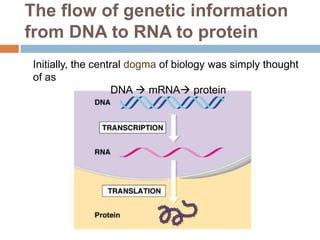
The flow of genetic information
from DNA to RNA to protein
Initially, the central dogma of biology was simply thought
of as
                    DNA  mRNA protein
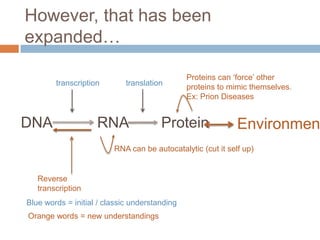
However, that has been
expanded…

                                               Proteins can ‘force’ other
        transcription        translation       proteins to mimic themselves.
                                               Ex: Prion Diseases


DNA                 RNA                Protein               Environmen
                         RNA can be autocatalytic (cut it self up)


   Reverse
   transcription
Blue words = initial / classic understanding
Orange words = new understandings
What do all those nitrogenous
bases mean?
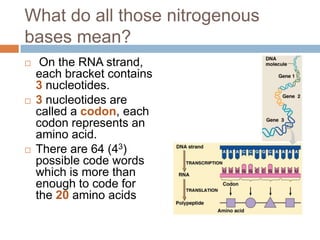
    On the RNA strand,
    each bracket contains
    3 nucleotides.
   3 nucleotides are
    called a codon, each
    codon represents an
    amino acid.
   There are 64 (43)
    possible code words
    which is more than
    enough to code for
    the 20 amino acids
Now it’s your turn..
   You should be able to use the notes you took
    for homework to complete the questions up
    through the elongation stage of translation.
   Remember: There are lots of resources on the
    blog to help you!

Central dogma

  • 1.
    CENTRAL DOGMA To supplementthe guided notes packet
  • 2.
    The flow ofgenetic information from DNA to RNA to protein Initially, the central dogma of biology was simply thought of as DNA  mRNA protein
  • 3.
    However, that hasbeen expanded… Proteins can ‘force’ other transcription translation proteins to mimic themselves. Ex: Prion Diseases DNA RNA Protein Environmen RNA can be autocatalytic (cut it self up) Reverse transcription Blue words = initial / classic understanding Orange words = new understandings
  • 4.
    What do allthose nitrogenous bases mean?  On the RNA strand, each bracket contains 3 nucleotides.  3 nucleotides are called a codon, each codon represents an amino acid.  There are 64 (43) possible code words which is more than enough to code for the 20 amino acids
  • 5.
    Now it’s yourturn..  You should be able to use the notes you took for homework to complete the questions up through the elongation stage of translation.  Remember: There are lots of resources on the blog to help you!