THE CELLULAR LEVEL OF ORGANIZATION
Chapter 3
Unless otherwise noted, the images and text used in this PowerPoint are from:
Betts, J. G., Young, K. A., Wise, J. A., Johnson, E., Poe, B., Kruse, D. H., Korol, O.,
Johnson, J. E., Womble, M., & DeSaix, P. (2022). Chapter 9: Joints. In Anatomy and
Physiology 2e. OpenStax.
https://openstax.org/books/anatomy-and-physiology-2e/pages/9-introduction
Chapter Objectives:
After this chapter, you will be able to:
Describe the structure and function of the cell membrane,
including its regulation of materials into and out of the cell
Describe the functions of the various cytoplasmic organelles
Explain the structure and contents of the nucleus, as well as the
process of DNA replication
Explain the process by which a cell builds proteins using the
DNA code
List the stages of the cell cycle in order, including the steps of
cell division in somatic cells
Discuss how a cell differentiates and becomes more specialized
List the morphological and physiological characteristics of some
representative cell types in the human body
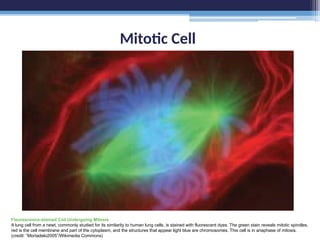
Mitotic Cell
Flourescence-stained Cell Undergoing Mitosis
A lung cell from a newt, commonly studied for its similarity to human lung cells, is stained with fluorescent dyes. The green stain reveals mitotic spindles,
red is the cell membrane and part of the cytoplasm, and the structures that appear light blue are chromosomes. This cell is in anaphase of mitosis.
(credit: “Mortadelo2005”/Wikimedia Commons)
The Cell Membrane
SECTION 3.1
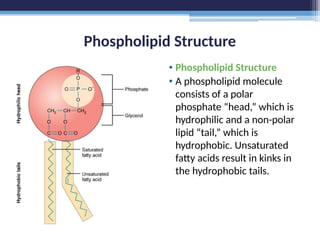
Phospholipid Structure
• Phospholipid Structure
• A phospholipid molecule
consists of a polar
phosphate “head,” which is
hydrophilic and a non-polar
lipid “tail,” which is
hydrophobic. Unsaturated
fatty acids result in kinks in
the hydrophobic tails.
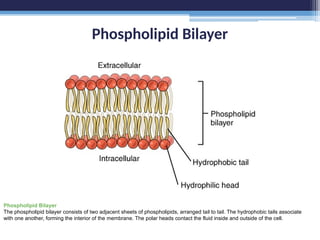
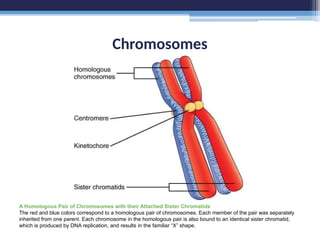
Phospholipid Bilayer
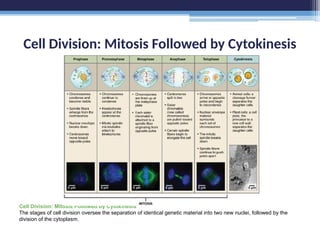
The phospholipid bilayer consists of two adjacent sheets of phospholipids, arranged tail to tail. The hydrophobic tails associate
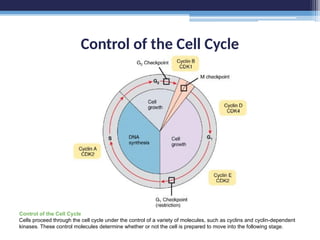
with one another, forming the interior of the membrane. The polar heads contact the fluid inside and outside of the cell.
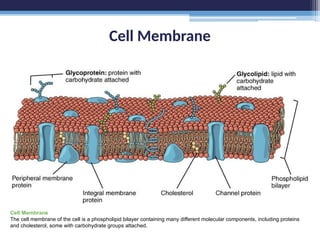
Cell Membrane
Cell Membrane
The cell membrane of the cell is a phospholipid bilayer containing many different molecular components, including proteins
and cholesterol, some with carbohydrate groups attached.
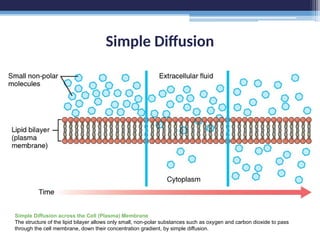
Simple Diffusion
Simple Diffusion across the Cell (Plasma) Membrane
The structure of the lipid bilayer allows only small, non-polar substances such as oxygen and carbon dioxide to pass
through the cell membrane, down their concentration gradient, by simple diffusion.
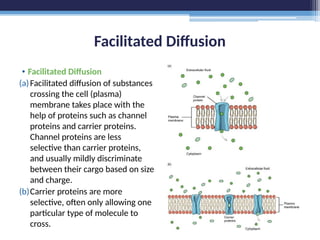
Facilitated Diffusion
• Facilitated Diffusion
(a)Facilitated diffusion of substances
crossing the cell (plasma)
membrane takes place with the
help of proteins such as channel
proteins and carrier proteins.
Channel proteins are less
selective than carrier proteins,
and usually mildly discriminate
between their cargo based on size
and charge.
(b)Carrier proteins are more
selective, often only allowing one
particular type of molecule to
cross.
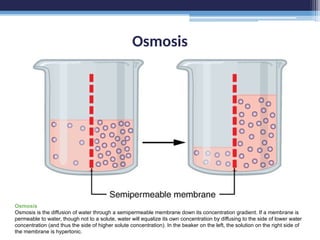
Osmosis
Osmosis
Osmosis is the diffusion of water through a semipermeable membrane down its concentration gradient. If a membrane is
permeable to water, though not to a solute, water will equalize its own concentration by diffusing to the side of lower water
concentration (and thus the side of higher solute concentration). In the beaker on the left, the solution on the right side of
the membrane is hypertonic.
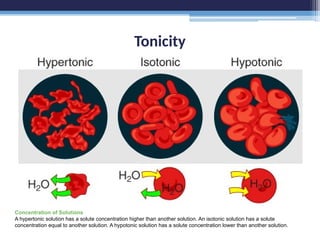
Tonicity
Concentration of Solutions
A hypertonic solution has a solute concentration higher than another solution. An isotonic solution has a solute
concentration equal to another solution. A hypotonic solution has a solute concentration lower than another solution.
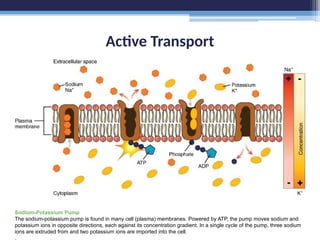
Active Transport
Sodium-Potassium Pump
The sodium-potassium pump is found in many cell (plasma) membranes. Powered by ATP, the pump moves sodium and
potassium ions in opposite directions, each against its concentration gradient. In a single cycle of the pump, three sodium
ions are extruded from and two potassium ions are imported into the cell.
.
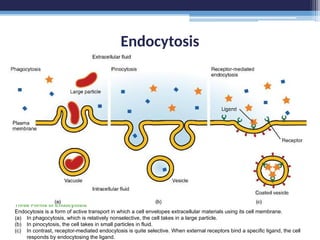
Endocytosis
Three Forms of Endocytosis
Endocytosis is a form of active transport in which a cell envelopes extracellular materials using its cell membrane.
(a) In phagocytosis, which is relatively nonselective, the cell takes in a large particle.
(b) In pinocytosis, the cell takes in small particles in fluid.
(c) In contrast, receptor-mediated endocytosis is quite selective. When external receptors bind a specific ligand, the cell
responds by endocytosing the ligand.
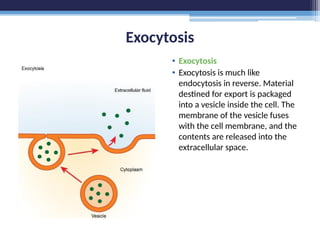
Exocytosis
• Exocytosis
• Exocytosis is much like
endocytosis in reverse. Material
destined for export is packaged
into a vesicle inside the cell. The
membrane of the vesicle fuses
with the cell membrane, and the
contents are released into the
extracellular space.
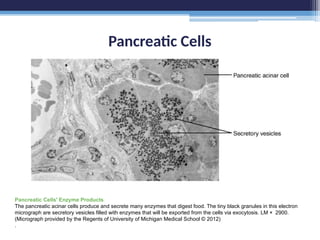
Pancreatic Cells
Pancreatic Cells' Enzyme Products
The pancreatic acinar cells produce and secrete many enzymes that digest food. The tiny black granules in this electron
micrograph are secretory vesicles filled with enzymes that will be exported from the cells via exocytosis. LM × 2900.
(Micrograph provided by the Regents of University of Michigan Medical School © 2012)
.
The Cytoplasm and Cellular
Organelles
SECTION 3.2
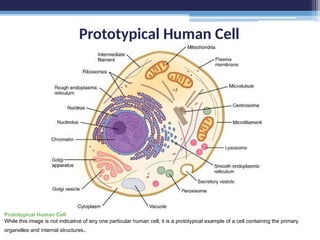
Prototypical Human Cell
While this image is not indicative of any one particular human cell, it is a prototypical example of a cell containing the primary
organelles and internal structures.
Endoplasmic Reticulum
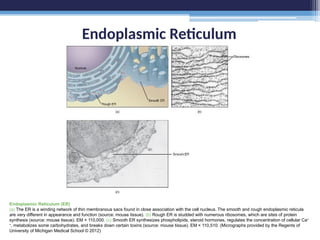
Endoplasmic Reticulum (ER)
(a) The ER is a winding network of thin membranous sacs found in close association with the cell nucleus. The smooth and rough endoplasmic reticula
are very different in appearance and function (source: mouse tissue). (b) Rough ER is studded with numerous ribosomes, which are sites of protein
synthesis (source: mouse tissue). EM × 110,000. (c) Smooth ER synthesizes phospholipids, steroid hormones, regulates the concentration of cellular Ca+
+
, metabolizes some carbohydrates, and breaks down certain toxins (source: mouse tissue). EM × 110,510. (Micrographs provided by the Regents of
University of Michigan Medical School © 2012)
Golgi Apparatus
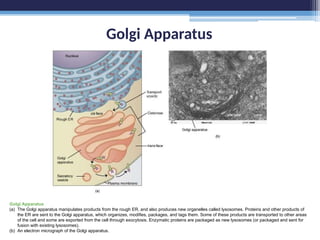
Golgi Apparatus
(a) The Golgi apparatus manipulates products from the rough ER, and also produces new organelles called lysosomes. Proteins and other products of
the ER are sent to the Golgi apparatus, which organizes, modifies, packages, and tags them. Some of these products are transported to other areas
of the cell and some are exported from the cell through exocytosis. Enzymatic proteins are packaged as new lysosomes (or packaged and sent for
fusion with existing lysosomes).
(b) An electron micrograph of the Golgi apparatus.
Mitochondrion
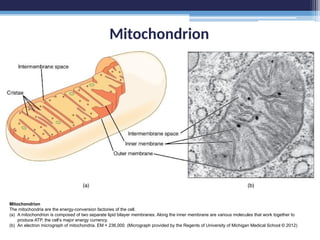
Mitochondrion
The mitochondria are the energy-conversion factories of the cell.
(a) A mitochondrion is composed of two separate lipid bilayer membranes. Along the inner membrane are various molecules that work together to
produce ATP, the cell’s major energy currency.
(b) An electron micrograph of mitochondria. EM × 236,000. (Micrograph provided by the Regents of University of Michigan Medical School © 2012)
Peroxisome
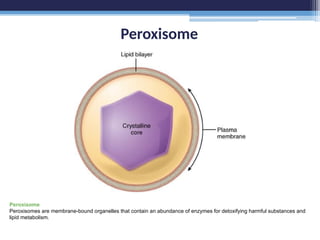
Peroxisome
Peroxisomes are membrane-bound organelles that contain an abundance of enzymes for detoxifying harmful substances and
lipid metabolism.
Cytoskeleton
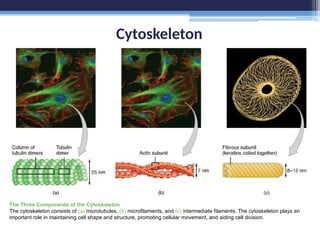
The Three Components of the Cytoskeleton
The cytoskeleton consists of (a) microtubules, (b) microfilaments, and (c) intermediate filaments. The cytoskeleton plays an
important role in maintaining cell shape and structure, promoting cellular movement, and aiding cell division.
The Nucleus and DNA Replication
SECTION 3.3
Nucleus
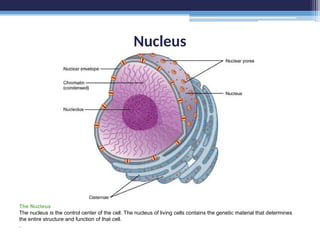
The Nucleus
The nucleus is the control center of the cell. The nucleus of living cells contains the genetic material that determines
the entire structure and function of that cell.
.
Multinucleated Muscle Cell
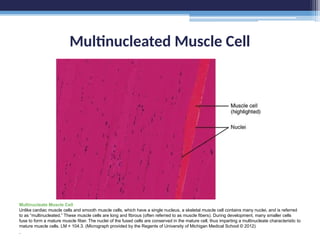
Multinucleate Muscle Cell
Unlike cardiac muscle cells and smooth muscle cells, which have a single nucleus, a skeletal muscle cell contains many nuclei, and is referred
to as “multinucleated.” These muscle cells are long and fibrous (often referred to as muscle fibers). During development, many smaller cells
fuse to form a mature muscle fiber. The nuclei of the fused cells are conserved in the mature cell, thus imparting a multinucleate characteristic to
mature muscle cells. LM × 104.3. (Micrograph provided by the Regents of University of Michigan Medical School © 2012)
.
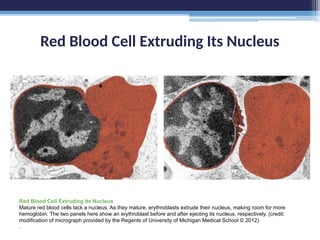
Red Blood Cell Extruding Its Nucleus
Mature red blood cells lack a nucleus. As they mature, erythroblasts extrude their nucleus, making room for more
hemoglobin. The two panels here show an erythroblast before and after ejecting its nucleus, respectively. (credit:
modification of micrograph provided by the Regents of University of Michigan Medical School © 2012)
.
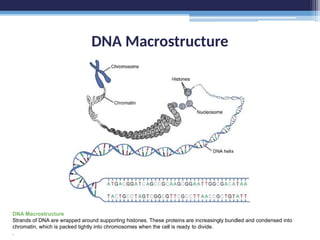
DNA Macrostructure
DNA Macrostructure
Strands of DNA are wrapped around supporting histones. These proteins are increasingly bundled and condensed into
chromatin, which is packed tightly into chromosomes when the cell is ready to divide.
.
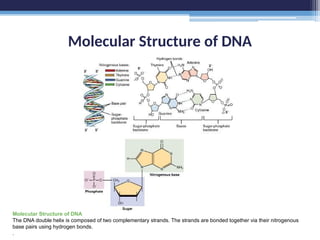
Molecular Structure of DNA
The DNA double helix is composed of two complementary strands. The strands are bonded together via their nitrogenous
base pairs using hydrogen bonds.
.
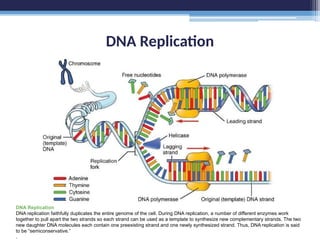
DNA Replication
DNA Replication
DNA replication faithfully duplicates the entire genome of the cell. During DNA replication, a number of different enzymes work
together to pull apart the two strands so each strand can be used as a template to synthesize new complementary strands. The two
new daughter DNA molecules each contain one preexisting strand and one newly synthesized strand. Thus, DNA replication is said
to be “semiconservative.”
.
Protein Synthesis
SECTION 3.4
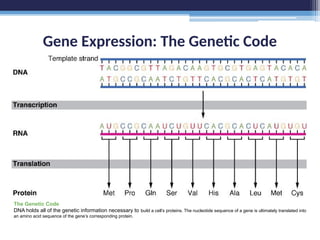
Gene Expression: The Genetic Code
The Genetic Code
DNA holds all of the genetic information necessary to build a cell’s proteins. The nucleotide sequence of a gene is ultimately translated into
an amino acid sequence of the gene’s corresponding protein.
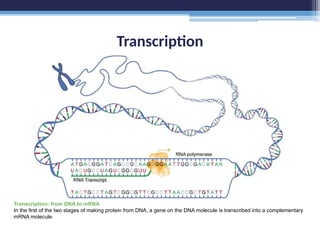
Transcription
Transcription: from DNA to mRNA
In the first of the two stages of making protein from DNA, a gene on the DNA molecule is transcribed into a complementary
mRNA molecule.
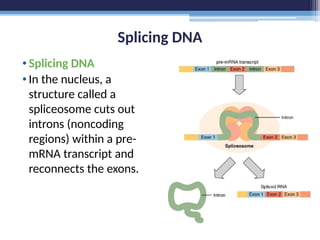
Splicing DNA
•Splicing DNA
•In the nucleus, a
structure called a
spliceosome cuts out
introns (noncoding
regions) within a pre-
mRNA transcript and
reconnects the exons.
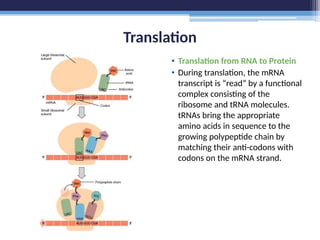
Translation
• Translation from RNA to Protein
• During translation, the mRNA
transcript is “read” by a functional
complex consisting of the
ribosome and tRNA molecules.
tRNAs bring the appropriate
amino acids in sequence to the
growing polypeptide chain by
matching their anti-codons with
codons on the mRNA strand.
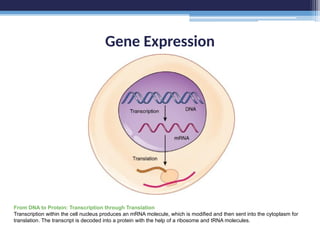
Gene Expression
From DNA to Protein: Transcription through Translation
Transcription within the cell nucleus produces an mRNA molecule, which is modified and then sent into the cytoplasm for
translation. The transcript is decoded into a protein with the help of a ribosome and tRNA molecules.
Cell Growth and Division
SECTION 3.5
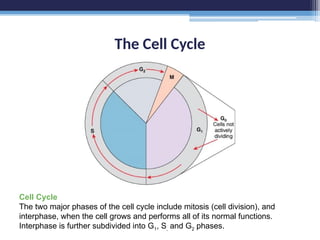
The Cell Cycle
Cell Cycle
The two major phases of the cell cycle include mitosis (cell division), and
interphase, when the cell grows and performs all of its normal functions.
Interphase is further subdivided into G1, S, and G2 phases.
Chromosomes
A Homologous Pair of Chromosomes with their Attached Sister Chromatids
The red and blue colors correspond to a homologous pair of chromosomes. Each member of the pair was separately
inherited from one parent. Each chromosome in the homologous pair is also bound to an identical sister chromatid,
which is produced by DNA replication, and results in the familiar “X” shape.
Cell Division: Mitosis Followed by Cytokinesis
The stages of cell division oversee the separation of identical genetic material into two new nuclei, followed by the
division of the cytoplasm.
Control of the Cell Cycle
Cells proceed through the cell cycle under the control of a variety of molecules, such as cyclins and cyclin-dependent
kinases. These control molecules determine whether or not the cell is prepared to move into the following stage.
Cellular Differentiation
SECTION 3.6
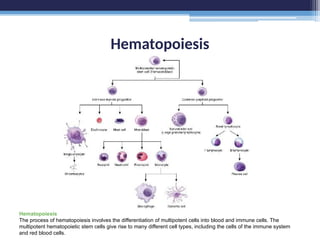
Hematopoiesis
Hematopoiesis
The process of hematopoiesis involves the differentiation of multipotent cells into blood and immune cells. The
multipotent hematopoietic stem cells give rise to many different cell types, including the cells of the immune system
and red blood cells.
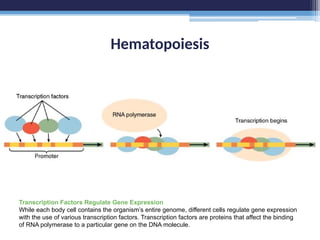
Hematopoiesis
Transcription Factors Regulate Gene Expression
While each body cell contains the organism’s entire genome, different cells regulate gene expression
with the use of various transcription factors. Transcription factors are proteins that affect the binding
of RNA polymerase to a particular gene on the DNA molecule.
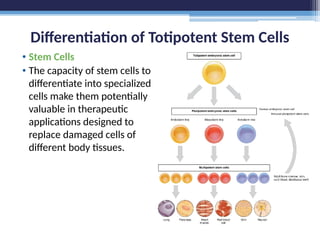
Differentiation of Totipotent Stem Cells
• Stem Cells
• The capacity of stem cells to
differentiate into specialized
cells make them potentially
valuable in therapeutic
applications designed to
replace damaged cells of
different body tissues.
Unless otherwise noted, the images and text used in this PowerPoint
are from:
Betts, J. G., Young, K. A., Wise, J. A., Johnson, E., Poe, B., Kruse, D.
H., Korol, O., Johnson, J. E., Womble, M., & DeSaix, P. (2022).
Chapter 9: Joints. In Anatomy and Physiology 2e. OpenStax.
https://openstax.org/books/anatomy-and-physiology-2e/pages/9-
introduction
Citation

Cell division cycle PPT.pptx ANTOMY AND PHYSILOGY ALSO ADDED THIS TOPIC

  • 1.
    THE CELLULAR LEVELOF ORGANIZATION Chapter 3 Unless otherwise noted, the images and text used in this PowerPoint are from: Betts, J. G., Young, K. A., Wise, J. A., Johnson, E., Poe, B., Kruse, D. H., Korol, O., Johnson, J. E., Womble, M., & DeSaix, P. (2022). Chapter 9: Joints. In Anatomy and Physiology 2e. OpenStax. https://openstax.org/books/anatomy-and-physiology-2e/pages/9-introduction
  • 2.
    Chapter Objectives: After thischapter, you will be able to: Describe the structure and function of the cell membrane, including its regulation of materials into and out of the cell Describe the functions of the various cytoplasmic organelles Explain the structure and contents of the nucleus, as well as the process of DNA replication Explain the process by which a cell builds proteins using the DNA code List the stages of the cell cycle in order, including the steps of cell division in somatic cells Discuss how a cell differentiates and becomes more specialized List the morphological and physiological characteristics of some representative cell types in the human body
  • 3.
    Mitotic Cell Flourescence-stained CellUndergoing Mitosis A lung cell from a newt, commonly studied for its similarity to human lung cells, is stained with fluorescent dyes. The green stain reveals mitotic spindles, red is the cell membrane and part of the cytoplasm, and the structures that appear light blue are chromosomes. This cell is in anaphase of mitosis. (credit: “Mortadelo2005”/Wikimedia Commons)
  • 4.
  • 5.
    Phospholipid Structure • PhospholipidStructure • A phospholipid molecule consists of a polar phosphate “head,” which is hydrophilic and a non-polar lipid “tail,” which is hydrophobic. Unsaturated fatty acids result in kinks in the hydrophobic tails.
  • 6.
    Phospholipid Bilayer Phospholipid Bilayer Thephospholipid bilayer consists of two adjacent sheets of phospholipids, arranged tail to tail. The hydrophobic tails associate with one another, forming the interior of the membrane. The polar heads contact the fluid inside and outside of the cell.
  • 7.
    Cell Membrane Cell Membrane Thecell membrane of the cell is a phospholipid bilayer containing many different molecular components, including proteins and cholesterol, some with carbohydrate groups attached.
  • 8.
    Simple Diffusion Simple Diffusionacross the Cell (Plasma) Membrane The structure of the lipid bilayer allows only small, non-polar substances such as oxygen and carbon dioxide to pass through the cell membrane, down their concentration gradient, by simple diffusion.
  • 9.
    Facilitated Diffusion • FacilitatedDiffusion (a)Facilitated diffusion of substances crossing the cell (plasma) membrane takes place with the help of proteins such as channel proteins and carrier proteins. Channel proteins are less selective than carrier proteins, and usually mildly discriminate between their cargo based on size and charge. (b)Carrier proteins are more selective, often only allowing one particular type of molecule to cross.
  • 10.
    Osmosis Osmosis Osmosis is thediffusion of water through a semipermeable membrane down its concentration gradient. If a membrane is permeable to water, though not to a solute, water will equalize its own concentration by diffusing to the side of lower water concentration (and thus the side of higher solute concentration). In the beaker on the left, the solution on the right side of the membrane is hypertonic.
  • 11.
    Tonicity Concentration of Solutions Ahypertonic solution has a solute concentration higher than another solution. An isotonic solution has a solute concentration equal to another solution. A hypotonic solution has a solute concentration lower than another solution.
  • 12.
    Active Transport Sodium-Potassium Pump Thesodium-potassium pump is found in many cell (plasma) membranes. Powered by ATP, the pump moves sodium and potassium ions in opposite directions, each against its concentration gradient. In a single cycle of the pump, three sodium ions are extruded from and two potassium ions are imported into the cell. .
  • 13.
    Endocytosis Three Forms ofEndocytosis Endocytosis is a form of active transport in which a cell envelopes extracellular materials using its cell membrane. (a) In phagocytosis, which is relatively nonselective, the cell takes in a large particle. (b) In pinocytosis, the cell takes in small particles in fluid. (c) In contrast, receptor-mediated endocytosis is quite selective. When external receptors bind a specific ligand, the cell responds by endocytosing the ligand.
  • 14.
    Exocytosis • Exocytosis • Exocytosisis much like endocytosis in reverse. Material destined for export is packaged into a vesicle inside the cell. The membrane of the vesicle fuses with the cell membrane, and the contents are released into the extracellular space.
  • 15.
    Pancreatic Cells Pancreatic Cells'Enzyme Products The pancreatic acinar cells produce and secrete many enzymes that digest food. The tiny black granules in this electron micrograph are secretory vesicles filled with enzymes that will be exported from the cells via exocytosis. LM × 2900. (Micrograph provided by the Regents of University of Michigan Medical School © 2012) .
  • 16.
    The Cytoplasm andCellular Organelles SECTION 3.2
  • 17.
    Prototypical Human Cell PrototypicalHuman Cell While this image is not indicative of any one particular human cell, it is a prototypical example of a cell containing the primary organelles and internal structures.
  • 18.
    Endoplasmic Reticulum Endoplasmic Reticulum(ER) (a) The ER is a winding network of thin membranous sacs found in close association with the cell nucleus. The smooth and rough endoplasmic reticula are very different in appearance and function (source: mouse tissue). (b) Rough ER is studded with numerous ribosomes, which are sites of protein synthesis (source: mouse tissue). EM × 110,000. (c) Smooth ER synthesizes phospholipids, steroid hormones, regulates the concentration of cellular Ca+ + , metabolizes some carbohydrates, and breaks down certain toxins (source: mouse tissue). EM × 110,510. (Micrographs provided by the Regents of University of Michigan Medical School © 2012)
  • 19.
    Golgi Apparatus Golgi Apparatus (a)The Golgi apparatus manipulates products from the rough ER, and also produces new organelles called lysosomes. Proteins and other products of the ER are sent to the Golgi apparatus, which organizes, modifies, packages, and tags them. Some of these products are transported to other areas of the cell and some are exported from the cell through exocytosis. Enzymatic proteins are packaged as new lysosomes (or packaged and sent for fusion with existing lysosomes). (b) An electron micrograph of the Golgi apparatus.
  • 20.
    Mitochondrion Mitochondrion The mitochondria arethe energy-conversion factories of the cell. (a) A mitochondrion is composed of two separate lipid bilayer membranes. Along the inner membrane are various molecules that work together to produce ATP, the cell’s major energy currency. (b) An electron micrograph of mitochondria. EM × 236,000. (Micrograph provided by the Regents of University of Michigan Medical School © 2012)
  • 21.
    Peroxisome Peroxisome Peroxisomes are membrane-boundorganelles that contain an abundance of enzymes for detoxifying harmful substances and lipid metabolism.
  • 22.
    Cytoskeleton The Three Componentsof the Cytoskeleton The cytoskeleton consists of (a) microtubules, (b) microfilaments, and (c) intermediate filaments. The cytoskeleton plays an important role in maintaining cell shape and structure, promoting cellular movement, and aiding cell division.
  • 23.
    The Nucleus andDNA Replication SECTION 3.3
  • 24.
    Nucleus The Nucleus The nucleusis the control center of the cell. The nucleus of living cells contains the genetic material that determines the entire structure and function of that cell. .
  • 25.
    Multinucleated Muscle Cell MultinucleateMuscle Cell Unlike cardiac muscle cells and smooth muscle cells, which have a single nucleus, a skeletal muscle cell contains many nuclei, and is referred to as “multinucleated.” These muscle cells are long and fibrous (often referred to as muscle fibers). During development, many smaller cells fuse to form a mature muscle fiber. The nuclei of the fused cells are conserved in the mature cell, thus imparting a multinucleate characteristic to mature muscle cells. LM × 104.3. (Micrograph provided by the Regents of University of Michigan Medical School © 2012) .
  • 26.
    Red Blood CellExtruding Its Nucleus Red Blood Cell Extruding Its Nucleus Mature red blood cells lack a nucleus. As they mature, erythroblasts extrude their nucleus, making room for more hemoglobin. The two panels here show an erythroblast before and after ejecting its nucleus, respectively. (credit: modification of micrograph provided by the Regents of University of Michigan Medical School © 2012) .
  • 27.
    DNA Macrostructure DNA Macrostructure Strandsof DNA are wrapped around supporting histones. These proteins are increasingly bundled and condensed into chromatin, which is packed tightly into chromosomes when the cell is ready to divide. .
  • 28.
    Molecular Structure ofDNA Molecular Structure of DNA The DNA double helix is composed of two complementary strands. The strands are bonded together via their nitrogenous base pairs using hydrogen bonds. .
  • 29.
    DNA Replication DNA Replication DNAreplication faithfully duplicates the entire genome of the cell. During DNA replication, a number of different enzymes work together to pull apart the two strands so each strand can be used as a template to synthesize new complementary strands. The two new daughter DNA molecules each contain one preexisting strand and one newly synthesized strand. Thus, DNA replication is said to be “semiconservative.” .
  • 30.
  • 31.
    Gene Expression: TheGenetic Code The Genetic Code DNA holds all of the genetic information necessary to build a cell’s proteins. The nucleotide sequence of a gene is ultimately translated into an amino acid sequence of the gene’s corresponding protein.
  • 32.
    Transcription Transcription: from DNAto mRNA In the first of the two stages of making protein from DNA, a gene on the DNA molecule is transcribed into a complementary mRNA molecule.
  • 33.
    Splicing DNA •Splicing DNA •Inthe nucleus, a structure called a spliceosome cuts out introns (noncoding regions) within a pre- mRNA transcript and reconnects the exons.
  • 34.
    Translation • Translation fromRNA to Protein • During translation, the mRNA transcript is “read” by a functional complex consisting of the ribosome and tRNA molecules. tRNAs bring the appropriate amino acids in sequence to the growing polypeptide chain by matching their anti-codons with codons on the mRNA strand.
  • 35.
    Gene Expression From DNAto Protein: Transcription through Translation Transcription within the cell nucleus produces an mRNA molecule, which is modified and then sent into the cytoplasm for translation. The transcript is decoded into a protein with the help of a ribosome and tRNA molecules.
  • 36.
    Cell Growth andDivision SECTION 3.5
  • 37.
    The Cell Cycle CellCycle The two major phases of the cell cycle include mitosis (cell division), and interphase, when the cell grows and performs all of its normal functions. Interphase is further subdivided into G1, S, and G2 phases.
  • 38.
    Chromosomes A Homologous Pairof Chromosomes with their Attached Sister Chromatids The red and blue colors correspond to a homologous pair of chromosomes. Each member of the pair was separately inherited from one parent. Each chromosome in the homologous pair is also bound to an identical sister chromatid, which is produced by DNA replication, and results in the familiar “X” shape.
  • 39.
    Cell Division: MitosisFollowed by Cytokinesis Cell Division: Mitosis Followed by Cytokinesis The stages of cell division oversee the separation of identical genetic material into two new nuclei, followed by the division of the cytoplasm.
  • 40.
    Control of theCell Cycle Control of the Cell Cycle Cells proceed through the cell cycle under the control of a variety of molecules, such as cyclins and cyclin-dependent kinases. These control molecules determine whether or not the cell is prepared to move into the following stage.
  • 41.
  • 42.
    Hematopoiesis Hematopoiesis The process ofhematopoiesis involves the differentiation of multipotent cells into blood and immune cells. The multipotent hematopoietic stem cells give rise to many different cell types, including the cells of the immune system and red blood cells.
  • 43.
    Hematopoiesis Transcription Factors RegulateGene Expression While each body cell contains the organism’s entire genome, different cells regulate gene expression with the use of various transcription factors. Transcription factors are proteins that affect the binding of RNA polymerase to a particular gene on the DNA molecule.
  • 44.
    Differentiation of TotipotentStem Cells • Stem Cells • The capacity of stem cells to differentiate into specialized cells make them potentially valuable in therapeutic applications designed to replace damaged cells of different body tissues.
  • 45.
    Unless otherwise noted,the images and text used in this PowerPoint are from: Betts, J. G., Young, K. A., Wise, J. A., Johnson, E., Poe, B., Kruse, D. H., Korol, O., Johnson, J. E., Womble, M., & DeSaix, P. (2022). Chapter 9: Joints. In Anatomy and Physiology 2e. OpenStax. https://openstax.org/books/anatomy-and-physiology-2e/pages/9- introduction Citation

Editor's Notes

  • #1 Unless otherwise noted, the images and text used in this PowerPoint are from: Betts, J. G., Young, K. A., Wise, J. A., Johnson, E., Poe, B., Kruse, D. H., Korol, O., Johnson, J. E., Womble, M., & DeSaix, P. (2022). Chapter 9: Joints. In Anatomy and Physiology 2e. OpenStax. https://openstax.org/books/anatomy-and-physiology-2e/pages/9-introduction
  • #45 Unless otherwise noted, the images and text used in this PowerPoint are from: Betts, J. G., Young, K. A., Wise, J. A., Johnson, E., Poe, B., Kruse, D. H., Korol, O., Johnson, J. E., Womble, M., & DeSaix, P. (2022). Chapter 9: Joints. In Anatomy and Physiology 2e. OpenStax. https://openstax.org/books/anatomy-and-physiology-2e/pages/9-introduction