CELL BLOCK
AND
ITS UTILITY IN
CYTOPATHOLOGY
Dr Prakriti Shukla,
Department of Pathology, BMHRC
Fine needle aspiration cytology
(FNAC)
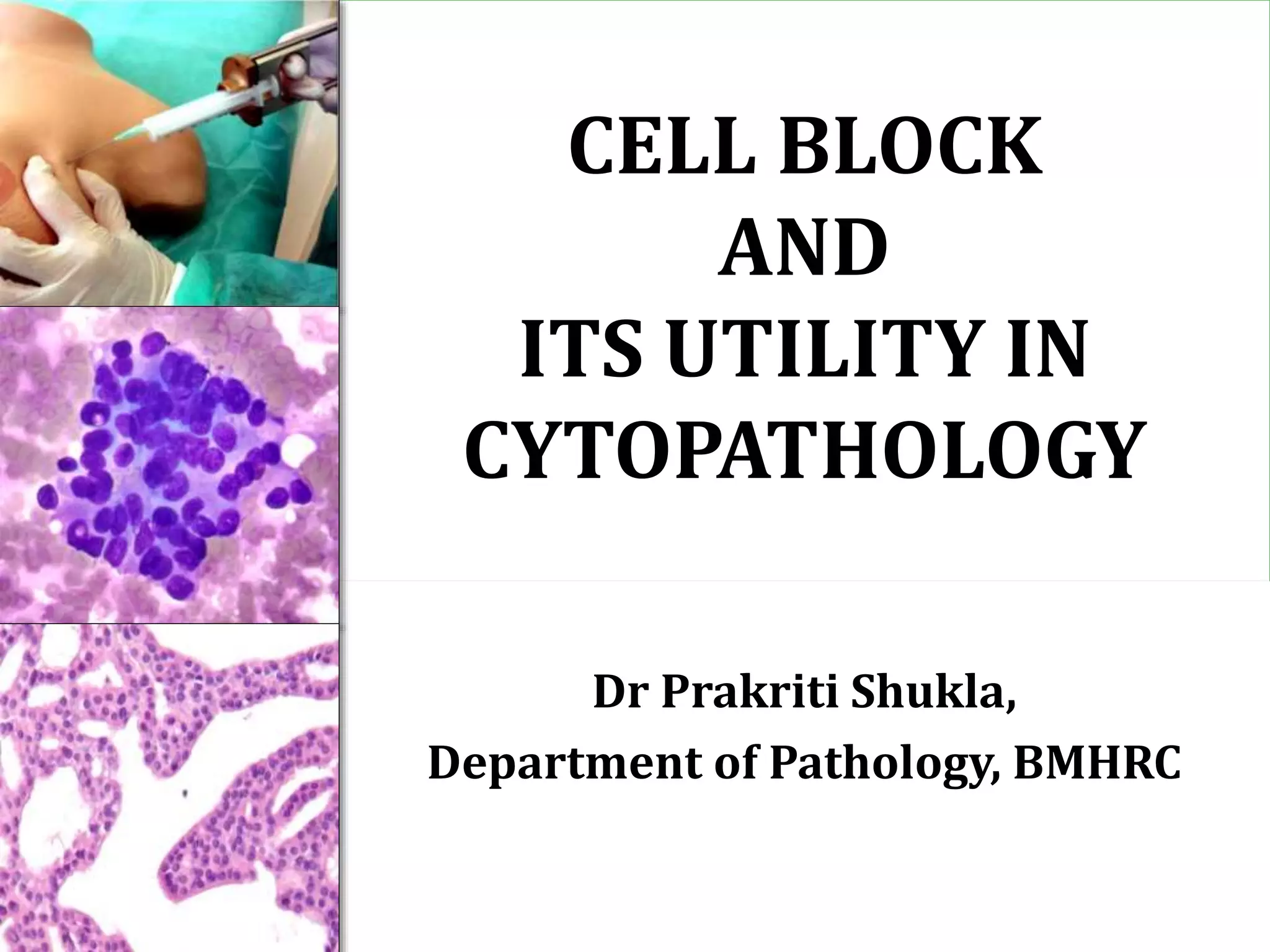
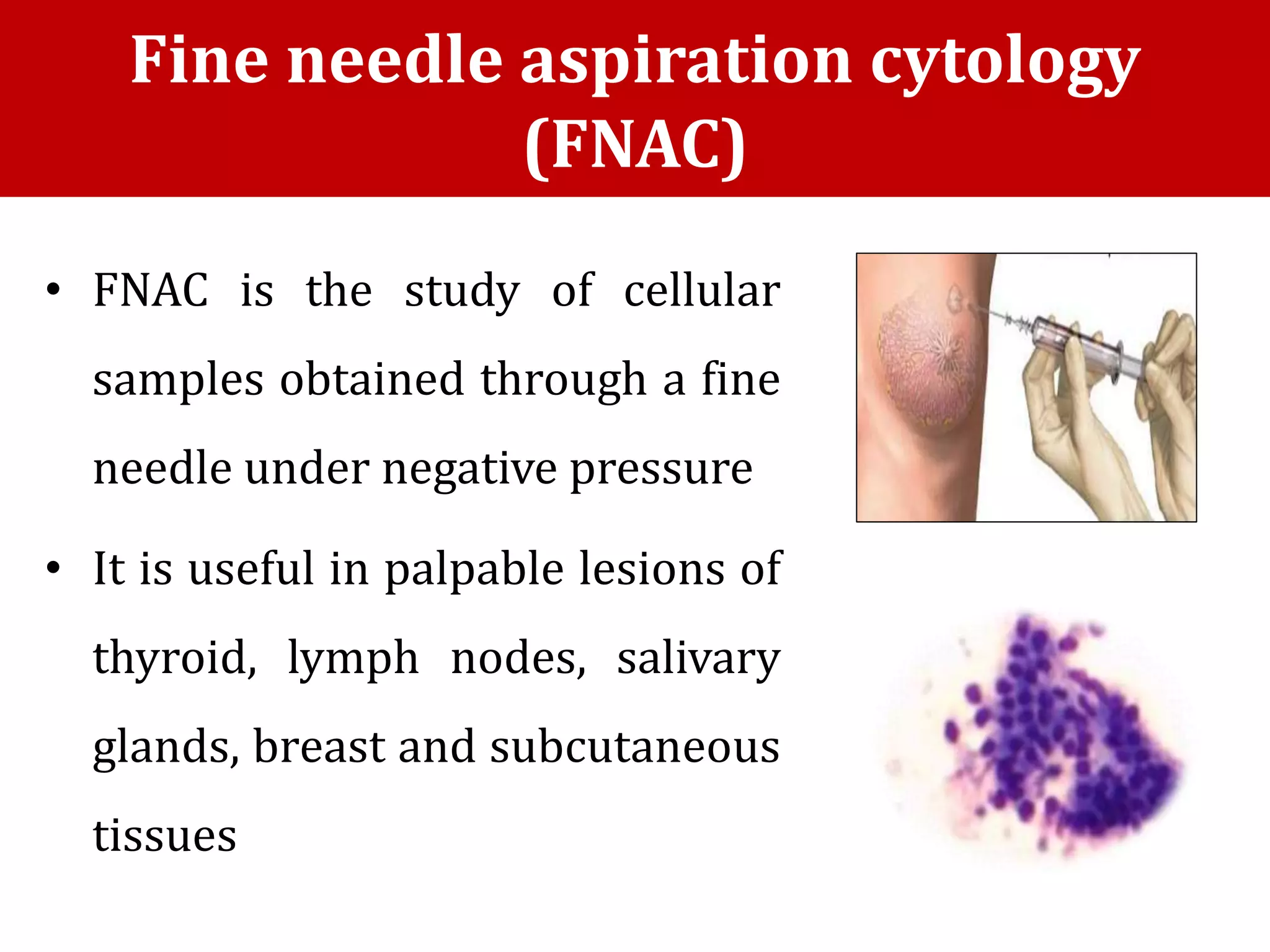
• FNAC is the study of cellular
samples obtained through a fine
needle under negative pressure
• It is useful in palpable lesions of
thyroid, lymph nodes, salivary
glands, breast and subcutaneous
tissues
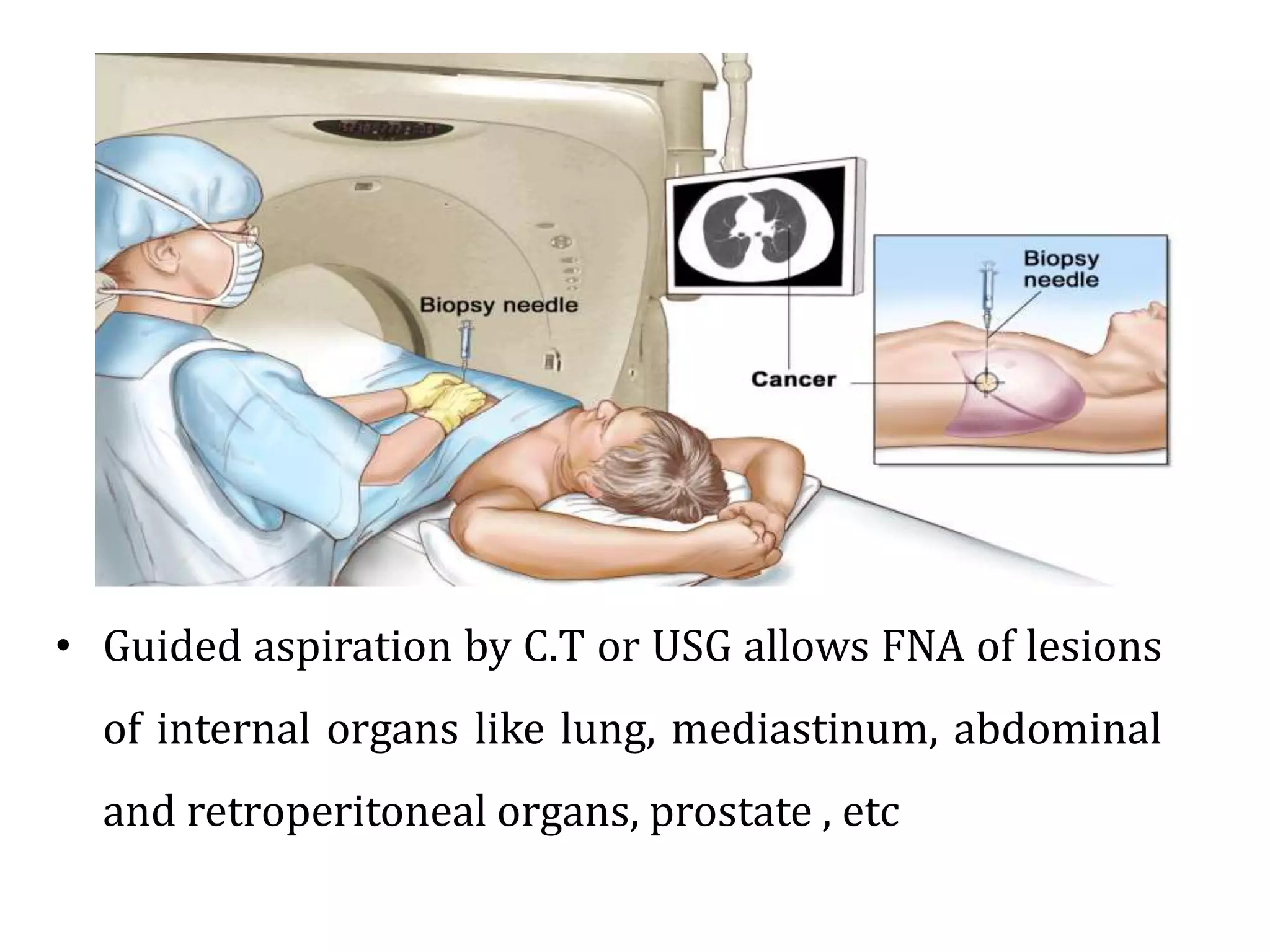
• Guided aspiration by C.T or USG allows FNA of lesions
of internal organs like lung, mediastinum, abdominal
and retroperitoneal organs, prostate , etc
• Relatively painless and inexpensive
• Provides unequivocal diagnosis (sensitivity and
specificity ≥ 90%)
• Highly suitable in debilitated patients and
multiple lesions
• Low risk of complications
• Easily repeatable
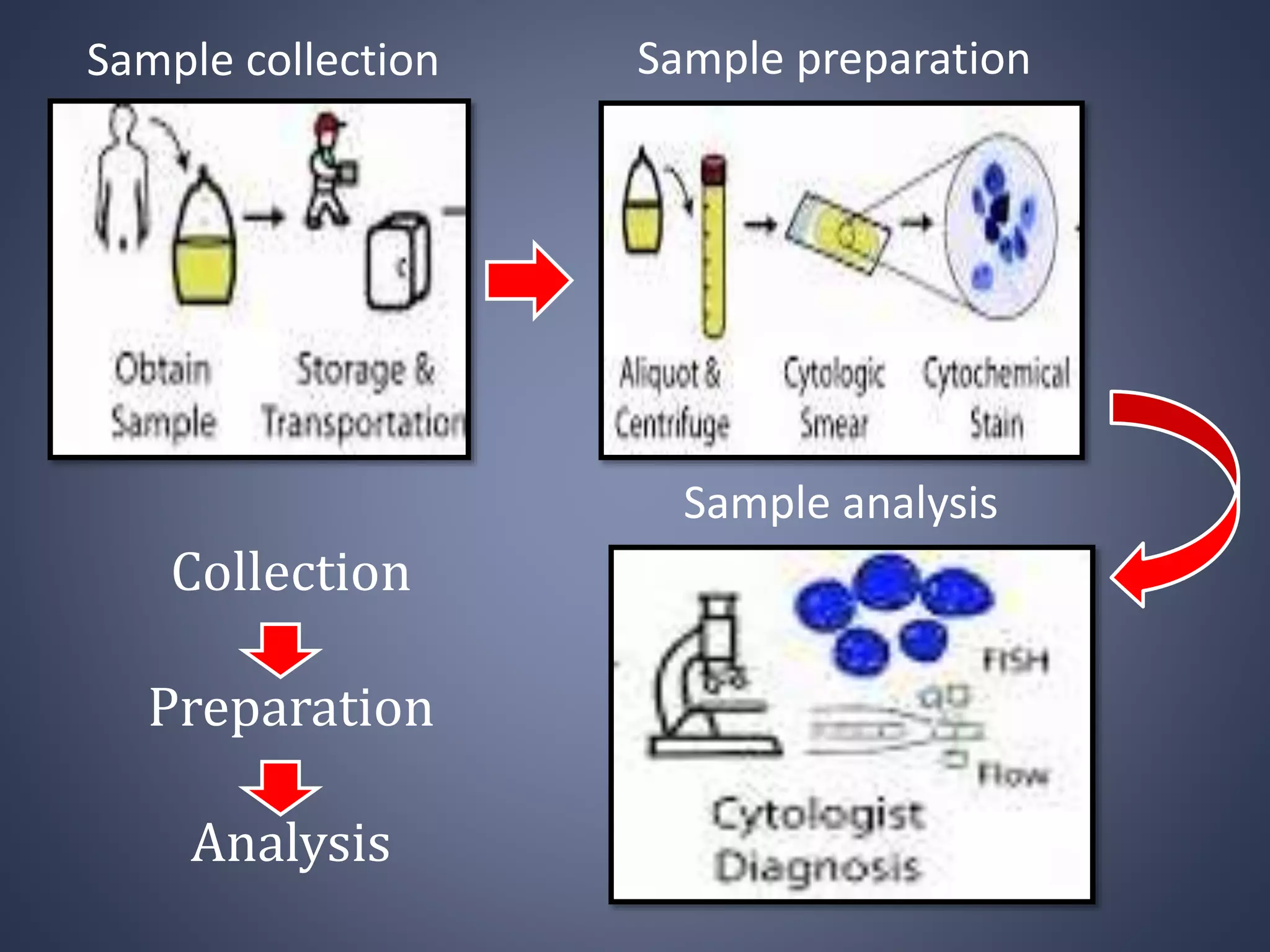
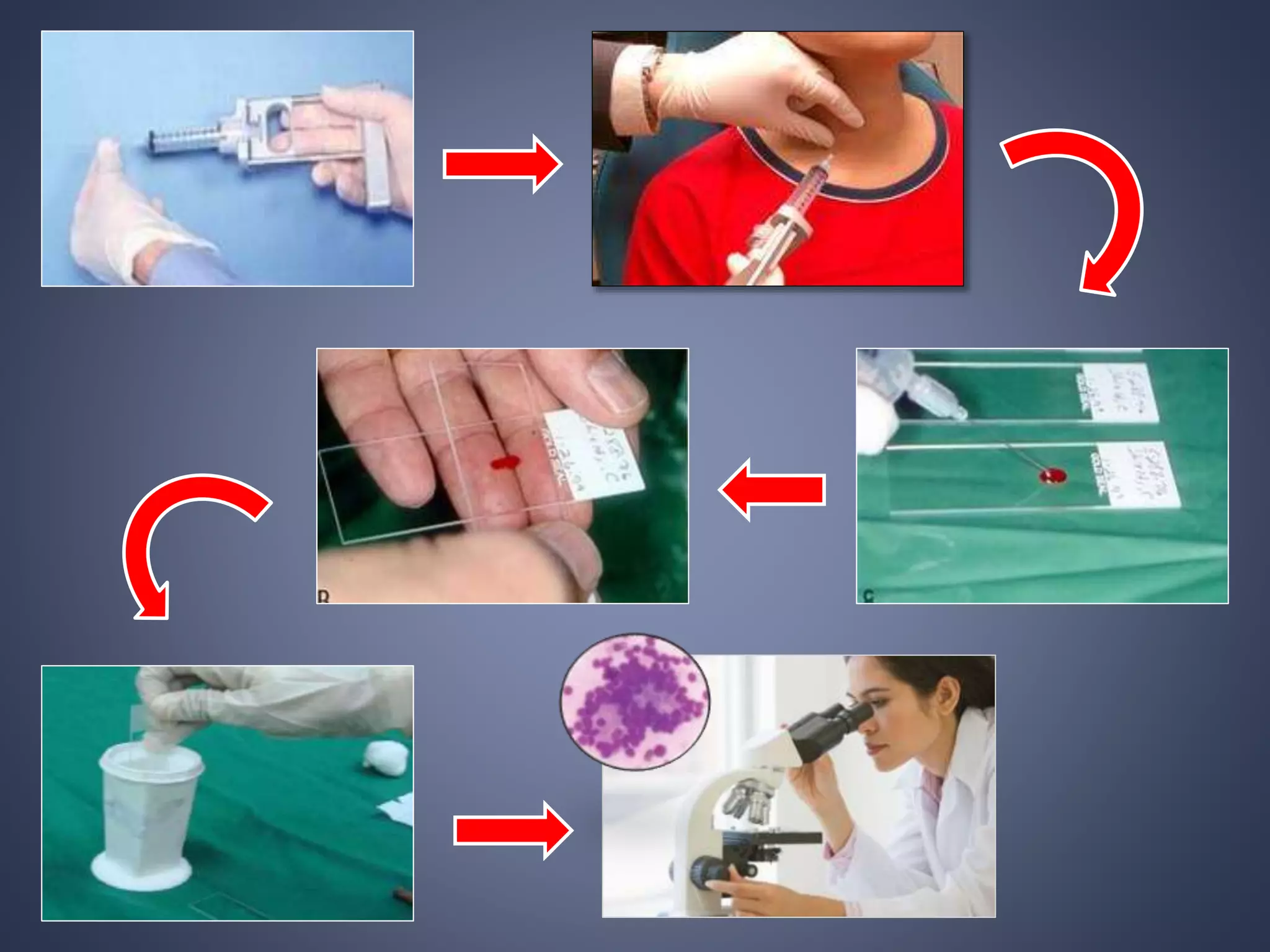
Sample collection Sample preparation
Sample analysis
Collection
Preparation
Analysis
• Proper history, clinical examination and radiological
findings
• Site must be clearly specified
• In deep seated swellings, the site must be properly
marked after examining the patient
• Deeper swellings should be approached by guided FNA
• If specimen is sputum, 3 to 5 consecutive days sputum
samples should be examined for diagnostic accuracy
Instructions before Aspiration
• For fluid cytology, 20–30 ml fluid is required for
cytodiagnosis
• If the entire specimen tapped cannot be sent to the
laboratory, a representative sample from the bottom
part of the fluid should be sent to the laboratory
• Smearing must be performed properly (reduces
crushing artefacts)
• Avoid admixture with blood while performing FNA
• Adequate number of slides must be prepared from each
patients with proper labelling
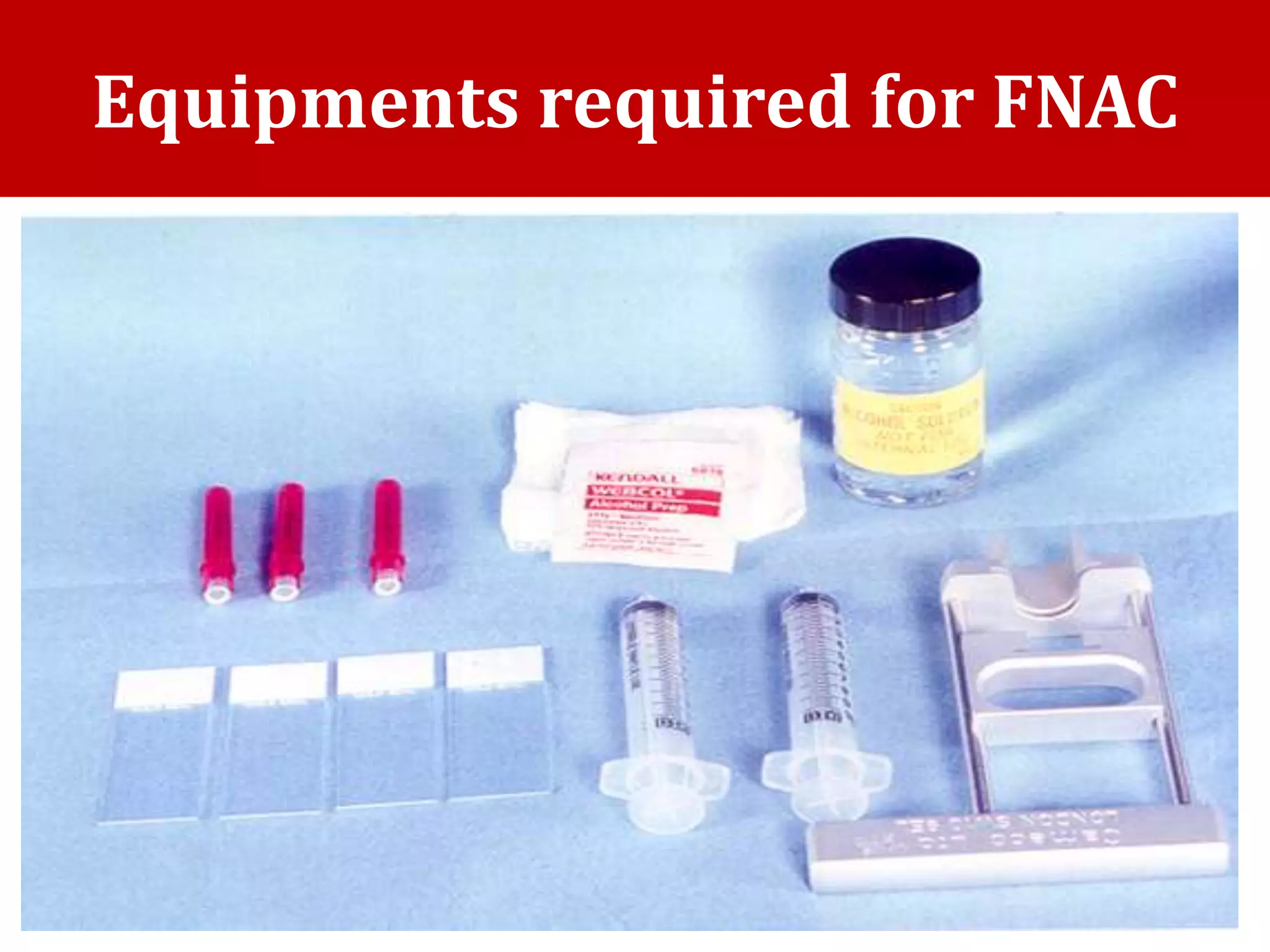
Equipments required for FNAC
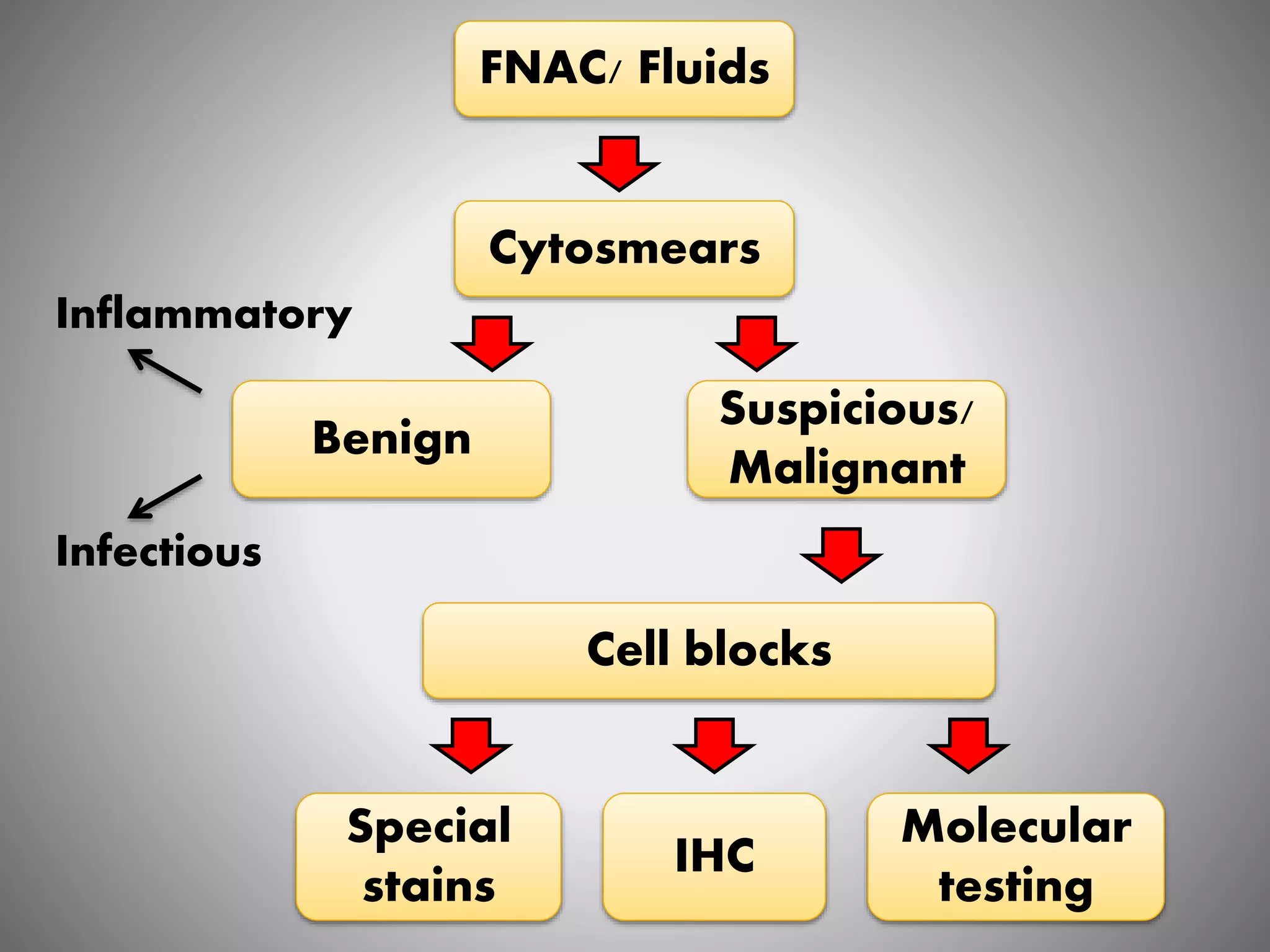
Cytosmears
Suspicious/
Malignant
Cell blocks
Special
stains
IHC
Molecular
testing
FNAC/ Fluids
Benign
Inflammatory
Infectious
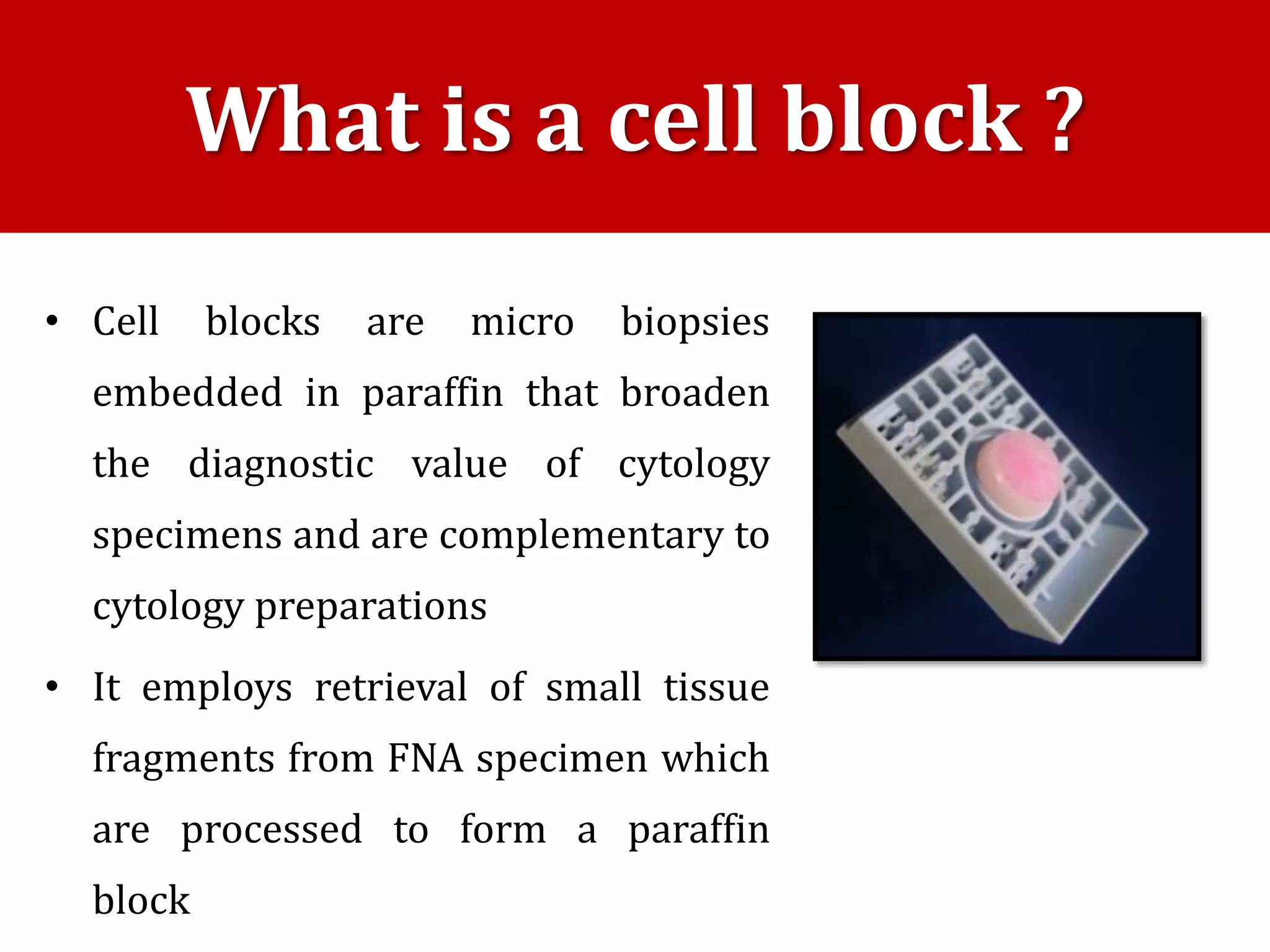
• Cell blocks are micro biopsies
embedded in paraffin that broaden
the diagnostic value of cytology
specimens and are complementary to
cytology preparations
• It employs retrieval of small tissue
fragments from FNA specimen which
are processed to form a paraffin
block
What is a cell block ?
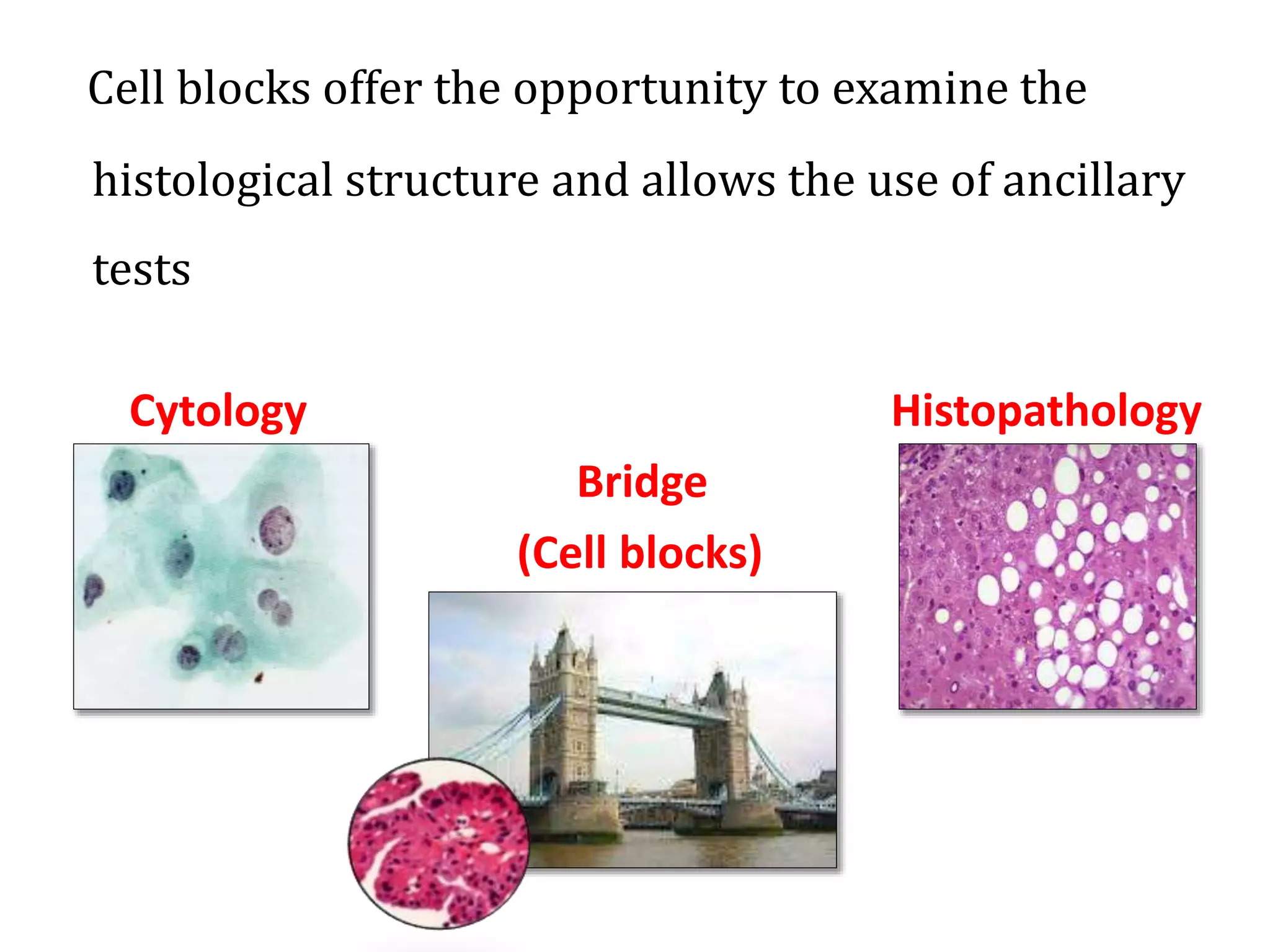
Cell blocks offer the opportunity to examine the
histological structure and allows the use of ancillary
tests
Cytology Histopathology
Bridge
(Cell blocks)
• Acquisition of tissue for cell block can increase both
diagnostic sensitivity and specificity (through both
cellular morphology and ancillary testing)
• It requires minimal effort and is extremely cost efficient.
• Moreover, tissue preserved in cell block can be readily
shared for second opinions and research without fear of
losing the original diagnostic smear specimen
Need for Cell Block
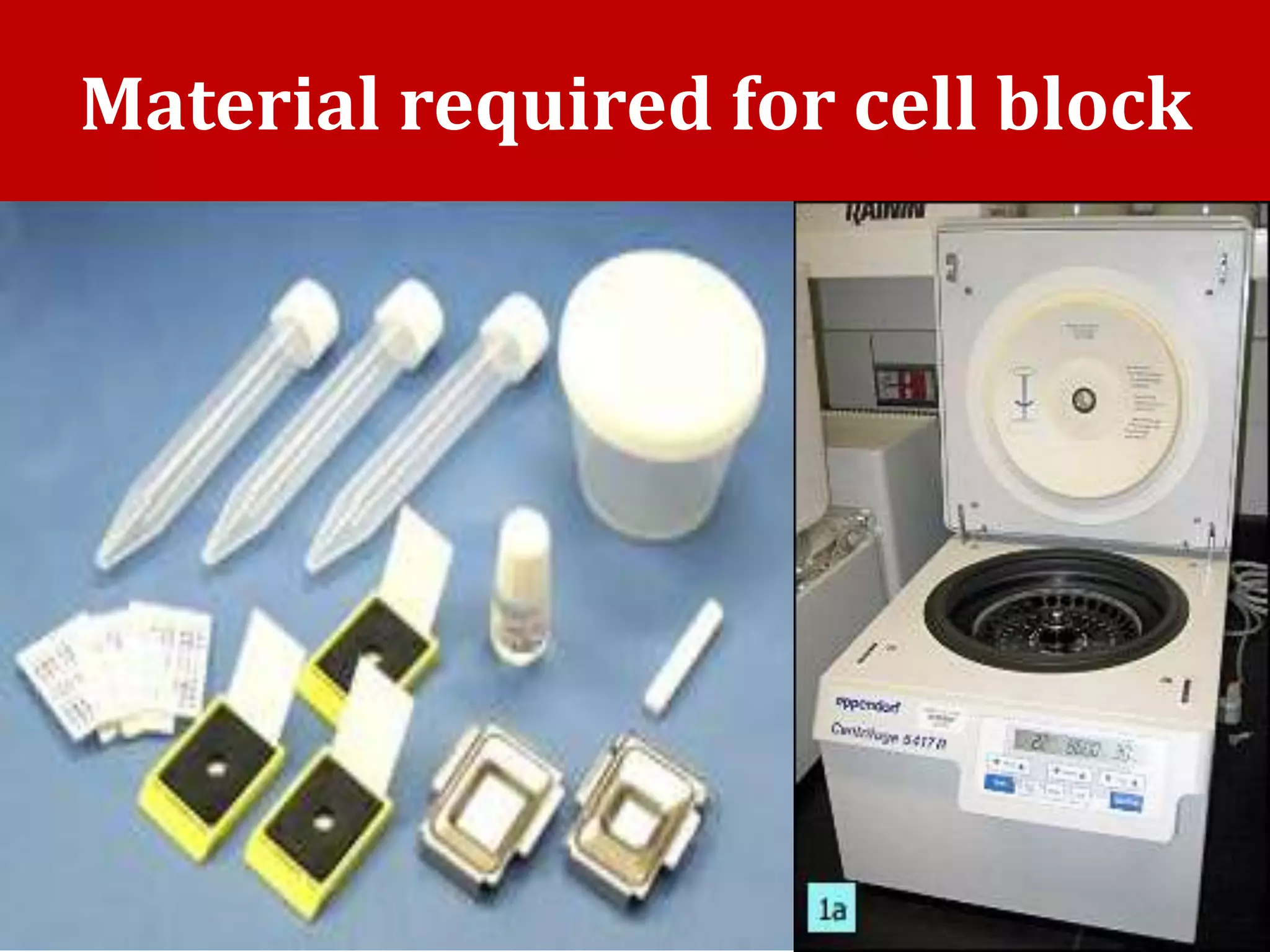
Material required for cell block
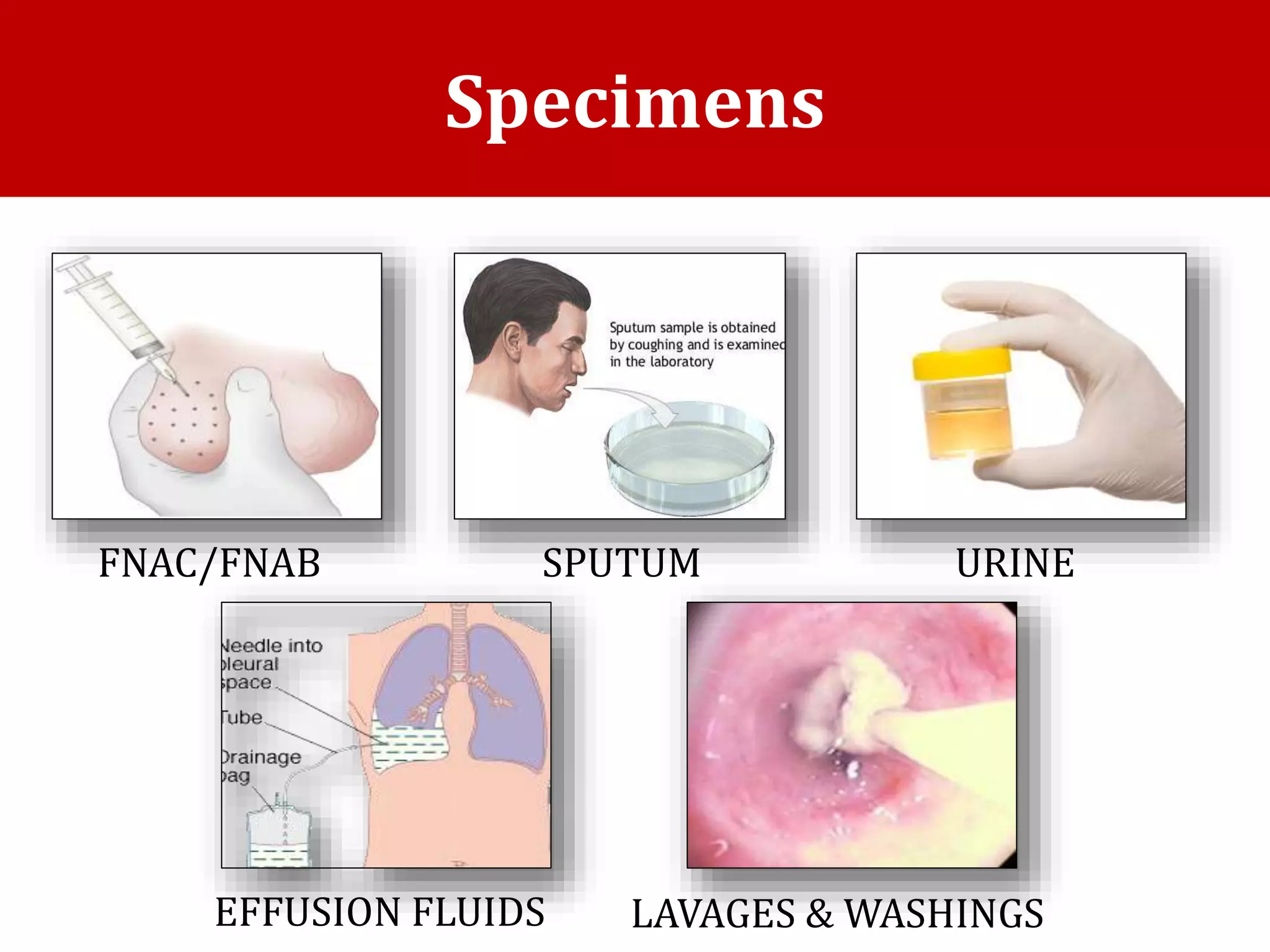
Specimens
FNAC/FNAB SPUTUM
EFFUSION FLUIDS
URINE
LAVAGES & WASHINGS
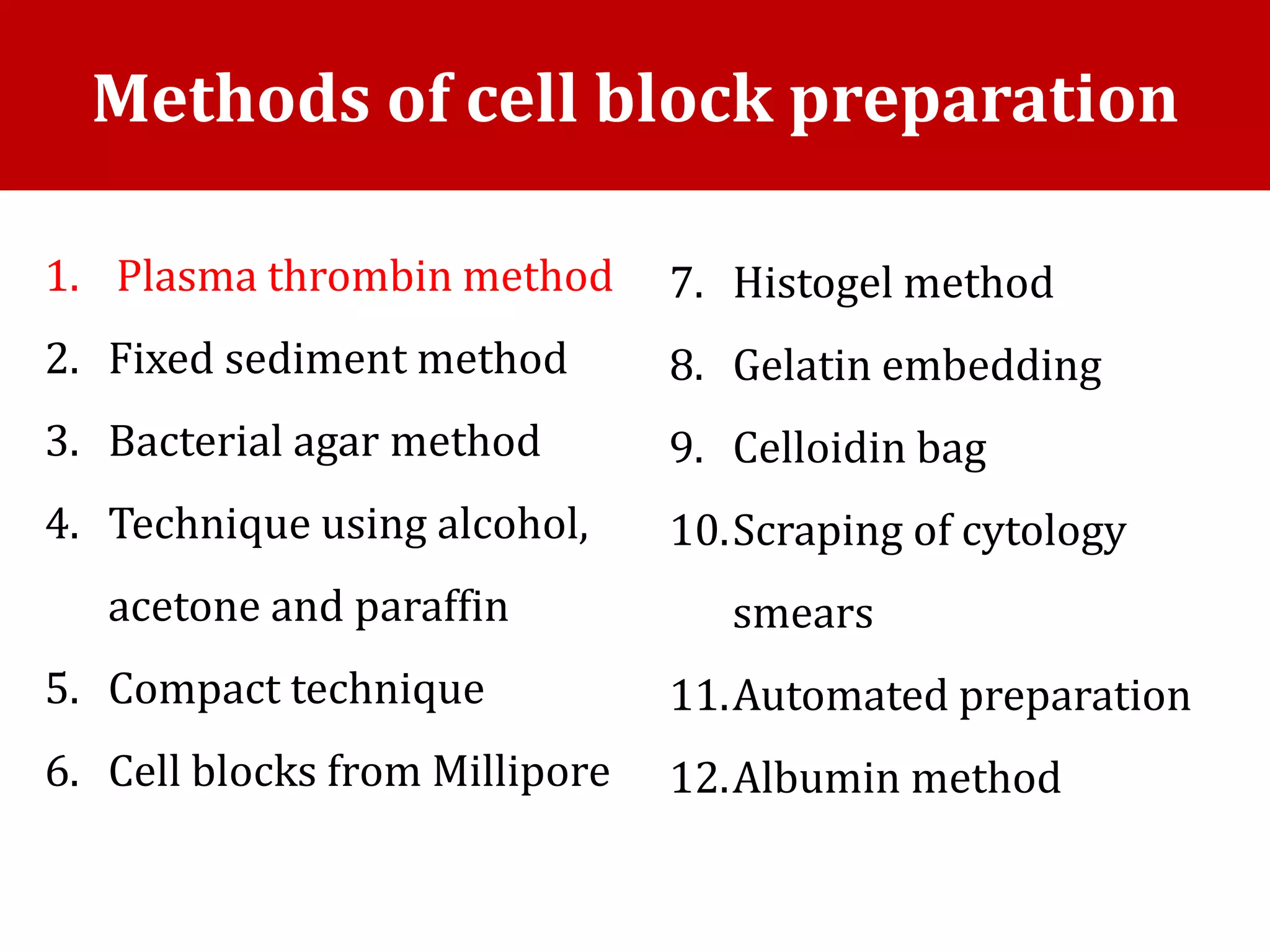
1. Plasma thrombin method
2. Fixed sediment method
3. Bacterial agar method
4. Technique using alcohol,
acetone and paraffin
5. Compact technique
6. Cell blocks from Millipore
Methods of cell block preparation
7. Histogel method
8. Gelatin embedding
9. Celloidin bag
10.Scraping of cytology
smears
11.Automated preparation
12.Albumin method
1. CB is simple , reproducible and readily available in routine
labs
2. Increased cellularity
3. Better morphological and architectural patterns
4. Additional yield of cells, thereby increasing diagnostic yield
5. Unlimited storage of the sample
6. Application of ancillary studies (IHC and molecular testing)
Advantages
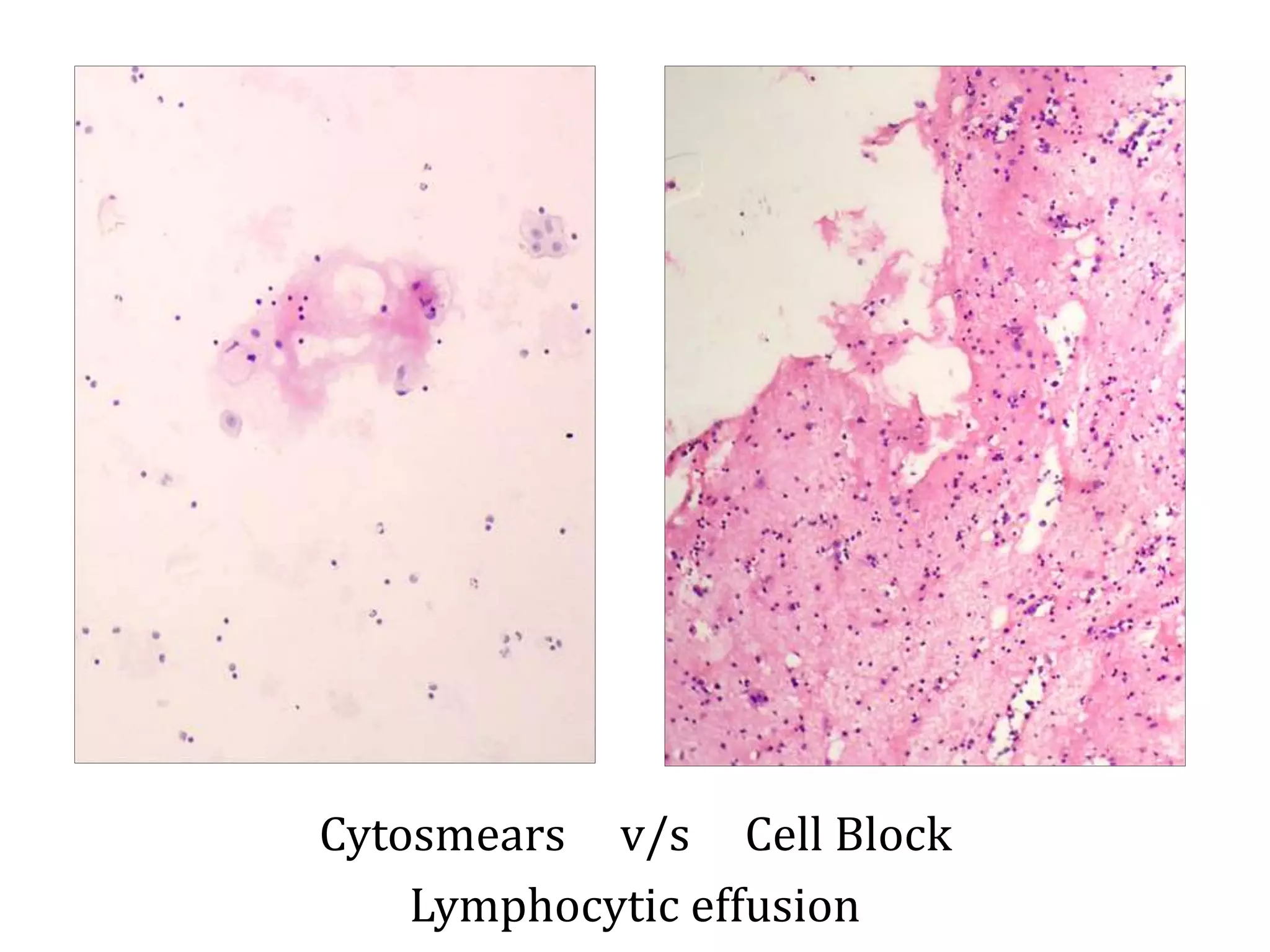
Cytosmears v/s Cell Block
Lymphocytic effusion
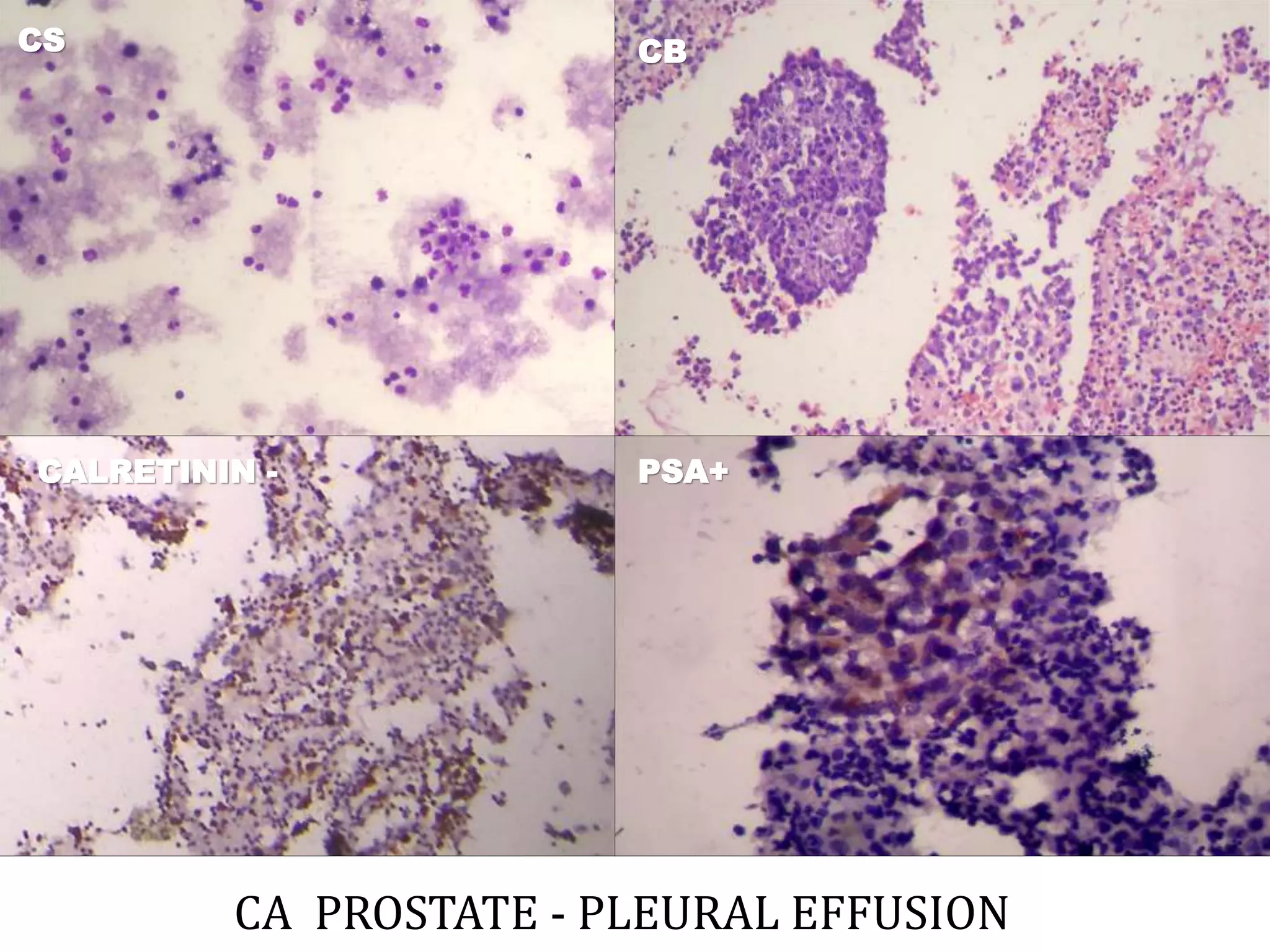
CA PROSTATE - PLEURAL EFFUSION
CS CB
CALRETININ - PSA+
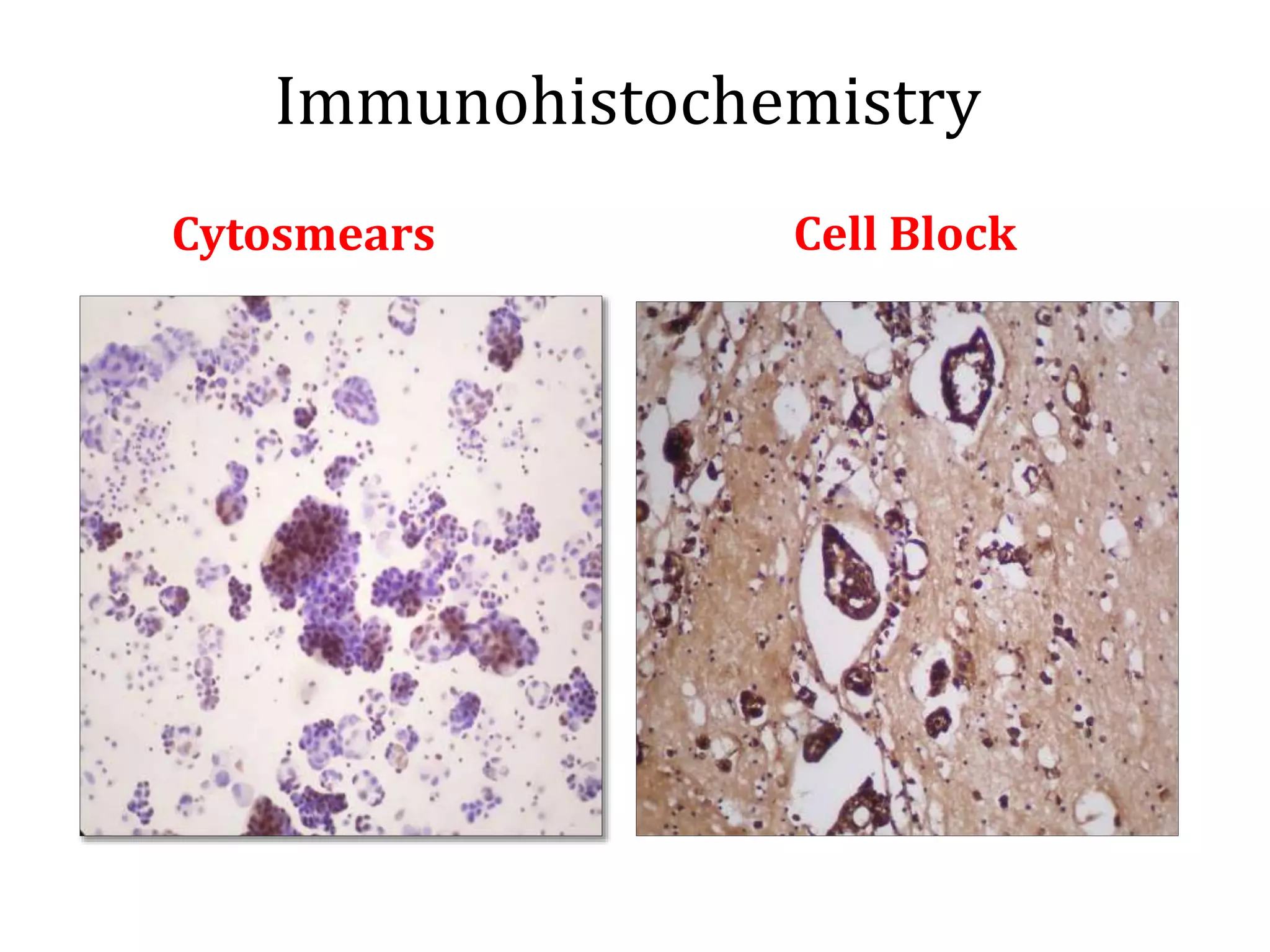
Cytosmears Cell Block
Immunohistochemistry
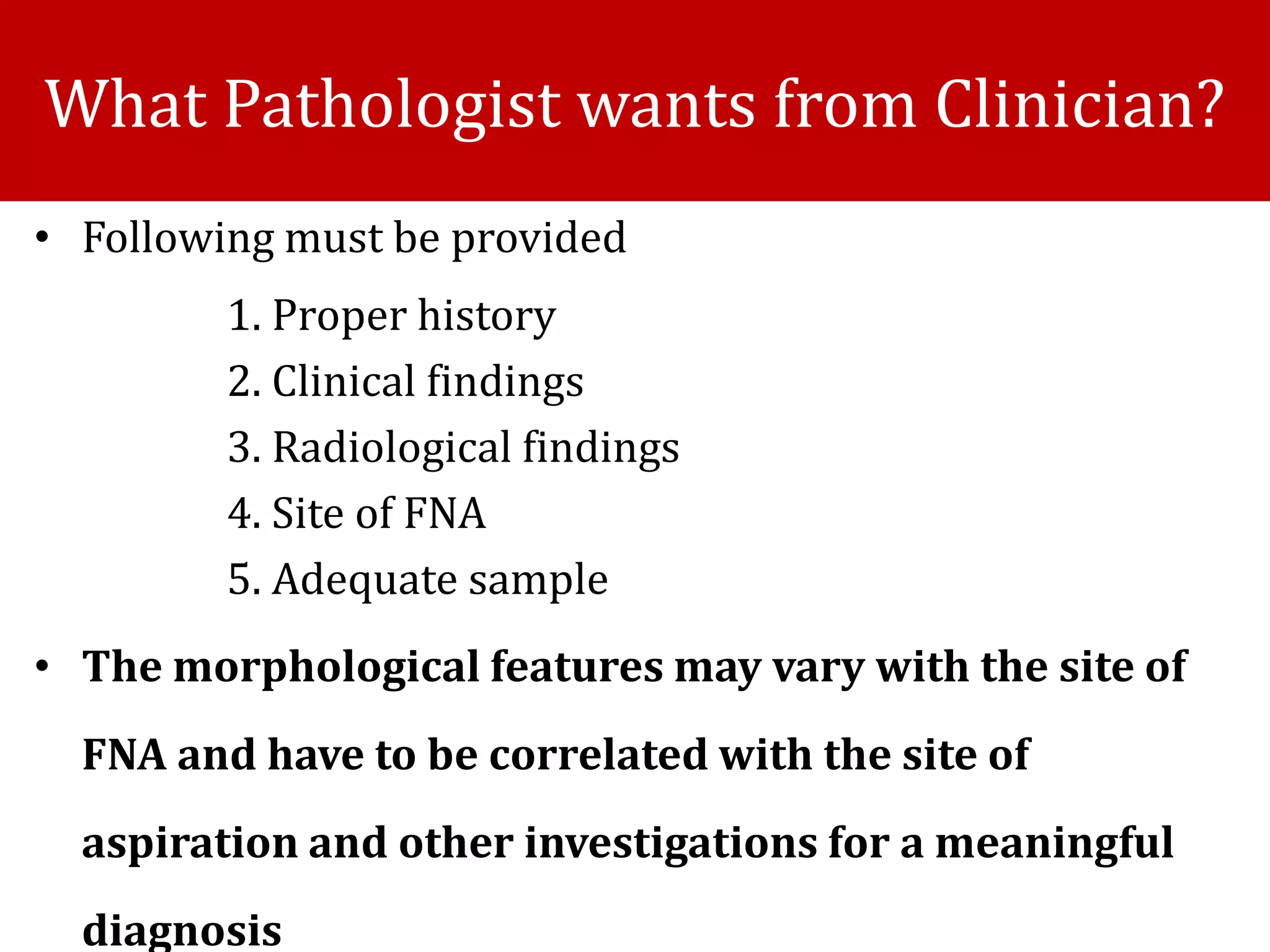
• Following must be provided
1. Proper history
2. Clinical findings
3. Radiological findings
4. Site of FNA
5. Adequate sample
• The morphological features may vary with the site of
FNA and have to be correlated with the site of
aspiration and other investigations for a meaningful
diagnosis
What Pathologist wants from Clinician?
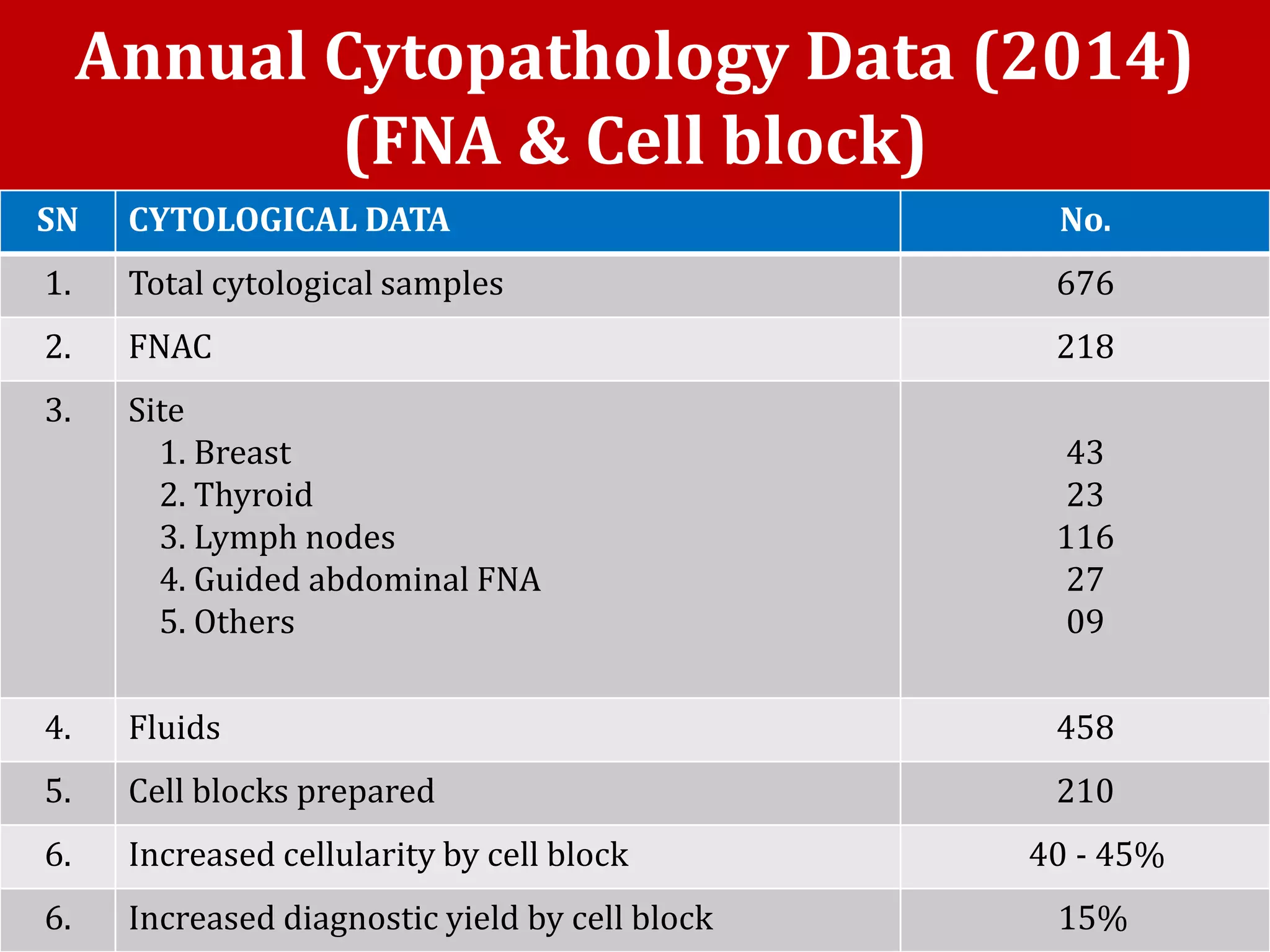
Annual Cytopathology Data (2014)
(FNA & Cell block)
SN CYTOLOGICAL DATA No.
1. Total cytological samples 676
2. FNAC 218
3. Site
1. Breast
2. Thyroid
3. Lymph nodes
4. Guided abdominal FNA
5. Others
43
23
116
27
09
4. Fluids 458
5. Cell blocks prepared 210
6. Increased cellularity by cell block 40 - 45%
6. Increased diagnostic yield by cell block 15%
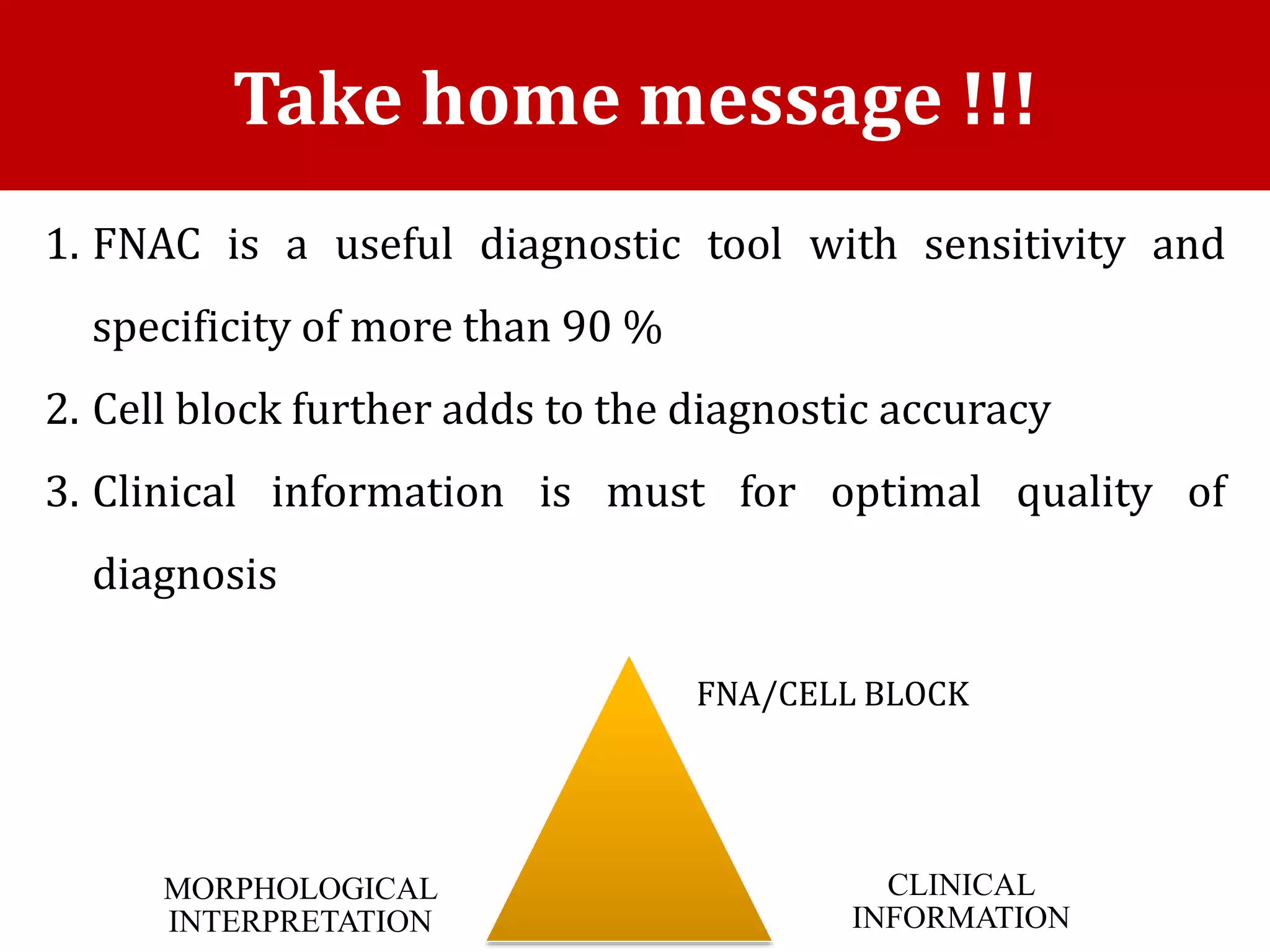
1. FNAC is a useful diagnostic tool with sensitivity and
specificity of more than 90 %
2. Cell block further adds to the diagnostic accuracy
3. Clinical information is must for optimal quality of
diagnosis
Take home message !!!
FNA/CELL BLOCK
MORPHOLOGICAL
INTERPRETATION
CLINICAL
INFORMATION
Thankyou

Cell block and its utility

  • 1.
    CELL BLOCK AND ITS UTILITYIN CYTOPATHOLOGY Dr Prakriti Shukla, Department of Pathology, BMHRC
  • 2.
    Fine needle aspirationcytology (FNAC) • FNAC is the study of cellular samples obtained through a fine needle under negative pressure • It is useful in palpable lesions of thyroid, lymph nodes, salivary glands, breast and subcutaneous tissues
  • 3.
    • Guided aspirationby C.T or USG allows FNA of lesions of internal organs like lung, mediastinum, abdominal and retroperitoneal organs, prostate , etc
  • 4.
    • Relatively painlessand inexpensive • Provides unequivocal diagnosis (sensitivity and specificity ≥ 90%) • Highly suitable in debilitated patients and multiple lesions • Low risk of complications • Easily repeatable
  • 5.
    Sample collection Samplepreparation Sample analysis Collection Preparation Analysis
  • 6.
    • Proper history,clinical examination and radiological findings • Site must be clearly specified • In deep seated swellings, the site must be properly marked after examining the patient • Deeper swellings should be approached by guided FNA • If specimen is sputum, 3 to 5 consecutive days sputum samples should be examined for diagnostic accuracy Instructions before Aspiration
  • 7.
    • For fluidcytology, 20–30 ml fluid is required for cytodiagnosis • If the entire specimen tapped cannot be sent to the laboratory, a representative sample from the bottom part of the fluid should be sent to the laboratory • Smearing must be performed properly (reduces crushing artefacts) • Avoid admixture with blood while performing FNA • Adequate number of slides must be prepared from each patients with proper labelling
  • 8.
  • 10.
  • 11.
    • Cell blocksare micro biopsies embedded in paraffin that broaden the diagnostic value of cytology specimens and are complementary to cytology preparations • It employs retrieval of small tissue fragments from FNA specimen which are processed to form a paraffin block What is a cell block ?
  • 12.
    Cell blocks offerthe opportunity to examine the histological structure and allows the use of ancillary tests Cytology Histopathology Bridge (Cell blocks)
  • 13.
    • Acquisition oftissue for cell block can increase both diagnostic sensitivity and specificity (through both cellular morphology and ancillary testing) • It requires minimal effort and is extremely cost efficient. • Moreover, tissue preserved in cell block can be readily shared for second opinions and research without fear of losing the original diagnostic smear specimen Need for Cell Block
  • 14.
  • 15.
  • 16.
    1. Plasma thrombinmethod 2. Fixed sediment method 3. Bacterial agar method 4. Technique using alcohol, acetone and paraffin 5. Compact technique 6. Cell blocks from Millipore Methods of cell block preparation 7. Histogel method 8. Gelatin embedding 9. Celloidin bag 10.Scraping of cytology smears 11.Automated preparation 12.Albumin method
  • 17.
    1. CB issimple , reproducible and readily available in routine labs 2. Increased cellularity 3. Better morphological and architectural patterns 4. Additional yield of cells, thereby increasing diagnostic yield 5. Unlimited storage of the sample 6. Application of ancillary studies (IHC and molecular testing) Advantages
  • 18.
    Cytosmears v/s CellBlock Lymphocytic effusion
  • 19.
    CA PROSTATE -PLEURAL EFFUSION CS CB CALRETININ - PSA+
  • 20.
  • 21.
    • Following mustbe provided 1. Proper history 2. Clinical findings 3. Radiological findings 4. Site of FNA 5. Adequate sample • The morphological features may vary with the site of FNA and have to be correlated with the site of aspiration and other investigations for a meaningful diagnosis What Pathologist wants from Clinician?
  • 22.
    Annual Cytopathology Data(2014) (FNA & Cell block) SN CYTOLOGICAL DATA No. 1. Total cytological samples 676 2. FNAC 218 3. Site 1. Breast 2. Thyroid 3. Lymph nodes 4. Guided abdominal FNA 5. Others 43 23 116 27 09 4. Fluids 458 5. Cell blocks prepared 210 6. Increased cellularity by cell block 40 - 45% 6. Increased diagnostic yield by cell block 15%
  • 23.
    1. FNAC isa useful diagnostic tool with sensitivity and specificity of more than 90 % 2. Cell block further adds to the diagnostic accuracy 3. Clinical information is must for optimal quality of diagnosis Take home message !!! FNA/CELL BLOCK MORPHOLOGICAL INTERPRETATION CLINICAL INFORMATION
  • 24.