Allan Gray Orbis Foundation: Selection Summit 2015
29 September 2015
Access with Success: the case
of Stellenbosch University
Presenters
Dr Celeste Nel
Deputy Director and head: Admissions and Residence Placement
Prospective Student Services
Visiting head: Equité Private Student Organisation
Dr Natasja Brown
Coordinator: Academic and Student Support
Faculty of AgriSciences
Residence head: Nemesia residence
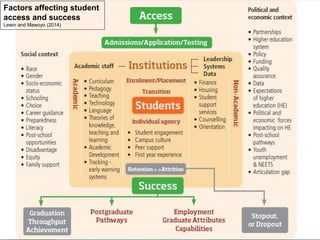
Access and success
Access is not simply providing a place for a student to study,
but allows students to participate fully and effective in higher
education.
Equally, success is not merely about graduating from an
academic programme, but also relates to the quality of the
programmes, and the teaching of those programmes, the kind of
skills and attributes with which students leave university,
including their preparedness for the world of work and their
ability to enter employment as successful graduates
Lewin and Mawoyo, 2014
Factors affecting student
access and success
Lewin and Mawoyo (2014)
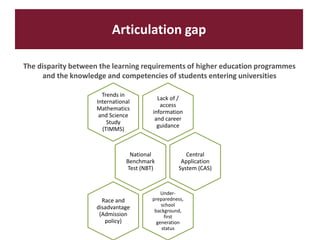
Articulation gap
The disparity between the learning requirements of higher education programmes
and the knowledge and competencies of students entering universities
Lack of /
access
information
and career
guidance
Trends in
International
Mathematics
and Science
Study
(TIMMS)
National
Benchmark
Test (NBT)
Central
Application
System (CAS)
Under-
preparedness,
school
background,
first
generation
status
Race and
disadvantage
(Admission
policy)
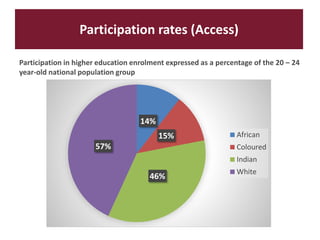
Participation rates (Access)
Participation in higher education enrolment expressed as a percentage of the 20 – 24
year-old national population group
14%
15%
46%
57%
African
Coloured
Indian
White
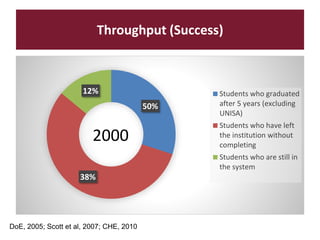
Throughput (Success)
50%
38%
12% Students who graduated
after 5 years (excluding
UNISA)
Students who have left
the institution without
completing
Students who are still in
the system
2000
DoE, 2005; Scott et al, 2007; CHE, 2010
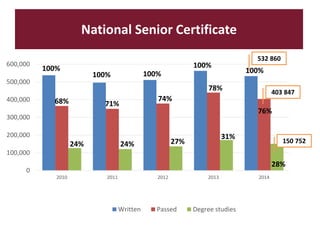
National Senior Certificate
0
100,000
200,000
300,000
400,000
500,000
600,000
2010 2011 2012 2013 2014
Written Passed Degree studies
68%
24%
71%
24%
74%
27%
78%
31%
76%
28%
100%
100%
100%100%
100%
532 860
403 847
150 752
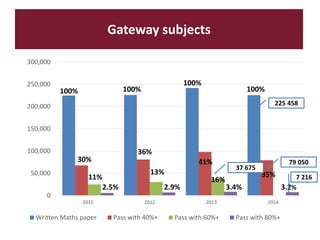
Gateway subjects
0
50,000
100,000
150,000
200,000
250,000
300,000
2011 2012 2013 2014
Written Maths paper Pass with 40%+ Pass with 60%+ Pass with 80%+
30%
11%
2.5%
36%
13%
2.9%
41%
16%
3.4%
35%
3.2%
100% 100%
100%
100%
37 675
79 050
225 458
7 216
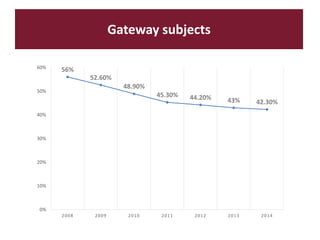
Gateway subjects
56%
52.60%
48.90%
45.30% 44.20% 43% 42.30%
0%
10%
20%
30%
40%
50%
60%
2008 2009 2010 2011 2012 2013 2014
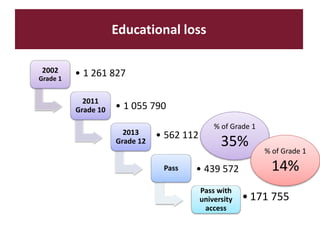
Educational loss
2002
Grade 1
• 1 261 827
2011
Grade 10 • 1 055 790
2013
Grade 12
• 562 112
Pass • 439 572
Pass with
university
access
• 171 755
% of Grade 1
35% % of Grade 1
14%
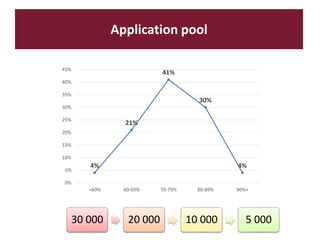
Application pool
4%
21%
41%
30%
4%
0%
5%
10%
15%
20%
25%
30%
35%
40%
45%
>60% 60-69% 70-79% 80-89% 90%+
30 000 20 000 10 000 5 000
Subject choice
guidance
Parent evenings
Career exhibition
Study skills
workshops
Career counselling
Careers@Maties
Open day
Schools visits
Career exhibitions
Information
evenings
Faculty outreaches
Campus visits
Career counselling
School visits
Career exhibitions
Campus visits
Social media
Web
CRM
Information
evenings
Information
evenings
Faculty visits
Social media
CRM
Recruitment
bursary project
Parent evening
Personal follow up
Campus visits
Residence
placement
First generation
camp
Personal follow up
when matric results
become available
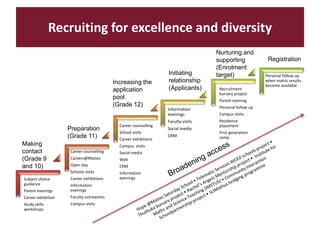
Making
contact
(Grade 9
and 10)
Preparation
(Grade 11)
Initiating
relationship
(Applicants)
Increasing the
application
pool
(Grade 12)
Nurturing and
supporting
(Enrolment
target)
Registration
Recruiting for excellence and diversity
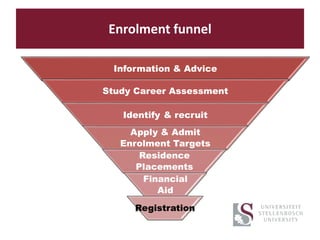
Enrolment funnel
Information & Advice
Study Career Assessment
Identify & recruit
Apply & Admit
Enrolment Targets
Residence
Placements
Financial
Aid
Registration
Role of the First-Year Academy
- Address first years’ success
- Effective communication with prospective students
- Transition from school to university
- Regular monitoring of students’ progress
- Support to lecturers, students and other role-players
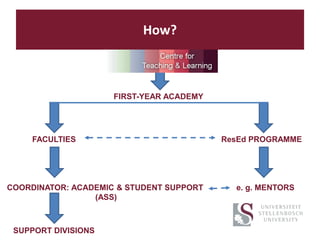
How?
FIRST-YEAR ACADEMY
FACULTIES
COORDINATOR: ACADEMIC & STUDENT SUPPORT
(ASS)
ResEd PROGRAMME
e. g. MENTORS
SUPPORT DIVISIONS
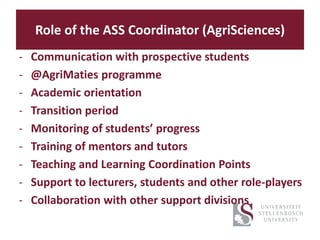
Role of the ASS Coordinator (AgriSciences)
- Communication with prospective students
- @AgriMaties programme
- Academic orientation
- Transition period
- Monitoring of students’ progress
- Training of mentors and tutors
- Teaching and Learning Coordination Points
- Support to lecturers, students and other role-players
- Collaboration with other support divisions
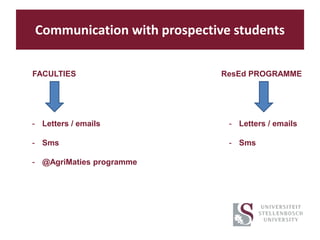
Communication with prospective students
FACULTIES ResEd PROGRAMME
- Letters / emails
- Sms
- @AgriMaties programme
- Letters / emails
- Sms
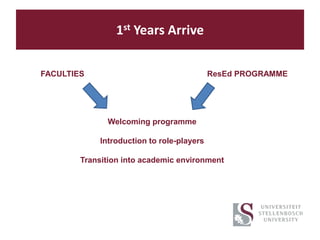
1st Years Arrive
FACULTIES ResEd PROGRAMME
Welcoming programme
Introduction to role-players
Transition into academic environment
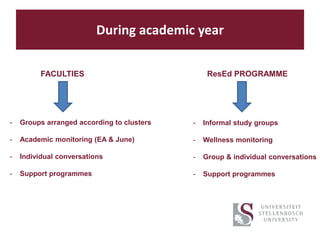
During academic year
FACULTIES ResEd PROGRAMME
- Groups arranged according to clusters
- Academic monitoring (EA & June)
- Individual conversations
- Support programmes
- Informal study groups
- Wellness monitoring
- Group & individual conversations
- Support programmes
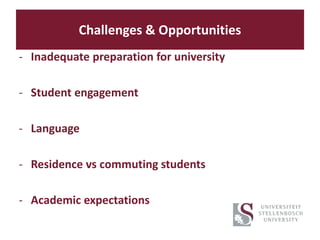
Challenges & Opportunities
- Inadequate preparation for university
- Student engagement
- Language
- Residence vs commuting students
- Academic expectations
DANKIE
THANK YOU

Celeste nel

  • 1.
    Allan Gray OrbisFoundation: Selection Summit 2015 29 September 2015 Access with Success: the case of Stellenbosch University
  • 2.
    Presenters Dr Celeste Nel DeputyDirector and head: Admissions and Residence Placement Prospective Student Services Visiting head: Equité Private Student Organisation Dr Natasja Brown Coordinator: Academic and Student Support Faculty of AgriSciences Residence head: Nemesia residence
  • 3.
    Access and success Accessis not simply providing a place for a student to study, but allows students to participate fully and effective in higher education. Equally, success is not merely about graduating from an academic programme, but also relates to the quality of the programmes, and the teaching of those programmes, the kind of skills and attributes with which students leave university, including their preparedness for the world of work and their ability to enter employment as successful graduates Lewin and Mawoyo, 2014
  • 4.
    Factors affecting student accessand success Lewin and Mawoyo (2014)
  • 5.
    Articulation gap The disparitybetween the learning requirements of higher education programmes and the knowledge and competencies of students entering universities Lack of / access information and career guidance Trends in International Mathematics and Science Study (TIMMS) National Benchmark Test (NBT) Central Application System (CAS) Under- preparedness, school background, first generation status Race and disadvantage (Admission policy)
  • 6.
    Participation rates (Access) Participationin higher education enrolment expressed as a percentage of the 20 – 24 year-old national population group 14% 15% 46% 57% African Coloured Indian White
  • 7.
    Throughput (Success) 50% 38% 12% Studentswho graduated after 5 years (excluding UNISA) Students who have left the institution without completing Students who are still in the system 2000 DoE, 2005; Scott et al, 2007; CHE, 2010
  • 8.
    National Senior Certificate 0 100,000 200,000 300,000 400,000 500,000 600,000 20102011 2012 2013 2014 Written Passed Degree studies 68% 24% 71% 24% 74% 27% 78% 31% 76% 28% 100% 100% 100%100% 100% 532 860 403 847 150 752
  • 9.
    Gateway subjects 0 50,000 100,000 150,000 200,000 250,000 300,000 2011 20122013 2014 Written Maths paper Pass with 40%+ Pass with 60%+ Pass with 80%+ 30% 11% 2.5% 36% 13% 2.9% 41% 16% 3.4% 35% 3.2% 100% 100% 100% 100% 37 675 79 050 225 458 7 216
  • 10.
    Gateway subjects 56% 52.60% 48.90% 45.30% 44.20%43% 42.30% 0% 10% 20% 30% 40% 50% 60% 2008 2009 2010 2011 2012 2013 2014
  • 11.
    Educational loss 2002 Grade 1 •1 261 827 2011 Grade 10 • 1 055 790 2013 Grade 12 • 562 112 Pass • 439 572 Pass with university access • 171 755 % of Grade 1 35% % of Grade 1 14%
  • 12.
  • 13.
    Subject choice guidance Parent evenings Careerexhibition Study skills workshops Career counselling Careers@Maties Open day Schools visits Career exhibitions Information evenings Faculty outreaches Campus visits Career counselling School visits Career exhibitions Campus visits Social media Web CRM Information evenings Information evenings Faculty visits Social media CRM Recruitment bursary project Parent evening Personal follow up Campus visits Residence placement First generation camp Personal follow up when matric results become available Making contact (Grade 9 and 10) Preparation (Grade 11) Initiating relationship (Applicants) Increasing the application pool (Grade 12) Nurturing and supporting (Enrolment target) Registration Recruiting for excellence and diversity
  • 14.
    Enrolment funnel Information &Advice Study Career Assessment Identify & recruit Apply & Admit Enrolment Targets Residence Placements Financial Aid Registration
  • 15.
    Role of theFirst-Year Academy - Address first years’ success - Effective communication with prospective students - Transition from school to university - Regular monitoring of students’ progress - Support to lecturers, students and other role-players
  • 16.
    How? FIRST-YEAR ACADEMY FACULTIES COORDINATOR: ACADEMIC& STUDENT SUPPORT (ASS) ResEd PROGRAMME e. g. MENTORS SUPPORT DIVISIONS
  • 17.
    Role of theASS Coordinator (AgriSciences) - Communication with prospective students - @AgriMaties programme - Academic orientation - Transition period - Monitoring of students’ progress - Training of mentors and tutors - Teaching and Learning Coordination Points - Support to lecturers, students and other role-players - Collaboration with other support divisions
  • 18.
    Communication with prospectivestudents FACULTIES ResEd PROGRAMME - Letters / emails - Sms - @AgriMaties programme - Letters / emails - Sms
  • 19.
    1st Years Arrive FACULTIESResEd PROGRAMME Welcoming programme Introduction to role-players Transition into academic environment
  • 20.
    During academic year FACULTIESResEd PROGRAMME - Groups arranged according to clusters - Academic monitoring (EA & June) - Individual conversations - Support programmes - Informal study groups - Wellness monitoring - Group & individual conversations - Support programmes
  • 21.
    Challenges & Opportunities -Inadequate preparation for university - Student engagement - Language - Residence vs commuting students - Academic expectations
  • 22.

Editor's Notes

  • #6 1) TIMMS: South Africa performs far worse than other African countries; massive difference in former privileged white schools and disadvantage former African schools
  • #8 UNISA included: 30% graduation; 56% non complete; 14% still in system Black completion rate is less than half the white completion rate Similar patterns in 2006 cohort analysis done by Council on HE