Improving Lifestyles, Tackling Obesity: the Health and Economic Impact of Prevention Michele Cecchini OECD - Health Division
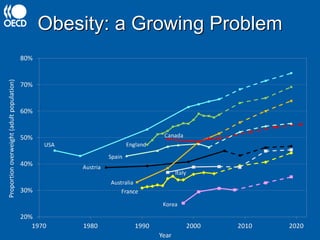
Obesity: a Growing Problem
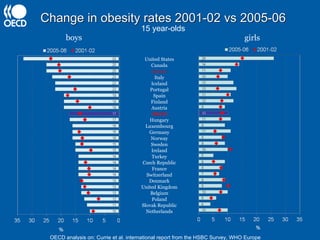
Change in obesity rates 2001-02 vs 2005-06 15 year-olds boys girls OECD analysis on: Currie et al. international report from the HSBC Survey, WHO Europe United States Canada Greece Italy Iceland Portugal Spain Finland Austria OECD Hungary Luxembourg Germany Norway Sweden Ireland Turkey Czech Republic France Switzerland Denmark United Kingdom Belgium Poland Slovak Republic Netherlands
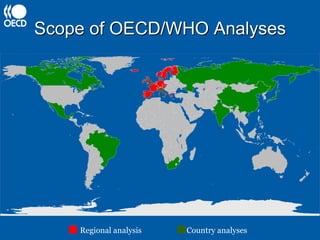
Scope of OECD/WHO Analyses Regional analysis Country analyses
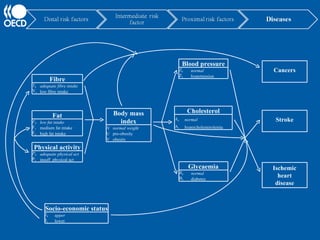
Cancers Stroke Ischemic heart disease Physical activity P 0 adequate physical act P 1 insuff .physical act Body mass index N normal weight U pre-obesity V obesity Blood pressure Z 0 normal Z 1 hypertension Cholesterol A 0 normal A 1 hypercholesterolemia Glycaemia B 0 normal B 1 diabetes Fat F 0 low fat intake F 1 medium fat intake F 2 high fat intake Fibre Y 0 adequate fibre intake Y 1 low fibre intake Socio-economic status I 0 upper I 1 lower
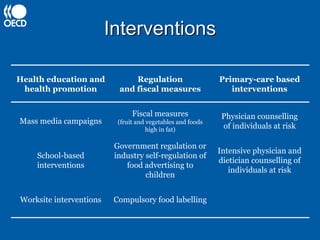
Interventions Health education and health promotion Regulation and fiscal measures Primary-care based interventions Mass media campaigns Fiscal measures (fruit and vegetables and foods high in fat) Physician  counselling of individuals at risk School-based interventions Government regulation or industry self-regulation of food advertising to children Intensive physician and dietician  counselling  of individuals at risk Worksite interventions Compulsory food  labelling
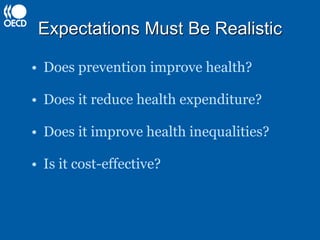
Expectations Must Be Realistic Does prevention improve health? Does it reduce health expenditure? Does it improve health inequalities? Is it cost-effective?
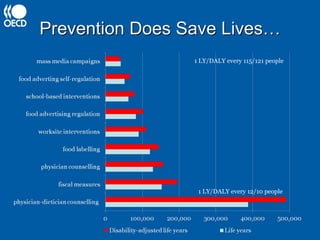
Prevention Does Save Lives… 1 LY/DALY every 115/121 people 1 LY/DALY every 12/10 people
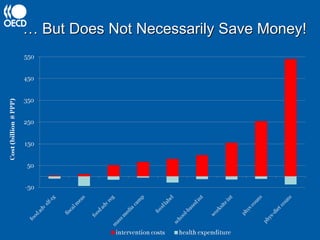
…  But Does Not Necessarily Save Money!
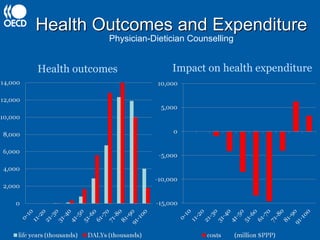
Health Outcomes and Expenditure Physician-Dietician Counselling Health outcomes Impact on health expenditure
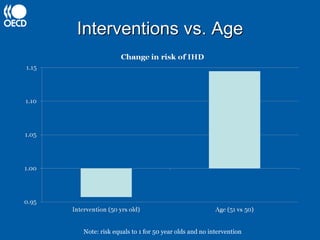
Interventions vs. Age Note: risk equals to 1 for 50 year olds and no intervention
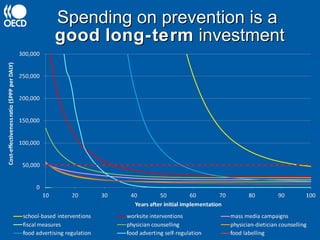
Spending on prevention is a  good   long-term  investment
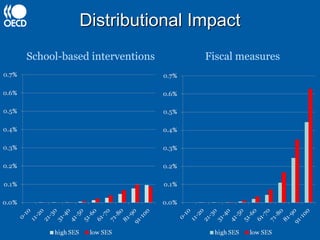
Distributional Impact School-based interventions Fiscal   measures
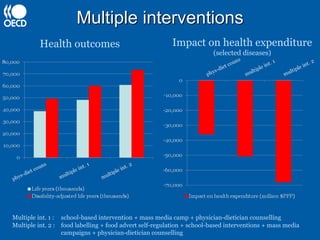
Multiple interventions Health outcomes Impact on health expenditure (selected diseases) Multiple   int. 1 : school-based intervention + mass media camp + physician-dietician counselling Multiple int. 2 : food labelling + food advert self-regulation + school-based interventions + mass media campaigns + physician-dietician counselling
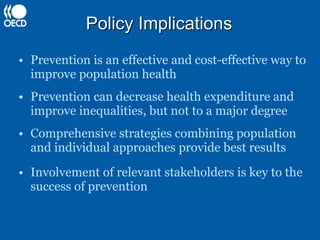
Policy Implications Prevention is an effective and cost-effective way to improve population health Prevention can decrease health expenditure and improve inequalities, but not to a major degree Comprehensive strategies combining population and individual approaches provide best results Involvement of relevant stakeholders is key to the success of prevention
OECD work on prevention Obesity and the economics of prevention: fit not fat OECD health working papers HWP 32, 45, 46, 48 Paper in Lancet series on chronic diseases www.oecd.org/health/prevention www.oecd.org/health/fitnotfat [email_address]

Παρουσίαση Μ. Cecchini (Ειδικός Ερευνητής ΟΟΣΑ)

  • 1.
    Improving Lifestyles, TacklingObesity: the Health and Economic Impact of Prevention Michele Cecchini OECD - Health Division
  • 2.
  • 3.
    Change in obesityrates 2001-02 vs 2005-06 15 year-olds boys girls OECD analysis on: Currie et al. international report from the HSBC Survey, WHO Europe United States Canada Greece Italy Iceland Portugal Spain Finland Austria OECD Hungary Luxembourg Germany Norway Sweden Ireland Turkey Czech Republic France Switzerland Denmark United Kingdom Belgium Poland Slovak Republic Netherlands
  • 4.
    Scope of OECD/WHOAnalyses Regional analysis Country analyses
  • 5.
    Cancers Stroke Ischemicheart disease Physical activity P 0 adequate physical act P 1 insuff .physical act Body mass index N normal weight U pre-obesity V obesity Blood pressure Z 0 normal Z 1 hypertension Cholesterol A 0 normal A 1 hypercholesterolemia Glycaemia B 0 normal B 1 diabetes Fat F 0 low fat intake F 1 medium fat intake F 2 high fat intake Fibre Y 0 adequate fibre intake Y 1 low fibre intake Socio-economic status I 0 upper I 1 lower
  • 6.
    Interventions Health educationand health promotion Regulation and fiscal measures Primary-care based interventions Mass media campaigns Fiscal measures (fruit and vegetables and foods high in fat) Physician counselling of individuals at risk School-based interventions Government regulation or industry self-regulation of food advertising to children Intensive physician and dietician counselling of individuals at risk Worksite interventions Compulsory food labelling
  • 7.
    Expectations Must BeRealistic Does prevention improve health? Does it reduce health expenditure? Does it improve health inequalities? Is it cost-effective?
  • 8.
    Prevention Does SaveLives… 1 LY/DALY every 115/121 people 1 LY/DALY every 12/10 people
  • 9.
    … ButDoes Not Necessarily Save Money!
  • 10.
    Health Outcomes andExpenditure Physician-Dietician Counselling Health outcomes Impact on health expenditure
  • 11.
    Interventions vs. AgeNote: risk equals to 1 for 50 year olds and no intervention
  • 12.
    Spending on preventionis a good long-term investment
  • 13.
    Distributional Impact School-basedinterventions Fiscal measures
  • 14.
    Multiple interventions Healthoutcomes Impact on health expenditure (selected diseases) Multiple int. 1 : school-based intervention + mass media camp + physician-dietician counselling Multiple int. 2 : food labelling + food advert self-regulation + school-based interventions + mass media campaigns + physician-dietician counselling
  • 15.
    Policy Implications Preventionis an effective and cost-effective way to improve population health Prevention can decrease health expenditure and improve inequalities, but not to a major degree Comprehensive strategies combining population and individual approaches provide best results Involvement of relevant stakeholders is key to the success of prevention
  • 16.
    OECD work onprevention Obesity and the economics of prevention: fit not fat OECD health working papers HWP 32, 45, 46, 48 Paper in Lancet series on chronic diseases www.oecd.org/health/prevention www.oecd.org/health/fitnotfat [email_address]

Editor's Notes

  • #5 4 billion individuals from 30 countries across 5 continents
  • #16 Effects are small if interventions are adopted in isolation…but, combinations improve effectiveness and efficiency multi-stakeholder approach would help mobilizing contributions from the private sector