SHRM Poll: The State of Consumer-Directed Health Plans in the WorkplaceSponsored by AETNA                                              June 29, 2011
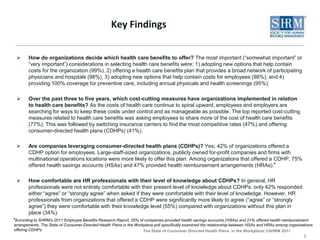
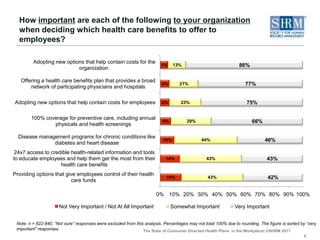
Key FindingsHow do organizations decide which health care benefits to offer? The most important (“somewhat important” or “very important”) considerations in selecting health care benefits were: 1) adopting new options that help contain costs for the organization (99%),2) offering a health care benefits plan that provides a broad network of participating physicians and hospitals (98%), 3) adopting new options that help contain costs for employees (98%), and 4) providing 100% coverage for preventive care, including annual physicals and health screenings (95%).
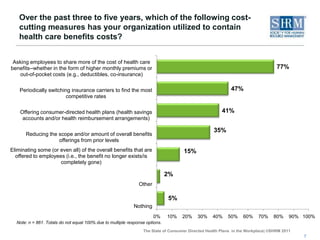
Over the past three to five years, which cost-cutting measures have organizations implemented in relation to health care benefits? As the costs of health care continue to spiral upward, employees and employers are searching for ways to keep these costs under control and as manageable as possible. The top reported cost-cutting measures related to health care benefits was asking employees to share more of the cost of health care benefits (77%). This was followed by switching insurance carriers to find the most competitive rates (47%) and offering consumer-directed health plans (CDHPs) (41%).
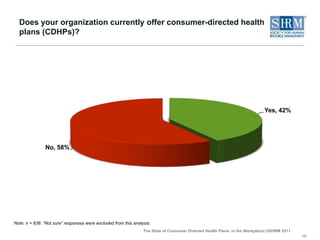
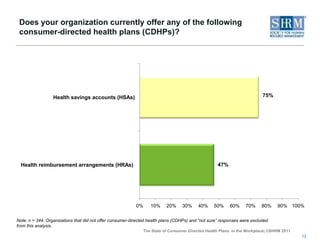
Are companies leveraging consumer-directed health plans (CDHPs)? Yes; 42% of organizations offered a CDHP option for employees. Large-staff-sized organizations, publicly owned for-profit companies and firms with multinational operations locations were more likely to offer this plan. Among organizations that offered a CDHP,75% offered health savings accounts (HSAs) and 47% provided health reimbursement arrangements (HRAs).*
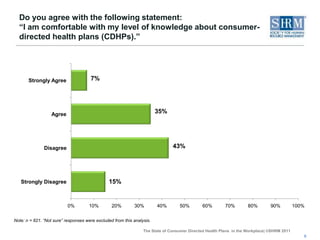
How comfortable are HR professionals with their level of knowledge about CDHPs? In general, HR professionals were not entirely comfortable with their present level of knowledge about CDHPs: only 42% responded either “agree” or “strongly agree” when asked if they were comfortable with their level of knowledge. However, HR professionals from organizations that offered a CDHP were significantly more likely to agree (“agree” or “strongly agree”) they were comfortable with their knowledge level (55%) compared with organizations without this plan in place (34%).2*According to SHRM’s 2011 Employee Benefits Research Report, 35% of companies provided health savings accounts (HSAs) and 21% offered health reimbursement arrangements. The State of Consumer-Directed Health Plans in the Workplace poll specifically examined the relationship between HSAs and HRAs among organizations offering CDHPs.
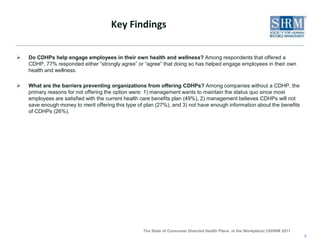
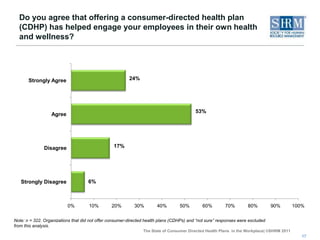
Key FindingsDo CDHPs help engage employees in their own health and wellness? Among respondents that offered a CDHP, 77% responded either “strongly agree” or “agree” that doing so has helped engage employees in their own health and wellness.
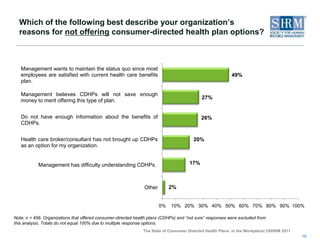
What are the barriers preventing organizations from offering CDHPs? Among companies without a CDHP, the primary reasons for not offering the option were: 1) management wants to maintain the status quo since most employees are satisfied with the current health care benefits plan (49%), 2) management believes CDHPs will not save enough money to merit offering this type of plan (27%), and 3) not have enough information about the benefits of CDHPs (26%).3
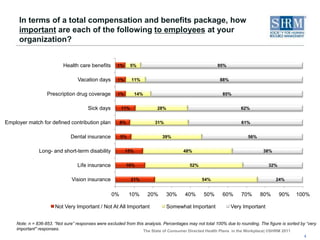
In terms of a total compensation and benefits package, how important are each of the following to employees at your organization? 4Note: n = 836-853. “Not sure” responses were excluded from this analysis. Percentages may not total 100% due to rounding. The figure is sorted by “very important" responses.
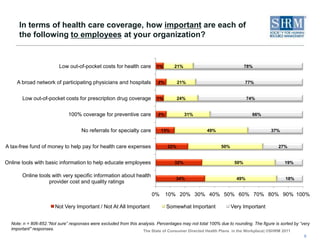
In terms of health care coverage, how important are each of the following to employees at your organization? 5Note: n = 806-852.“Not sure” responses were excluded from this analysis. Percentages may not total 100% due to rounding. The figure is sorted by “very important" responses.
How important are each of the following to your organization when deciding which health care benefits to offer to employees? 6Note: n = 822-840. “Not sure” responses were excluded from this analysis. Percentages may not total 100% due to rounding. The figure is sorted by “very important" responses.
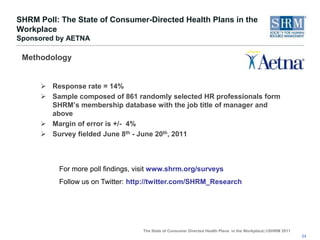
Over the past three to five years, which of the following cost-cutting measures has your organization utilized to contain health care benefits costs? 7Note: n = 861. Totals do not equal 100% due to multiple response options.
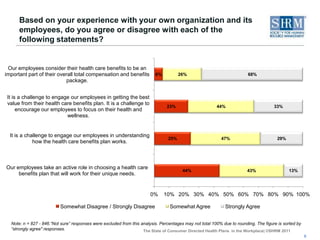
Based on your experience with your own organization and its employees, do you agree or disagree with each of the following statements? 8Note: n = 827 - 846.“Not sure” responses were excluded from this analysis. Percentages may not total 100% due to rounding. The figure is sorted by “strongly agree" responses.
Do you agree with the following statement: “I am comfortable with my level of knowledge about consumer-directed health plans (CDHPs).” 9Note: n = 821. “Not sure” responses were excluded from this analysis.
Does your organization currently offer consumer-directed health plans (CDHPs)? 10Note: n = 838. “Not sure” responses were excluded from this analysis.
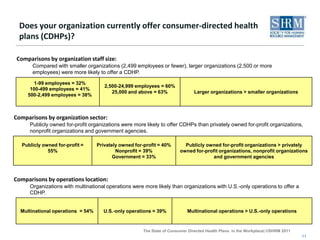
Does your organization currently offer consumer-directed health plans (CDHPs)? 11Comparisons by organization staff size:Compared with smaller organizations (2,499 employees or fewer), larger organizations (2,500 or more employees) were more likely to offer a CDHP.Comparisons by organization sector:Publicly owned for-profit organizations were more likely to offer CDHPs than privately owned for-profit organizations, nonprofit organizations and government agencies. Comparisons by operations location:Organizations with multinational operations were more likely than organizations with U.S.-only operations to offer a CDHP.
Does your organization currently offer any of the following consumer-directed health plans (CDHPs)? 12Note: n = 344. Organizations that did not offer consumer-directed health plans (CDHPs) and “not sure” responses were excluded from this analysis.
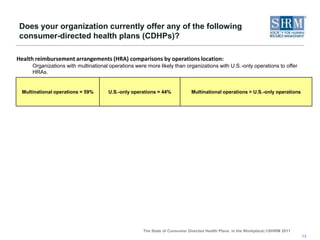
Does your organization currently offer any of the following consumer-directed health plans (CDHPs)? 13Health reimbursement arrangements (HRA) comparisons by operations location:Organizations with multinational operations were more likely than organizations with U.S.-only operations to offer HRAs.
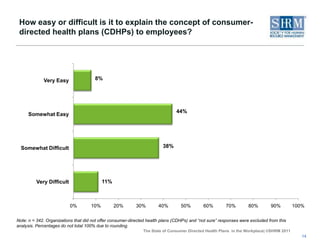
How easy or difficult is it to explain the concept of consumer-directed health plans (CDHPs) to employees? 14Note: n = 342. Organizations that did not offer consumer-directed health plans (CDHPs) and “not sure” responses were excluded from this analysis. Percentages do not total 100% due to rounding.
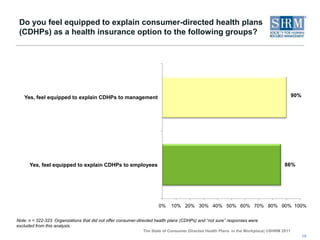
Do you feel equipped to explain consumer-directed health plans (CDHPs) as a health insurance option to the following groups?15Note: n = 322-323. Organizations that did not offer consumer-directed health plans (CDHPs) and “not sure” responses were excluded from this analysis.
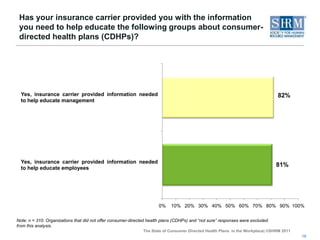
Has your insurance carrier provided you with the information you need to help educate the following groups about consumer-directed health plans (CDHPs)? 16Note: n = 310. Organizations that did not offer consumer-directed health plans (CDHPs) and “not sure” responses were excluded from this analysis.
Do you agree that offering a consumer-directed health plan (CDHP) has helped engage your employees in their own health and wellness? 17Note: n = 322. Organizations that did not offer consumer-directed health plans (CDHPs) and “not sure” responses were excluded from this analysis.
Which of the following best describe your organization’s reasons for not offering consumer-directed health plan options? 18Note: n = 456. Organizations that offered consumer-directed health plans (CDHPs) and “not sure” responses were excluded from this analysis. Totals do not equal 100% due to multiple response options.
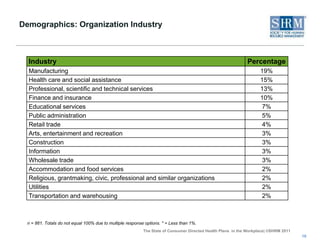
Demographics: Organization Industry19n = 861. Totals do not equal 100% due to multiple response options. * = Less than 1%.
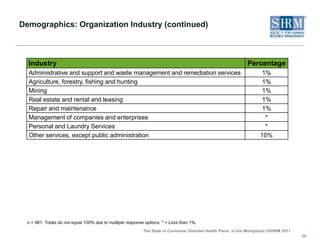
Demographics: Organization Industry (continued)20n = 861. Totals do not equal 100% due to multiple response options. * = Less than 1%.

Cdph poll final

  • 1.
    SHRM Poll: TheState of Consumer-Directed Health Plans in the WorkplaceSponsored by AETNA June 29, 2011
  • 2.
    Key FindingsHow doorganizations decide which health care benefits to offer? The most important (“somewhat important” or “very important”) considerations in selecting health care benefits were: 1) adopting new options that help contain costs for the organization (99%),2) offering a health care benefits plan that provides a broad network of participating physicians and hospitals (98%), 3) adopting new options that help contain costs for employees (98%), and 4) providing 100% coverage for preventive care, including annual physicals and health screenings (95%).
  • 3.
    Over the pastthree to five years, which cost-cutting measures have organizations implemented in relation to health care benefits? As the costs of health care continue to spiral upward, employees and employers are searching for ways to keep these costs under control and as manageable as possible. The top reported cost-cutting measures related to health care benefits was asking employees to share more of the cost of health care benefits (77%). This was followed by switching insurance carriers to find the most competitive rates (47%) and offering consumer-directed health plans (CDHPs) (41%).
  • 4.
    Are companies leveragingconsumer-directed health plans (CDHPs)? Yes; 42% of organizations offered a CDHP option for employees. Large-staff-sized organizations, publicly owned for-profit companies and firms with multinational operations locations were more likely to offer this plan. Among organizations that offered a CDHP,75% offered health savings accounts (HSAs) and 47% provided health reimbursement arrangements (HRAs).*
  • 5.
    How comfortable areHR professionals with their level of knowledge about CDHPs? In general, HR professionals were not entirely comfortable with their present level of knowledge about CDHPs: only 42% responded either “agree” or “strongly agree” when asked if they were comfortable with their level of knowledge. However, HR professionals from organizations that offered a CDHP were significantly more likely to agree (“agree” or “strongly agree”) they were comfortable with their knowledge level (55%) compared with organizations without this plan in place (34%).2*According to SHRM’s 2011 Employee Benefits Research Report, 35% of companies provided health savings accounts (HSAs) and 21% offered health reimbursement arrangements. The State of Consumer-Directed Health Plans in the Workplace poll specifically examined the relationship between HSAs and HRAs among organizations offering CDHPs.
  • 6.
    Key FindingsDo CDHPshelp engage employees in their own health and wellness? Among respondents that offered a CDHP, 77% responded either “strongly agree” or “agree” that doing so has helped engage employees in their own health and wellness.
  • 7.
    What are thebarriers preventing organizations from offering CDHPs? Among companies without a CDHP, the primary reasons for not offering the option were: 1) management wants to maintain the status quo since most employees are satisfied with the current health care benefits plan (49%), 2) management believes CDHPs will not save enough money to merit offering this type of plan (27%), and 3) not have enough information about the benefits of CDHPs (26%).3
  • 8.
    In terms ofa total compensation and benefits package, how important are each of the following to employees at your organization? 4Note: n = 836-853. “Not sure” responses were excluded from this analysis. Percentages may not total 100% due to rounding. The figure is sorted by “very important" responses.
  • 9.
    In terms ofhealth care coverage, how important are each of the following to employees at your organization? 5Note: n = 806-852.“Not sure” responses were excluded from this analysis. Percentages may not total 100% due to rounding. The figure is sorted by “very important" responses.
  • 10.
    How important areeach of the following to your organization when deciding which health care benefits to offer to employees? 6Note: n = 822-840. “Not sure” responses were excluded from this analysis. Percentages may not total 100% due to rounding. The figure is sorted by “very important" responses.
  • 11.
    Over the pastthree to five years, which of the following cost-cutting measures has your organization utilized to contain health care benefits costs? 7Note: n = 861. Totals do not equal 100% due to multiple response options.
  • 12.
    Based on yourexperience with your own organization and its employees, do you agree or disagree with each of the following statements? 8Note: n = 827 - 846.“Not sure” responses were excluded from this analysis. Percentages may not total 100% due to rounding. The figure is sorted by “strongly agree" responses.
  • 13.
    Do you agreewith the following statement: “I am comfortable with my level of knowledge about consumer-directed health plans (CDHPs).” 9Note: n = 821. “Not sure” responses were excluded from this analysis.
  • 14.
    Does your organizationcurrently offer consumer-directed health plans (CDHPs)? 10Note: n = 838. “Not sure” responses were excluded from this analysis.
  • 15.
    Does your organizationcurrently offer consumer-directed health plans (CDHPs)? 11Comparisons by organization staff size:Compared with smaller organizations (2,499 employees or fewer), larger organizations (2,500 or more employees) were more likely to offer a CDHP.Comparisons by organization sector:Publicly owned for-profit organizations were more likely to offer CDHPs than privately owned for-profit organizations, nonprofit organizations and government agencies. Comparisons by operations location:Organizations with multinational operations were more likely than organizations with U.S.-only operations to offer a CDHP.
  • 16.
    Does your organizationcurrently offer any of the following consumer-directed health plans (CDHPs)? 12Note: n = 344. Organizations that did not offer consumer-directed health plans (CDHPs) and “not sure” responses were excluded from this analysis.
  • 17.
    Does your organizationcurrently offer any of the following consumer-directed health plans (CDHPs)? 13Health reimbursement arrangements (HRA) comparisons by operations location:Organizations with multinational operations were more likely than organizations with U.S.-only operations to offer HRAs.
  • 18.
    How easy ordifficult is it to explain the concept of consumer-directed health plans (CDHPs) to employees? 14Note: n = 342. Organizations that did not offer consumer-directed health plans (CDHPs) and “not sure” responses were excluded from this analysis. Percentages do not total 100% due to rounding.
  • 19.
    Do you feelequipped to explain consumer-directed health plans (CDHPs) as a health insurance option to the following groups?15Note: n = 322-323. Organizations that did not offer consumer-directed health plans (CDHPs) and “not sure” responses were excluded from this analysis.
  • 20.
    Has your insurancecarrier provided you with the information you need to help educate the following groups about consumer-directed health plans (CDHPs)? 16Note: n = 310. Organizations that did not offer consumer-directed health plans (CDHPs) and “not sure” responses were excluded from this analysis.
  • 21.
    Do you agreethat offering a consumer-directed health plan (CDHP) has helped engage your employees in their own health and wellness? 17Note: n = 322. Organizations that did not offer consumer-directed health plans (CDHPs) and “not sure” responses were excluded from this analysis.
  • 22.
    Which of thefollowing best describe your organization’s reasons for not offering consumer-directed health plan options? 18Note: n = 456. Organizations that offered consumer-directed health plans (CDHPs) and “not sure” responses were excluded from this analysis. Totals do not equal 100% due to multiple response options.
  • 23.
    Demographics: Organization Industry19n= 861. Totals do not equal 100% due to multiple response options. * = Less than 1%.
  • 24.
    Demographics: Organization Industry(continued)20n = 861. Totals do not equal 100% due to multiple response options. * = Less than 1%.