Employee Health Insurance: Why Every Small business should consider a CdhpPresented by Triangle Business Advisors
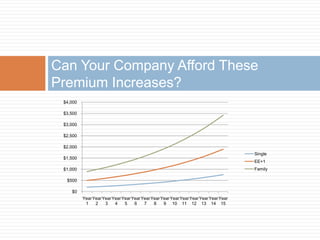
Can Your Company Afford These Premium Increases?
A unilateral agreement between the employer and insurance company to pay the claims of the employees and their dependents. Premiums are a projection of estimated claims from the risk of your employee group. What is Health Insurance?
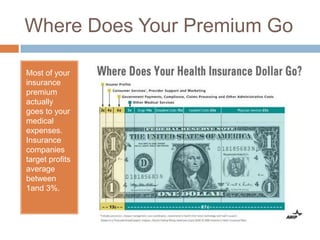
Where Does Your Premium GoMost of your insurance premium actually goes to your medical expenses.  Insurance companies target profits average between 1and 3%.
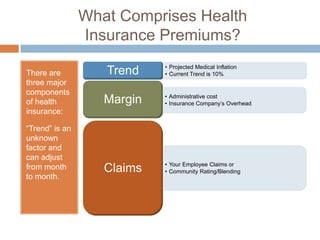
What Comprises Health Insurance Premiums?There are three major components of health insurance: “Trend” is an unknown factor and can adjust from month to month.
History of Medical Insurance
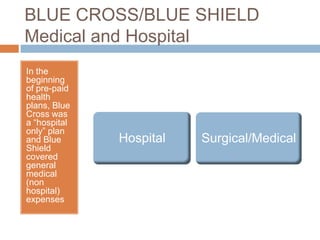
BLUE CROSS/BLUE SHIELD Medical and HospitalIn the beginning of pre-paid health plans, Blue Cross was a “hospital only” plan and Blue Shield covered general medical (non hospital) expenses
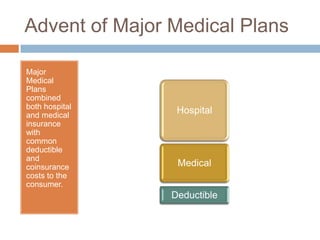
Advent of Major Medical PlansMajor Medical Plans combined both hospital and medical insurance with common deductible and coinsurance costs to the consumer.
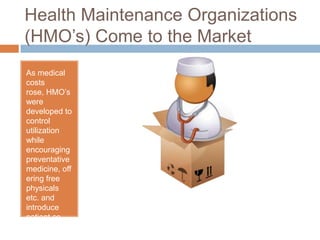
Health Maintenance Organizations(HMO’s) Come to the MarketAs medical costs rose, HMO’s were developed to control utilization while encouraging preventative medicine, offering free physicals etc. and introduce patient co-payment
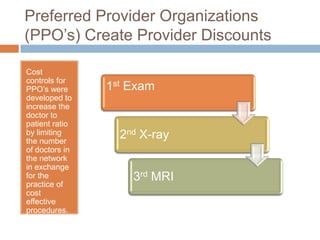
Preferred Provider Organizations (PPO’s) Create Provider DiscountsCost controls for PPO’s were developed to increase the doctor to patient ratio by limiting the number of doctors in the network in exchange for the practice of cost effective procedures.
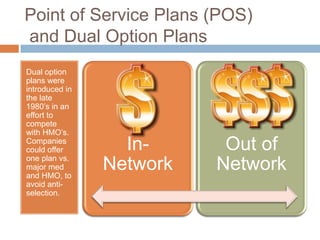
Point of Service Plans (POS) and Dual Option Plans Dual option plans were introduced in the late 1980’s in an effort to compete with HMO’s. Companies could offer one plan vs. major med and HMO, to avoid anti-selection.
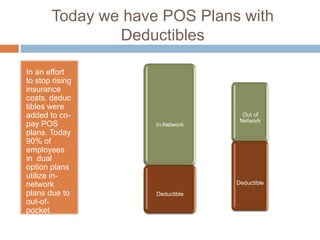
Today we have POS Plans with DeductiblesIn an effort to stop rising insurance costs, deductibles were added to co-pay POS plans. Today 90% of employees in  dual option plans utilize in-network plans due to out-of- pocket costs.
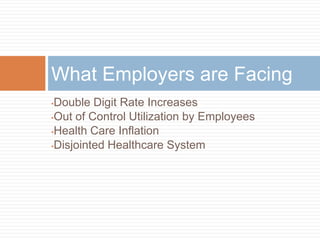
Double Digit Rate Increases
Out of Control Utilization by Employees
Health Care Inflation
Disjointed Healthcare SystemWhat Employers are Facing
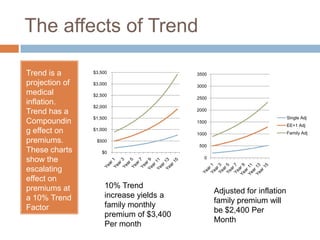
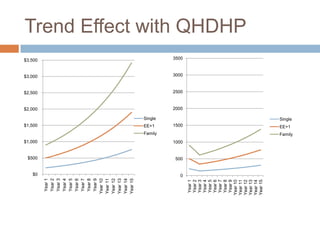
The affects of TrendTrend is a projection of medical inflation. Trend has a Compounding effect on premiums. These charts show the escalating effect on premiums at a 10% Trend Factor10% Trend increase yields a family monthly premium of $3,400 Per monthAdjusted for inflation family premium will be $2,400 Per Month
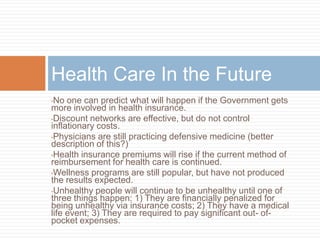
No one can predict what will happen if the Government gets more involved in health insurance.
Discount networks are effective, but do not control inflationary costs.
Physicians are still practicing defensive medicine (better description of this?)
Health insurance premiums will rise if the current method of reimbursement for health care is continued.
Wellness programs are still popular, but have not produced the results expected.
Unhealthy people will continue to be unhealthy until one of three things happen: 1) They are financially penalized for being unhealthy via insurance costs; 2) They have a medical life event; 3) They are required to pay significant out- of-pocket expenses.Health Care In the Future
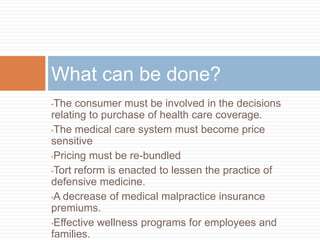
The consumer must be involved in the decisions relating to purchase of health care coverage.
The medical care system must become price sensitive
Pricing must be re-bundled
Tort reform is enacted to lessen the practice of defensive medicine.
A decrease of medical malpractice insurance premiums.

Why Every Biz Should Consider Cdhp From Tba

  • 1.
    Employee Health Insurance:Why Every Small business should consider a CdhpPresented by Triangle Business Advisors
  • 2.
    Can Your CompanyAfford These Premium Increases?
  • 3.
    A unilateral agreementbetween the employer and insurance company to pay the claims of the employees and their dependents. Premiums are a projection of estimated claims from the risk of your employee group. What is Health Insurance?
  • 4.
    Where Does YourPremium GoMost of your insurance premium actually goes to your medical expenses. Insurance companies target profits average between 1and 3%.
  • 5.
    What Comprises HealthInsurance Premiums?There are three major components of health insurance: “Trend” is an unknown factor and can adjust from month to month.
  • 6.
  • 7.
    BLUE CROSS/BLUE SHIELDMedical and HospitalIn the beginning of pre-paid health plans, Blue Cross was a “hospital only” plan and Blue Shield covered general medical (non hospital) expenses
  • 8.
    Advent of MajorMedical PlansMajor Medical Plans combined both hospital and medical insurance with common deductible and coinsurance costs to the consumer.
  • 9.
    Health Maintenance Organizations(HMO’s)Come to the MarketAs medical costs rose, HMO’s were developed to control utilization while encouraging preventative medicine, offering free physicals etc. and introduce patient co-payment
  • 10.
    Preferred Provider Organizations(PPO’s) Create Provider DiscountsCost controls for PPO’s were developed to increase the doctor to patient ratio by limiting the number of doctors in the network in exchange for the practice of cost effective procedures.
  • 11.
    Point of ServicePlans (POS) and Dual Option Plans Dual option plans were introduced in the late 1980’s in an effort to compete with HMO’s. Companies could offer one plan vs. major med and HMO, to avoid anti-selection.
  • 12.
    Today we havePOS Plans with DeductiblesIn an effort to stop rising insurance costs, deductibles were added to co-pay POS plans. Today 90% of employees in dual option plans utilize in-network plans due to out-of- pocket costs.
  • 13.
  • 14.
    Out of ControlUtilization by Employees
  • 15.
  • 16.
  • 17.
    The affects ofTrendTrend is a projection of medical inflation. Trend has a Compounding effect on premiums. These charts show the escalating effect on premiums at a 10% Trend Factor10% Trend increase yields a family monthly premium of $3,400 Per monthAdjusted for inflation family premium will be $2,400 Per Month
  • 18.
    No one canpredict what will happen if the Government gets more involved in health insurance.
  • 19.
    Discount networks areeffective, but do not control inflationary costs.
  • 20.
    Physicians are stillpracticing defensive medicine (better description of this?)
  • 21.
    Health insurance premiumswill rise if the current method of reimbursement for health care is continued.
  • 22.
    Wellness programs arestill popular, but have not produced the results expected.
  • 23.
    Unhealthy people willcontinue to be unhealthy until one of three things happen: 1) They are financially penalized for being unhealthy via insurance costs; 2) They have a medical life event; 3) They are required to pay significant out- of-pocket expenses.Health Care In the Future
  • 24.
    The consumer mustbe involved in the decisions relating to purchase of health care coverage.
  • 25.
    The medical caresystem must become price sensitive
  • 26.
    Pricing must bere-bundled
  • 27.
    Tort reform isenacted to lessen the practice of defensive medicine.
  • 28.
    A decrease ofmedical malpractice insurance premiums.