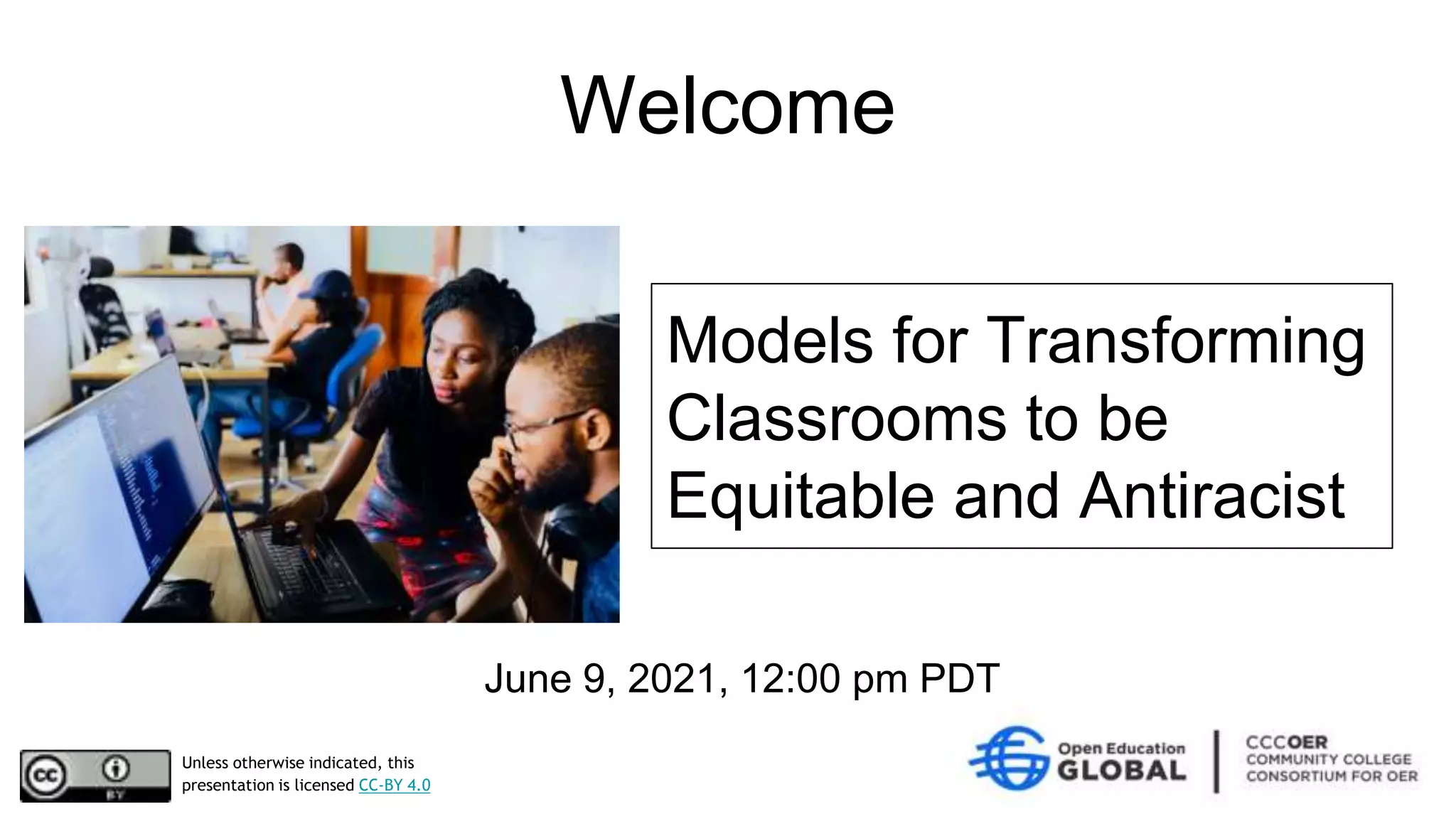
June 9, 2021, 12:00 pm PDT
Welcome
Unless otherwise indicated, this
presentation is licensed CC-BY 4.0
Models for Transforming
Classrooms to be
Equitable and Antiracist
Agenda
• Introductions
• Environmental Science course and Library support at Roxbury
Community College (Boston, MA)
• Biology Course transformation via Oregon Equity and Open
Education program
• Introduction to Business Class transformation via Open for
AntiRacism program (California)
• Summer Activities
Previous slide image credit:
stickies-post-it-list by Gerd Altmann from Pixabay
Speakers
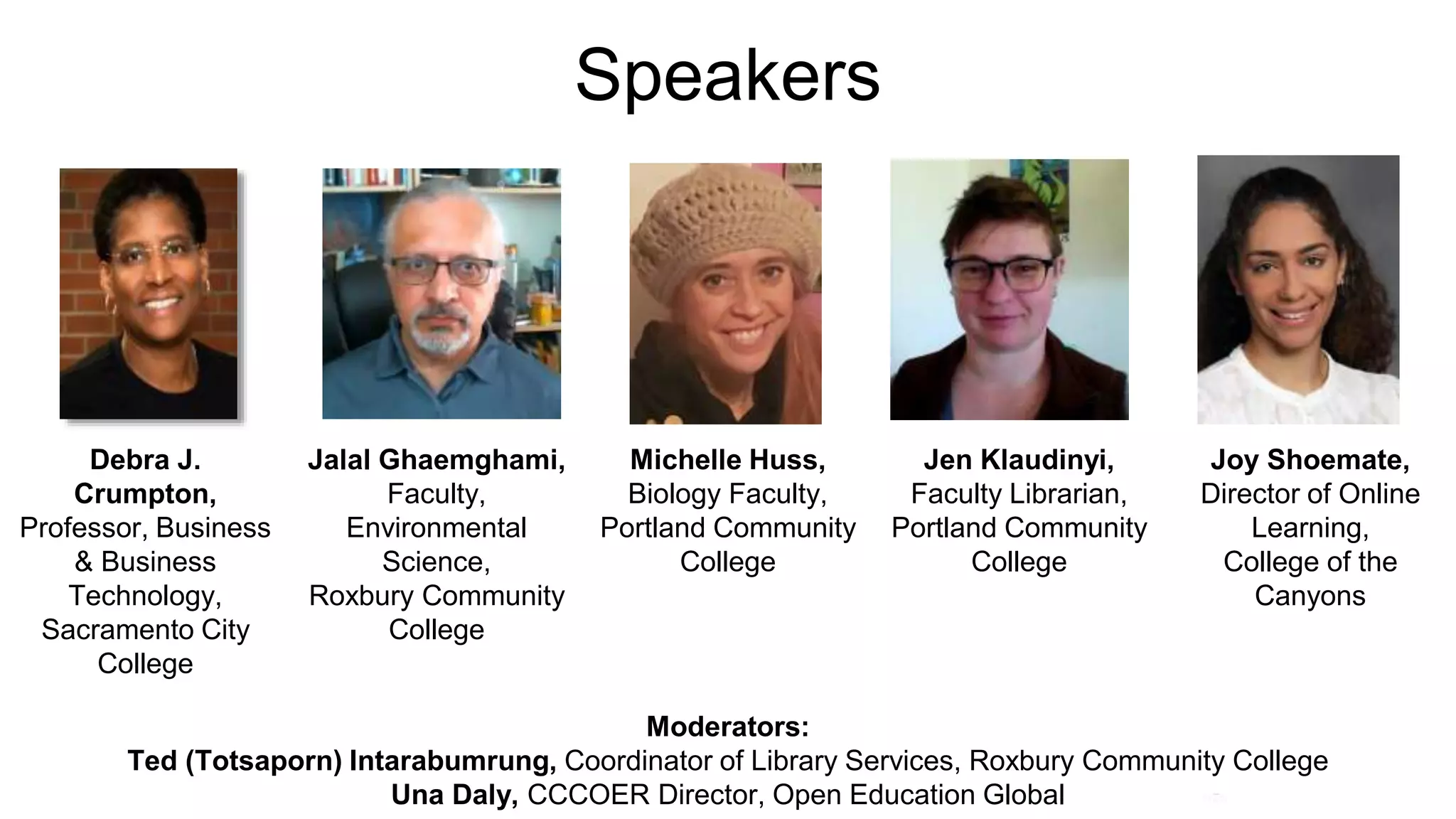
Debra J.
Crumpton,
Professor, Business
& Business
Technology,
Sacramento City
College
Jalal Ghaemghami,
Faculty,
Environmental
Science,
Roxbury Community
College
Michelle Huss,
Biology Faculty,
Portland Community
College
Jen Klaudinyi,
Faculty Librarian,
Portland Community
College
Joy Shoemate,
Director of Online
Learning,
College of the
Canyons
Moderators:
Ted (Totsaporn) Intarabumrung, Coordinator of Library Services, Roxbury Community College
Una Daly, CCCOER Director, Open Education Global
● Expand awareness & access to high-
quality OER
● Support faculty choice & development
● Foster regional OER leadership
● Improve student equity & success
CCCOER Mission
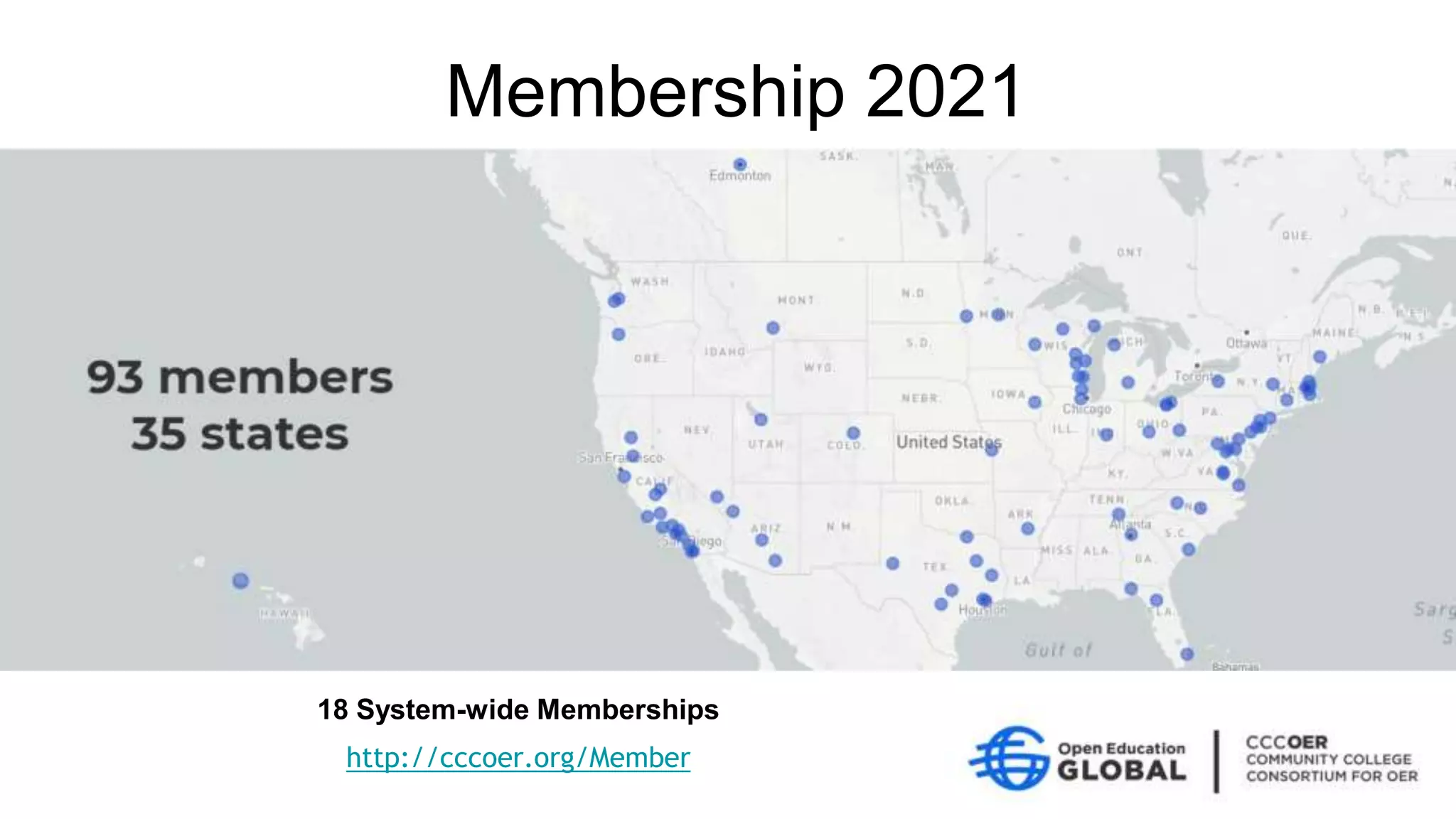
Membership 2021
http://cccoer.org/Member
18 System-wide Memberships
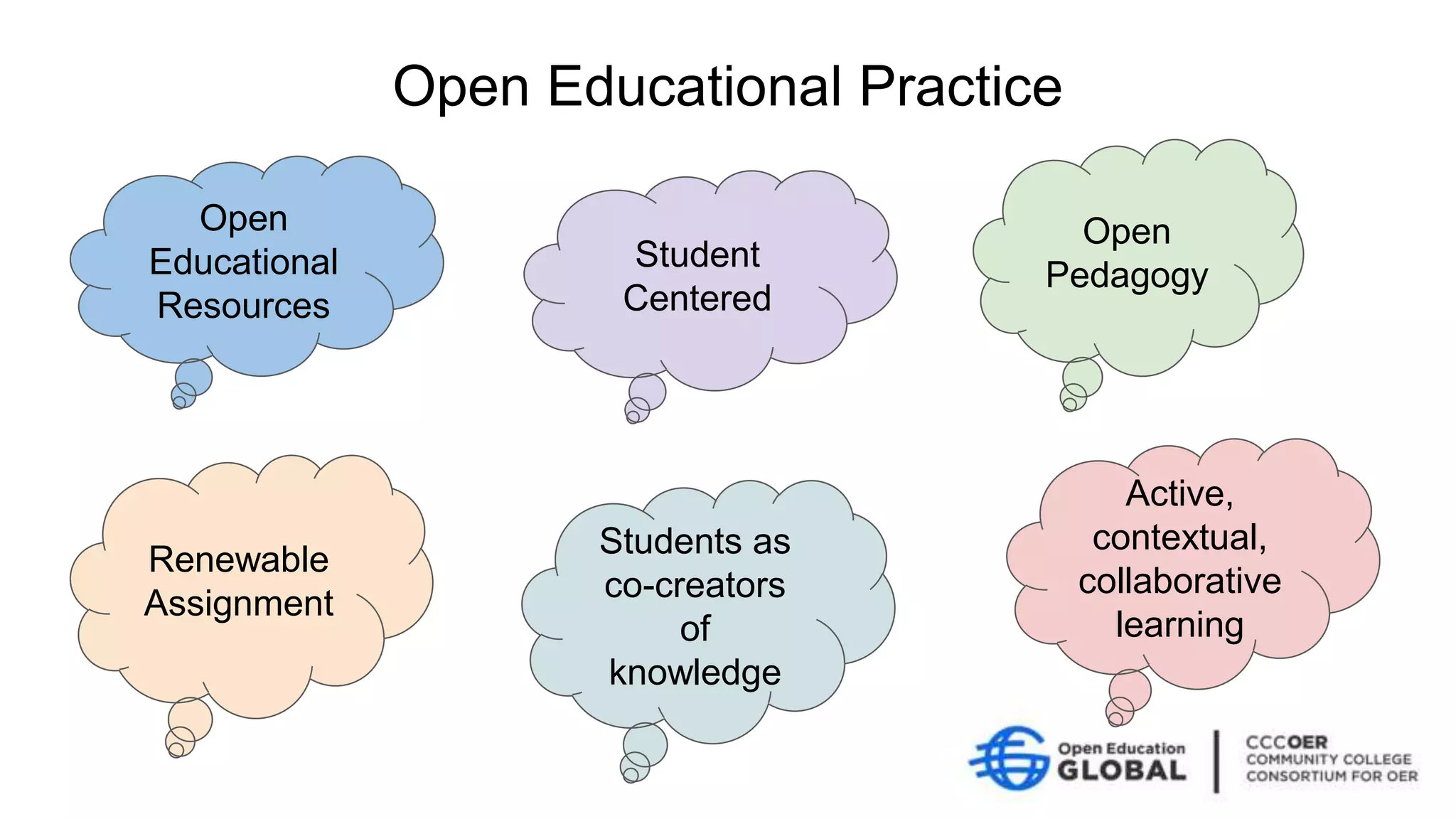
Open
Educational
Resources
Open
Pedagogy
Renewable
Assignment
Students as
co-creators
of
knowledge
Active,
contextual,
collaborative
learning
Student
Centered
Open Educational Practice
Roxbury College
Ted (Totsaporn)
Intarabumrung, Coordinator
of Library Services
Jalal Ghaemghami, Ph.D.,
Faculty, Environmental
Science
OPEN EDUCATIONAL
RESOURCES AT ROXBURY
COMMUNITY COLLEGE
Totsaporn (Ted) Intarabumrung
Coordinator of Library Resources
Jalal Ghaemghami Faculty
8
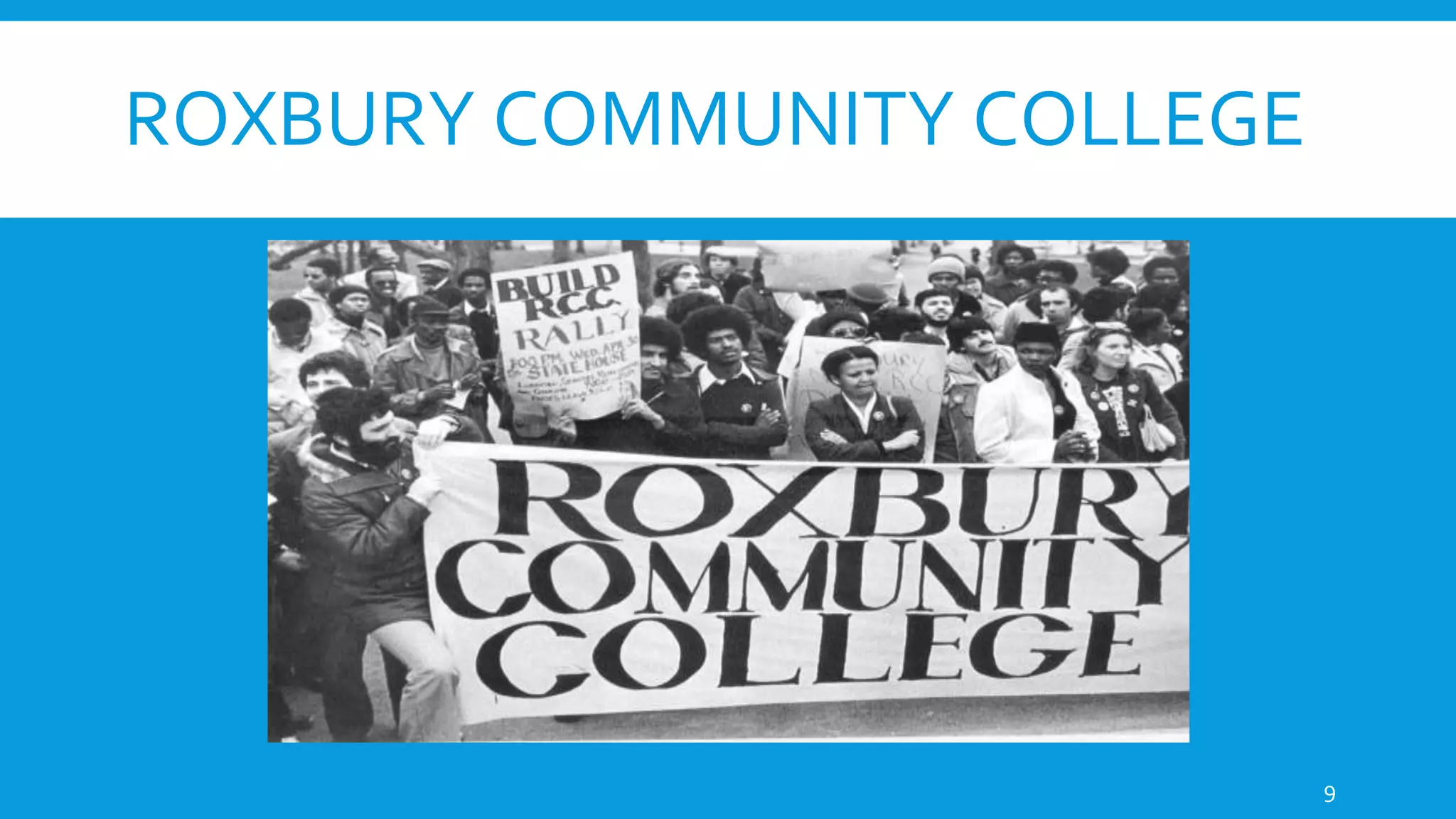
ROXBURY COMMUNITY COLLEGE
9
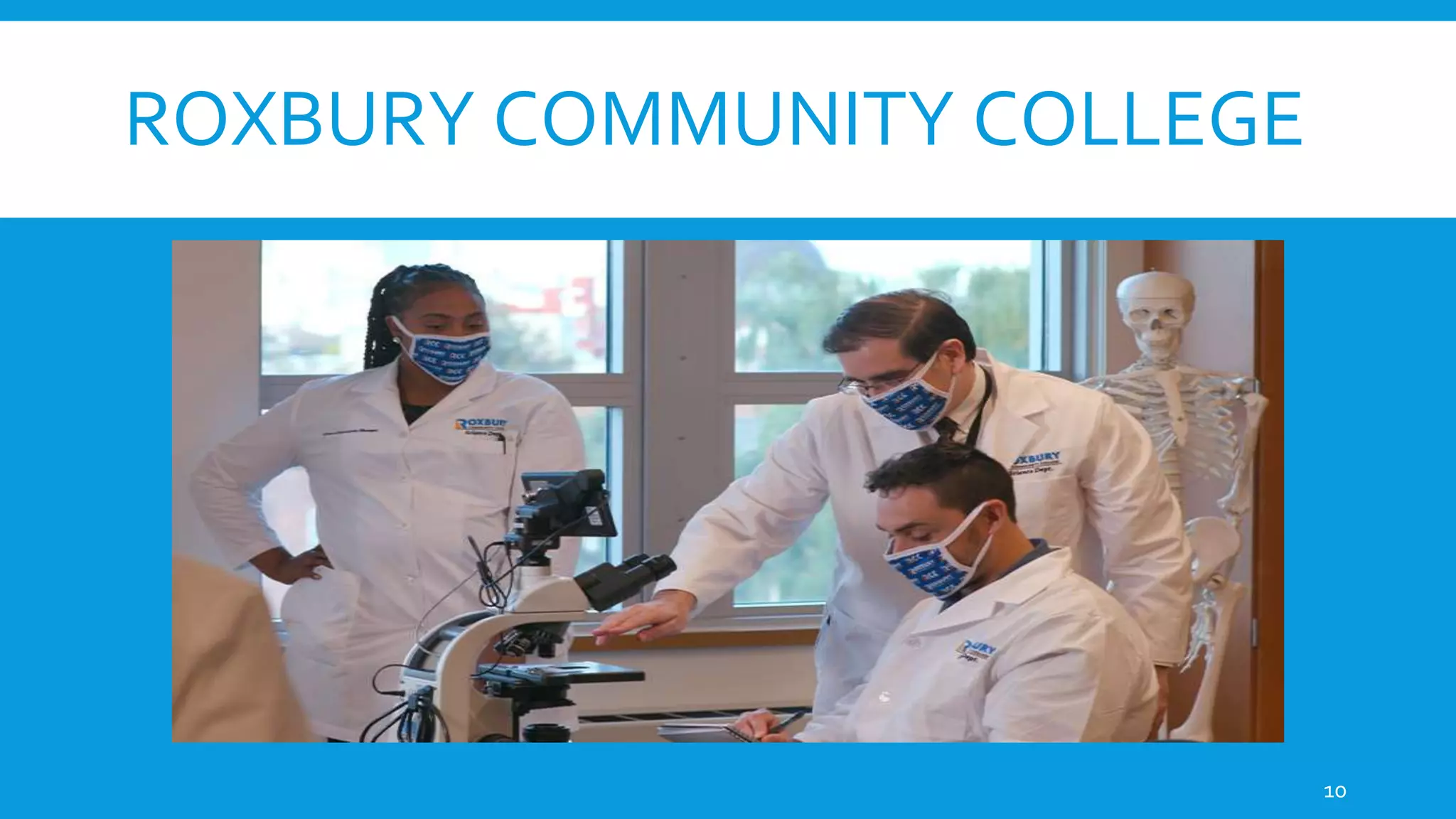
ROXBURY COMMUNITY COLLEGE
10
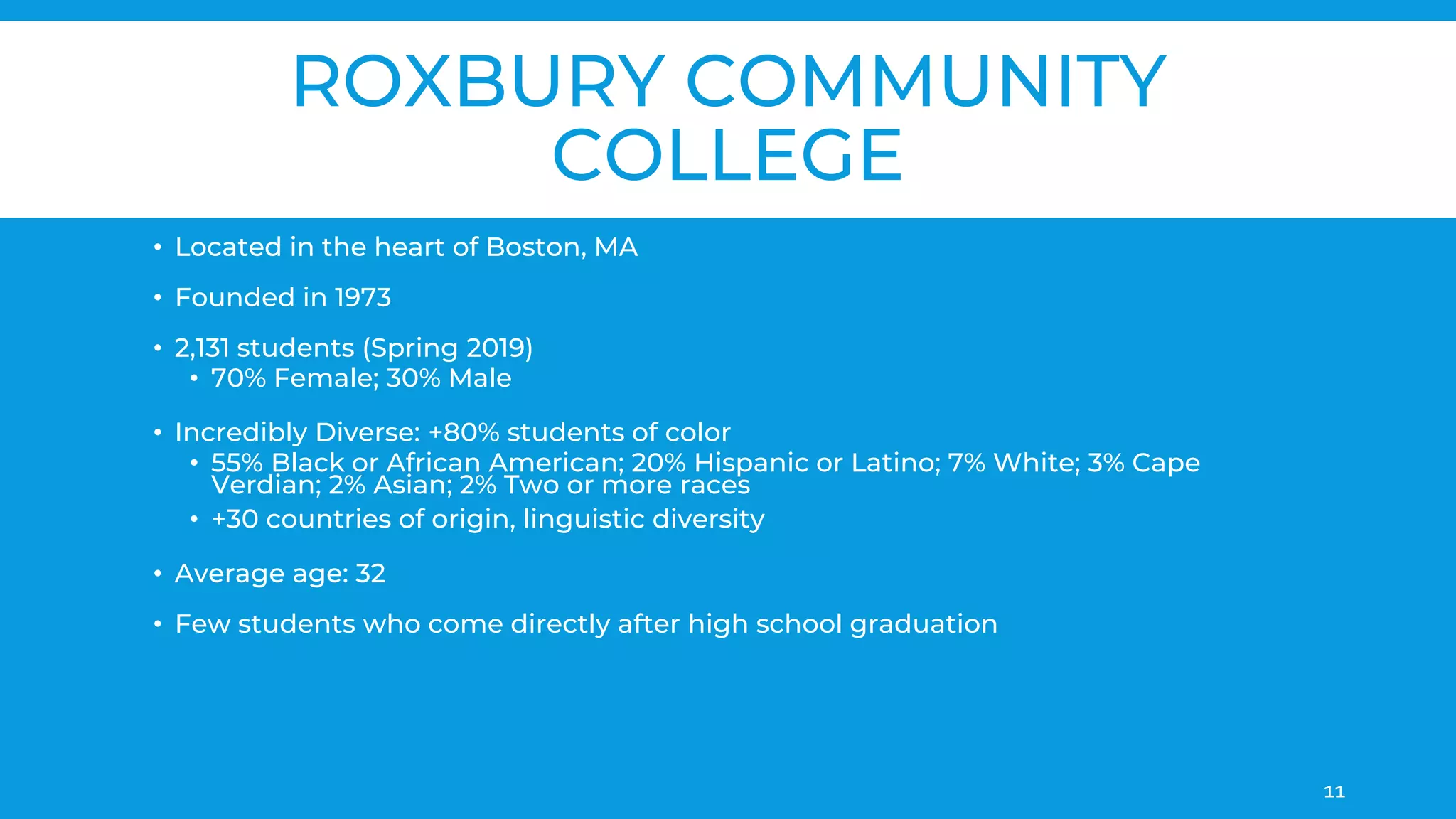
ROXBURY COMMUNITY
COLLEGE
• Located in the heart of Boston, MA
• Founded in 1973
• 2,131 students (Spring 2019)
• 70% Female; 30% Male
• Incredibly Diverse: +80% students of color
• 55% Black or African American; 20% Hispanic or Latino; 7% White; 3% Cape
Verdian; 2% Asian; 2% Two or more races
• +30 countries of origin, linguistic diversity
• Average age: 32
• Few students who come directly after high school graduation
11
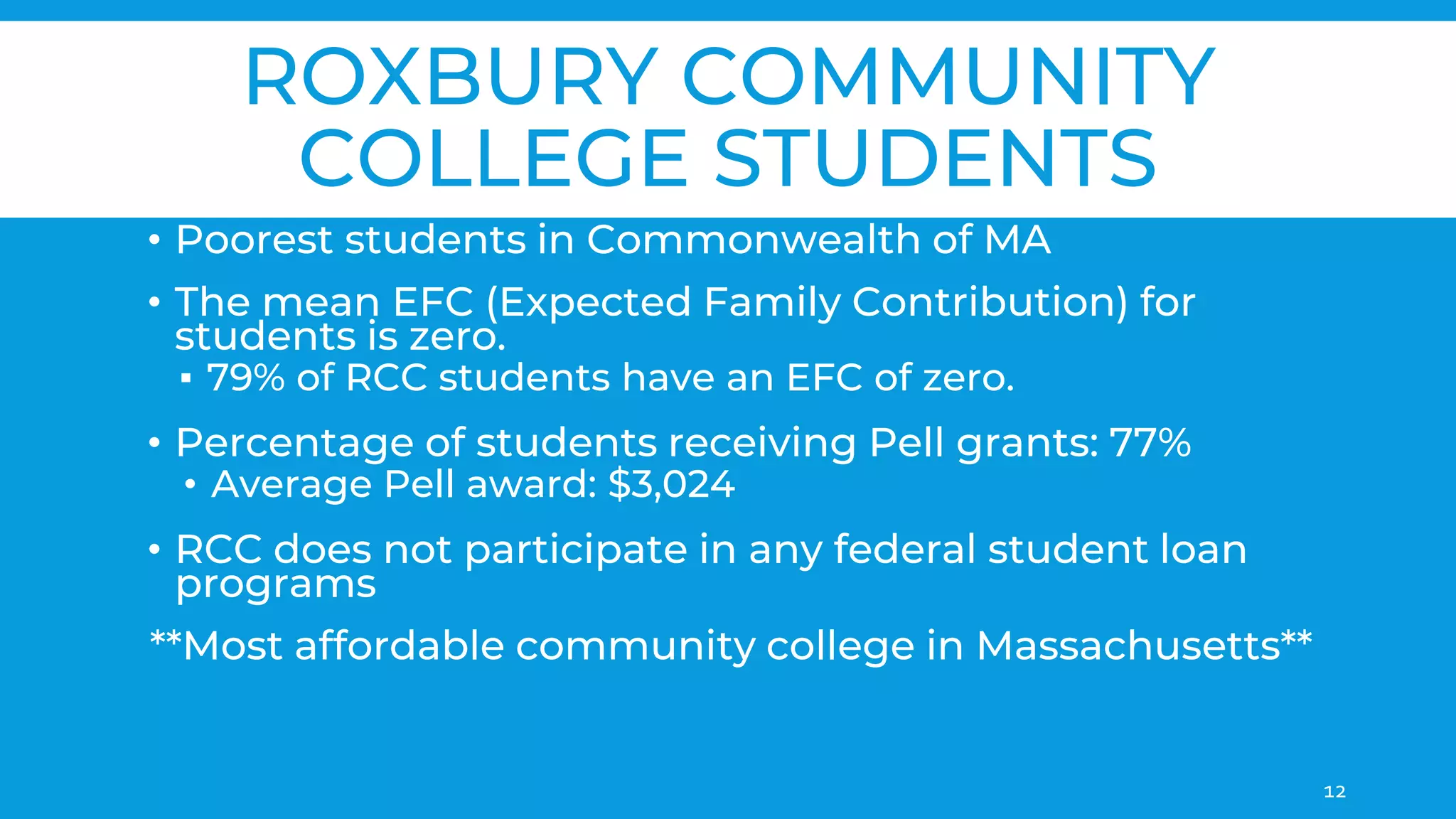
ROXBURY COMMUNITY
COLLEGE STUDENTS
• Poorest students in Commonwealth of MA
• The mean EFC (Expected Family Contribution) for
students is zero.
▪ 79% of RCC students have an EFC of zero.
• Percentage of students receiving Pell grants: 77%
• Average Pell award: $3,024
• RCC does not participate in any federal student loan
programs
**Most affordable community college in Massachusetts**
12
ROXBURY COMMUNITY COLLEGE:
OER SUPPORTS & INITIATIVES
▪OER Task Force
▪OER Platforms (OER Commons & OER LibGuides)
▪OER Stipends
▪OER Ambassadors
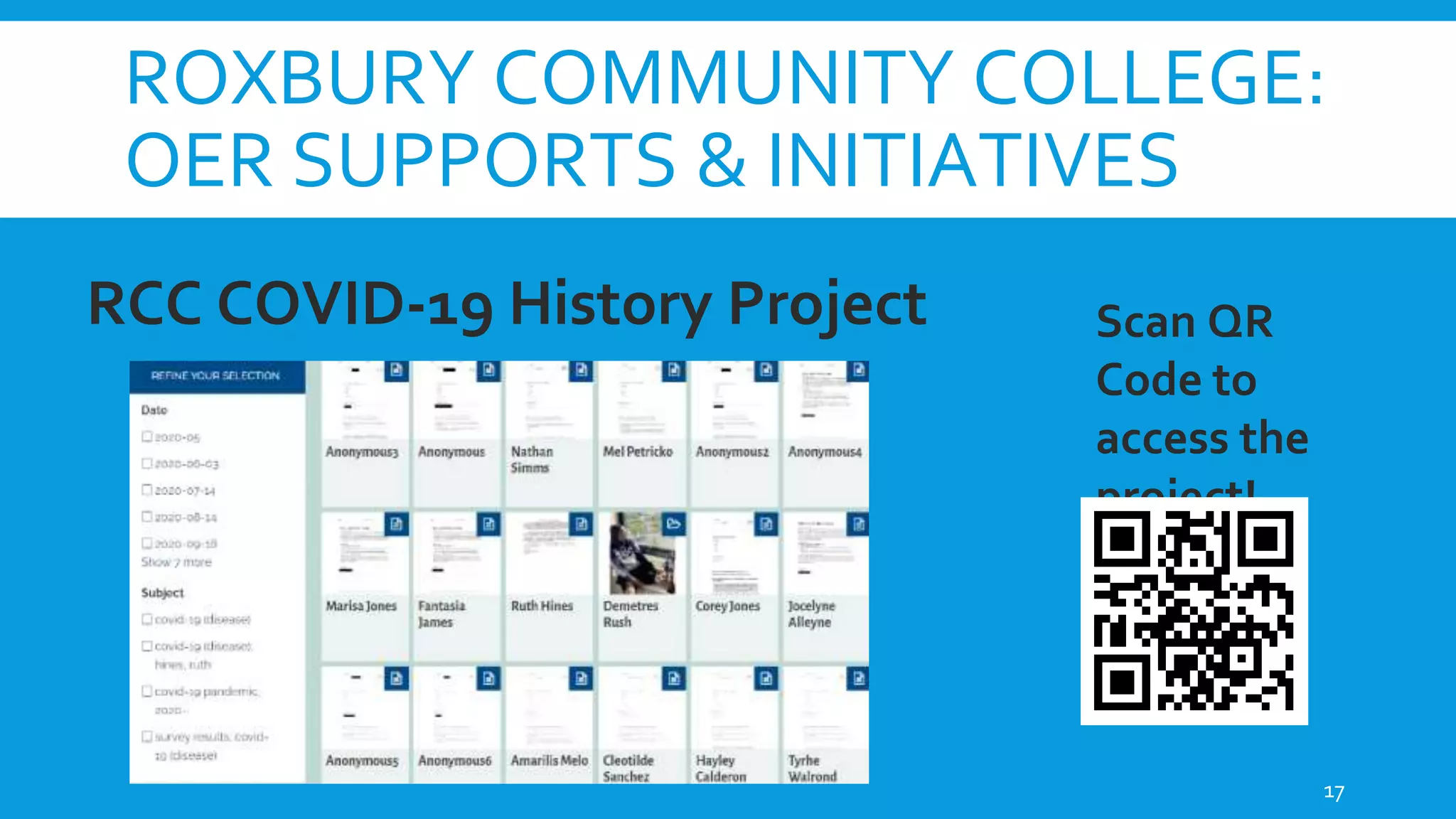
▪RCC Covid-19 History Project
▪Black Men Speak, 2020: Black Life Matters
13
ROXBURY COMMUNITY COLLEGE:
OER SUPPORTS & INITIATIVES
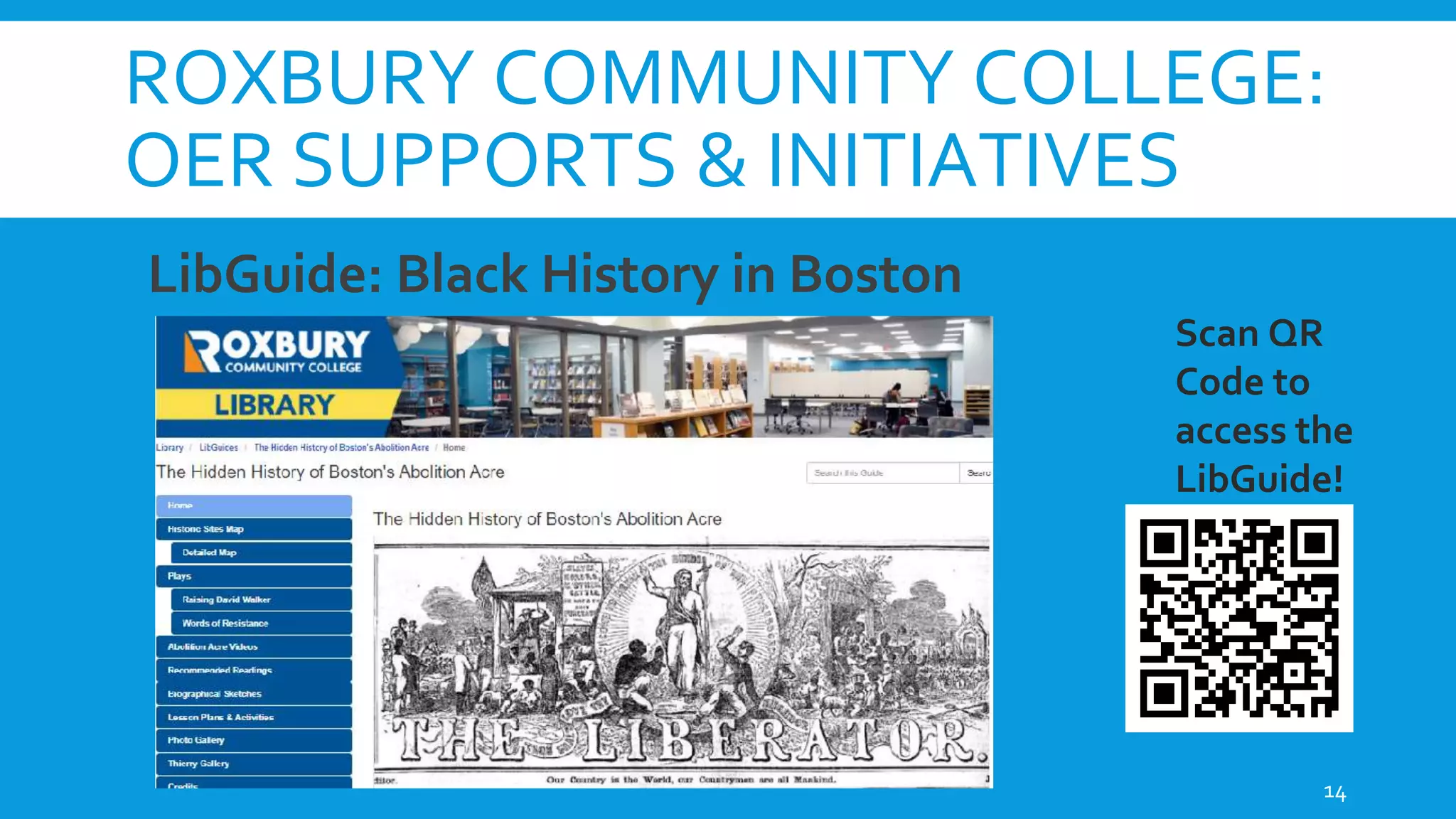
LibGuide: Black History in Boston
14
Scan QR
Code to
access the
LibGuide!
ROXBURY COMMUNITY COLLEGE:
OER SUPPORTS & INITIATIVES
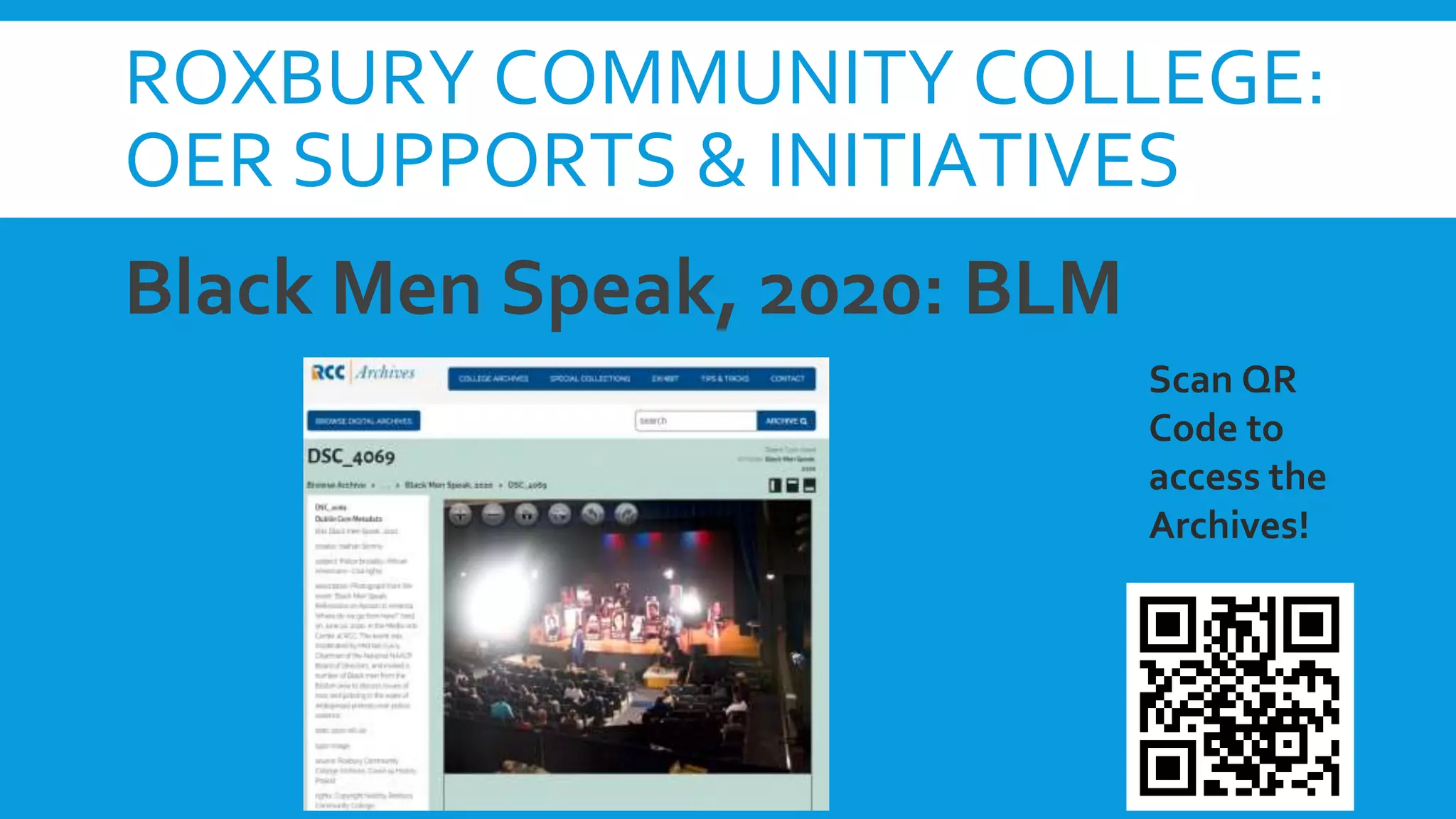
Black Men Speak, 2020: BLM
15
Scan QR
Code to
access the
Archives!
ROXBURY COMMUNITY COLLEGE:
OER SUPPORTS & INITIATIVES
16
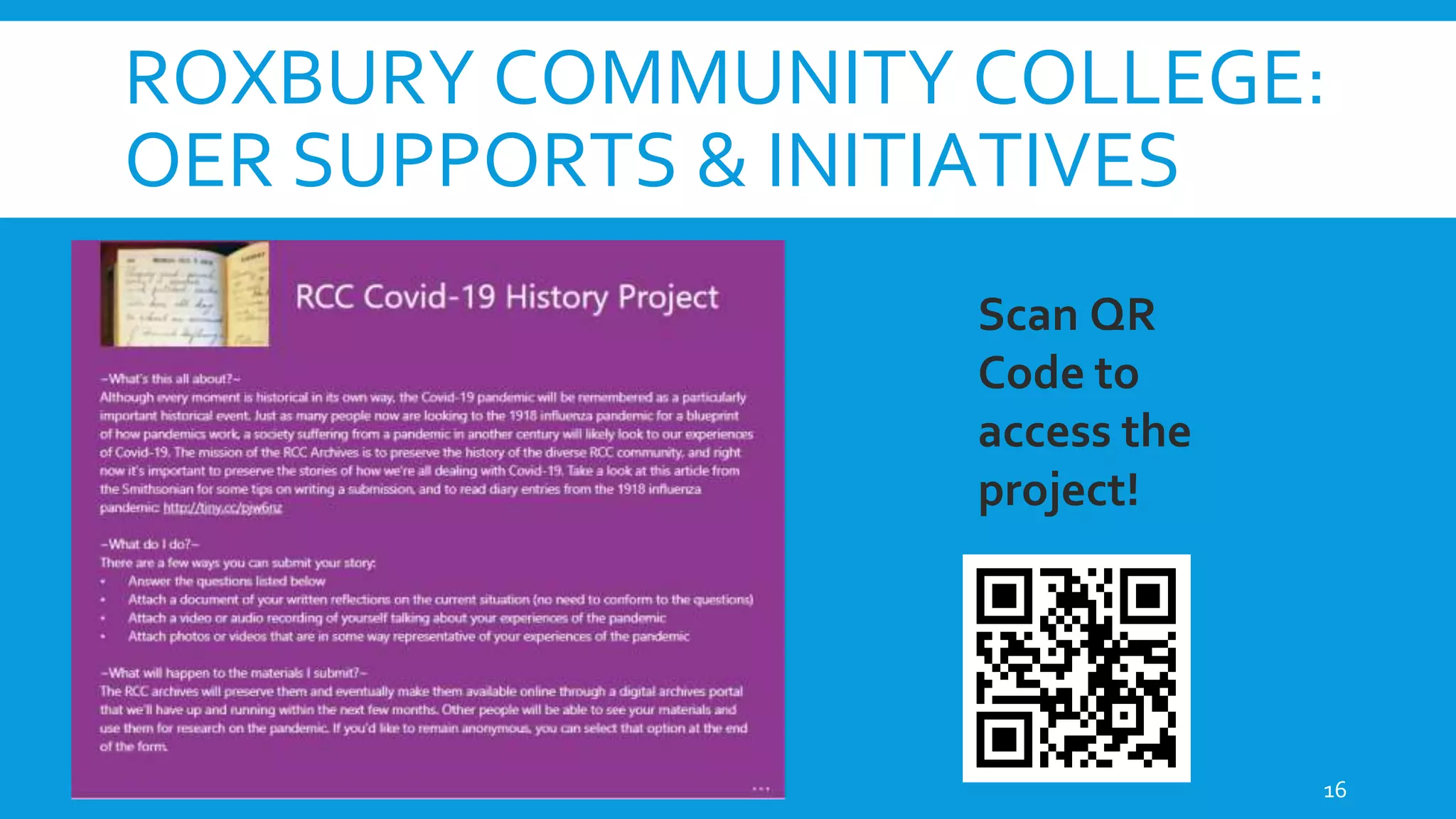
Scan QR
Code to
access the
project!
ROXBURY COMMUNITY COLLEGE:
OER SUPPORTS & INITIATIVES
17
Scan QR
Code to
access the
project!
RCC COVID-19 History Project
ROXBURY COMMUNITY COLLEGE
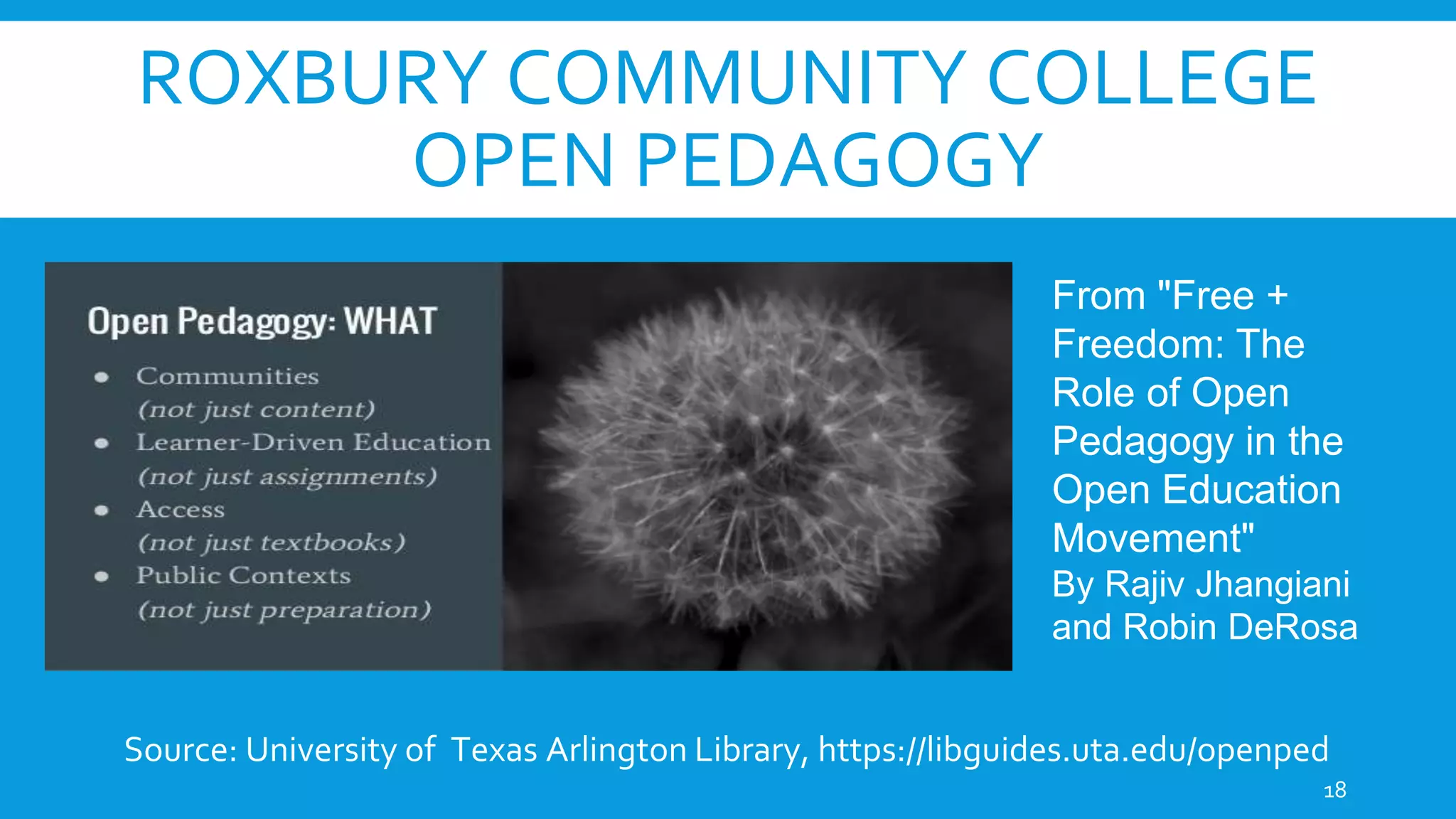
OPEN PEDAGOGY
18
Source: University of Texas Arlington Library, https://libguides.uta.edu/openped
From "Free +
Freedom: The
Role of Open
Pedagogy in the
Open Education
Movement"
By Rajiv Jhangiani
and Robin DeRosa
Agenda
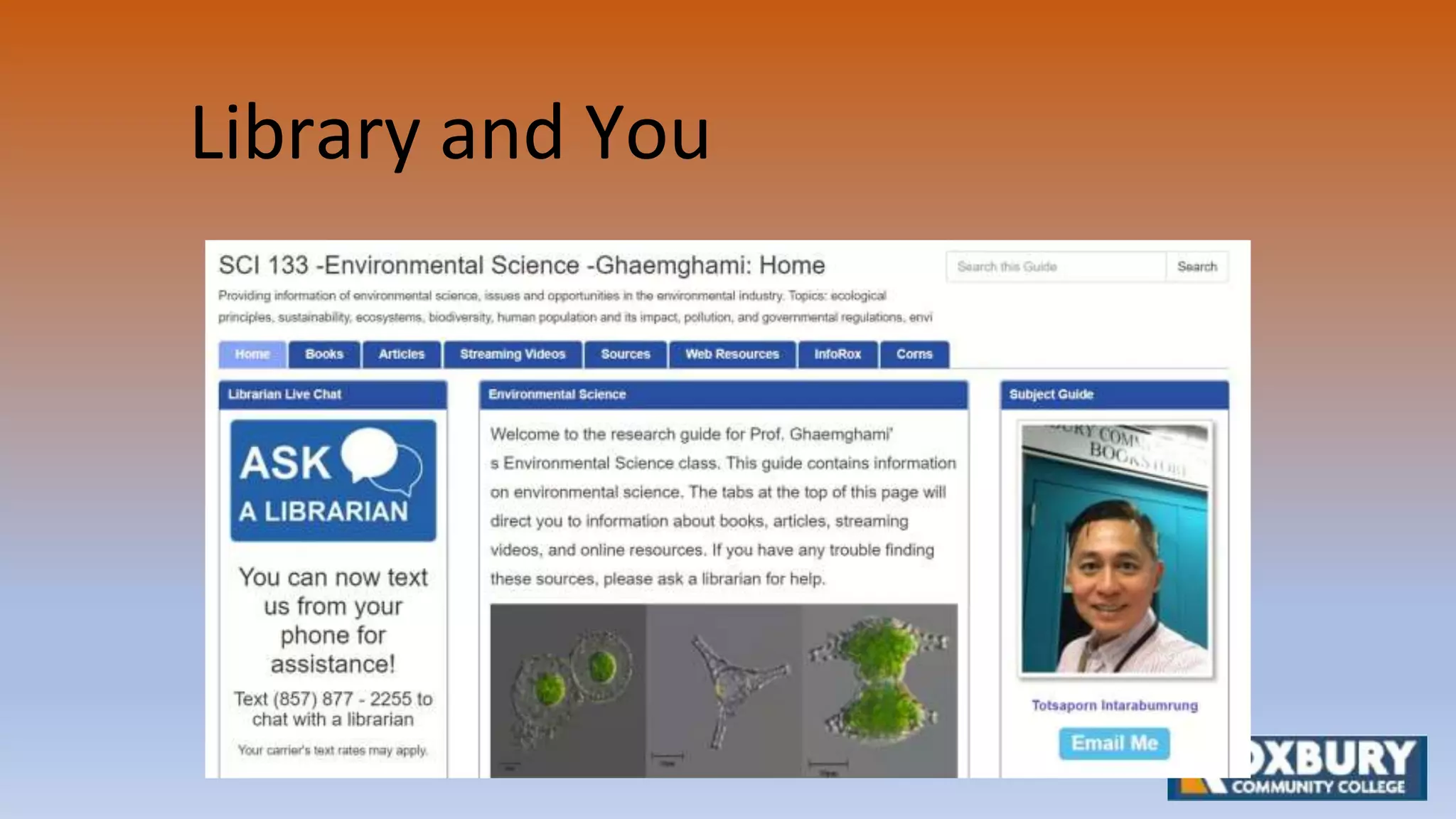
• Library and You
• Course Design
• Student Centered Approach
• Exciting and empowering
• Research in Environmental Science
• Student as teammates
Dr. Jalal Ghaemghami, Faculty
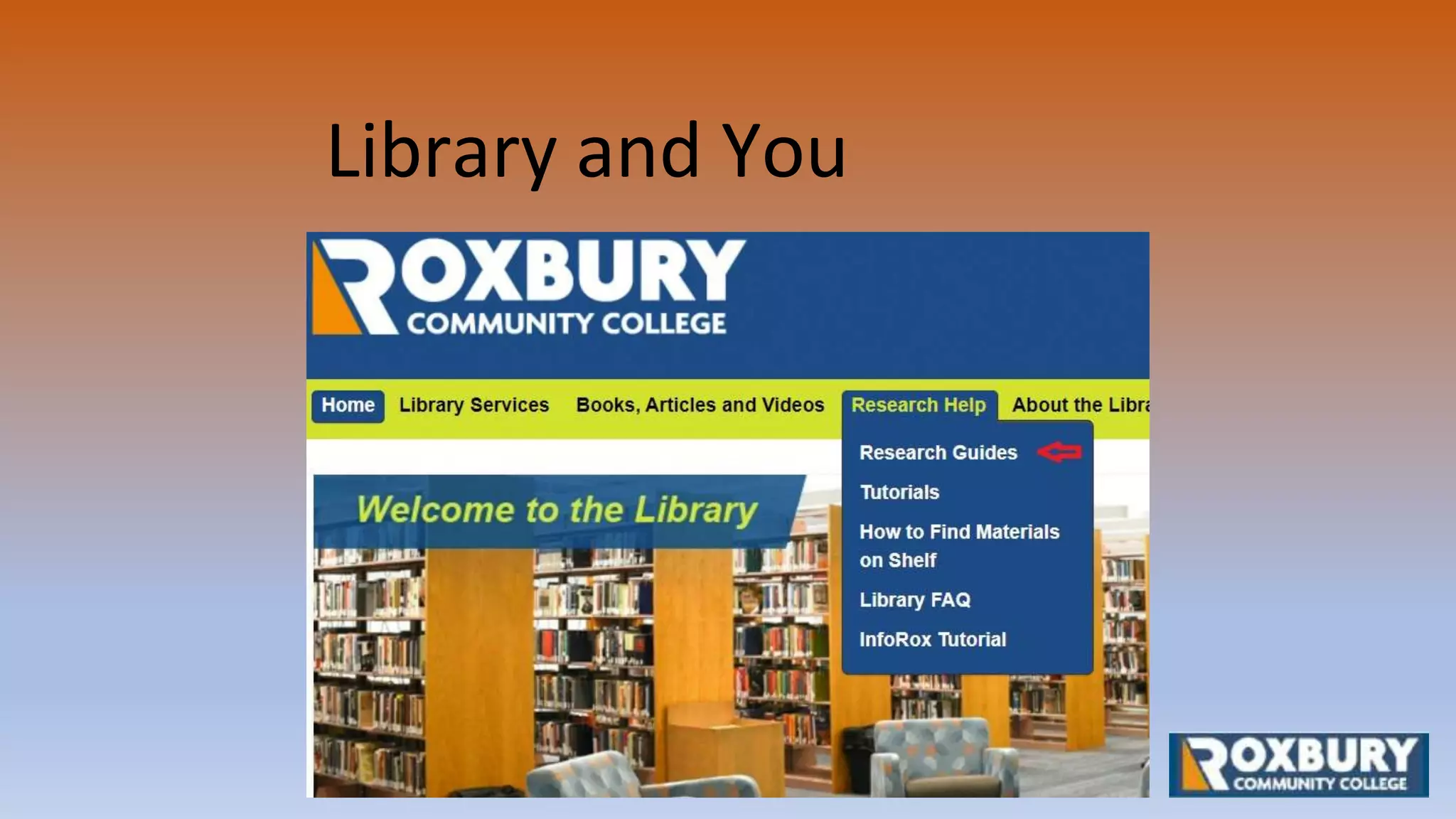
Library and You
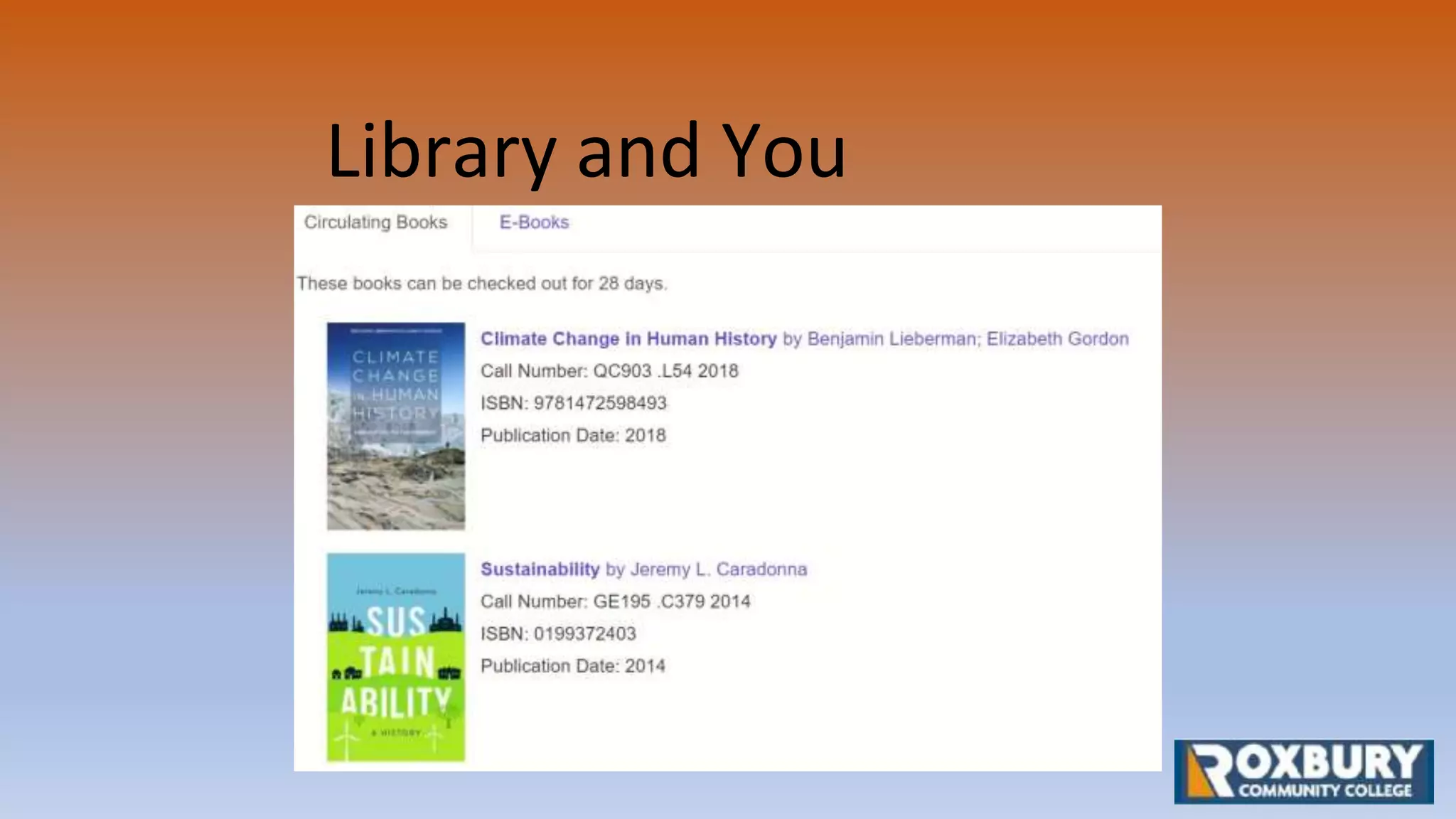
Library and You
Library and You
Syllabus
• Time management and delivery
• Clearly share expectation and any required task.
• Carefully time due dates for assignments
• Connectivity among topics in your class
• Thematic knowledge
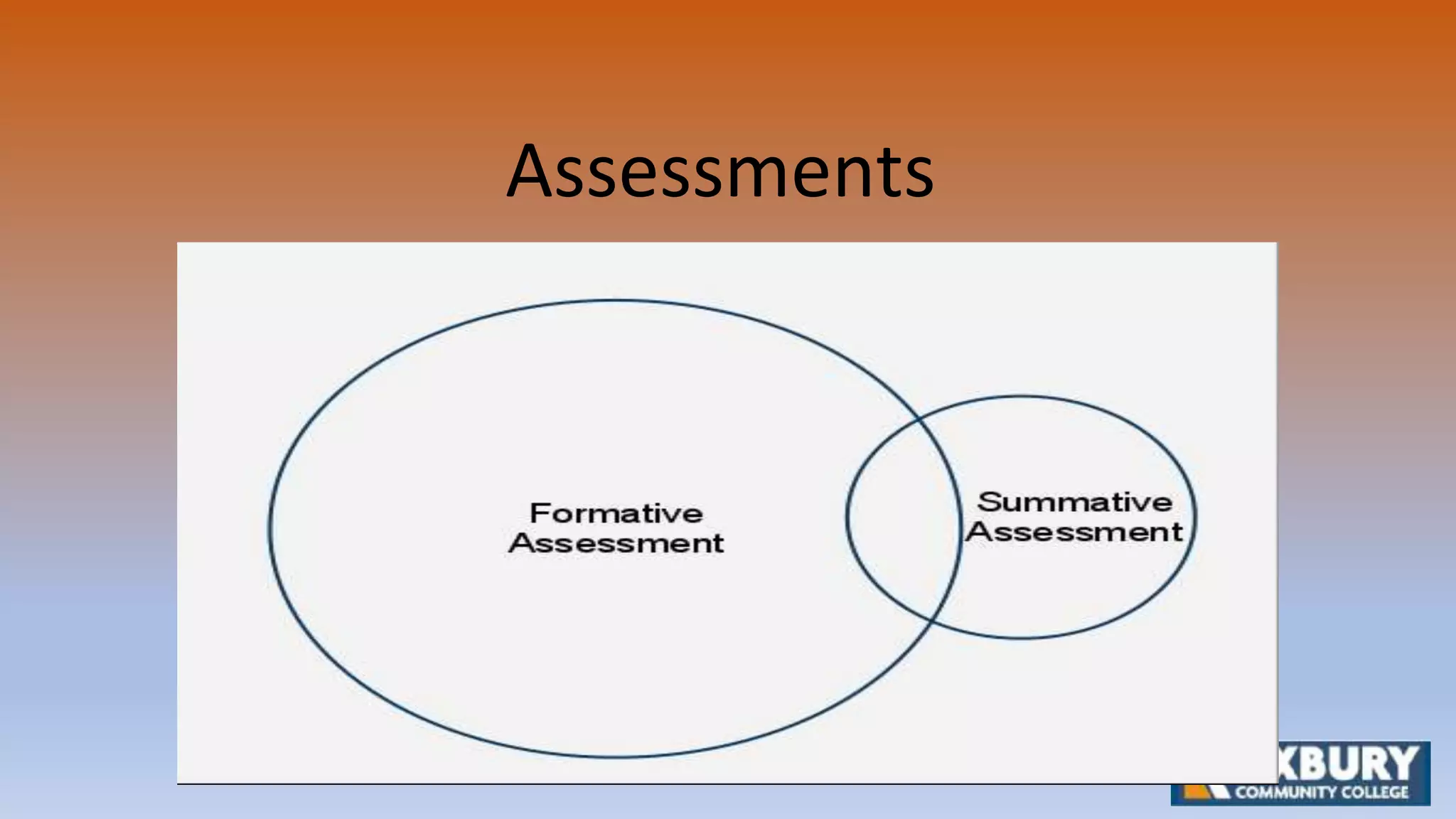
• Assessments [Formative]
• OER: Important to learn "how to use them?"
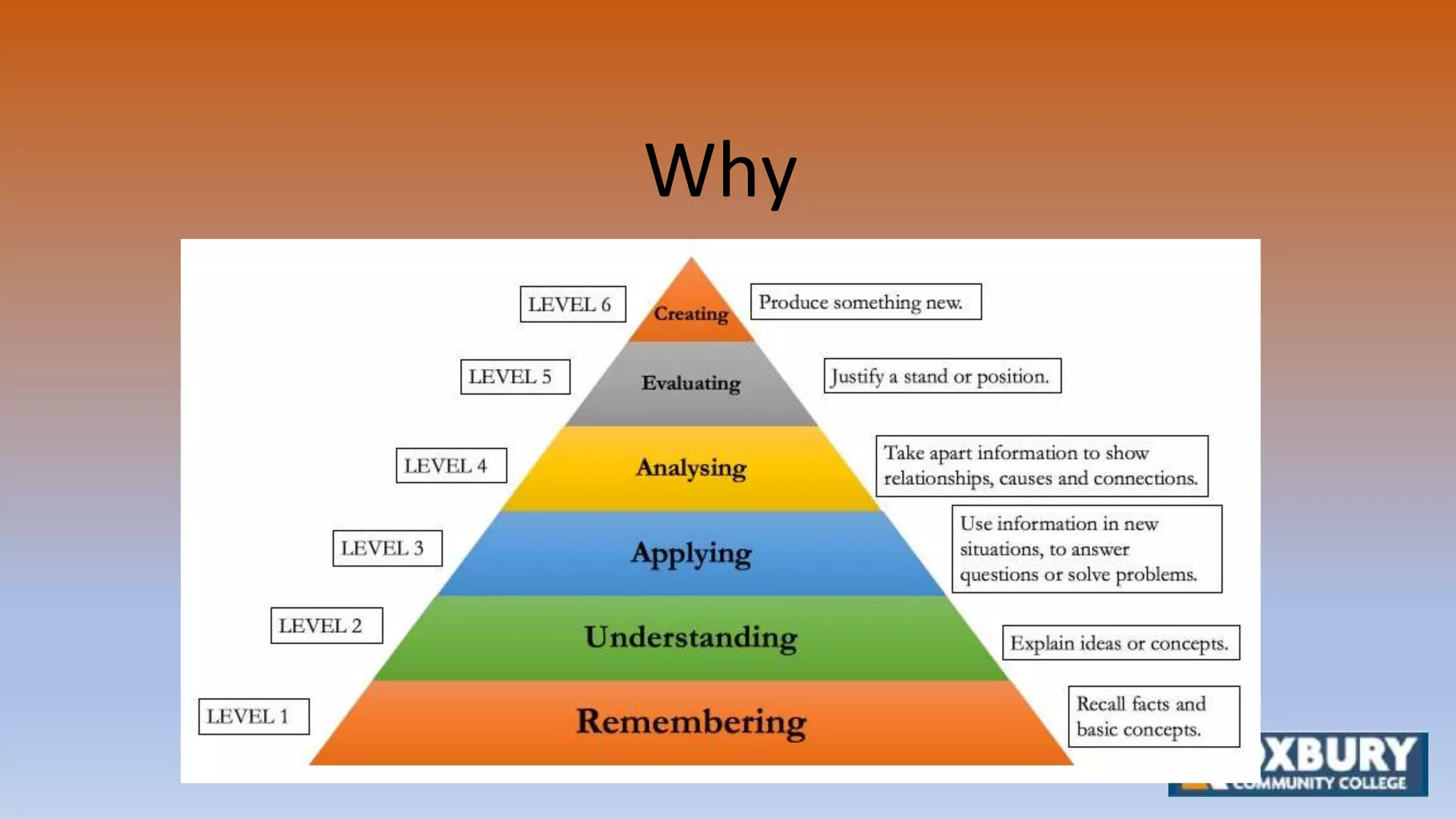
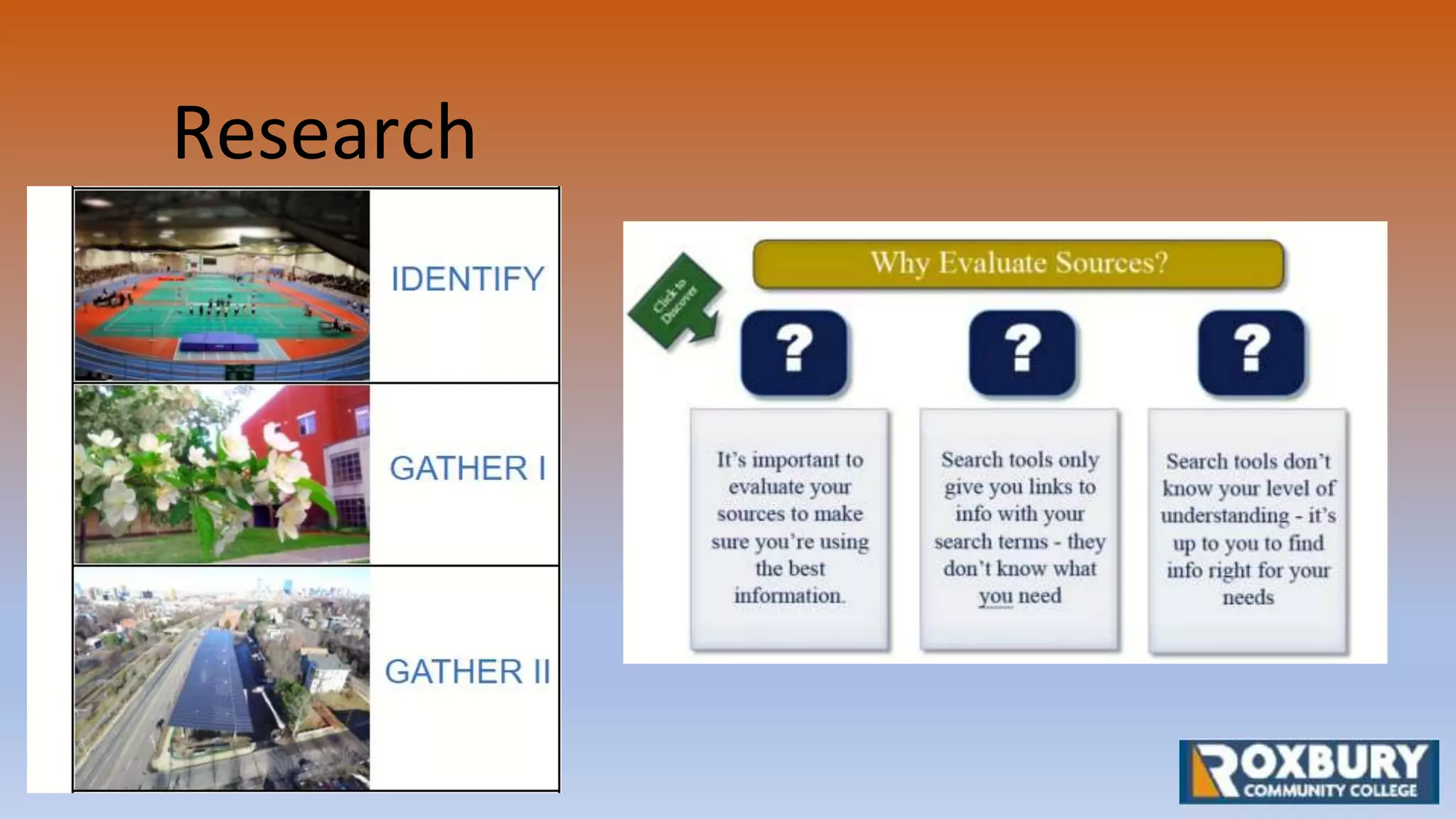
Why
Assessments
Research
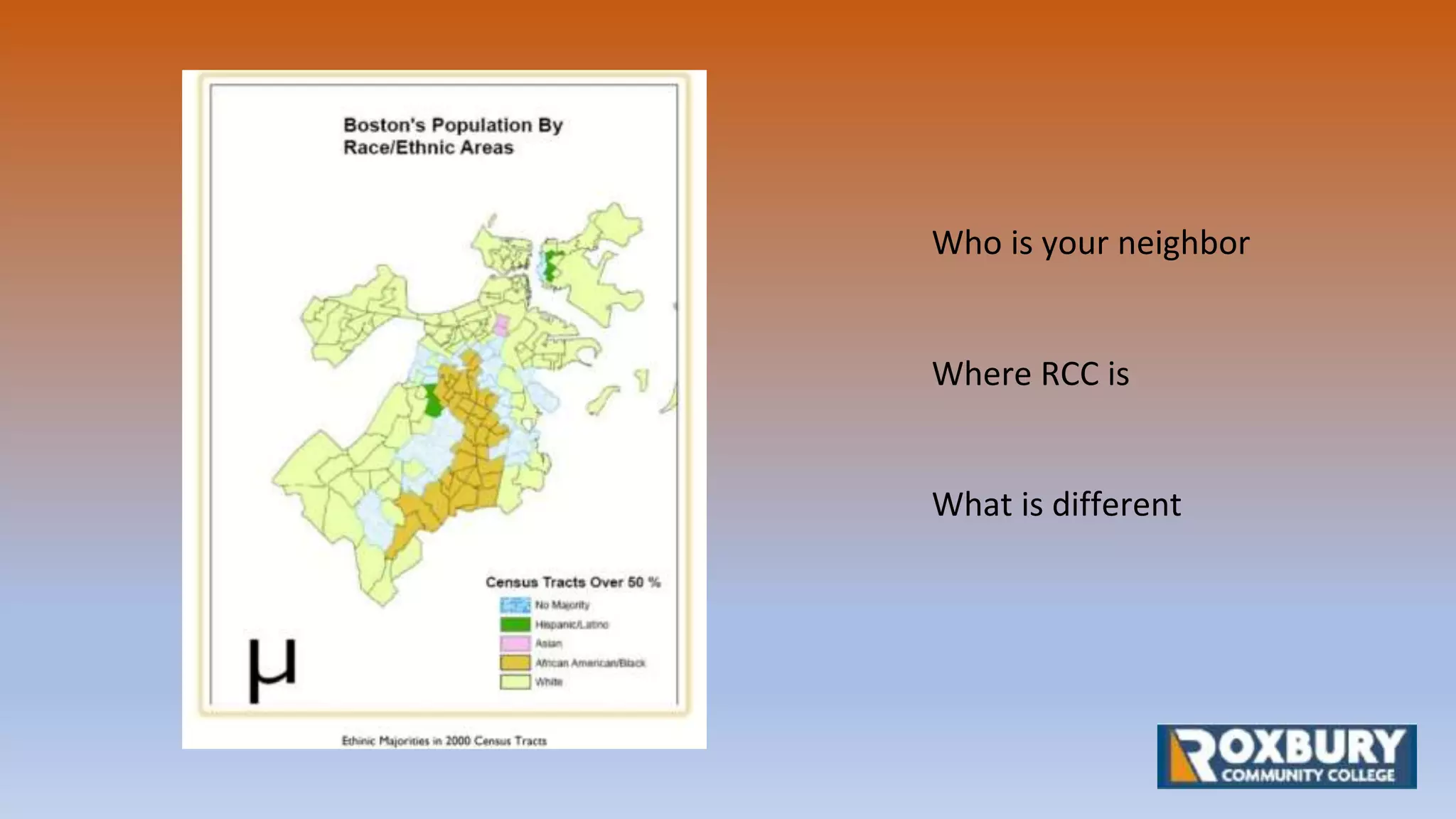
Who is your neighbor
Where RCC is
What is different
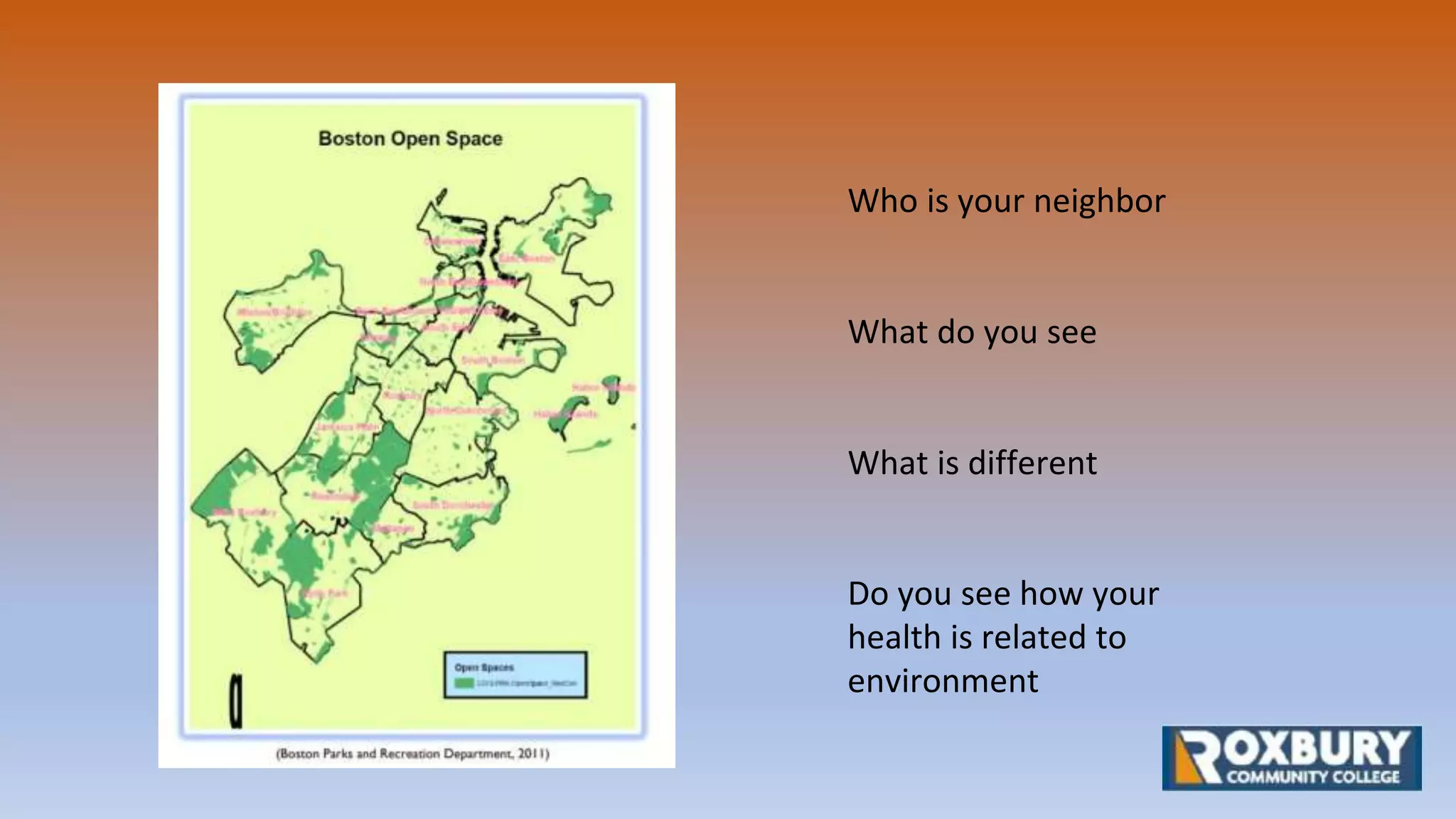
Who is your neighbor
What do you see
What is different
Do you see how your
health is related to
environment
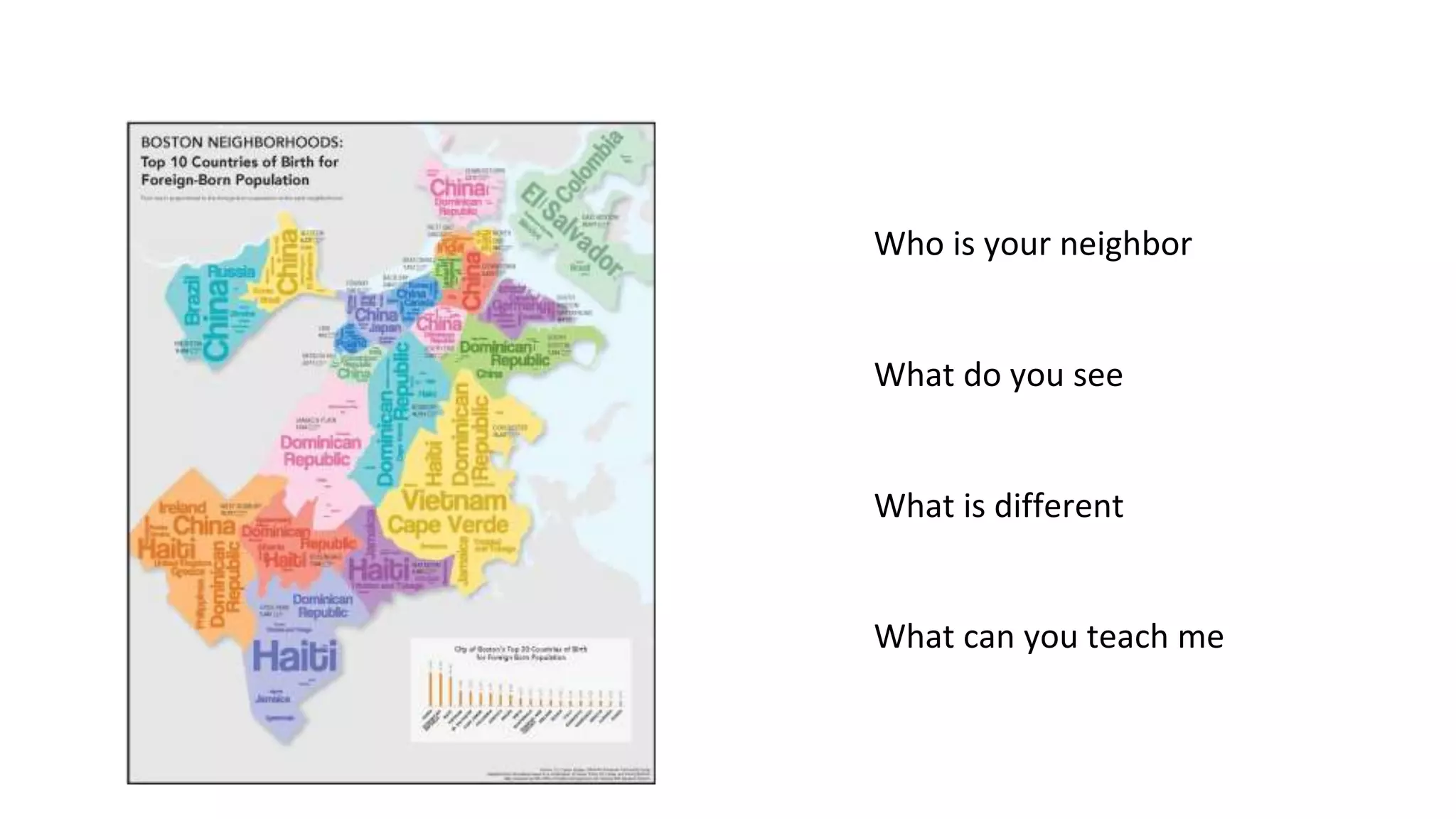
Who is your neighbor
What do you see
What is different
What can you teach me
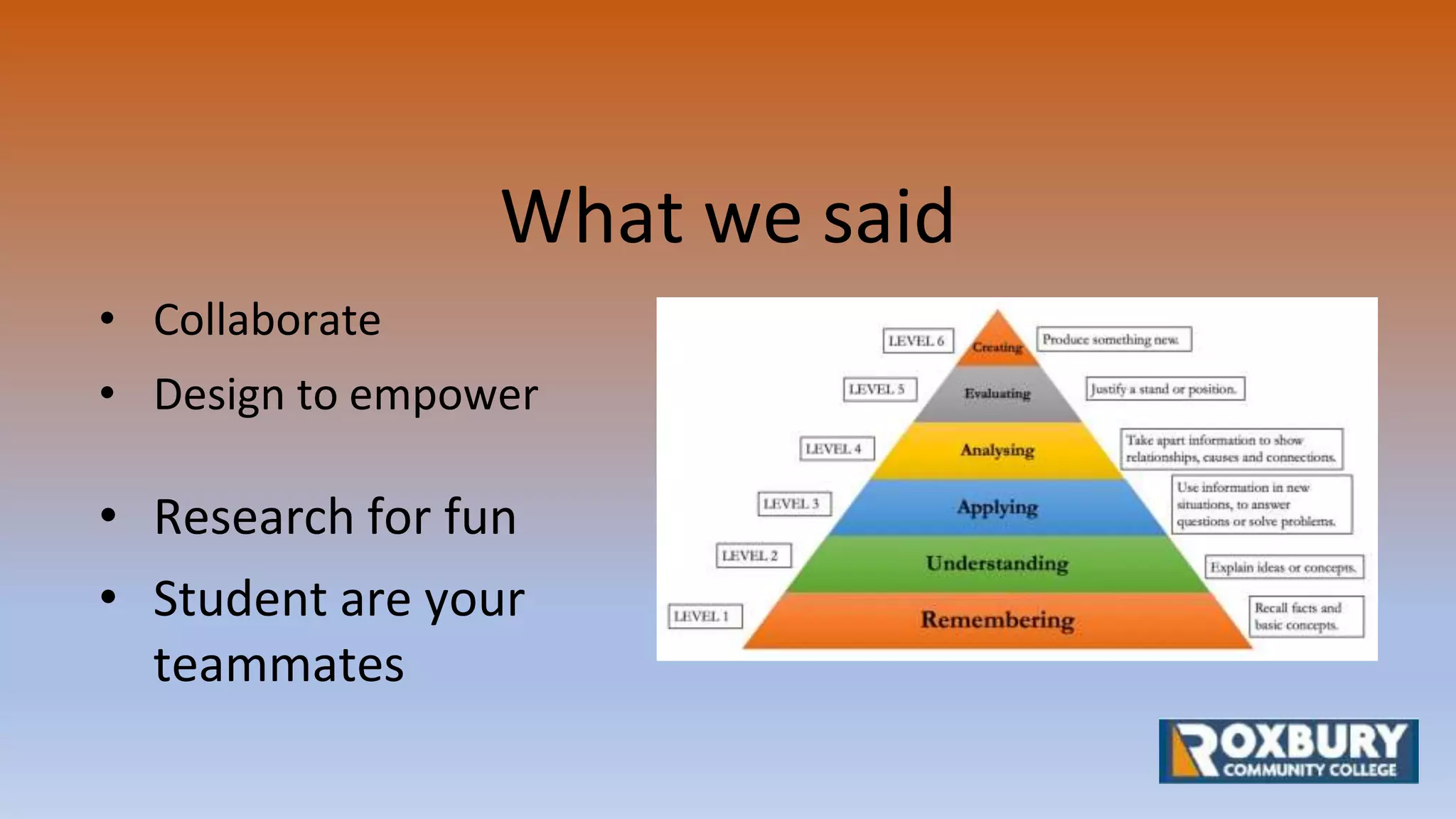
What we said
• Collaborate
• Design to empower
• Research for fun
• Student are your
teammates
Equity and Open Education
Faculty Cohort Model
Equity and Open Education Faculty Cohort course:
http://tinyurl.com/eoecourse
Jen Klaudinyi, Faculty Librarian,
Portland Community College
Michelle Huss, Biology Faculty,
Portland Community College
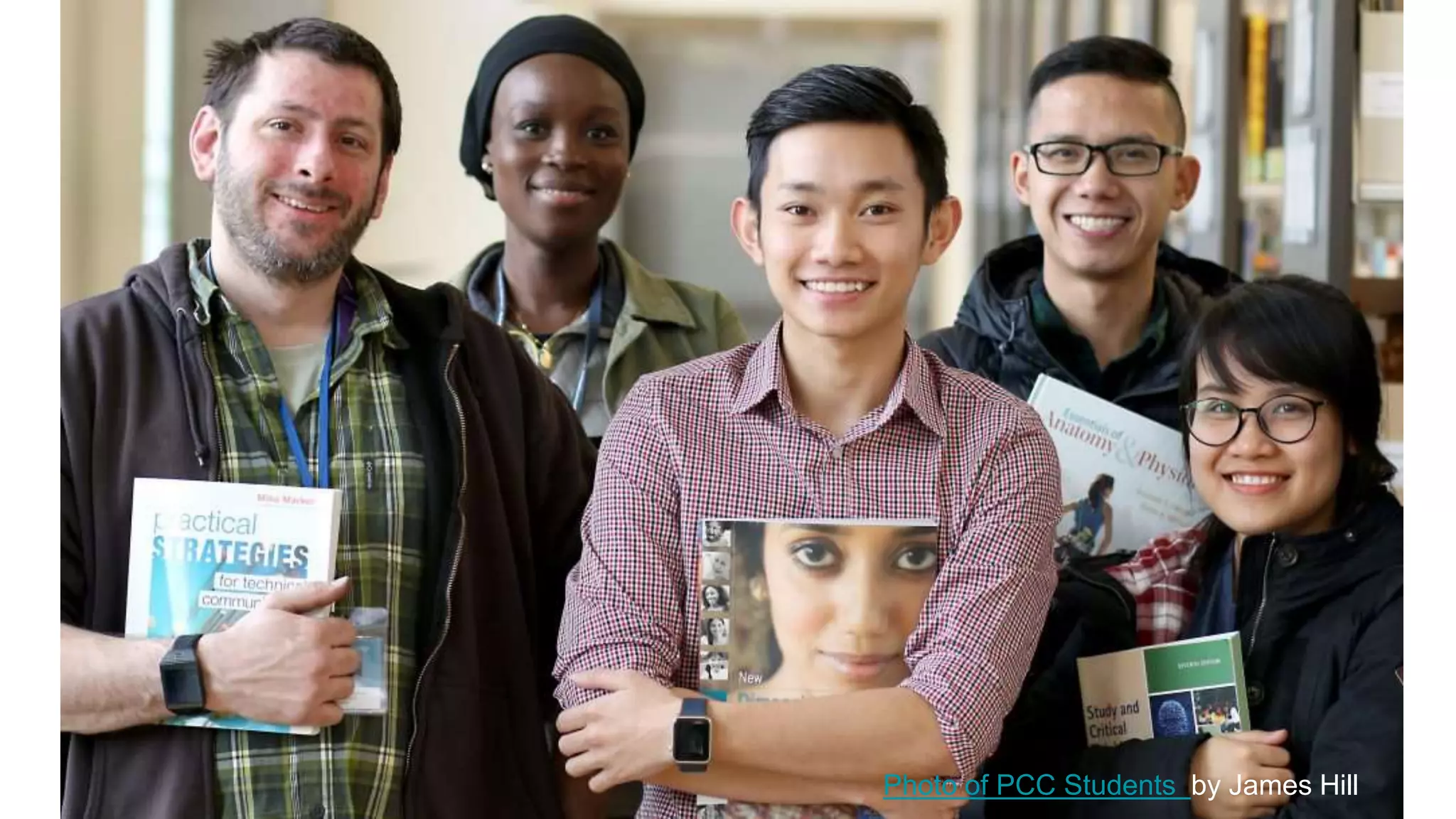
Photo of PCC Students by James Hill
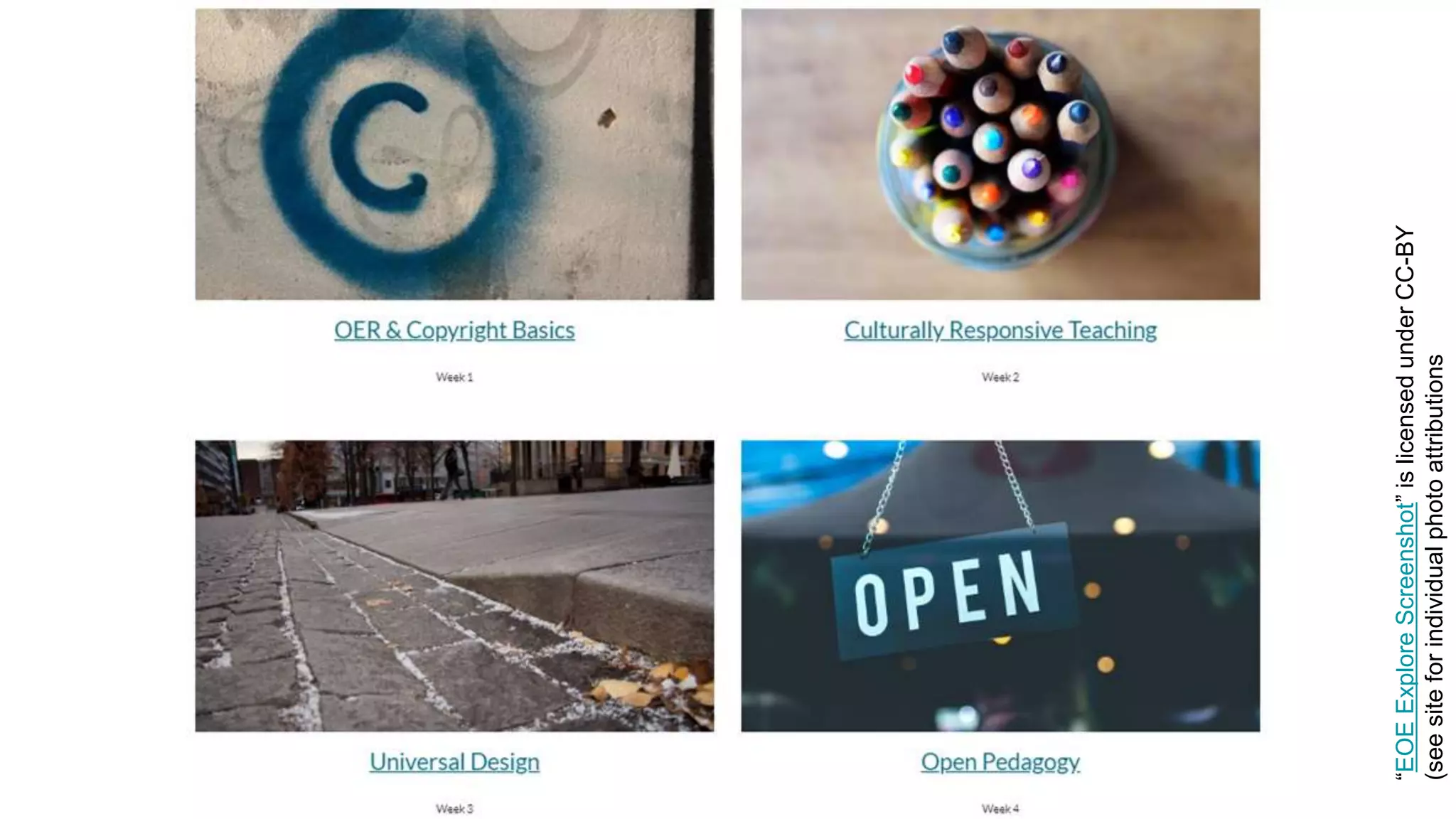
“EOE
Explore
Screenshot”
is
licensed
under
CC-BY
(see
site
for
individual
photo
attributions
http://tinyurl.com/eoecourse
Jen Klaudinyi | Faculty Librarian
jen.klaudinyi@pcc.edu
Openly licensed EOE Canvas course shell
OPEN PEDAGOGY
CHANGED MY
TEACHING LIFE
EQUITY AND OPEN EDUCATION FACULTY COHORT
This document was created by Michelle Huss and is licensed under a Creative Commons Attribution 4.0 international license. Please use and share this
presentation.
TEACHING LIFE BEFORE EOE FACULTY COHORT
Disposable assignments
Students had little control over
their
education and less voice
Low relevance
Text reliant heavy (white male
viewpoints)
Photo by Anniken &
Andreas, licensed under
Creative Commons 3.0
https://thenounproject.com/
term/tired-face/1058302/
START EARLY WITH A CULTURE SHIFT
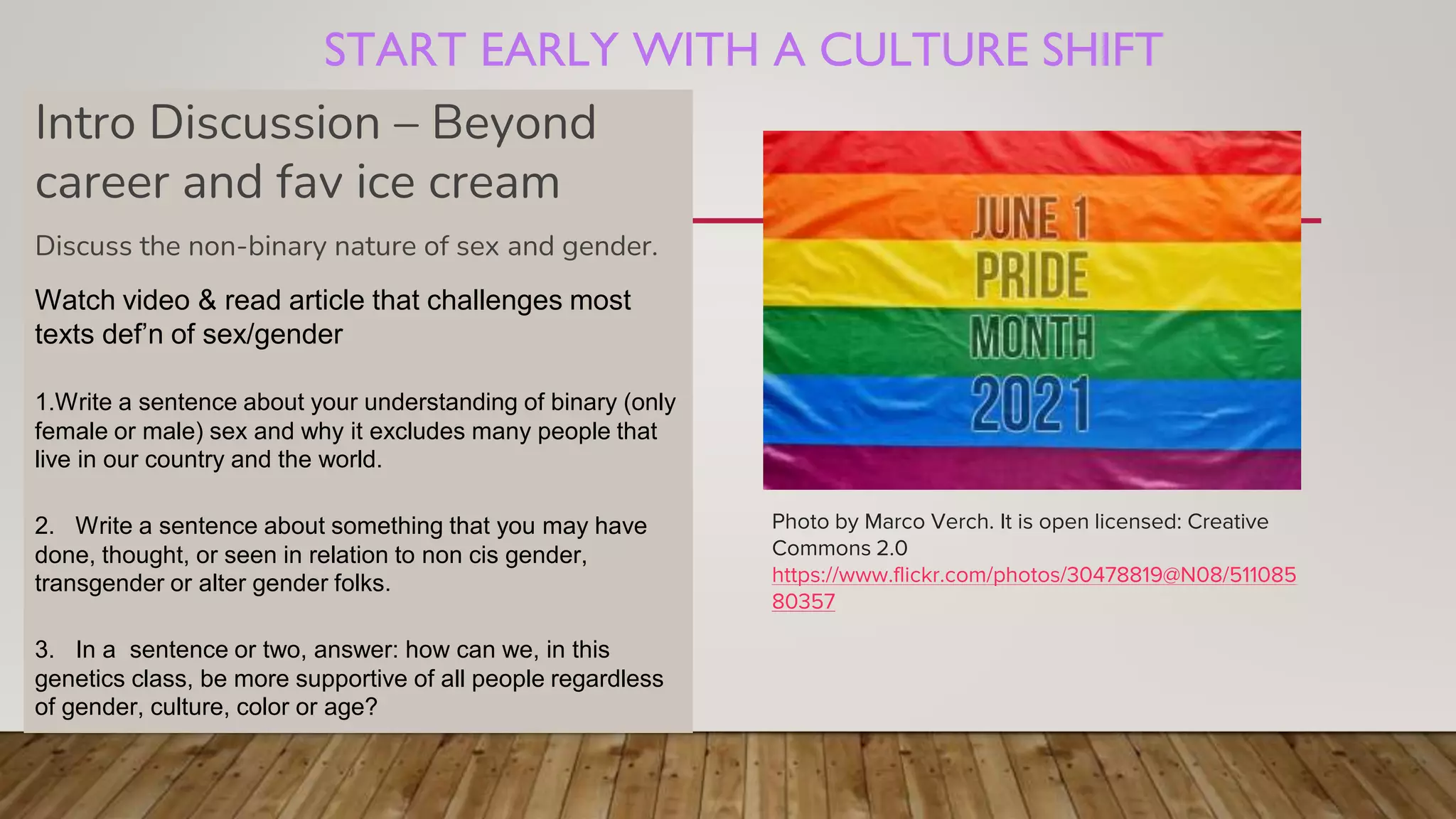
Photo by Marco Verch. It is open licensed: Creative
Commons 2.0
https://www.flickr.com/photos/30478819@N08/511085
80357
Intro Discussion – Beyond
career and fav ice cream
Discuss the non-binary nature of sex and gender.
Watch video & read article that challenges most
texts def’n of sex/gender
1.Write a sentence about your understanding of binary (only
female or male) sex and why it excludes many people that
live in our country and the world.
2. Write a sentence about something that you may have
done, thought, or seen in relation to non cis gender,
transgender or alter gender folks.
3. In a sentence or two, answer: how can we, in this
genetics class, be more supportive of all people regardless
of gender, culture, color or age?
FROM DISPOSABLE TO LEGACY & OPEN
• CASE STUDY SHARE
• LEGACY PROJECTS
• NON-DISPOSABLE HW LEADS TO ASSESSMENT WRITING BY STUDENTS
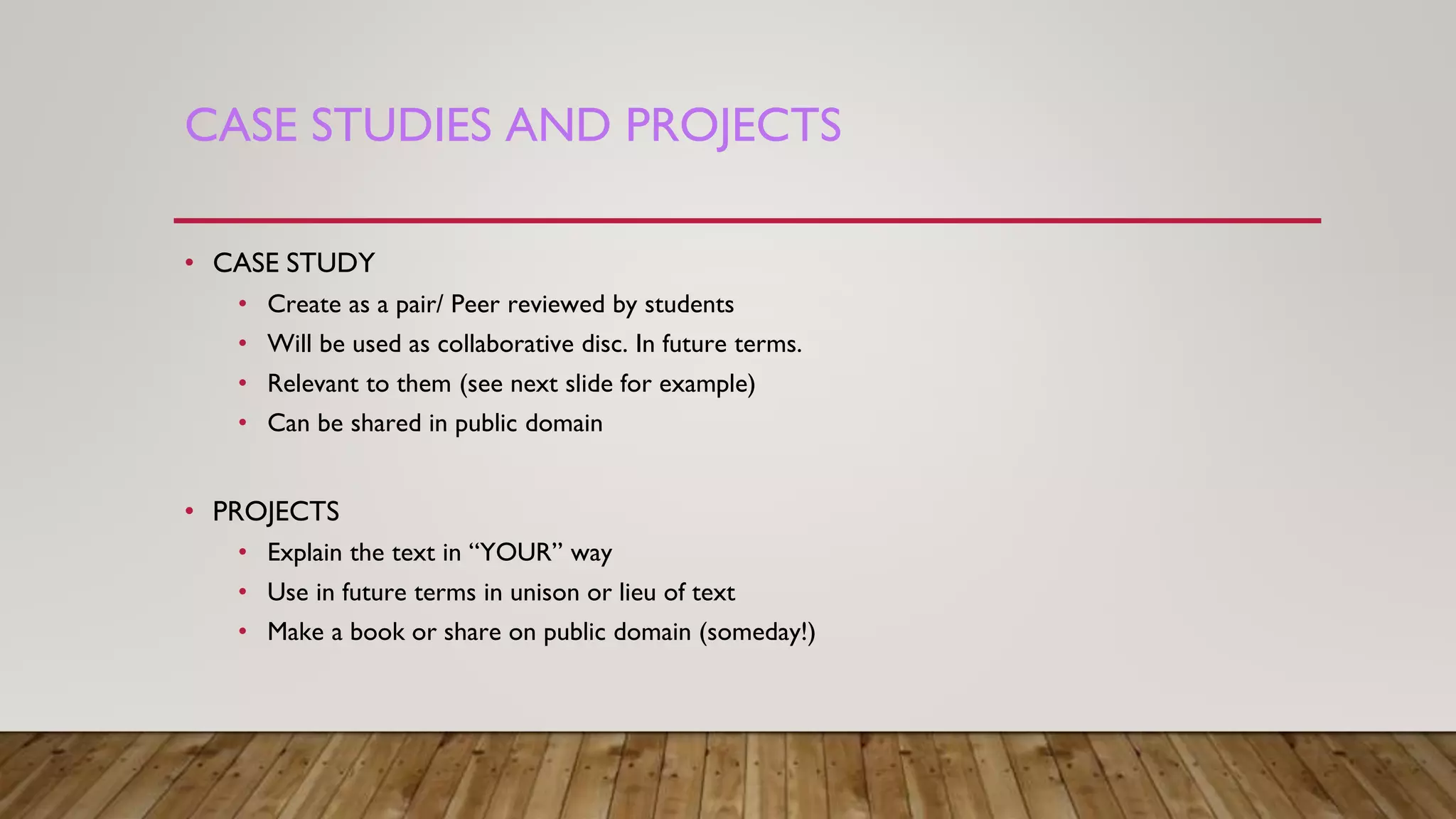
CASE STUDIES AND PROJECTS
• CASE STUDY
• Create as a pair/ Peer reviewed by students
• Will be used as collaborative disc. In future terms.
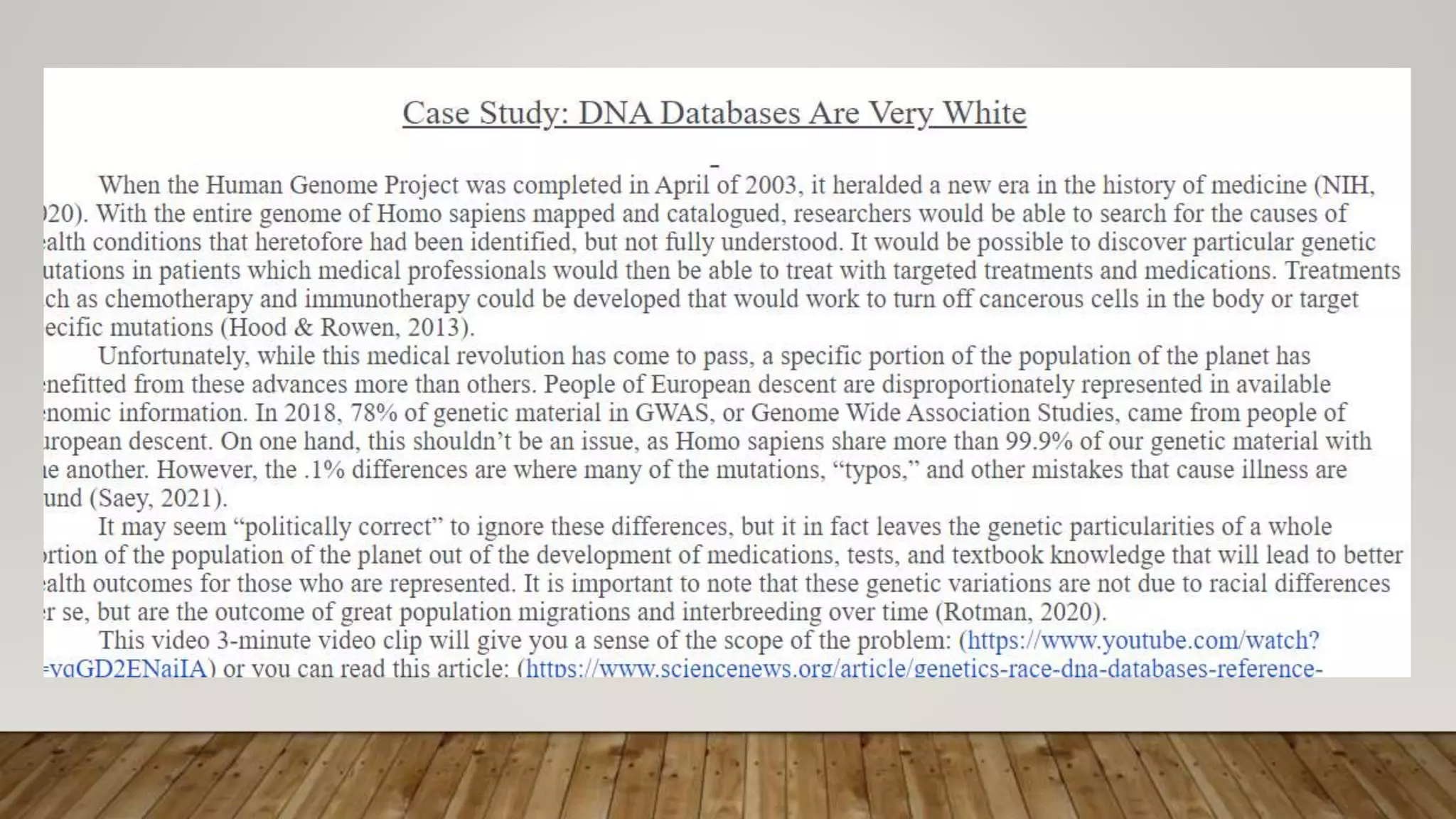
• Relevant to them (see next slide for example)
• Can be shared in public domain
• PROJECTS
• Explain the text in “YOUR” way
• Use in future terms in unison or lieu of text
• Make a book or share on public domain (someday!)
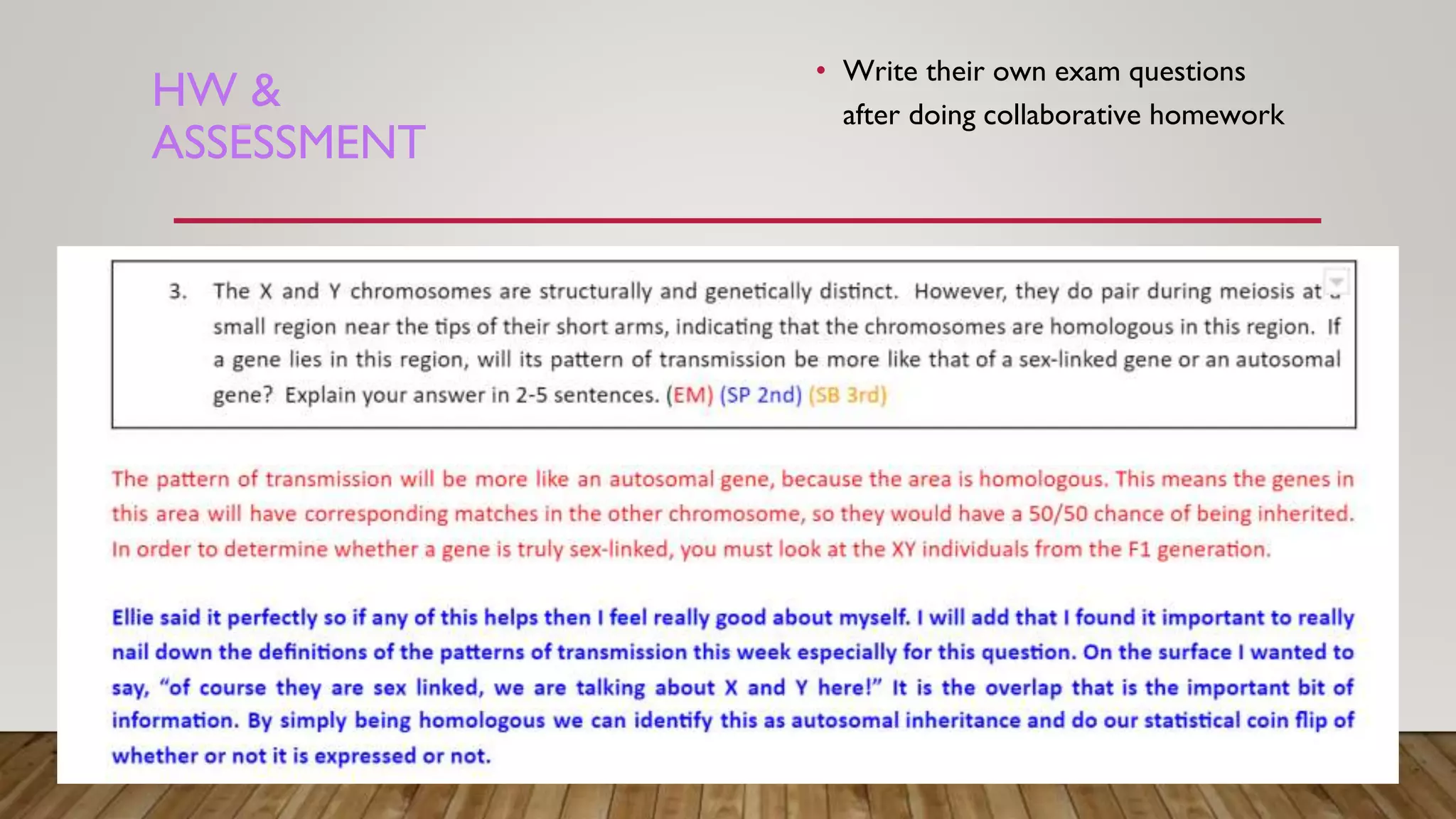
HW &
ASSESSMENT
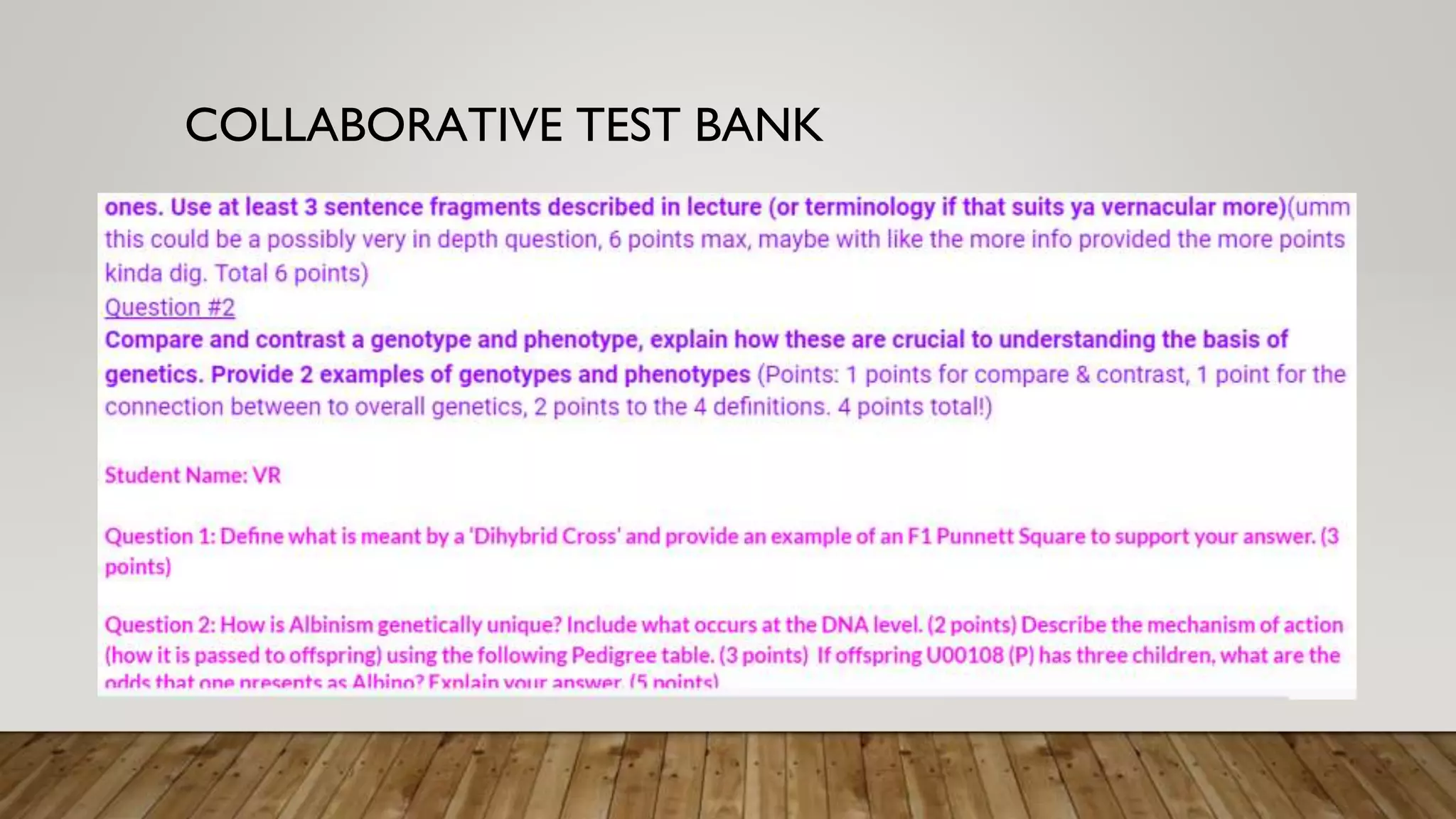
• Write their own exam questions
after doing collaborative homework
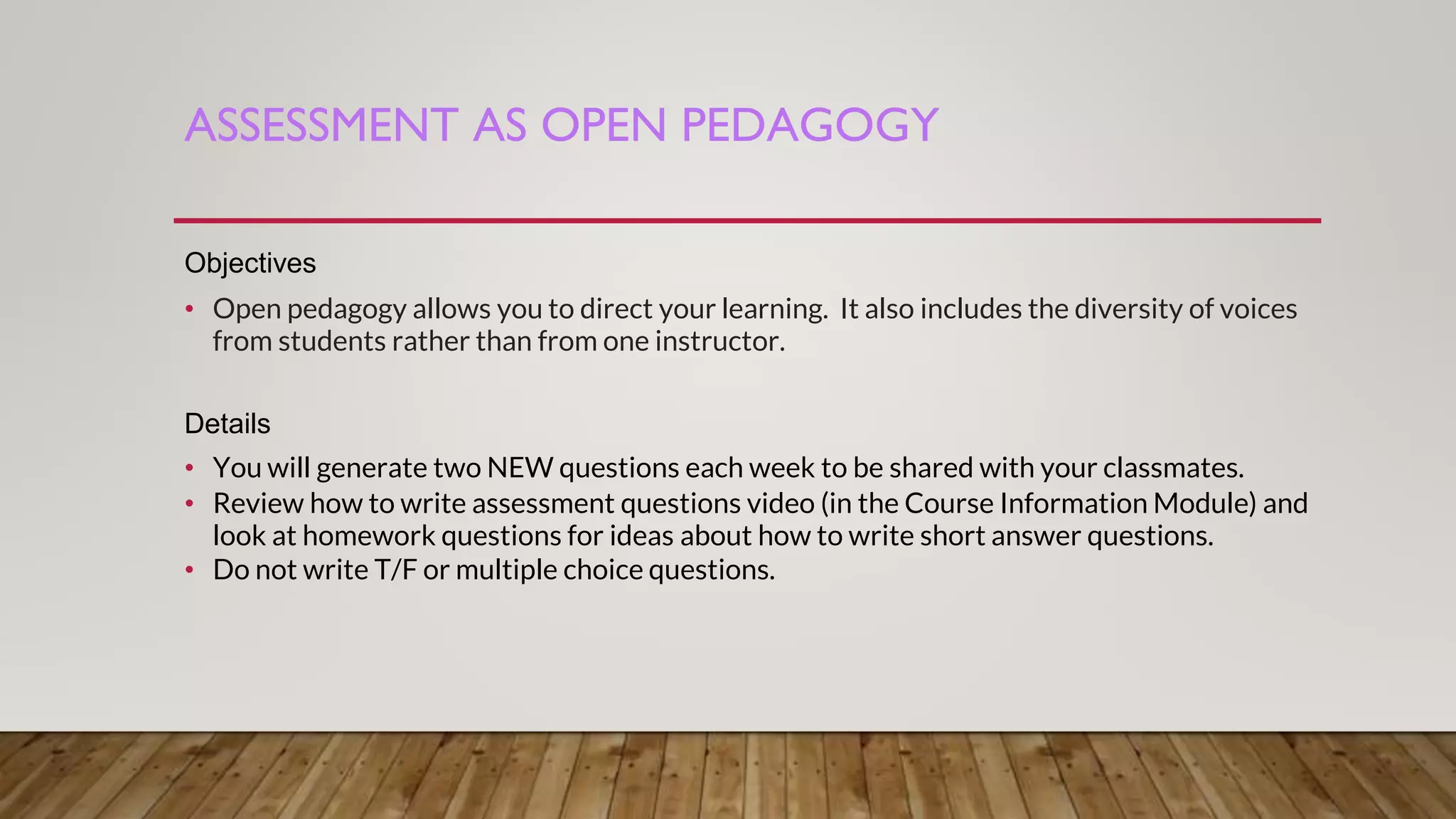
ASSESSMENT AS OPEN PEDAGOGY
Objectives
• Open pedagogy allows you to direct your learning. It also includes the diversity of voices
from students rather than from one instructor.
Details
• You will generate two NEW questions each week to be shared with your classmates.
• Review how to write assessment questions video (in the Course Information Module) and
look at homework questions for ideas about how to write short answer questions.
• Do not write T/F or multiple choice questions.
COLLABORATIVE TEST BANK
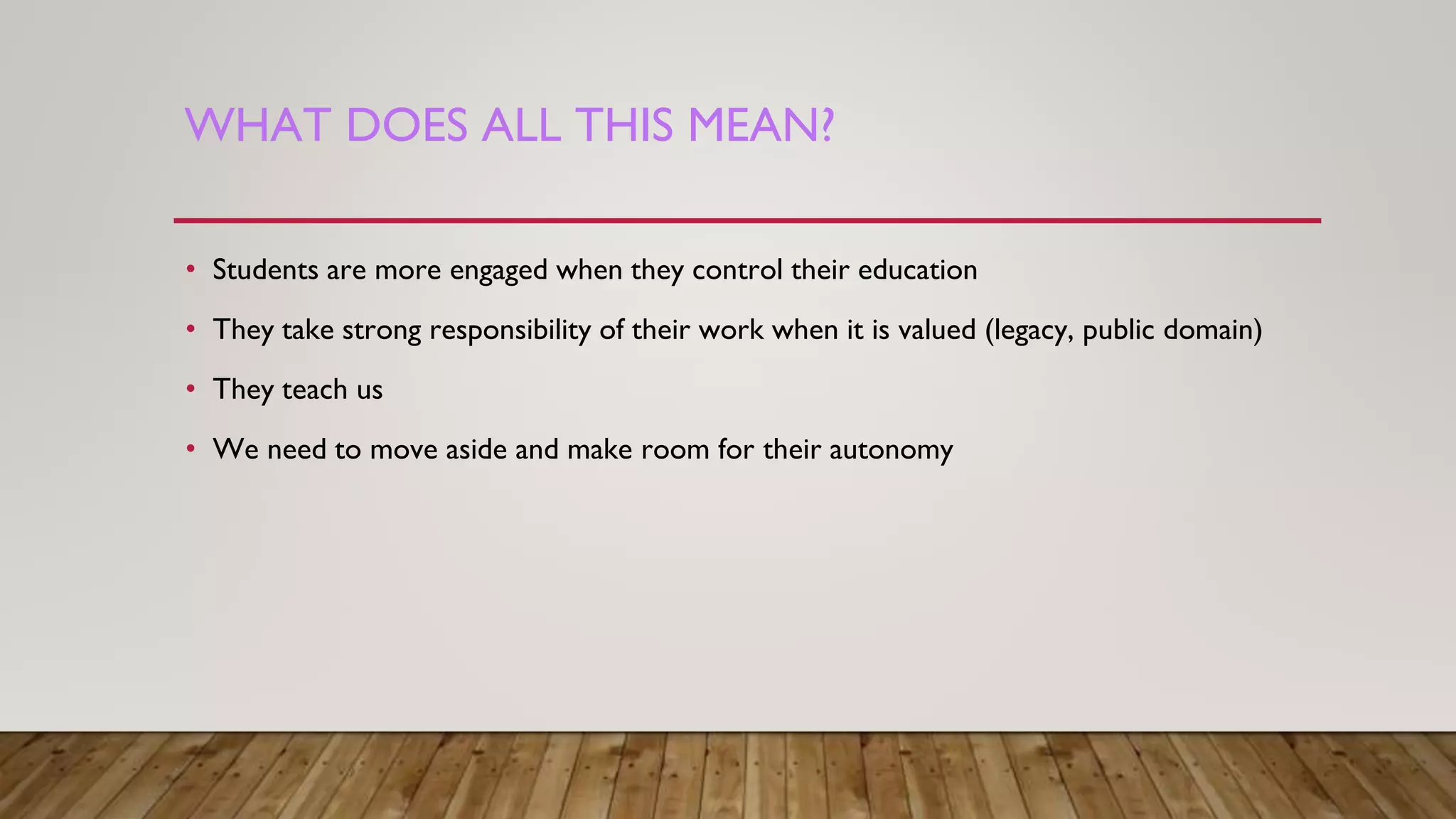
WHAT DOES ALL THIS MEAN?
• Students are more engaged when they control their education
• They take strong responsibility of their work when it is valued (legacy, public domain)
• They teach us
• We need to move aside and make room for their autonomy
Open for AntiRacism
Joy Shoemate, Director of Online
Learning, College of the Canyons
Debra J. Crumpton, Professor,
Business & Business Technology,
Sacramento City College
Joy Shoemate
joy.shoemate@canyons.edu
Director, Online Education
College of the Canyons
Unless otherwise indicated, this
presentation is licensed CC-BY 4.0
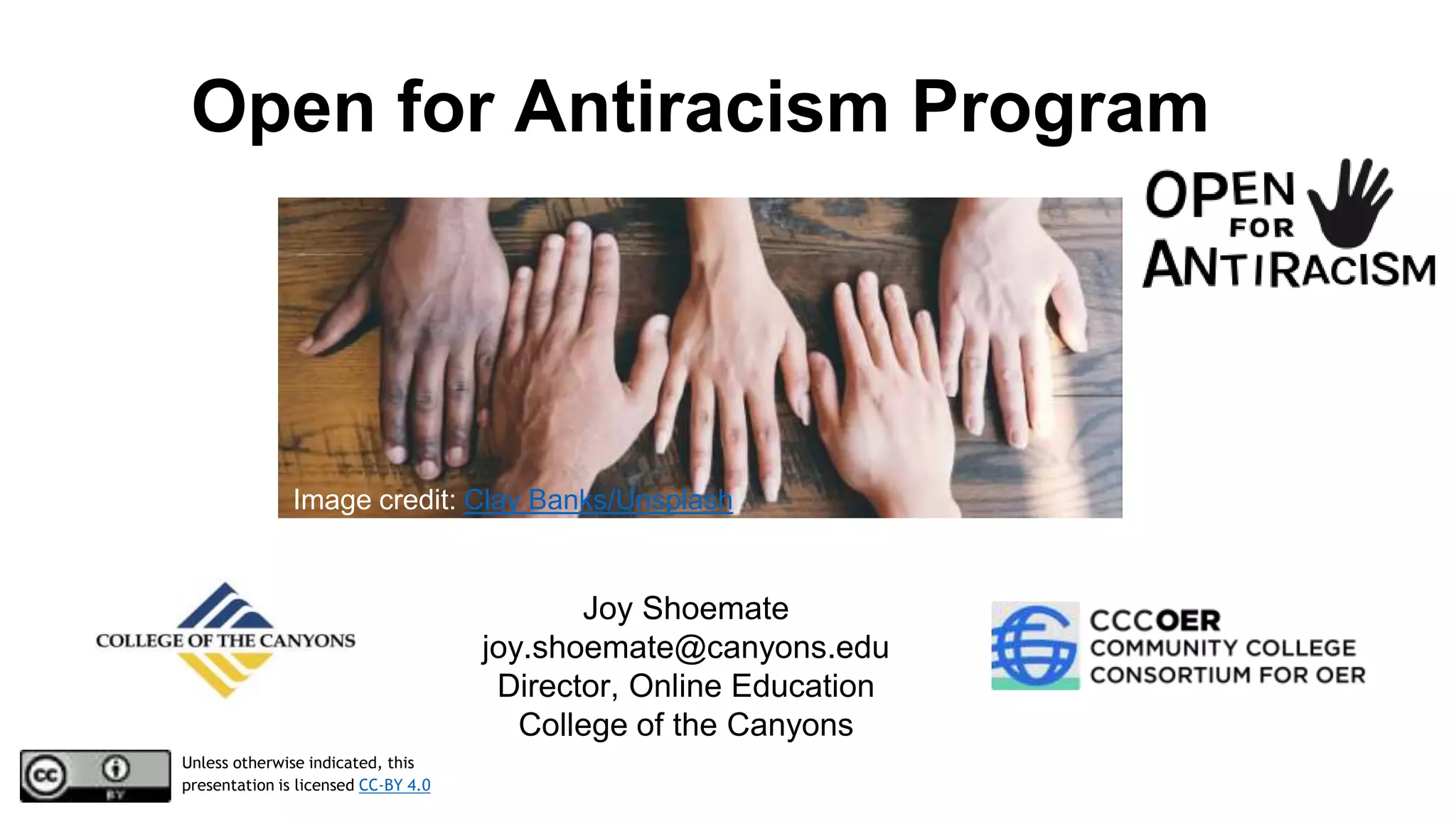
Open for Antiracism Program
Image credit: Clay Banks/Unsplash
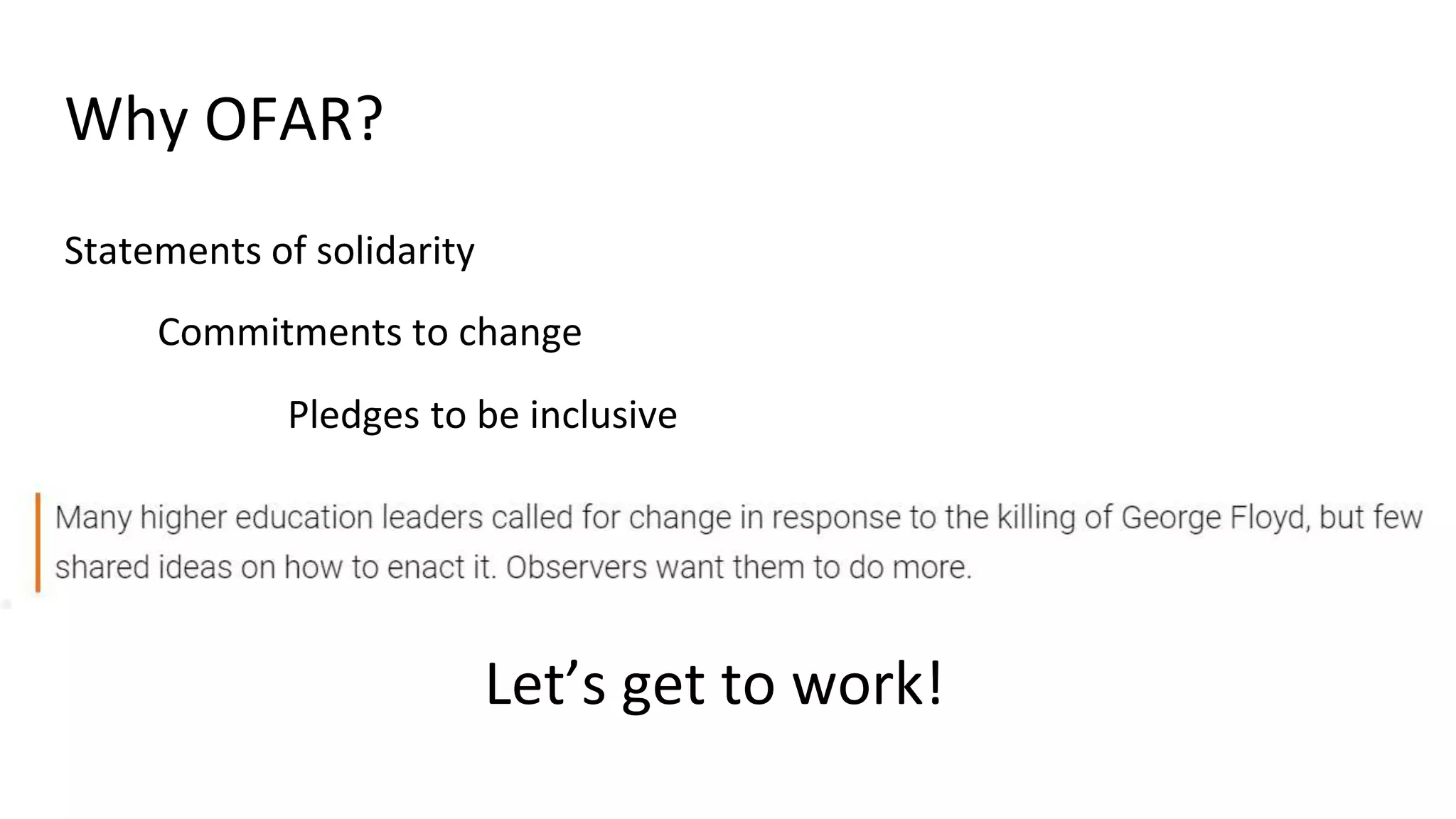
Why OFAR?
Statements of solidarity
Commitments to change
Pledges to be inclusive
Let’s get to work!
● Explore how to use OER and open pedagogy to make instructional
materials and teaching more anti-racist.
● Learn about Anti-Racist Pedagogy, OER, and Open Pedagogy in a
facilitated online course.
● Develop and implement an action plan in collaboration with students.
● Benefit from peer connections, monthly webinars, coaching, and OER
support.
● Document impact via faculty surveys, interviews and student surveys.
4-week Canvas Course
● What is Antiracism?
● What are OERs and how can they support Antiracism?
● What is Open Pedagogy and how it support Antiracism?
● Creating an Antiracism action plan
Small group and large group discussions throughout building
community and understanding.
Defining Antiracist Pedagogy
Be race conscious
● Acknowledge your identity and social position
● Recognize that implicit bias exists
Think systemically and structurally
● Expose systemic or structural racism
Examine the history of a discipline
● Ask how knowledge is defined and accepted
● Ask who gets to have a voice in the discipline
Include voices and perspectives from many peoples and groups
Invite students to contribute their own perspectives and
experiences
Bridging Gap between Open Pedagogy and
Antiracist Pedagogy
• Thoughtful consideration of authorial voices in learning materials
• Conscientiously realigning the power structure within the learning
environment to include learners as active participants in the learning
process
• Engagement in discussion to actively combat racism in our fields
• Constant evaluation of the course design
• Textbook replacement
• Open course design
• Open student projects
• Non-disposable vs. disposable assignments
Action plan template
How will you integrate OER and open pedagogy as a way to
make your teaching and learning explicitly anti-racist.
Think both about both short-term, easily implemented actions
or projects, and the long term.
How can you extend or "scale up" your idea? Bring others in?
Expand your reach?
Ongoing Support
Monthly workshops and open office hours
• OER search, Open licensing, Q&A
Monthly Speaker Series
• Leaders in antiracism and equity in higher education
• OFAR Cohort Showcase Celebration
Thank you!
Contact Info:
Una Daly-- unatdaly@oeglobal.org
Liz Yata -- lizyata@oeglobal.org
James Glapa-Grossklag – James.Glapa-Grossklag@canyons.edu
Kim Grewe – kgrewe@nvcc.edu
Joy Shoemate – joy.shoemate@canyons.edu
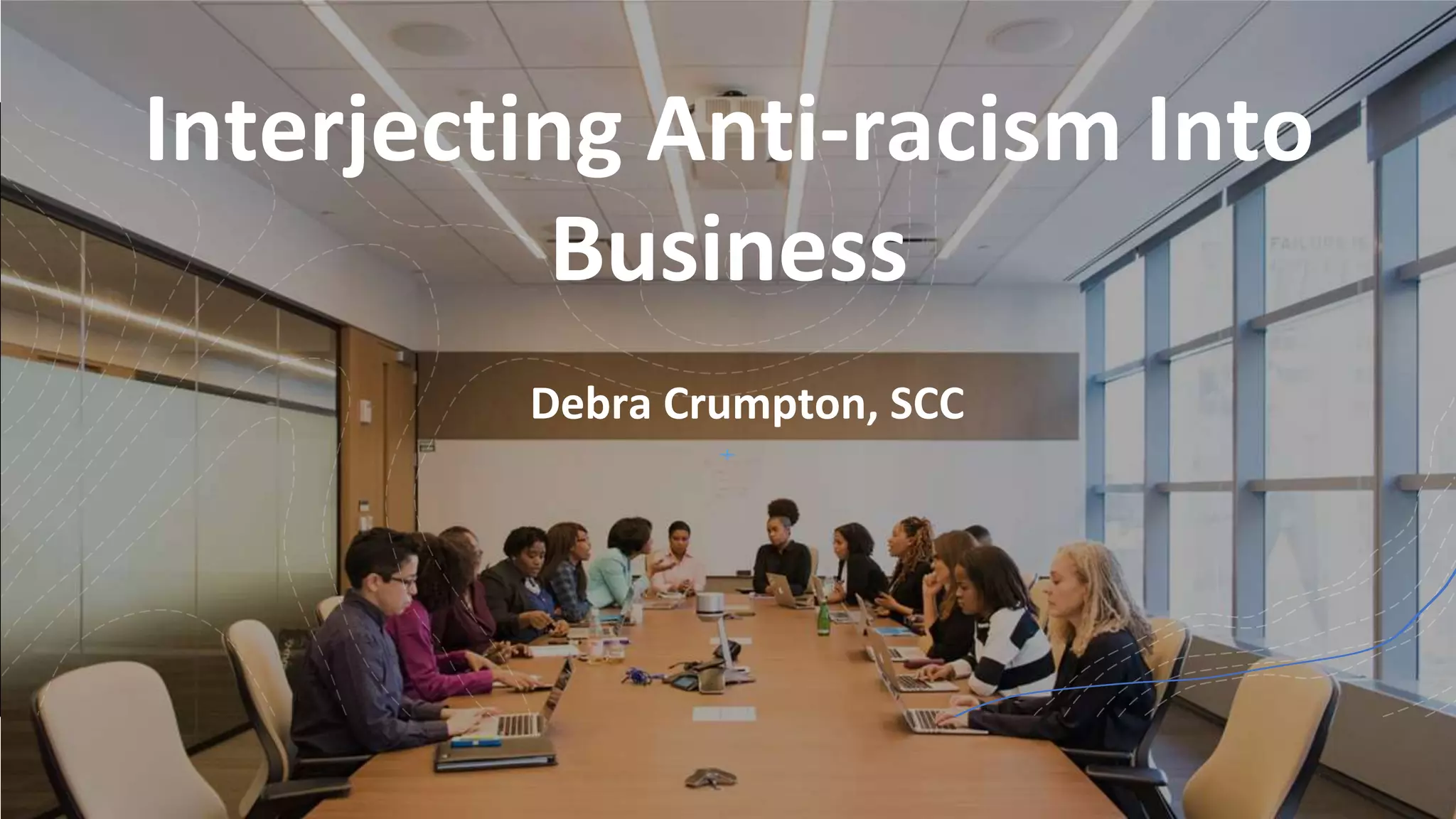
Interjecting Anti-racism Into
Business
Debra Crumpton, SCC
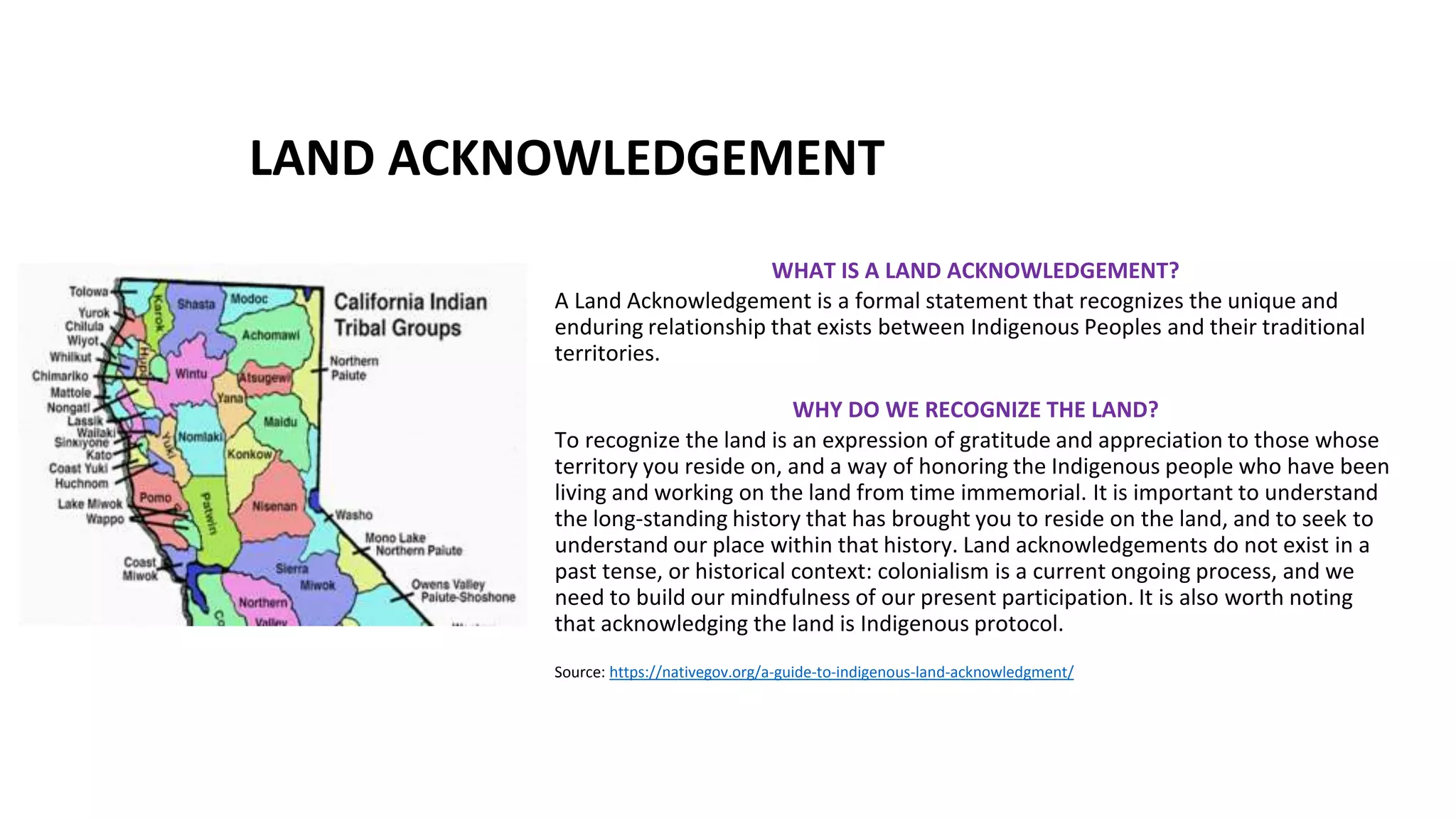
LAND ACKNOWLEDGEMENT
WHAT IS A LAND ACKNOWLEDGEMENT?
A Land Acknowledgement is a formal statement that recognizes the unique and
enduring relationship that exists between Indigenous Peoples and their traditional
territories.
WHY DO WE RECOGNIZE THE LAND?
To recognize the land is an expression of gratitude and appreciation to those whose
territory you reside on, and a way of honoring the Indigenous people who have been
living and working on the land from time immemorial. It is important to understand
the long-standing history that has brought you to reside on the land, and to seek to
understand our place within that history. Land acknowledgements do not exist in a
past tense, or historical context: colonialism is a current ongoing process, and we
need to build our mindfulness of our present participation. It is also worth noting
that acknowledging the land is Indigenous protocol.
Source: https://nativegov.org/a-guide-to-indigenous-land-acknowledgment/
Injecting Antiracism into Business
My Intentions - My Action Plan
• Integrate & Remix OER text
• Create antiracist course content
• Create antiracist learning experiences for
students
• Encourage student-generated and student-
curated content
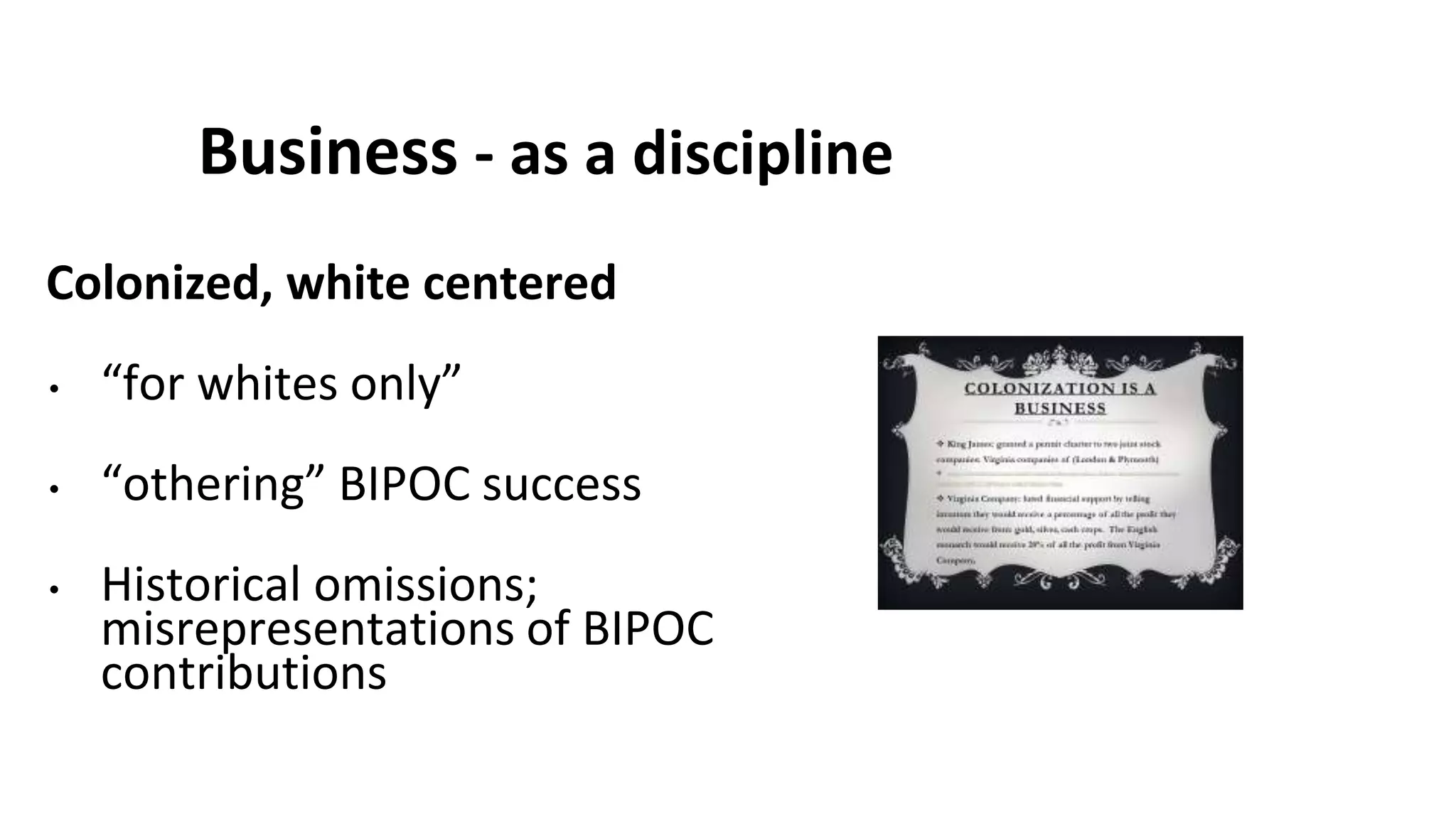
Business - as a discipline
Colonized, white centered
• “for whites only”
• “othering” BIPOC success
• Historical omissions;
misrepresentations of BIPOC
contributions
Anti-racism Activities to Date
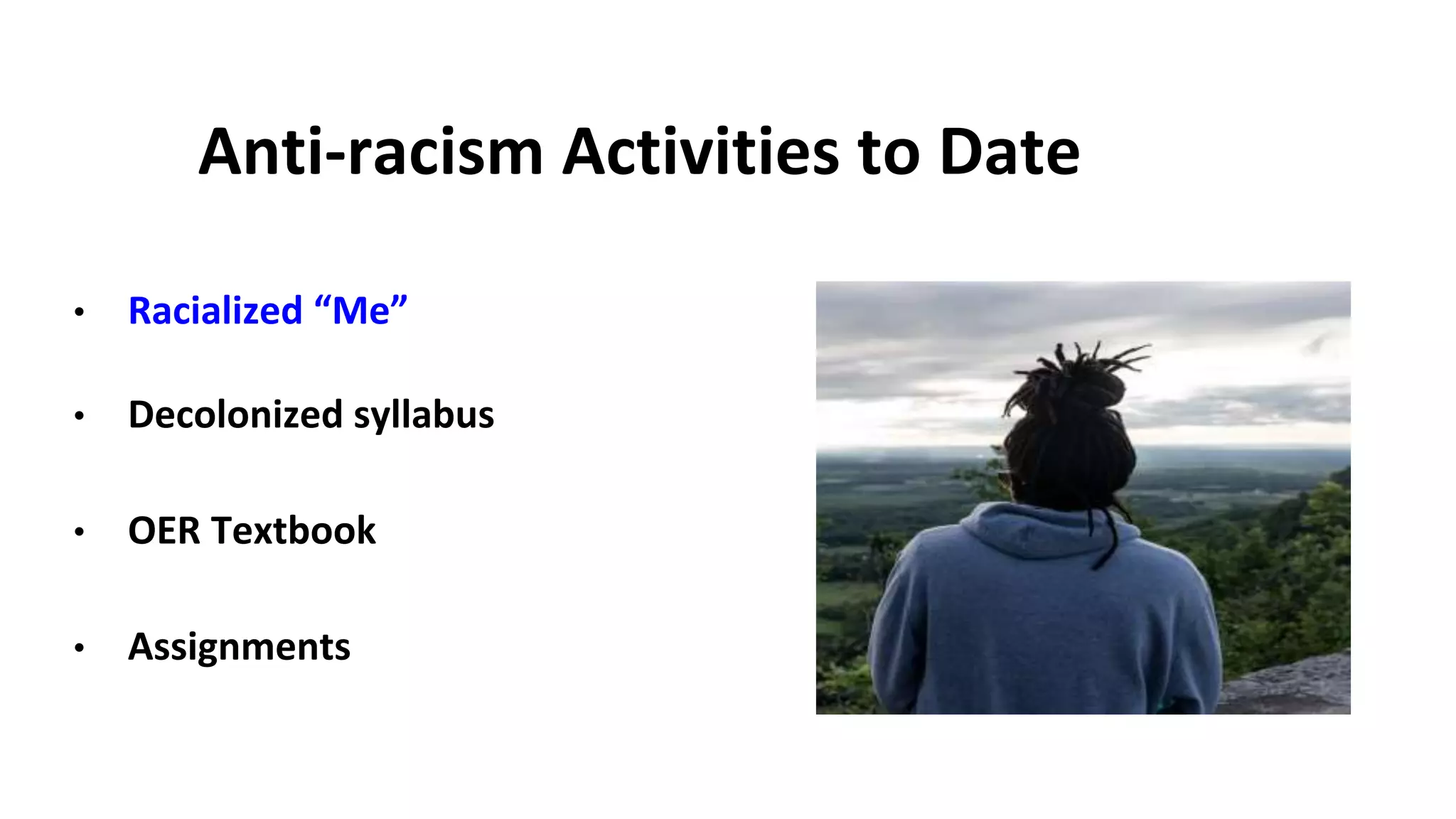
• Racialized “Me”
• Decolonized syllabus
• OER Textbook
• Assignments
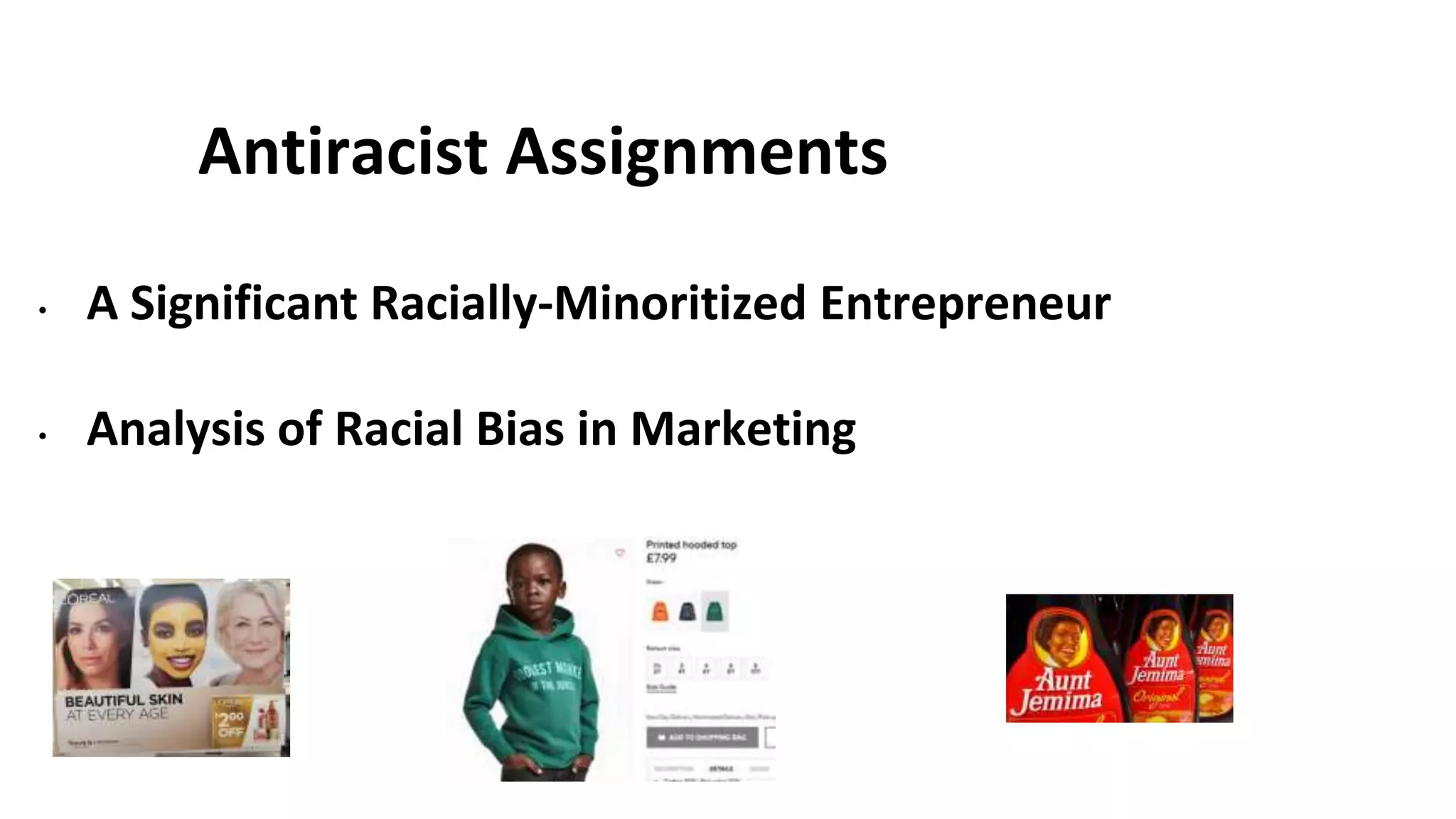
Antiracist Assignments
• A Significant Racially-Minoritized Entrepreneur
• Analysis of Racial Bias in Marketing
Racism in Marketing
The Racial Bias in Retail Study
Commissioned by Sephora
View on YouTube:
https://www.youtube.com/watch?v
=aSjSXHmKZpA
Racism in Marketing
Racism in Marketing
by SupremeUTV
View on YouTube:
https://www.youtube.com/watch?v=EXEugb0jE3k
Racism in Marketing
Respond to the questions with the understanding and knowledge that the only experience you know to be true is your own and that you
cannot speak for anyone else. Respond to the questions with the understanding that you, like each person, are on your individual journey
and your place on your journey may be vastly different than another person’s place on their journey.
Do not be intolerant of others or invalidate another student’s perspective, experience, or “truth.”
The goal for this discussion forum, as it is for all discussion forums, is to increase knowledge, broaden insights, and advance
understanding. Education helps us to pursue a better life and create a better world. Stay mindful of this as you answer the following
questions.
1. How did the first video, The Racial Bias in Retail Study, make you feel? Do you agree with the information that was presented? Why
or why not?
2. How did the first video, The Racial Bias in Retail Study, make you feel? Do you agree with the information that was presented? Why
or why not?
3. Identify at least three products or services that you use and identify the racism in them. Explain how you see racism in the product
or served in each product or service that you identified. )This is not about being right or wrong it is about your perspective.)
4. Have you ever been treated unfairly, unjust, or in any way discriminated again when you were shopping? If so, please share as much
of your experience as you feel comfortable sharing.
Racism in Marketing
BIPOC students –
▪ “felt ignored and unwanted”
▪ “My blood began to boil and I scolded this man for treating my father with
disrespect”
White students -
▪ “I have never had to experience any form of discrimination and as such cannot
share an experience here.”
▪ “I am not my ancestors”
Racism in Marketing
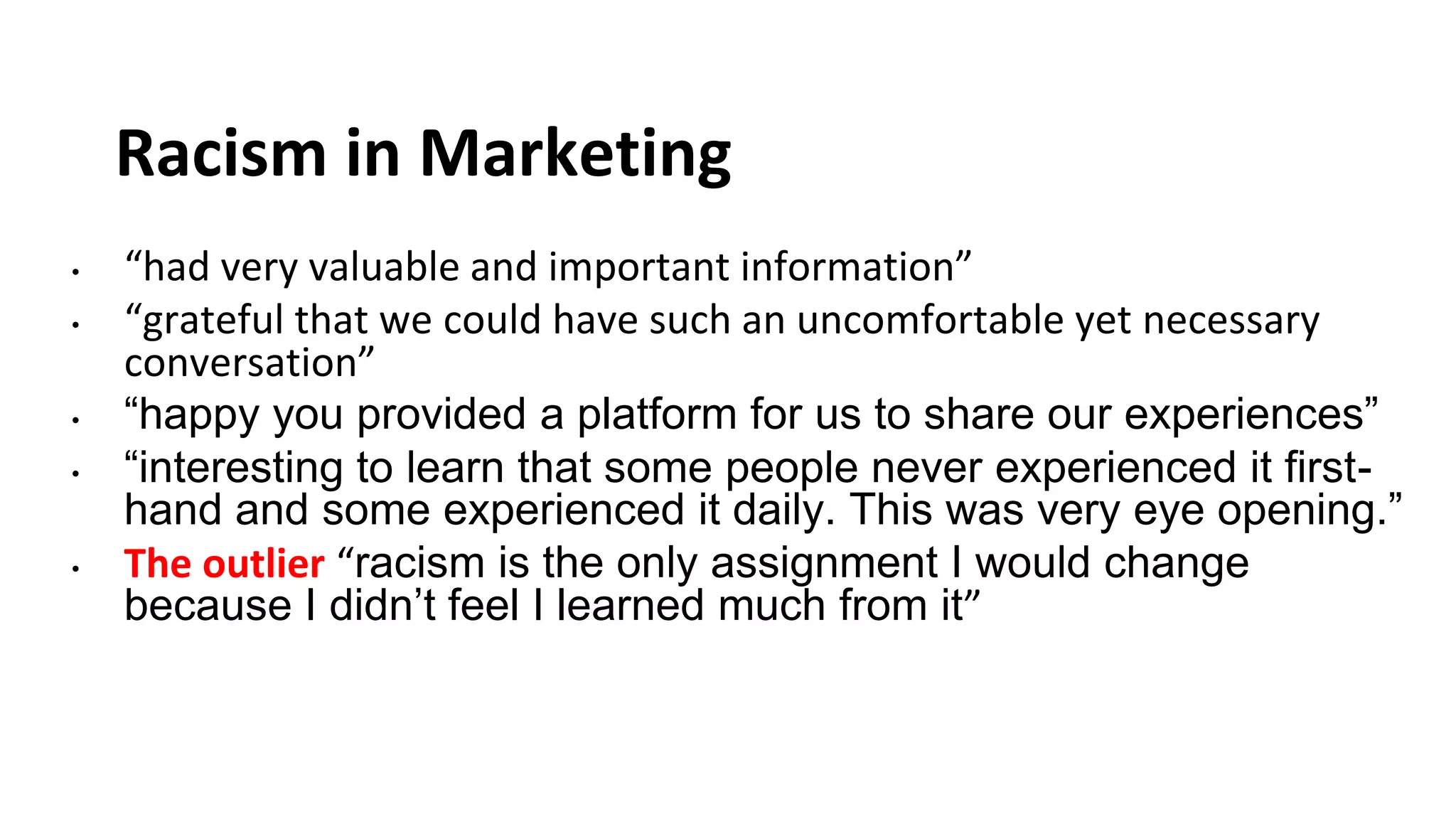
• “had very valuable and important information”
• “grateful that we could have such an uncomfortable yet necessary
conversation”
• “happy you provided a platform for us to share our experiences”
• “interesting to learn that some people never experienced it first-
hand and some experienced it daily. This was very eye opening.”
• The outlier “racism is the only assignment I would change
because I didn’t feel I learned much from it”
Sharing OFAR
• Department Meetings
• Professional Development
Activity: August 18
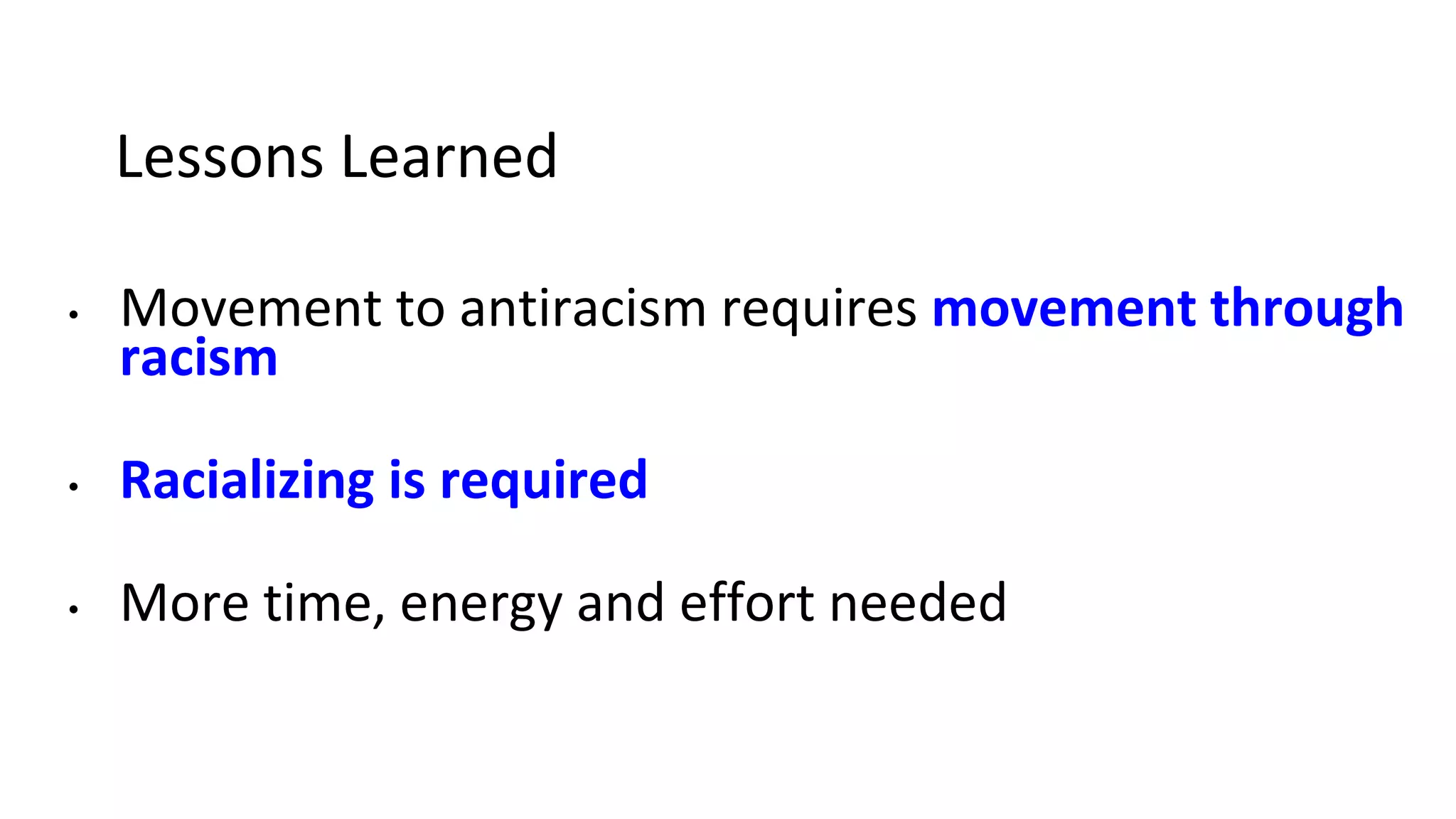
Lessons Learned
• Movement to antiracism requires movement through
racism
• Racializing is required
• More time, energy and effort needed
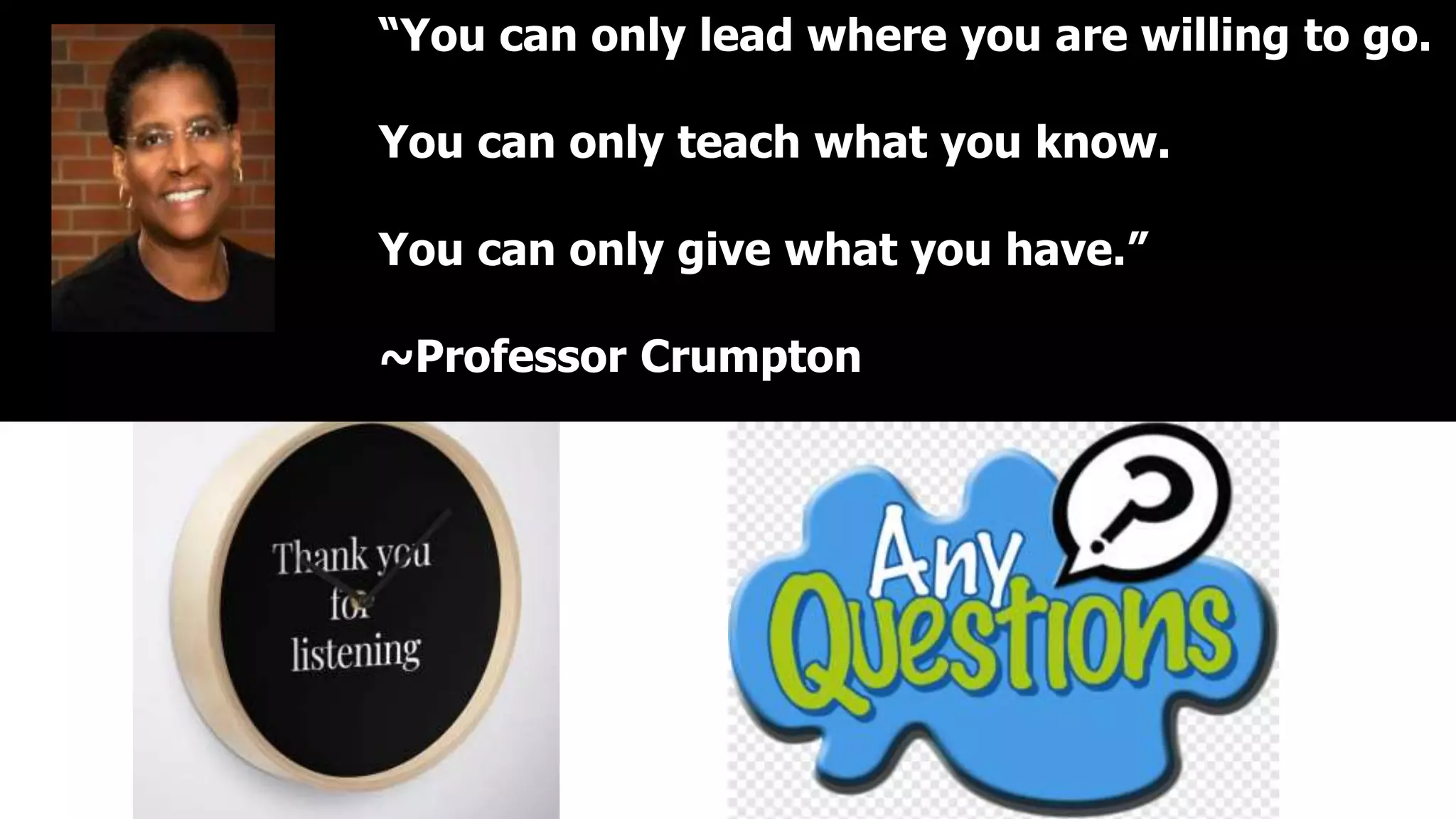
“You can only lead where you are willing to go.
You can only teach what you know.
You can only give what you have.”
~Professor Crumpton
Image by Gerd Altmann from Pixabay
That’s a wrap for Spring
webinars!
Check out our Summer Activities at
CCCOER.org/
Did you miss a webinar?
Browse the archives at:
https://www.cccoer.org/webinar/
Cherry blossom bumblebee by Rudy
and Peter Skitterians from Pixabay
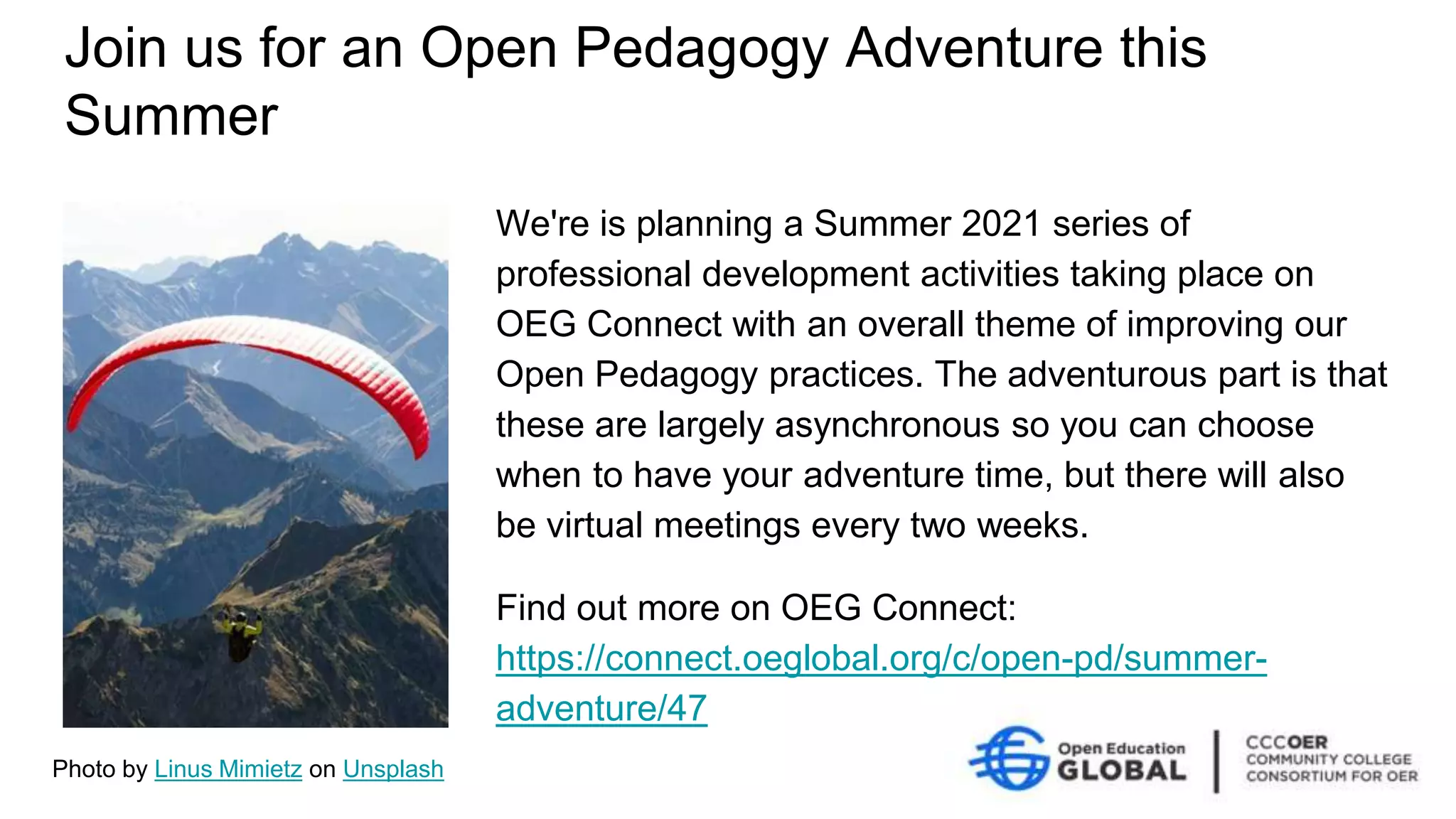
Join us for an Open Pedagogy Adventure this
Summer
We're is planning a Summer 2021 series of
professional development activities taking place on
OEG Connect with an overall theme of improving our
Open Pedagogy practices. The adventurous part is that
these are largely asynchronous so you can choose
when to have your adventure time, but there will also
be virtual meetings every two weeks.
Find out more on OEG Connect:
https://connect.oeglobal.org/c/open-pd/summer-
adventure/47
Photo by Linus Mimietz on Unsplash
Stay in the Loop
● Upcoming Conferences
See our website under “Get-Involved”
● Join our Community Email
○ https://www.cccoer.org/community-email/
● Read our EDI blog posts & Student
OER Impact Stories
○ https://www.cccoer.org
Image by Paul Brennan from Pixabay
Questions?
Contact Info:
@unatdaly -- unatdaly@oeglobal.org
@CCCOER Liz Yata -- lizyata@oeglobal.org
Thank you!

CCCOER Presents: Models for Transforming Cassrooms to be Equitable and Antiracist

  • 1.
    June 9, 2021,12:00 pm PDT Welcome Unless otherwise indicated, this presentation is licensed CC-BY 4.0 Models for Transforming Classrooms to be Equitable and Antiracist
  • 2.
    Agenda • Introductions • EnvironmentalScience course and Library support at Roxbury Community College (Boston, MA) • Biology Course transformation via Oregon Equity and Open Education program • Introduction to Business Class transformation via Open for AntiRacism program (California) • Summer Activities Previous slide image credit: stickies-post-it-list by Gerd Altmann from Pixabay
  • 3.
    Speakers Debra J. Crumpton, Professor, Business &Business Technology, Sacramento City College Jalal Ghaemghami, Faculty, Environmental Science, Roxbury Community College Michelle Huss, Biology Faculty, Portland Community College Jen Klaudinyi, Faculty Librarian, Portland Community College Joy Shoemate, Director of Online Learning, College of the Canyons Moderators: Ted (Totsaporn) Intarabumrung, Coordinator of Library Services, Roxbury Community College Una Daly, CCCOER Director, Open Education Global
  • 4.
    ● Expand awareness& access to high- quality OER ● Support faculty choice & development ● Foster regional OER leadership ● Improve student equity & success CCCOER Mission
  • 5.
  • 6.
  • 7.
    Roxbury College Ted (Totsaporn) Intarabumrung,Coordinator of Library Services Jalal Ghaemghami, Ph.D., Faculty, Environmental Science
  • 8.
    OPEN EDUCATIONAL RESOURCES ATROXBURY COMMUNITY COLLEGE Totsaporn (Ted) Intarabumrung Coordinator of Library Resources Jalal Ghaemghami Faculty 8
  • 9.
  • 10.
  • 11.
    ROXBURY COMMUNITY COLLEGE • Locatedin the heart of Boston, MA • Founded in 1973 • 2,131 students (Spring 2019) • 70% Female; 30% Male • Incredibly Diverse: +80% students of color • 55% Black or African American; 20% Hispanic or Latino; 7% White; 3% Cape Verdian; 2% Asian; 2% Two or more races • +30 countries of origin, linguistic diversity • Average age: 32 • Few students who come directly after high school graduation 11
  • 12.
    ROXBURY COMMUNITY COLLEGE STUDENTS •Poorest students in Commonwealth of MA • The mean EFC (Expected Family Contribution) for students is zero. ▪ 79% of RCC students have an EFC of zero. • Percentage of students receiving Pell grants: 77% • Average Pell award: $3,024 • RCC does not participate in any federal student loan programs **Most affordable community college in Massachusetts** 12
  • 13.
    ROXBURY COMMUNITY COLLEGE: OERSUPPORTS & INITIATIVES ▪OER Task Force ▪OER Platforms (OER Commons & OER LibGuides) ▪OER Stipends ▪OER Ambassadors ▪RCC Covid-19 History Project ▪Black Men Speak, 2020: Black Life Matters 13
  • 14.
    ROXBURY COMMUNITY COLLEGE: OERSUPPORTS & INITIATIVES LibGuide: Black History in Boston 14 Scan QR Code to access the LibGuide!
  • 15.
    ROXBURY COMMUNITY COLLEGE: OERSUPPORTS & INITIATIVES Black Men Speak, 2020: BLM 15 Scan QR Code to access the Archives!
  • 16.
    ROXBURY COMMUNITY COLLEGE: OERSUPPORTS & INITIATIVES 16 Scan QR Code to access the project!
  • 17.
    ROXBURY COMMUNITY COLLEGE: OERSUPPORTS & INITIATIVES 17 Scan QR Code to access the project! RCC COVID-19 History Project
  • 18.
    ROXBURY COMMUNITY COLLEGE OPENPEDAGOGY 18 Source: University of Texas Arlington Library, https://libguides.uta.edu/openped From "Free + Freedom: The Role of Open Pedagogy in the Open Education Movement" By Rajiv Jhangiani and Robin DeRosa
  • 19.
    Agenda • Library andYou • Course Design • Student Centered Approach • Exciting and empowering • Research in Environmental Science • Student as teammates Dr. Jalal Ghaemghami, Faculty
  • 20.
  • 21.
  • 22.
  • 23.
    Syllabus • Time managementand delivery • Clearly share expectation and any required task. • Carefully time due dates for assignments • Connectivity among topics in your class • Thematic knowledge • Assessments [Formative] • OER: Important to learn "how to use them?"
  • 24.
  • 25.
  • 26.
  • 27.
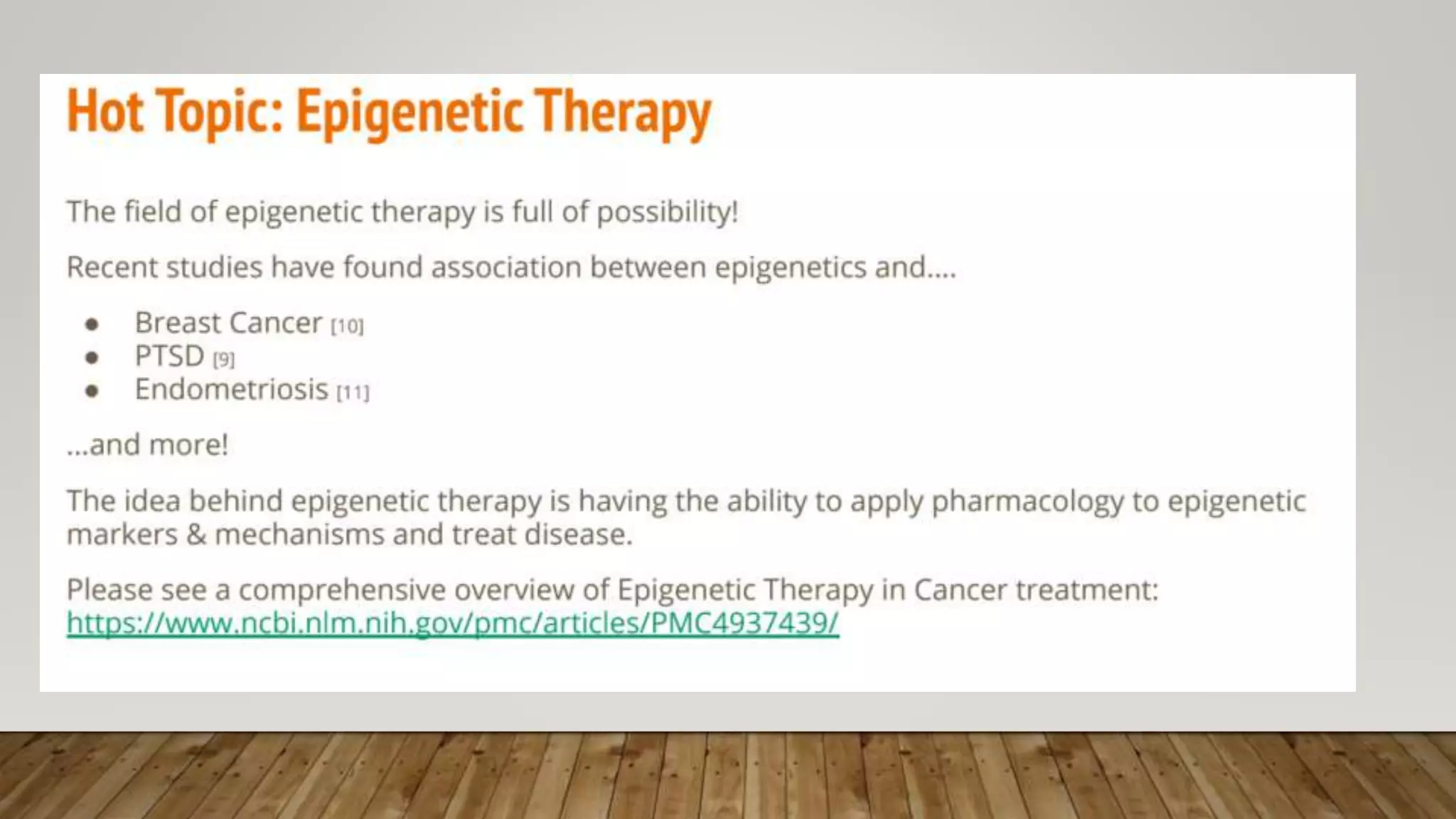
    Who is yourneighbor Where RCC is What is different
  • 28.
    Who is yourneighbor What do you see What is different Do you see how your health is related to environment
  • 29.
    Who is yourneighbor What do you see What is different What can you teach me
  • 30.
    What we said •Collaborate • Design to empower • Research for fun • Student are your teammates
  • 31.
    Equity and OpenEducation Faculty Cohort Model Equity and Open Education Faculty Cohort course: http://tinyurl.com/eoecourse Jen Klaudinyi, Faculty Librarian, Portland Community College Michelle Huss, Biology Faculty, Portland Community College
  • 32.
    Photo of PCCStudents by James Hill
  • 33.
  • 34.
    http://tinyurl.com/eoecourse Jen Klaudinyi |Faculty Librarian jen.klaudinyi@pcc.edu Openly licensed EOE Canvas course shell
  • 35.
    OPEN PEDAGOGY CHANGED MY TEACHINGLIFE EQUITY AND OPEN EDUCATION FACULTY COHORT This document was created by Michelle Huss and is licensed under a Creative Commons Attribution 4.0 international license. Please use and share this presentation.
  • 36.
    TEACHING LIFE BEFOREEOE FACULTY COHORT Disposable assignments Students had little control over their education and less voice Low relevance Text reliant heavy (white male viewpoints) Photo by Anniken & Andreas, licensed under Creative Commons 3.0 https://thenounproject.com/ term/tired-face/1058302/
  • 37.
    START EARLY WITHA CULTURE SHIFT Photo by Marco Verch. It is open licensed: Creative Commons 2.0 https://www.flickr.com/photos/30478819@N08/511085 80357 Intro Discussion – Beyond career and fav ice cream Discuss the non-binary nature of sex and gender. Watch video & read article that challenges most texts def’n of sex/gender 1.Write a sentence about your understanding of binary (only female or male) sex and why it excludes many people that live in our country and the world. 2. Write a sentence about something that you may have done, thought, or seen in relation to non cis gender, transgender or alter gender folks. 3. In a sentence or two, answer: how can we, in this genetics class, be more supportive of all people regardless of gender, culture, color or age?
  • 38.
    FROM DISPOSABLE TOLEGACY & OPEN • CASE STUDY SHARE • LEGACY PROJECTS • NON-DISPOSABLE HW LEADS TO ASSESSMENT WRITING BY STUDENTS
  • 39.
    CASE STUDIES ANDPROJECTS • CASE STUDY • Create as a pair/ Peer reviewed by students • Will be used as collaborative disc. In future terms. • Relevant to them (see next slide for example) • Can be shared in public domain • PROJECTS • Explain the text in “YOUR” way • Use in future terms in unison or lieu of text • Make a book or share on public domain (someday!)
  • 41.
    HW & ASSESSMENT • Writetheir own exam questions after doing collaborative homework
  • 42.
    ASSESSMENT AS OPENPEDAGOGY Objectives • Open pedagogy allows you to direct your learning. It also includes the diversity of voices from students rather than from one instructor. Details • You will generate two NEW questions each week to be shared with your classmates. • Review how to write assessment questions video (in the Course Information Module) and look at homework questions for ideas about how to write short answer questions. • Do not write T/F or multiple choice questions.
  • 43.
  • 44.
    WHAT DOES ALLTHIS MEAN? • Students are more engaged when they control their education • They take strong responsibility of their work when it is valued (legacy, public domain) • They teach us • We need to move aside and make room for their autonomy
  • 48.
    Open for AntiRacism JoyShoemate, Director of Online Learning, College of the Canyons Debra J. Crumpton, Professor, Business & Business Technology, Sacramento City College
  • 49.
    Joy Shoemate joy.shoemate@canyons.edu Director, OnlineEducation College of the Canyons Unless otherwise indicated, this presentation is licensed CC-BY 4.0 Open for Antiracism Program Image credit: Clay Banks/Unsplash
  • 50.
    Why OFAR? Statements ofsolidarity Commitments to change Pledges to be inclusive Let’s get to work!
  • 51.
    ● Explore howto use OER and open pedagogy to make instructional materials and teaching more anti-racist. ● Learn about Anti-Racist Pedagogy, OER, and Open Pedagogy in a facilitated online course. ● Develop and implement an action plan in collaboration with students. ● Benefit from peer connections, monthly webinars, coaching, and OER support. ● Document impact via faculty surveys, interviews and student surveys.
  • 52.
    4-week Canvas Course ●What is Antiracism? ● What are OERs and how can they support Antiracism? ● What is Open Pedagogy and how it support Antiracism? ● Creating an Antiracism action plan Small group and large group discussions throughout building community and understanding.
  • 53.
    Defining Antiracist Pedagogy Berace conscious ● Acknowledge your identity and social position ● Recognize that implicit bias exists Think systemically and structurally ● Expose systemic or structural racism Examine the history of a discipline ● Ask how knowledge is defined and accepted ● Ask who gets to have a voice in the discipline Include voices and perspectives from many peoples and groups Invite students to contribute their own perspectives and experiences
  • 54.
    Bridging Gap betweenOpen Pedagogy and Antiracist Pedagogy • Thoughtful consideration of authorial voices in learning materials • Conscientiously realigning the power structure within the learning environment to include learners as active participants in the learning process • Engagement in discussion to actively combat racism in our fields • Constant evaluation of the course design • Textbook replacement • Open course design • Open student projects • Non-disposable vs. disposable assignments
  • 55.
    Action plan template Howwill you integrate OER and open pedagogy as a way to make your teaching and learning explicitly anti-racist. Think both about both short-term, easily implemented actions or projects, and the long term. How can you extend or "scale up" your idea? Bring others in? Expand your reach?
  • 56.
    Ongoing Support Monthly workshopsand open office hours • OER search, Open licensing, Q&A Monthly Speaker Series • Leaders in antiracism and equity in higher education • OFAR Cohort Showcase Celebration
  • 57.
    Thank you! Contact Info: UnaDaly-- unatdaly@oeglobal.org Liz Yata -- lizyata@oeglobal.org James Glapa-Grossklag – James.Glapa-Grossklag@canyons.edu Kim Grewe – kgrewe@nvcc.edu Joy Shoemate – joy.shoemate@canyons.edu
  • 58.
  • 59.
    LAND ACKNOWLEDGEMENT WHAT ISA LAND ACKNOWLEDGEMENT? A Land Acknowledgement is a formal statement that recognizes the unique and enduring relationship that exists between Indigenous Peoples and their traditional territories. WHY DO WE RECOGNIZE THE LAND? To recognize the land is an expression of gratitude and appreciation to those whose territory you reside on, and a way of honoring the Indigenous people who have been living and working on the land from time immemorial. It is important to understand the long-standing history that has brought you to reside on the land, and to seek to understand our place within that history. Land acknowledgements do not exist in a past tense, or historical context: colonialism is a current ongoing process, and we need to build our mindfulness of our present participation. It is also worth noting that acknowledging the land is Indigenous protocol. Source: https://nativegov.org/a-guide-to-indigenous-land-acknowledgment/
  • 60.
    Injecting Antiracism intoBusiness My Intentions - My Action Plan • Integrate & Remix OER text • Create antiracist course content • Create antiracist learning experiences for students • Encourage student-generated and student- curated content
  • 61.
    Business - asa discipline Colonized, white centered • “for whites only” • “othering” BIPOC success • Historical omissions; misrepresentations of BIPOC contributions
  • 62.
    Anti-racism Activities toDate • Racialized “Me” • Decolonized syllabus • OER Textbook • Assignments
  • 63.
    Antiracist Assignments • ASignificant Racially-Minoritized Entrepreneur • Analysis of Racial Bias in Marketing
  • 64.
    Racism in Marketing TheRacial Bias in Retail Study Commissioned by Sephora View on YouTube: https://www.youtube.com/watch?v =aSjSXHmKZpA
  • 65.
    Racism in Marketing Racismin Marketing by SupremeUTV View on YouTube: https://www.youtube.com/watch?v=EXEugb0jE3k
  • 66.
    Racism in Marketing Respondto the questions with the understanding and knowledge that the only experience you know to be true is your own and that you cannot speak for anyone else. Respond to the questions with the understanding that you, like each person, are on your individual journey and your place on your journey may be vastly different than another person’s place on their journey. Do not be intolerant of others or invalidate another student’s perspective, experience, or “truth.” The goal for this discussion forum, as it is for all discussion forums, is to increase knowledge, broaden insights, and advance understanding. Education helps us to pursue a better life and create a better world. Stay mindful of this as you answer the following questions. 1. How did the first video, The Racial Bias in Retail Study, make you feel? Do you agree with the information that was presented? Why or why not? 2. How did the first video, The Racial Bias in Retail Study, make you feel? Do you agree with the information that was presented? Why or why not? 3. Identify at least three products or services that you use and identify the racism in them. Explain how you see racism in the product or served in each product or service that you identified. )This is not about being right or wrong it is about your perspective.) 4. Have you ever been treated unfairly, unjust, or in any way discriminated again when you were shopping? If so, please share as much of your experience as you feel comfortable sharing.
  • 68.
    Racism in Marketing BIPOCstudents – ▪ “felt ignored and unwanted” ▪ “My blood began to boil and I scolded this man for treating my father with disrespect” White students - ▪ “I have never had to experience any form of discrimination and as such cannot share an experience here.” ▪ “I am not my ancestors”
  • 69.
    Racism in Marketing •“had very valuable and important information” • “grateful that we could have such an uncomfortable yet necessary conversation” • “happy you provided a platform for us to share our experiences” • “interesting to learn that some people never experienced it first- hand and some experienced it daily. This was very eye opening.” • The outlier “racism is the only assignment I would change because I didn’t feel I learned much from it”
  • 70.
    Sharing OFAR • DepartmentMeetings • Professional Development Activity: August 18
  • 72.
    Lessons Learned • Movementto antiracism requires movement through racism • Racializing is required • More time, energy and effort needed
  • 73.
    “You can onlylead where you are willing to go. You can only teach what you know. You can only give what you have.” ~Professor Crumpton
  • 74.
    Image by GerdAltmann from Pixabay
  • 75.
    That’s a wrapfor Spring webinars! Check out our Summer Activities at CCCOER.org/ Did you miss a webinar? Browse the archives at: https://www.cccoer.org/webinar/ Cherry blossom bumblebee by Rudy and Peter Skitterians from Pixabay
  • 76.
    Join us foran Open Pedagogy Adventure this Summer We're is planning a Summer 2021 series of professional development activities taking place on OEG Connect with an overall theme of improving our Open Pedagogy practices. The adventurous part is that these are largely asynchronous so you can choose when to have your adventure time, but there will also be virtual meetings every two weeks. Find out more on OEG Connect: https://connect.oeglobal.org/c/open-pd/summer- adventure/47 Photo by Linus Mimietz on Unsplash
  • 77.
    Stay in theLoop ● Upcoming Conferences See our website under “Get-Involved” ● Join our Community Email ○ https://www.cccoer.org/community-email/ ● Read our EDI blog posts & Student OER Impact Stories ○ https://www.cccoer.org Image by Paul Brennan from Pixabay
  • 78.
    Questions? Contact Info: @unatdaly --unatdaly@oeglobal.org @CCCOER Liz Yata -- lizyata@oeglobal.org Thank you!