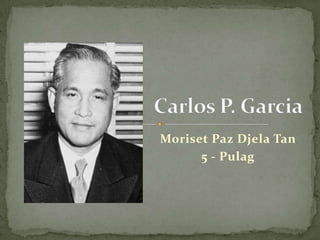
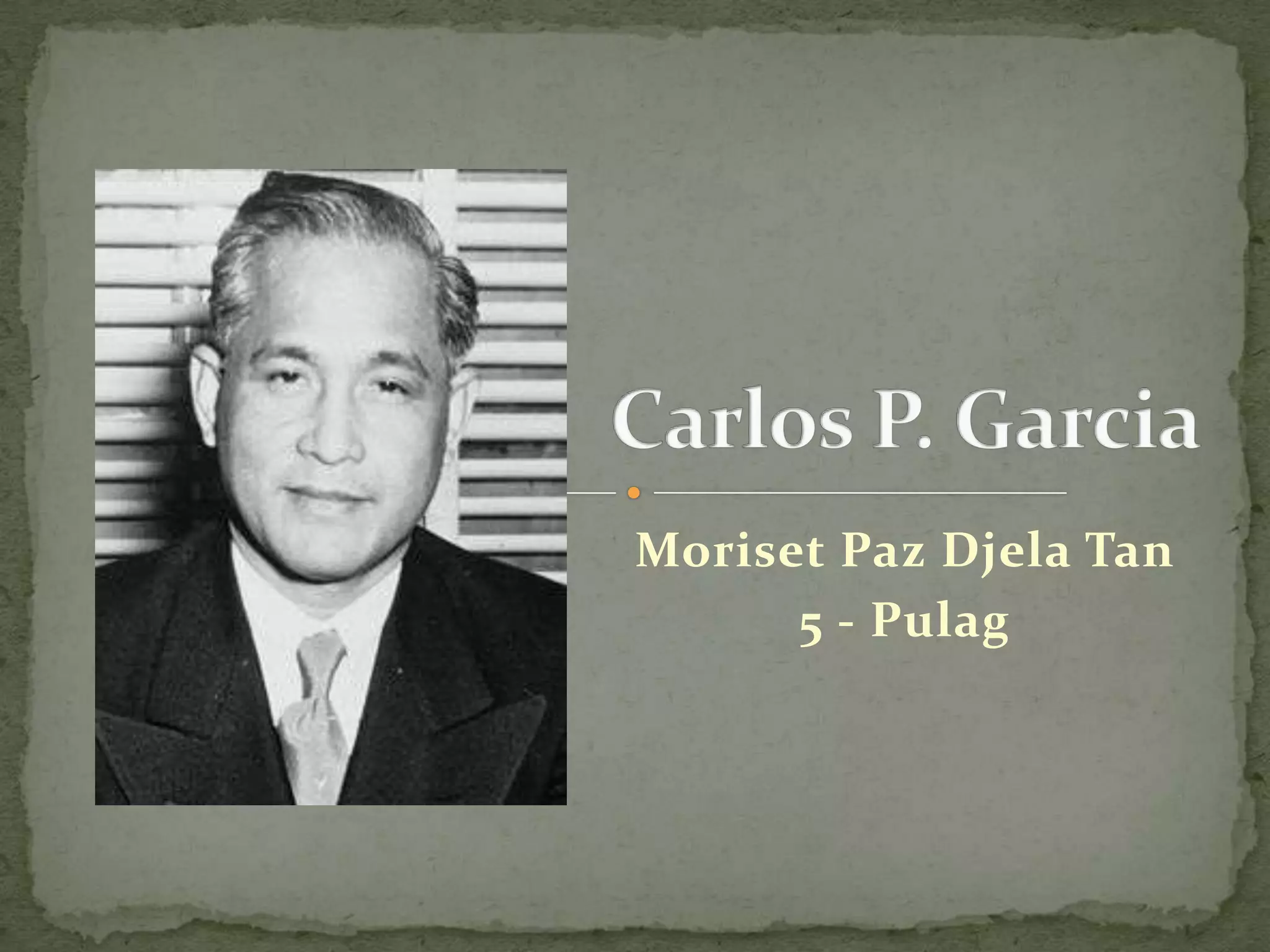
Moriset Paz Djela Tan
5 - Pulag
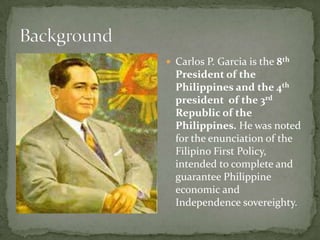
 Carlos P. Garcia is the 8th

President of the
Philippines and the 4th
president of the 3rd
Republic of the
Philippines. He was noted
for the enunciation of the
Filipino First Policy,
intended to complete and
guarantee Philippine
economic and
Independence sovereighty.
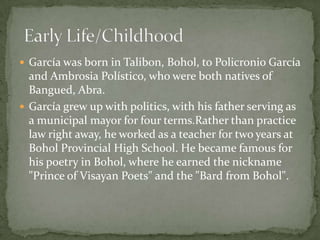
 García was born in Talibon, Bohol, to Policronio García

and Ambrosia Polístico, who were both natives of
Bangued, Abra.
 García grew up with politics, with his father serving as
a municipal mayor for four terms.Rather than practice
law right away, he worked as a teacher for two years at
Bohol Provincial High School. He became famous for
his poetry in Bohol, where he earned the nickname
"Prince of Visayan Poets" and the "Bard from Bohol".
 . He acquired his primary education in his native

Talibon, then took his secondary education in Cebu
Provincial High School. Initially, he pursued his
college education at Silliman University in Dumaguete
City, Negros Oriental, and later studied at the
Philippine Law School where he earned his law degree
in 1923. He was among the top ten in the bar
examination.
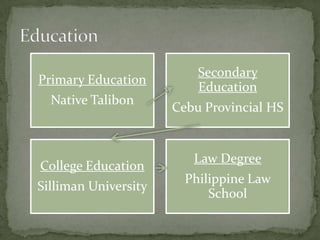
Primary Education
Native Talibon

College Education

Silliman University

Secondary
Education

Cebu Provincial HS

Law Degree
Philippine Law
School
In 1924, he married Leonila Dimataga, and they had a
daughter, Linda García-Campos.
Descendants:
 Teodoro P. García, Sr.
 Teodoro P. García, Jr.
 Dominique Marie L. García (b. 1988)
 Timothy Daniel L. García (b. 1989)
 Raphael L. García (b. 1992)
 Jace Jotham M. Cortez García (b. 2009)
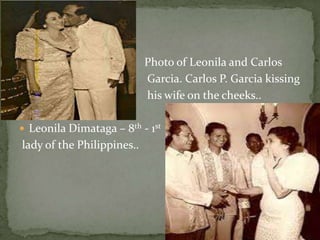
 Leonila Dimataga-García (1906 – 1994) was the wife of

Philippine President Carlos P. García, and was eighth
First Lady of the Philippines. She assumed the title on
17 March 1957 upon the accession of her husband, who
was then-Vice-President, shortly after the death of
President Ramón Magsaysay.
 Fondly called "Indáy", the native of Opon (now LapuLapu City), Cebu was a professional pharmacist. As
First Lady, García became active in cultural and social
activities in line with her husband's Filipino First
Policy.




Photo of Leonila and Carlos
Garcia. Carlos P. Garcia kissing
his wife on the cheeks..

 Leonila Dimataga – 8th - 1st

lady of the Philippines..
 Guerrilla Leader
 Lawyer

 Poet
 Teacher(Filipino)
 Orator
García entered politics in 1925, scoring an impressive
victory to become Representative of the Third District of
Bohol. He was elected for another term in 1928 and
served until 1931. He was elected Governor of Bohol in
1933, but served only until 1941 when he successfully ran
for Senate, but he was unable to serve due to the
Japanese occupation of the Philippines during the
Second World War. He assumed the office when
Congress re-convened in 1945 after Allied liberation and
the end of the War
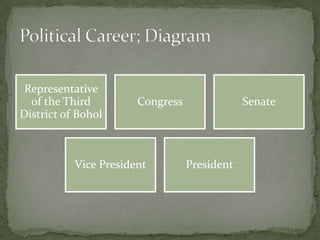
Representative
of the Third
District of Bohol

Congress

Vice President

Senate

President
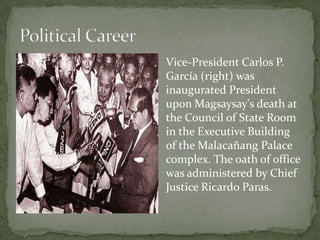
Vice-President Carlos P.
García (right) was
inaugurated President
upon Magsaysay's death at
the Council of State Room
in the Executive Building
of the Malacañang Palace
complex. The oath of office
was administered by Chief
Justice Ricardo Paras.
 After his failed re–election bid, García retired to Tagbilaran

to resume as a private citizen. On June 1, 1971, García was
elected delegate of the 1971 Constitutional Convention. The
convention delegates elected him as the President of the
Convention. However, just days after his election, on June 14,
1971, García died from a fatal heart attack. He was succeeded
as president of the Convention by his former Vice-President,
Diosdado Macapagal.
 García became the first layman to lie in state at the Manila
Cathedral (an honour previously reserved for deceased
Archbishops of Manila) and the first President to be buried
at the Libingan ng mga Bayani
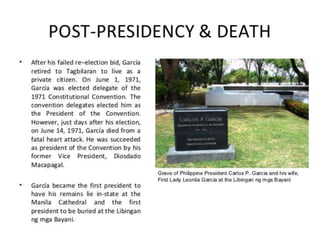
President Garcia’s
tomb at “Libingan
ng mga Bayani”
 He presided over the eight months of Magsaysay's

remaining term and went on to win the 1957 elections,
"the noisiest and the most expensive in Philippine
History”
 Top Ten of the bar examinations
 His election as Bohol representative to the National
Assembly in 1952 marked his entry into Philippine
politics and public service - one of the longest ever.
 “We are called upon to decide on this momentous debate

whether or not this land of ours will remain the cradle and
grave, the womb and tomb of our race – the only place
where we can build our homes, our temples, and our altars
and where we erect the castles of our racial hopes, dreams
and traditions and where we establish the warehouse of our
happiness and prosperity, of our joys and sorrows”
 He represented Philippines to U.S.
 Garcia's main achievement before he became president

involved his activities as foreign policy expert for the
government. As secretary of foreign affairs, he opened formal
reparation negotiations in an effort to end the nine-year
technical state of war between Japan and the Philippines,
leading to an agreement in April 1954. During the Geneva
Conference on Korean unification and other Asian problems,
Garcia as chairman of the Philippine delegation attacked
communist promises in Asia and defended the U.S. policy in
the Far East. In a speech on May 7, 1954, the day of the fall of
Dien Bien Phu, Garcia repeated the Philippine stand for
nationalism and opposition of communism

Carlos P. Garcia Biography by Moriset Tan

  • 1.
    Moriset Paz DjelaTan 5 - Pulag
  • 2.
     Carlos P.Garcia is the 8th President of the Philippines and the 4th president of the 3rd Republic of the Philippines. He was noted for the enunciation of the Filipino First Policy, intended to complete and guarantee Philippine economic and Independence sovereighty.
  • 3.
     García wasborn in Talibon, Bohol, to Policronio García and Ambrosia Polístico, who were both natives of Bangued, Abra.  García grew up with politics, with his father serving as a municipal mayor for four terms.Rather than practice law right away, he worked as a teacher for two years at Bohol Provincial High School. He became famous for his poetry in Bohol, where he earned the nickname "Prince of Visayan Poets" and the "Bard from Bohol".
  • 4.
     . Heacquired his primary education in his native Talibon, then took his secondary education in Cebu Provincial High School. Initially, he pursued his college education at Silliman University in Dumaguete City, Negros Oriental, and later studied at the Philippine Law School where he earned his law degree in 1923. He was among the top ten in the bar examination.
  • 5.
    Primary Education Native Talibon CollegeEducation Silliman University Secondary Education Cebu Provincial HS Law Degree Philippine Law School
  • 6.
    In 1924, hemarried Leonila Dimataga, and they had a daughter, Linda García-Campos. Descendants:  Teodoro P. García, Sr.  Teodoro P. García, Jr.  Dominique Marie L. García (b. 1988)  Timothy Daniel L. García (b. 1989)  Raphael L. García (b. 1992)  Jace Jotham M. Cortez García (b. 2009)
  • 7.
     Leonila Dimataga-García(1906 – 1994) was the wife of Philippine President Carlos P. García, and was eighth First Lady of the Philippines. She assumed the title on 17 March 1957 upon the accession of her husband, who was then-Vice-President, shortly after the death of President Ramón Magsaysay.  Fondly called "Indáy", the native of Opon (now LapuLapu City), Cebu was a professional pharmacist. As First Lady, García became active in cultural and social activities in line with her husband's Filipino First Policy.
  • 8.
       Photo of Leonilaand Carlos Garcia. Carlos P. Garcia kissing his wife on the cheeks..  Leonila Dimataga – 8th - 1st lady of the Philippines..
  • 9.
     Guerrilla Leader Lawyer  Poet  Teacher(Filipino)  Orator
  • 10.
    García entered politicsin 1925, scoring an impressive victory to become Representative of the Third District of Bohol. He was elected for another term in 1928 and served until 1931. He was elected Governor of Bohol in 1933, but served only until 1941 when he successfully ran for Senate, but he was unable to serve due to the Japanese occupation of the Philippines during the Second World War. He assumed the office when Congress re-convened in 1945 after Allied liberation and the end of the War
  • 11.
    Representative of the Third Districtof Bohol Congress Vice President Senate President
  • 12.
    Vice-President Carlos P. García(right) was inaugurated President upon Magsaysay's death at the Council of State Room in the Executive Building of the Malacañang Palace complex. The oath of office was administered by Chief Justice Ricardo Paras.
  • 14.
     After hisfailed re–election bid, García retired to Tagbilaran to resume as a private citizen. On June 1, 1971, García was elected delegate of the 1971 Constitutional Convention. The convention delegates elected him as the President of the Convention. However, just days after his election, on June 14, 1971, García died from a fatal heart attack. He was succeeded as president of the Convention by his former Vice-President, Diosdado Macapagal.  García became the first layman to lie in state at the Manila Cathedral (an honour previously reserved for deceased Archbishops of Manila) and the first President to be buried at the Libingan ng mga Bayani
  • 15.
    President Garcia’s tomb at“Libingan ng mga Bayani”
  • 16.
     He presidedover the eight months of Magsaysay's remaining term and went on to win the 1957 elections, "the noisiest and the most expensive in Philippine History”  Top Ten of the bar examinations  His election as Bohol representative to the National Assembly in 1952 marked his entry into Philippine politics and public service - one of the longest ever.
  • 18.
     “We arecalled upon to decide on this momentous debate whether or not this land of ours will remain the cradle and grave, the womb and tomb of our race – the only place where we can build our homes, our temples, and our altars and where we erect the castles of our racial hopes, dreams and traditions and where we establish the warehouse of our happiness and prosperity, of our joys and sorrows”
  • 19.
     He representedPhilippines to U.S.  Garcia's main achievement before he became president involved his activities as foreign policy expert for the government. As secretary of foreign affairs, he opened formal reparation negotiations in an effort to end the nine-year technical state of war between Japan and the Philippines, leading to an agreement in April 1954. During the Geneva Conference on Korean unification and other Asian problems, Garcia as chairman of the Philippine delegation attacked communist promises in Asia and defended the U.S. policy in the Far East. In a speech on May 7, 1954, the day of the fall of Dien Bien Phu, Garcia repeated the Philippine stand for nationalism and opposition of communism