Martin Tillman, President 
Global Career Compass 
April 29, 2014
 To understand new rationale linking study 
abroad & career development 
 To review best practices for collaboration 
with study abroad colleagues 
 To understand why collaboration makes a 
difference for student learning 
 To understand skill domains employers 
value 
 To share best practices on your campus
 Increased student mobility 
 Increased anxiety of families 
 Increased pressure on career offices 
IMPACT? A new narrative supporting 
realignment of international programs to 
achieve gains in competencies adding value 
to student career decision-making & post-graduate 
job searches
“…In today’s global economy, where 
complexity and change are the norm, 
attracting and retaining culturally competent 
talent will continue to challenge companies 
globally…International experience has 
become a critical asset for all global 
organizations and will continue to create a 
competitive advantage.” 
Laurette Bennhold-Samaan, Managing Director 
Aperian Global (2011, personal correspondence)
“…American universities have made great strides 
toward internationalizing their campuses…too much 
of this progress has…been conceived in academic 
terms…those of us in higher education are forced to 
look beyond our campuses, because the employability 
of our graduates is at stake – as well as capacity of 
organizations to grow and create those jobs we hear 
about. “ 
Giles Bousquet, Dean, Div. of International Studies & Vice 
Provost for Globalization, Univ. of Wisconsin-Madison (2011
True or false? 
Most go abroad without thinking 
about how the experience adds 
value or is connected to their career 
development…
 Students may not know how unique it is to 
study abroad! They may under-value its 
strategic importance on resume! 
 Fact: In 2011-12, less than 1% studied abroad - 
--or under 300,000 students 
 Opens window on marketing experience – and 
what is learned - to employers
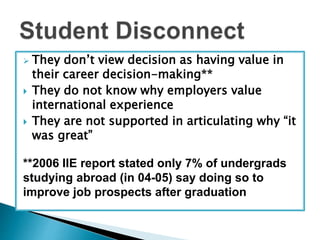
 They don’t view decision as having value in 
their career decision-making** 
 They do not know why employers value 
international experience 
 They are not supported in articulating why “it 
was great” 
**2006 IIE report stated only 7% of undergrads 
studying abroad (in 04-05) say doing so to 
improve job prospects after graduation
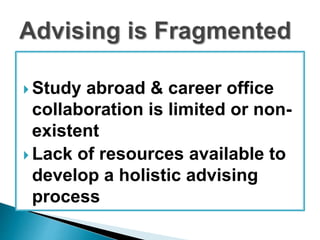
 Study abroad & career office 
collaboration is limited or non-existent 
 Lack of resources available to 
develop a holistic advising 
process
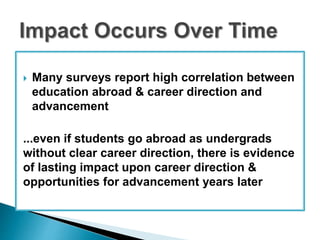
 Many surveys report high correlation between 
education abroad & career direction and 
advancement 
...even if students go abroad as undergrads 
without clear career direction, there is evidence 
of lasting impact upon career direction & 
opportunities for advancement years later
Too much emphasis placed on 
instrumental administrative issues in 
study abroad – at expense of focus on 
aligning learning objectives with student 
career goals or aspirations
 Adaptability & Self-Confidence 
 Autonomy 
 Problem-solving capacity 
Strengthened interpersonal 
relationships 
Identity development
 Language development 
 Awareness of international issues 
 Intellectual flexibility 
 Cross-cultural sensitivity
 Domain knowledge 
 Cognitive, social & personal skills 
 Prior work experience 
 Cross-cultural experience 
(Rand Corp, NACE, 1994) 
2011 QS Global Employer Survey: 10,000 
respondents from 116 nations. 60% valued 
international experience when recruiting talent.
“…employers are under strong pressure 
to find employees who are not only 
technically proficient, but also culturally 
astute and able to thrive in a global work 
environment.”
 Institutions with articulated 
internationalization policies bridging gap 
between student needs and employer 
expectations in design and structure of study 
abroad programs 
 Advisors need to assist students see 
connection between time abroad and value 
employers place on skills and competencies 
they develop through their program 
experiences
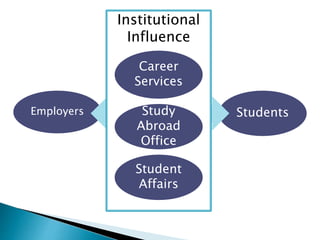
Institutional 
Influence 
Career 
Services 
Study 
Abroad 
Office 
Employers Students 
Student 
Affairs
 Students make purposeful decision to 
study abroad 
 Students take advantage of career 
connections while abroad 
 Students learn to “unpack” & market 
experience to employers
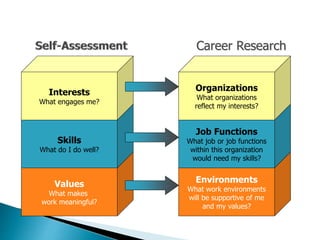
Interests 
What engages me? 
Skills 
What do I do well? 
Values 
What makes 
work meaningful? 
Career Research 
Organizations 
What organizations 
reflect my interests? 
Job Functions 
What job or job functions 
within this organization 
would need my skills? 
Environments 
What work environments 
will be supportive of me 
and my values?
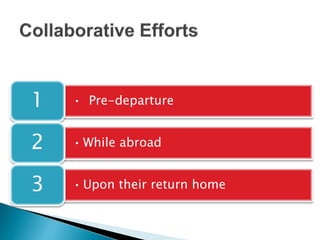
1 • Pre-departure 
2 •While abroad 
3 • Upon their return home
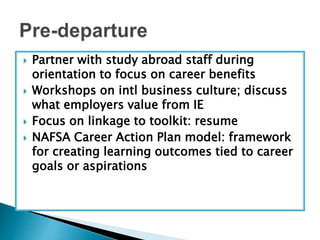
 Partner with study abroad staff during 
orientation to focus on career benefits 
 Workshops on intl business culture; discuss 
what employers value from IE 
 Focus on linkage to toolkit: resume 
 NAFSA Career Action Plan model: framework 
for creating learning outcomes tied to career 
goals or aspirations
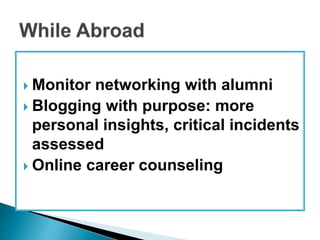
 Monitor networking with alumni 
 Blogging with purpose: more 
personal insights, critical incidents 
assessed 
 Online career counseling
 Best practice unpacking seminar model at 
MSU – required seminar for all students who 
go abroad (otherwise most LASA programs 
poorly attended) 
 Goal: assist students get beyond “it was 
great.” 
 Students have inadequate skills to make 
meaning of their intl experience in interview 
settings
 Assist students create career narratives 
derived from specific cross-cultural 
experiences 
 Assist students to draw out lessons learned 
from critical incidents 
 Have alumni discuss obstacles they faced in 
making meaning of and articulating their intl 
experience
 Best Campuses: UMN, MSU, Elon, 
Susquehanna, U Penn, Depauw, 
UVA, UKY, Smith, UKS 
 Best Resource: UMN: July 2014 
Career Integration Conference web 
resources
Workshop for Advisors at Connecticut College & University Career Service Offices

Workshop for Advisors at Connecticut College & University Career Service Offices

  • 1.
    Martin Tillman, President Global Career Compass April 29, 2014
  • 2.
     To understandnew rationale linking study abroad & career development  To review best practices for collaboration with study abroad colleagues  To understand why collaboration makes a difference for student learning  To understand skill domains employers value  To share best practices on your campus
  • 3.
     Increased studentmobility  Increased anxiety of families  Increased pressure on career offices IMPACT? A new narrative supporting realignment of international programs to achieve gains in competencies adding value to student career decision-making & post-graduate job searches
  • 4.
    “…In today’s globaleconomy, where complexity and change are the norm, attracting and retaining culturally competent talent will continue to challenge companies globally…International experience has become a critical asset for all global organizations and will continue to create a competitive advantage.” Laurette Bennhold-Samaan, Managing Director Aperian Global (2011, personal correspondence)
  • 5.
    “…American universities havemade great strides toward internationalizing their campuses…too much of this progress has…been conceived in academic terms…those of us in higher education are forced to look beyond our campuses, because the employability of our graduates is at stake – as well as capacity of organizations to grow and create those jobs we hear about. “ Giles Bousquet, Dean, Div. of International Studies & Vice Provost for Globalization, Univ. of Wisconsin-Madison (2011
  • 6.
    True or false? Most go abroad without thinking about how the experience adds value or is connected to their career development…
  • 7.
     Students maynot know how unique it is to study abroad! They may under-value its strategic importance on resume!  Fact: In 2011-12, less than 1% studied abroad - --or under 300,000 students  Opens window on marketing experience – and what is learned - to employers
  • 9.
     They don’tview decision as having value in their career decision-making**  They do not know why employers value international experience  They are not supported in articulating why “it was great” **2006 IIE report stated only 7% of undergrads studying abroad (in 04-05) say doing so to improve job prospects after graduation
  • 10.
     Study abroad& career office collaboration is limited or non-existent  Lack of resources available to develop a holistic advising process
  • 11.
     Many surveysreport high correlation between education abroad & career direction and advancement ...even if students go abroad as undergrads without clear career direction, there is evidence of lasting impact upon career direction & opportunities for advancement years later
  • 12.
    Too much emphasisplaced on instrumental administrative issues in study abroad – at expense of focus on aligning learning objectives with student career goals or aspirations
  • 13.
     Adaptability &Self-Confidence  Autonomy  Problem-solving capacity Strengthened interpersonal relationships Identity development
  • 14.
     Language development  Awareness of international issues  Intellectual flexibility  Cross-cultural sensitivity
  • 15.
     Domain knowledge  Cognitive, social & personal skills  Prior work experience  Cross-cultural experience (Rand Corp, NACE, 1994) 2011 QS Global Employer Survey: 10,000 respondents from 116 nations. 60% valued international experience when recruiting talent.
  • 16.
    “…employers are understrong pressure to find employees who are not only technically proficient, but also culturally astute and able to thrive in a global work environment.”
  • 17.
     Institutions witharticulated internationalization policies bridging gap between student needs and employer expectations in design and structure of study abroad programs  Advisors need to assist students see connection between time abroad and value employers place on skills and competencies they develop through their program experiences
  • 18.
    Institutional Influence Career Services Study Abroad Office Employers Students Student Affairs
  • 19.
     Students makepurposeful decision to study abroad  Students take advantage of career connections while abroad  Students learn to “unpack” & market experience to employers
  • 20.
    Interests What engagesme? Skills What do I do well? Values What makes work meaningful? Career Research Organizations What organizations reflect my interests? Job Functions What job or job functions within this organization would need my skills? Environments What work environments will be supportive of me and my values?
  • 21.
    1 • Pre-departure 2 •While abroad 3 • Upon their return home
  • 22.
     Partner withstudy abroad staff during orientation to focus on career benefits  Workshops on intl business culture; discuss what employers value from IE  Focus on linkage to toolkit: resume  NAFSA Career Action Plan model: framework for creating learning outcomes tied to career goals or aspirations
  • 23.
     Monitor networkingwith alumni  Blogging with purpose: more personal insights, critical incidents assessed  Online career counseling
  • 24.
     Best practiceunpacking seminar model at MSU – required seminar for all students who go abroad (otherwise most LASA programs poorly attended)  Goal: assist students get beyond “it was great.”  Students have inadequate skills to make meaning of their intl experience in interview settings
  • 25.
     Assist studentscreate career narratives derived from specific cross-cultural experiences  Assist students to draw out lessons learned from critical incidents  Have alumni discuss obstacles they faced in making meaning of and articulating their intl experience
  • 26.
     Best Campuses:UMN, MSU, Elon, Susquehanna, U Penn, Depauw, UVA, UKY, Smith, UKS  Best Resource: UMN: July 2014 Career Integration Conference web resources