Western Kenya Carbon
      Financed
   AFOLU Project
WHAT IS AN AFOLU PROJECT?
•Protection & enhancement of existing forests
•New forests / tree planting incl. agroforestry
•Improved agricultural practices e.g. conservation
agriculture


…and more
Profile of AFOLU Projects
TYPE            EXAMPLES          COSTS            NON-C             COMMENTS
                                                   INCOMES


FORESTS -       Existing          Management,      Timber, NTFP,   LT investment,
EXISTING        plantations,      protection –     Tourism. Timing little debt
                natural forests   relatively low   - depends.      available

NEW FORESTS     New               Establishment,   Timber & NTFP     Very LT
/ TREES         plantations,      management –     – long time       investment,
                Agroforestry      very high        before $          high upfront
                                                                     costs, little debt
                                                                     available
AGRICULTURE / Improved ag         Inputs,          Improved crop     Shorter term
SOIL C        practices e.g.      management.      / livestock       investment.
              fertilizer          Medium - low     yields – Timing   Debt may be
              management                           short - med       available.
• Rockefeller funded project with support of CARE and CCAF/ICRAF

• Timeframe: 2011 -2012 (18 months)

• The project sought to improve the productivity and sustainability of land
  use systems in selected watersheds in the Nyando river basins through
  adoption of an integrated ecosystem management approach

• Objectives
    •   support on-and off-farm conservation strategies

    •   improve the capacity of local communities and institutions to identify,
        formulate and implement integrated ecosystem management activities
        (including both on-and off-farm land use planning) capturing local to global
        environmental benefits
    •   The project is pro-poor centered.
Pro – poor
By “pro-poor” we mean an approach that ensures:

1.         Poverty reduction benefits reach poorer households,
           women and other vulnerable groups within the target
           communities;
2.         No negative social impacts, or where such impacts are
           inevitable, effective mitigation measures are put in
           place to achieve a net “do no harm” outcome;
3.         Equitable sharing of benefits derived from carbon
           revenues both within communities and along the
           carbon value chain from buyer to seller – in effect “fair
           trade in carbon.”
4.         Rights are respected and secured
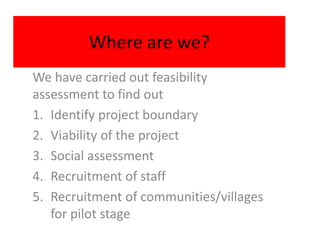
Where are we?
We have carried out feasibility
assessment to find out
1. Identify project boundary
2. Viability of the project
3. Social assessment
4. Recruitment of staff
5. Recruitment of communities/villages
   for pilot stage
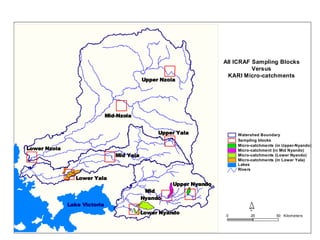
All ICRAF Sampling Blocks
                                                                               Versus
                                                                      KARI Micro-catchments
                                            Upper Nzoia


                              Mid-Nzoia


                                                 Upper Yala              Watershed Boundary
                                                                         Sampling blocks
                                                                         Micro-catchments (in Upper-Nyando)
Lower Nzoia                                                              Micro-catchment (in Mid Nyando)
                                 Mid Yala                                Micro-catchments (Lower Nyando)
                                                                         Micro-catchments (in Lower Yala)
                                                                         Lakes
                                                                         Rivers

                 Lower Yala
                                                      Upper Nyando
                                             Mid
                                            Nyando
              Lake Victoria
                                            Lower Nyando
                                                                              N

                                                                     0        25          50 Kilometers
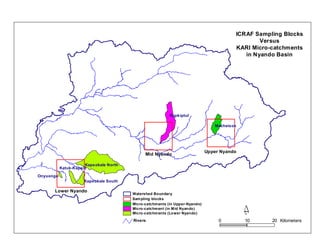
ICRAF Sampling Blocks
                                                                                                  Versus
                                                                                          KARI Micro-catchments
                                                                                             in Nyando Basin


                                                           Kapkiptul

                                                                                  Macheisok


                                                                               Upper Nyando
                                               Mid Nyando

                       Kapsokale North
           Katuk-Kapsiti

Onyuongo
                      Kapsokale South

      Lower Nyando
                                         Watershed Boundary
                                         Sam pling blocks
                                         Micro-catchm ents (in Upper-Nyando)
                                         Micro-catchm ent (in Mid Nyando)
                                         Micro-catchm ents (Lower Nyando)                     N


                                         Rivers                                     0         10     20 Kilometers
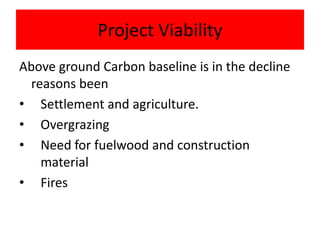
Project Viability
Above ground Carbon baseline is in the decline
  reasons been
• Settlement and agriculture.
• Overgrazing
• Need for fuelwood and construction
    material
• Fires
Potential AFOLU Interventions
Dispersed interplanting and boundary planting-
    1. may be widely adopted by individual farmers with small areas of
       landholding and
    2. Contribute to enhanced food production
Woodlots
    1. Diversify farm production
    2. Additional revenue streams for farmers
    3. Protect the already bare hills from erosion and protection of the river
       catchments
    4. Reduce erosion and formation of gullies
    5. May establish woodlots on degraded or under-utilised land where in the
       long term this system may help to re-habilitate degraded lands
    6. Carbon finance per unit area relatively high
Fruit orchard
    1. Food security
    2. Diversify farm produce
Soil carbon
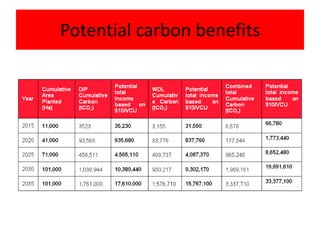
Potential carbon benefits
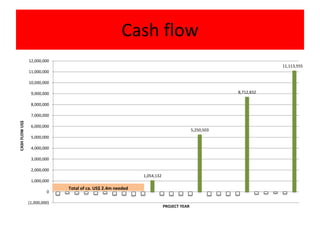
Cash flow
                12,000,000
                                                                                                                11,113,555
                11,000,000

                10,000,000

                 9,000,000                                                                          8,712,832

                 8,000,000

                 7,000,000
CASH FLOW US$


                 6,000,000
                                                                                        5,250,503
                 5,000,000

                 4,000,000

                 3,000,000

                 2,000,000
                                                             1,054,132
                 1,000,000
                              Total of ca. US$ 2.4m needed
                         0

                (1,000,000)
                                                                         PROJECT YEAR
Social impact assessment
Land and its resources- Most important resource
Land ownership –
Lower Nyando: Land adjudication complete with
parcel numbers but most people don’t have title
deeds.
•Mid Nyando: Settlement scheme in the 60’s. Most
have title deeds. Not all households grow sugar
cane especially the poor. Some squatters with no
land – work as labourers or farm unused land(
absentee landlords). One cannot move to another
piece of land to build unless you bought.
•Women have no rights over ancestral lands
•In both areas land can be tied to loans either
agricultural, bank or for the mid Nyando; the
Settlement loan
Types of Land conflicts
1. Boundary conflicts especially in lower Nyando
   where boundaries are less well defined.
2. conflicts between sons and parents if parents
   sold land and
3. land clashes
Conflict resolutions
•Resolution through clan elders
•Provincial administration(Chief).
•Legal redress through courts
•N/B Leasing agreement usually by mutual
understanding
Social/cultural
1. Religious affiliation may have restrictions such
   as SDA, Legio Maria
2. Market-poor get products cheaply and are
   nearer
3. Funerals- activities may have to be suspended
4. Taboos such as golo kodhi
5. Maize planting culture- Maize planting given
   priority over other activities
Environmental
1. Flooding               5. Hailstorms
2. Drought                6. Inadequate rain
3. Crop destruction by wildlife
4. Soil erosion
Recruitment of staff

Around 14 staffs have been recruited
as follows
•1 project officer
•2 extension officers
•1 driver
•10 Lead farmers
Activities on progress
The project is in the process of identifying 10
communities for the pilot stage.
•5 in lower Nyando and another 5 mid-Nyando
•Identifying a consultant for Carbon
qualification is in progress
•Setting up of the project data base
•Awareness raising and
•preparation for march/April 2011 planting in
progress
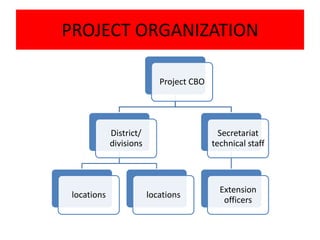
PROJECT ORGANIZATION

                            Project CBO


             District/                      Secretariat
             divisions                    technical staff


                                            Extension
 locations               locations
                                             officers
Thank you

Care International - Geoffrey Onyango

  • 1.
    Western Kenya Carbon Financed AFOLU Project
  • 2.
    WHAT IS ANAFOLU PROJECT? •Protection & enhancement of existing forests •New forests / tree planting incl. agroforestry •Improved agricultural practices e.g. conservation agriculture …and more
  • 3.
    Profile of AFOLUProjects TYPE EXAMPLES COSTS NON-C COMMENTS INCOMES FORESTS - Existing Management, Timber, NTFP, LT investment, EXISTING plantations, protection – Tourism. Timing little debt natural forests relatively low - depends. available NEW FORESTS New Establishment, Timber & NTFP Very LT / TREES plantations, management – – long time investment, Agroforestry very high before $ high upfront costs, little debt available AGRICULTURE / Improved ag Inputs, Improved crop Shorter term SOIL C practices e.g. management. / livestock investment. fertilizer Medium - low yields – Timing Debt may be management short - med available.
  • 4.
    • Rockefeller fundedproject with support of CARE and CCAF/ICRAF • Timeframe: 2011 -2012 (18 months) • The project sought to improve the productivity and sustainability of land use systems in selected watersheds in the Nyando river basins through adoption of an integrated ecosystem management approach • Objectives • support on-and off-farm conservation strategies • improve the capacity of local communities and institutions to identify, formulate and implement integrated ecosystem management activities (including both on-and off-farm land use planning) capturing local to global environmental benefits • The project is pro-poor centered.
  • 5.
    Pro – poor By“pro-poor” we mean an approach that ensures: 1. Poverty reduction benefits reach poorer households, women and other vulnerable groups within the target communities; 2. No negative social impacts, or where such impacts are inevitable, effective mitigation measures are put in place to achieve a net “do no harm” outcome; 3. Equitable sharing of benefits derived from carbon revenues both within communities and along the carbon value chain from buyer to seller – in effect “fair trade in carbon.” 4. Rights are respected and secured
  • 6.
    Where are we? Wehave carried out feasibility assessment to find out 1. Identify project boundary 2. Viability of the project 3. Social assessment 4. Recruitment of staff 5. Recruitment of communities/villages for pilot stage
  • 7.
    All ICRAF SamplingBlocks Versus KARI Micro-catchments Upper Nzoia Mid-Nzoia Upper Yala Watershed Boundary Sampling blocks Micro-catchments (in Upper-Nyando) Lower Nzoia Micro-catchment (in Mid Nyando) Mid Yala Micro-catchments (Lower Nyando) Micro-catchments (in Lower Yala) Lakes Rivers Lower Yala Upper Nyando Mid Nyando Lake Victoria Lower Nyando N 0 25 50 Kilometers
  • 8.
    ICRAF Sampling Blocks Versus KARI Micro-catchments in Nyando Basin Kapkiptul Macheisok Upper Nyando Mid Nyando Kapsokale North Katuk-Kapsiti Onyuongo Kapsokale South Lower Nyando Watershed Boundary Sam pling blocks Micro-catchm ents (in Upper-Nyando) Micro-catchm ent (in Mid Nyando) Micro-catchm ents (Lower Nyando) N Rivers 0 10 20 Kilometers
  • 9.
    Project Viability Above groundCarbon baseline is in the decline reasons been • Settlement and agriculture. • Overgrazing • Need for fuelwood and construction material • Fires
  • 10.
    Potential AFOLU Interventions Dispersedinterplanting and boundary planting- 1. may be widely adopted by individual farmers with small areas of landholding and 2. Contribute to enhanced food production Woodlots 1. Diversify farm production 2. Additional revenue streams for farmers 3. Protect the already bare hills from erosion and protection of the river catchments 4. Reduce erosion and formation of gullies 5. May establish woodlots on degraded or under-utilised land where in the long term this system may help to re-habilitate degraded lands 6. Carbon finance per unit area relatively high Fruit orchard 1. Food security 2. Diversify farm produce Soil carbon
  • 11.
  • 12.
    Cash flow 12,000,000 11,113,555 11,000,000 10,000,000 9,000,000 8,712,832 8,000,000 7,000,000 CASH FLOW US$ 6,000,000 5,250,503 5,000,000 4,000,000 3,000,000 2,000,000 1,054,132 1,000,000 Total of ca. US$ 2.4m needed 0 (1,000,000) PROJECT YEAR
  • 13.
    Social impact assessment Landand its resources- Most important resource Land ownership – Lower Nyando: Land adjudication complete with parcel numbers but most people don’t have title deeds. •Mid Nyando: Settlement scheme in the 60’s. Most have title deeds. Not all households grow sugar cane especially the poor. Some squatters with no land – work as labourers or farm unused land( absentee landlords). One cannot move to another piece of land to build unless you bought. •Women have no rights over ancestral lands •In both areas land can be tied to loans either agricultural, bank or for the mid Nyando; the Settlement loan
  • 14.
    Types of Landconflicts 1. Boundary conflicts especially in lower Nyando where boundaries are less well defined. 2. conflicts between sons and parents if parents sold land and 3. land clashes Conflict resolutions •Resolution through clan elders •Provincial administration(Chief). •Legal redress through courts •N/B Leasing agreement usually by mutual understanding
  • 15.
    Social/cultural 1. Religious affiliationmay have restrictions such as SDA, Legio Maria 2. Market-poor get products cheaply and are nearer 3. Funerals- activities may have to be suspended 4. Taboos such as golo kodhi 5. Maize planting culture- Maize planting given priority over other activities Environmental 1. Flooding 5. Hailstorms 2. Drought 6. Inadequate rain 3. Crop destruction by wildlife 4. Soil erosion
  • 16.
    Recruitment of staff Around14 staffs have been recruited as follows •1 project officer •2 extension officers •1 driver •10 Lead farmers
  • 17.
    Activities on progress Theproject is in the process of identifying 10 communities for the pilot stage. •5 in lower Nyando and another 5 mid-Nyando •Identifying a consultant for Carbon qualification is in progress •Setting up of the project data base •Awareness raising and •preparation for march/April 2011 planting in progress
  • 18.
    PROJECT ORGANIZATION Project CBO District/ Secretariat divisions technical staff Extension locations locations officers
  • 19.