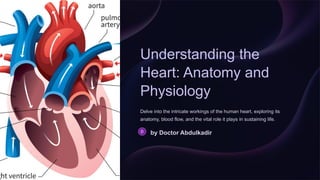
Understanding the
Heart: Anatomy and
Physiology
Delve into the intricate workings of the human heart, exploring its
anatomy, blood flow, and the vital role it plays in sustaining life.
by Doctor Abdulkadir
Cardiomyopathy: An Overview
Hypertrophic Cardiomyopathy
Discover the causes, symptoms,
diagnosis, and treatment options for
hypertrophic cardiomyopathy, a
condition characterized by thickened
heart muscles.
Dilated Cardiomyopathy
Learn about the causes, symptoms,
diagnosis, and treatment of dilated
cardiomyopathy, a condition that
weakens and enlarges the heart.
Restrictive Cardiomyopathy
Explore the causes, symptoms,
diagnosis, and treatment of restrictive
cardiomyopathy, a rare condition that
stiffens the heart muscle, affecting its
ability to relax and fill with blood.
Arrhythmogenic
Cardiomyopathy
Dive into the causes, symptoms,
diagnosis, and treatment of
arrhythmogenic cardiomyopathy, a
condition characterized by abnormal
heart rhythms and replacement of heart
muscle with fibrous scar tissue.
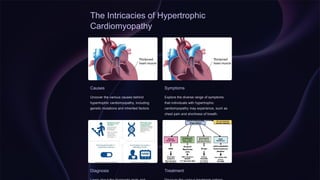
The Intricacies of Hypertrophic
Cardiomyopathy
Causes
Uncover the various causes behind
hypertrophic cardiomyopathy, including
genetic mutations and inherited factors.
Symptoms
Explore the diverse range of symptoms
that individuals with hypertrophic
cardiomyopathy may experience, such as
chest pain and shortness of breath.
Diagnosis Treatment
Unraveling the Complexities of
Dilated Cardiomyopathy
1 Causes
Investigate the underlying causes of dilated cardiomyopathy, such as viral
infections, alcohol abuse, and genetic factors.
2 Symptoms
Explore the wide array of symptoms commonly associated with dilated
cardiomyopathy, including fatigue, irregular heartbeats, and fluid retention.
3 Diagnosis
Learn about the diagnostic tests used to identify dilated cardiomyopathy and
differentiate it from other heart conditions.
4 Treatment
Discover the treatment options available for individuals with dilated
cardiomyopathy, including medications, lifestyle modifications, and heart
transplant.
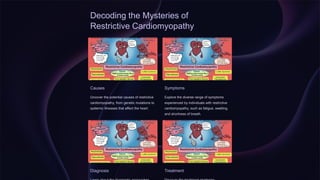
Decoding the Mysteries of
Restrictive Cardiomyopathy
Causes
Uncover the potential causes of restrictive
cardiomyopathy, from genetic mutations to
systemic illnesses that affect the heart.
Symptoms
Explore the diverse range of symptoms
experienced by individuals with restrictive
cardiomyopathy, such as fatigue, swelling,
and shortness of breath.
Diagnosis Treatment
Understanding Arrhythmogenic
Cardiomyopathy
1 Causes
Explore the causes and risk
factors associated with
arrhythmogenic cardiomyopathy,
including genetic mutations and
genetic syndromes.
2
Symptoms
Examine the common symptoms
experienced by individuals with
arrhythmogenic cardiomyopathy,
such as palpitations, dizziness,
and fainting spells.
3 Diagnosis
Learn about the diagnostic tests
used to accurately diagnose
arrhythmogenic cardiomyopathy
and distinguish it from other
rhythm disorders.
4
Treatment
Discover the treatment
techniques and strategies
utilized to manage
arrhythmogenic cardiomyopathy,
ranging from lifestyle
modifications and medications
to implantable devices and heart
surgery.

cardiomyopathy.pptx

  • 1.
    Understanding the Heart: Anatomyand Physiology Delve into the intricate workings of the human heart, exploring its anatomy, blood flow, and the vital role it plays in sustaining life. by Doctor Abdulkadir
  • 2.
    Cardiomyopathy: An Overview HypertrophicCardiomyopathy Discover the causes, symptoms, diagnosis, and treatment options for hypertrophic cardiomyopathy, a condition characterized by thickened heart muscles. Dilated Cardiomyopathy Learn about the causes, symptoms, diagnosis, and treatment of dilated cardiomyopathy, a condition that weakens and enlarges the heart. Restrictive Cardiomyopathy Explore the causes, symptoms, diagnosis, and treatment of restrictive cardiomyopathy, a rare condition that stiffens the heart muscle, affecting its ability to relax and fill with blood. Arrhythmogenic Cardiomyopathy Dive into the causes, symptoms, diagnosis, and treatment of arrhythmogenic cardiomyopathy, a condition characterized by abnormal heart rhythms and replacement of heart muscle with fibrous scar tissue.
  • 3.
    The Intricacies ofHypertrophic Cardiomyopathy Causes Uncover the various causes behind hypertrophic cardiomyopathy, including genetic mutations and inherited factors. Symptoms Explore the diverse range of symptoms that individuals with hypertrophic cardiomyopathy may experience, such as chest pain and shortness of breath. Diagnosis Treatment
  • 4.
    Unraveling the Complexitiesof Dilated Cardiomyopathy 1 Causes Investigate the underlying causes of dilated cardiomyopathy, such as viral infections, alcohol abuse, and genetic factors. 2 Symptoms Explore the wide array of symptoms commonly associated with dilated cardiomyopathy, including fatigue, irregular heartbeats, and fluid retention. 3 Diagnosis Learn about the diagnostic tests used to identify dilated cardiomyopathy and differentiate it from other heart conditions. 4 Treatment Discover the treatment options available for individuals with dilated cardiomyopathy, including medications, lifestyle modifications, and heart transplant.
  • 5.
    Decoding the Mysteriesof Restrictive Cardiomyopathy Causes Uncover the potential causes of restrictive cardiomyopathy, from genetic mutations to systemic illnesses that affect the heart. Symptoms Explore the diverse range of symptoms experienced by individuals with restrictive cardiomyopathy, such as fatigue, swelling, and shortness of breath. Diagnosis Treatment
  • 6.
    Understanding Arrhythmogenic Cardiomyopathy 1 Causes Explorethe causes and risk factors associated with arrhythmogenic cardiomyopathy, including genetic mutations and genetic syndromes. 2 Symptoms Examine the common symptoms experienced by individuals with arrhythmogenic cardiomyopathy, such as palpitations, dizziness, and fainting spells. 3 Diagnosis Learn about the diagnostic tests used to accurately diagnose arrhythmogenic cardiomyopathy and distinguish it from other rhythm disorders. 4 Treatment Discover the treatment techniques and strategies utilized to manage arrhythmogenic cardiomyopathy, ranging from lifestyle modifications and medications to implantable devices and heart surgery.