Editorial
Staying in the Pink of Health
for Patients with Cardiorenal
Anemia Requires
a Multidisciplinary Approach
Ragavendra R. Baliga, MD, MBA James B. Young, MD
Consulting Editors
Anemia in heart failure is not only debilitating but
also associated with higher morbidity, mortality,
and greater total health care costs1
in an ever-
aging population. It is common in patients who
have heart failure, with a prevalence ranging from
4% to 55%.2
Most studies indicate that the preva-
lence of anemia is higher in patients with heart
failure who are more symptomatic or have comor-
bid conditions, such as kidney disease, diabetes
mellitus, and advanced age, when compared
with ambulatory and less-symptomatic patients.3,4
The relative risk of death increases by a factor of
1.6 in anemic patients with heart failure who also
have chronic kidney disease.
The pathophysiology of cardiorenal failure is
multifactorial.5
A recent consensus conference
on cardiorenal syndromes6
described 5 subtypes
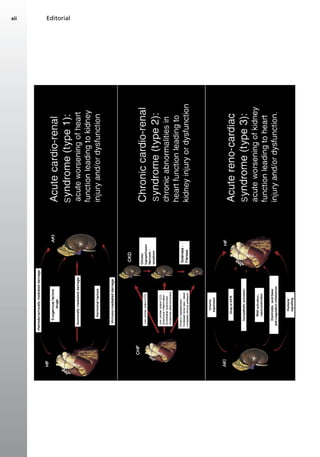
with distinct pathophysiologies (Fig. 1),7
preven-
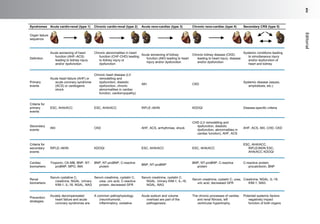
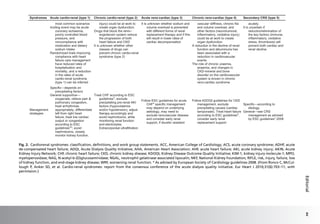
tion, and management strategies (Fig. 2):
 Type 1, or acute cardiorenal syndrome, is acute
worsening of heart function leading to kidney
injury or dysfunction. Approximately 27% to
40% of the patients with acute decompensated
heart failure seem to develop acute kidney
injury. This type is associated with the poorest
prognosis.
 Type 2, or chronic cardiorenal syndrome,
includes patients with chronic abnormalities in
heart function leading to kidney injury or
dysfunction. This has been reported in 63% of
patients hospitalized with congestive heart
failure. In this subset, serum creatinine may
not entirely reflect underlying renal function.
 Type 3, or acute renocardiac syndrome, is
acute worsening of kidney function, leading to
heart injury or dysfunction. The effects on heart
function are due to factors in addition to volume
overload (eg, acute kidney injury, glomerulone-
phritis, and renal ischemia).
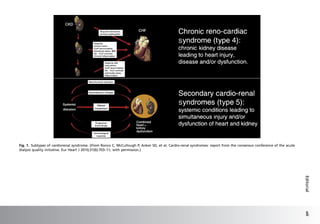
 Type 4, or chronic renocardiac syndrome, is
a situation in which chronic kidney disease
leads to heart injury, disease, or dysfunction
(eg, chronic glomerulonephritis).
 Type 5, or secondary cardiorenal syndrome,
includes systemic conditions leading to injury
or dysfunction of heart and kidney (eg, diabetes
mellitus, sepsis, systemic lupus erythematosus,
or amyloidosis).
Patients may move from one subtype to another
depending on the nature of primary insult. The
recognition of these 5 distinct subtypes of cardi-
orenal failure should facilitate better under-
standing not only of these conditions but also of
accompanying comorbidities, such as anemia.
The etiology and pathophysiology of anemia in
heart failure is also multifactorial8
and is due to
a complex interaction9
between cardiac function,
renal dysfunction, neurohormonal and inflammatory
Heart Failure Clin 6 (2010) xi–xvi
doi:10.1016/j.hfc.2010.05.001
1551-7136/10/$ – see front matter ª 2010 Elsevier Inc. All rights reserved.
heartfailure.theclinics.com
Anemia and Heart Failure
Editorialxii
Fig. 1. Subtypes of cardiorenal syndrome. (From Ronco C, McCullough P, Anker SD, et al. Cardio-renal syndromes: report from the consensus conference of the acute
dialysis quality initiative. Eur Heart J 2010;31(6):703–11; with permission.)
Editorialxiii
Syndromes Acute cardio-renal (type 1) Chronic cardio-renal (type 2) Acute reno-cardiac (type 3) Chronic reno-cardiac (type 4) Secondary CRS (type 5)
Organ failure
sequence
Definition
Acute worsening of heart
function (AHF–ACS)
leading to kidney injury
and/or dysfunction
Chronic abnormalities in heart
function (CHF-CHD) leading
to kidney injury or
dysfunction
Acute worsening of kidney
function (AKI) leading to heart
injury and/or dysfunction
Chronic kidney disease (CKD)
leading to heart injury, disease
and/or dysfunction
Systemic conditions leading
to simultaneous injury
and/or dysfunction of
heart and kidney
Primary
events
Acute heart failure (AHF) or
acute coronary syndrome
(ACS) or cardiogenic
shock
Chronic heart disease (LV
remodelling and
dysfunction, diastolic
dysfunction, chronic
abnormalities in cardiac
function, cardiomyopathy)
DKCIKA
Systemic disease (sepsis,
amyloidosis, etc.)
Criteria for
primary
events
ESC, AHA/ACC ESC, AHA/ACC RIFLE–AKI airetirccificeps-esaesiDIQODKN
Secondary
events
kcohs,saimhtyhrra,SCA,FHADKCIKA
CHD (LV remodelling and
dysfunction, diastolic
dysfunction, abnormalities in
cardiac function), AHF, ACS
AHF, ACS, AKI, CHD, CKD
Criteria for
secondary
events
CCA/AHA,CSECCA/AHA,CSEIQODKNIKA–ELFIR
ESC, AHA/ACC,
RIFLE/AKIN ESC,
AHA/ACC KDOQI
Cardiac
biomarkers
Troponin, CK-MB, BNP, NT-
proBNP, MPO, IMA
BNP, NT-proBNP, C-reactive
protein
BNP, NT-proBNP
BNP, NT-proBNP, C-reactive
protein
C-reactive protein,
procalcitonin, BNP
Renal
biomarkers
Serum cystatine C,
creatinine, NGAL. Urinary
KIM-1, IL-18, NGAL, NAG
Serum creatinine, cystatin C,
urea, uric acid, C-reactive
protein, decreased GFR
Serum creatinine, cystatin C,
NGAL. Urinary KIM-1, IL-18,
NGAL, NAG
Serum creatinine, cystatin C, urea,
uric acid, decreased GFR
Creatinine, NGAL, IL-18,
KIM-1, NAG
Prevention
strategies
Acutely decompensated
heart failure and acute
coronary syndromes are
A common pathophysiology
(neurohumoral,
inflammatory, oxidative
Acute sodium and volume
overload are part of the
pathogenesis.
The chronic processes of cardiac
and renal fibrosis, left
ventricular hypertrophy,
Potential systemic factors
negatively impact
function of both organs
Editorialxiv
Syndromes Acute cardio-renal (type 1) Chronic cardio-renal (type 2) Acute reno-cardiac (type 3) Chronic reno-cardiac (type 4) Secondary CRS (type 5)
most common scenarios
Inciting event may be acute
coronary ischaemia,
poorly controlled blood
pressure, and
noncompliance with
medication and dietary
sodium intake
Randomized trials improving
compliance with heart
failure care management
have reduced rates of
hospitalization and
mortality, and a reduction
in the rates of acute
cardio-renal syndrome
(type 1) can be inferred
injury) could be at work to
create organ dysfunction.
Drugs that block the renin–
angiotensin system reduce
the progression of both
heart failure and CKD
It is unknown whether other
classes of drugs can
prevent chronic cardio-renal
syndrome (type 2)
It is unknown whether sodium and
volume overload is prevented
with different forms of renal
replacement therapy and if this
will result in lower rates of
cardiac decompensation
vascular stiffness, chronic Na
and volume overload, and
other factors (neurohumoral,
inflammatory, oxidative injury)
could be at work to create
organ dysfunction
A reduction in the decline of renal
function and albuminuria has
been associated with a
reduction in cardiovascular
events
The role of chronic uraemia,
anaemia, and changes in
CKD-mineral and bone
disorder on the cardiovascular
system is known in chronic
reno-cardiac syndrome
acutely.
It is uncertain if
reduction/elimination of
the key factors (immune,
inflammatory, oxidative
stress, thrombosis) will
prevent both cardiac and
renal decline.
Management
strategies
Specific—depends on
precipitating factors
General supportive—
oxygenate, relieve pain 
pulmonary congestion,
treat arrhythmias
appropriately, differentiate
left from right heart
failure, treat low cardiac
output or congestion
according to ESC
guidelines
(a)
; avoid
nephrotoxins, closely
monitor kidney function.
Treat CHF according to ESC
guidelines
a
, exclude
precipitating pre-renal AKI
factors (hypovolaemia
and/or hypotension), adjust
therapy accordingly and
avoid nephrotoxins, while
monitoring renal function
and electrolytes.
Extracorporeal ultrafiltration
Follow ESC guidelines for acute
CHF
a
specific management
may depend on underlying
aetiology, may need to
exclude renovascular disease
and consider early renal
support, if diuretic resistant
Follow KDOQI guidelines for CKD
management, exclude
precipitating causes (cardiac
tamponade). Treat heart failure
according to ESC guidelinesa
,
consider early renal
replacement support
Specific—according to
etiology.
General—see CRS
management as advised
by ESC guidelines* 2008
Fig. 2. Cardiorenal syndromes: classification, definitions, and work group statements. ACC, American College of Cardiology; ACS, acute coronary syndrome; ADHF, acute
de-compensated heart failure; ADQI, Acute Dialysis Quality Initiative; AHA, American Heart Association; AHF, acute heart failure; AKI, acute kidney injury; AKIN, Acute
Kidney Injury Network; CHF, chronic heart failure; CKD, chronic kidney disease; KDOQI, Kidney Disease Outcome Quality Initiative; KIM-1, kidney injury molecule-1; MPO,
myeloperoxidase; NAG, N-acetyl-b-(D)glucosaminidase; NGAL, neutrophil gelatinase-associated lipocalin; NKF, National Kidney Foundation; RIFLE, risk, injury, failure, loss
of kidney function, and end-stage kidney disease; WRF, worsening renal function. a
As advised by European Society of Cardiology guidelines 2008. (From Ronco C, McCul-
lough P, Anker SD, et al. Cardio-renal syndromes: report from the consensus conference of the acute dialysis quality initiative. Eur Heart J 2010;31(6):703–11; with
permission.)
Editorialxv
responses, hemodilution, iron deficiency, impaired
ability to use available iron stores,10
bone marrow
suppression due to cytokines (eg, tumor necrosis
factor a [TNF-a], interleukin [IL]-1, IL-6, and
C-reactive protein), blunted bone marrow respon-
siveness to erythropoietin, impaired iron mobiliza-
tion, and effects of medications. Aspirin and
angiotensin-converting enzyme inhibitors11
contribute to the anemia potentially through the
actions of hematopoesis inhibitor, N-acetyl-seryl-
aspartyl-lysyl-proline.12
IL-6 stimulates the
production of hepcidin in the hepatic cells, which
blocks absorption of iron in duodenum and
down-regulates ferroprotein expression, which in
turn prevents release of iron from total body
stores.13
In contrast, TNF-a and IL-6 inhibit eryth-
ropoietin production in the kidney by activating the
GATA-binding protein, GATA2, and nuclear factor
kB and also inhibits proliferation of bone marrow
erythroid progenitor cells.3,4,13
Some have used
erythropoietin receptor–stimulating agents or
intravenous iron to correct the anemia of heart
failure, but concern has arisen about the true
effectiveness of this approach and morbidity asso-
ciated with the therapy. The Reduction of Events
with Darbopoeitin Alfa in Heart Failure is a large-
scale, phase III, placebo-controlled, randomized,
morbidity and mortality clinical trial designed to
clarify these issues and will likely be finished
recruiting in 18 months.14
To unravel these complex interactions in cardi-
orenal anemia, Anil Agarwal, MD, Stuart Katz,
MD, and Ajay Singh, MD, have assembled a multi-
disciplinary team of experts in this field. In our
opinion, their multidisciplinary approach is essen-
tial to ensure that patients with cardiorenal anemia
stay in the pink of health.
Ragavendra R. Baliga, MD, MBA
Division of Cardiovascular Medicine
The Ohio State University
Columbus, OH, USA
James B. Young, MD
Division of Medicine and Lerner
College of Medicine, Cleveland Clinic
Cleveland, OH, USA
E-mail addresses:
Ragavendra.Baliga@osumc.edu (R.R. Baliga)
YOUNGJ@ccf.org (J.B. Young)
REFERENCES
1. Allen LA, Anstrom KJ, Horton JR, et al. Relationship
between anemia and health care costs in heart
failure. J Card Fail 2009;15(10):843–9.
2. Tanner H, Moschovitis G, Kuster GM, et al. The prev-
alence of anemia in chronic heart failure. Int J Cardiol
2002;86(1):115–21.
3. Anand IS. Anemia and chronic heart failure implica-
tions and treatment options. J Am Coll Cardiol 2008;
52(7):501–11.
4. Dec GW. Anemia and iron deficiency–new thera-
peutic targets in heart failure? N Engl J Med 2009;
361(25):2475–7.
5. Baliga RR, Young JB. ‘‘Stiff central arteries’’
syndrome: does a weak heart really stiff the kidney?
Heart Fail Clin 2008;4(4):ix–xii.
6. Ronco C, McCullough P, Anker SD, et al. Cardio-
renal syndromes: report from the consensus confer-
ence of the acute dialysis quality initiative. Eur Heart
J 2010;31(6):703–11.
7. Ronco C, Haapio M, House AA, et al. Cardiorenal
syndrome. J Am Coll Cardiol 2008;52(19):1527–39.
8. Nanas JN, Matsouka C, Karageorgopoulos D, et al.
Etiology of anemia in patients with advanced heart
failure. J Am Coll Cardiol 2006;48(12):2485–9.
9. Felker GM. Too much, too little, or just right?: untan-
gling endogenous erythropoietin in heart failure.
Circulation 2010; 121(2):191–3.
10. Opasich C, Cazzola M, Scelsi L, et al. Blunted eryth-
ropoietin production and defective iron supply for
erythropoiesis as major causes of anaemia in patients
with chronic heart failure. Eur Heart J 2005;26(21):
2232–7.
11. Ishani A, Weinhandl E, Zhao Z, et al. Angiotensin-
converting enzyme inhibitor as a risk factor for
the development of anemia, and the impact of
incident anemia on mortality in patients with left
ventricular dysfunction. J Am Coll Cardiol 2005;
45(3):391–9.
12. van der Meer P, Lipsic E, Westenbrink BD, et al. Levels
ofhematopoiesisinhibitorN-acetyl-seryl-aspartyl-lysyl-
proline partially explain the occurrence of anemia in
heart failure. Circulation 2005;112(12):1743–7.
13. Weiss G, Goodnough LT. Anemia of chronic disease.
N Engl J Med 2005;352(10):1011–23.
14. McMurray JJV, Anand IS, Diaz R, et al. Design of the
reduction of events with darbepoetin alfa in heart
failure (RED-HF): a phase III, anaemia correction,
morbidity-morality trial. Eur J Heart Fail 2009;11:
795–801.
Editorialxvi

Cardio renalanemiahf clinics

  • 1.
    Editorial Staying in thePink of Health for Patients with Cardiorenal Anemia Requires a Multidisciplinary Approach Ragavendra R. Baliga, MD, MBA James B. Young, MD Consulting Editors Anemia in heart failure is not only debilitating but also associated with higher morbidity, mortality, and greater total health care costs1 in an ever- aging population. It is common in patients who have heart failure, with a prevalence ranging from 4% to 55%.2 Most studies indicate that the preva- lence of anemia is higher in patients with heart failure who are more symptomatic or have comor- bid conditions, such as kidney disease, diabetes mellitus, and advanced age, when compared with ambulatory and less-symptomatic patients.3,4 The relative risk of death increases by a factor of 1.6 in anemic patients with heart failure who also have chronic kidney disease. The pathophysiology of cardiorenal failure is multifactorial.5 A recent consensus conference on cardiorenal syndromes6 described 5 subtypes with distinct pathophysiologies (Fig. 1),7 preven- tion, and management strategies (Fig. 2): Type 1, or acute cardiorenal syndrome, is acute worsening of heart function leading to kidney injury or dysfunction. Approximately 27% to 40% of the patients with acute decompensated heart failure seem to develop acute kidney injury. This type is associated with the poorest prognosis. Type 2, or chronic cardiorenal syndrome, includes patients with chronic abnormalities in heart function leading to kidney injury or dysfunction. This has been reported in 63% of patients hospitalized with congestive heart failure. In this subset, serum creatinine may not entirely reflect underlying renal function. Type 3, or acute renocardiac syndrome, is acute worsening of kidney function, leading to heart injury or dysfunction. The effects on heart function are due to factors in addition to volume overload (eg, acute kidney injury, glomerulone- phritis, and renal ischemia). Type 4, or chronic renocardiac syndrome, is a situation in which chronic kidney disease leads to heart injury, disease, or dysfunction (eg, chronic glomerulonephritis). Type 5, or secondary cardiorenal syndrome, includes systemic conditions leading to injury or dysfunction of heart and kidney (eg, diabetes mellitus, sepsis, systemic lupus erythematosus, or amyloidosis). Patients may move from one subtype to another depending on the nature of primary insult. The recognition of these 5 distinct subtypes of cardi- orenal failure should facilitate better under- standing not only of these conditions but also of accompanying comorbidities, such as anemia. The etiology and pathophysiology of anemia in heart failure is also multifactorial8 and is due to a complex interaction9 between cardiac function, renal dysfunction, neurohormonal and inflammatory Heart Failure Clin 6 (2010) xi–xvi doi:10.1016/j.hfc.2010.05.001 1551-7136/10/$ – see front matter ª 2010 Elsevier Inc. All rights reserved. heartfailure.theclinics.com Anemia and Heart Failure
  • 2.
  • 3.
    Fig. 1. Subtypesof cardiorenal syndrome. (From Ronco C, McCullough P, Anker SD, et al. Cardio-renal syndromes: report from the consensus conference of the acute dialysis quality initiative. Eur Heart J 2010;31(6):703–11; with permission.) Editorialxiii
  • 4.
    Syndromes Acute cardio-renal(type 1) Chronic cardio-renal (type 2) Acute reno-cardiac (type 3) Chronic reno-cardiac (type 4) Secondary CRS (type 5) Organ failure sequence Definition Acute worsening of heart function (AHF–ACS) leading to kidney injury and/or dysfunction Chronic abnormalities in heart function (CHF-CHD) leading to kidney injury or dysfunction Acute worsening of kidney function (AKI) leading to heart injury and/or dysfunction Chronic kidney disease (CKD) leading to heart injury, disease and/or dysfunction Systemic conditions leading to simultaneous injury and/or dysfunction of heart and kidney Primary events Acute heart failure (AHF) or acute coronary syndrome (ACS) or cardiogenic shock Chronic heart disease (LV remodelling and dysfunction, diastolic dysfunction, chronic abnormalities in cardiac function, cardiomyopathy) DKCIKA Systemic disease (sepsis, amyloidosis, etc.) Criteria for primary events ESC, AHA/ACC ESC, AHA/ACC RIFLE–AKI airetirccificeps-esaesiDIQODKN Secondary events kcohs,saimhtyhrra,SCA,FHADKCIKA CHD (LV remodelling and dysfunction, diastolic dysfunction, abnormalities in cardiac function), AHF, ACS AHF, ACS, AKI, CHD, CKD Criteria for secondary events CCA/AHA,CSECCA/AHA,CSEIQODKNIKA–ELFIR ESC, AHA/ACC, RIFLE/AKIN ESC, AHA/ACC KDOQI Cardiac biomarkers Troponin, CK-MB, BNP, NT- proBNP, MPO, IMA BNP, NT-proBNP, C-reactive protein BNP, NT-proBNP BNP, NT-proBNP, C-reactive protein C-reactive protein, procalcitonin, BNP Renal biomarkers Serum cystatine C, creatinine, NGAL. Urinary KIM-1, IL-18, NGAL, NAG Serum creatinine, cystatin C, urea, uric acid, C-reactive protein, decreased GFR Serum creatinine, cystatin C, NGAL. Urinary KIM-1, IL-18, NGAL, NAG Serum creatinine, cystatin C, urea, uric acid, decreased GFR Creatinine, NGAL, IL-18, KIM-1, NAG Prevention strategies Acutely decompensated heart failure and acute coronary syndromes are A common pathophysiology (neurohumoral, inflammatory, oxidative Acute sodium and volume overload are part of the pathogenesis. The chronic processes of cardiac and renal fibrosis, left ventricular hypertrophy, Potential systemic factors negatively impact function of both organs Editorialxiv
  • 5.
    Syndromes Acute cardio-renal(type 1) Chronic cardio-renal (type 2) Acute reno-cardiac (type 3) Chronic reno-cardiac (type 4) Secondary CRS (type 5) most common scenarios Inciting event may be acute coronary ischaemia, poorly controlled blood pressure, and noncompliance with medication and dietary sodium intake Randomized trials improving compliance with heart failure care management have reduced rates of hospitalization and mortality, and a reduction in the rates of acute cardio-renal syndrome (type 1) can be inferred injury) could be at work to create organ dysfunction. Drugs that block the renin– angiotensin system reduce the progression of both heart failure and CKD It is unknown whether other classes of drugs can prevent chronic cardio-renal syndrome (type 2) It is unknown whether sodium and volume overload is prevented with different forms of renal replacement therapy and if this will result in lower rates of cardiac decompensation vascular stiffness, chronic Na and volume overload, and other factors (neurohumoral, inflammatory, oxidative injury) could be at work to create organ dysfunction A reduction in the decline of renal function and albuminuria has been associated with a reduction in cardiovascular events The role of chronic uraemia, anaemia, and changes in CKD-mineral and bone disorder on the cardiovascular system is known in chronic reno-cardiac syndrome acutely. It is uncertain if reduction/elimination of the key factors (immune, inflammatory, oxidative stress, thrombosis) will prevent both cardiac and renal decline. Management strategies Specific—depends on precipitating factors General supportive— oxygenate, relieve pain pulmonary congestion, treat arrhythmias appropriately, differentiate left from right heart failure, treat low cardiac output or congestion according to ESC guidelines (a) ; avoid nephrotoxins, closely monitor kidney function. Treat CHF according to ESC guidelines a , exclude precipitating pre-renal AKI factors (hypovolaemia and/or hypotension), adjust therapy accordingly and avoid nephrotoxins, while monitoring renal function and electrolytes. Extracorporeal ultrafiltration Follow ESC guidelines for acute CHF a specific management may depend on underlying aetiology, may need to exclude renovascular disease and consider early renal support, if diuretic resistant Follow KDOQI guidelines for CKD management, exclude precipitating causes (cardiac tamponade). Treat heart failure according to ESC guidelinesa , consider early renal replacement support Specific—according to etiology. General—see CRS management as advised by ESC guidelines* 2008 Fig. 2. Cardiorenal syndromes: classification, definitions, and work group statements. ACC, American College of Cardiology; ACS, acute coronary syndrome; ADHF, acute de-compensated heart failure; ADQI, Acute Dialysis Quality Initiative; AHA, American Heart Association; AHF, acute heart failure; AKI, acute kidney injury; AKIN, Acute Kidney Injury Network; CHF, chronic heart failure; CKD, chronic kidney disease; KDOQI, Kidney Disease Outcome Quality Initiative; KIM-1, kidney injury molecule-1; MPO, myeloperoxidase; NAG, N-acetyl-b-(D)glucosaminidase; NGAL, neutrophil gelatinase-associated lipocalin; NKF, National Kidney Foundation; RIFLE, risk, injury, failure, loss of kidney function, and end-stage kidney disease; WRF, worsening renal function. a As advised by European Society of Cardiology guidelines 2008. (From Ronco C, McCul- lough P, Anker SD, et al. Cardio-renal syndromes: report from the consensus conference of the acute dialysis quality initiative. Eur Heart J 2010;31(6):703–11; with permission.) Editorialxv
  • 6.
    responses, hemodilution, irondeficiency, impaired ability to use available iron stores,10 bone marrow suppression due to cytokines (eg, tumor necrosis factor a [TNF-a], interleukin [IL]-1, IL-6, and C-reactive protein), blunted bone marrow respon- siveness to erythropoietin, impaired iron mobiliza- tion, and effects of medications. Aspirin and angiotensin-converting enzyme inhibitors11 contribute to the anemia potentially through the actions of hematopoesis inhibitor, N-acetyl-seryl- aspartyl-lysyl-proline.12 IL-6 stimulates the production of hepcidin in the hepatic cells, which blocks absorption of iron in duodenum and down-regulates ferroprotein expression, which in turn prevents release of iron from total body stores.13 In contrast, TNF-a and IL-6 inhibit eryth- ropoietin production in the kidney by activating the GATA-binding protein, GATA2, and nuclear factor kB and also inhibits proliferation of bone marrow erythroid progenitor cells.3,4,13 Some have used erythropoietin receptor–stimulating agents or intravenous iron to correct the anemia of heart failure, but concern has arisen about the true effectiveness of this approach and morbidity asso- ciated with the therapy. The Reduction of Events with Darbopoeitin Alfa in Heart Failure is a large- scale, phase III, placebo-controlled, randomized, morbidity and mortality clinical trial designed to clarify these issues and will likely be finished recruiting in 18 months.14 To unravel these complex interactions in cardi- orenal anemia, Anil Agarwal, MD, Stuart Katz, MD, and Ajay Singh, MD, have assembled a multi- disciplinary team of experts in this field. In our opinion, their multidisciplinary approach is essen- tial to ensure that patients with cardiorenal anemia stay in the pink of health. Ragavendra R. Baliga, MD, MBA Division of Cardiovascular Medicine The Ohio State University Columbus, OH, USA James B. Young, MD Division of Medicine and Lerner College of Medicine, Cleveland Clinic Cleveland, OH, USA E-mail addresses: Ragavendra.Baliga@osumc.edu (R.R. Baliga) YOUNGJ@ccf.org (J.B. Young) REFERENCES 1. Allen LA, Anstrom KJ, Horton JR, et al. Relationship between anemia and health care costs in heart failure. J Card Fail 2009;15(10):843–9. 2. Tanner H, Moschovitis G, Kuster GM, et al. The prev- alence of anemia in chronic heart failure. Int J Cardiol 2002;86(1):115–21. 3. Anand IS. Anemia and chronic heart failure implica- tions and treatment options. J Am Coll Cardiol 2008; 52(7):501–11. 4. Dec GW. Anemia and iron deficiency–new thera- peutic targets in heart failure? N Engl J Med 2009; 361(25):2475–7. 5. Baliga RR, Young JB. ‘‘Stiff central arteries’’ syndrome: does a weak heart really stiff the kidney? Heart Fail Clin 2008;4(4):ix–xii. 6. Ronco C, McCullough P, Anker SD, et al. Cardio- renal syndromes: report from the consensus confer- ence of the acute dialysis quality initiative. Eur Heart J 2010;31(6):703–11. 7. Ronco C, Haapio M, House AA, et al. Cardiorenal syndrome. J Am Coll Cardiol 2008;52(19):1527–39. 8. Nanas JN, Matsouka C, Karageorgopoulos D, et al. Etiology of anemia in patients with advanced heart failure. J Am Coll Cardiol 2006;48(12):2485–9. 9. Felker GM. Too much, too little, or just right?: untan- gling endogenous erythropoietin in heart failure. Circulation 2010; 121(2):191–3. 10. Opasich C, Cazzola M, Scelsi L, et al. Blunted eryth- ropoietin production and defective iron supply for erythropoiesis as major causes of anaemia in patients with chronic heart failure. Eur Heart J 2005;26(21): 2232–7. 11. Ishani A, Weinhandl E, Zhao Z, et al. Angiotensin- converting enzyme inhibitor as a risk factor for the development of anemia, and the impact of incident anemia on mortality in patients with left ventricular dysfunction. J Am Coll Cardiol 2005; 45(3):391–9. 12. van der Meer P, Lipsic E, Westenbrink BD, et al. Levels ofhematopoiesisinhibitorN-acetyl-seryl-aspartyl-lysyl- proline partially explain the occurrence of anemia in heart failure. Circulation 2005;112(12):1743–7. 13. Weiss G, Goodnough LT. Anemia of chronic disease. N Engl J Med 2005;352(10):1011–23. 14. McMurray JJV, Anand IS, Diaz R, et al. Design of the reduction of events with darbepoetin alfa in heart failure (RED-HF): a phase III, anaemia correction, morbidity-morality trial. Eur J Heart Fail 2009;11: 795–801. Editorialxvi