6/24/2022 1
SUNNY, BPH, TU
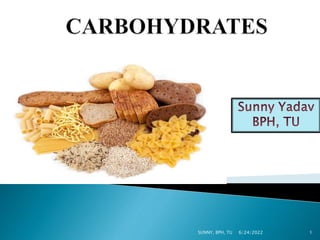
 Major component of food which is the main
source of energy; providing 4 Kcal/gm
 In balanced diet, carbohydrates provide 50-
60% of total calories taken.
 In excess, the carbohydrates are converted into
body fat.
 Composed of carbon, hydrogen, and oxygen
and also called saccharide.
6/24/2022 2
SUNNY, BPH, TU
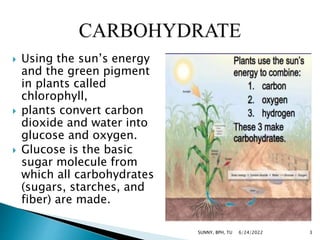
 Using the sun’s energy
and the green pigment
in plants called
chlorophyll,
 plants convert carbon
dioxide and water into
glucose and oxygen.
 Glucose is the basic
sugar molecule from
which all carbohydrates
(sugars, starches, and
fiber) are made.
6/24/2022 3
SUNNY, BPH, TU
 Energy production in the body (supplies
energy to all part of body)
 Useful in oxidation of fat
 Growth of useful bacteria
 Synthesis of vitamin B complex
 Absorption of minerals
 Prevention of constipation
 Synthesis of non-essential amino acids,
glycoproteins, glycolipids

6/24/2022 4
SUNNY, BPH, TU
6/24/2022 5
SUNNY, BPH, TU
6/24/2022 6
SUNNY, BPH, TU
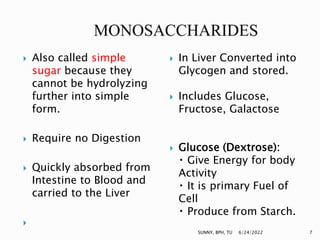
 Also called simple
sugar because they
cannot be hydrolyzing
further into simple
form.
 Require no Digestion
 Quickly absorbed from
Intestine to Blood and
carried to the Liver

 In Liver Converted into
Glycogen and stored.
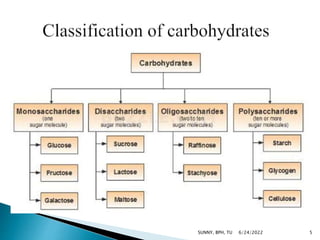
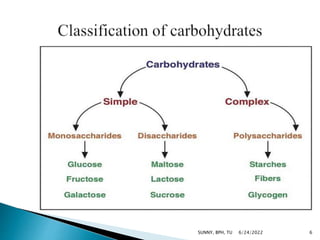
 Includes Glucose,
Fructose, Galactose
 Glucose (Dextrose):
Give Energy for body
Activity
It is primary Fuel of
Cell
Produce from Starch.
6/24/2022 7
SUNNY, BPH, TU
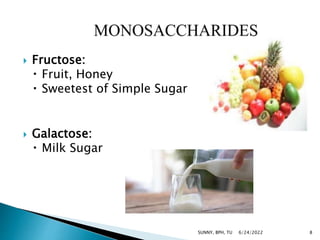
 Fructose:
Fruit, Honey
Sweetest of Simple Sugar
 Galactose:
Milk Sugar
6/24/2022 8
SUNNY, BPH, TU
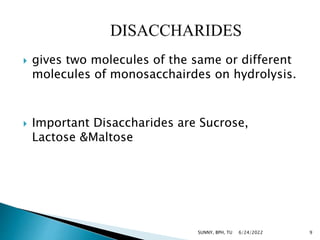
 gives two molecules of the same or different
molecules of monosacchairdes on hydrolysis.
 Important Disaccharides are Sucrose,
Lactose &Maltose
6/24/2022 9
SUNNY, BPH, TU
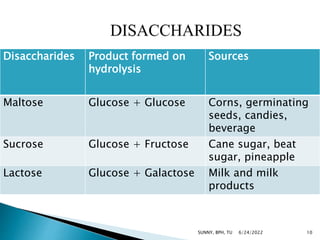
Disaccharides Product formed on
hydrolysis
Sources
Maltose Glucose + Glucose Corns, germinating
seeds, candies,
beverage
Sucrose Glucose + Fructose Cane sugar, beat
sugar, pineapple
Lactose Glucose + Galactose Milk and milk
products
6/24/2022 10
SUNNY, BPH, TU
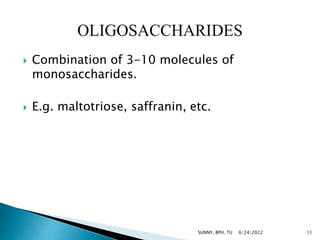
 Combination of 3-10 molecules of
monosaccharides.
 E.g. maltotriose, saffranin, etc.
6/24/2022 11
SUNNY, BPH, TU
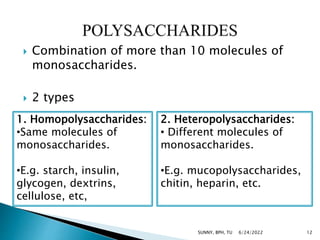
 Combination of more than 10 molecules of
monosaccharides.
 2 types
2. Heteropolysaccharides:
• Different molecules of
monosaccharides.
•E.g. mucopolysaccharides,
chitin, heparin, etc.
1. Homopolysaccharides:
•Same molecules of
monosaccharides.
•E.g. starch, insulin,
glycogen, dextrins,
cellulose, etc,
6/24/2022 12
SUNNY, BPH, TU
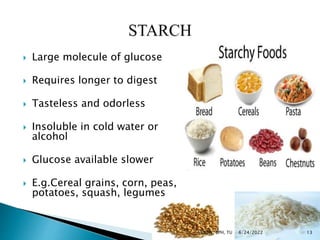
 Large molecule of glucose
 Requires longer to digest
 Tasteless and odorless
 Insoluble in cold water or
alcohol
 Glucose available slower
 E.g.Cereal grains, corn, peas,
potatoes, squash, legumes
6/24/2022 13
SUNNY, BPH, TU
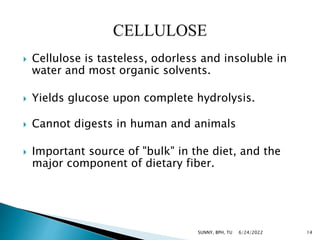
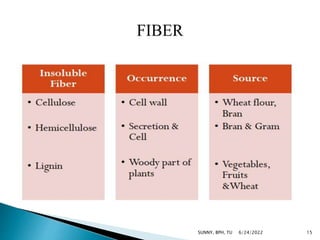
 Cellulose is tasteless, odorless and insoluble in
water and most organic solvents.
 Yields glucose upon complete hydrolysis.
 Cannot digests in human and animals
 Important source of "bulk" in the diet, and the
major component of dietary fiber.
6/24/2022 14
SUNNY, BPH, TU
6/24/2022 15
SUNNY, BPH, TU
6/24/2022 16
SUNNY, BPH, TU
6/24/2022 17
SUNNY, BPH, TU
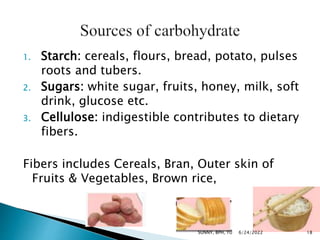
1. Starch: cereals, flours, bread, potato, pulses
roots and tubers.
2. Sugars: white sugar, fruits, honey, milk, soft
drink, glucose etc.
3. Cellulose: indigestible contributes to dietary
fibers.
Fibers includes Cereals, Bran, Outer skin of
Fruits & Vegetables, Brown rice,
6/24/2022 18
SUNNY, BPH, TU
• Rich sources: they include pure carbohydrate
foods (sago, tapioca, jaggery and sugar),
cereals and millets and dried fruits.
• Good sources: Pulses, milk powder (full fat),
milk powder (skimmed),roots and tubers
(fresh).
• Fair sources: fresh fruits, animal milk, nuts
and oil seeds and legumes.
6/24/2022 19
SUNNY, BPH, TU
 Daily requirements
- Children: 60-250 grams
- Adolescents: 400 grams
- Men: 300 - 700 grams
- Women: 240 - 540 grams
The carbohydrate reserve (glycogen) of a
human adult is about 500
6/24/2022 20
SUNNY, BPH, TU
1. Decrease growth
2. Tissue wasting
3. Metabolic acidosis
4. Weakness
6/24/2022 21
SUNNY, BPH, TU
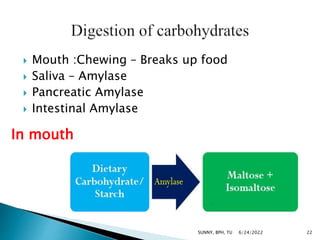
 Mouth :Chewing – Breaks up food
 Saliva – Amylase
 Pancreatic Amylase
 Intestinal Amylase
In mouth
6/24/2022 22
SUNNY, BPH, TU
 In Small Intestine
Maltose → Maltase → Glucose + Glucose
Lactose → Lactase → Glucose + Galactose
Sucrose → Surcease → Glucose + Fructose
6/24/2022 23
SUNNY, BPH, TU
 The end products of carbohydrates are
glucose, fructose and galactose
 These end products are absorbed from small
intestine to capillaries of blood vessels with
the help of villi
 These end products are absorbed by active
transport (glucose and galactose) and
facilitated diffusion (fructose)
6/24/2022
SUNNY, BPH, TU 24
 Calories are used to measure energy. We use
calories to measure how much energy is there in
certain foods. We use calories also to measure
how much energy a person needs(energy
requirements)
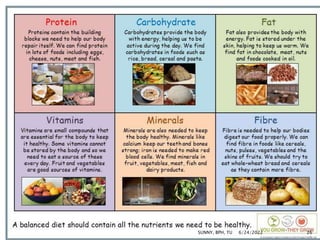
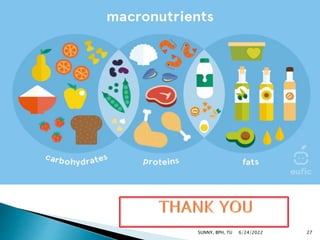
 Nutrients that provide calories, and the
amounts are as follows:-
- One Gram of Carbohydrate provides 4 calories.
- One Gram of proteins provides 4 calories.
- One Gram of fats provides 9 calories.
6/24/2022 25
SUNNY, BPH, TU
6/24/2022 26
SUNNY, BPH, TU
6/24/2022 27
SUNNY, BPH, TU

Carbohydrates.pptx

  • 1.
  • 2.
     Major componentof food which is the main source of energy; providing 4 Kcal/gm  In balanced diet, carbohydrates provide 50- 60% of total calories taken.  In excess, the carbohydrates are converted into body fat.  Composed of carbon, hydrogen, and oxygen and also called saccharide. 6/24/2022 2 SUNNY, BPH, TU
  • 3.
     Using thesun’s energy and the green pigment in plants called chlorophyll,  plants convert carbon dioxide and water into glucose and oxygen.  Glucose is the basic sugar molecule from which all carbohydrates (sugars, starches, and fiber) are made. 6/24/2022 3 SUNNY, BPH, TU
  • 4.
     Energy productionin the body (supplies energy to all part of body)  Useful in oxidation of fat  Growth of useful bacteria  Synthesis of vitamin B complex  Absorption of minerals  Prevention of constipation  Synthesis of non-essential amino acids, glycoproteins, glycolipids  6/24/2022 4 SUNNY, BPH, TU
  • 5.
  • 6.
  • 7.
     Also calledsimple sugar because they cannot be hydrolyzing further into simple form.  Require no Digestion  Quickly absorbed from Intestine to Blood and carried to the Liver   In Liver Converted into Glycogen and stored.  Includes Glucose, Fructose, Galactose  Glucose (Dextrose): Give Energy for body Activity It is primary Fuel of Cell Produce from Starch. 6/24/2022 7 SUNNY, BPH, TU
  • 8.
     Fructose: Fruit, Honey Sweetestof Simple Sugar  Galactose: Milk Sugar 6/24/2022 8 SUNNY, BPH, TU
  • 9.
     gives twomolecules of the same or different molecules of monosacchairdes on hydrolysis.  Important Disaccharides are Sucrose, Lactose &Maltose 6/24/2022 9 SUNNY, BPH, TU
  • 10.
    Disaccharides Product formedon hydrolysis Sources Maltose Glucose + Glucose Corns, germinating seeds, candies, beverage Sucrose Glucose + Fructose Cane sugar, beat sugar, pineapple Lactose Glucose + Galactose Milk and milk products 6/24/2022 10 SUNNY, BPH, TU
  • 11.
     Combination of3-10 molecules of monosaccharides.  E.g. maltotriose, saffranin, etc. 6/24/2022 11 SUNNY, BPH, TU
  • 12.
     Combination ofmore than 10 molecules of monosaccharides.  2 types 2. Heteropolysaccharides: • Different molecules of monosaccharides. •E.g. mucopolysaccharides, chitin, heparin, etc. 1. Homopolysaccharides: •Same molecules of monosaccharides. •E.g. starch, insulin, glycogen, dextrins, cellulose, etc, 6/24/2022 12 SUNNY, BPH, TU
  • 13.
     Large moleculeof glucose  Requires longer to digest  Tasteless and odorless  Insoluble in cold water or alcohol  Glucose available slower  E.g.Cereal grains, corn, peas, potatoes, squash, legumes 6/24/2022 13 SUNNY, BPH, TU
  • 14.
     Cellulose istasteless, odorless and insoluble in water and most organic solvents.  Yields glucose upon complete hydrolysis.  Cannot digests in human and animals  Important source of "bulk" in the diet, and the major component of dietary fiber. 6/24/2022 14 SUNNY, BPH, TU
  • 15.
  • 16.
  • 17.
  • 18.
    1. Starch: cereals,flours, bread, potato, pulses roots and tubers. 2. Sugars: white sugar, fruits, honey, milk, soft drink, glucose etc. 3. Cellulose: indigestible contributes to dietary fibers. Fibers includes Cereals, Bran, Outer skin of Fruits & Vegetables, Brown rice, 6/24/2022 18 SUNNY, BPH, TU
  • 19.
    • Rich sources:they include pure carbohydrate foods (sago, tapioca, jaggery and sugar), cereals and millets and dried fruits. • Good sources: Pulses, milk powder (full fat), milk powder (skimmed),roots and tubers (fresh). • Fair sources: fresh fruits, animal milk, nuts and oil seeds and legumes. 6/24/2022 19 SUNNY, BPH, TU
  • 20.
     Daily requirements -Children: 60-250 grams - Adolescents: 400 grams - Men: 300 - 700 grams - Women: 240 - 540 grams The carbohydrate reserve (glycogen) of a human adult is about 500 6/24/2022 20 SUNNY, BPH, TU
  • 21.
    1. Decrease growth 2.Tissue wasting 3. Metabolic acidosis 4. Weakness 6/24/2022 21 SUNNY, BPH, TU
  • 22.
     Mouth :Chewing– Breaks up food  Saliva – Amylase  Pancreatic Amylase  Intestinal Amylase In mouth 6/24/2022 22 SUNNY, BPH, TU
  • 23.
     In SmallIntestine Maltose → Maltase → Glucose + Glucose Lactose → Lactase → Glucose + Galactose Sucrose → Surcease → Glucose + Fructose 6/24/2022 23 SUNNY, BPH, TU
  • 24.
     The endproducts of carbohydrates are glucose, fructose and galactose  These end products are absorbed from small intestine to capillaries of blood vessels with the help of villi  These end products are absorbed by active transport (glucose and galactose) and facilitated diffusion (fructose) 6/24/2022 SUNNY, BPH, TU 24
  • 25.
     Calories areused to measure energy. We use calories to measure how much energy is there in certain foods. We use calories also to measure how much energy a person needs(energy requirements)  Nutrients that provide calories, and the amounts are as follows:- - One Gram of Carbohydrate provides 4 calories. - One Gram of proteins provides 4 calories. - One Gram of fats provides 9 calories. 6/24/2022 25 SUNNY, BPH, TU
  • 26.
  • 27.