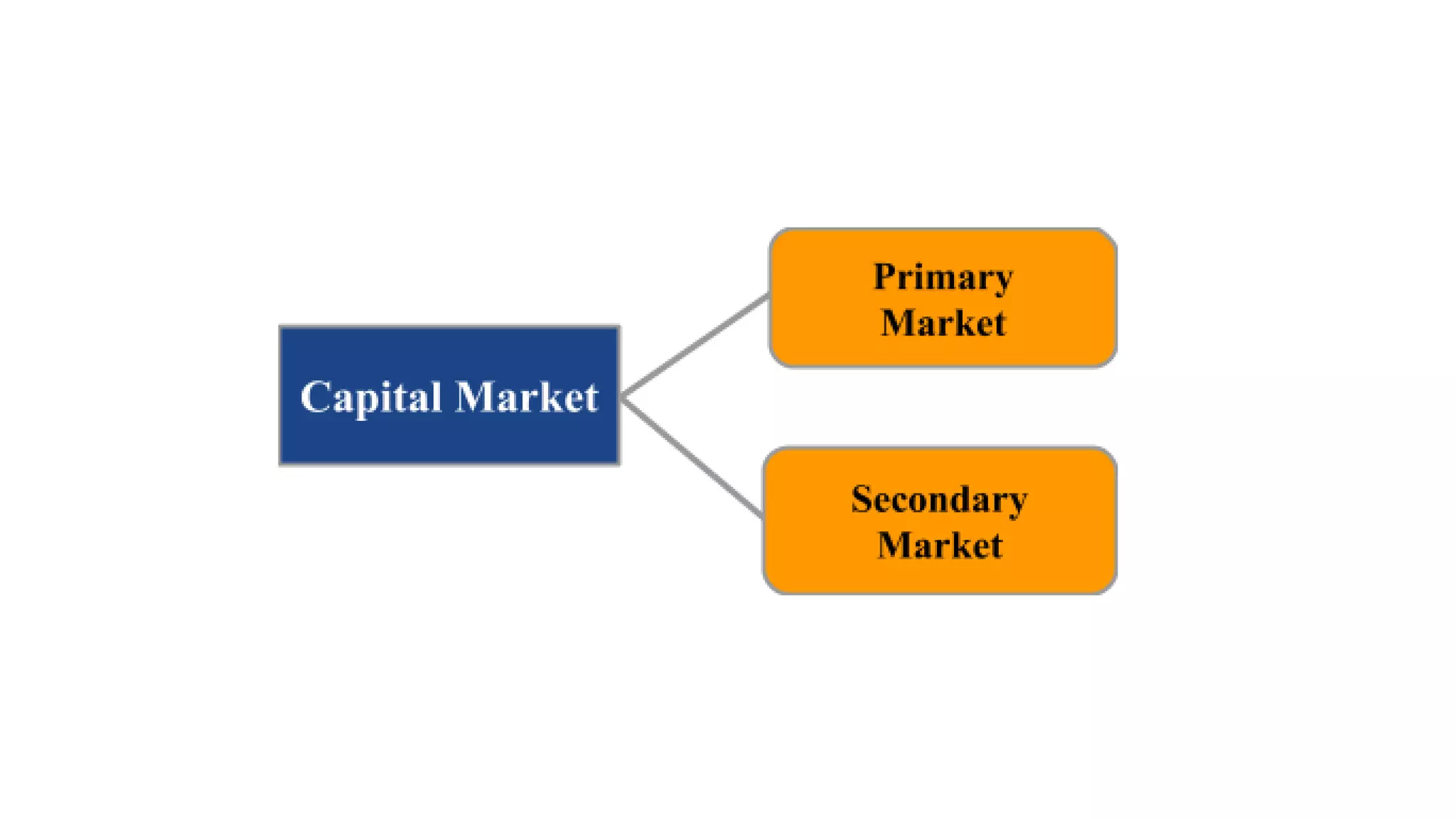
Primary Market: Meaning
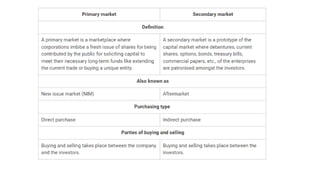
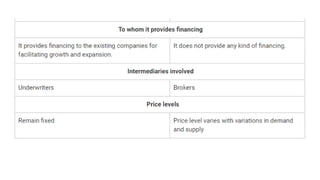
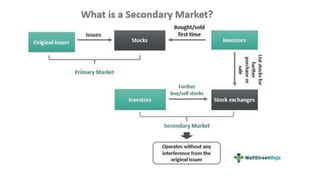
A primary market is a marketplace where corporations
imbibe a fresh issue of shares for being contributed by the
public for soliciting capital to meet their necessary long-term
funds like extending the current trade or buying a unique
entity.
Multiple types of issues made by the establishment are –
Offer for sale, public issue, issue of Indian Depository
Receipt (IDR), bonus Issue, right issue, etc.
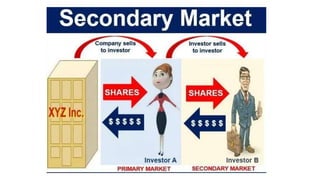
Secondary Market: Meaning
A secondary market is a prototype of the capital market where
debentures, current shares, options, bonds, treasury bills,
commercial papers, etc., of the enterprises are patronised amongst
the investors.
The secondary market can be an auction business where the
business of bonds is functioned through a dealer market or the
stock exchange, usually called over the counter.
Money Market
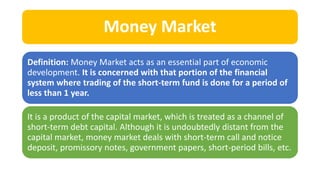
Definition: Money Market acts as an essential part of economic
development. It is concerned with that portion of the financial
system where trading of the short-term fund is done for a period of
less than 1 year.
It is a product of the capital market, which is treated as a channel of
short-term debt capital. Although it is undoubtedly distant from the
capital market, money market deals with short-term call and notice
deposit, promissory notes, government papers, short-period bills, etc.
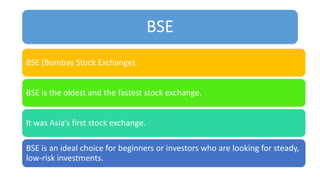
BSE
BSE (Bombay Stock Exchange):
BSE is the oldest and the fastest stock exchange.
It was Asia’s first stock exchange.
BSE is an ideal choice for beginners or investors who are looking for steady,
low-risk investments.
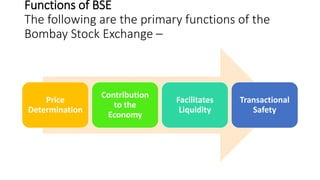
Functions of BSE
The following are the primary functions of the
Bombay Stock Exchange –
Price
Determination
Contribution
to the
Economy
Facilitates
Liquidity
Transactional
Safety
FOREX
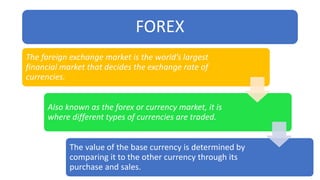
The foreign exchange market is the world’s largest
financial market that decides the exchange rate of
currencies.
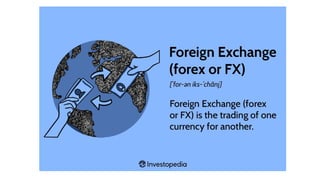
Also known as the forex or currency market, it is
where different types of currencies are traded.
The value of the base currency is determined by
comparing it to the other currency through its
purchase and sales.
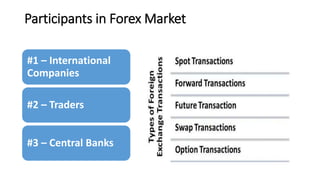
Participants in Forex Market
#1 – International
Companies
#2 – Traders
#3 – Central Banks
Spot Transactions
This method of transaction is the fastest way
to exchange currencies. Spot transaction
refers to the exchange or settlement of the
currencies by the buyer and seller within two
days of the deal without a signed contract.
Forward Transactions
Forward transactions are future transactions
when the buyer and seller enter into an
agreement of purchase and sale of currency
after 90 days. The agreement is framed on
the basis of a fixed exchange rate for a
definite date in the future.
Future Transaction
Future transactions also deal with contracts in the same manner as forward
transactions. However, in the case of future transactions, standardized
contracts in terms of features, date, and size should be followed.
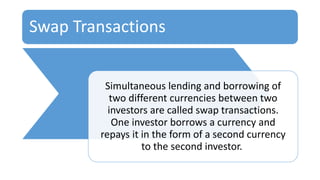
Swap Transactions
Simultaneous lending and borrowing of
two different currencies between two
investors are called swap transactions.
One investor borrows a currency and
repays it in the form of a second currency
to the second investor.
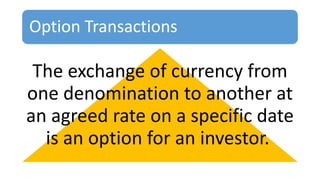
Option Transactions
The exchange of currency from
one denomination to another at
an agreed rate on a specific date
is an option for an investor.
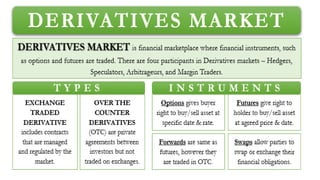
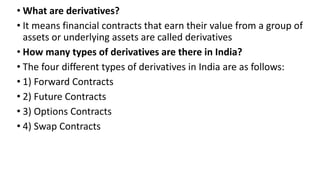
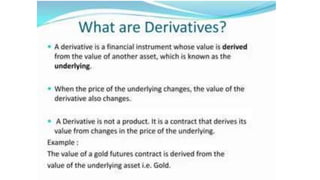
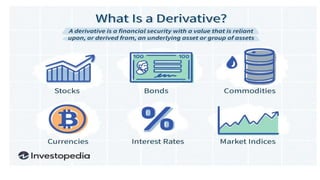
• What are derivatives?
• It means financial contracts that earn their value from a group of
assets or underlying assets are called derivatives
• How many types of derivatives are there in India?
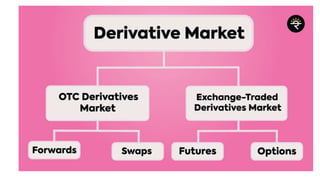
• The four different types of derivatives in India are as follows:
• 1) Forward Contracts
• 2) Future Contracts
• 3) Options Contracts
• 4) Swap Contracts
capital market.pptx
capital market.pptx

capital market.pptx

  • 2.
    Primary Market: Meaning Aprimary market is a marketplace where corporations imbibe a fresh issue of shares for being contributed by the public for soliciting capital to meet their necessary long-term funds like extending the current trade or buying a unique entity. Multiple types of issues made by the establishment are – Offer for sale, public issue, issue of Indian Depository Receipt (IDR), bonus Issue, right issue, etc.
  • 3.
    Secondary Market: Meaning Asecondary market is a prototype of the capital market where debentures, current shares, options, bonds, treasury bills, commercial papers, etc., of the enterprises are patronised amongst the investors. The secondary market can be an auction business where the business of bonds is functioned through a dealer market or the stock exchange, usually called over the counter.
  • 6.
    Money Market Definition: MoneyMarket acts as an essential part of economic development. It is concerned with that portion of the financial system where trading of the short-term fund is done for a period of less than 1 year. It is a product of the capital market, which is treated as a channel of short-term debt capital. Although it is undoubtedly distant from the capital market, money market deals with short-term call and notice deposit, promissory notes, government papers, short-period bills, etc.
  • 21.
    BSE BSE (Bombay StockExchange): BSE is the oldest and the fastest stock exchange. It was Asia’s first stock exchange. BSE is an ideal choice for beginners or investors who are looking for steady, low-risk investments.
  • 22.
    Functions of BSE Thefollowing are the primary functions of the Bombay Stock Exchange – Price Determination Contribution to the Economy Facilitates Liquidity Transactional Safety
  • 26.
    FOREX The foreign exchangemarket is the world’s largest financial market that decides the exchange rate of currencies. Also known as the forex or currency market, it is where different types of currencies are traded. The value of the base currency is determined by comparing it to the other currency through its purchase and sales.
  • 28.
    Participants in ForexMarket #1 – International Companies #2 – Traders #3 – Central Banks
  • 29.
    Spot Transactions This methodof transaction is the fastest way to exchange currencies. Spot transaction refers to the exchange or settlement of the currencies by the buyer and seller within two days of the deal without a signed contract.
  • 30.
    Forward Transactions Forward transactionsare future transactions when the buyer and seller enter into an agreement of purchase and sale of currency after 90 days. The agreement is framed on the basis of a fixed exchange rate for a definite date in the future.
  • 31.
    Future Transaction Future transactionsalso deal with contracts in the same manner as forward transactions. However, in the case of future transactions, standardized contracts in terms of features, date, and size should be followed.
  • 32.
    Swap Transactions Simultaneous lendingand borrowing of two different currencies between two investors are called swap transactions. One investor borrows a currency and repays it in the form of a second currency to the second investor.
  • 33.
    Option Transactions The exchangeof currency from one denomination to another at an agreed rate on a specific date is an option for an investor.
  • 41.
    • What arederivatives? • It means financial contracts that earn their value from a group of assets or underlying assets are called derivatives • How many types of derivatives are there in India? • The four different types of derivatives in India are as follows: • 1) Forward Contracts • 2) Future Contracts • 3) Options Contracts • 4) Swap Contracts