CANeLearn Augment
Images sourced from https://unsplash.com/collections, @rlabonte,
https://www.flickr.com/creativecommons, or https://photosforclass.com/
CANeLearn.net
Micro-Credential K-12
Professional Learning Program
For teaching and learning in
Online Learning Environments
May 29th – Online presentation
Presenters
About the Canadian eLearning Network
• CANeLearn is a pan-Canadian network of K-12 online and blended
learning schools, organizations, and educators
• Focus is on PD, research, sharing resources
• Intent is to leverage our Canadian collective to promote online and
blended, or e-learning
MISSION
To be the leading voice in Canada for learner
success in K-12 online and blended learning.
https://CANeLearn.net
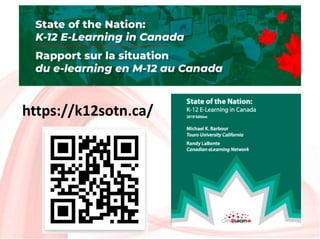
https://k12sotn.ca/
What is Class Size??
Education in Canada
Pan Canadian Trends
Centralized or Decentralized?
Online or Classroom?
• Smaller jurisdictions centralize, larger decentralize
• No significant difference in completion rates
• Completion rates for online BC 89%, ON up to 94%
• CDLI (NL): 86.8% completion vs. 80.9% in classrooms
• Medium or model not the difference – teachers are
– The truck that delivers groceries does not change nutrition
• Researchers constantly asked does blended and online learning work?
The better question?
Under what conditions can they work?
https://canelearn.net/which-is-more-effective-centralized-or-decentralized/
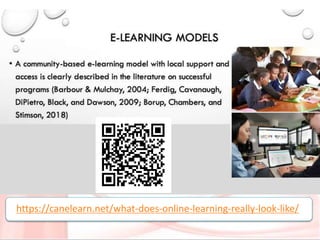
https://canelearn.net/what-does-online-learning-really-look-like/
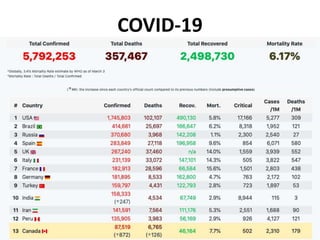
COVID-19
Emergency Remote Teaching
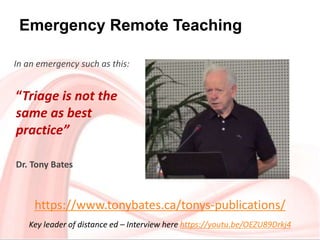
In an emergency such as this:
“Triage is not the
same as best
practice”
Dr. Tony Bates
https://www.tonybates.ca/tonys-publications/
Key leader of distance ed – Interview here https://youtu.be/OEZU89Drkj4
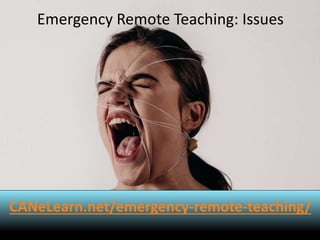
Emergency Remote Teaching: Issues
CANeLearn.net/emergency-remote-teaching/
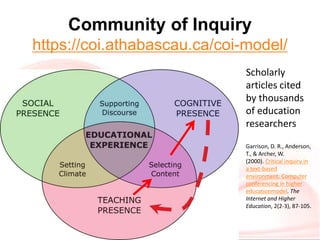
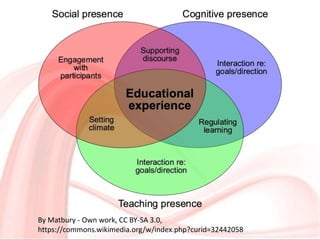
Community of Inquiry
https://coi.athabascau.ca/coi-model/
Scholarly
articles cited
by thousands
of education
researchers
Garrison, D. R., Anderson,
T., & Archer, W.
(2000). Critical inquiry in
a text-based
environment: Computer
conferencing in higher
educationmodel. The
Internet and Higher
Education, 2(2-3), 87-105.
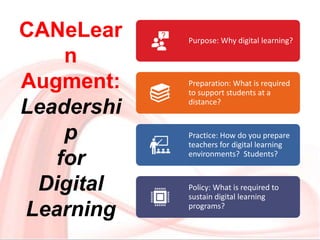
CANeLear
n
Augment:
Leadershi
p
for
Digital
Learning
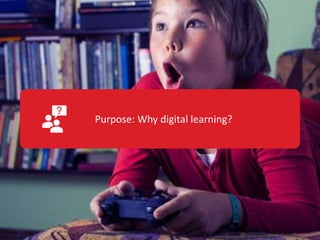
Purpose: Why digital learning?
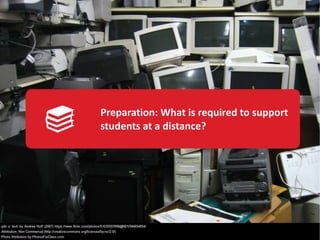
Preparation: What is required
to support students at a
distance?
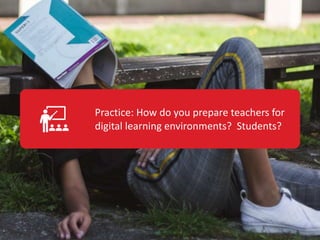
Practice: How do you prepare
teachers for digital learning
environments? Students?
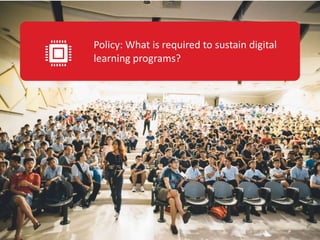
Policy: What is required to
sustain digital learning
programs?
Leadership
in/for Digital
Learning
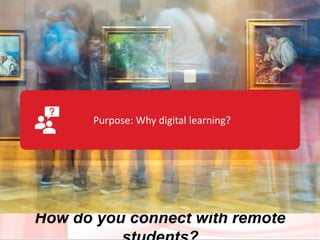
Purpose: Why digital learning?
How do you connect with remote
Purpose: Why digital learning?
Preparation: What is required to support
students at a distance?
Leadership
in/for Digital
Learning
Practice: How do you prepare teachers for
digital learning environments? Students?
Policy: What is required to sustain digital
learning programs?
Leadership
in/for Digital
Learning
Policy: What is required to sustain digital
learning programs?
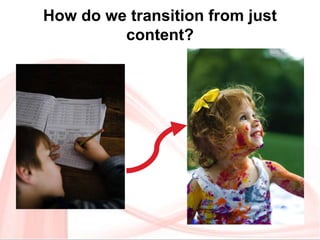
How do we transition from just
content?
By Matbury - Own work, CC BY-SA 3.0,
https://commons.wikimedia.org/w/index.php?curid=32442058
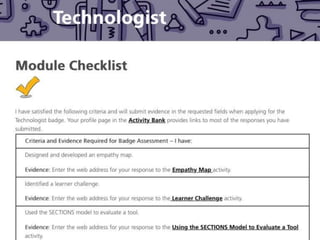
CANeLearn is partnering with eCampusOntario to support a
Micro-credential pilot program for K-12 teachers in Canada
• Leads to post-secondary credit for diploma and Masters programs
at accredited Canadian universities
• National nonprofit accredits and credentials teacher learning –
certifying for post-secondary recognition
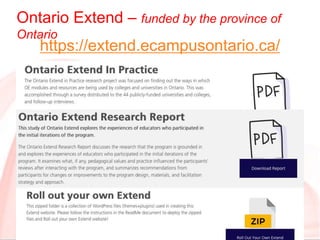
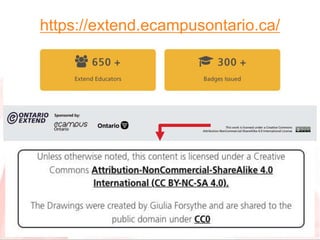
Ontario Extend – funded by the province of
Ontario
https://extend.ecampusontario.ca/
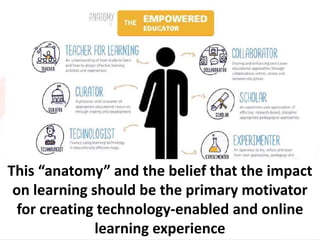
This “anatomy” and the belief that the impact
on learning should be the primary motivator
for creating technology-enabled and online
learning experience
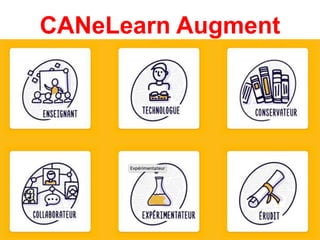
CANeLearn Augment
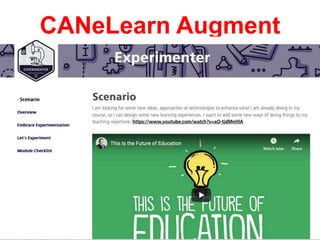
CANeLearn Augment
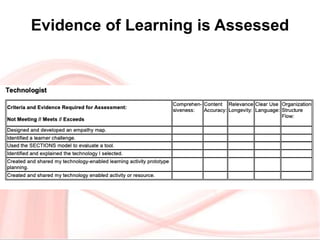
Evidence of Learning is Assessed
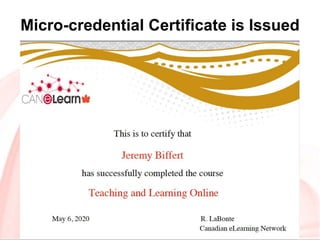
Micro-credential Certificate is Issued
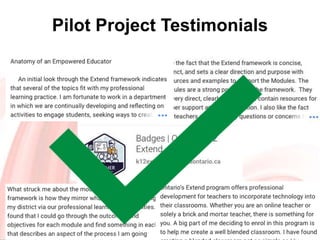
Pilot Project Testimonials
Our goal…
• Foster effective and engaging online pedagogy
• Oversee the extension of K-12 educator’s
professional practice
• Augment teacher’s digital learning skills
• To offer a rigorous, applied, and recognized
program
• To scaffold teacher professional learning into
university degree programs
Next steps
1. How does the direction the
Canadian eLearning Network is
taking in Canada fit in your
context?
2. How can CANeLearn help to
address your needs?
3. What are the next steps?
34
Thank You -- Merci!
Dr. Randy LaBonte et Dr. Michael Canuel
rlabonte@canelearn.net
mcanuel@learnquebec.ca
CANeLearn.net
Images sourced or from https://photosforclass.com/ , https://unsplash.com/collections,,
@rlabonte, or https://www.flickr.com/creativecommons/

CANeLearn Augment: Micro-credential overview

  • 1.
    CANeLearn Augment Images sourcedfrom https://unsplash.com/collections, @rlabonte, https://www.flickr.com/creativecommons, or https://photosforclass.com/ CANeLearn.net Micro-Credential K-12 Professional Learning Program For teaching and learning in Online Learning Environments May 29th – Online presentation
  • 2.
  • 3.
    About the CanadianeLearning Network • CANeLearn is a pan-Canadian network of K-12 online and blended learning schools, organizations, and educators • Focus is on PD, research, sharing resources • Intent is to leverage our Canadian collective to promote online and blended, or e-learning MISSION To be the leading voice in Canada for learner success in K-12 online and blended learning. https://CANeLearn.net
  • 4.
  • 5.
  • 6.
  • 7.
    Pan Canadian Trends Centralizedor Decentralized? Online or Classroom? • Smaller jurisdictions centralize, larger decentralize • No significant difference in completion rates • Completion rates for online BC 89%, ON up to 94% • CDLI (NL): 86.8% completion vs. 80.9% in classrooms • Medium or model not the difference – teachers are – The truck that delivers groceries does not change nutrition • Researchers constantly asked does blended and online learning work? The better question? Under what conditions can they work? https://canelearn.net/which-is-more-effective-centralized-or-decentralized/
  • 8.
  • 9.
  • 10.
    Emergency Remote Teaching Inan emergency such as this: “Triage is not the same as best practice” Dr. Tony Bates https://www.tonybates.ca/tonys-publications/ Key leader of distance ed – Interview here https://youtu.be/OEZU89Drkj4
  • 11.
    Emergency Remote Teaching:Issues CANeLearn.net/emergency-remote-teaching/
  • 12.
    Community of Inquiry https://coi.athabascau.ca/coi-model/ Scholarly articlescited by thousands of education researchers Garrison, D. R., Anderson, T., & Archer, W. (2000). Critical inquiry in a text-based environment: Computer conferencing in higher educationmodel. The Internet and Higher Education, 2(2-3), 87-105.
  • 13.
    CANeLear n Augment: Leadershi p for Digital Learning Purpose: Why digitallearning? Preparation: What is required to support students at a distance? Practice: How do you prepare teachers for digital learning environments? Students? Policy: What is required to sustain digital learning programs?
  • 14.
  • 15.
    How do youconnect with remote Purpose: Why digital learning?
  • 16.
    Preparation: What isrequired to support students at a distance?
  • 17.
    Leadership in/for Digital Learning Practice: Howdo you prepare teachers for digital learning environments? Students?
  • 18.
    Policy: What isrequired to sustain digital learning programs?
  • 19.
    Leadership in/for Digital Learning Policy: Whatis required to sustain digital learning programs?
  • 20.
    How do wetransition from just content?
  • 21.
    By Matbury -Own work, CC BY-SA 3.0, https://commons.wikimedia.org/w/index.php?curid=32442058
  • 22.
    CANeLearn is partneringwith eCampusOntario to support a Micro-credential pilot program for K-12 teachers in Canada • Leads to post-secondary credit for diploma and Masters programs at accredited Canadian universities • National nonprofit accredits and credentials teacher learning – certifying for post-secondary recognition
  • 23.
    Ontario Extend –funded by the province of Ontario https://extend.ecampusontario.ca/
  • 24.
  • 25.
    This “anatomy” andthe belief that the impact on learning should be the primary motivator for creating technology-enabled and online learning experience
  • 26.
  • 27.
  • 29.
  • 30.
  • 31.
  • 32.
    Our goal… • Fostereffective and engaging online pedagogy • Oversee the extension of K-12 educator’s professional practice • Augment teacher’s digital learning skills • To offer a rigorous, applied, and recognized program • To scaffold teacher professional learning into university degree programs
  • 33.
    Next steps 1. Howdoes the direction the Canadian eLearning Network is taking in Canada fit in your context? 2. How can CANeLearn help to address your needs? 3. What are the next steps?
  • 34.
    34 Thank You --Merci! Dr. Randy LaBonte et Dr. Michael Canuel rlabonte@canelearn.net mcanuel@learnquebec.ca CANeLearn.net Images sourced or from https://photosforclass.com/ , https://unsplash.com/collections,, @rlabonte, or https://www.flickr.com/creativecommons/

Editor's Notes

  • #13 Social presence is “the ability of participants to identify with the community (e.g., course of study), communicate purposefully in a trusting environment, and develop inter-personal relationships by way of projecting their individual personalities.” (Garrison, 2009) Teaching Presence  is the design, facilitation, and direction of cognitive and social processes for the purpose of realizing personally meaningful and educationally worthwhile learning outcomes (Anderson, Rourke, Garrison, & Archer, 2001). Cognitive Presence is the extent to which learners are able to construct and confirm meaning through sustained reflection and discourse (Garrison, Anderson, & Archer, 2001).
  • #22 Social presence is “the ability of participants to identify with the community (e.g., course of study), communicate purposefully in a trusting environment, and develop inter-personal relationships by way of projecting their individual personalities.” (Garrison, 2009) Teaching Presence  is the design, facilitation, and direction of cognitive and social processes for the purpose of realizing personally meaningful and educationally worthwhile learning outcomes (Anderson, Rourke, Garrison, & Archer, 2001). Cognitive Presence is the extent to which learners are able to construct and confirm meaning through sustained reflection and discourse (Garrison, Anderson, & Archer, 2001).
  • #26 This “anatomy” and the belief that the impact on learning should be the primary motivator for creating technology-enabled and online learning experience