Intellectual Property
Why it matters for your business
© IP Scope, 2013. All rights reserved.
www.ipscope.co.uk
What is
Protected?
Overview of Intellectual Property
Patents
Inventions
Up to 20 years
(subject to
annual renewal)
Your idea being
used, sold or
manufactured
Trade Marks
Brand Identity,
including words
& logos
Forever
(renewals every
10 years)
The use of your
trademarks by
others without
your permission
Registered
Design Rights
What the
product looks
like
Up to 25 years
Your product
being
manufactured,
sold or imported
Copyright
Music, art, film,
literary works &
broadcasts
Life plus 70
years (sound
broadcasts are
50 years)
Your work being
copied or
reproduced
© IP Scope, 2013. All rights reserved. www.ipscope.co.uk
How long?
What does
it protect
against?
How can I determine if my business needs IP protection?
• The UK Intellectual Property Office provides a free IP Healthcheck
service that takes you through a series of questions to determine
how to safeguard your IP assets and provides a confidential report
with recommendations for next steps.
– http://www.ipo.gov.uk/whyuse/business/iphealthcheck.htm
• What you get
– A list of recommended Action Points, to help you protect and exploit your IP
rights;
– An explanation of why they have made each recommendation;
– Guidance on how to put each recommendation into practice;
– Links to useful information, websites and other resources.
© IP Scope, 2013. All rights reserved.
www.ipscope.co.uk
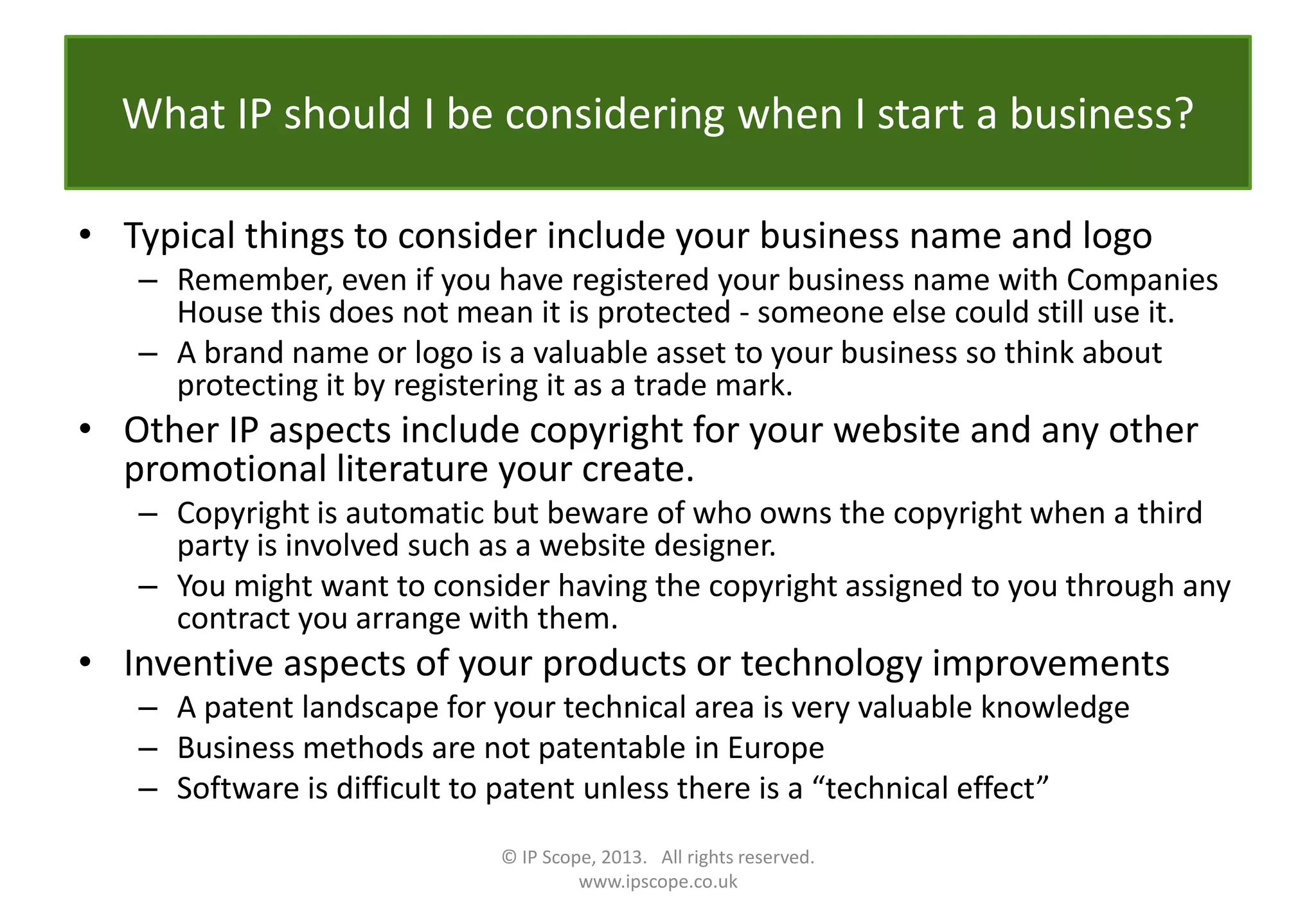
What IP should I be considering when I start a business?
• Typical things to consider include your business name and logo
– Remember, even if you have registered your business name with Companies
House this does not mean it is protected - someone else could still use it.
– A brand name or logo is a valuable asset to your business so think about
protecting it by registering it as a trade mark.
• Other IP aspects include copyright for your website and any other
promotional literature your create.
– Copyright is automatic but beware of who owns the copyright when a third
party is involved such as a website designer.
– You might want to consider having the copyright assigned to you through any
contract you arrange with them.
• Inventive aspects of your products or technology improvements
– A patent landscape for your technical area is very valuable knowledge
– Business methods are not patentable in Europe
– Software is difficult to patent unless there is a “technical effect”
© IP Scope, 2013. All rights reserved.
www.ipscope.co.uk
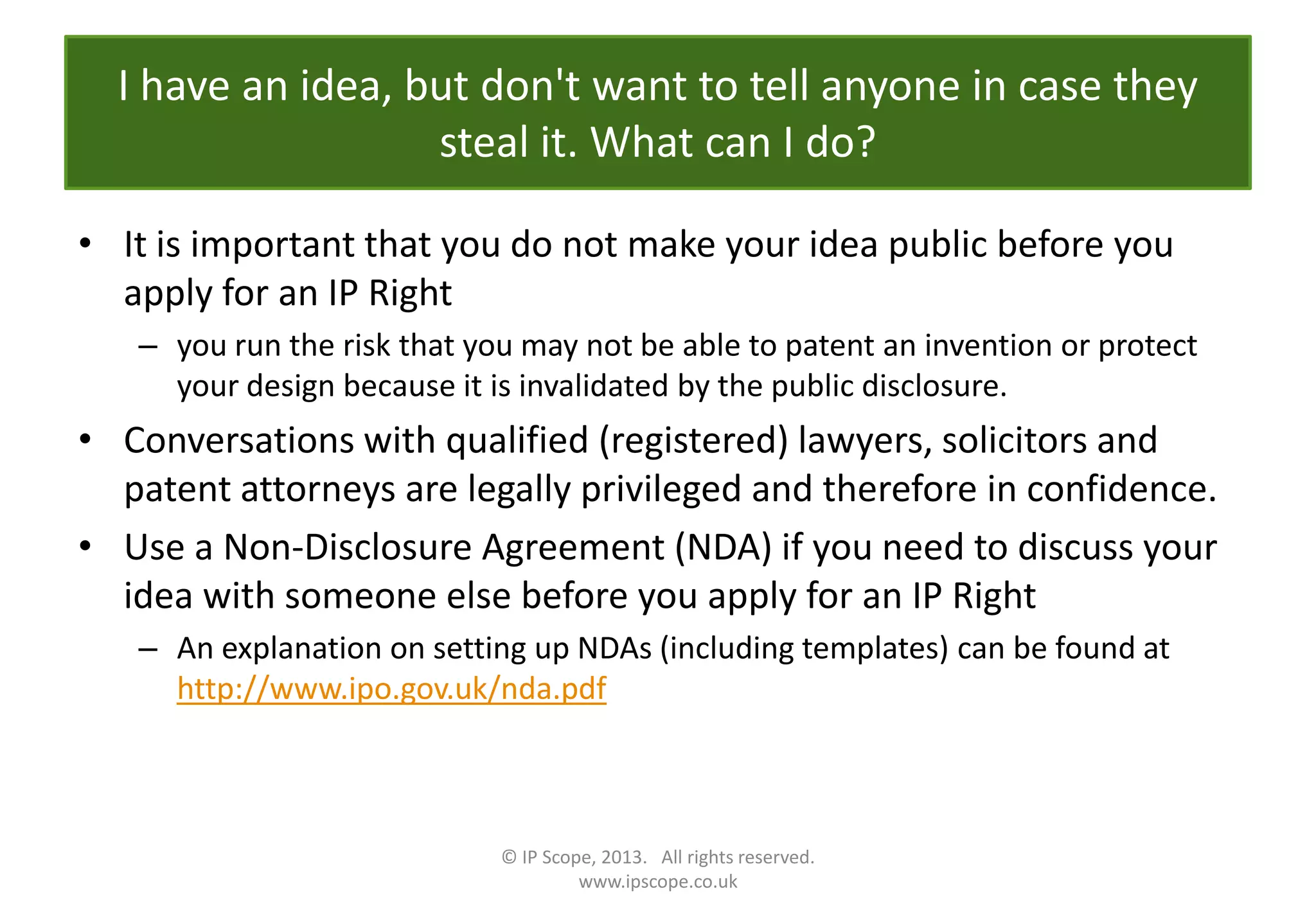
I have an idea, but don't want to tell anyone in case they
steal it. What can I do?
• It is important that you do not make your idea public before you
apply for an IP Right
– you run the risk that you may not be able to patent an invention or protect
your design because it is invalidated by the public disclosure.
• Conversations with qualified (registered) lawyers, solicitors and
patent attorneys are legally privileged and therefore in confidence.
• Use a Non-Disclosure Agreement (NDA) if you need to discuss your
idea with someone else before you apply for an IP Right
– An explanation on setting up NDAs (including templates) can be found at
http://www.ipo.gov.uk/nda.pdf
© IP Scope, 2013. All rights reserved.
www.ipscope.co.uk

Camjelly IP chat

  • 1.
    Intellectual Property Why itmatters for your business © IP Scope, 2013. All rights reserved. www.ipscope.co.uk
  • 2.
    What is Protected? Overview ofIntellectual Property Patents Inventions Up to 20 years (subject to annual renewal) Your idea being used, sold or manufactured Trade Marks Brand Identity, including words & logos Forever (renewals every 10 years) The use of your trademarks by others without your permission Registered Design Rights What the product looks like Up to 25 years Your product being manufactured, sold or imported Copyright Music, art, film, literary works & broadcasts Life plus 70 years (sound broadcasts are 50 years) Your work being copied or reproduced © IP Scope, 2013. All rights reserved. www.ipscope.co.uk How long? What does it protect against?
  • 3.
    How can Idetermine if my business needs IP protection? • The UK Intellectual Property Office provides a free IP Healthcheck service that takes you through a series of questions to determine how to safeguard your IP assets and provides a confidential report with recommendations for next steps. – http://www.ipo.gov.uk/whyuse/business/iphealthcheck.htm • What you get – A list of recommended Action Points, to help you protect and exploit your IP rights; – An explanation of why they have made each recommendation; – Guidance on how to put each recommendation into practice; – Links to useful information, websites and other resources. © IP Scope, 2013. All rights reserved. www.ipscope.co.uk
  • 4.
    What IP shouldI be considering when I start a business? • Typical things to consider include your business name and logo – Remember, even if you have registered your business name with Companies House this does not mean it is protected - someone else could still use it. – A brand name or logo is a valuable asset to your business so think about protecting it by registering it as a trade mark. • Other IP aspects include copyright for your website and any other promotional literature your create. – Copyright is automatic but beware of who owns the copyright when a third party is involved such as a website designer. – You might want to consider having the copyright assigned to you through any contract you arrange with them. • Inventive aspects of your products or technology improvements – A patent landscape for your technical area is very valuable knowledge – Business methods are not patentable in Europe – Software is difficult to patent unless there is a “technical effect” © IP Scope, 2013. All rights reserved. www.ipscope.co.uk
  • 5.
    I have anidea, but don't want to tell anyone in case they steal it. What can I do? • It is important that you do not make your idea public before you apply for an IP Right – you run the risk that you may not be able to patent an invention or protect your design because it is invalidated by the public disclosure. • Conversations with qualified (registered) lawyers, solicitors and patent attorneys are legally privileged and therefore in confidence. • Use a Non-Disclosure Agreement (NDA) if you need to discuss your idea with someone else before you apply for an IP Right – An explanation on setting up NDAs (including templates) can be found at http://www.ipo.gov.uk/nda.pdf © IP Scope, 2013. All rights reserved. www.ipscope.co.uk