Cable-supported structures
Supervised By:
Asst.Prof Mr. Niazy R. Maroof
Presentation By:
Zhala S. Hasan
3rd
Stage
Erbil Polytechnic University
Erbil Technology College
Construction and Materials
Technology Engineering
2
what is cable
structure?
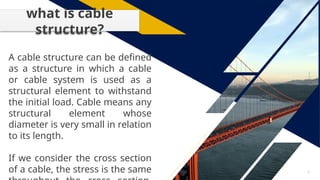
A cable structure can be defined
as a structure in which a cable
or cable system is used as a
structural element to withstand
the initial load. Cable means any
structural element whose
diameter is very small in relation
to its length.
If we consider the cross section
of a cable, the stress is the same
3
Type of cable supported
structure
1- Suspension Cable
Bridges
2- Cable Stayed Bridges
3- Single curved cable
roofs
4- Double curved cable
roofs
4
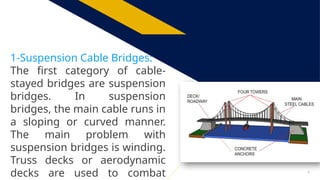
1-Suspension Cable Bridges:
The first category of cable-
stayed bridges are suspension
bridges. In suspension
bridges, the main cable runs in
a sloping or curved manner.
The main problem with
suspension bridges is winding.
Truss decks or aerodynamic
decks are used to combat
5
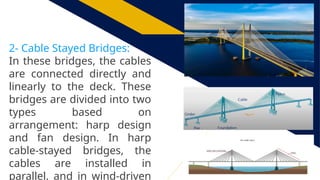
2- Cable Stayed Bridges:
In these bridges, the cables
are connected directly and
linearly to the deck. These
bridges are divided into two
types based on
arrangement: harp design
and fan design. In harp
cable-stayed bridges, the
cables are installed in
parallel, and in wind-driven
6
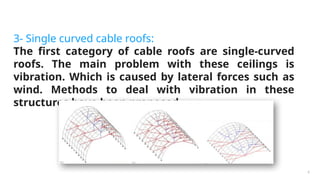
3- Single curved cable roofs:
The first category of cable roofs are single-curved
roofs. The main problem with these ceilings is
vibration. Which is caused by lateral forces such as
wind. Methods to deal with vibration in these
structures have been proposed.
7
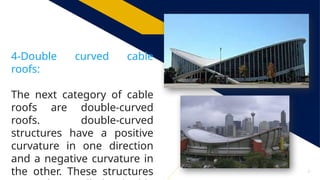
4-Double curved cable
roofs:
The next category of cable
roofs are double-curved
roofs. double-curved
structures have a positive
curvature in one direction
and a negative curvature in
the other. These structures
FR
8
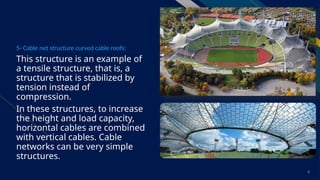
5- Cable net structure curved cable roofs:
This structure is an example of
a tensile structure, that is, a
structure that is stabilized by
tension instead of
compression.
In these structures, to increase
the height and load capacity,
horizontal cables are combined
with vertical cables. Cable
networks can be very simple
structures.
9
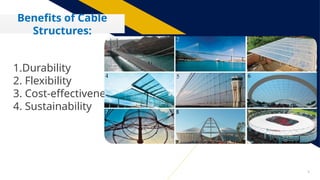
Benefits of Cable
Structures:
1.Durability
2. Flexibility
3. Cost-effectiveness
4. Sustainability
10
Thank You

Cable-supported structure Engineering presentation.pptx

  • 1.
    Cable-supported structures Supervised By: Asst.ProfMr. Niazy R. Maroof Presentation By: Zhala S. Hasan 3rd Stage Erbil Polytechnic University Erbil Technology College Construction and Materials Technology Engineering
  • 2.
    2 what is cable structure? Acable structure can be defined as a structure in which a cable or cable system is used as a structural element to withstand the initial load. Cable means any structural element whose diameter is very small in relation to its length. If we consider the cross section of a cable, the stress is the same
  • 3.
    3 Type of cablesupported structure 1- Suspension Cable Bridges 2- Cable Stayed Bridges 3- Single curved cable roofs 4- Double curved cable roofs
  • 4.
    4 1-Suspension Cable Bridges: Thefirst category of cable- stayed bridges are suspension bridges. In suspension bridges, the main cable runs in a sloping or curved manner. The main problem with suspension bridges is winding. Truss decks or aerodynamic decks are used to combat
  • 5.
    5 2- Cable StayedBridges: In these bridges, the cables are connected directly and linearly to the deck. These bridges are divided into two types based on arrangement: harp design and fan design. In harp cable-stayed bridges, the cables are installed in parallel, and in wind-driven
  • 6.
    6 3- Single curvedcable roofs: The first category of cable roofs are single-curved roofs. The main problem with these ceilings is vibration. Which is caused by lateral forces such as wind. Methods to deal with vibration in these structures have been proposed.
  • 7.
    7 4-Double curved cable roofs: Thenext category of cable roofs are double-curved roofs. double-curved structures have a positive curvature in one direction and a negative curvature in the other. These structures
  • 8.
    FR 8 5- Cable netstructure curved cable roofs: This structure is an example of a tensile structure, that is, a structure that is stabilized by tension instead of compression. In these structures, to increase the height and load capacity, horizontal cables are combined with vertical cables. Cable networks can be very simple structures.
  • 9.
    9 Benefits of Cable Structures: 1.Durability 2.Flexibility 3. Cost-effectiveness 4. Sustainability
  • 10.
  • 11.