DR. LOKESHWARI M.S.
ASSISTANT PROFESSOR, S1
DEPARTMENT OF GENERAL SURGERY
GASTRIC CARCINOMA
• Based on the cell involved it is divided into following types:
1. Adenocarcinoma - most common type ; columnar cells
2. Lymphoma - arises from lymphocytes
3. Gastrointestinal stromal tumour - mesenchymal tumour
4. Carcinoid tumour - arises from neuroendocrine cells
Classification
Gastric
Adenocarcinoma
• 5th Most common cause of cancer death worldwide
• 2nd leading cause of cancer death in world
• 7th decade
• Males > Females
• M/C CA in Japan
• Africans, Japanese, Hispanics
Introduction
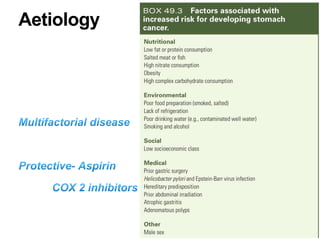
Aetiology
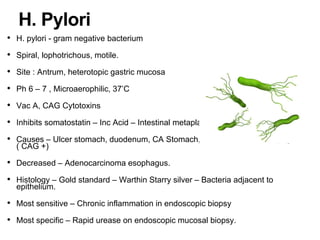
• H. pylori - gram negative bacterium
• Spiral, lophotrichous, motile.
• Site : Antrum, heterotopic gastric mucosa
• Ph 6 – 7 , Microaerophilic, 37’C
• Vac A, CAG Cytotoxins
• Inhibits somatostatin – Inc Acid – Intestinal metaplasia – CA
• Causes – Ulcer stomach, duodenum, CA Stomach, MALToma, SCC esopagus
( CAG +)
• Decreased – Adenocarcinoma esophagus.
• Histology – Gold standard – Warthin Starry silver – Bacteria adjacent to
epithelium.
• Most sensitive – Chronic inflammation in endoscopic biopsy
• Most specific – Rapid urease on endoscopic mucosal biopsy.
H. Pylori
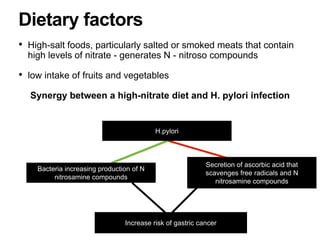
• High-salt foods, particularly salted or smoked meats that contain
high levels of nitrate - generates N - nitroso compounds
• low intake of fruits and vegetables
Synergy between a high-nitrate diet and H. pylori infection
Dietary factors
H.pylori
Bacteria increasing production of N
nitrosamine compounds
Secretion of ascorbic acid that
scavenges free radicals and N
nitrosamine compounds
Increase risk of gastric cancer
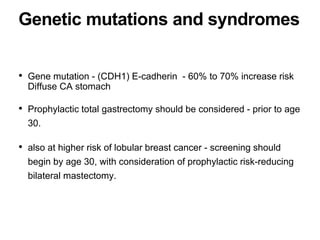
• Gene mutation - (CDH1) E-cadherin - 60% to 70% increase risk
Diffuse CA stomach
• Prophylactic total gastrectomy should be considered - prior to age
30.
• also at higher risk of lobular breast cancer - screening should
begin by age 30, with consideration of prophylactic risk-reducing
bilateral mastectomy.
Genetic mutations and syndromes
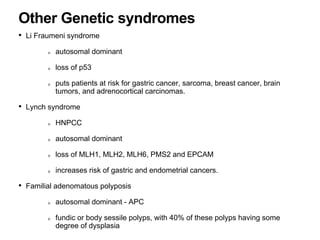
• Li Fraumeni syndrome
autosomal dominant
loss of p53
puts patients at risk for gastric cancer, sarcoma, breast cancer, brain
tumors, and adrenocortical carcinomas.
• Lynch syndrome
HNPCC
autosomal dominant
loss of MLH1, MLH2, MLH6, PMS2 and EPCAM
increases risk of gastric and endometrial cancers.
• Familial adenomatous polyposis
autosomal dominant - APC
fundic or body sessile polyps, with 40% of these polyps having some
degree of dysplasia
Other Genetic syndromes
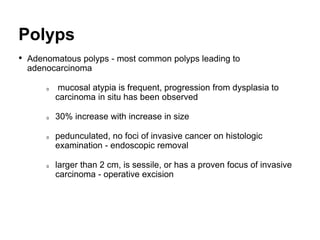
Polyps
• Adenomatous polyps - most common polyps leading to
adenocarcinoma
mucosal atypia is frequent, progression from dysplasia to
carcinoma in situ has been observed
30% increase with increase in size
pedunculated, no foci of invasive cancer on histologic
examination - endoscopic removal
larger than 2 cm, is sessile, or has a proven focus of invasive
carcinoma - operative excision
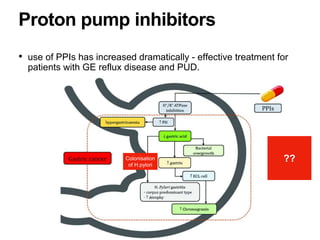
• use of PPIs has increased dramatically - effective treatment for
patients with GE reflux disease and PUD.
Proton pump inhibitors
Colonisation
of H.pylori
??
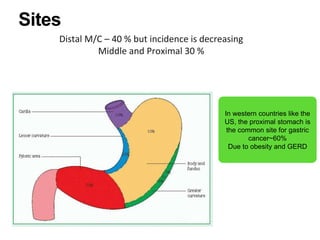
Sites
In western countries like the
US, the proximal stomach is
the common site for gastric
cancer~60%
Due to obesity and GERD
Distal M/C – 40 % but incidence is decreasing
Middle and Proximal 30 %
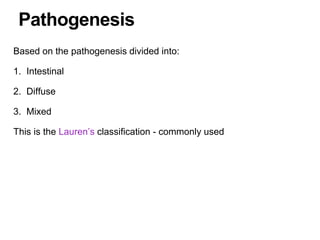
Based on the pathogenesis divided into:
1. Intestinal
2. Diffuse
3. Mixed
This is the Lauren’s classification - commonly used
Pathogenesis
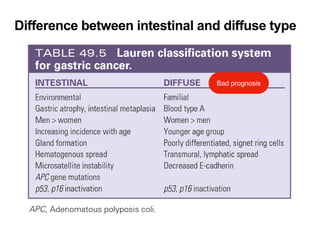
Difference between intestinal and diffuse type
Bad prognosis
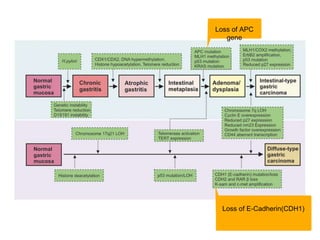
Loss of APC
gene
Loss of E-Cadherin(CDH1)
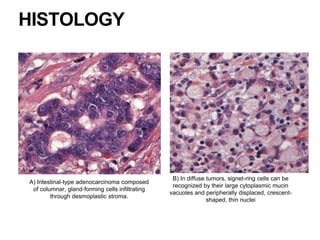
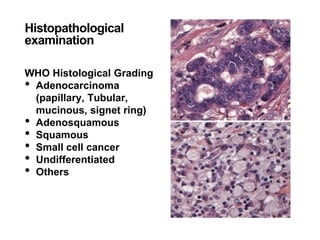
HISTOLOGY
A) Intestinal-type adenocarcinoma composed
of columnar, gland-forming cells infiltrating
through desmoplastic stroma.
B) In diffuse tumors, signet-ring cells can be
recognized by their large cytoplasmic mucin
vacuoles and peripherally displaced, crescent-
shaped, thin nuclei
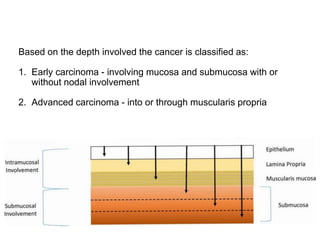
Based on the depth involved the cancer is classified as:
1. Early carcinoma - involving mucosa and submucosa with or
without nodal involvement
2. Advanced carcinoma - into or through muscularis propria
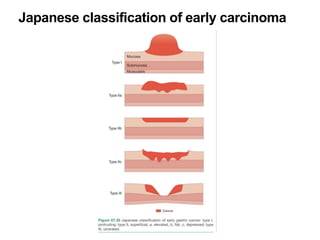
Japanese classification of early carcinoma
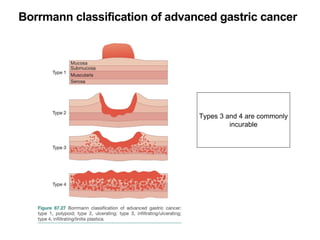
Borrmann classification of advanced gastric cancer
Types 3 and 4 are commonly
incurable
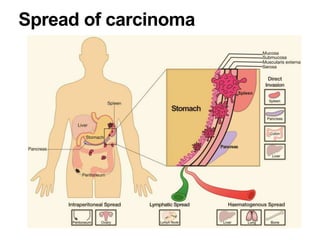
Spread of carcinoma
Clinical features
• M/C symtpoms Abdominal pain – Constant, non radiating, not
associated with food intake > Weight loss
• Proximal – Dysphagia, GERD
• Distal – GOO
• Early Satiety
• Palpable mass – Advanced CA ( Muscularis would have been
invaded)
• Ascites ( Late)
• Jaundice ( Late)
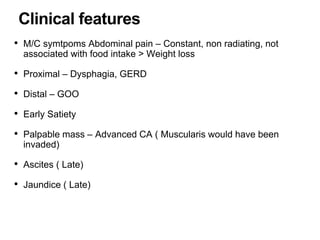
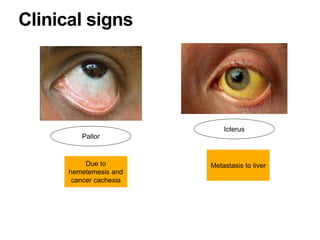
Clinical signs
Pallor
Icterus
Due to
hemetemesis and
cancer cachexia
Metastasis to liver
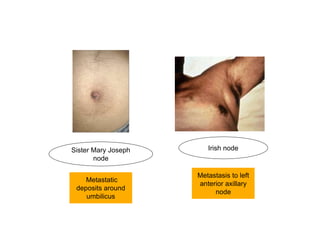
Sister Mary Joseph
node
Irish node
Metastatic
deposits around
umbilicus
Metastasis to left
anterior axillary
node
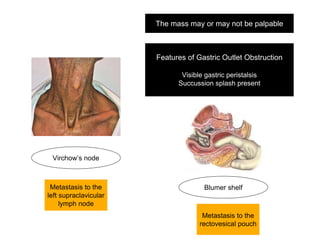
Virchow’s node
Metastasis to the
left supraclavicular
lymph node
Features of Gastric Outlet Obstruction
Visible gastric peristalsis
Succussion splash present
The mass may or may not be palpable
Blumer shelf
Metastasis to the
rectovesical pouch
Investigations of Gastric
Carcinoma
• Imaging Studies
• Staging Laproscopy
• Histopathological and cytological investigations
Imaging Studies
• Endoscopy + Biopsy
• Ultrasonography
• CT
• PET/CT
• MRI
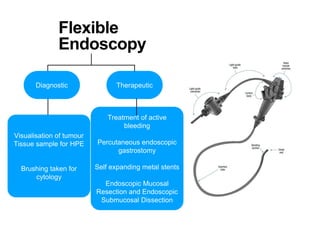
Flexible
Endoscopy
Diagnostic Therapeutic
Treatment of active
bleeding
Percutaneous endoscopic
gastrostomy
Self expanding metal stents
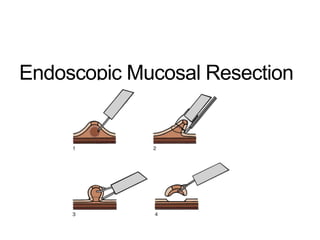
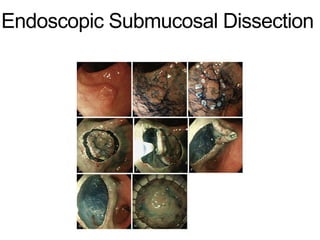
Endoscopic Mucosal
Resection and Endoscopic
Submucosal Dissection
Visualisation of tumour
Tissue sample for HPE
Brushing taken for
cytology
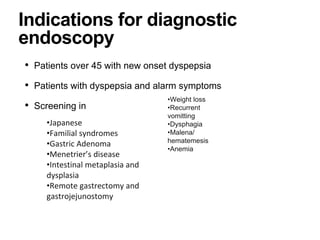
Indications for diagnostic
endoscopy
• Patients over 45 with new onset dyspepsia
• Patients with dyspepsia and alarm symptoms
• Screening in
•Japanese
•Familial syndromes
•Gastric Adenoma
•Menetrier’s disease
•Intestinal metaplasia and
dysplasia
•Remote gastrectomy and
gastrojejunostomy
•Weight loss
•Recurrent
vomitting
•Dysphagia
•Malena/
hematemesis
•Anemia
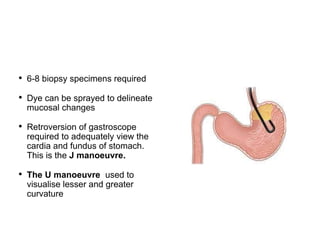
• 6-8 biopsy specimens required
• Dye can be sprayed to delineate
mucosal changes
• Retroversion of gastroscope
required to adequately view the
cardia and fundus of stomach.
This is the J manoeuvre.
• The U manoeuvre used to
visualise lesser and greater
curvature
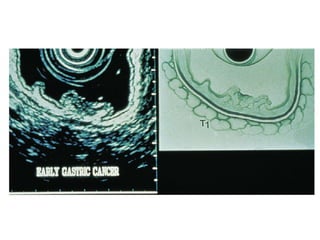
Endoluminal Ultrasonography
Diagnostic
Staging of gastric
cancer
(Depth of invasion,
lymph nodes, ascites,
adjacent structures)
Therapeutic
Biopsy of submucosal
lesions
Biopsy of para
esophageal lymph
nodes
EUS guided FNAC
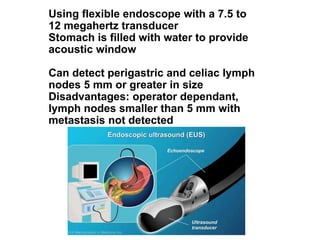
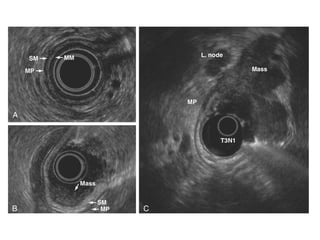
Using flexible endoscope with a 7.5 to
12 megahertz transducer
Stomach is filled with water to provide
acoustic window
Can detect perigastric and celiac lymph
nodes 5 mm or greater in size
Disadvantages: operator dependant,
lymph nodes smaller than 5 mm with
metastasis not detected
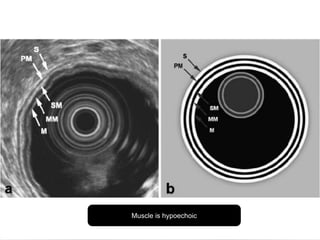
Muscle is hypoechoic
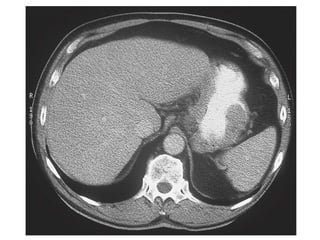
CT
• CT of abdomen with oral and iv contrast is performed to see
thickening of gastric mucosal wall and lymph nodal metastasis
• CECT chest and pelvis can be used to check for metastases
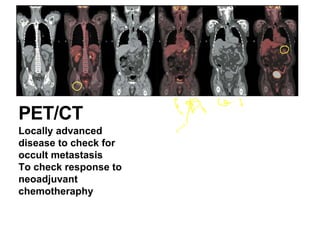
PET/CT
Locally advanced
disease to check for
occult metastasis
To check response to
neoadjuvant
chemotheraphy
D LAP
• To detect peritoneal disease
• Difficult to detect unless patient has ascites or bulky
intraperitoneal deposits
• Approximately 20-30% of patients undergoing staging
laparoscopy for T2 or greater gastric cancer will be found to
have peritoneal disease.
Histopathological
examination
WHO Histological Grading
• Adenocarcinoma
(papillary, Tubular,
mucinous, signet ring)
• Adenosquamous
• Squamous
• Small cell cancer
• Undifferentiated
• Others
Staging of Gastric
Adenocarcinoma
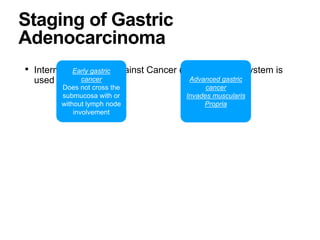
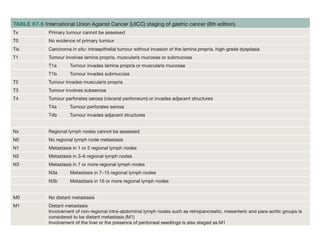
• International union against Cancer (UICC) staging system is
used
Early gastric
cancer
Does not cross the
submucosa with or
without lymph node
involvement
Advanced gastric
cancer
Invades muscularis
Propria
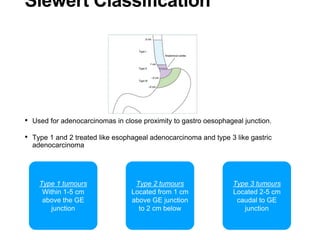
Siewert Classification
• Used for adenocarcinomas in close proximity to gastro oesophageal junction.
• Type 1 and 2 treated like esophageal adenocarcinoma and type 3 like gastric
adenocarcinoma
Type 2 tumours
Located from 1 cm
above GE junction
to 2 cm below
Type 1 tumours
Within 1-5 cm
above the GE
junction
Type 3 tumours
Located 2-5 cm
caudal to GE
junction
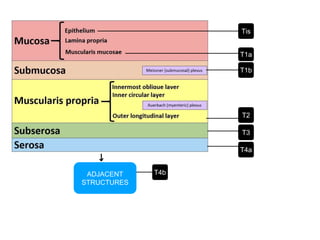
ADJACENT
STRUCTURES
Tis
T1a
T4b
T4a
T3
T1b
T2
Management Modalities
• Surgery:
• Chemotherapy
• Radiotherapy
1. Tumour Resection
2. Lymph Node Resection
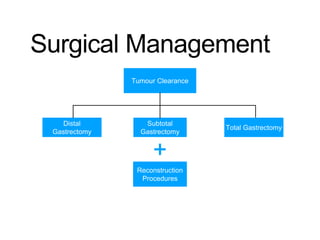
Surgical Management
Tumour Clearance
Distal
Gastrectomy
Total Gastrectomy
Subtotal
Gastrectomy
Reconstruction
Procedures
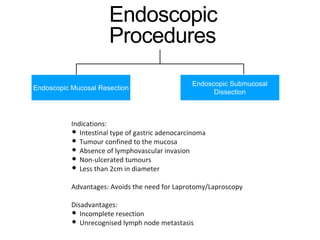
Endoscopic
Procedures
Indications:
• Intestinal type of gastric adenocarcinoma
• Tumour confined to the mucosa
• Absence of lymphovascular invasion
• Non-ulcerated tumours
• Less than 2cm in diameter
Advantages: Avoids the need for Laprotomy/Laproscopy
Disadvantages:
• Incomplete resection
• Unrecognised lymph node metastasis
Endoscopic Mucosal Resection
Endoscopic Submucosal
Dissection
Endoscopic Mucosal Resection
Endoscopic Submucosal Dissection
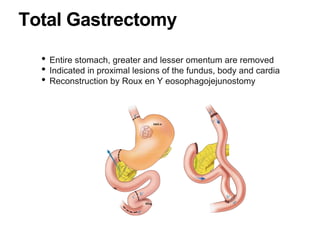
Total Gastrectomy
• Entire stomach, greater and lesser omentum are removed
• Indicated in proximal lesions of the fundus, body and cardia
• Reconstruction by Roux en Y eosophagojejunostomy
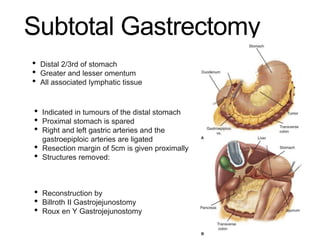
Subtotal Gastrectomy
• Indicated in tumours of the distal stomach
• Proximal stomach is spared
• Right and left gastric arteries and the
gastroepiploic arteries are ligated
• Resection margin of 5cm is given proximally
• Structures removed:
• Reconstruction by
• Billroth II Gastrojejunostomy
• Roux en Y Gastrojejunostomy
• Distal 2/3rd of stomach
• Greater and lesser omentum
• All associated lymphatic tissue
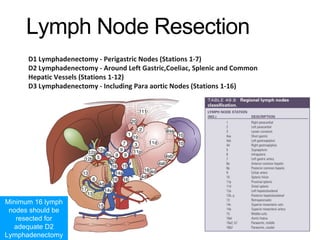
Lymph Node Resection
D1 Lymphadenectomy - Perigastric Nodes (Stations 1-7)
D2 Lymphadenectomy - Around Left Gastric,Coeliac, Splenic and Common
Hepatic Vessels (Stations 1-12)
D3 Lymphadenectomy - Including Para aortic Nodes (Stations 1-16)
Minimum 16 lymph
nodes should be
resected for
adequate D2
Lymphadenectomy
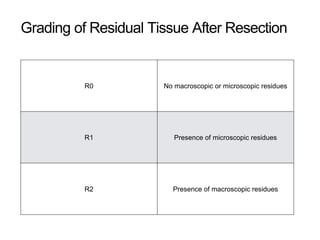
Grading of Residual Tissue After Resection
R0 No macroscopic or microscopic residues
R1 Presence of microscopic residues
R2 Presence of macroscopic residues
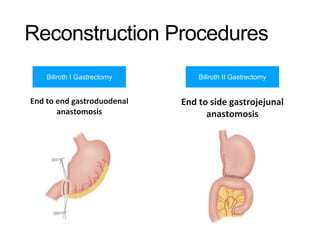
Reconstruction Procedures
Billroth I Gastrectomy Billroth II Gastrectomy
End to end gastroduodenal
anastomosis
End to side gastrojejunal
anastomosis
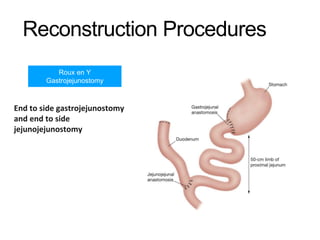
Reconstruction Procedures
Roux en Y
Gastrojejunostomy
End to side gastrojejunostomy
and end to side
jejunojejunostomy
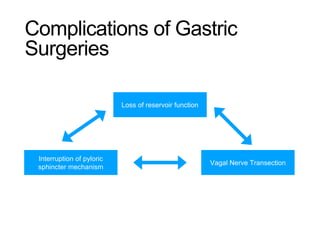
Complications of Gastric
Surgeries
Loss of reservoir function
Interruption of pyloric
sphincter mechanism
Vagal Nerve Transection
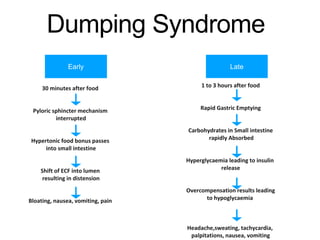
Dumping Syndrome
Early Late
30 minutes after food
Pyloric sphincter mechanism
interrupted
Hypertonic food bonus passes
into small intestine
Shift of ECF into lumen
resulting in distension
Bloating, nausea, vomiting, pain
1 to 3 hours after food
Rapid Gastric Emptying
Carbohydrates in Small intestine
rapidly Absorbed
Hyperglycaemia leading to insulin
release
Overcompensation results leading
to hypoglycaemia
Headache,sweating, tachycardia,
palpitations, nausea, vomiting
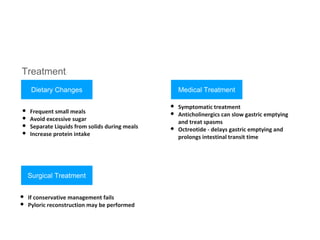
Treatment:
Dietary Changes
• Frequent small meals
• Avoid excessive sugar
• Separate Liquids from solids during meals
• Increase protein intake
Medical Treatment
• Symptomatic treatment
• Anticholinergics can slow gastric emptying
and treat spasms
• Octreotide - delays gastric emptying and
prolongs intestinal transit time
Surgical Treatment
• If conservative management fails
• Pyloric reconstruction may be performed
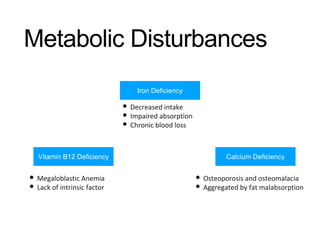
Metabolic Disturbances
Iron Deficiency
• Decreased intake
• Impaired absorption
• Chronic blood loss
Vitamin B12 Deficiency
• Megaloblastic Anemia
• Lack of intrinsic factor
Calcium Deficiency
• Osteoporosis and osteomalacia
• Aggregated by fat malabsorption
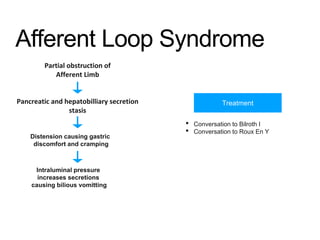
Afferent Loop Syndrome
Partial obstruction of
Afferent Limb
Pancreatic and hepatobilliary secretion
stasis
Distension causing gastric
discomfort and cramping
Intraluminal pressure
increases secretions
causing bilious vomitting
Treatment
• Conversation to Bilroth I
• Conversation to Roux En Y
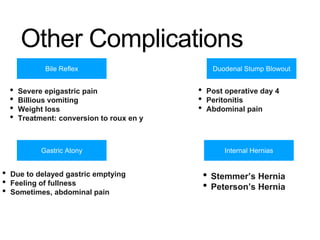
Other Complications
Bile Reflex
Gastric Atony
Duodenal Stump Blowout
Internal Hernias
• Severe epigastric pain
• Billious vomiting
• Weight loss
• Treatment: conversion to roux en y
• Post operative day 4
• Peritonitis
• Abdominal pain
• Stemmer’s Hernia
• Peterson’s Hernia
• Due to delayed gastric emptying
• Feeling of fullness
• Sometimes, abdominal pain
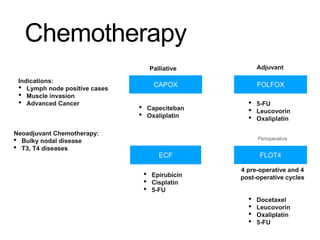
Chemotherapy
ECF
CAPOX FOLFOX
• Epirubicin
• Cisplatin
• 5-FU
• Capeciteban
• Oxaliplatin
• 5-FU
• Leucovorin
• Oxaliplatin
FLOT4
• Docetaxel
• Leucovorin
• Oxaliplatin
• 5-FU
4 pre-operative and 4
post-operative cycles
Indications:
• Lymph node positive cases
• Muscle invasion
• Advanced Cancer
Neoadjuvant Chemotherapy:
• Bulky nodal disease
• T3, T4 diseases
Palliative Adjuvant
Perioperative
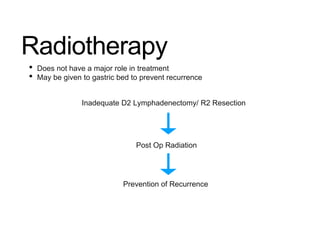
Radiotherapy
• Does not have a major role in treatment
• May be given to gastric bed to prevent recurrence
Inadequate D2 Lymphadenectomy/ R2 Resection
Post Op Radiation
Prevention of Recurrence
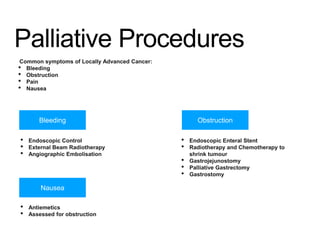
Palliative Procedures
Common symptoms of Locally Advanced Cancer:
• Bleeding
• Obstruction
• Pain
• Nausea
Bleeding
• Endoscopic Control
• External Beam Radiotherapy
• Angiographic Embolisation
Nausea
• Antiemetics
• Assessed for obstruction
Obstruction
• Endoscopic Enteral Stent
• Radiotherapy and Chemotherapy to
shrink tumour
• Gastrojejunostomy
• Palliative Gastrectomy
• Gastrostomy
Thank you

CA STOMACH.pptx

  • 1.
    DR. LOKESHWARI M.S. ASSISTANTPROFESSOR, S1 DEPARTMENT OF GENERAL SURGERY GASTRIC CARCINOMA
  • 2.
    • Based onthe cell involved it is divided into following types: 1. Adenocarcinoma - most common type ; columnar cells 2. Lymphoma - arises from lymphocytes 3. Gastrointestinal stromal tumour - mesenchymal tumour 4. Carcinoid tumour - arises from neuroendocrine cells Classification
  • 3.
  • 4.
    • 5th Mostcommon cause of cancer death worldwide • 2nd leading cause of cancer death in world • 7th decade • Males > Females • M/C CA in Japan • Africans, Japanese, Hispanics Introduction
  • 5.
  • 6.
    • H. pylori- gram negative bacterium • Spiral, lophotrichous, motile. • Site : Antrum, heterotopic gastric mucosa • Ph 6 – 7 , Microaerophilic, 37’C • Vac A, CAG Cytotoxins • Inhibits somatostatin – Inc Acid – Intestinal metaplasia – CA • Causes – Ulcer stomach, duodenum, CA Stomach, MALToma, SCC esopagus ( CAG +) • Decreased – Adenocarcinoma esophagus. • Histology – Gold standard – Warthin Starry silver – Bacteria adjacent to epithelium. • Most sensitive – Chronic inflammation in endoscopic biopsy • Most specific – Rapid urease on endoscopic mucosal biopsy. H. Pylori
  • 7.
    • High-salt foods,particularly salted or smoked meats that contain high levels of nitrate - generates N - nitroso compounds • low intake of fruits and vegetables Synergy between a high-nitrate diet and H. pylori infection Dietary factors H.pylori Bacteria increasing production of N nitrosamine compounds Secretion of ascorbic acid that scavenges free radicals and N nitrosamine compounds Increase risk of gastric cancer
  • 8.
    • Gene mutation- (CDH1) E-cadherin - 60% to 70% increase risk Diffuse CA stomach • Prophylactic total gastrectomy should be considered - prior to age 30. • also at higher risk of lobular breast cancer - screening should begin by age 30, with consideration of prophylactic risk-reducing bilateral mastectomy. Genetic mutations and syndromes
  • 9.
    • Li Fraumenisyndrome autosomal dominant loss of p53 puts patients at risk for gastric cancer, sarcoma, breast cancer, brain tumors, and adrenocortical carcinomas. • Lynch syndrome HNPCC autosomal dominant loss of MLH1, MLH2, MLH6, PMS2 and EPCAM increases risk of gastric and endometrial cancers. • Familial adenomatous polyposis autosomal dominant - APC fundic or body sessile polyps, with 40% of these polyps having some degree of dysplasia Other Genetic syndromes
  • 10.
    Polyps • Adenomatous polyps- most common polyps leading to adenocarcinoma mucosal atypia is frequent, progression from dysplasia to carcinoma in situ has been observed 30% increase with increase in size pedunculated, no foci of invasive cancer on histologic examination - endoscopic removal larger than 2 cm, is sessile, or has a proven focus of invasive carcinoma - operative excision
  • 11.
    • use ofPPIs has increased dramatically - effective treatment for patients with GE reflux disease and PUD. Proton pump inhibitors Colonisation of H.pylori ??
  • 12.
    Sites In western countrieslike the US, the proximal stomach is the common site for gastric cancer~60% Due to obesity and GERD Distal M/C – 40 % but incidence is decreasing Middle and Proximal 30 %
  • 13.
    Based on thepathogenesis divided into: 1. Intestinal 2. Diffuse 3. Mixed This is the Lauren’s classification - commonly used Pathogenesis
  • 14.
    Difference between intestinaland diffuse type Bad prognosis
  • 15.
    Loss of APC gene Lossof E-Cadherin(CDH1)
  • 16.
    HISTOLOGY A) Intestinal-type adenocarcinomacomposed of columnar, gland-forming cells infiltrating through desmoplastic stroma. B) In diffuse tumors, signet-ring cells can be recognized by their large cytoplasmic mucin vacuoles and peripherally displaced, crescent- shaped, thin nuclei
  • 17.
    Based on thedepth involved the cancer is classified as: 1. Early carcinoma - involving mucosa and submucosa with or without nodal involvement 2. Advanced carcinoma - into or through muscularis propria
  • 18.
  • 19.
    Borrmann classification ofadvanced gastric cancer Types 3 and 4 are commonly incurable
  • 20.
  • 21.
    Clinical features • M/Csymtpoms Abdominal pain – Constant, non radiating, not associated with food intake > Weight loss • Proximal – Dysphagia, GERD • Distal – GOO • Early Satiety • Palpable mass – Advanced CA ( Muscularis would have been invaded) • Ascites ( Late) • Jaundice ( Late)
  • 22.
    Clinical signs Pallor Icterus Due to hemetemesisand cancer cachexia Metastasis to liver
  • 23.
    Sister Mary Joseph node Irishnode Metastatic deposits around umbilicus Metastasis to left anterior axillary node
  • 24.
    Virchow’s node Metastasis tothe left supraclavicular lymph node Features of Gastric Outlet Obstruction Visible gastric peristalsis Succussion splash present The mass may or may not be palpable Blumer shelf Metastasis to the rectovesical pouch
  • 25.
    Investigations of Gastric Carcinoma •Imaging Studies • Staging Laproscopy • Histopathological and cytological investigations
  • 26.
    Imaging Studies • Endoscopy+ Biopsy • Ultrasonography • CT • PET/CT • MRI
  • 27.
    Flexible Endoscopy Diagnostic Therapeutic Treatment ofactive bleeding Percutaneous endoscopic gastrostomy Self expanding metal stents Endoscopic Mucosal Resection and Endoscopic Submucosal Dissection Visualisation of tumour Tissue sample for HPE Brushing taken for cytology
  • 28.
    Indications for diagnostic endoscopy •Patients over 45 with new onset dyspepsia • Patients with dyspepsia and alarm symptoms • Screening in •Japanese •Familial syndromes •Gastric Adenoma •Menetrier’s disease •Intestinal metaplasia and dysplasia •Remote gastrectomy and gastrojejunostomy •Weight loss •Recurrent vomitting •Dysphagia •Malena/ hematemesis •Anemia
  • 29.
    • 6-8 biopsyspecimens required • Dye can be sprayed to delineate mucosal changes • Retroversion of gastroscope required to adequately view the cardia and fundus of stomach. This is the J manoeuvre. • The U manoeuvre used to visualise lesser and greater curvature
  • 30.
    Endoluminal Ultrasonography Diagnostic Staging ofgastric cancer (Depth of invasion, lymph nodes, ascites, adjacent structures) Therapeutic Biopsy of submucosal lesions Biopsy of para esophageal lymph nodes EUS guided FNAC
  • 31.
    Using flexible endoscopewith a 7.5 to 12 megahertz transducer Stomach is filled with water to provide acoustic window Can detect perigastric and celiac lymph nodes 5 mm or greater in size Disadvantages: operator dependant, lymph nodes smaller than 5 mm with metastasis not detected
  • 32.
  • 34.
    CT • CT ofabdomen with oral and iv contrast is performed to see thickening of gastric mucosal wall and lymph nodal metastasis • CECT chest and pelvis can be used to check for metastases
  • 36.
    PET/CT Locally advanced disease tocheck for occult metastasis To check response to neoadjuvant chemotheraphy
  • 37.
    D LAP • Todetect peritoneal disease • Difficult to detect unless patient has ascites or bulky intraperitoneal deposits • Approximately 20-30% of patients undergoing staging laparoscopy for T2 or greater gastric cancer will be found to have peritoneal disease.
  • 38.
    Histopathological examination WHO Histological Grading •Adenocarcinoma (papillary, Tubular, mucinous, signet ring) • Adenosquamous • Squamous • Small cell cancer • Undifferentiated • Others
  • 39.
    Staging of Gastric Adenocarcinoma •International union against Cancer (UICC) staging system is used Early gastric cancer Does not cross the submucosa with or without lymph node involvement Advanced gastric cancer Invades muscularis Propria
  • 40.
    Siewert Classification • Usedfor adenocarcinomas in close proximity to gastro oesophageal junction. • Type 1 and 2 treated like esophageal adenocarcinoma and type 3 like gastric adenocarcinoma Type 2 tumours Located from 1 cm above GE junction to 2 cm below Type 1 tumours Within 1-5 cm above the GE junction Type 3 tumours Located 2-5 cm caudal to GE junction
  • 42.
  • 44.
    Management Modalities • Surgery: •Chemotherapy • Radiotherapy 1. Tumour Resection 2. Lymph Node Resection
  • 45.
    Surgical Management Tumour Clearance Distal Gastrectomy TotalGastrectomy Subtotal Gastrectomy Reconstruction Procedures
  • 46.
    Endoscopic Procedures Indications: • Intestinal typeof gastric adenocarcinoma • Tumour confined to the mucosa • Absence of lymphovascular invasion • Non-ulcerated tumours • Less than 2cm in diameter Advantages: Avoids the need for Laprotomy/Laproscopy Disadvantages: • Incomplete resection • Unrecognised lymph node metastasis Endoscopic Mucosal Resection Endoscopic Submucosal Dissection
  • 47.
  • 48.
  • 49.
    Total Gastrectomy • Entirestomach, greater and lesser omentum are removed • Indicated in proximal lesions of the fundus, body and cardia • Reconstruction by Roux en Y eosophagojejunostomy
  • 50.
    Subtotal Gastrectomy • Indicatedin tumours of the distal stomach • Proximal stomach is spared • Right and left gastric arteries and the gastroepiploic arteries are ligated • Resection margin of 5cm is given proximally • Structures removed: • Reconstruction by • Billroth II Gastrojejunostomy • Roux en Y Gastrojejunostomy • Distal 2/3rd of stomach • Greater and lesser omentum • All associated lymphatic tissue
  • 51.
    Lymph Node Resection D1Lymphadenectomy - Perigastric Nodes (Stations 1-7) D2 Lymphadenectomy - Around Left Gastric,Coeliac, Splenic and Common Hepatic Vessels (Stations 1-12) D3 Lymphadenectomy - Including Para aortic Nodes (Stations 1-16) Minimum 16 lymph nodes should be resected for adequate D2 Lymphadenectomy
  • 52.
    Grading of ResidualTissue After Resection R0 No macroscopic or microscopic residues R1 Presence of microscopic residues R2 Presence of macroscopic residues
  • 53.
    Reconstruction Procedures Billroth IGastrectomy Billroth II Gastrectomy End to end gastroduodenal anastomosis End to side gastrojejunal anastomosis
  • 54.
    Reconstruction Procedures Roux enY Gastrojejunostomy End to side gastrojejunostomy and end to side jejunojejunostomy
  • 55.
    Complications of Gastric Surgeries Lossof reservoir function Interruption of pyloric sphincter mechanism Vagal Nerve Transection
  • 56.
    Dumping Syndrome Early Late 30minutes after food Pyloric sphincter mechanism interrupted Hypertonic food bonus passes into small intestine Shift of ECF into lumen resulting in distension Bloating, nausea, vomiting, pain 1 to 3 hours after food Rapid Gastric Emptying Carbohydrates in Small intestine rapidly Absorbed Hyperglycaemia leading to insulin release Overcompensation results leading to hypoglycaemia Headache,sweating, tachycardia, palpitations, nausea, vomiting
  • 57.
    Treatment: Dietary Changes • Frequentsmall meals • Avoid excessive sugar • Separate Liquids from solids during meals • Increase protein intake Medical Treatment • Symptomatic treatment • Anticholinergics can slow gastric emptying and treat spasms • Octreotide - delays gastric emptying and prolongs intestinal transit time Surgical Treatment • If conservative management fails • Pyloric reconstruction may be performed
  • 58.
    Metabolic Disturbances Iron Deficiency •Decreased intake • Impaired absorption • Chronic blood loss Vitamin B12 Deficiency • Megaloblastic Anemia • Lack of intrinsic factor Calcium Deficiency • Osteoporosis and osteomalacia • Aggregated by fat malabsorption
  • 59.
    Afferent Loop Syndrome Partialobstruction of Afferent Limb Pancreatic and hepatobilliary secretion stasis Distension causing gastric discomfort and cramping Intraluminal pressure increases secretions causing bilious vomitting Treatment • Conversation to Bilroth I • Conversation to Roux En Y
  • 60.
    Other Complications Bile Reflex GastricAtony Duodenal Stump Blowout Internal Hernias • Severe epigastric pain • Billious vomiting • Weight loss • Treatment: conversion to roux en y • Post operative day 4 • Peritonitis • Abdominal pain • Stemmer’s Hernia • Peterson’s Hernia • Due to delayed gastric emptying • Feeling of fullness • Sometimes, abdominal pain
  • 61.
    Chemotherapy ECF CAPOX FOLFOX • Epirubicin •Cisplatin • 5-FU • Capeciteban • Oxaliplatin • 5-FU • Leucovorin • Oxaliplatin FLOT4 • Docetaxel • Leucovorin • Oxaliplatin • 5-FU 4 pre-operative and 4 post-operative cycles Indications: • Lymph node positive cases • Muscle invasion • Advanced Cancer Neoadjuvant Chemotherapy: • Bulky nodal disease • T3, T4 diseases Palliative Adjuvant Perioperative
  • 62.
    Radiotherapy • Does nothave a major role in treatment • May be given to gastric bed to prevent recurrence Inadequate D2 Lymphadenectomy/ R2 Resection Post Op Radiation Prevention of Recurrence
  • 63.
    Palliative Procedures Common symptomsof Locally Advanced Cancer: • Bleeding • Obstruction • Pain • Nausea Bleeding • Endoscopic Control • External Beam Radiotherapy • Angiographic Embolisation Nausea • Antiemetics • Assessed for obstruction Obstruction • Endoscopic Enteral Stent • Radiotherapy and Chemotherapy to shrink tumour • Gastrojejunostomy • Palliative Gastrectomy • Gastrostomy
  • 64.

Editor's Notes

  • #3 From the following pie chart it can be seen that Adenocarcinoma occupies almost 90% of the gastric cancers
  • #4 I will be speaking on gastric Adenocarcinoma it’s etiology, Pathogenesis, spread of the carcinoma and it’s clinical features Since adenocarcinoma is the majority of the gastric cancers, simply telling gastric carcinoma means adenocarcinoma. So I will also be using the terms gastric carcinoma and adenocarcinoma synonymously
  • #5 But better results are obtained in Japan where the disease is common due to early screening
  • #6 The factors affecting are……. Prior gastric surgery , for example gastrojejunostomy where there is increase risk of carcinoma in the stump because of bile reflux and achlorhydria Males are 2 times in more risk than that of females Let’s discuss in detail about the major risk factors
  • #7 International Agency for research on Cancer
  • #8 N nitroso compounds which are carcinogenic Decrease in antioxidant Antioxidants scavenge the free radicals and n nitrosamine compounds Resulting in
  • #9 Loss of E cadherin Cdh
  • #10 Hereditary non polypoidal colorectal cancer MLH-Mutl homolog 1 PMS-post meiotic segregation increased 2 EPCAM-epithelial cellular adhesion molecule
  • #12 Hydrogen potassium atpase pump H. Pylori gastritis out of which 1 3rd progresses to atrophic gastritis This theory is still not proven
  • #13 Common site of gastric carcinoma
  • #16 Primary mechanism chronic inflammation Key step
  • #18 Based on the findings of Endoluminal ultrasonography early gastric carcinoma and advanced gastric carcinoma are having their own classification Endoluminal ultrasonography
  • #19 Type 1 protruding Type 2 superficial. Elevated. Flat. Depressed Type 3 ulcerated Type 1 has the best prognosis
  • #20 Type 1 polyploid Type 2 ulcerating Type 3 infiltrating Type 4 linintis plastica Type 4 has the worst prognosis
  • #21 Direct and lymphatic are the common modes of spread As distant metastasis to supraclavicular node
  • #22 Mistaken as peptic ulcer disease or GERD Clinical presentation of a patient with gastric carcinoma is the 3 a’s