PASSIVE VOICE WITH
MODALS
PASSIVE VOICE WITH MODALS
Remember the passive voice…
PASSIVE VOICE WITH MODALS
Remember the passive voice…
PASSIVE VOICE WITH MODALS
Remember the passive voice…
Luke kicks the ball.
PASSIVE VOICE WITH MODALS
Remember the passive voice…
Luke kicks the ball.
Who does the action
PASSIVE VOICE WITH MODALS
Remember the passive voice…
Luke kicks the ball.
Who does the action
The action
PASSIVE VOICE WITH MODALS
Remember the passive voice…
Luke kicks the ball.
Who does the action
The action
Who receives the action
PASSIVE VOICE WITH MODALS
Remember the passive voice…
Luke kicks the ball.
Who does the action
The action
Who receives the action
This is a sentence in ACTIVE VOICE
PASSIVE VOICE WITH MODALS
Remember the passive voice…
Luke kicks the ball.
Who does the action
The action
Who receives the action
The ball is kicked by Luke
This is a sentence in ACTIVE VOICE
PASSIVE VOICE WITH MODALS
Remember the passive voice…
Luke kicks the ball.
Who does the action
The action
Who receives the action
The ball is kicked by Luke
This is a sentence in ACTIVE VOICE
Who receives the action
PASSIVE VOICE WITH MODALS
Remember the passive voice…
Luke kicks the ball.
Who does the action
The action
Who receives the action
The ball is kicked by Luke
This is a sentence in ACTIVE VOICE
Who receives the action
The action
PASSIVE VOICE WITH MODALS
Remember the passive voice…
Luke kicks the ball.
Who does the action
The action
Who receives the action
The ball is kicked by Luke
This is a sentence in ACTIVE VOICE
Who receives the action
The action
Who does the action
PASSIVE VOICE WITH MODALS
Remember the passive voice…
Luke kicks the ball.
Who does the action
The action
Who receives the action
The ball is kicked by Luke
This is a sentence in ACTIVE VOICE
Who receives the action
The action
Who does the action
This is a sentence in PASSIVE VOICE
PASSIVE VOICE WITH MODALS
Do you see the
difference???
PASSIVE VOICE WITH MODALS
Take a look…
PASSIVE VOICE WITH MODALS
Luke kicks the ball.
Who does the action
The action
Who receives the action
This is a sentence in ACTIVE VOICE
PASSIVE VOICE WITH MODALS
Luke kicks the ball.
Who does the action
The action
Who receives the action
This is a sentence in ACTIVE VOICE
In the ACTIVE VOICE who does the
action goes first and who receives
the action goes last.
PASSIVE VOICE WITH MODALS
Luke kicks the ball.
Who does the action
The action
Who receives the action
This is a sentence in ACTIVE VOICE
In the ACTIVE VOICE who does the
action goes first and who receives
the action goes last.
1st last
PASSIVE VOICE WITH MODALS
Luke kicks the ball.
Who does the action
The action
Who receives the action
This is a sentence in ACTIVE VOICE
In the ACTIVE VOICE who does the
action goes first and who receives
the action goes last.
1st last
The ball is kicked by Luke
Who receives the action
The action
Who does the action
This is a sentence in PASSIVE VOICE
PASSIVE VOICE WITH MODALS
Luke kicks the ball.
Who does the action
The action
Who receives the action
This is a sentence in ACTIVE VOICE
In the ACTIVE VOICE who does the
action goes first and who receives
the action goes last.
1st last
The ball is kicked by Luke
Who receives the action
The action
Who does the action
This is a sentence in PASSIVE VOICE
In the PASSIVE VOICE who receives
the action goes first and who does
the action goes last.
PASSIVE VOICE WITH MODALS
Luke kicks the ball.
Who does the action
The action
Who receives the action
This is a sentence in ACTIVE VOICE
In the ACTIVE VOICE who does the
action goes first and who receives
the action goes last.
1st last
The ball is kicked by Luke
Who receives the action
The action
Who does the action
This is a sentence in PASSIVE VOICE
In the PASSIVE VOICE who receives
the action goes first and who does
the action goes last.
1st last
PASSIVE VOICE WITH MODALS
Luke kicks the ball.
Who does the action
The action
Who receives the action
This is a sentence in ACTIVE VOICE
In the ACTIVE VOICE who does the
action goes first and who receives
the action goes last.
1st last
The ball is kicked by Luke
Who receives the action
The action
Who does the action
This is a sentence in PASSIVE VOICE
In the PASSIVE VOICE who receives
the action goes first and who does
the action goes last.
1st last
And the action has the form:
VERB TO BE + VERB IN PAST PARTICIPLE
PASSIVE VOICE WITH MODALS
Luke kicks the ball.
Who does the action
The action
Who receives the action
This is a sentence in ACTIVE VOICE
In the ACTIVE VOICE who does the
action goes first and who receives
the action goes last.
1st last
The ball is kicked by Luke
Who receives the action
The action
Who does the action
This is a sentence in PASSIVE VOICE
In the PASSIVE VOICE who receives
the action goes first and who does
the action goes last.
1st last
And the action has the form:
VERB TO BE + VERB IN PAST PARTICIPLE
To be
PASSIVE VOICE WITH MODALS
Luke kicks the ball.
Who does the action
The action
Who receives the action
This is a sentence in ACTIVE VOICE
In the ACTIVE VOICE who does the
action goes first and who receives
the action goes last.
1st last
The ball is kicked by Luke
Who receives the action
The action
Who does the action
This is a sentence in PASSIVE VOICE
In the PASSIVE VOICE who receives
the action goes first and who does
the action goes last.
1st last
And the action has the form:
VERB TO BE + VERB IN PAST PARTICIPLE
To be +
PASSIVE VOICE WITH MODALS
Luke kicks the ball.
Who does the action
The action
Who receives the action
This is a sentence in ACTIVE VOICE
In the ACTIVE VOICE who does the
action goes first and who receives
the action goes last.
1st last
The ball is kicked by Luke
Who receives the action
The action
Who does the action
This is a sentence in PASSIVE VOICE
In the PASSIVE VOICE who receives
the action goes first and who does
the action goes last.
1st last
And the action has the form:
VERB TO BE + VERB IN PAST PARTICIPLE
To be + Verb in past Participle
PASSIVE VOICE WITH MODALS
Luke kicks the ball.
Who does the action
The action
Who receives the action
This is a sentence in ACTIVE VOICE
(Luke patea el balón)
PASSIVE VOICE WITH MODALS
Luke kicks the ball.
Who does the action
The action
Who receives the action
The ball is kicked by Luke
Who does the action
The action = Verb To be + Verb in Past Participle
Who receives the action
This is a sentence in ACTIVE VOICE
This is a sentence in PASSIVE VOICE
(El balón es pateado por Luke)
(Luke patea el balón)
PASSIVE VOICE WITH MODALS
Now, we can use “MODAL
AUXILIARIES” with the
PASSIVE VOICE…
PASSIVE VOICE WITH MODALS
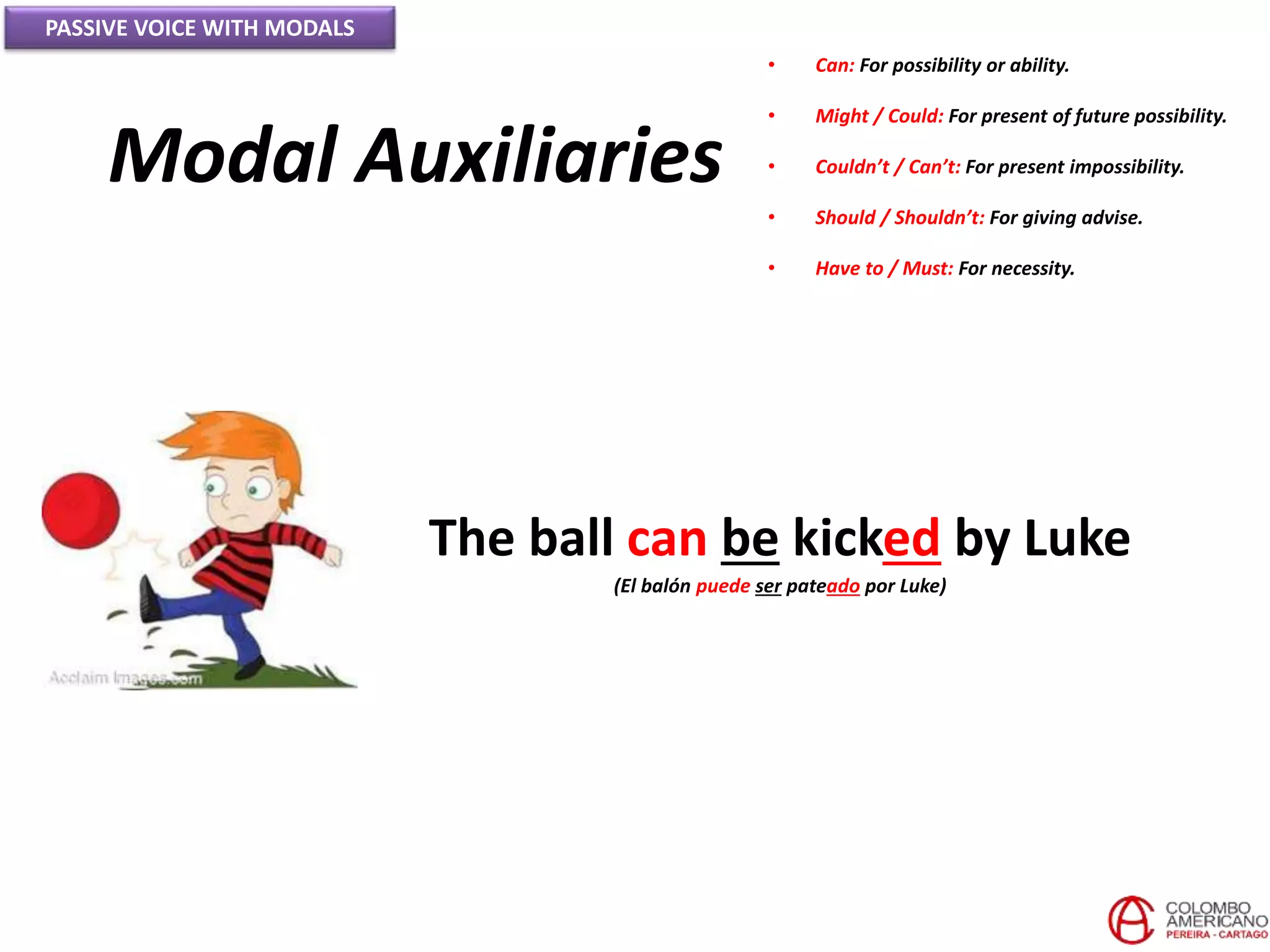
Modal Auxiliaries
• Can: For possibility or ability.
• Might / Could: For present of future possibility.
• Couldn’t / Can’t: For present impossibility.
• Should / Shouldn’t: For giving advise.
• Have to / Must: For necessity.
PASSIVE VOICE WITH MODALS
Modal Auxiliaries
• Can: For possibility or ability.
• Might / Could: For present of future possibility.
• Couldn’t / Can’t: For present impossibility.
• Should / Shouldn’t: For giving advise.
• Have to / Must: For necessity.
The ball can be kicked by Luke
(El balón puede ser pateado por Luke)
PASSIVE VOICE WITH MODALS
Modal Auxiliaries
• Can: For possibility or ability.
• Might / Could: For present of future possibility.
• Couldn’t / Can’t: For present impossibility.
• Should / Shouldn’t: For giving advise.
• Have to / Must: For necessity.
The ball should be kicked by Luke
(El balón debería ser pateado por Luke)
PASSIVE VOICE WITH MODALS
Thank you!!!

C16 U6 Project the passive voice with modals.

  • 1.
  • 2.
    PASSIVE VOICE WITHMODALS Remember the passive voice…
  • 3.
    PASSIVE VOICE WITHMODALS Remember the passive voice…
  • 4.
    PASSIVE VOICE WITHMODALS Remember the passive voice… Luke kicks the ball.
  • 5.
    PASSIVE VOICE WITHMODALS Remember the passive voice… Luke kicks the ball. Who does the action
  • 6.
    PASSIVE VOICE WITHMODALS Remember the passive voice… Luke kicks the ball. Who does the action The action
  • 7.
    PASSIVE VOICE WITHMODALS Remember the passive voice… Luke kicks the ball. Who does the action The action Who receives the action
  • 8.
    PASSIVE VOICE WITHMODALS Remember the passive voice… Luke kicks the ball. Who does the action The action Who receives the action This is a sentence in ACTIVE VOICE
  • 9.
    PASSIVE VOICE WITHMODALS Remember the passive voice… Luke kicks the ball. Who does the action The action Who receives the action The ball is kicked by Luke This is a sentence in ACTIVE VOICE
  • 10.
    PASSIVE VOICE WITHMODALS Remember the passive voice… Luke kicks the ball. Who does the action The action Who receives the action The ball is kicked by Luke This is a sentence in ACTIVE VOICE Who receives the action
  • 11.
    PASSIVE VOICE WITHMODALS Remember the passive voice… Luke kicks the ball. Who does the action The action Who receives the action The ball is kicked by Luke This is a sentence in ACTIVE VOICE Who receives the action The action
  • 12.
    PASSIVE VOICE WITHMODALS Remember the passive voice… Luke kicks the ball. Who does the action The action Who receives the action The ball is kicked by Luke This is a sentence in ACTIVE VOICE Who receives the action The action Who does the action
  • 13.
    PASSIVE VOICE WITHMODALS Remember the passive voice… Luke kicks the ball. Who does the action The action Who receives the action The ball is kicked by Luke This is a sentence in ACTIVE VOICE Who receives the action The action Who does the action This is a sentence in PASSIVE VOICE
  • 14.
    PASSIVE VOICE WITHMODALS Do you see the difference???
  • 15.
    PASSIVE VOICE WITHMODALS Take a look…
  • 16.
    PASSIVE VOICE WITHMODALS Luke kicks the ball. Who does the action The action Who receives the action This is a sentence in ACTIVE VOICE
  • 17.
    PASSIVE VOICE WITHMODALS Luke kicks the ball. Who does the action The action Who receives the action This is a sentence in ACTIVE VOICE In the ACTIVE VOICE who does the action goes first and who receives the action goes last.
  • 18.
    PASSIVE VOICE WITHMODALS Luke kicks the ball. Who does the action The action Who receives the action This is a sentence in ACTIVE VOICE In the ACTIVE VOICE who does the action goes first and who receives the action goes last. 1st last
  • 19.
    PASSIVE VOICE WITHMODALS Luke kicks the ball. Who does the action The action Who receives the action This is a sentence in ACTIVE VOICE In the ACTIVE VOICE who does the action goes first and who receives the action goes last. 1st last The ball is kicked by Luke Who receives the action The action Who does the action This is a sentence in PASSIVE VOICE
  • 20.
    PASSIVE VOICE WITHMODALS Luke kicks the ball. Who does the action The action Who receives the action This is a sentence in ACTIVE VOICE In the ACTIVE VOICE who does the action goes first and who receives the action goes last. 1st last The ball is kicked by Luke Who receives the action The action Who does the action This is a sentence in PASSIVE VOICE In the PASSIVE VOICE who receives the action goes first and who does the action goes last.
  • 21.
    PASSIVE VOICE WITHMODALS Luke kicks the ball. Who does the action The action Who receives the action This is a sentence in ACTIVE VOICE In the ACTIVE VOICE who does the action goes first and who receives the action goes last. 1st last The ball is kicked by Luke Who receives the action The action Who does the action This is a sentence in PASSIVE VOICE In the PASSIVE VOICE who receives the action goes first and who does the action goes last. 1st last
  • 22.
    PASSIVE VOICE WITHMODALS Luke kicks the ball. Who does the action The action Who receives the action This is a sentence in ACTIVE VOICE In the ACTIVE VOICE who does the action goes first and who receives the action goes last. 1st last The ball is kicked by Luke Who receives the action The action Who does the action This is a sentence in PASSIVE VOICE In the PASSIVE VOICE who receives the action goes first and who does the action goes last. 1st last And the action has the form: VERB TO BE + VERB IN PAST PARTICIPLE
  • 23.
    PASSIVE VOICE WITHMODALS Luke kicks the ball. Who does the action The action Who receives the action This is a sentence in ACTIVE VOICE In the ACTIVE VOICE who does the action goes first and who receives the action goes last. 1st last The ball is kicked by Luke Who receives the action The action Who does the action This is a sentence in PASSIVE VOICE In the PASSIVE VOICE who receives the action goes first and who does the action goes last. 1st last And the action has the form: VERB TO BE + VERB IN PAST PARTICIPLE To be
  • 24.
    PASSIVE VOICE WITHMODALS Luke kicks the ball. Who does the action The action Who receives the action This is a sentence in ACTIVE VOICE In the ACTIVE VOICE who does the action goes first and who receives the action goes last. 1st last The ball is kicked by Luke Who receives the action The action Who does the action This is a sentence in PASSIVE VOICE In the PASSIVE VOICE who receives the action goes first and who does the action goes last. 1st last And the action has the form: VERB TO BE + VERB IN PAST PARTICIPLE To be +
  • 25.
    PASSIVE VOICE WITHMODALS Luke kicks the ball. Who does the action The action Who receives the action This is a sentence in ACTIVE VOICE In the ACTIVE VOICE who does the action goes first and who receives the action goes last. 1st last The ball is kicked by Luke Who receives the action The action Who does the action This is a sentence in PASSIVE VOICE In the PASSIVE VOICE who receives the action goes first and who does the action goes last. 1st last And the action has the form: VERB TO BE + VERB IN PAST PARTICIPLE To be + Verb in past Participle
  • 26.
    PASSIVE VOICE WITHMODALS Luke kicks the ball. Who does the action The action Who receives the action This is a sentence in ACTIVE VOICE (Luke patea el balón)
  • 27.
    PASSIVE VOICE WITHMODALS Luke kicks the ball. Who does the action The action Who receives the action The ball is kicked by Luke Who does the action The action = Verb To be + Verb in Past Participle Who receives the action This is a sentence in ACTIVE VOICE This is a sentence in PASSIVE VOICE (El balón es pateado por Luke) (Luke patea el balón)
  • 28.
    PASSIVE VOICE WITHMODALS Now, we can use “MODAL AUXILIARIES” with the PASSIVE VOICE…
  • 29.
    PASSIVE VOICE WITHMODALS Modal Auxiliaries • Can: For possibility or ability. • Might / Could: For present of future possibility. • Couldn’t / Can’t: For present impossibility. • Should / Shouldn’t: For giving advise. • Have to / Must: For necessity.
  • 30.
    PASSIVE VOICE WITHMODALS Modal Auxiliaries • Can: For possibility or ability. • Might / Could: For present of future possibility. • Couldn’t / Can’t: For present impossibility. • Should / Shouldn’t: For giving advise. • Have to / Must: For necessity. The ball can be kicked by Luke (El balón puede ser pateado por Luke)
  • 31.
    PASSIVE VOICE WITHMODALS Modal Auxiliaries • Can: For possibility or ability. • Might / Could: For present of future possibility. • Couldn’t / Can’t: For present impossibility. • Should / Shouldn’t: For giving advise. • Have to / Must: For necessity. The ball should be kicked by Luke (El balón debería ser pateado por Luke)
  • 32.
    PASSIVE VOICE WITHMODALS Thank you!!!