Business Plan Description
Executive Summary
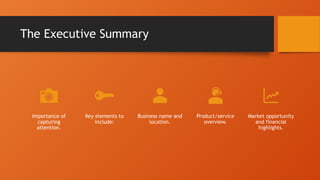
The executive summary is a concise overview of the entire business plan. It should capture the essence of your business idea, presenting your vision, mission, and the core aspects of your business model. This section typically includes:
1. **Business Name**: Clearly state your business name.
2. **Business Location**: Where your business will be based.
3. **Business Concept**: A brief description of what your business does and the market it serves.
4. **Market Need**: Explain the problem your business solves or the need it fills in the market.
5. **Target Market**: Define the demographics of your ideal customer base.
6. **Financial Highlights**: Key financial projections, including anticipated revenues and profits.
7. **Funding Requirements**: How much funding you need, how you will use it, and the proposed terms.
### Business Description
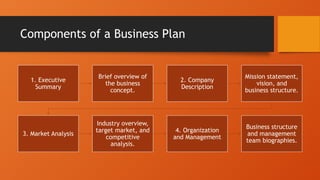
The business description provides a deeper dive into your business model, delving into the following key areas:
1. **Industry Overview**:
- Discuss the industry within which your business operates. Include insights into its size, growth rate, trends, and outlook.
2. **Company Structure**:
- Outline your business structure—whether it’s a sole proprietorship, partnership, LLC, or corporation. Discuss ownership and the organizational structure.
- Include information about the founders, their expertise, and roles within the business.
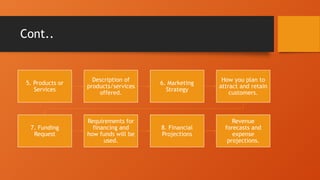
3. **Products and Services**:
- Describe in detail the products and services your business offers. Highlight unique features and benefits to customers.
- Discuss your supply chain, sourcing of materials, and production processes if applicable.
4. **Business Model**:
- Explain how your business will operate and make money. Include details about revenue streams (e.g., direct sales, subscriptions, advertisements).
### Market Analysis
Understanding the market is crucial. This section should consist of:
1. **Market Research**:
- Provide data on your target market, including size, demographics, and behavioral patterns.
2. **Target Customer Profile**:
- Create detailed profiles for your ideal customers, including age, gender, income level, preferences, and buying behavior.
3. **Competitive Analysis**:
- Identify your key competitors. Discuss their strengths and weaknesses and how your business will differentiate itself from them.
4. **Market Trends**:
- Discuss relevant trends in the industry and how they might affect your business. Include insights on customer expectations and technological advancements.
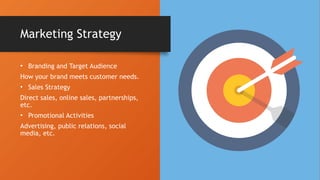
### Marketing Strategy
Your marketing strategy outlines how you plan to attract and retain customers. This includes:
1. **Brand Positioning**:
- Describe your brand identity and what it represents. Discuss how you will position your brand in the market.
2. **Marketing Channels**:
- List the channels you will use for marketing. Include online (social media, SEO, content marketing) and of