The right business model
can be the difference between
success and failure for
exactly same technology or
product. #BMGEN
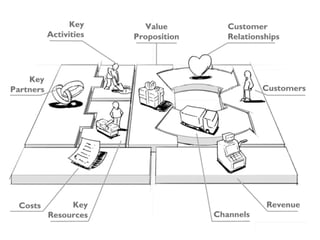
Business Model Generation
         Canvas
 a brief review and a fun practice
                         October 29, 2011
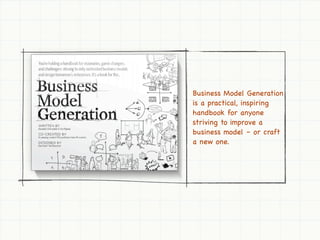
Business Model Generation
is a practical, inspiring
handbook for anyone
striving to improve a
business model – or craft
a new one.
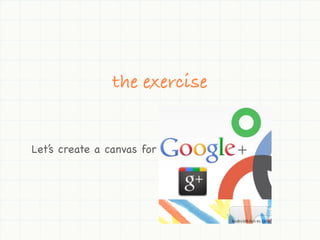
the exercise


Let’s create a canvas for
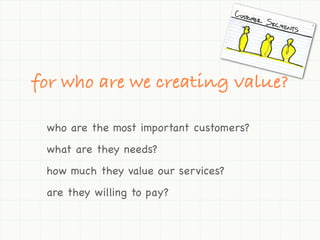
for who are we creating value?

 who are the most important customers?
 what are they needs?
 how much they value our services?
 are they willing to pay?
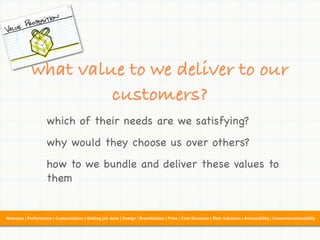
what value to we deliver to our
                      customers?
                     which of their needs are we satisfying?
                     why would they choose us over others?
                     how to we bundle and deliver these values to
                     them


Newness | Performance | Customization | Getting job done | Design | Brand/status | Price | Cost Structure | Risk reduction | Accessibility | Convenience/usability
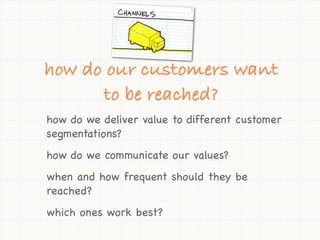
how do our customers want
      to be reached?
how do we deliver value to different customer
segmentations?
how do we communicate our values?
when and how frequent should they be
reached?
which ones work best?
what type of relationship
   should we establish?
what type of relationship do they expect?
which ones we have established?
how do we maintain it?
how costly are they?
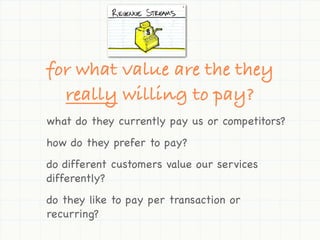
for what value are the they
  really willing to pay?
what do they currently pay us or competitors?
how do they prefer to pay?
do different customers value our services
differently?
do they like to pay per transaction or
recurring?
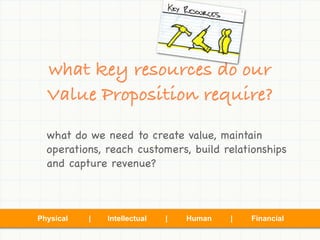
what key resources do our
  Value Proposition require?
  what do we need to create value, maintain
  operations, reach customers, build relationships
  and capture revenue?


Physical   |   Intellectual   |   Human   |   Financial
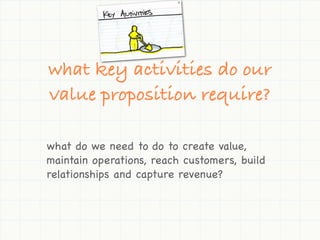
what key activities do our
value proposition require?

what do we need to do to create value,
maintain operations, reach customers, build
relationships and capture revenue?
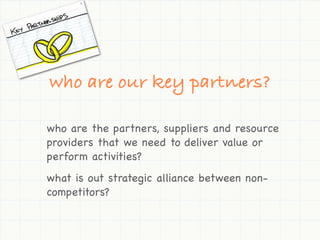
who are our key partners?

who are the partners, suppliers and resource
providers that we need to deliver value or
perform activities?
what is out strategic alliance between non-
competitors?
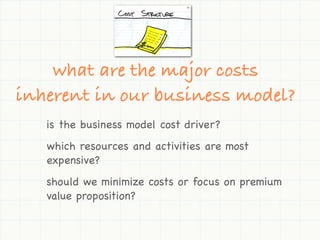
what are the major costs
inherent in our business model?
   is the business model cost driver?
   which resources and activities are most
   expensive?
   should we minimize costs or focus on premium
   value proposition?
Design
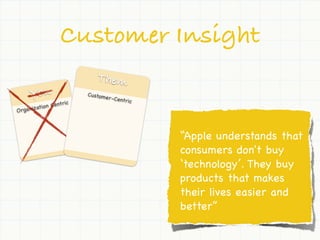
Customer Insight
                            Them
     You                 Custo m
                                   er -Cent
                                           ric
                  tric
        at ion Cen
Organiz


                                                 “Apple understands that
                                                 consumers don't buy
                                                 ‘technology’. They buy
                                                 products that makes
                                                 their lives easier and
                                                 better”
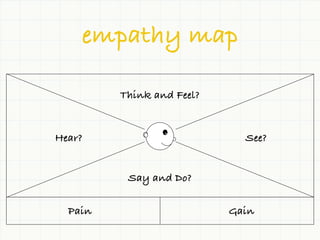
empathy map

         Think and Feel?


Hear?                        See?


          Say and Do?

  Pain                     Gain
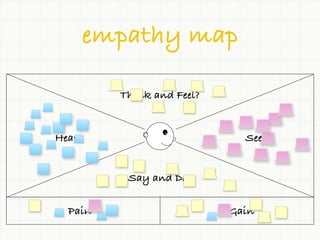
empathy map

         Think and Feel?


Hear?                        See?


          Say and Do?

  Pain                     Gain
Strategy
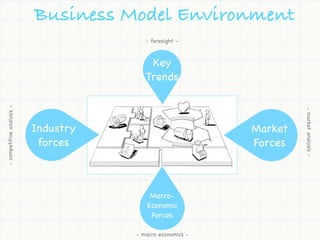
Business Model Environment
                                         - foresight -


                                          Key
                                         Trends
- competitive analysis -


                                                                     - market analysis -
                           Industry                         Market
                            forces                          Forces


                                          Macro-
                                         Economic
                                          Forces

                                      - macro economics -
Thank you
                Shahed Khalili
                     www.pifpof.com

                     @shahedkhalili

            shahed.khalili@gmail.com
Post session notes:
the plan was to briefly cover the concept, describe the building blocks then dig deeper into
the topic as we do the exercise.

it was a bit ambitious to think we can complete the canvas with a group of about 30 people.
the exercise didn’t workout as well as I i thought it would, however the overall feedback
about the topic was positive and relevant.

@manningsmith had a good suggestion: to randomly pick four people from the audience,
preferably those with exposure to the concept, do the exercise with the small group and
have the rest of the room observe. another suggestion was to have two back-to-back
sessions, the first session would be an introduction to the topic and in the following session
form groups of 4-5 and have each group create their own canvas then compare and discuss.
something to consider for next time anyone wants to do this in a ProductCamp.

Business Model Generation Canvas

  • 1.
    The right businessmodel can be the difference between success and failure for exactly same technology or product. #BMGEN
  • 2.
    Business Model Generation Canvas a brief review and a fun practice October 29, 2011
  • 3.
    Business Model Generation isa practical, inspiring handbook for anyone striving to improve a business model – or craft a new one.
  • 6.
  • 7.
    for who arewe creating value? who are the most important customers? what are they needs? how much they value our services? are they willing to pay?
  • 8.
    what value towe deliver to our customers? which of their needs are we satisfying? why would they choose us over others? how to we bundle and deliver these values to them Newness | Performance | Customization | Getting job done | Design | Brand/status | Price | Cost Structure | Risk reduction | Accessibility | Convenience/usability
  • 9.
    how do ourcustomers want to be reached? how do we deliver value to different customer segmentations? how do we communicate our values? when and how frequent should they be reached? which ones work best?
  • 10.
    what type ofrelationship should we establish? what type of relationship do they expect? which ones we have established? how do we maintain it? how costly are they?
  • 11.
    for what valueare the they really willing to pay? what do they currently pay us or competitors? how do they prefer to pay? do different customers value our services differently? do they like to pay per transaction or recurring?
  • 12.
    what key resourcesdo our Value Proposition require? what do we need to create value, maintain operations, reach customers, build relationships and capture revenue? Physical | Intellectual | Human | Financial
  • 13.
    what key activitiesdo our value proposition require? what do we need to do to create value, maintain operations, reach customers, build relationships and capture revenue?
  • 14.
    who are ourkey partners? who are the partners, suppliers and resource providers that we need to deliver value or perform activities? what is out strategic alliance between non- competitors?
  • 15.
    what are themajor costs inherent in our business model? is the business model cost driver? which resources and activities are most expensive? should we minimize costs or focus on premium value proposition?
  • 16.
  • 17.
    Customer Insight Them You Custo m er -Cent ric tric at ion Cen Organiz “Apple understands that consumers don't buy ‘technology’. They buy products that makes their lives easier and better”
  • 18.
    empathy map Think and Feel? Hear? See? Say and Do? Pain Gain
  • 19.
    empathy map Think and Feel? Hear? See? Say and Do? Pain Gain
  • 20.
  • 21.
    Business Model Environment - foresight - Key Trends - competitive analysis - - market analysis - Industry Market forces Forces Macro- Economic Forces - macro economics -
  • 22.
    Thank you Shahed Khalili www.pifpof.com @shahedkhalili shahed.khalili@gmail.com
  • 23.
    Post session notes: theplan was to briefly cover the concept, describe the building blocks then dig deeper into the topic as we do the exercise. it was a bit ambitious to think we can complete the canvas with a group of about 30 people. the exercise didn’t workout as well as I i thought it would, however the overall feedback about the topic was positive and relevant. @manningsmith had a good suggestion: to randomly pick four people from the audience, preferably those with exposure to the concept, do the exercise with the small group and have the rest of the room observe. another suggestion was to have two back-to-back sessions, the first session would be an introduction to the topic and in the following session form groups of 4-5 and have each group create their own canvas then compare and discuss. something to consider for next time anyone wants to do this in a ProductCamp.