Building High Performance Team

Module (04)
SITUATIONAL TEAMWORK
BEHAVIOR
Module (04) Situational Teamwork Behavior
4.1

Holding Meeting Effectively

4.2

During Normal Operation Condition

4.3

During Emergency Condition

4.4

During Troubleshooting & Investigation

4.5

During Repair & Maintenance Activities

4.6

After Achieving Goals & Success

4.7

Working SMARTER not HARDER

4.8

Promote Team for Problem Solving
4.1 Holding Meeting Effectively

Why do meeting fail?
 No Identifiable Goals or Agenda.
 Lack of Commitment

 Absence of Trust and Loyalty
 No Interest and Contribution
 Lack of Accountability (No Specific Items)

 Physical Setting (Organized Place NOT achieved)

Meeting without Agenda = Waste Time
Effective Meeting Techniques
1. Let the Topic dictate the Length and Subject.
2. Be brief and to the point (Stick to your Agenda).
3. Hold a question-and-answer period.

4. Don't brush off Complaints.
5. Be ready to handle the “Problem"
Situations with observe.
6. If any thing specific, discuss it after
meeting with who concern.
7. End the Meeting on TIME!!!
4.2 During Normal Operation Condition
During Normal Operation we need Highly Communication Skills
between all Team Member :
 Cooperative
 Interested
 Respect
 Fast Reply
 Supportive
 Dynamic

 Initiative
 Pro-Active
Data is VALUE, and Knowledge is POWER
In undertaking the shift in duties from Normal Operating Assignments to
upset response tasks, a number of transitions in individual teaming
arrangements occur.
These transitions are characterized by the conduct of turnovers of
information on operating status and duties between staff on both working
and Standby Units.
These transitions mark the partial disassembly and down-sizing of teams
associated with non-upset units and the re-forming of larger teams for
response on upset units and must be conducted fairly rapidly to free
additional operating resources to assist with upset unit response in a
timely manner.
4.3 During Emergency Condition
During Emergency Condition we need
ONLY one Team Leader and all
Team members should be follow him.
During Emergency Condition we need
ONLY one Team Leader and all

Team members should be follow him.
 Team members have a mix of levels of experience
 Team members have a mix of skills
 At least one person has strong management skills
 Team take turns leading the Situation
 Team makes clear assignments for each activities.
The supportive nature of a TEAM can help and save the
Employees and Equipments in the plant. Also, they can reduce
the risk, TEAMS work together to help returning employees

regain their confidence and prevent time-lost accidents.
4.4 During Troubleshooting & Investigation
Brainstorming :
 Idea Generation
 Issue Generation

 Divergent Thinking
 Open Format
Teamwork:

 Working Team
 Respect each others
 Participants cannot leave alone

 Leader hold the situation
The most important result from
Root Cause Failure Analysis

is the answer to:

“What can WE learn from this Situation?”
Majority of problems found will

relate to Processes and People
Don’t waste time looking for culprits, look for the
Causes and learn from them!
4.5 During Repair & Maintenance Activities:

Operation

Maintenance

I use
I operate

Operation

I maintain
I repair

Maintenance

We maintain

Conventional

TPM


Productivity



Reliability



Availability



Down Time



Maintainability



Utilization



Optimization

We are Highly Qualified maintenance department delivers
quick responses to all plant services needs.
4.5 After achieving Goals & Success:
 Setting goals means being accountable.
Because without accountability, our goals
flutter in the wind while no one is watching.

 Instead of getting frustrated or discouraged,
monitoring our progress takes the
overwhelming feat of achieving our goals
and breaks it down into more manageable
chunks.
 Chunks that we can consider and react to.
Chunks that allow us to see that progress
happens over time.
Celebrate Achieving Success:
Focusing on what went well, especially when trying to achieve longterm goals, is what keeps us going. Knowing that progress has been

made — even if the progress can only be measured in baby steps —
provides motivation to remember that tomorrow is a new day and
new chance to make more progress.

Reflect on what could be Improved:
The truth is that sometimes achieving our goals is hard. Maybe there
are struggles or obstacles we did not envision. Road blocks,
challenges, and distractions are a reality when trying to achieve any
goal. BUT we should reflect our success to others as a TEAM.
4.7 Working Smarter not Harder
Smarter

Harder

Work Hard + Work SMART

= Wealth and Success
Meaning of HARD Work
 Hard Work involves commitment
 Involvement and Sincerity.

 Working honestly.
There is saying :

“The Harder you work, the Luckier you get”
Meaning of SMART Work
Working SMART is working with a goal in mind, a goal that
is meaningful to you.

It also means knowing what points are of high priority and
what you can be flexible on, so you can focus on what’s
important.
SMART work also refers to being Creative
and looking or other ways to get work done faster.
Advantages of HARD Work:

 A hard work’s reputation is based on years of hard work and
meticulousness. He is trusted to be professional and competent.
 A hard worker is happy to solve difficult problems he
encountered in course of his work
 Hard Workers, usually are on their table Troubleshooting the
problems. They work for their own satisfaction rather than being
worrying about creating impression on bosses.
 There is a saying in weight lifting; no pain, no gain.’ So, one can’t
achieve great success without working hard.
 No delegation of work.
Advantage of SMART Work:
 It requires less time to accomplish the task
 Needs to put less efforts
 In SMART work, we get the work done by others without any
physical stress, e.g a team leader or Manger
 In SMART work, the work is done according to plan. Hence,
acquire more results.

 SMART work includes completing the task by using tacts, while at
the others end completing the task by using full standard method is
called hard work.

 SMART work provides us with the ability of quick prblem solving
4.8 Promote Team for Problem Solving:

 Strategy
 Methodology
Team for Problem Solving:

 Tools

 Performance
System
Problem Solving Wheel
1. Identify the Problem

6. Planning for Next Action

2 . Analysis the Problem

(Recommendations)

3. Generate Possible

5. Selecting the

Solutions

Suitable Solution

4. Analysis the Solutions
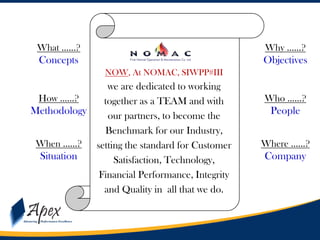
Conclusion:

Team Maturity
What ……?

Why ……?

Concepts

Objectives
NOW, At NOMAC, SIWPP#III

we are dedicated to working
How ……?
together as a TEAM and with
Methodology
our partners, to become the
Benchmark for our Industry,
When ……?
setting the standard for Customer
Situation
Satisfaction, Technology,
Financial Performance, Integrity
and Quality in all that we do.

Who ……?

People
Where ……?

Company
Building high performance teame module (04) situational teamwork behavior

Building high performance teame module (04) situational teamwork behavior

  • 1.
    Building High PerformanceTeam Module (04) SITUATIONAL TEAMWORK BEHAVIOR
  • 2.
    Module (04) SituationalTeamwork Behavior 4.1 Holding Meeting Effectively 4.2 During Normal Operation Condition 4.3 During Emergency Condition 4.4 During Troubleshooting & Investigation 4.5 During Repair & Maintenance Activities 4.6 After Achieving Goals & Success 4.7 Working SMARTER not HARDER 4.8 Promote Team for Problem Solving
  • 3.
    4.1 Holding MeetingEffectively Why do meeting fail?  No Identifiable Goals or Agenda.  Lack of Commitment  Absence of Trust and Loyalty  No Interest and Contribution  Lack of Accountability (No Specific Items)  Physical Setting (Organized Place NOT achieved) Meeting without Agenda = Waste Time
  • 4.
    Effective Meeting Techniques 1.Let the Topic dictate the Length and Subject. 2. Be brief and to the point (Stick to your Agenda). 3. Hold a question-and-answer period. 4. Don't brush off Complaints. 5. Be ready to handle the “Problem" Situations with observe. 6. If any thing specific, discuss it after meeting with who concern. 7. End the Meeting on TIME!!!
  • 5.
    4.2 During NormalOperation Condition During Normal Operation we need Highly Communication Skills between all Team Member :  Cooperative  Interested  Respect  Fast Reply  Supportive  Dynamic  Initiative  Pro-Active Data is VALUE, and Knowledge is POWER
  • 6.
    In undertaking theshift in duties from Normal Operating Assignments to upset response tasks, a number of transitions in individual teaming arrangements occur. These transitions are characterized by the conduct of turnovers of information on operating status and duties between staff on both working and Standby Units. These transitions mark the partial disassembly and down-sizing of teams associated with non-upset units and the re-forming of larger teams for response on upset units and must be conducted fairly rapidly to free additional operating resources to assist with upset unit response in a timely manner.
  • 7.
    4.3 During EmergencyCondition During Emergency Condition we need ONLY one Team Leader and all Team members should be follow him. During Emergency Condition we need ONLY one Team Leader and all Team members should be follow him.
  • 8.
     Team membershave a mix of levels of experience  Team members have a mix of skills  At least one person has strong management skills  Team take turns leading the Situation  Team makes clear assignments for each activities. The supportive nature of a TEAM can help and save the Employees and Equipments in the plant. Also, they can reduce the risk, TEAMS work together to help returning employees regain their confidence and prevent time-lost accidents.
  • 9.
    4.4 During Troubleshooting& Investigation Brainstorming :  Idea Generation  Issue Generation  Divergent Thinking  Open Format Teamwork:  Working Team  Respect each others  Participants cannot leave alone  Leader hold the situation
  • 10.
    The most importantresult from Root Cause Failure Analysis is the answer to: “What can WE learn from this Situation?” Majority of problems found will relate to Processes and People Don’t waste time looking for culprits, look for the Causes and learn from them!
  • 11.
    4.5 During Repair& Maintenance Activities: Operation Maintenance I use I operate Operation I maintain I repair Maintenance We maintain Conventional TPM
  • 12.
     Productivity  Reliability  Availability  Down Time  Maintainability  Utilization  Optimization We areHighly Qualified maintenance department delivers quick responses to all plant services needs.
  • 13.
    4.5 After achievingGoals & Success:  Setting goals means being accountable. Because without accountability, our goals flutter in the wind while no one is watching.  Instead of getting frustrated or discouraged, monitoring our progress takes the overwhelming feat of achieving our goals and breaks it down into more manageable chunks.  Chunks that we can consider and react to. Chunks that allow us to see that progress happens over time.
  • 14.
    Celebrate Achieving Success: Focusingon what went well, especially when trying to achieve longterm goals, is what keeps us going. Knowing that progress has been made — even if the progress can only be measured in baby steps — provides motivation to remember that tomorrow is a new day and new chance to make more progress. Reflect on what could be Improved: The truth is that sometimes achieving our goals is hard. Maybe there are struggles or obstacles we did not envision. Road blocks, challenges, and distractions are a reality when trying to achieve any goal. BUT we should reflect our success to others as a TEAM.
  • 15.
    4.7 Working Smarternot Harder Smarter Harder Work Hard + Work SMART = Wealth and Success
  • 16.
    Meaning of HARDWork  Hard Work involves commitment  Involvement and Sincerity.  Working honestly. There is saying : “The Harder you work, the Luckier you get”
  • 17.
    Meaning of SMARTWork Working SMART is working with a goal in mind, a goal that is meaningful to you. It also means knowing what points are of high priority and what you can be flexible on, so you can focus on what’s important. SMART work also refers to being Creative and looking or other ways to get work done faster.
  • 18.
    Advantages of HARDWork:  A hard work’s reputation is based on years of hard work and meticulousness. He is trusted to be professional and competent.  A hard worker is happy to solve difficult problems he encountered in course of his work  Hard Workers, usually are on their table Troubleshooting the problems. They work for their own satisfaction rather than being worrying about creating impression on bosses.  There is a saying in weight lifting; no pain, no gain.’ So, one can’t achieve great success without working hard.  No delegation of work.
  • 19.
    Advantage of SMARTWork:  It requires less time to accomplish the task  Needs to put less efforts  In SMART work, we get the work done by others without any physical stress, e.g a team leader or Manger  In SMART work, the work is done according to plan. Hence, acquire more results.  SMART work includes completing the task by using tacts, while at the others end completing the task by using full standard method is called hard work.  SMART work provides us with the ability of quick prblem solving
  • 20.
    4.8 Promote Teamfor Problem Solving:  Strategy  Methodology Team for Problem Solving:  Tools  Performance System
  • 21.
    Problem Solving Wheel 1.Identify the Problem 6. Planning for Next Action 2 . Analysis the Problem (Recommendations) 3. Generate Possible 5. Selecting the Solutions Suitable Solution 4. Analysis the Solutions
  • 22.
  • 23.
    What ……? Why ……? Concepts Objectives NOW,At NOMAC, SIWPP#III we are dedicated to working How ……? together as a TEAM and with Methodology our partners, to become the Benchmark for our Industry, When ……? setting the standard for Customer Situation Satisfaction, Technology, Financial Performance, Integrity and Quality in all that we do. Who ……? People Where ……? Company